Robot Injection Molding: Plastic Components, Materials, Mold Design, and Manufacturing Solutions

Введение

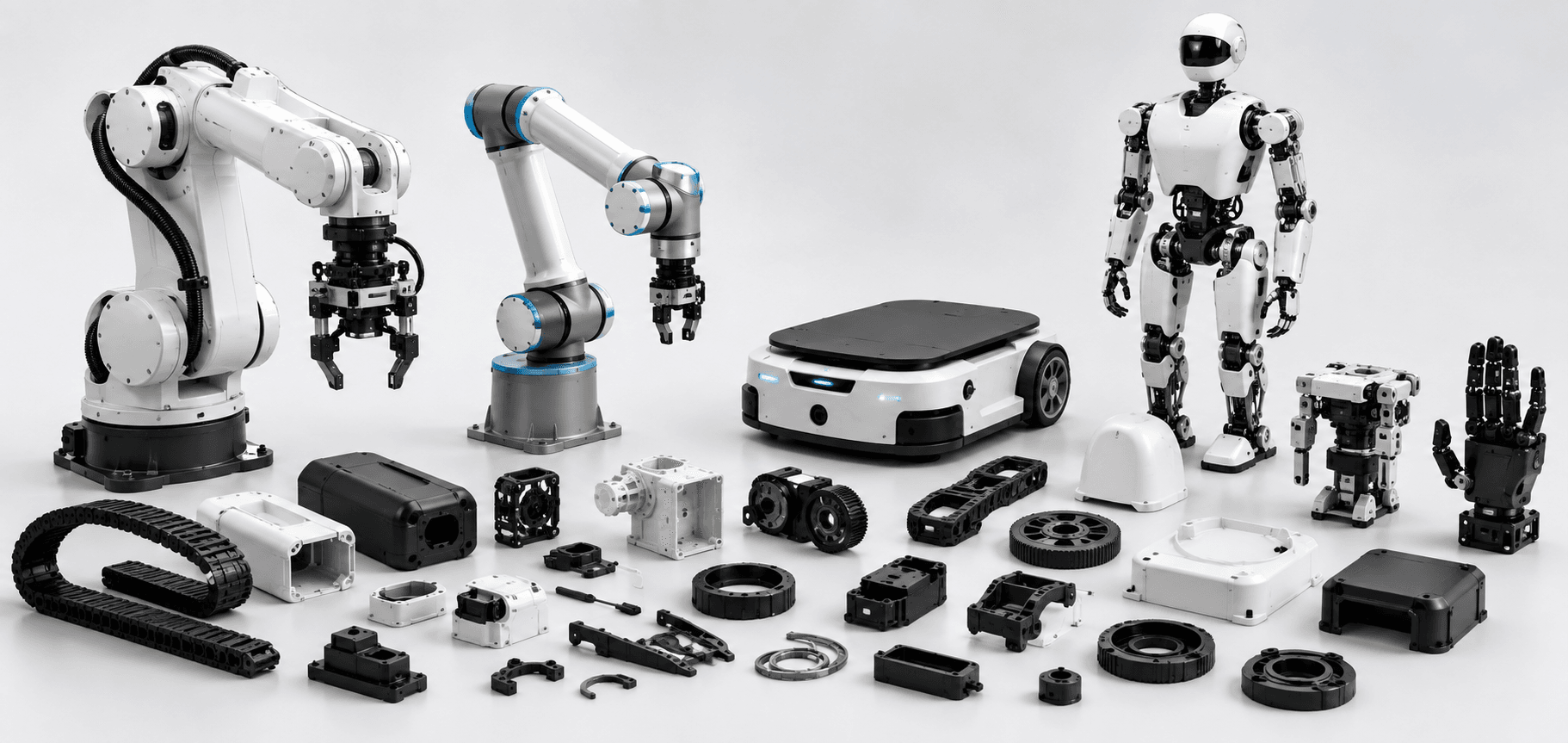
Robotics is rapidly expanding beyond traditional industrial automation into logistics, healthcare, agriculture, inspection, service applications, and increasingly sophisticated humanoid systems. Modern robots combine mechanical structures, electric drives, sensors, cameras, control electronics, batteries, and software into compact machines that must operate accurately and reliably.

Injection molded plastics play an important role in this development.

Robot manufacturers use engineered plastic components to reduce weight, protect electronics, manage cables, reduce friction and noise, improve appearance, electrically isolate components, and integrate complex mechanical features into fewer parts.

Compared with machined metal components, injection molding can integrate ribs, snap fits, bearing seats, cable channels, mounting bosses, sealing grooves, ventilation structures, and cosmetic surfaces into a single component. This is particularly valuable when robot production moves from prototypes into medium- or high-volume manufacturing.

The International Federation of Robotics covers both industrial and service robots, including mobile robots used in professional applications, while major robotics suppliers now offer portfolios spanning industrial robots, collaborative robots and autonomous mobile robots.

This article examines how injection molded plastic parts are used in robotics, which engineering polymers are suitable, and what mold design and quality-control factors should be considered.


1. Robot Arm Covers and Joint Housings

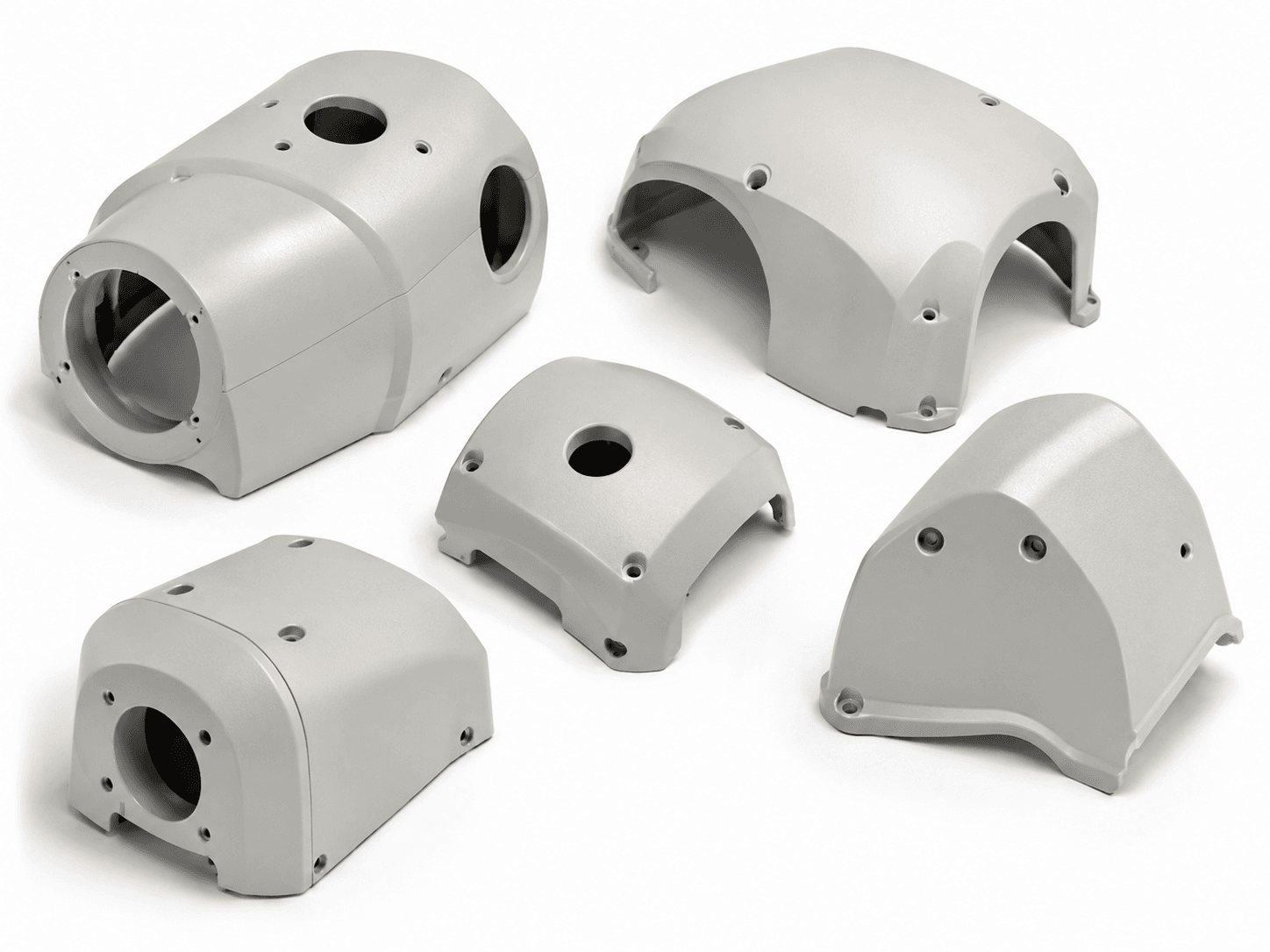
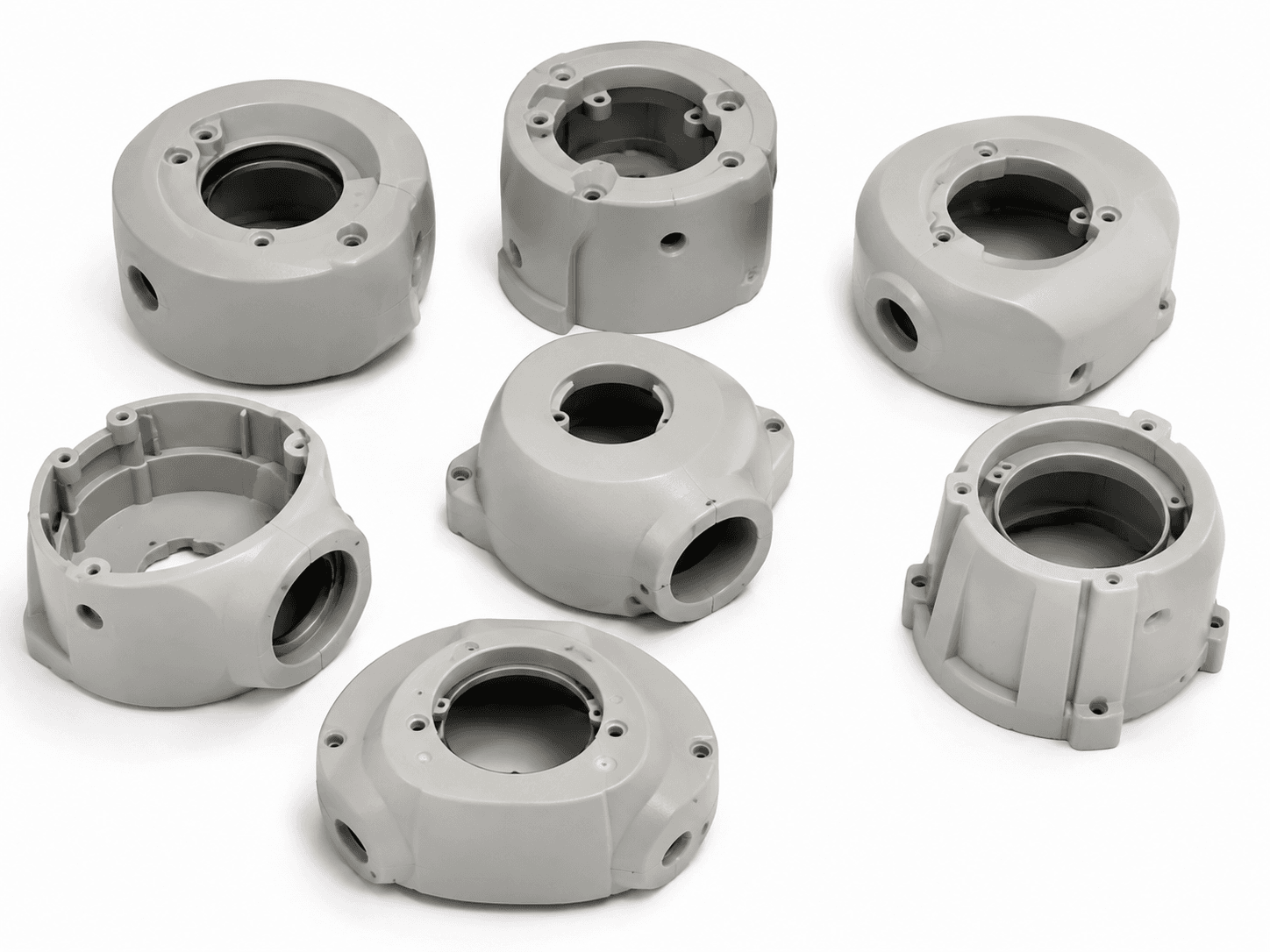
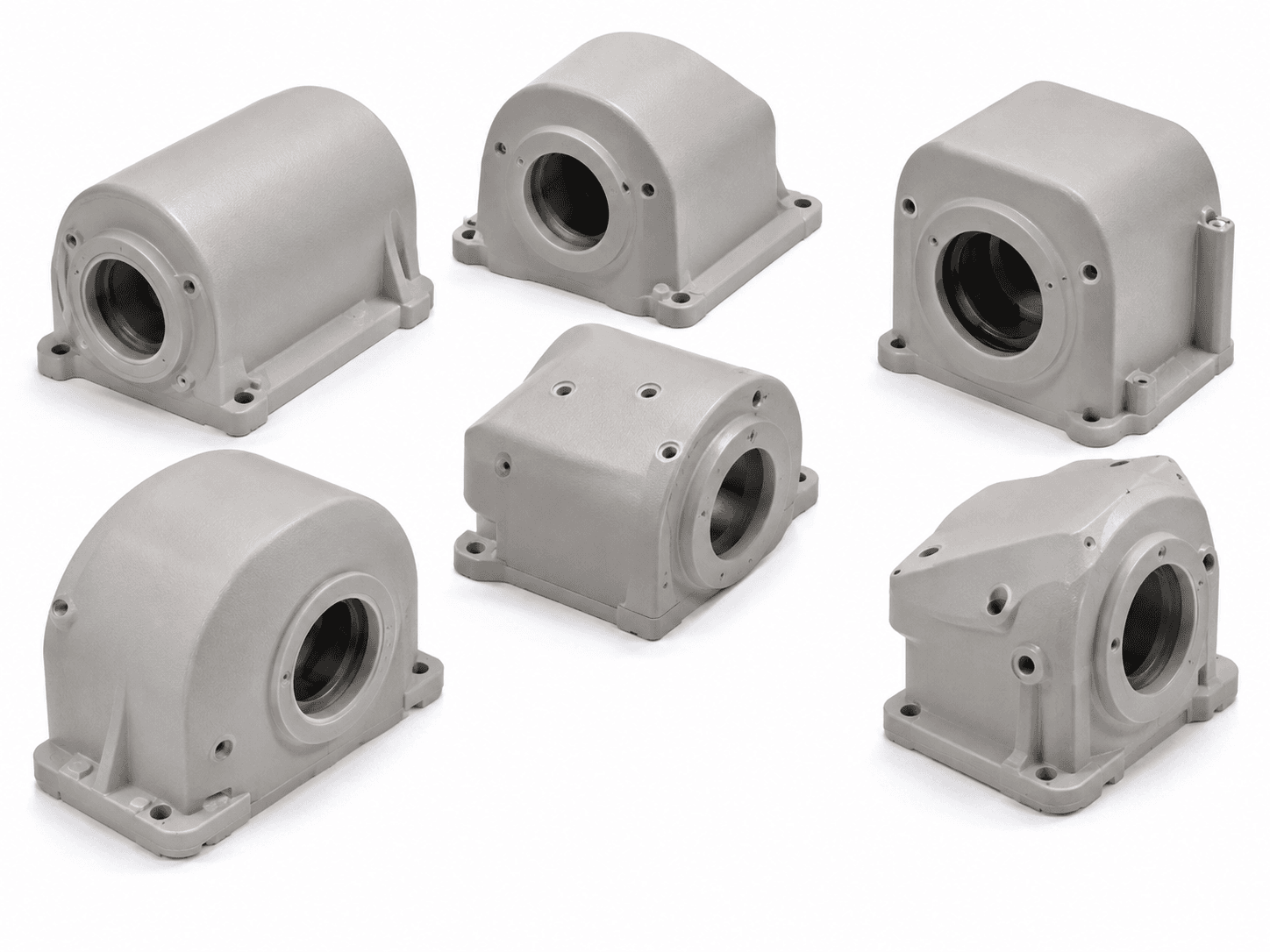
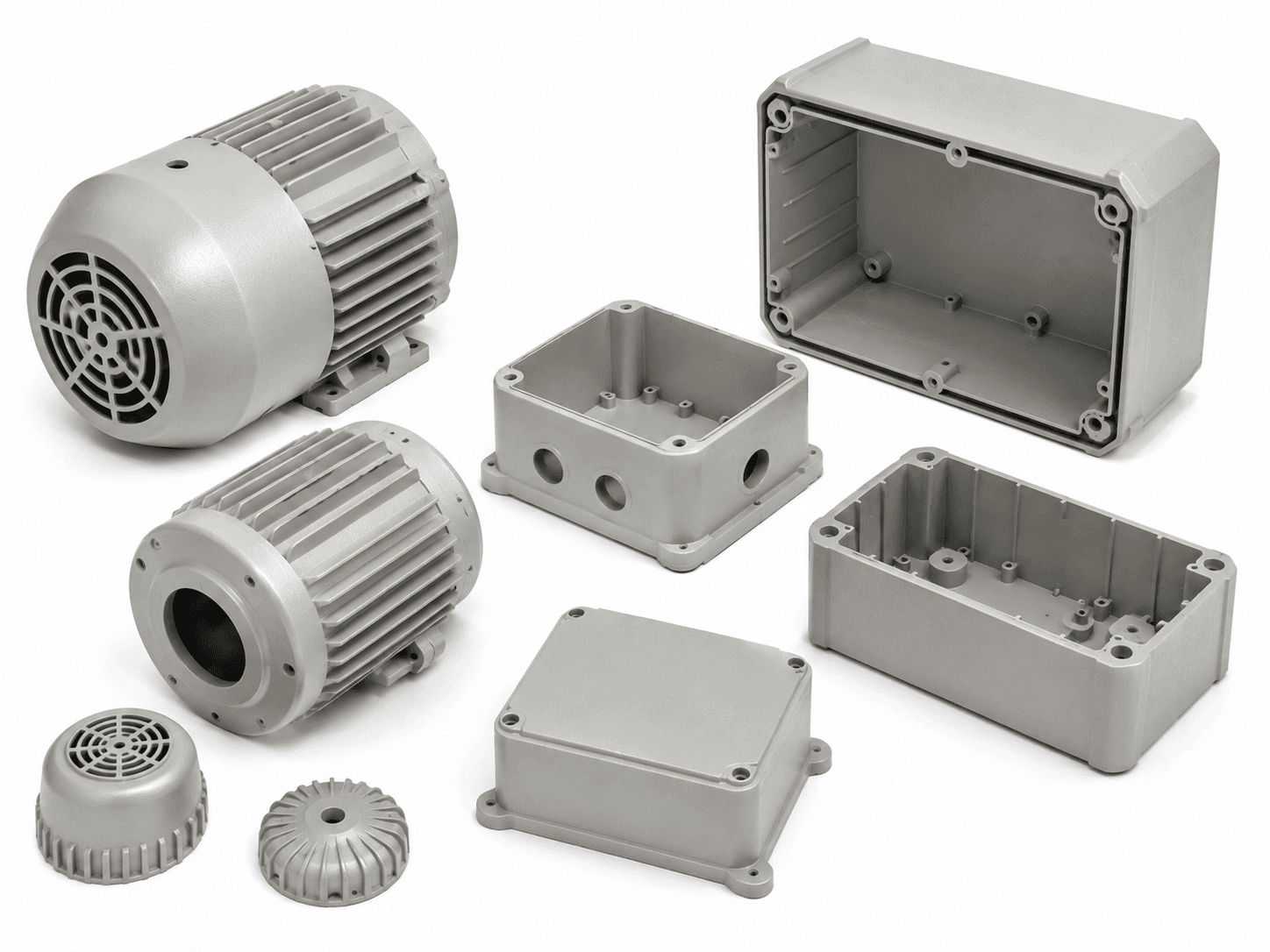
Industrial and collaborative robots contain multiple joints, motors, gearboxes, sensors and cable systems that require protective housings.

Typical injection molded components include:

  • Robot arm covers
  • Joint covers
  • Motor housings
  • Gearbox covers
  • Base covers
  • Electronic control housings
  • Decorative exterior shells

Plastic is particularly useful because these covers usually do not need to carry the robot’s primary structural loads.

Reducing housing mass can help decrease the total moving mass of the arm. This is important because excessive weight at moving joints can increase inertia and place additional demands on motors and transmission systems.

Литье под давлением also enables smooth external surfaces and complex curved geometries that would be more difficult or expensive to manufacture from sheet metal.

Robot Housing Material Examples

КомпонентMain RequirementPotential Material
Robot Arm CoverLightweight + impact resistancePC/ABS
Joint HousingDimensional stabilityPA-GF
Electronics CoverElectrical insulationPC/ABS FR
Service Robot ShellAppearance + toughnessАБС
Outdoor Robot HousingWeather resistancePC/ASA

2. Precision Plastic Gears and Transmission Components

Robots rely on highly controlled movement, making gears and transmission systems critical components.

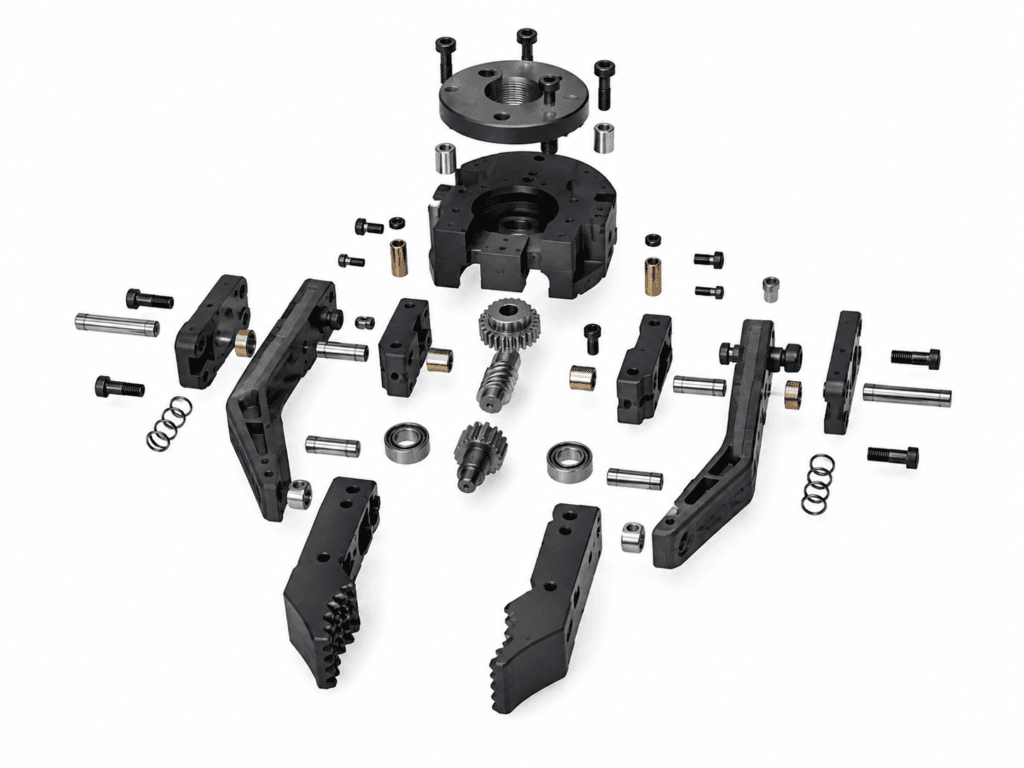
Although high-load robot joints often use metal reducers, plastic gears can be useful in lower-load mechanisms, auxiliary actuators, sensors, grippers and service robots.

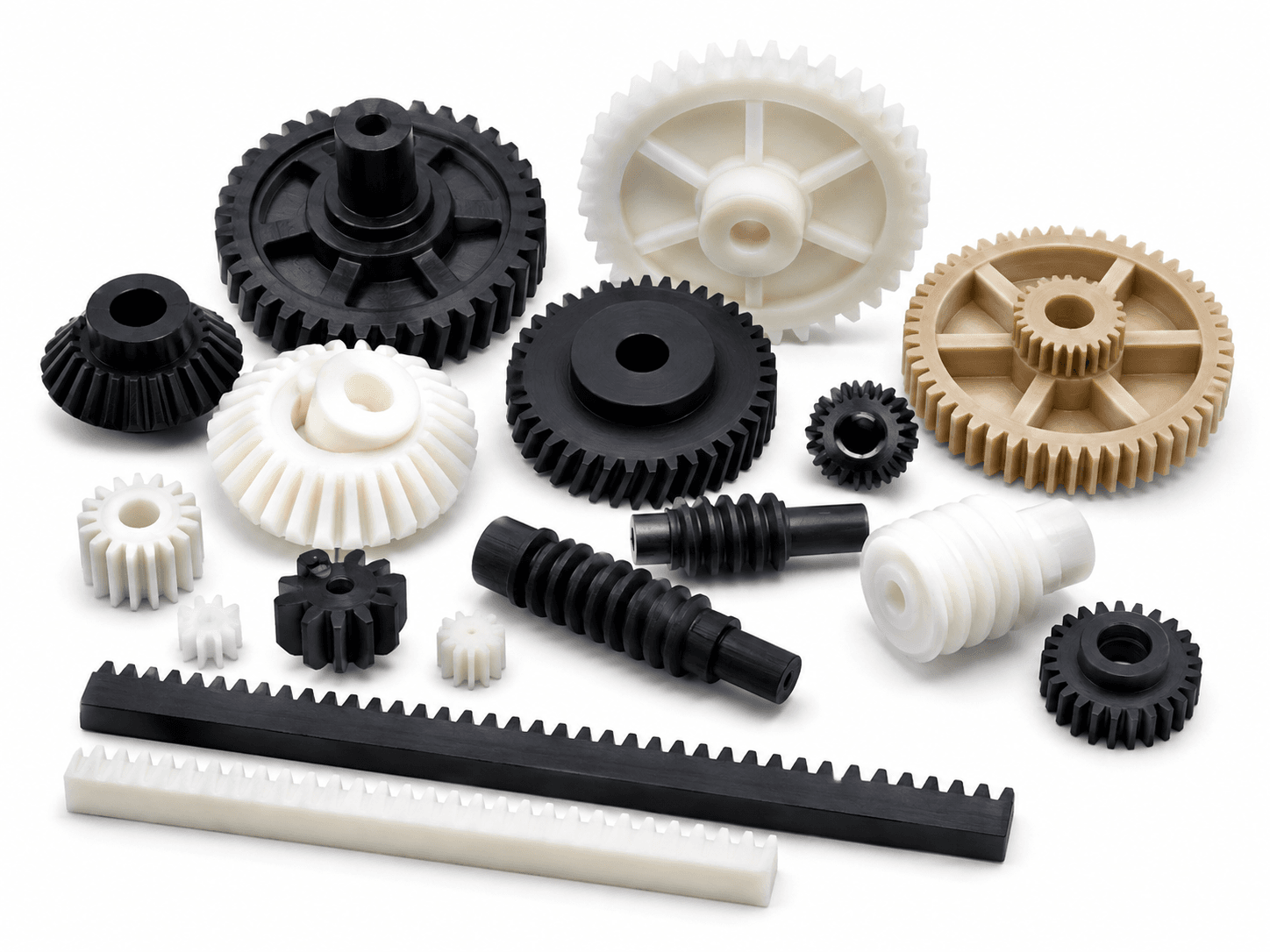
Injection molded transmission components can include:

  • Spur gears
  • Worm gears
  • Gear racks
  • Small bevel gears
  • Encoder gears
  • Adjustment mechanisms
  • Actuator components

POM is frequently considered for precision mechanical components because of its low friction, dimensional stability and wear characteristics. BASF identifies injection molding as an important processing method for POM and notes its use in sophisticated machine and mechanical components.

Plastic gears can also help reduce operating noise and component weight.

3. Bearings, Bushings, and Low-Friction Components

Robotic joints and mechanisms contain many rotating and sliding interfaces.

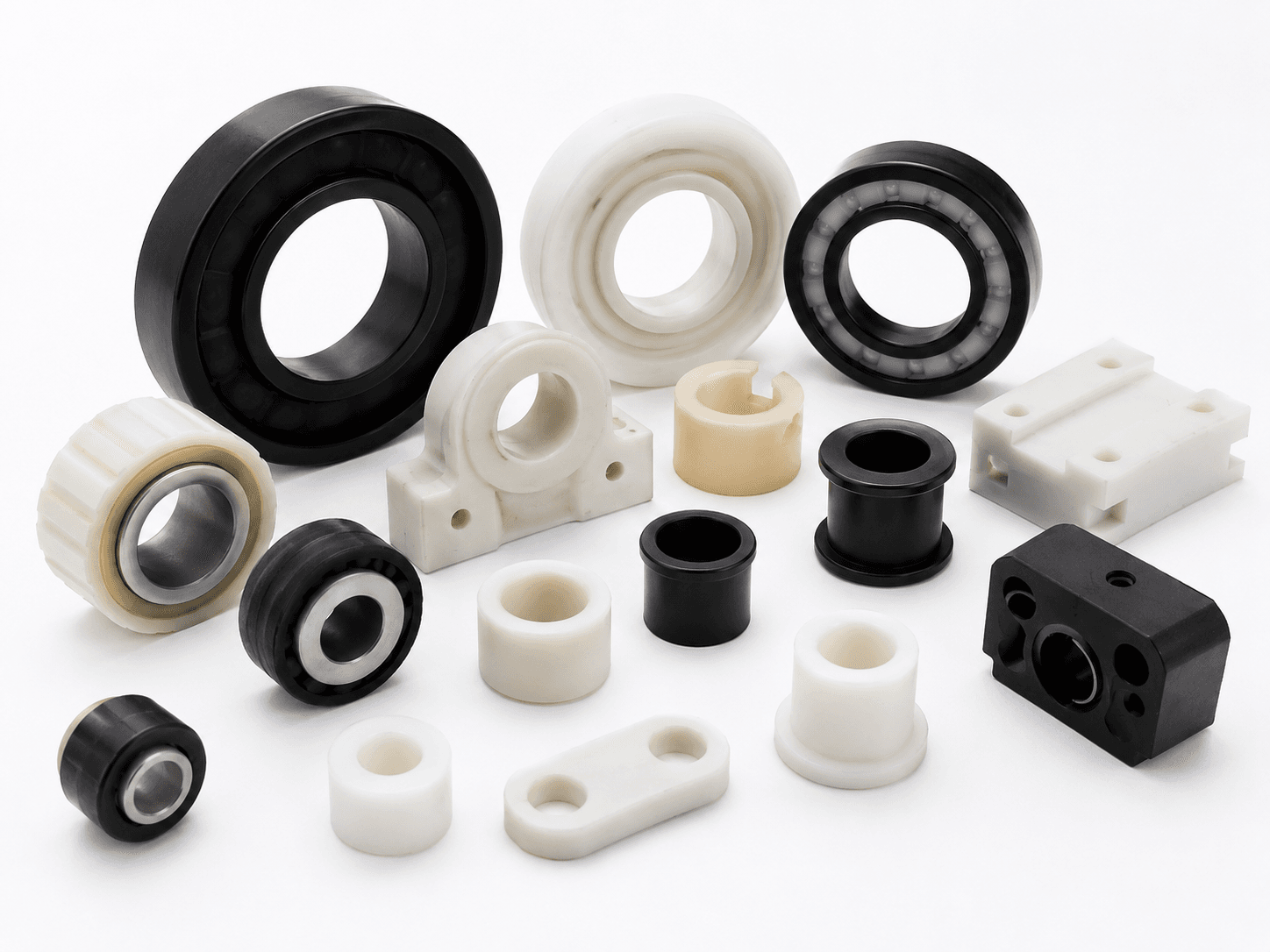
Potential injection molded applications include:

  • Bushings
  • Plain bearings
  • Sliding pads
  • Guide blocks
  • Linear bearing components
  • Rollers
  • Pivot components

Specialized polymers can reduce friction and, in suitable applications, eliminate the need for external lubrication.

This is attractive for robots operating in environments where grease contamination should be minimized or maintenance access is difficult.

Polymer bearing technology is already being used in robotic applications. For example, polymer plain bearings have been applied in autonomous logistics robots and robotic gripper systems.

Bearing Design Considerations

FactorEngineering Importance
LoadControls bearing pressure
SpeedInfluences friction and heat
Shaft MaterialAffects wear behavior
TemperatureChanges polymer performance
Duty CycleDetermines expected life
LubricationInfluences material selection

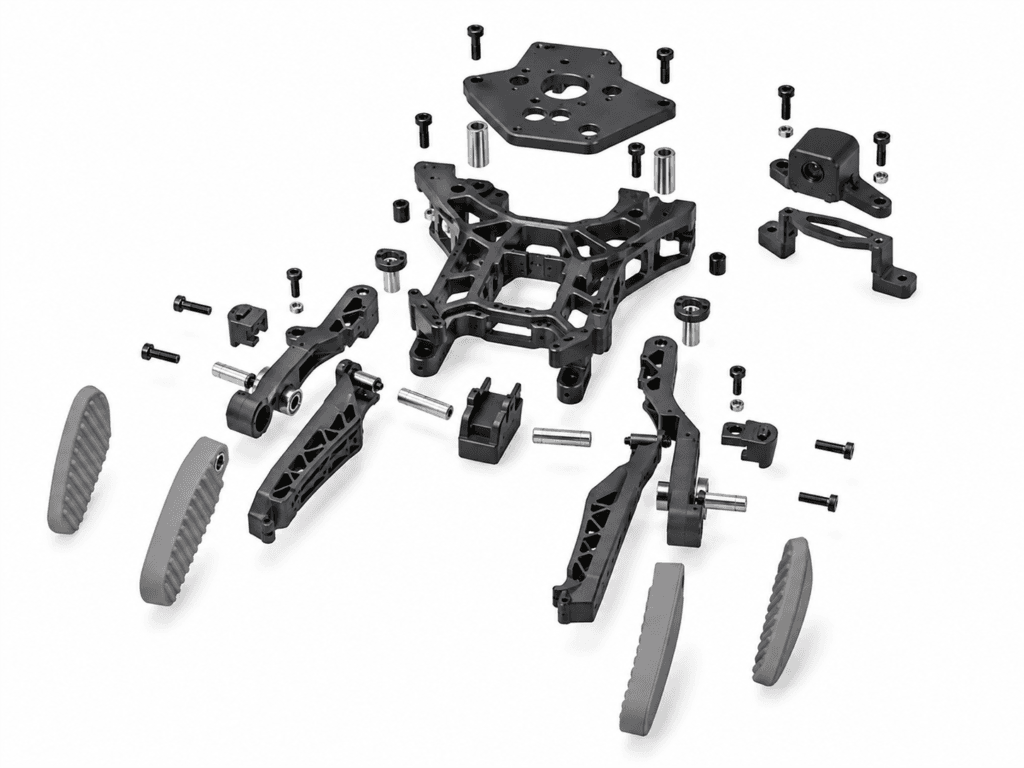
4. Robotic Grippers and End Effectors

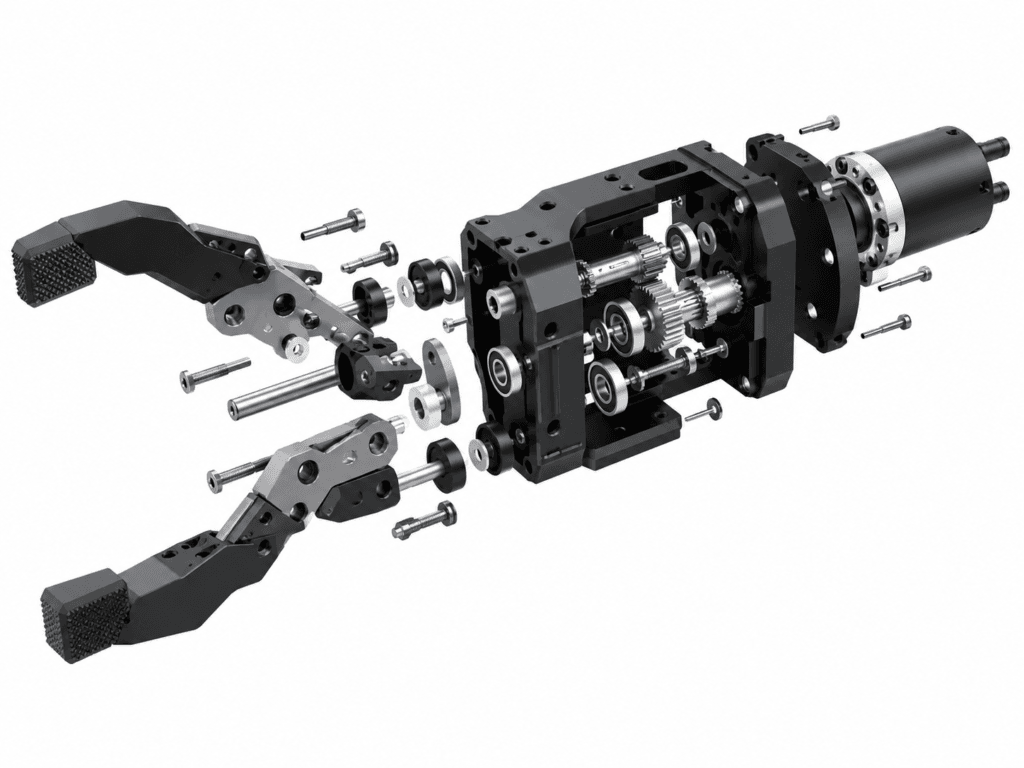
End effectors are one of the most promising areas for engineering plastics because weight at the end of a robot arm has a strong influence on payload and motion performance.

Injection molded components can be used in:

  • Parallel grippers
  • Finger grippers
  • Vacuum gripper structures
  • Soft gripping systems
  • Tool-change housings
  • Sensor brackets
  • Protective pads

Reducing end-effector weight allows more of the robot’s rated payload to be used for the actual workpiece.

Plastic components can also reduce the risk of scratching delicate products.

Robotic grippers using self-lubricating polymer components are already commercially demonstrated, including plastic finger-gripper systems for collaborative robots.

TPE or TPU can also be overmolded onto rigid gripper fingers to create softer contact surfaces.

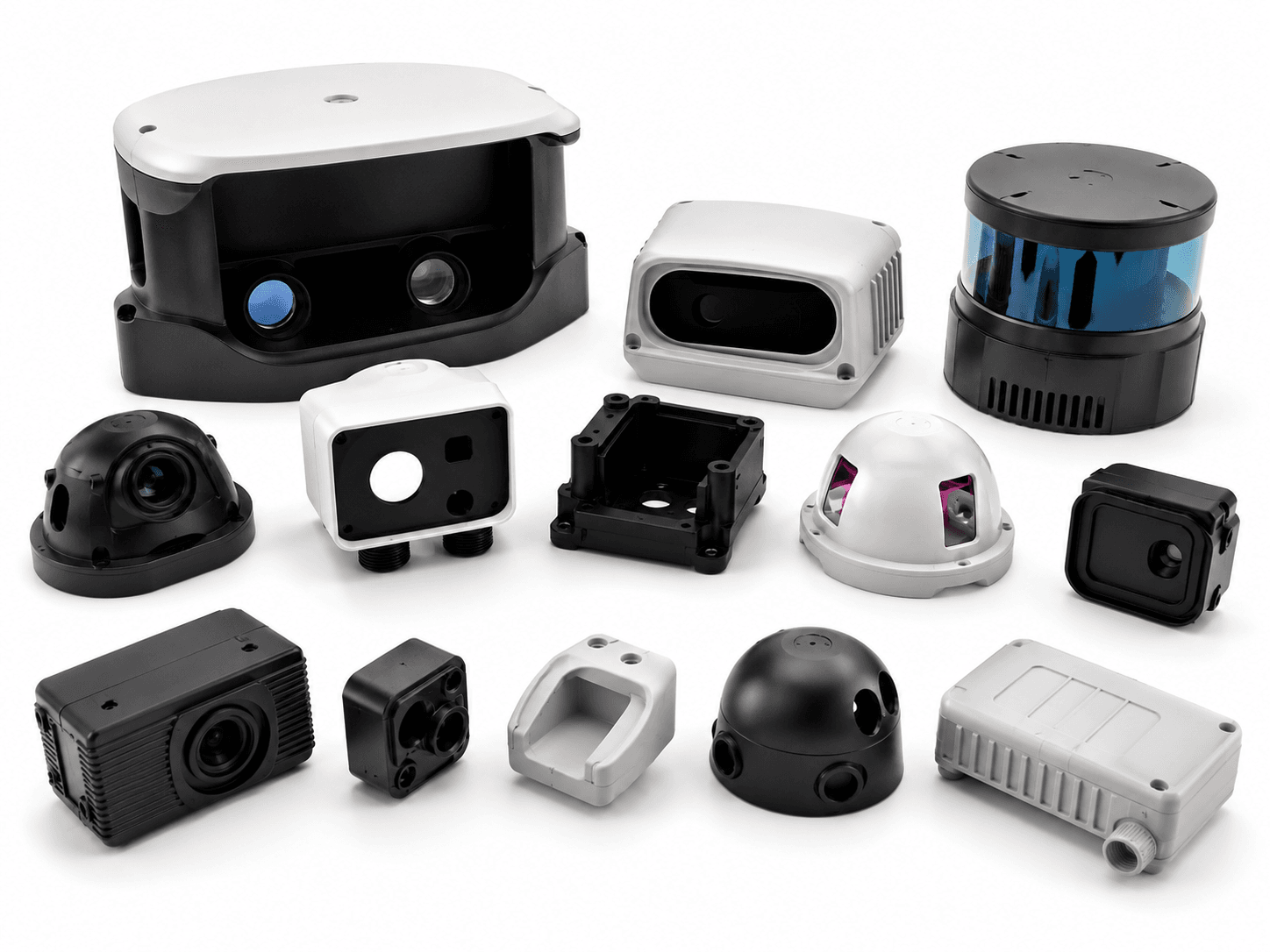
5. Sensor, Camera, and LiDAR Housings

Modern robots depend heavily on machine vision and environmental sensing.

Injection molding is widely suitable for housings around:

  • Cameras
  • LiDAR sensors
  • Ultrasonic sensors
  • Proximity sensors
  • Force sensors
  • Encoders
  • IMUs
  • Safety sensors

These housings may require tight dimensional tolerances because sensor alignment can directly influence system performance.

Important design features can include:

  • Precise mounting datums
  • Optical openings
  • PCB bosses
  • Cable routing
  • Gasket grooves
  • Snap-fit assembly
  • EMI shielding provisions

Transparent PC may be considered for some protective windows, while ABS, PC/ABS, PBT and reinforced engineering plastics can be used for structural housings depending on the application.

6. Autonomous Mobile Robot Components

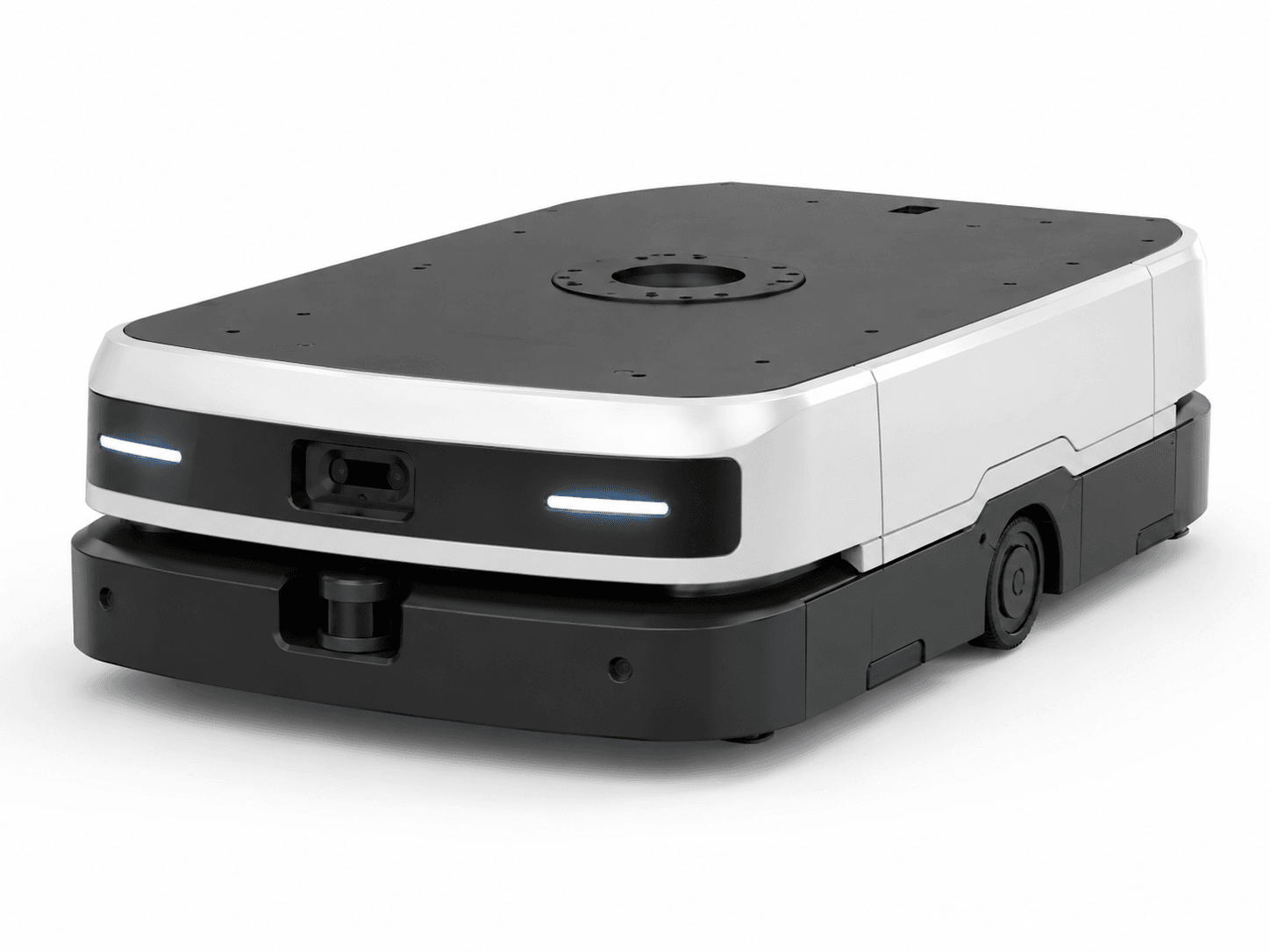
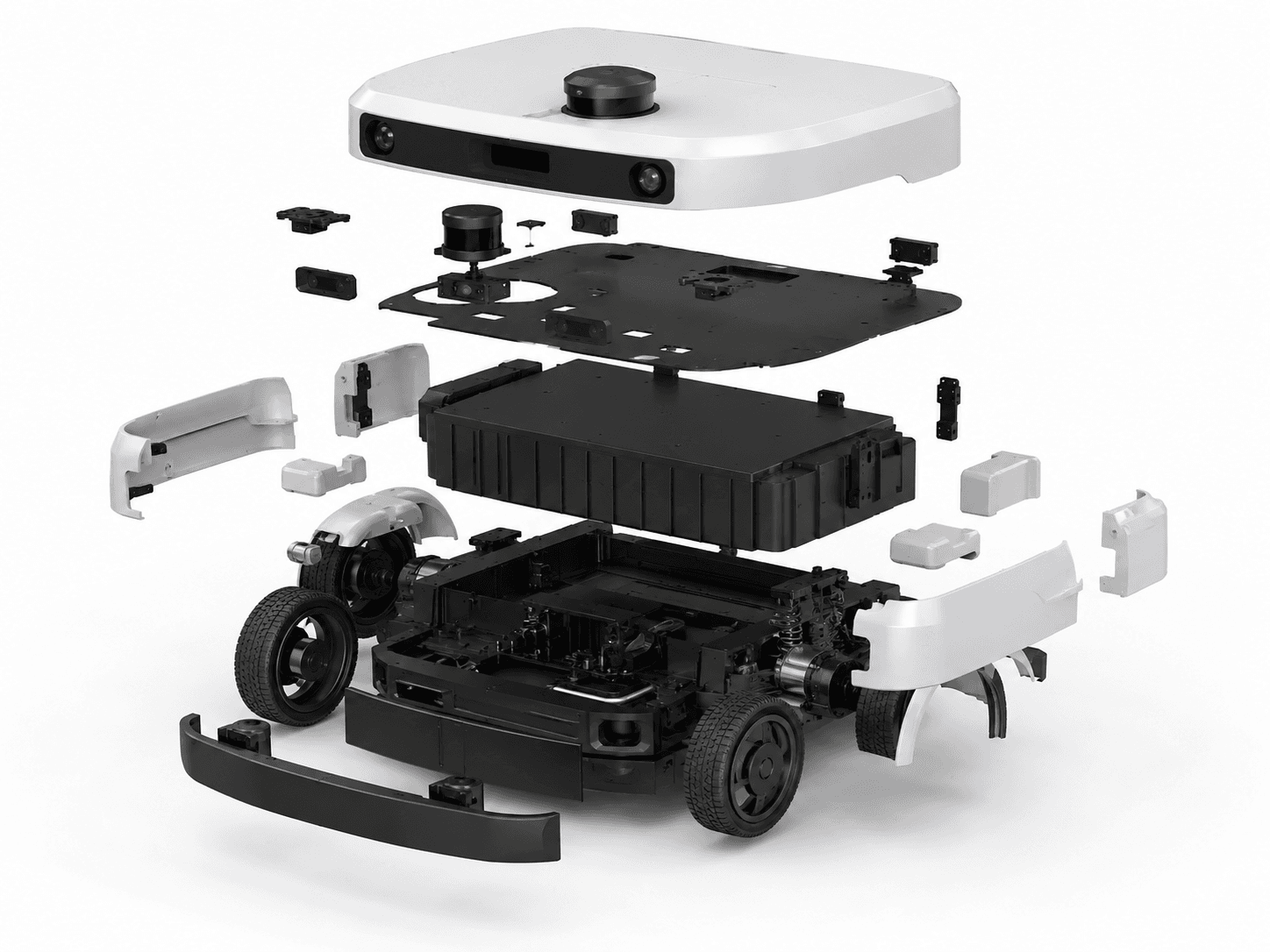
Autonomous Mobile Robots (AMRs) are increasingly used for logistics, warehouse automation and material movement.

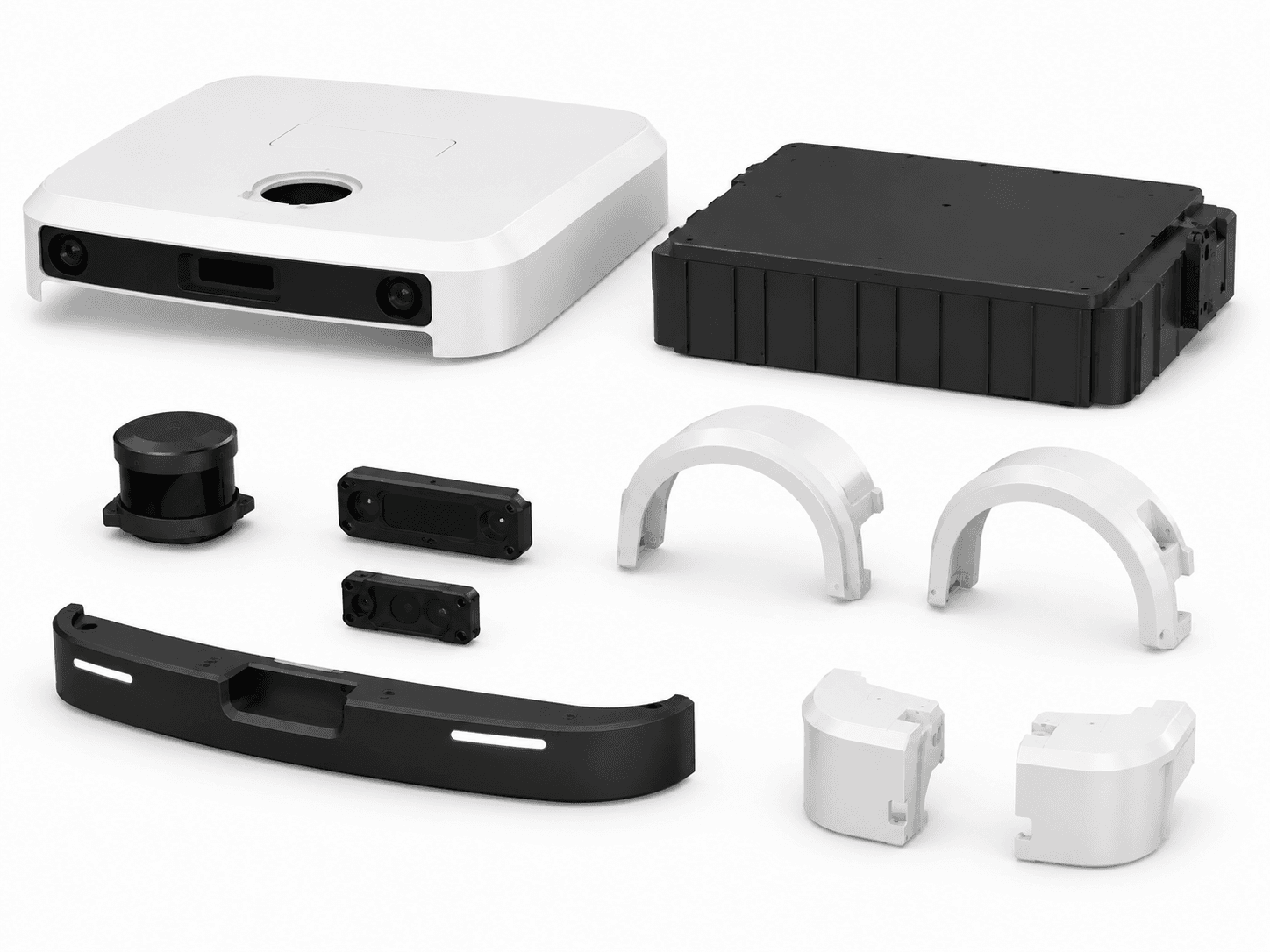
Typical injection molded parts include:

  • Outer body panels
  • Sensor covers
  • Wheel guards
  • Battery housings
  • Control enclosures
  • Handles
  • Cable-management components
  • Bumpers

Large AMR panels need to be lightweight while remaining sufficiently rigid.

Ribs, curved surfaces and reinforced mounting structures can improve stiffness without unnecessarily increasing wall thickness.

Impact-resistant plastics are particularly important because mobile robots may experience accidental collisions during service.

AMR Component Requirements

КомпонентMain Requirement
Outer HousingImpact + appearance
Sensor CoverDimensional precision
Battery CoverStrength + electrical protection
Wheel GuardToughness
BumperImpact absorption
Control HousingElectrical insulation

Start Your Custom Injection Molding Project

Looking for reliable injection molded parts for robotics, automotive, industrial equipment, or other demanding applications? Send us your drawings, 3D files, materials, quantities, and technical requirements. Our engineering team will review your project and provide professional recommendations for part design, tooling, materials, manufacturing feasibility, and cost optimization.

Send Us Your RFQ for a Fast Evaluation

Have a new plastic part, prototype, or injection mold project? Contact us today and share your RFQ, CAD files, specifications, and expected production volume. We can support your project from design and prototyping to mold manufacturing, injection molding, assembly, and final inspection, providing an efficient one-stop manufacturing solution.
Get a Quote

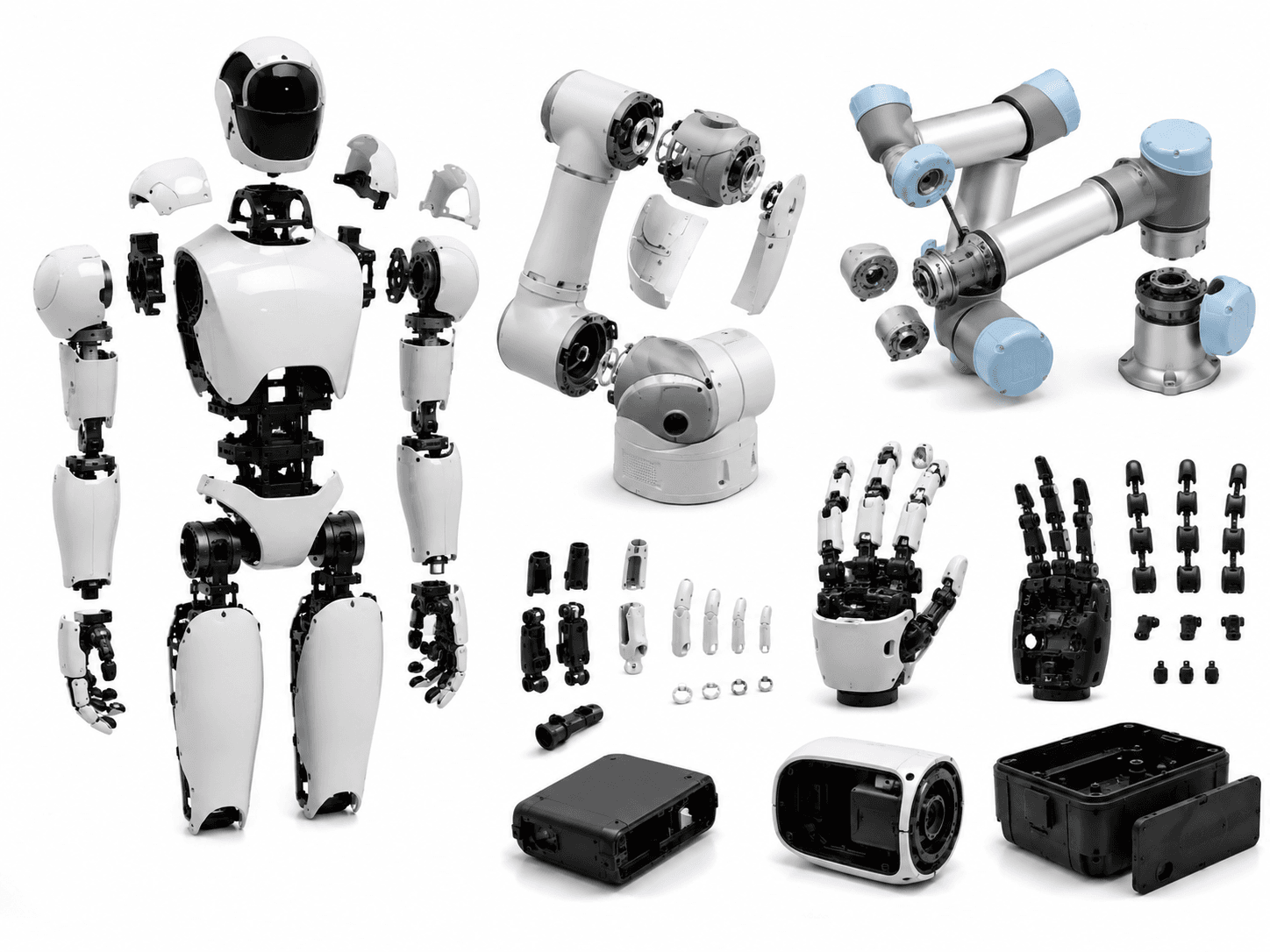
7. Collaborative and Humanoid Robot Plastic Components

Collaborative and humanoid robots place particularly strong emphasis on lightweight construction and external surface design.

Potential injection molded applications include:

  • Arm shells
  • Shoulder covers
  • Joint covers
  • Hand components
  • Finger structures
  • Head housings
  • Electronic enclosures
  • Cable guides
  • Защитные чехлы

Because these robots may operate near people, external housings also need smooth geometry and carefully controlled edges.

High-performance polymers can be used even in demanding robotic structures. For example, SABIC has documented PEI-based components used in surgical robot wrist and arm-base applications where stiffness and precision are important.

8. Cable Management and Protective Components

Robots contain moving power, signal, pneumatic and data cables.

Reliable cable management is essential because repeated bending can create fatigue or interfere with robot movement.

Injection molded components can include:

  • Cable clips
  • Cable guides
  • Strain-relief components
  • Connector housings
  • Protective sleeves
  • Routing brackets

PA and other tough engineering plastics are suitable candidates where repeated flexing and mechanical durability are important.

These parts are often small, making multi-cavity molds practical for higher-volume production.


9. Engineering Plastics for Robot Components

Robot applications require materials with different combinations of stiffness, impact resistance, wear performance and dimensional stability.

МатериалMain AdvantageRobot Application
АБСAppearance + cost efficiencyExterior shells
PC/ABSImpact + dimensional stabilityRobot housings
PA66-GFHigh stiffnessStructural brackets
POMLow friction + wear resistanceGears and bushings
PBTElectrical propertiesConnectors and sensors
PPSHeat and chemical resistanceHigh-performance components
TPU/TPEFlexibilityGrippers and bumpers
PC/ASAWeather resistanceOutdoor robots

Engineering polyamides are available with combinations of mechanical strength, durability and thermal stability suitable for demanding industrial applications.


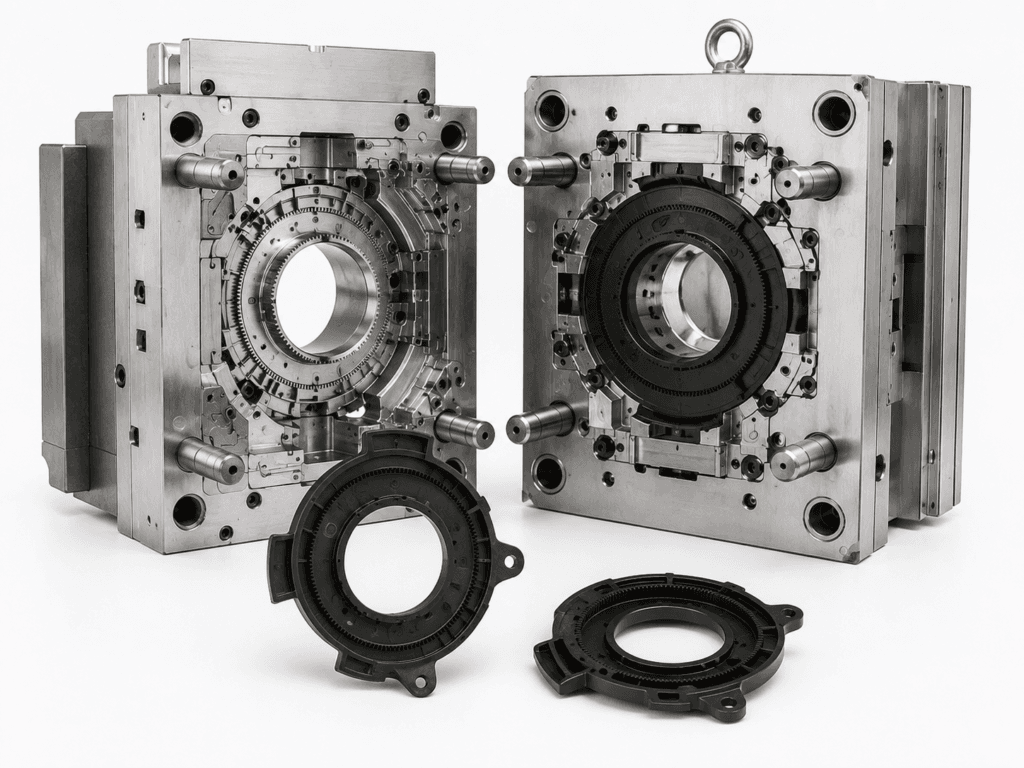
10. Injection Mold Design for Robot Components

Robot components often require tighter dimensional control than conventional consumer housings.

Important tooling considerations include:

Точность размеров

Joint interfaces, sensor positions, bearing seats and gearbox locations may require precise tolerances.

Warpage Control

Long robot-arm covers and large AMR housings can deform if gate location or cooling is poorly designed.

Fiber Orientation

For PA-GF components, fiber orientation can significantly influence shrinkage and dimensional behavior.

Литье с закладными элементами

Metal threaded inserts, shafts and reinforcement pieces can be integrated directly into molded components.

Surface Quality

Visible robot shells may require VDI textures, matte finishes or polished surfaces.

Moldflow can be used to evaluate filling, cooling and warpage before final tooling decisions are made. Autodesk states that Moldflow provides material-flow, cooling and warpage analysis for injection molding.

11. Quality Control and Robot Safety

Robotic components may operate through millions of repeated motion cycles, making dimensional stability and durability critical.

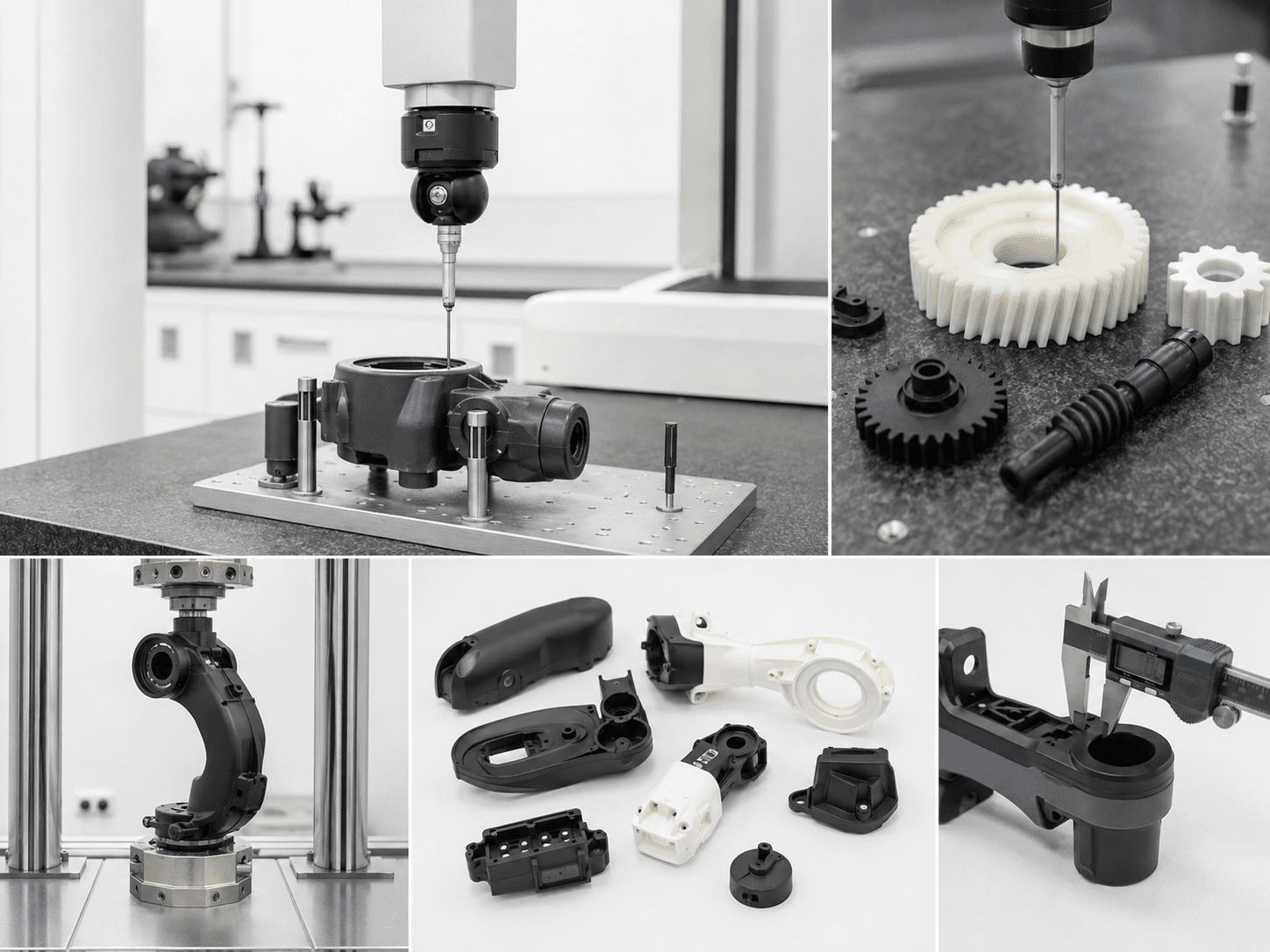
Typical testing methods include:

  • CMM dimensional inspection
  • Gear profile measurement
  • Bearing wear testing
  • Torque testing
  • Fatigue testing
  • Impact testing
  • Assembly verification
  • Thermal cycling
  • Functional life-cycle testing

Industrial robot safety is addressed internationally through ISO 10218. ISO published updated editions of ISO 10218-1 and ISO 10218-2 in 2025, covering industrial robots and industrial robot applications/robot cells respectively.

A plastic component should therefore be evaluated not only for moldability but also for its role in the complete robotic system.

Why Choose Samgo for Robot Injection Molding?

Robot product development requires close cooperation between mechanical design, material engineering, tooling and production.

Samgo supports robotic plastic components from initial engineering review through mass production.

CapabilityПольза для клиента
Product Design SupportOptimize robot structures
Анализ технологичности (DFM)Identify manufacturing risks
Material SelectionBalance weight and performance
Моделирование методом MoldflowControl filling and warpage
Производство прецизионных пресс-формImprove assembly accuracy
Insert / OvermoldingIntegrate multiple materials
Quality InspectionVerify critical dimensions

Applications can include industrial robots, collaborative robots, AMRs, robot grippers, service robots, humanoid robots, sensor systems and custom automation equipment.


Frequently Asked Questions

Why are plastics used in robots?

Engineering plastics can reduce weight, provide electrical insulation, lower friction, reduce noise and integrate complex features into fewer components.

Which plastic is suitable for robot gears?

POM and engineering nylons are common candidates for lower- and medium-load plastic gear applications. Actual suitability depends on torque, speed, temperature, duty cycle and expected service life.

Can structural robot parts be injection molded?

Yes, particularly secondary structural components, brackets, housings and reinforced interfaces. Glass-fiber-reinforced engineering plastics can provide high stiffness, although primary high-load robot structures may still require metal.

Can injection molding be used for humanoid robots?

Yes. Humanoid robots can use molded plastics for exterior shells, hand components, joint covers, electronic housings, cable-management components and selected structural parts.

Conclusion

Injection molded plastics are becoming increasingly important in modern robotics as manufacturers seek lighter, quieter, more compact and more cost-effective mechanical systems.

Applications extend far beyond decorative covers. Engineering plastics can be used for robot arm housings, joint covers, gears, bearings, grippers, sensor enclosures, cable-management systems, AMR body components and increasingly sophisticated service and humanoid robot parts.

Successful robot injection molding requires a different engineering approach from ordinary consumer products. Weight, moving inertia, wear, friction, dimensional precision, sensor alignment, fatigue life and structural stiffness must all be evaluated.

As robot production volumes increase, injection molding becomes particularly attractive because complex functional geometry can be manufactured repeatedly at a lower unit cost than many machining-based processes.

Through DFM analysis, material selection, Moldflow simulation, precision tooling, insert molding, controlled injection molding and dimensional validation, manufacturers can develop high-performance plastic components that support the next generation of industrial, collaborative, mobile and humanoid robots.

Узнать актуальную цену? Мы ответим как можно скорее (в течение 12 часов)

Типы литников для литья пластмасс под давлением: выбор, принципы проектирования, преимущества и области применения

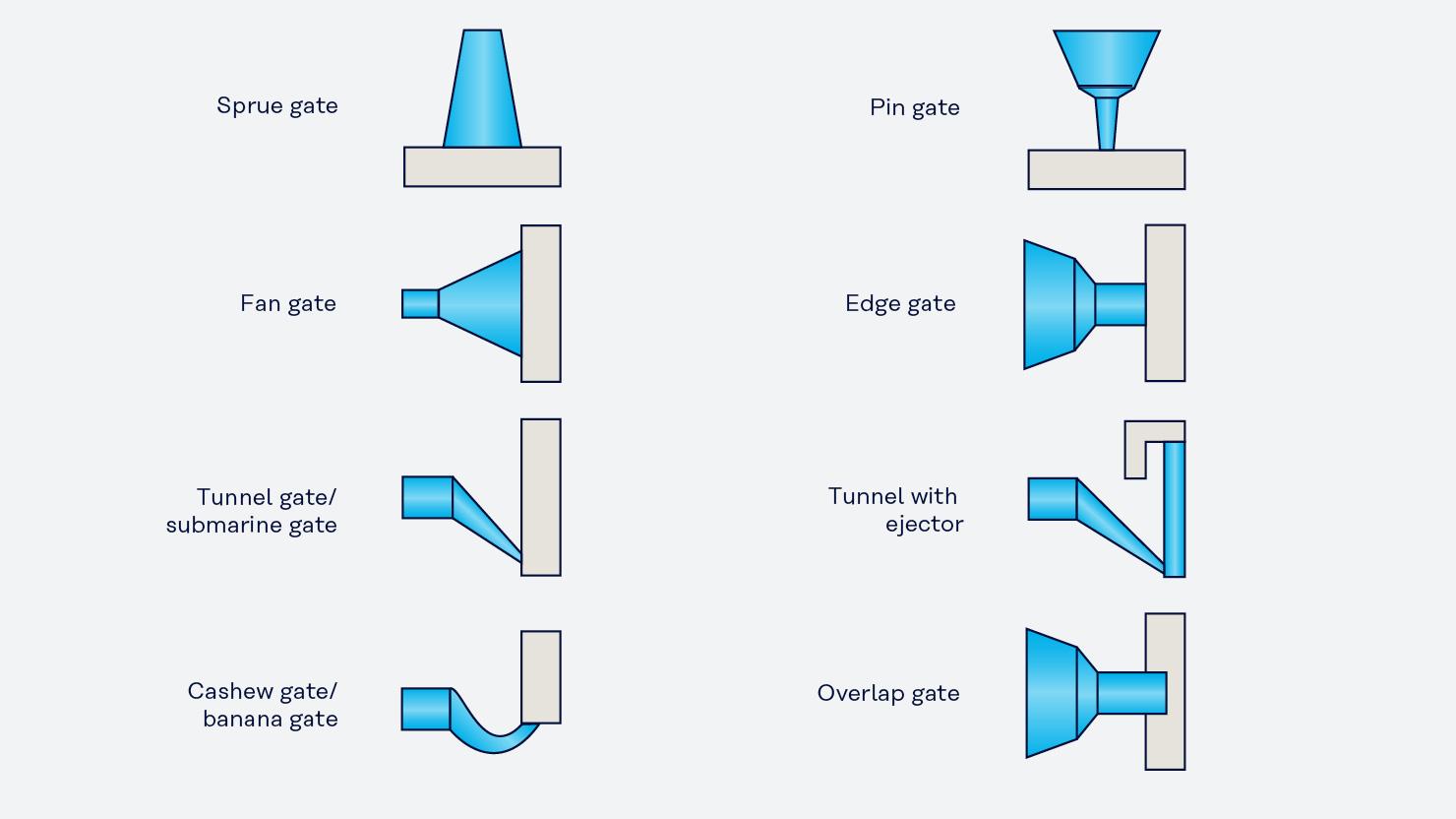
Конструкция впускного литника — один из наиболее критических аспектов проектирования пресс-форм для литья пластмасс под давлением. Несмотря на то, что литник обычно является наименьшим элементом литниковой системы, он оказывает существенное влияние на течь расплава, давление выдержки, эффективность охлаждения, внешний вид детали, время цикла и общее качество продукта.

Плохо спроектированный литник может стать причиной многочисленных дефектов литья, включая недолив, утяжины, линии спая, струйное течение, следы ожогов, избыточный литниковый остаток и коробление детали. И наоборот, выбор подходящего типа и расположения литника помогает обеспечить сбалансированное заполнение, стабильную точность размеров и эффективное производство.
Читать далее »

Материалы из полипропилена (ПП): виды, марки, свойства и применение

Полипропилен (ПП) является одним из самых широко используемых термопластов в мире, на долю которого приходится значительная часть мирового производства пластика. Благодаря прекрасному балансу механических свойств, химической стойкости, легкости и экономической эффективности, ПП стал предпочтительным материалом для бесчисленных изделий, получаемых методом литья под давлением, в автомобильной, бытовой, медицинской, упаковочной, электротехнической и промышленной отраслях.

Современный полипропилен выпускается во множестве различных марок и рецептур. Производители могут выбирать между гомополимером ПП, статичным сополимером ПП, блок-сополимером ПП, армированным стекловолокном ПП, наполненным минералами ПП, огнестойким ПП, УФ-стабилизированным ПП и пищевым ПП в зависимости от требований к изделию.
Читать далее »

Анализ течения расплава при литье под давлением: Полное руководство по симуляции Moldflow для пластиковых деталей

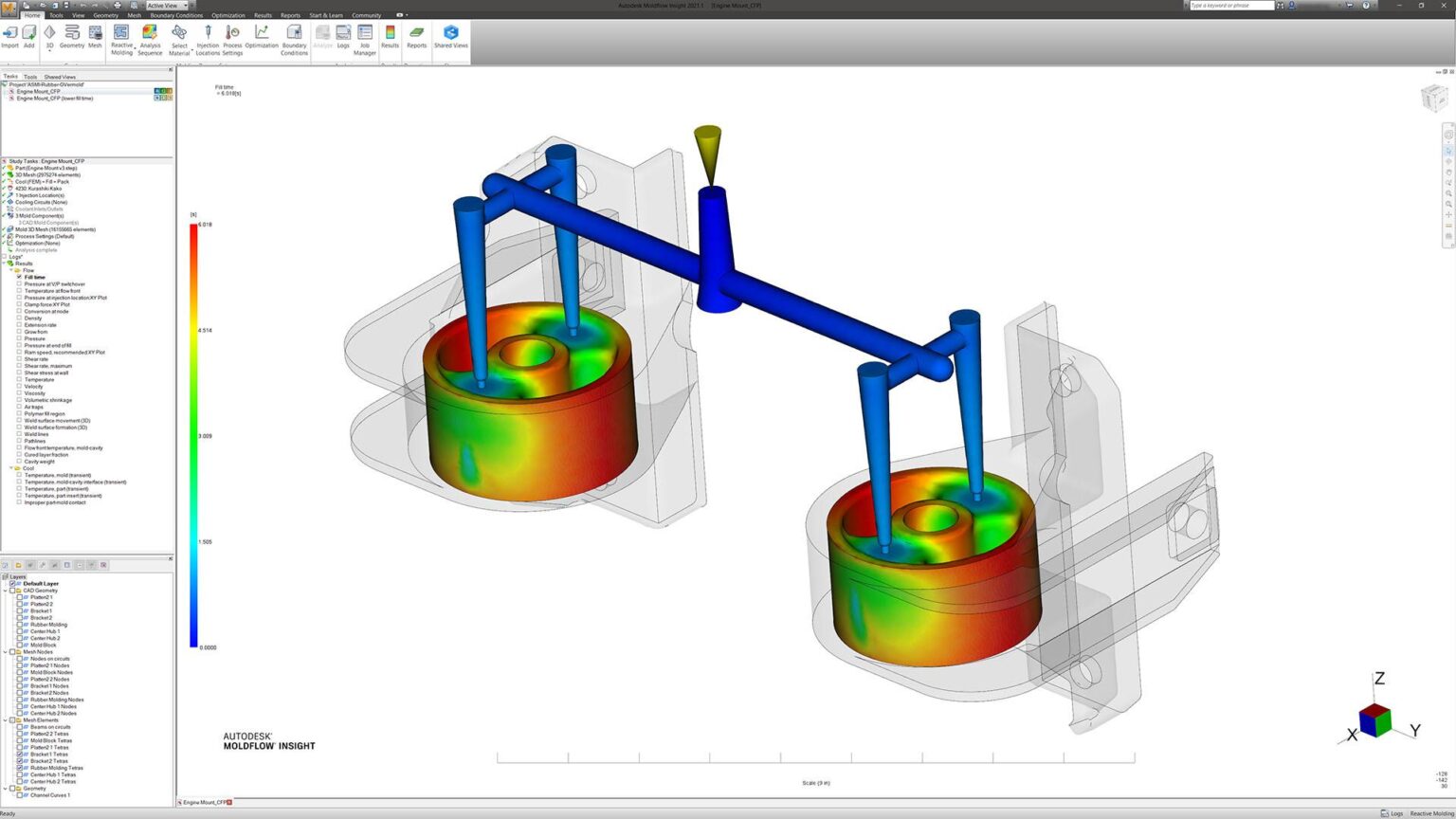
В современной разработке пластиковых изделий производство пресс-форм больше не опирается исключительно на инженерный опыт. Компьютерное проектирование (CAE) стало неотъемлемой частью процесса литья под давлением, позволяя инженерам прогнозировать потенциальные дефекты формования до изготовления пресс-формы. Среди этих технологий анализ течения расплава при литье под давлением, часто называемый анализом Moldflow, является одним из наиболее ценных инженерных инструментов для снижения рисков разработки, сокращения сроков выполнения заказов и повышения качества деталей.
Читать далее »

Конструкция литьевой формы: Полное руководство по компонентам и проектированию пластиковых пресс-форм

Литье пластмасс под давлением является одним из наиболее эффективных производственных процессов для изготовления высококачественных пластиковых деталей с исключительной точностью и повторяемостью. Тем не менее, качество каждого сформованного изделия во многом зависит от конструкции и изготовления самой литьевой формы. Хорошо спроектированная пресс-форма — это гораздо больше, чем просто стальной блок: это сложная механическая система, которая управляет потоком расплавленного пластика, охлаждением, извлечением деталей, точностью размеров и эффективностью производства.

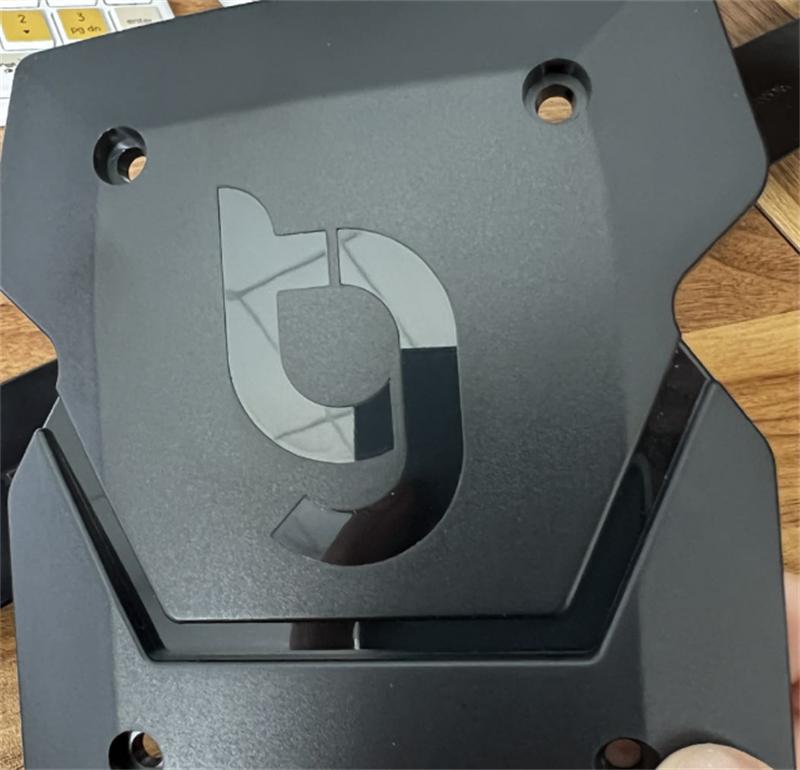
Литьевая форма обычно состоит из десятков или даже сотен прецизионно обработанных компонентов, слаженно работающих на протяжении каждого цикла литья. Каждый компонент имеет определенное назначение: от направления расплавленного пластика в полость формы до извлечения готовой детали без повреждений. Даже незначительные улучшения в конструкции формы могут существенно сократить время цикла, улучшить качество продукции, продлить срок службы формы и снизить производственные затраты.
Читать далее »

Подбор цвета пластика для литья под давлением: Полное руководство по RAL, Pantone, мастербатчам и заказным цветам

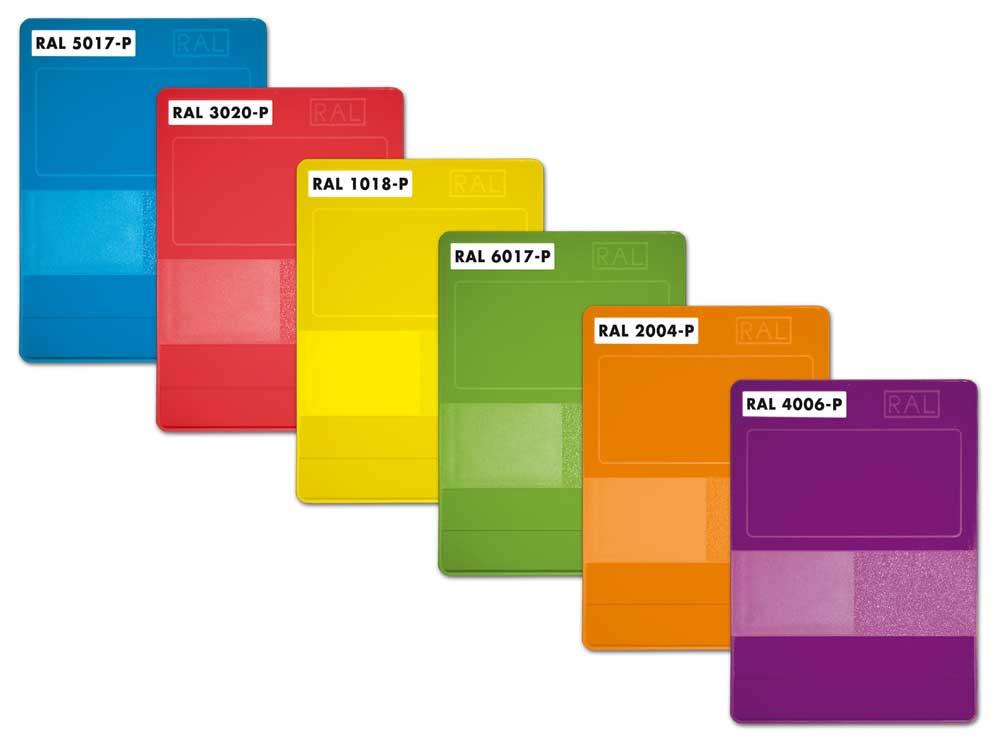
Цвет в литье пластмасс под давлением — это гораздо больше, чем просто эстетическая особенность: он играет важнейшую роль в брендинге продукции, восприятии потребителей, контроле качества и дифференциации на рынке. Независимо от того, производится ли бытовая электроника, автомобильные интерьеры, медицинские приборы, промышленное оборудование или товары для улицы, достижение точного и стабильного подбора цвета имеет решающее значение для успеха продукта.

Читать далее »