
Robot Injection Molding: Plastic Components, Materials, Mold Design, and Manufacturing Solutions
Introduction
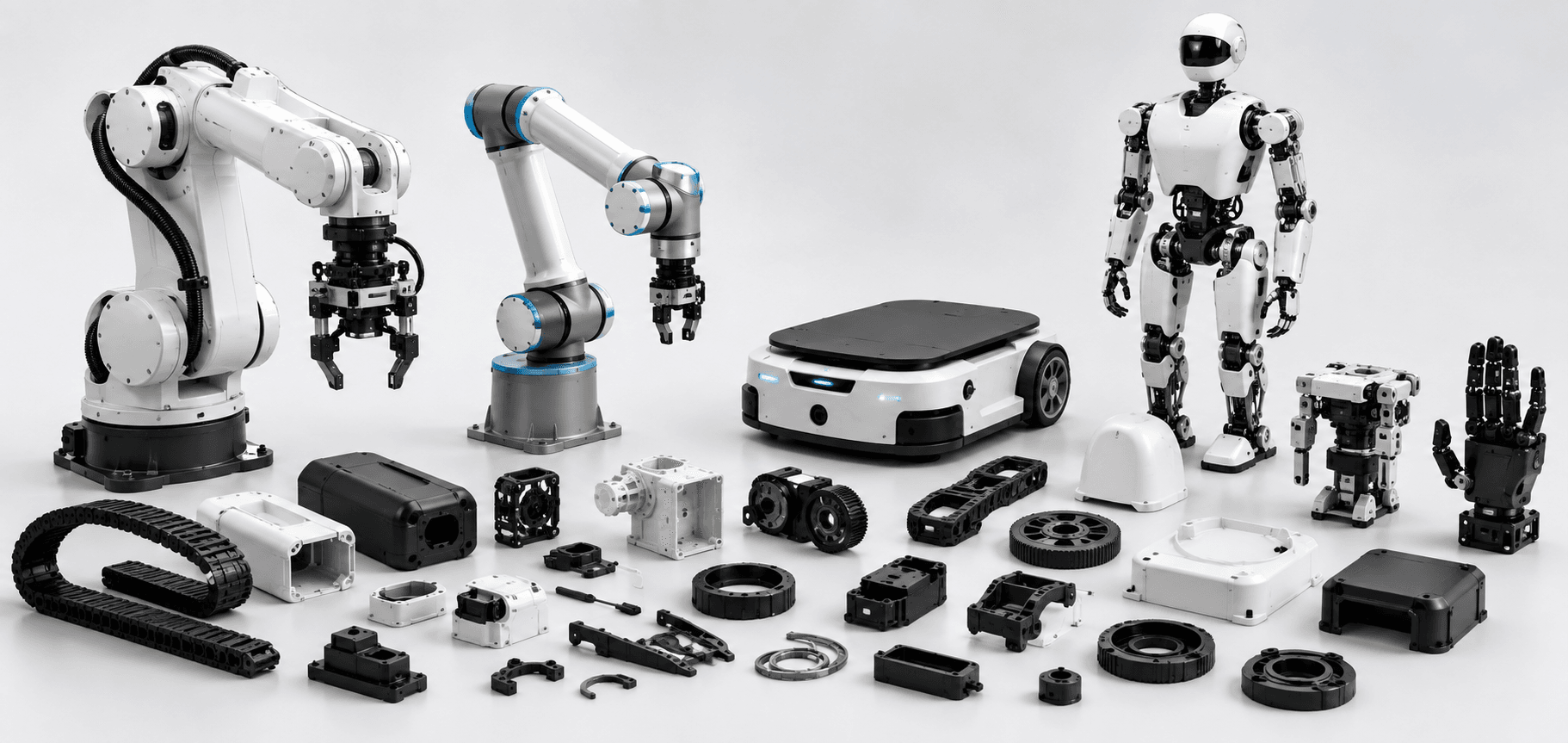
Robotics is rapidly expanding beyond traditional industrial automation into logistics, healthcare, agriculture, inspection, service applications, and increasingly sophisticated humanoid systems. Modern robots combine mechanical structures, electric drives, sensors, cameras, control electronics, batteries, and software into compact machines that must operate accurately and reliably.
Injection molded plastics play an important role in this development.
Robot manufacturers use engineered plastic components to reduce weight, protect electronics, manage cables, reduce friction and noise, improve appearance, electrically isolate components, and integrate complex mechanical features into fewer parts.
Compared with machined metal components, injection molding can integrate ribs, snap fits, bearing seats, cable channels, mounting bosses, sealing grooves, ventilation structures, and cosmetic surfaces into a single component. This is particularly valuable when robot production moves from prototypes into medium- or high-volume manufacturing.
The International Federation of Robotics covers both industrial and service robots, including mobile robots used in professional applications, while major robotics suppliers now offer portfolios spanning industrial robots, collaborative robots and autonomous mobile robots.
This article examines how injection molded plastic parts are used in robotics, which engineering polymers are suitable, and what mold design and quality-control factors should be considered.
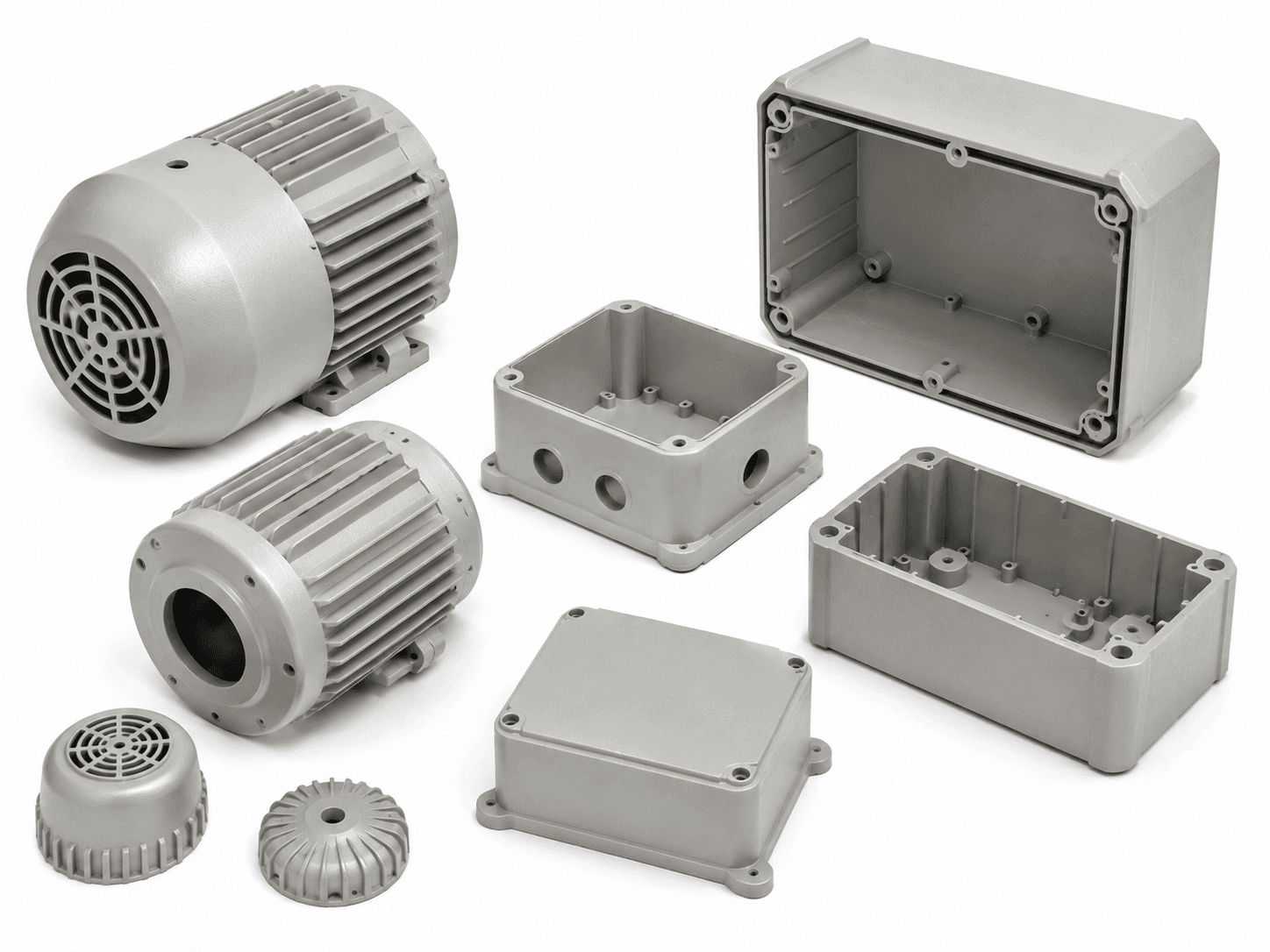
1. Robot Arm Covers and Joint Housings
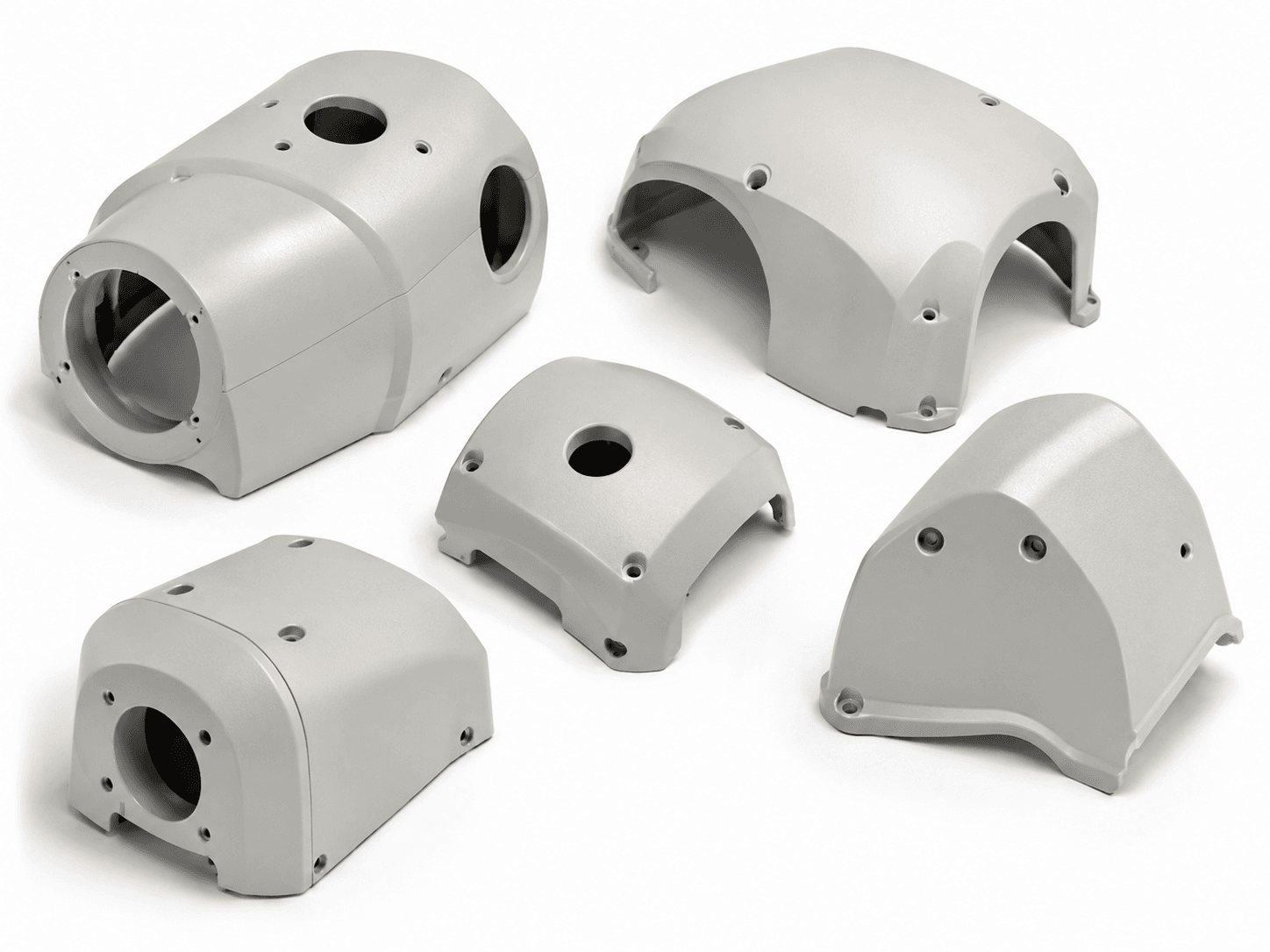
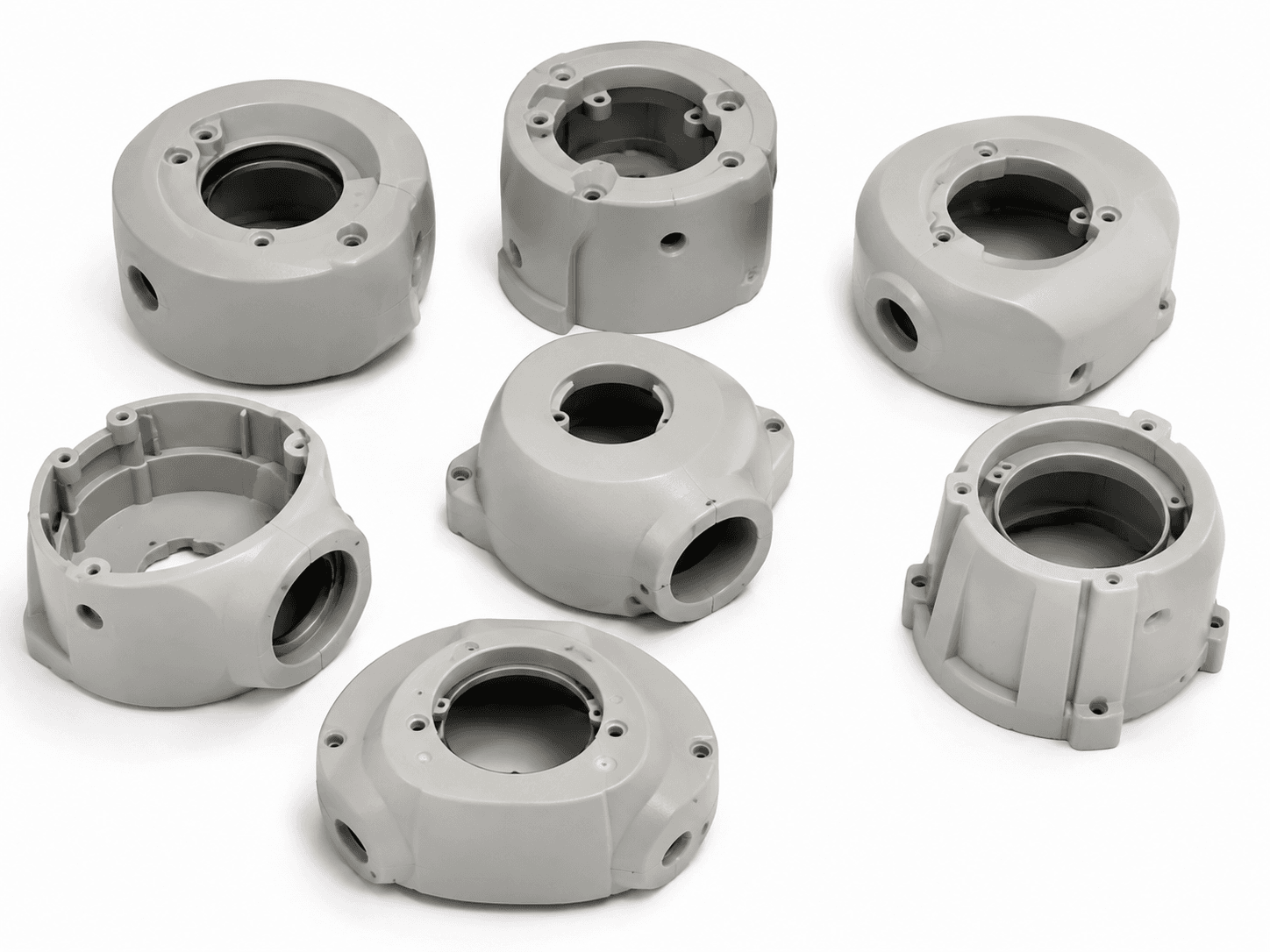
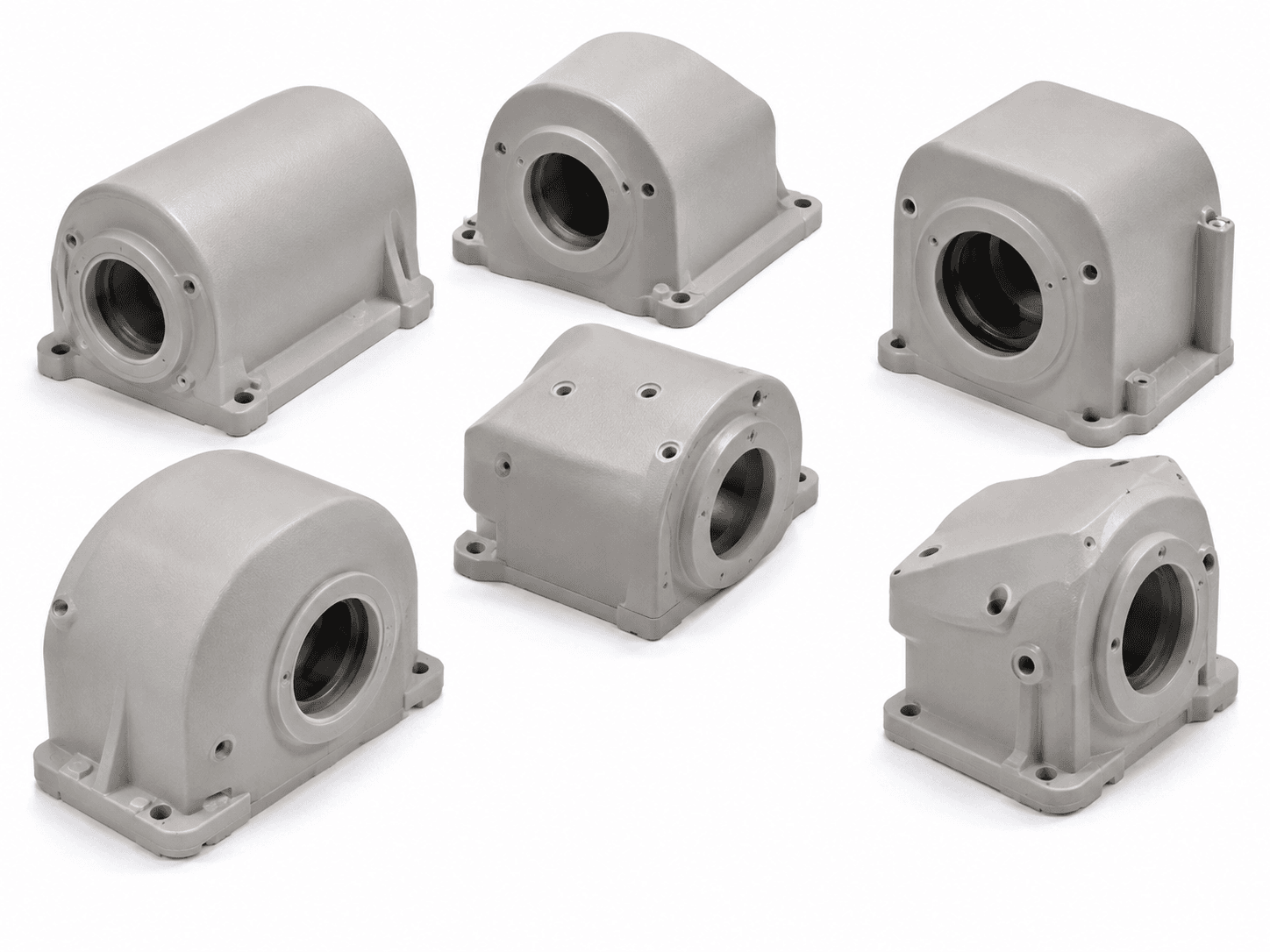
Industrial and collaborative robots contain multiple joints, motors, gearboxes, sensors and cable systems that require protective housings.
Typical injection molded components include:
- Robot arm covers
- Joint covers
- Motor housings
- Gearbox covers
- Base covers
- Electronic control housings
- Decorative exterior shells
Plastic is particularly useful because these covers usually do not need to carry the robot’s primary structural loads.
Reducing housing mass can help decrease the total moving mass of the arm. This is important because excessive weight at moving joints can increase inertia and place additional demands on motors and transmission systems.
Injection molding also enables smooth external surfaces and complex curved geometries that would be more difficult or expensive to manufacture from sheet metal.
Robot Housing Material Examples
| Component | Main Requirement | Potential Material |
|---|---|---|
| Robot Arm Cover | Lightweight + impact resistance | PC/ABS |
| Joint Housing | Dimensional stability | PA-GF |
| Electronics Cover | Electrical insulation | PC/ABS FR |
| Service Robot Shell | Appearance + toughness | ABS |
| Outdoor Robot Housing | Weather resistance | PC/ASA |


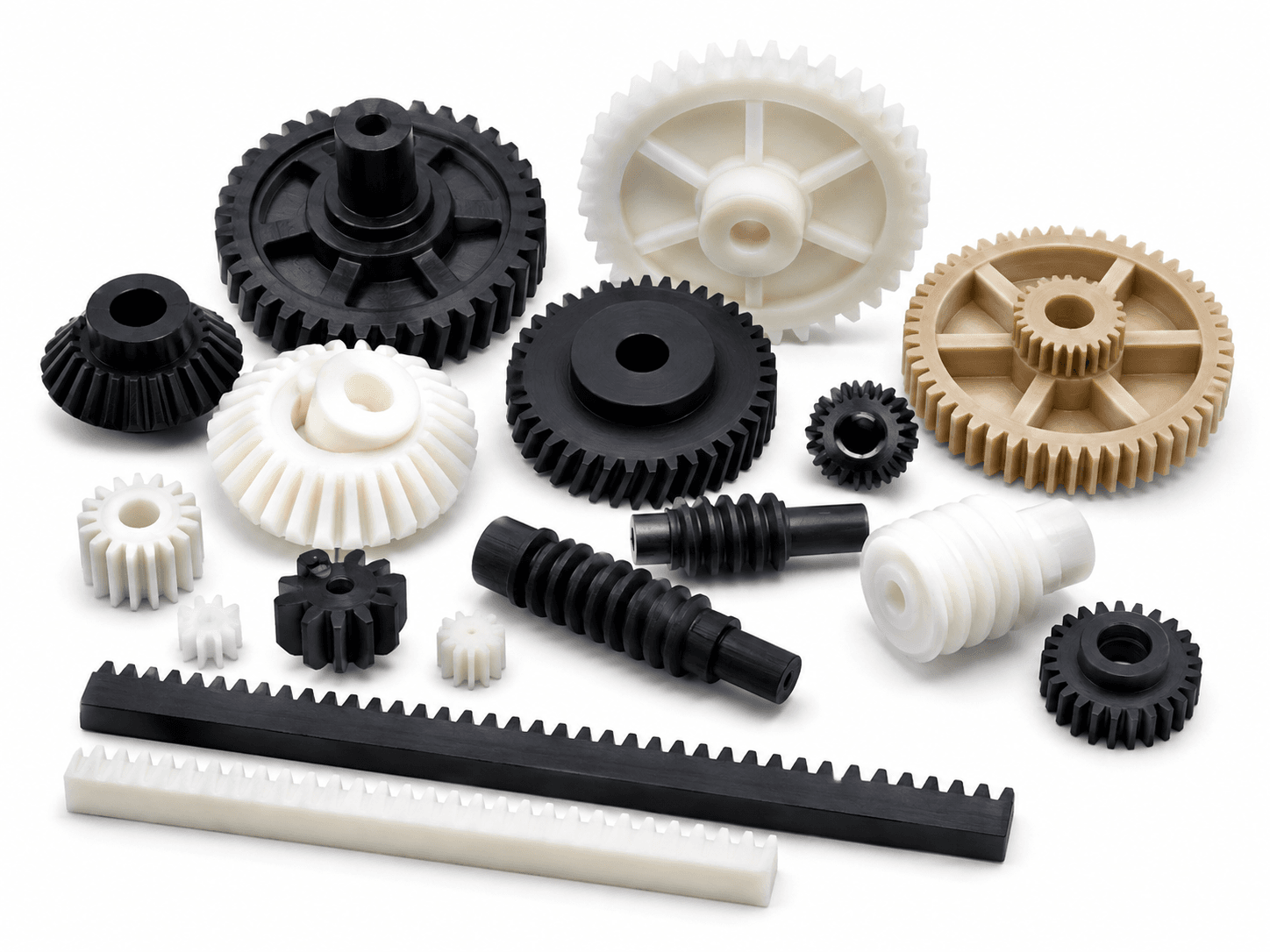
2. Precision Plastic Gears and Transmission Components
Robots rely on highly controlled movement, making gears and transmission systems critical components.
Although high-load robot joints often use metal reducers, plastic gears can be useful in lower-load mechanisms, auxiliary actuators, sensors, grippers and service robots.
Injection molded transmission components can include:
- Spur gears
- Worm gears
- Gear racks
- Small bevel gears
- Encoder gears
- Adjustment mechanisms
- Actuator components
POM is frequently considered for precision mechanical components because of its low friction, dimensional stability and wear characteristics. BASF identifies injection molding as an important processing method for POM and notes its use in sophisticated machine and mechanical components.
Plastic gears can also help reduce operating noise and component weight.

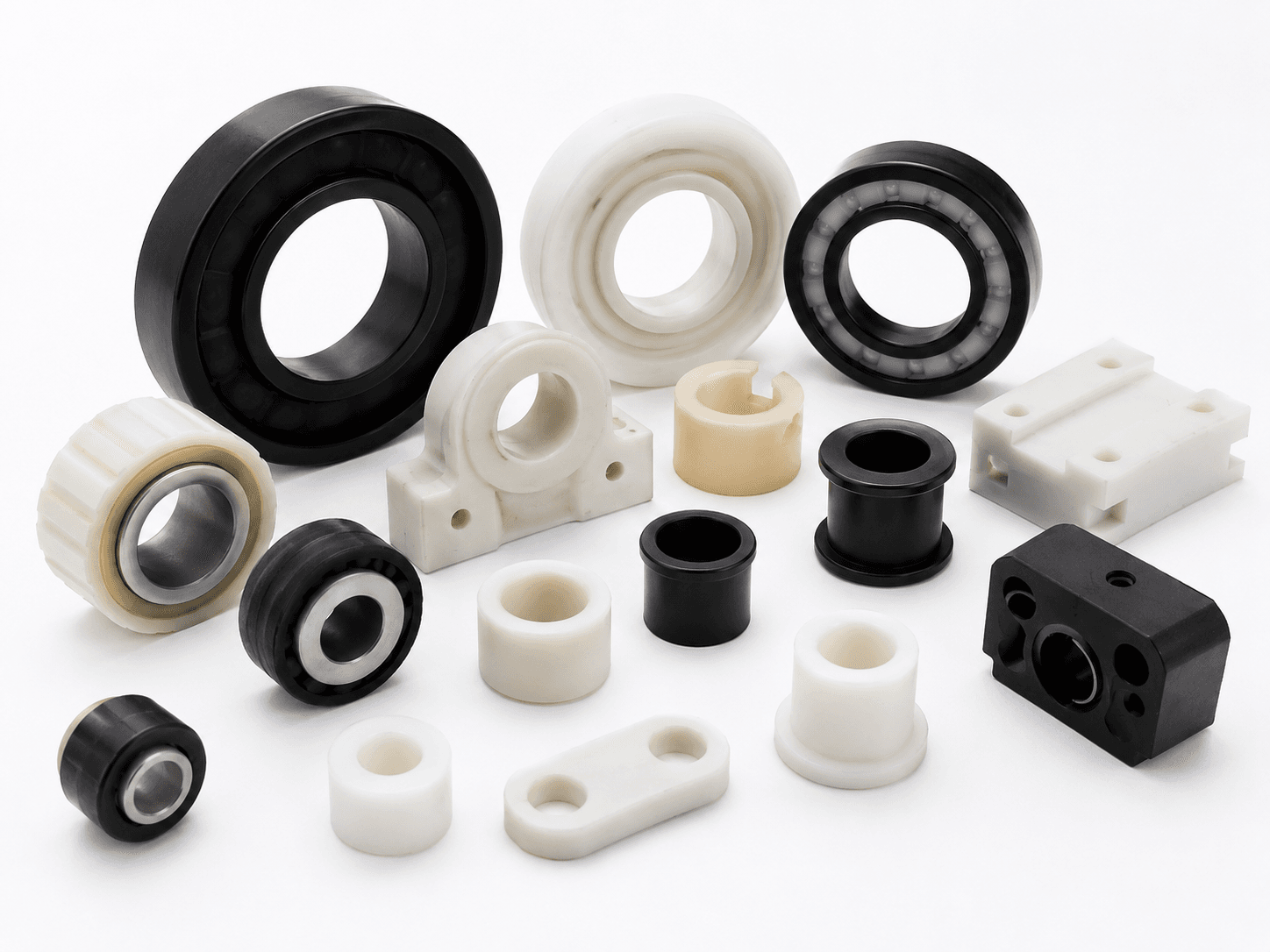
3. Bearings, Bushings, and Low-Friction Components
Robotic joints and mechanisms contain many rotating and sliding interfaces.
Potential injection molded applications include:
- Bushings
- Plain bearings
- Sliding pads
- Guide blocks
- Linear bearing components
- Rollers
- Pivot components
Specialized polymers can reduce friction and, in suitable applications, eliminate the need for external lubrication.
This is attractive for robots operating in environments where grease contamination should be minimized or maintenance access is difficult.
Polymer bearing technology is already being used in robotic applications. For example, polymer plain bearings have been applied in autonomous logistics robots and robotic gripper systems.
Bearing Design Considerations
| Factor | Engineering Importance |
| Load | Controls bearing pressure |
| Speed | Influences friction and heat |
| Shaft Material | Affects wear behavior |
| Temperature | Changes polymer performance |
| Duty Cycle | Determines expected life |
| Lubrication | Influences material selection |

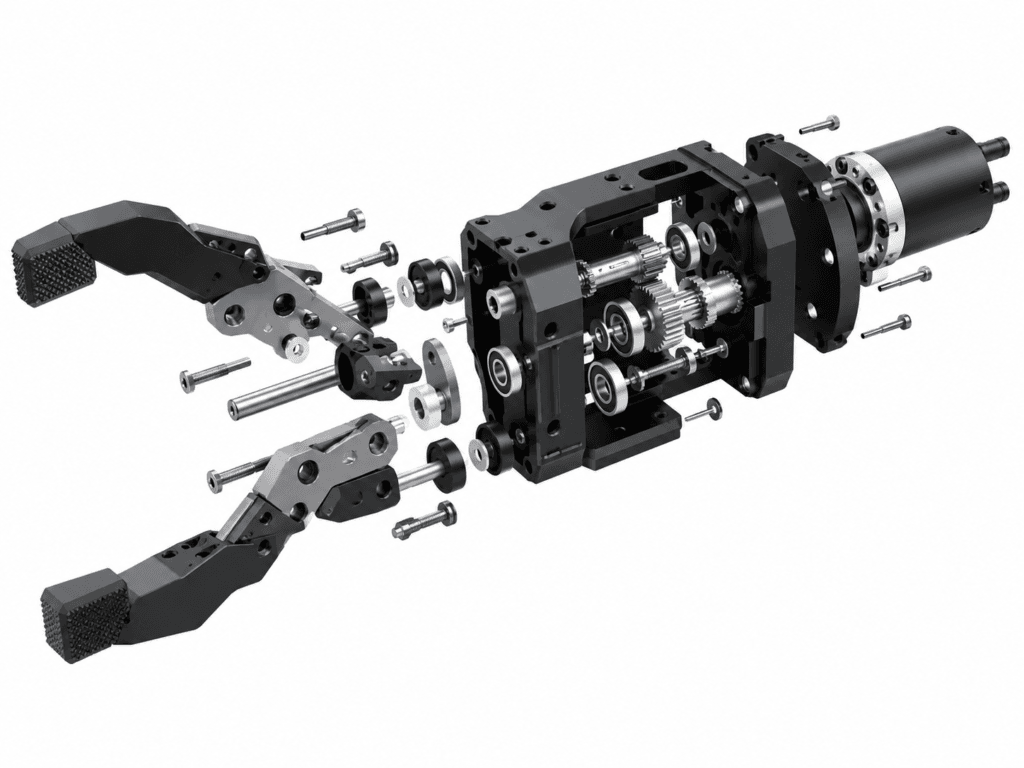
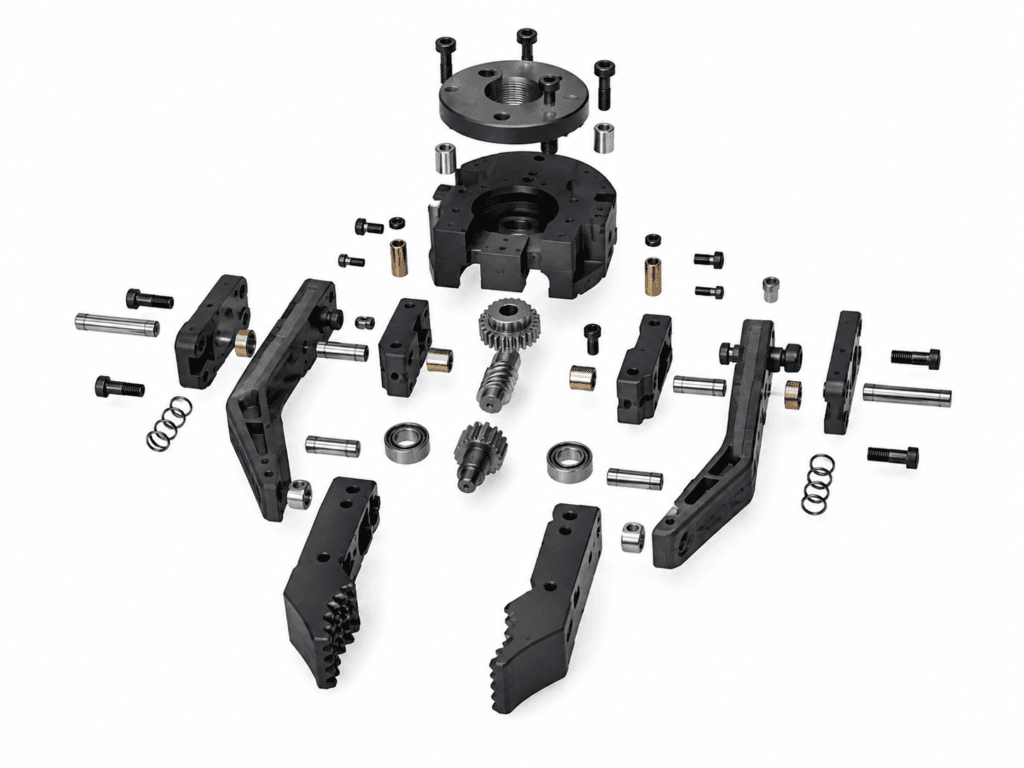
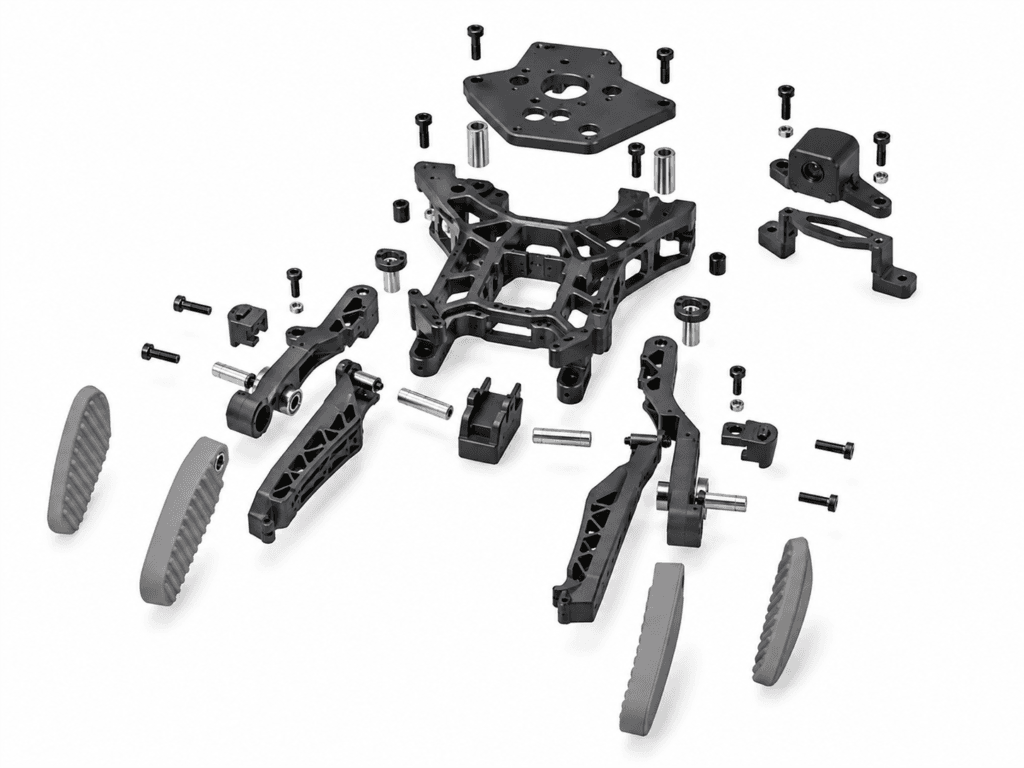
4. Robotic Grippers and End Effectors
End effectors are one of the most promising areas for engineering plastics because weight at the end of a robot arm has a strong influence on payload and motion performance.
Injection molded components can be used in:
- Parallel grippers
- Finger grippers
- Vacuum gripper structures
- Soft gripping systems
- Tool-change housings
- Sensor brackets
- Protective pads
Reducing end-effector weight allows more of the robot’s rated payload to be used for the actual workpiece.
Plastic components can also reduce the risk of scratching delicate products.
Robotic grippers using self-lubricating polymer components are already commercially demonstrated, including plastic finger-gripper systems for collaborative robots.
TPE or TPU can also be overmolded onto rigid gripper fingers to create softer contact surfaces.


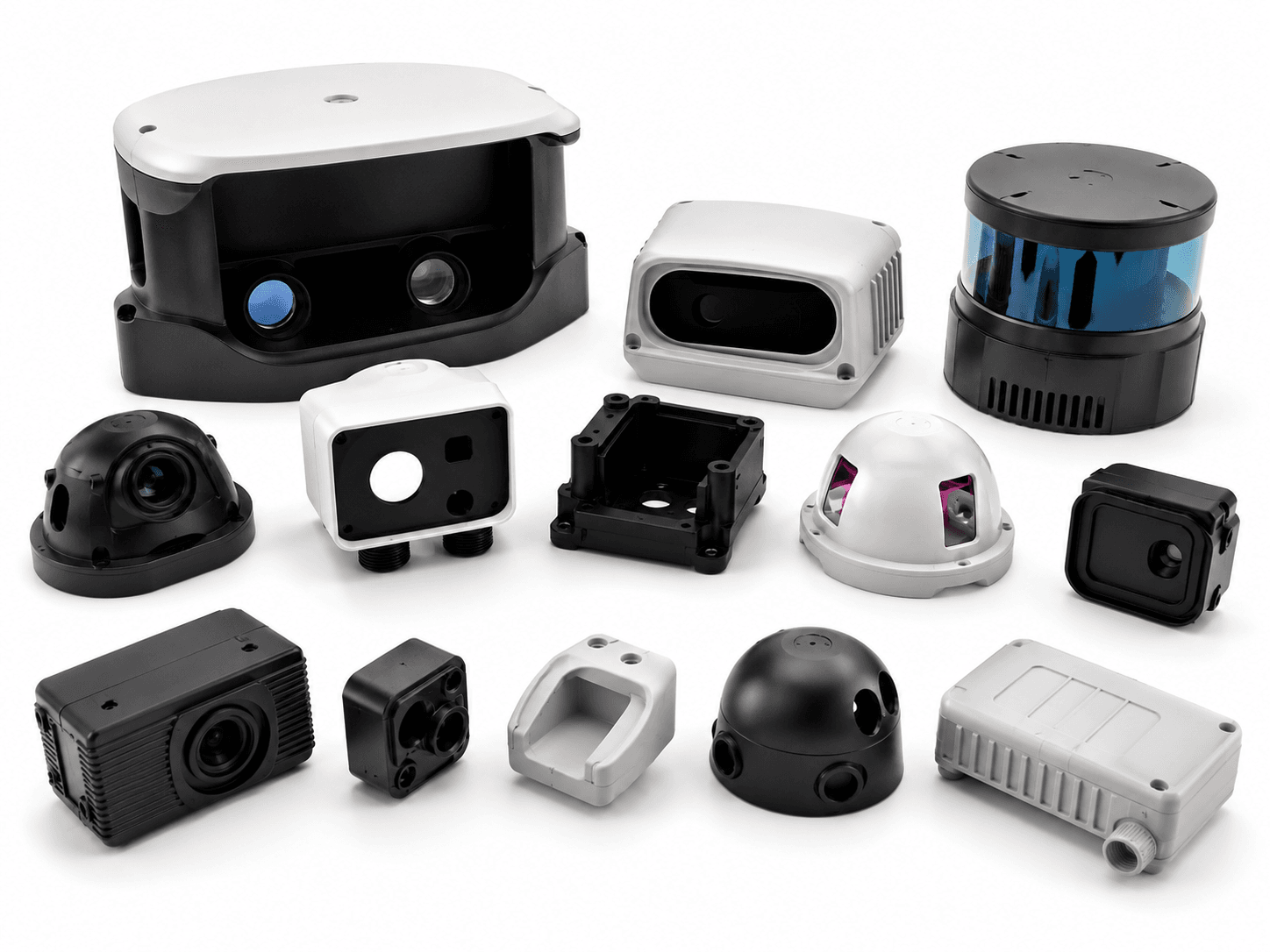
5. Sensor, Camera, and LiDAR Housings
Modern robots depend heavily on machine vision and environmental sensing.
Injection molding is widely suitable for housings around:
- Cameras
- LiDAR sensors
- Ultrasonic sensors
- Proximity sensors
- Force sensors
- Encoders
- IMUs
- Safety sensors
These housings may require tight dimensional tolerances because sensor alignment can directly influence system performance.
Important design features can include:
- Precise mounting datums
- Optical openings
- PCB bosses
- Cable routing
- Gasket grooves
- Snap-fit assembly
- EMI shielding provisions
Transparent PC may be considered for some protective windows, while ABS, PC/ABS, PBT and reinforced engineering plastics can be used for structural housings depending on the application.

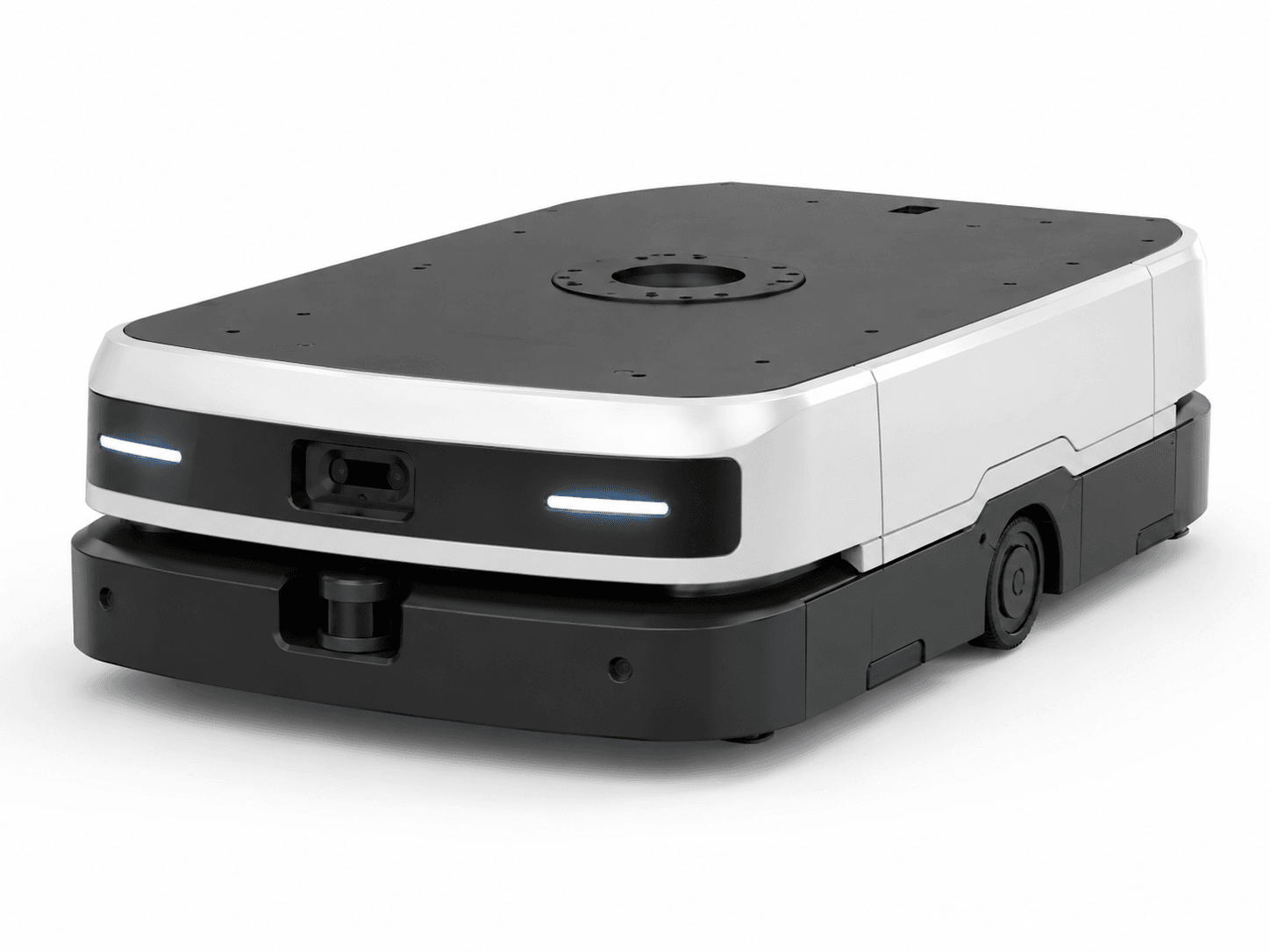
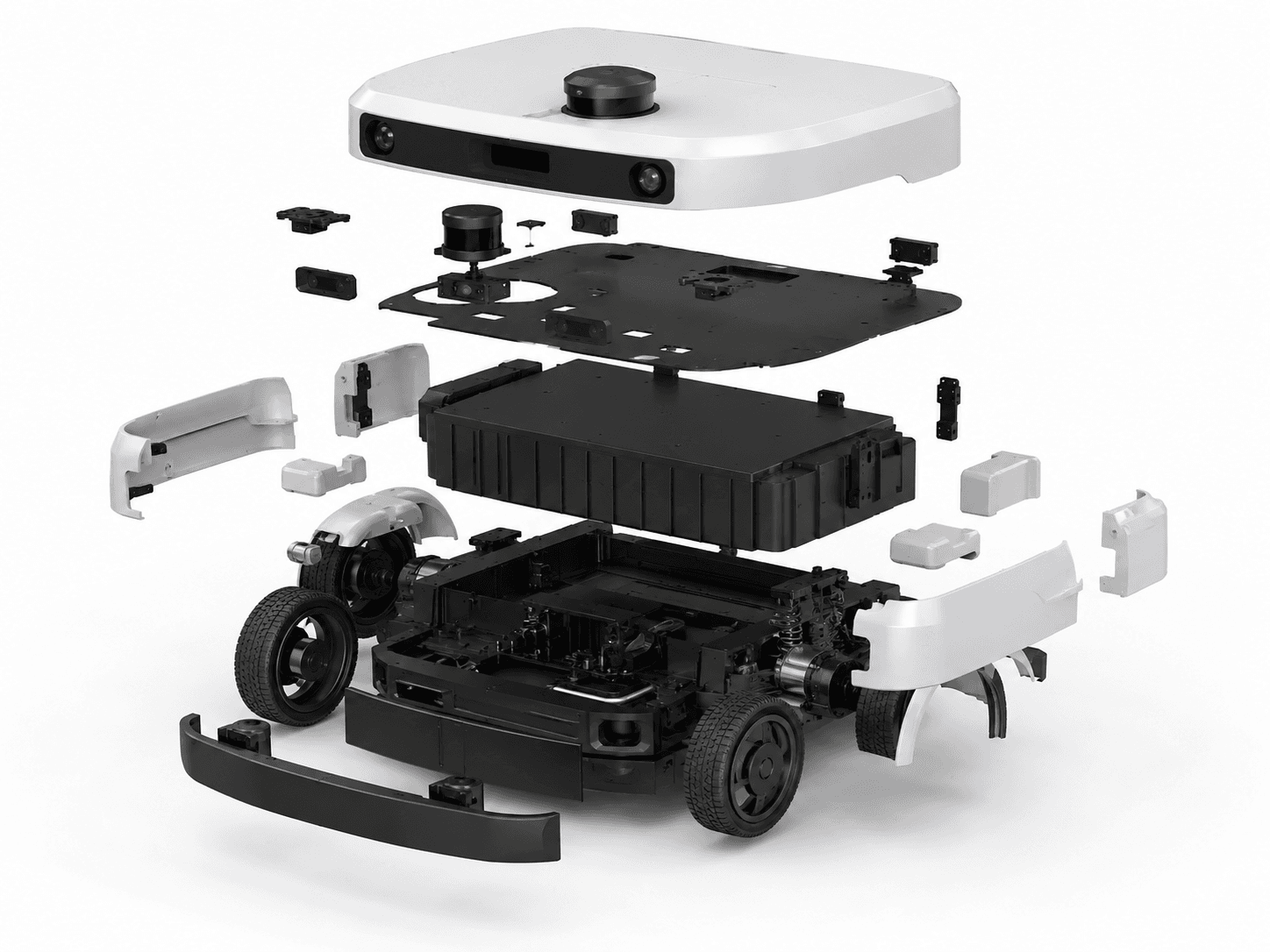
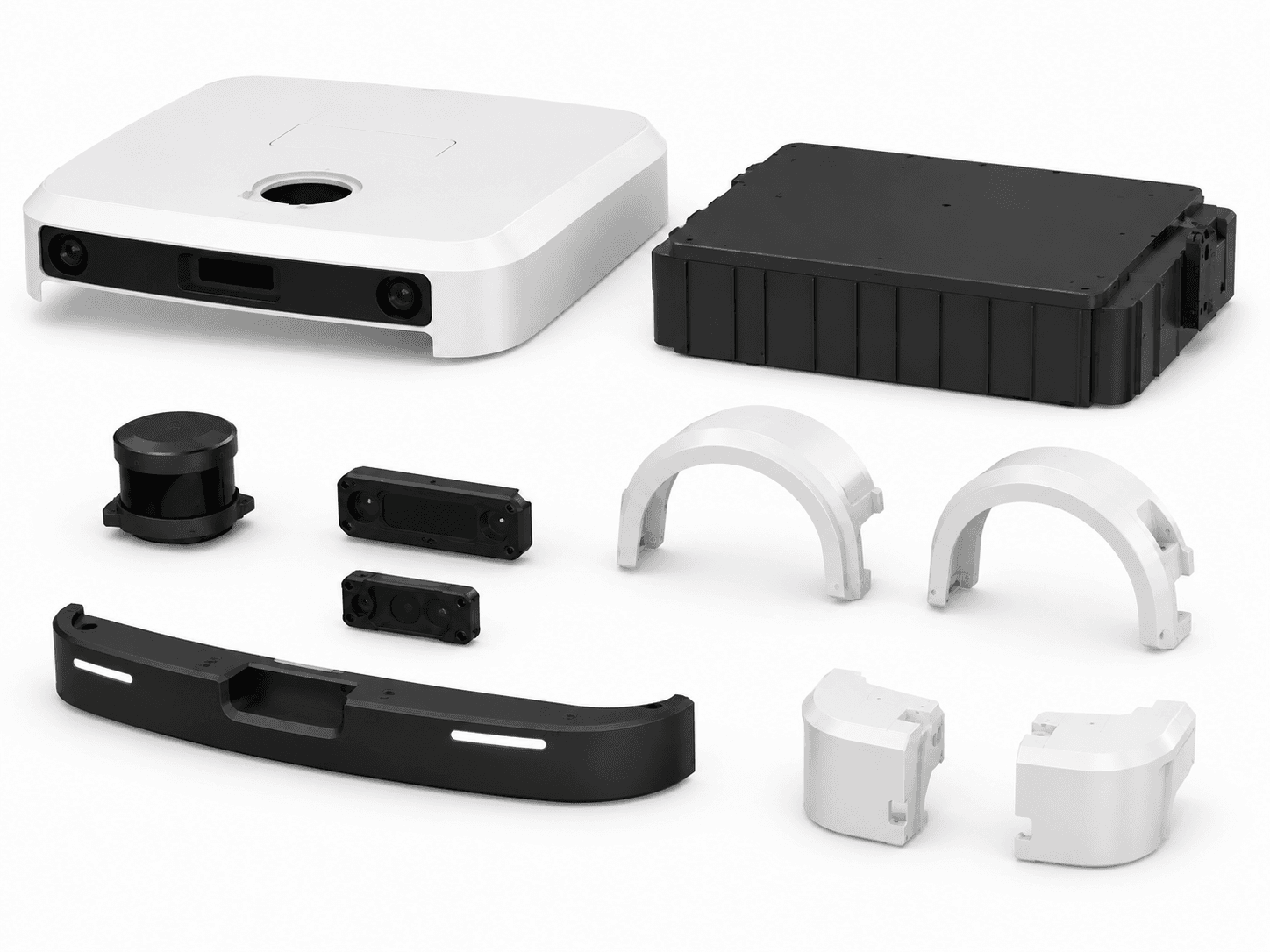
6. Autonomous Mobile Robot Components
Autonomous Mobile Robots (AMRs) are increasingly used for logistics, warehouse automation and material movement.
Typical injection molded parts include:
- Outer body panels
- Sensor covers
- Wheel guards
- Battery housings
- Control enclosures
- Handles
- Cable-management components
- Bumpers
Large AMR panels need to be lightweight while remaining sufficiently rigid.
Ribs, curved surfaces and reinforced mounting structures can improve stiffness without unnecessarily increasing wall thickness.
Impact-resistant plastics are particularly important because mobile robots may experience accidental collisions during service.
AMR Component Requirements
| Component | Main Requirement |
| Outer Housing | Impact + appearance |
| Sensor Cover | Dimensional precision |
| Battery Cover | Strength + electrical protection |
| Wheel Guard | Toughness |
| Bumper | Impact absorption |
| Control Housing | Electrical insulation |


Start Your Custom Injection Molding Project
Send Us Your RFQ for a Fast Evaluation
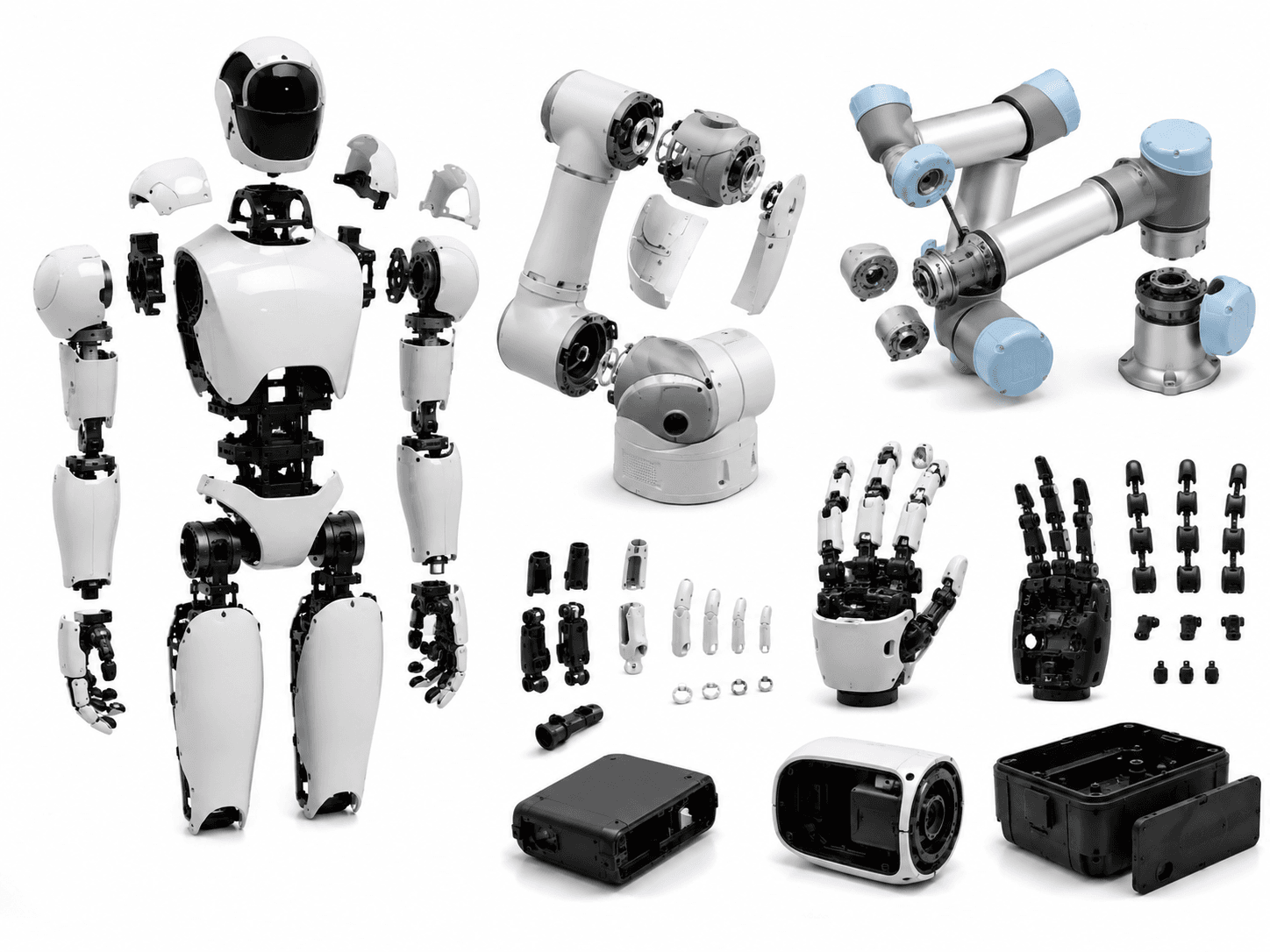
7. Collaborative and Humanoid Robot Plastic Components
Collaborative and humanoid robots place particularly strong emphasis on lightweight construction and external surface design.
Potential injection molded applications include:
- Arm shells
- Shoulder covers
- Joint covers
- Hand components
- Finger structures
- Head housings
- Electronic enclosures
- Cable guides
- Protective covers
Because these robots may operate near people, external housings also need smooth geometry and carefully controlled edges.
High-performance polymers can be used even in demanding robotic structures. For example, SABIC has documented PEI-based components used in surgical robot wrist and arm-base applications where stiffness and precision are important.

8. Cable Management and Protective Components
Robots contain moving power, signal, pneumatic and data cables.
Reliable cable management is essential because repeated bending can create fatigue or interfere with robot movement.
Injection molded components can include:
- Cable clips
- Cable guides
- Strain-relief components
- Connector housings
- Protective sleeves
- Routing brackets
PA and other tough engineering plastics are suitable candidates where repeated flexing and mechanical durability are important.
These parts are often small, making multi-cavity molds practical for higher-volume production.
9. Engineering Plastics for Robot Components
Robot applications require materials with different combinations of stiffness, impact resistance, wear performance and dimensional stability.
| Material | Main Advantage | Robot Application |
| ABS | Appearance + cost efficiency | Exterior shells |
| PC/ABS | Impact + dimensional stability | Robot housings |
| PA66-GF | High stiffness | Structural brackets |
| POM | Low friction + wear resistance | Gears and bushings |
| PBT | Electrical properties | Connectors and sensors |
| PPS | Heat and chemical resistance | High-performance components |
| TPU/TPE | Flexibility | Grippers and bumpers |
| PC/ASA | Weather resistance | Outdoor robots |
Engineering polyamides are available with combinations of mechanical strength, durability and thermal stability suitable for demanding industrial applications.
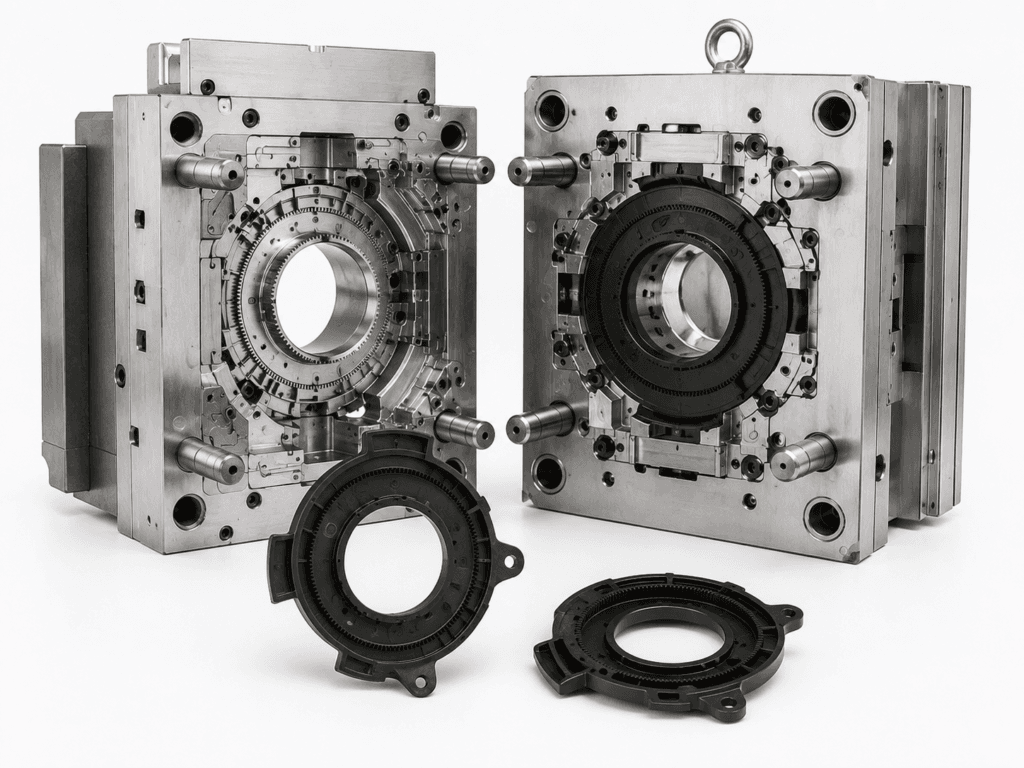
10. Injection Mold Design for Robot Components
Robot components often require tighter dimensional control than conventional consumer housings.
Important tooling considerations include:
Dimensional Accuracy
Joint interfaces, sensor positions, bearing seats and gearbox locations may require precise tolerances.
Warpage Control
Long robot-arm covers and large AMR housings can deform if gate location or cooling is poorly designed.
Fiber Orientation
For PA-GF components, fiber orientation can significantly influence shrinkage and dimensional behavior.
Insert Molding
Metal threaded inserts, shafts and reinforcement pieces can be integrated directly into molded components.
Surface Quality
Visible robot shells may require VDI textures, matte finishes or polished surfaces.
Moldflow can be used to evaluate filling, cooling and warpage before final tooling decisions are made. Autodesk states that Moldflow provides material-flow, cooling and warpage analysis for injection molding.

11. Quality Control and Robot Safety
Robotic components may operate through millions of repeated motion cycles, making dimensional stability and durability critical.
Typical testing methods include:
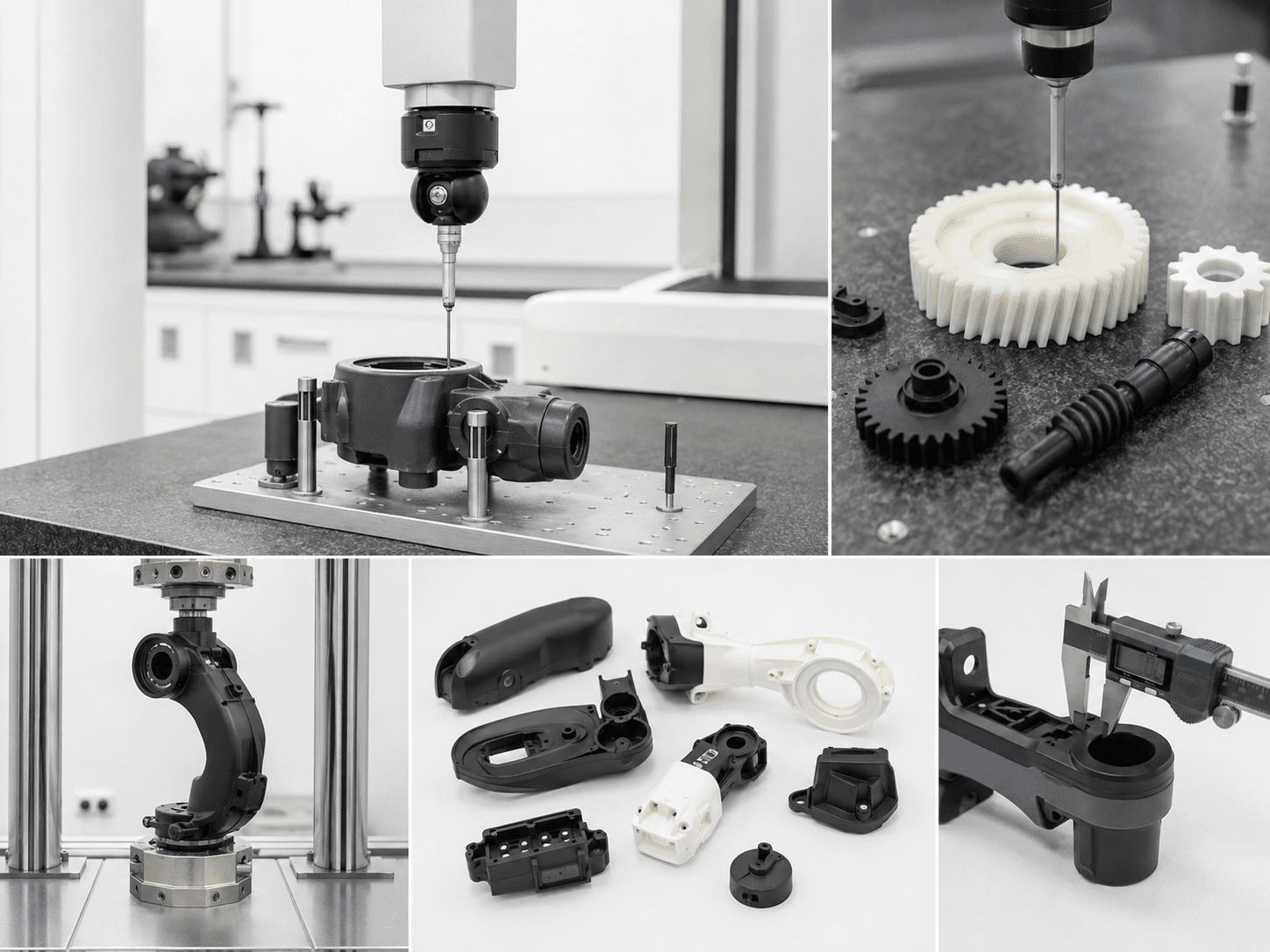
- CMM dimensional inspection
- Gear profile measurement
- Bearing wear testing
- Torque testing
- Fatigue testing
- Impact testing
- Assembly verification
- Thermal cycling
- Functional life-cycle testing
Industrial robot safety is addressed internationally through ISO 10218. ISO published updated editions of ISO 10218-1 and ISO 10218-2 in 2025, covering industrial robots and industrial robot applications/robot cells respectively.
A plastic component should therefore be evaluated not only for moldability but also for its role in the complete robotic system.

Why Choose Samgo for Robot Injection Molding?
Robot product development requires close cooperation between mechanical design, material engineering, tooling and production.
Samgo supports robotic plastic components from initial engineering review through mass production.
| Capability | Customer Benefit |
| Product Design Support | Optimize robot structures |
| DFM Analysis | Identify manufacturing risks |
| Material Selection | Balance weight and performance |
| Moldflow Simulation | Control filling and warpage |
| Precision Mold Manufacturing | Improve assembly accuracy |
| Insert / Overmolding | Integrate multiple materials |
| Quality Inspection | Verify critical dimensions |
Applications can include industrial robots, collaborative robots, AMRs, robot grippers, service robots, humanoid robots, sensor systems and custom automation equipment.
Frequently Asked Questions
Why are plastics used in robots?
Engineering plastics can reduce weight, provide electrical insulation, lower friction, reduce noise and integrate complex features into fewer components.
Which plastic is suitable for robot gears?
POM and engineering nylons are common candidates for lower- and medium-load plastic gear applications. Actual suitability depends on torque, speed, temperature, duty cycle and expected service life.
Can structural robot parts be injection molded?
Yes, particularly secondary structural components, brackets, housings and reinforced interfaces. Glass-fiber-reinforced engineering plastics can provide high stiffness, although primary high-load robot structures may still require metal.
Can injection molding be used for humanoid robots?
Yes. Humanoid robots can use molded plastics for exterior shells, hand components, joint covers, electronic housings, cable-management components and selected structural parts.
Conclusion
Injection molded plastics are becoming increasingly important in modern robotics as manufacturers seek lighter, quieter, more compact and more cost-effective mechanical systems.
Applications extend far beyond decorative covers. Engineering plastics can be used for robot arm housings, joint covers, gears, bearings, grippers, sensor enclosures, cable-management systems, AMR body components and increasingly sophisticated service and humanoid robot parts.
Successful robot injection molding requires a different engineering approach from ordinary consumer products. Weight, moving inertia, wear, friction, dimensional precision, sensor alignment, fatigue life and structural stiffness must all be evaluated.
As robot production volumes increase, injection molding becomes particularly attractive because complex functional geometry can be manufactured repeatedly at a lower unit cost than many machining-based processes.
Through DFM analysis, material selection, Moldflow simulation, precision tooling, insert molding, controlled injection molding and dimensional validation, manufacturers can develop high-performance plastic components that support the next generation of industrial, collaborative, mobile and humanoid robots.
Get the latest price? We will reply as soon as possible (within 12 hours)

Plastic Injection Molding Gate Types: Selection, Design Principles, Advantages, and Applications
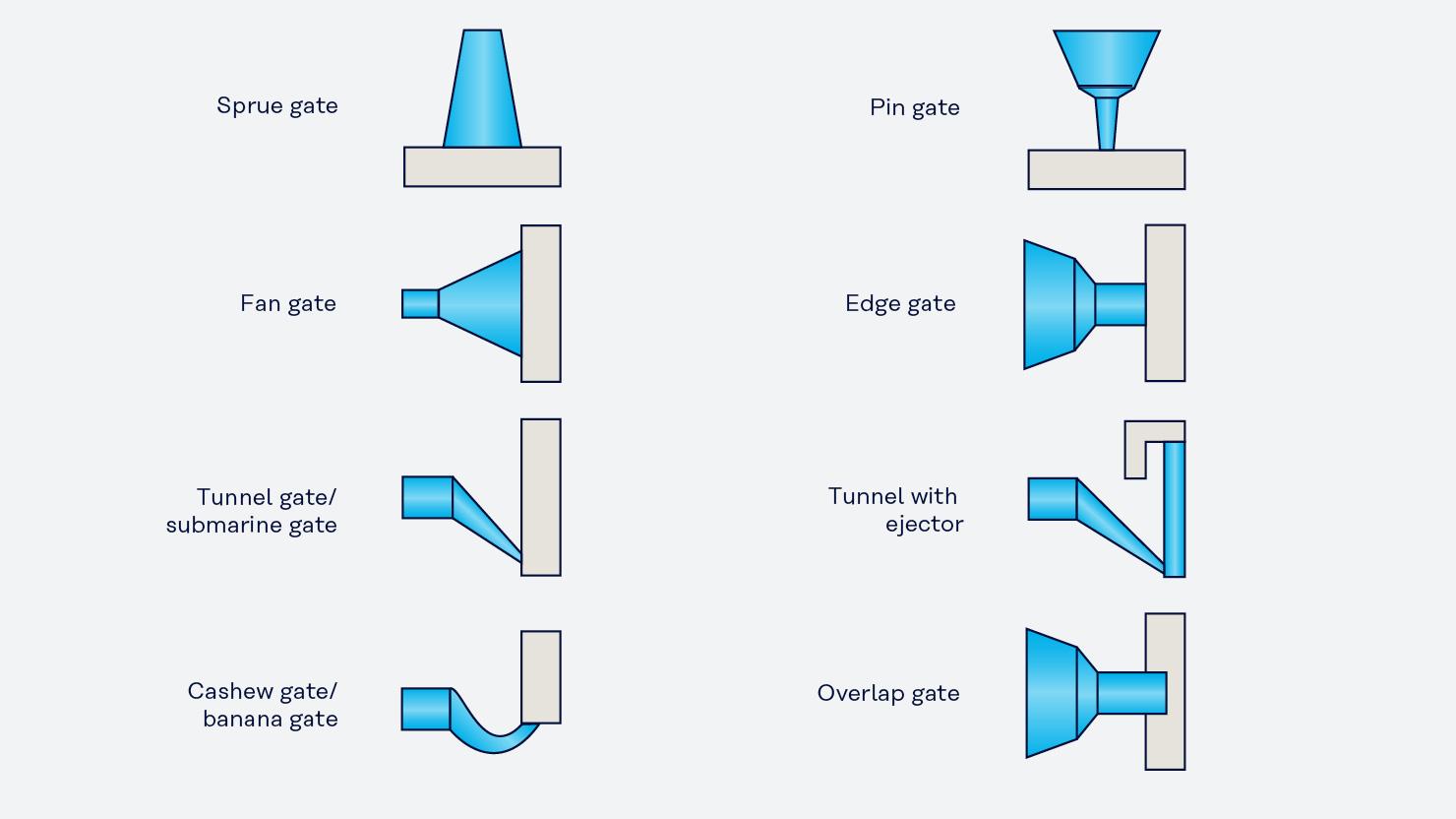
Gate design is one of the most critical aspects of plastic injection mold engineering. Although the gate is usually the smallest feature in the runner system, it has a significant influence on melt flow, packing pressure, cooling efficiency, part appearance, cycle time, and overall product quality.
A poorly designed gate can cause numerous molding defects, including short shots, sink marks, weld lines, jetting, burn marks, excessive gate vestige, and part warpage. Conversely, selecting the appropriate gate type and location helps ensure balanced filling, consistent dimensional accuracy, and efficient production.
Polypropylene (PP) Materials: Types, Grades, Properties, and Applications
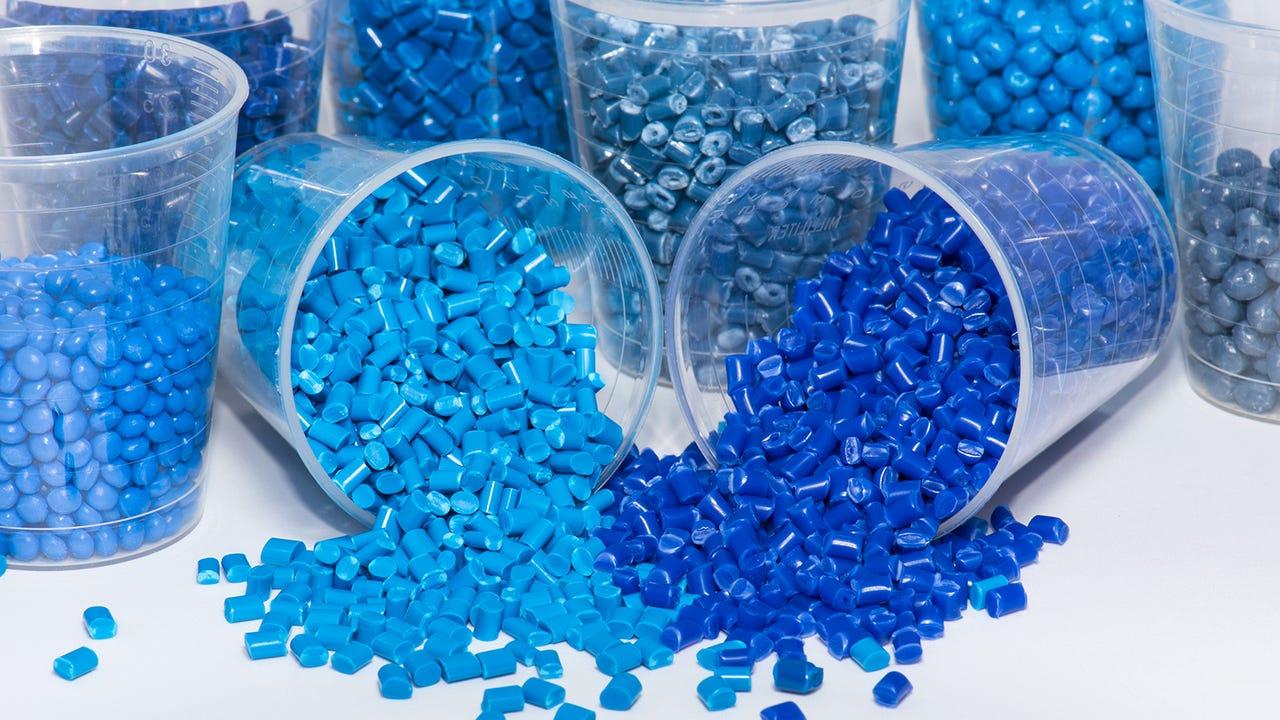
Polypropylene (PP) is one of the world’s most widely used thermoplastics, accounting for a significant share of global plastic production. Thanks to its excellent balance of mechanical properties, chemical resistance, lightweight characteristics, and cost-effectiveness, PP has become the preferred material for countless injection molded products across automotive, household, medical, packaging, electrical, and industrial applications.
Modern polypropylene is available in many different grades and formulations. Manufacturers can choose from homopolymer PP, random copolymer PP, impact copolymer PP, glass fiber reinforced PP, mineral-filled PP, flame-retardant PP, UV-stabilized PP, and food-grade PP depending on product requirements.
Injection Mold Flow Analysis: A Complete Guide to Moldflow Simulation for Plastic Parts
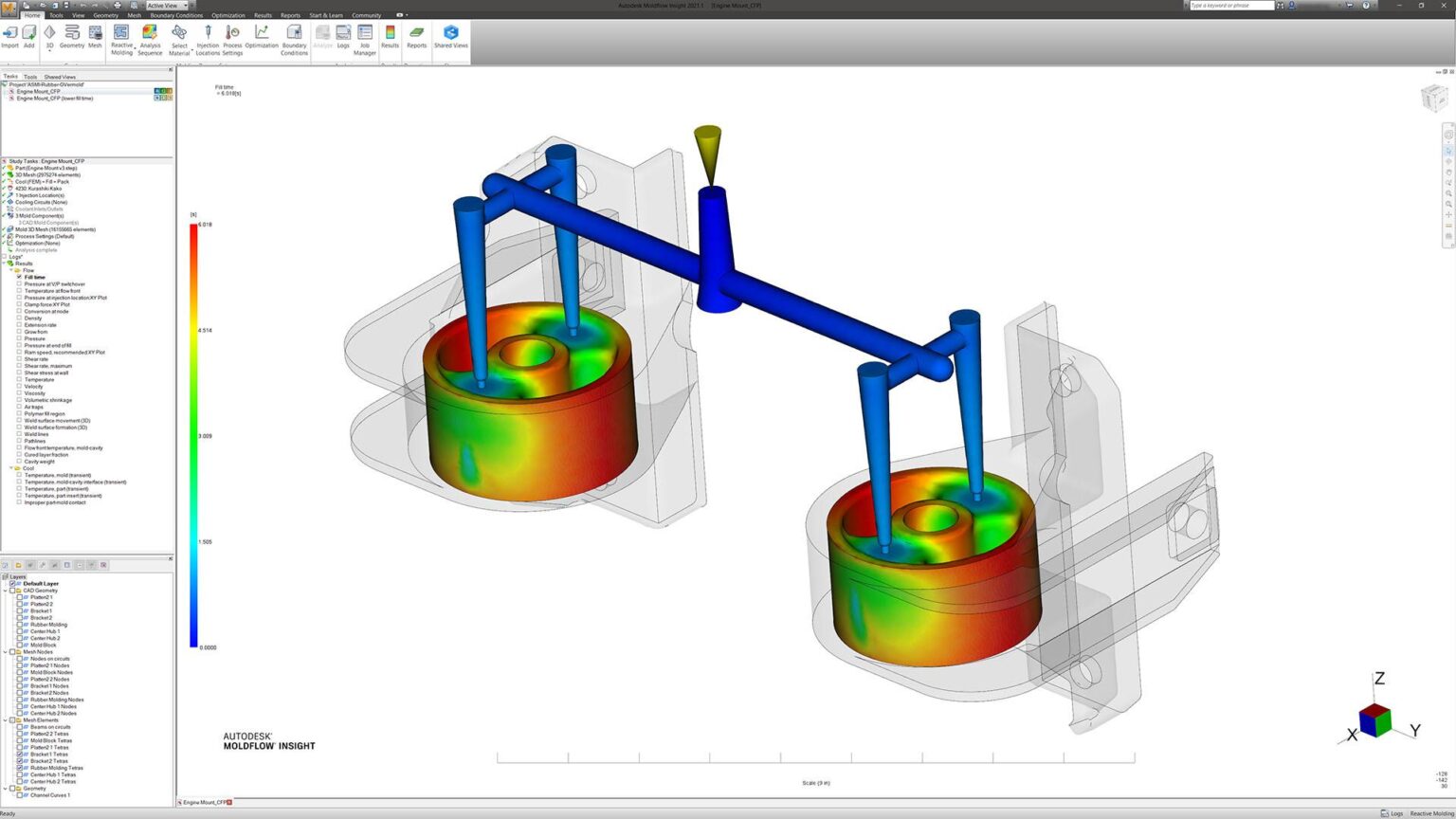
In modern plastic product development, mold manufacturing is no longer based solely on engineering experience. Computer-Aided Engineering (CAE) has become an essential part of the injection molding process, enabling engineers to predict potential molding defects before a mold is manufactured. Among these technologies, Injection Mold Flow Analysis, often referred to as Moldflow Analysis, is one of the most valuable engineering tools for reducing development risks, shortening lead times, and improving part quality.
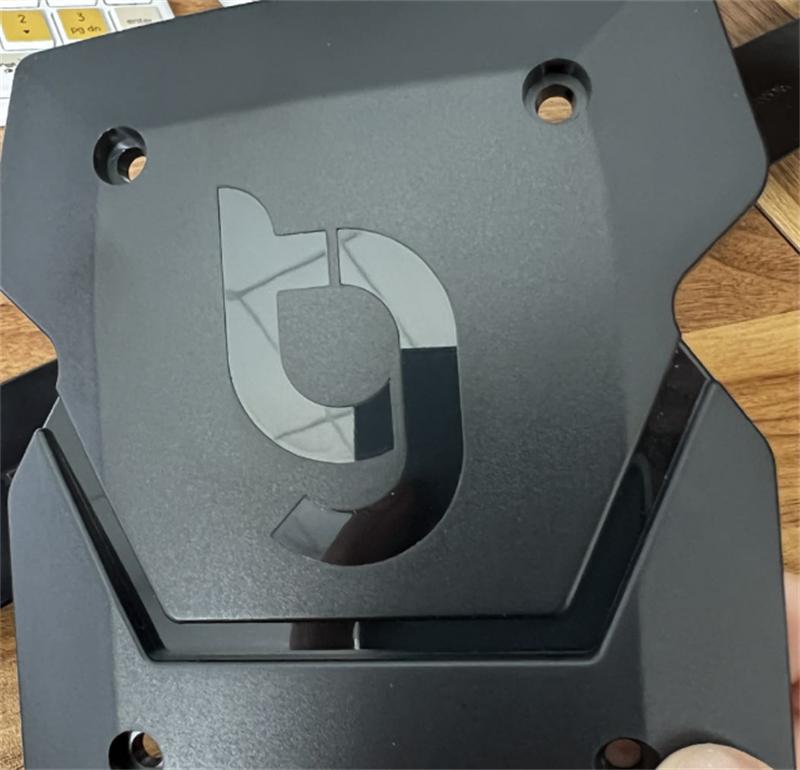
Injection Molded Logos: A Complete Guide to Logo Design, Manufacturing Methods, and Best Practices for Plastic Parts
Brand identity is one of the most valuable assets for any company. Whether manufacturing consumer electronics, medical devices, automotive components, industrial equipment, or outdoor products, displaying a professional logo on a product enhances brand recognition, builds customer confidence, and differentiates products in a competitive market.
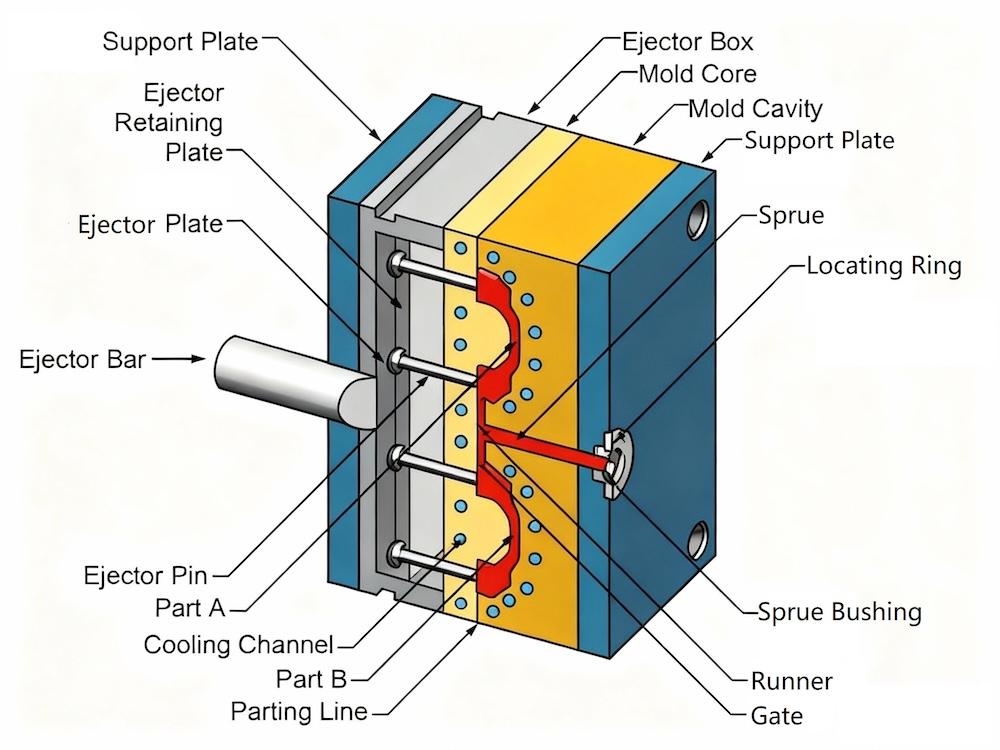
Injection Mold Structure Explained: A Complete Guide to Plastic Mold Components and Design
Plastic injection molding is one of the most efficient manufacturing processes for producing high-quality plastic components with exceptional precision and repeatability. However, the quality of every molded product depends largely on the design and construction of the injection mold itself. A well-engineered mold is far more than a block of steel—it is a sophisticated mechanical system that controls molten plastic flow, cooling, part ejection, dimensional accuracy, and production efficiency.
An injection mold typically consists of dozens or even hundreds of precision-machined components working together throughout every molding cycle. Each component has a specific purpose, from guiding molten plastic into the cavity to removing the finished part without damage. Even minor improvements in mold structure can significantly reduce cycle time, improve product quality, extend mold life, and lower manufacturing costs.
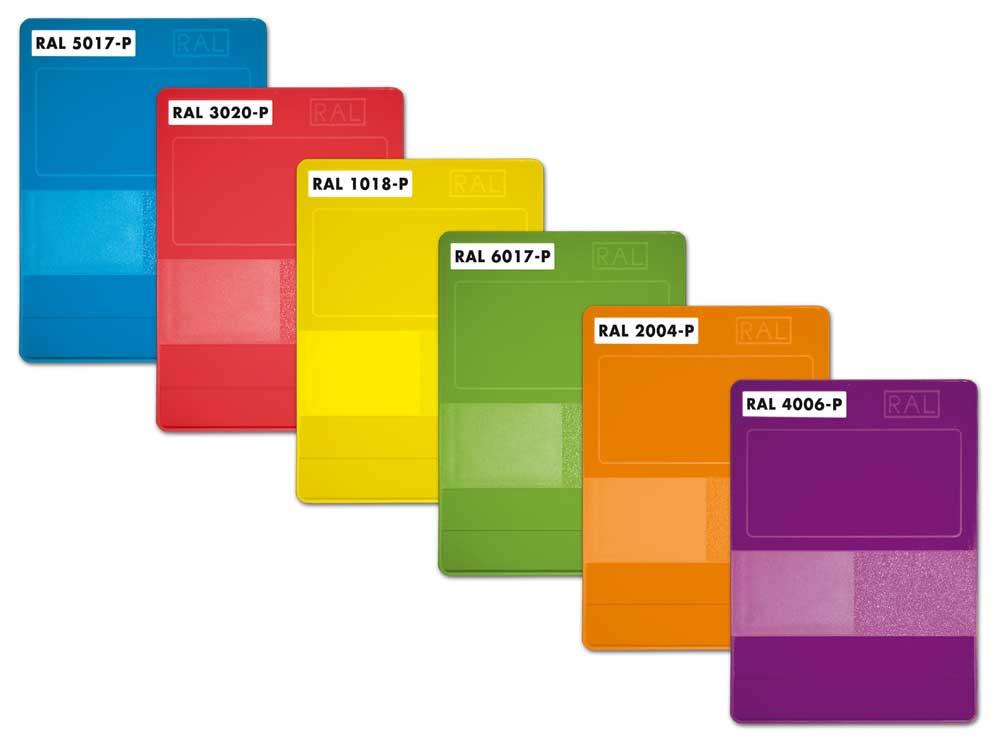
Plastic Color Matching for Injection Molding: A Complete Guide to RAL, Pantone, Masterbatch, and Custom Colors
Color is far more than an aesthetic feature in plastic injection molding—it plays a critical role in product branding, customer perception, quality control, and market differentiation. Whether manufacturing consumer electronics, automotive interiors, medical devices, industrial equipment, or outdoor products, achieving accurate and consistent color matching is essential for product success.