Robot Injection Molding: Plastic Components, Materials, Mold Design, and Manufacturing Solutions

إرسال استفسار

جدول المحتويات

مقدمة

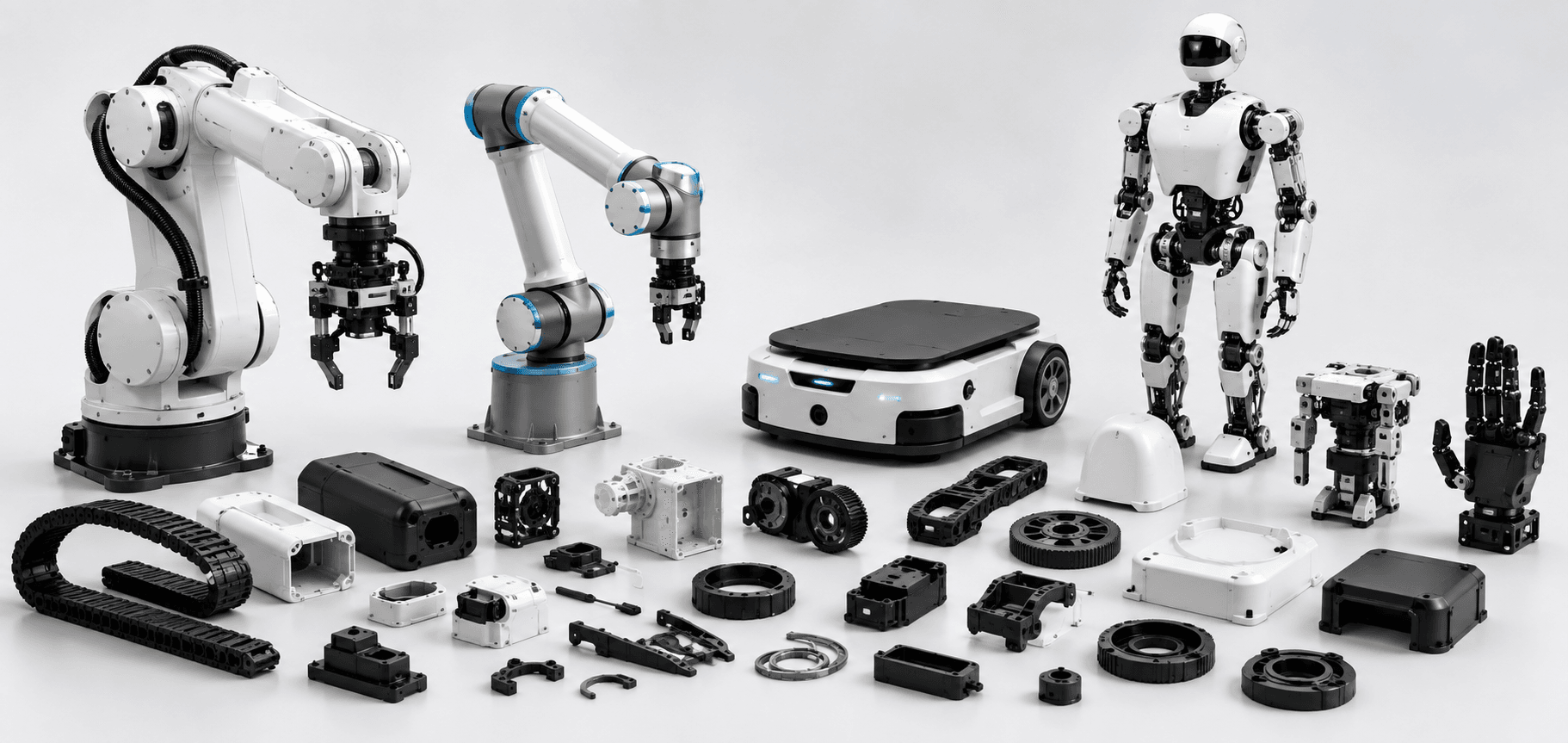
Robotics is rapidly expanding beyond traditional industrial automation into logistics, healthcare, agriculture, inspection, service applications, and increasingly sophisticated humanoid systems. Modern robots combine mechanical structures, electric drives, sensors, cameras, control electronics, batteries, and software into compact machines that must operate accurately and reliably.

Injection molded plastics play an important role in this development.

Robot manufacturers use engineered plastic components to reduce weight, protect electronics, manage cables, reduce friction and noise, improve appearance, electrically isolate components, and integrate complex mechanical features into fewer parts.

Compared with machined metal components, injection molding can integrate ribs, snap fits, bearing seats, cable channels, mounting bosses, sealing grooves, ventilation structures, and cosmetic surfaces into a single component. This is particularly valuable when robot production moves from prototypes into medium- or high-volume manufacturing.

The International Federation of Robotics covers both industrial and service robots, including mobile robots used in professional applications, while major robotics suppliers now offer portfolios spanning industrial robots, collaborative robots and autonomous mobile robots.

This article examines how injection molded plastic parts are used in robotics, which engineering polymers are suitable, and what mold design and quality-control factors should be considered.


1. Robot Arm Covers and Joint Housings

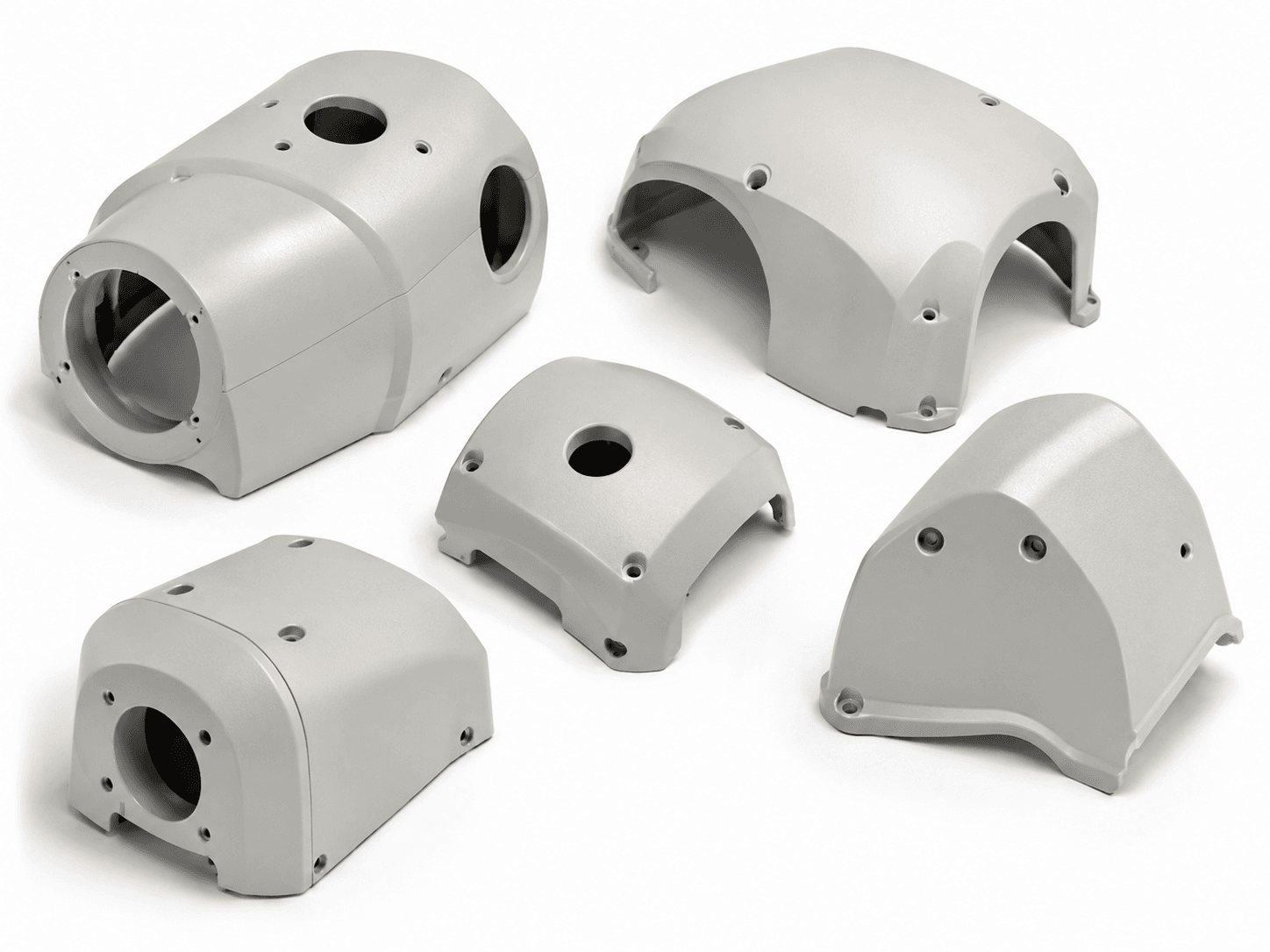
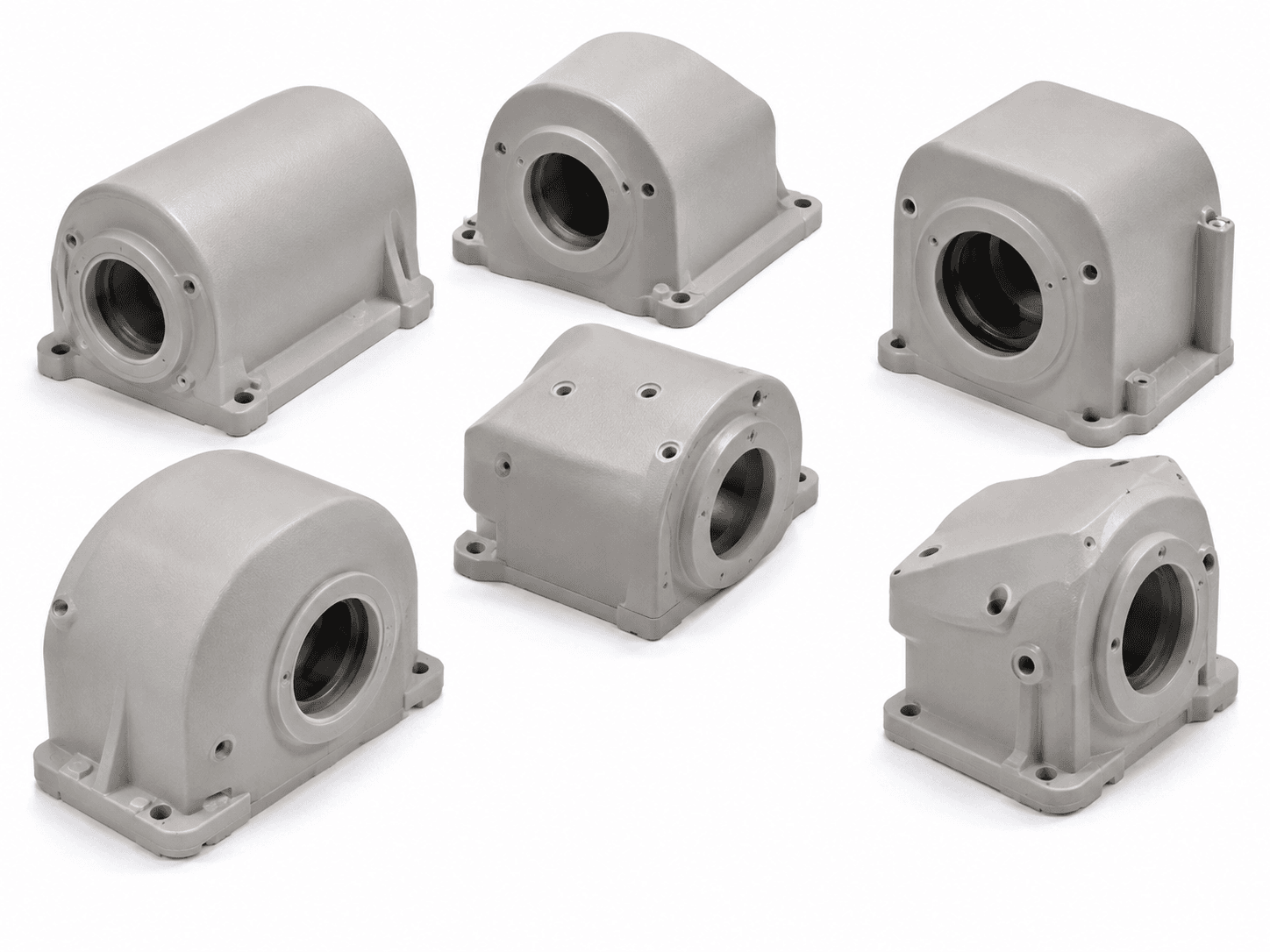
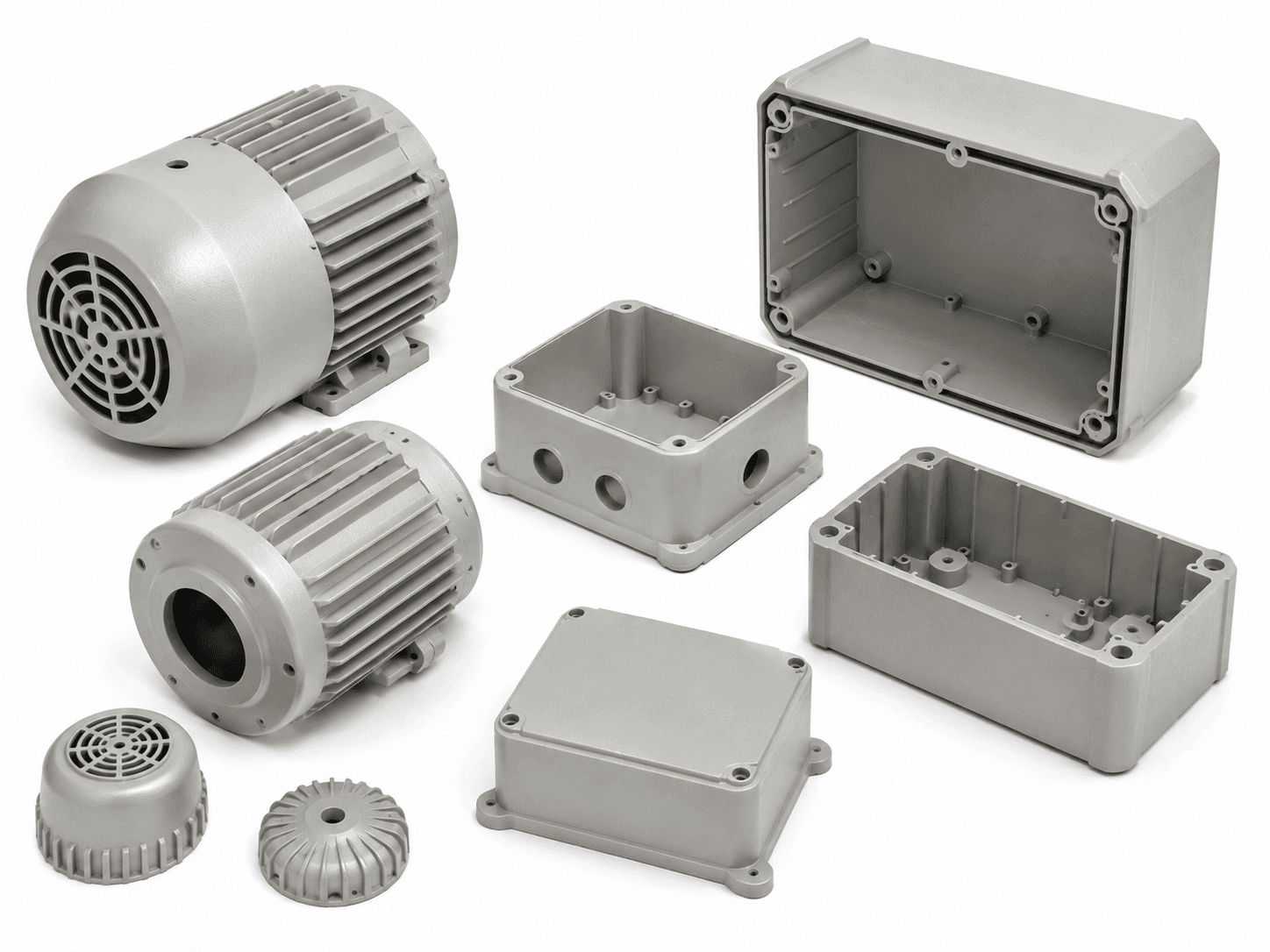
Industrial and collaborative robots contain multiple joints, motors, gearboxes, sensors and cable systems that require protective housings.

تشمل المكونات النموذجية المقولبة بالحقن:

  • Robot arm covers
  • Joint covers
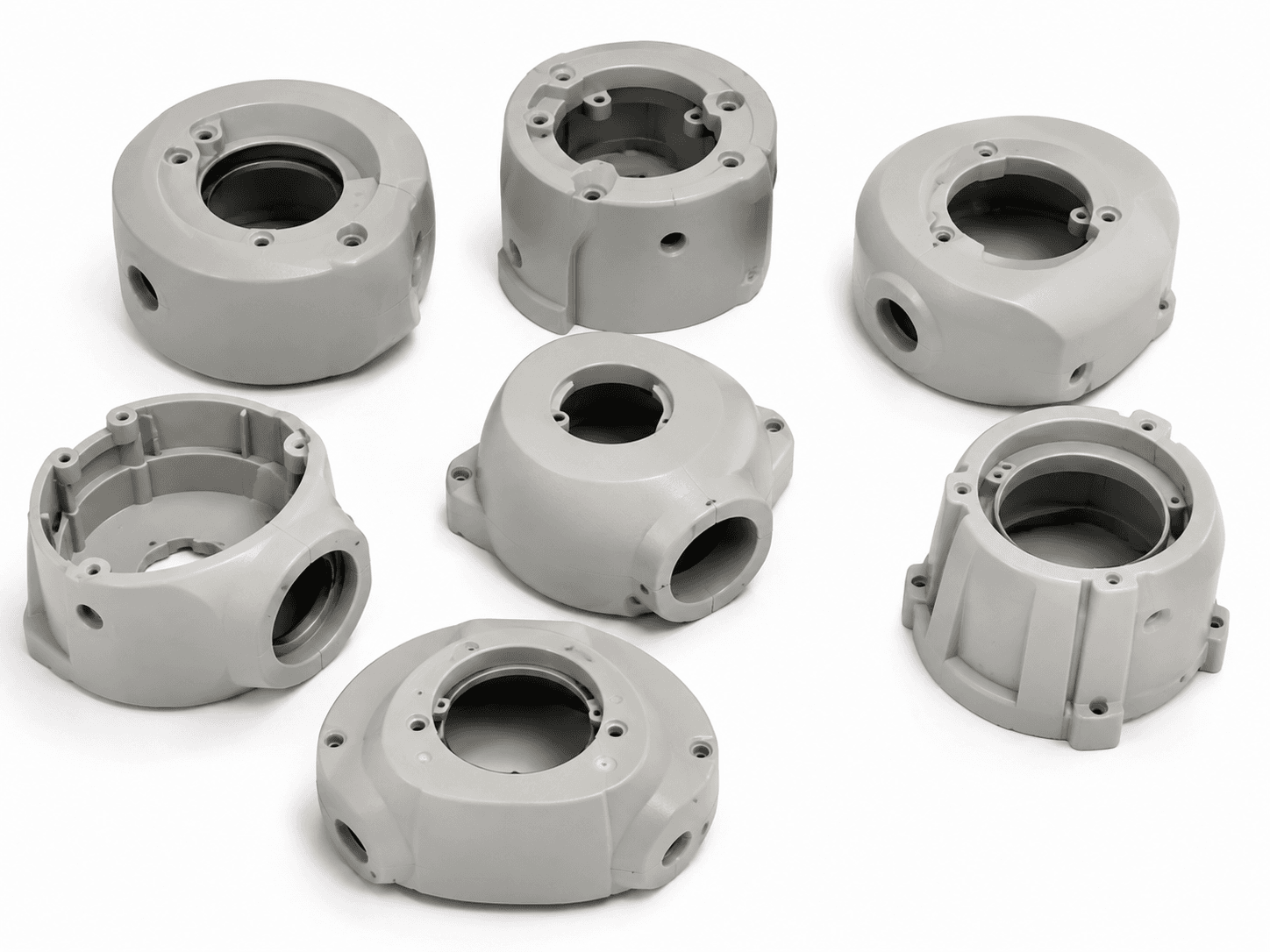
  • Motor housings
  • Gearbox covers
  • Base covers
  • Electronic control housings
  • Decorative exterior shells

Plastic is particularly useful because these covers usually do not need to carry the robot’s primary structural loads.

Reducing housing mass can help decrease the total moving mass of the arm. This is important because excessive weight at moving joints can increase inertia and place additional demands on motors and transmission systems.

القولبة بالحقن also enables smooth external surfaces and complex curved geometries that would be more difficult or expensive to manufacture from sheet metal.

Robot Housing Material Examples

مكونMain Requirementمادة محتملة
Robot Arm CoverLightweight + impact resistanceبولي كاربونات / أكريلونتريل بوتادين ستيرين
Joint Housingثبات الأبعادPA-GF
Electronics Coverعزل كهربائيPC/ABS FR
Service Robot ShellAppearance + toughnessإيه بي إس
Outdoor Robot HousingWeather resistancePC/ASA

2. Precision Plastic Gears and Transmission Components

Robots rely on highly controlled movement, making gears and transmission systems critical components.

Although high-load robot joints often use metal reducers, plastic gears can be useful in lower-load mechanisms, auxiliary actuators, sensors, grippers and service robots.

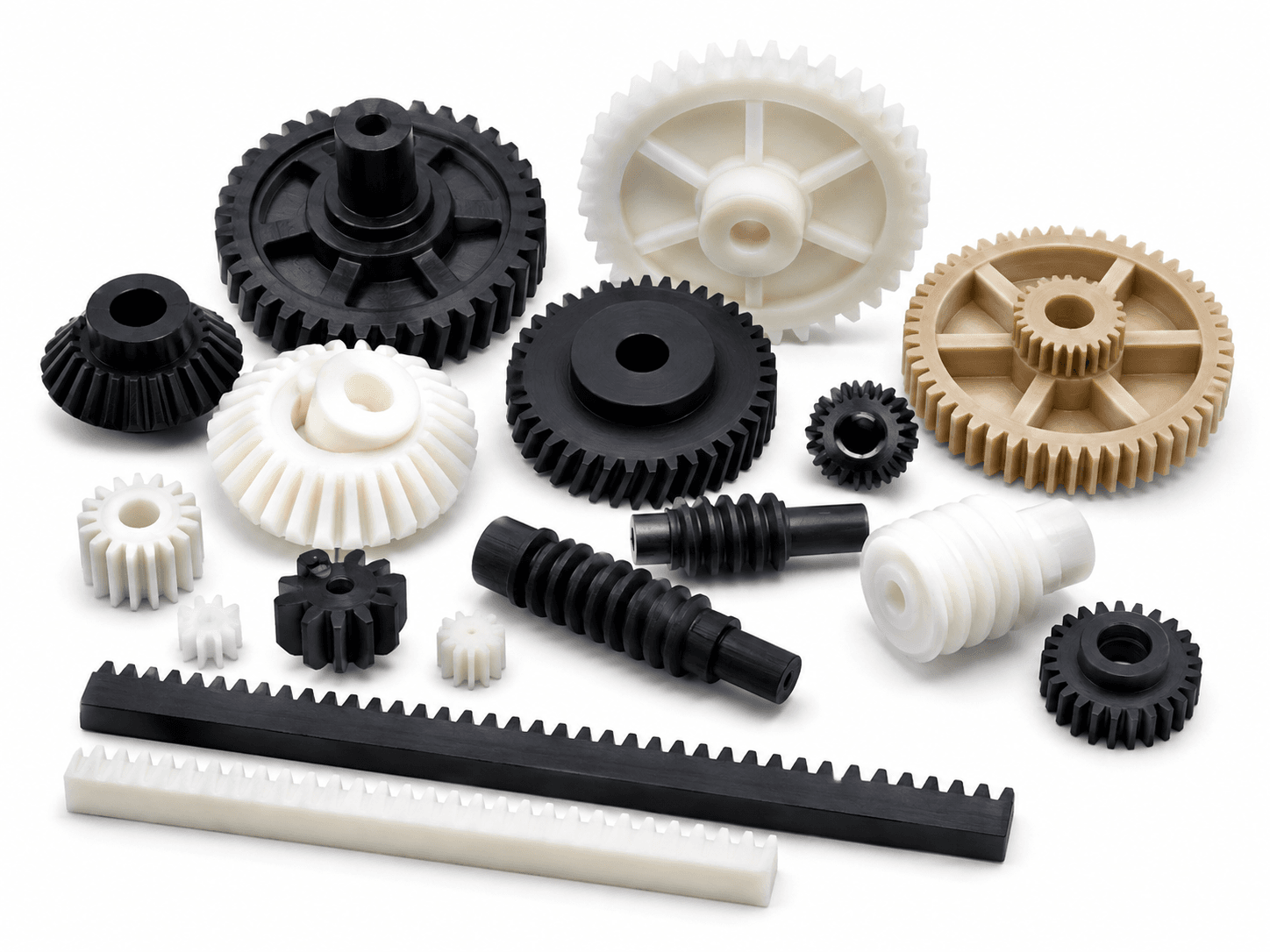
Injection molded transmission components can include:

  • Spur gears
  • Worm gears
  • Gear racks
  • Small bevel gears
  • Encoder gears
  • Adjustment mechanisms
  • Actuator components

POM is frequently considered for precision mechanical components because of its low friction, dimensional stability and wear characteristics. BASF identifies injection molding as an important processing method for POM and notes its use in sophisticated machine and mechanical components.

Plastic gears can also help reduce operating noise and component weight.

3. Bearings, Bushings, and Low-Friction Components

Robotic joints and mechanisms contain many rotating and sliding interfaces.

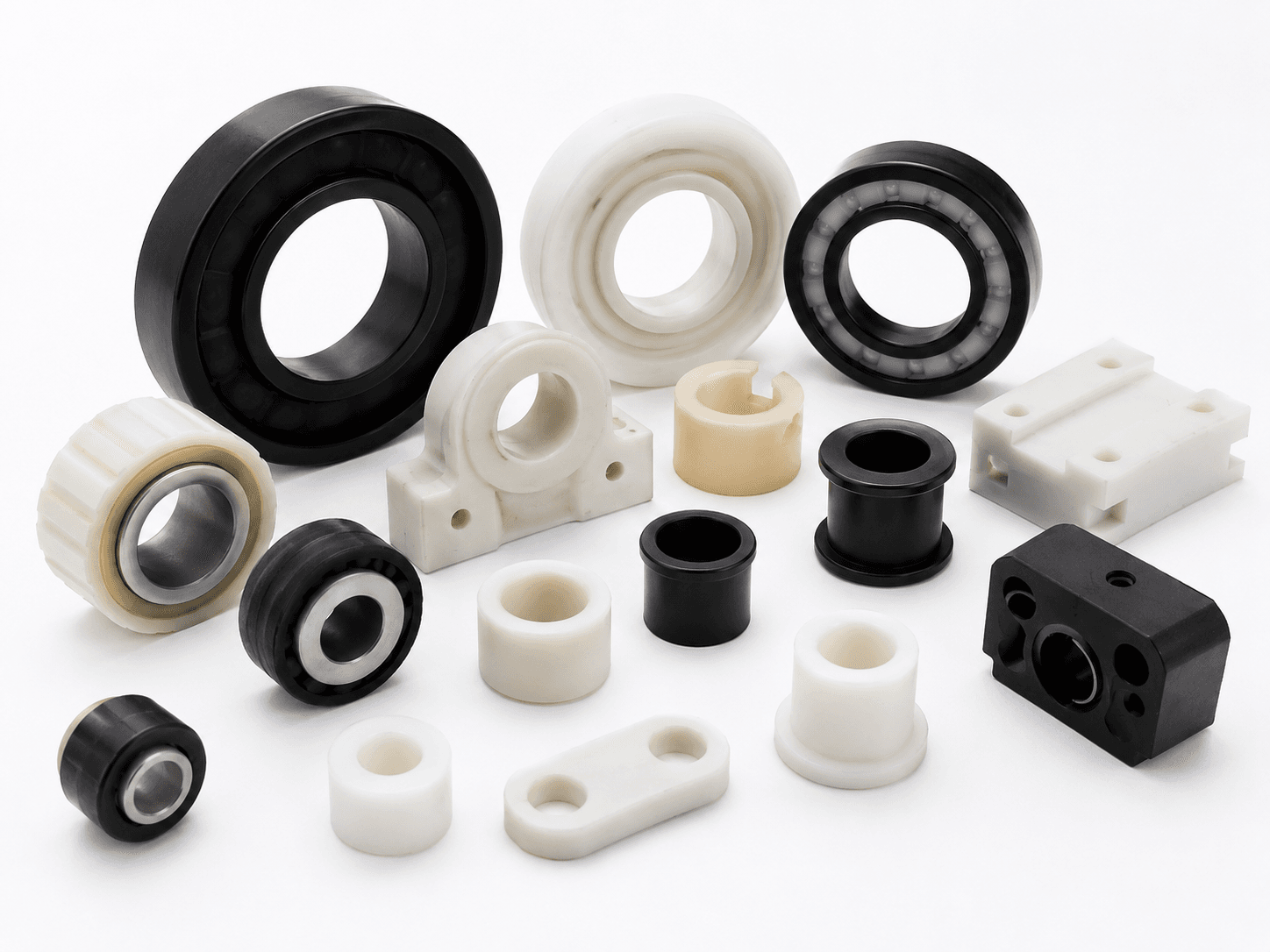
Potential injection molded applications include:

  • Bushings
  • Plain bearings
  • Sliding pads
  • Guide blocks
  • Linear bearing components
  • Rollers
  • Pivot components

Specialized polymers can reduce friction and, in suitable applications, eliminate the need for external lubrication.

This is attractive for robots operating in environments where grease contamination should be minimized or maintenance access is difficult.

Polymer bearing technology is already being used in robotic applications. For example, polymer plain bearings have been applied in autonomous logistics robots and robotic gripper systems.

Bearing Design Considerations

FactorEngineering Importance
LoadControls bearing pressure
SpeedInfluences friction and heat
Shaft MaterialAffects wear behavior
TemperatureChanges polymer performance
Duty CycleDetermines expected life
LubricationInfluences material selection

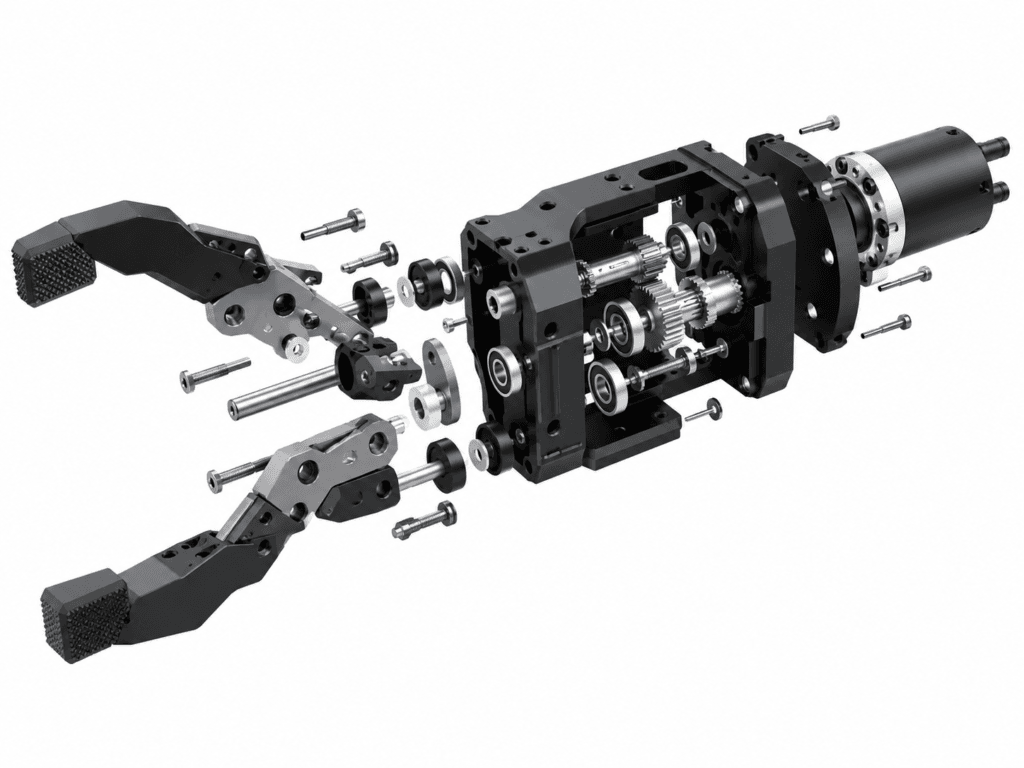
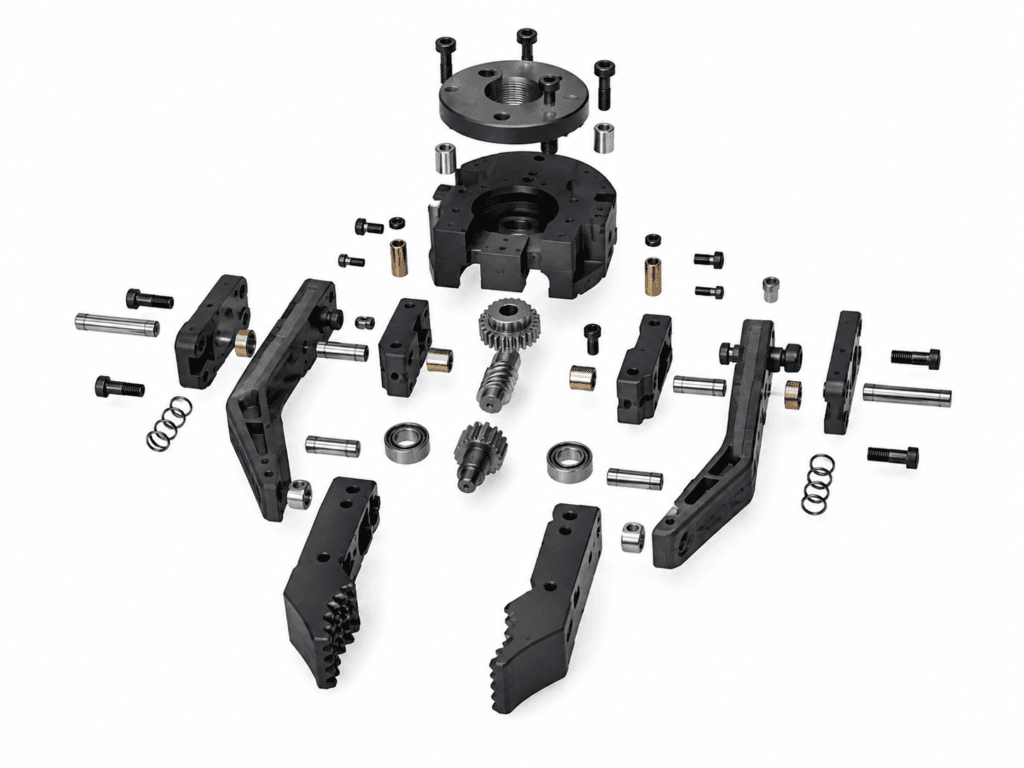
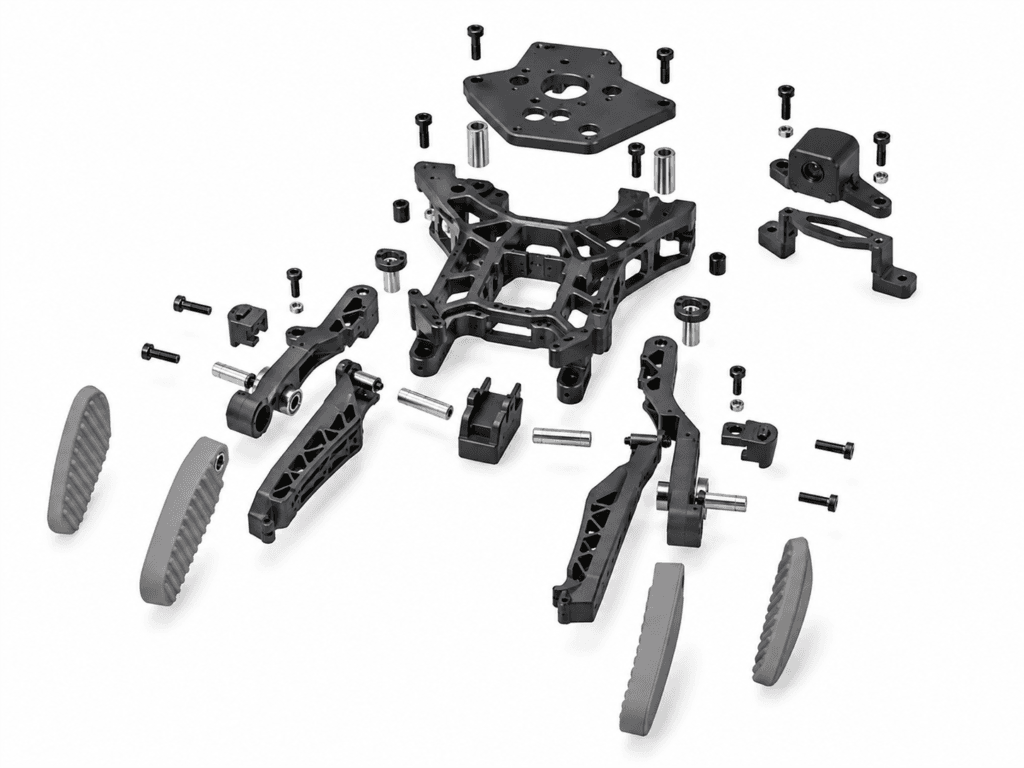
4. Robotic Grippers and End Effectors

End effectors are one of the most promising areas for engineering plastics because weight at the end of a robot arm has a strong influence on payload and motion performance.

Injection molded components can be used in:

  • Parallel grippers
  • Finger grippers
  • Vacuum gripper structures
  • Soft gripping systems
  • Tool-change housings
  • Sensor brackets
  • Protective pads

Reducing end-effector weight allows more of the robot’s rated payload to be used for the actual workpiece.

Plastic components can also reduce the risk of scratching delicate products.

Robotic grippers using self-lubricating polymer components are already commercially demonstrated, including plastic finger-gripper systems for collaborative robots.

TPE or TPU can also be overmolded onto rigid gripper fingers to create softer contact surfaces.

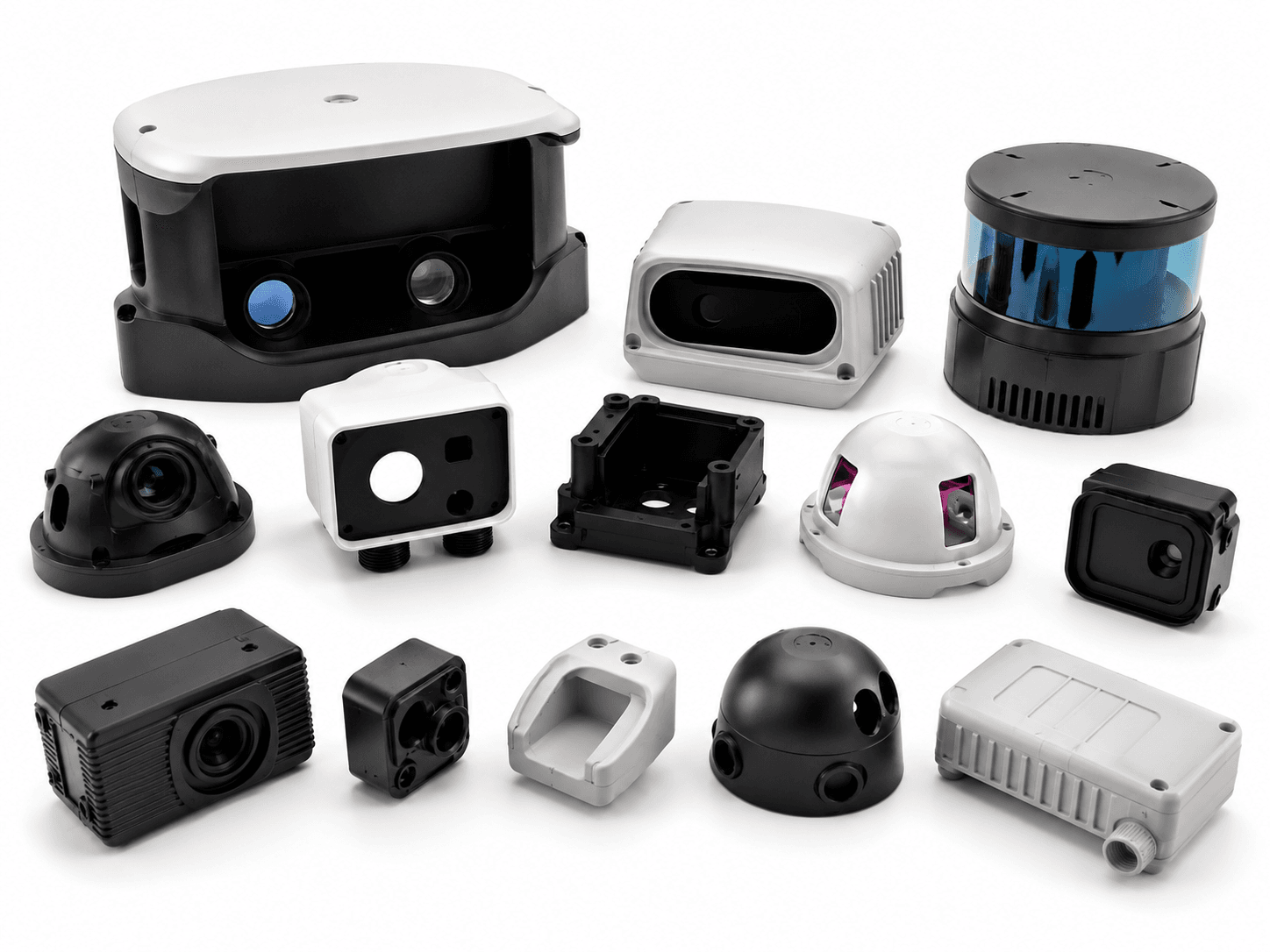
5. Sensor, Camera, and LiDAR Housings

Modern robots depend heavily on machine vision and environmental sensing.

Injection molding is widely suitable for housings around:

  • Cameras
  • LiDAR sensors
  • Ultrasonic sensors
  • Proximity sensors
  • Force sensors
  • Encoders
  • IMUs
  • Safety sensors

These housings may require tight dimensional tolerances because sensor alignment can directly influence system performance.

Important design features can include:

  • Precise mounting datums
  • Optical openings
  • PCB bosses
  • Cable routing
  • Gasket grooves
  • Snap-fit assembly
  • EMI shielding provisions

Transparent PC may be considered for some protective windows, while ABS, PC/ABS, PBT and reinforced engineering plastics can be used for structural housings depending on the application.

6. Autonomous Mobile Robot Components

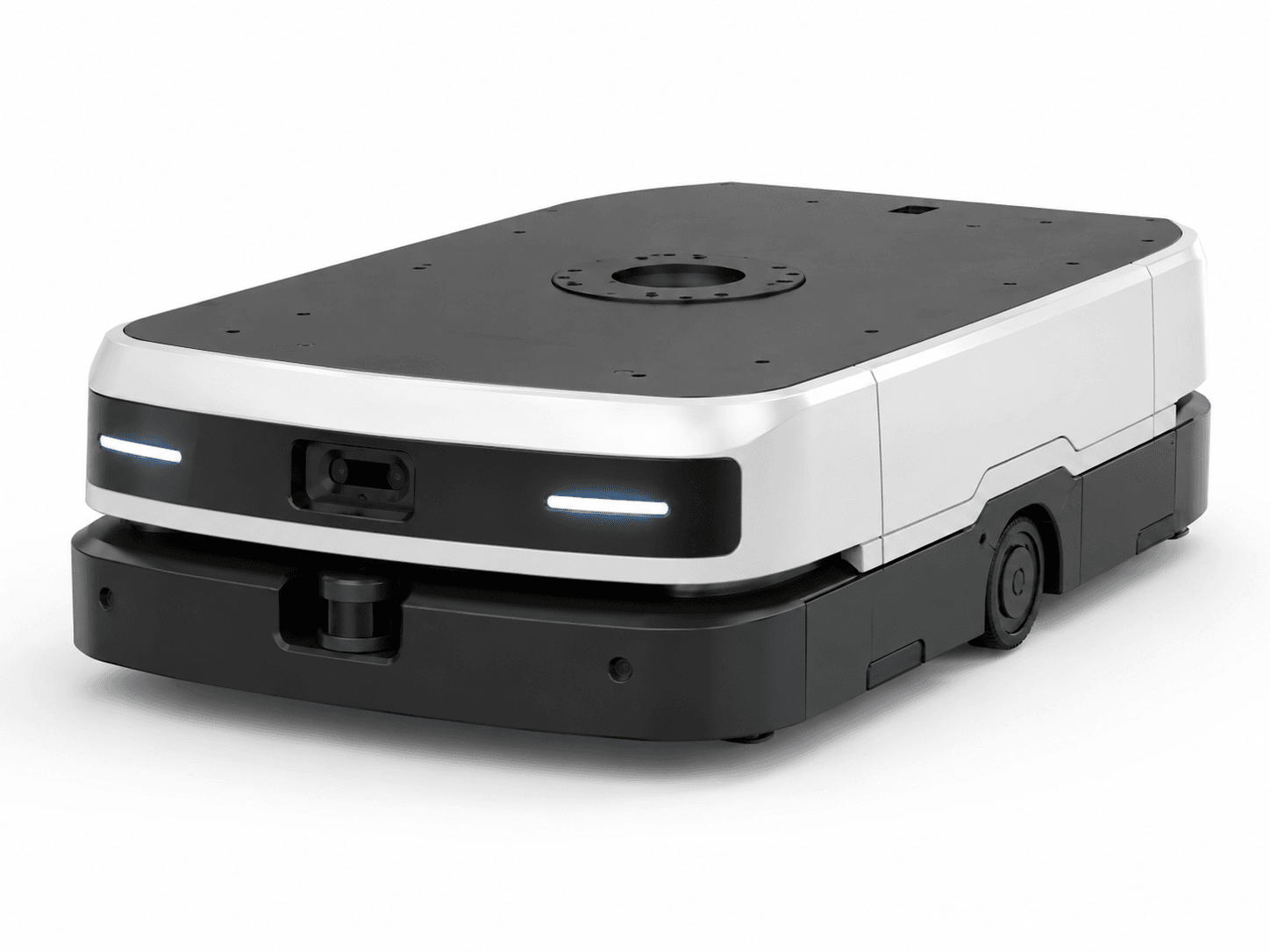
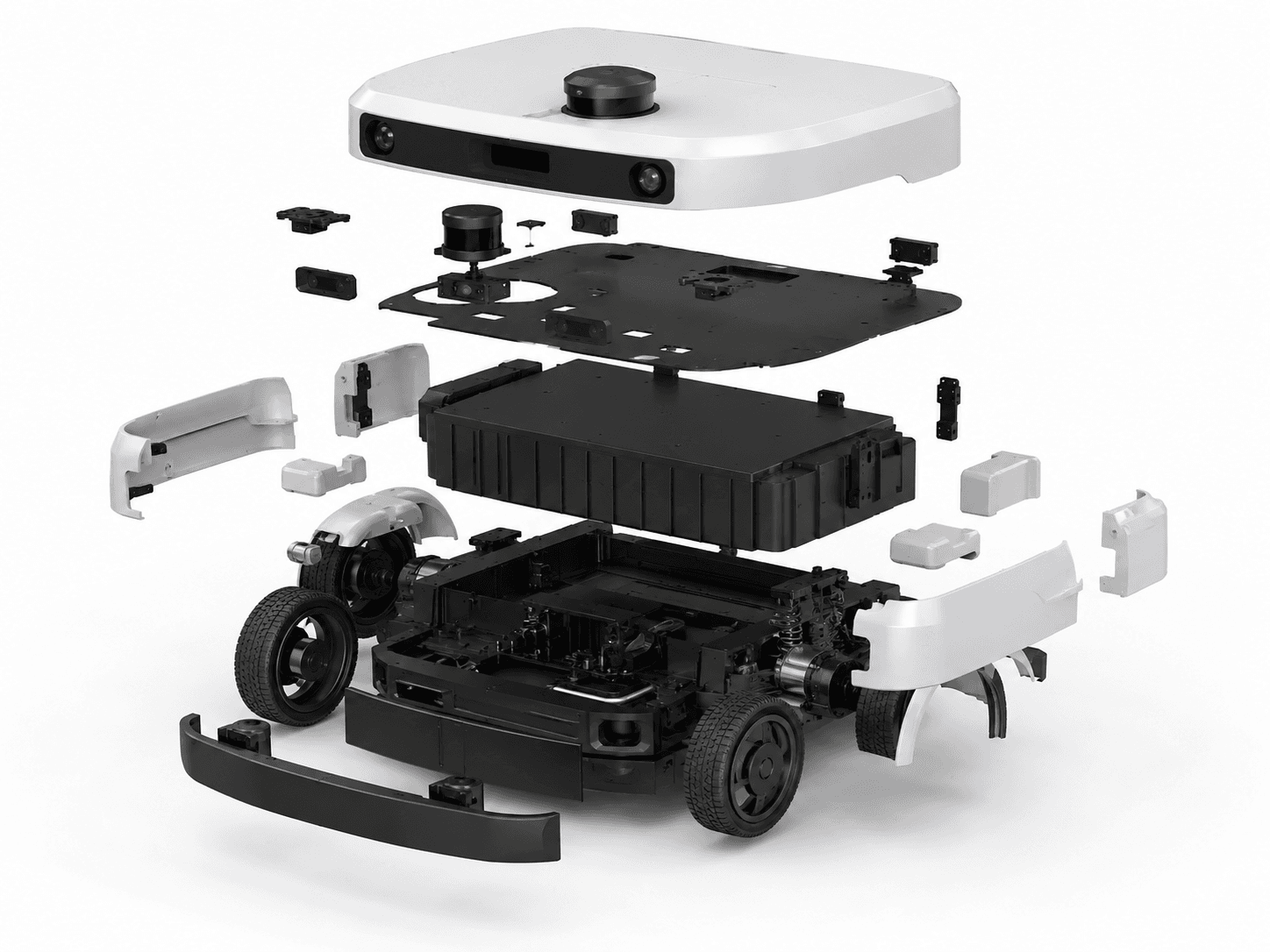
Autonomous Mobile Robots (AMRs) are increasingly used for logistics, warehouse automation and material movement.

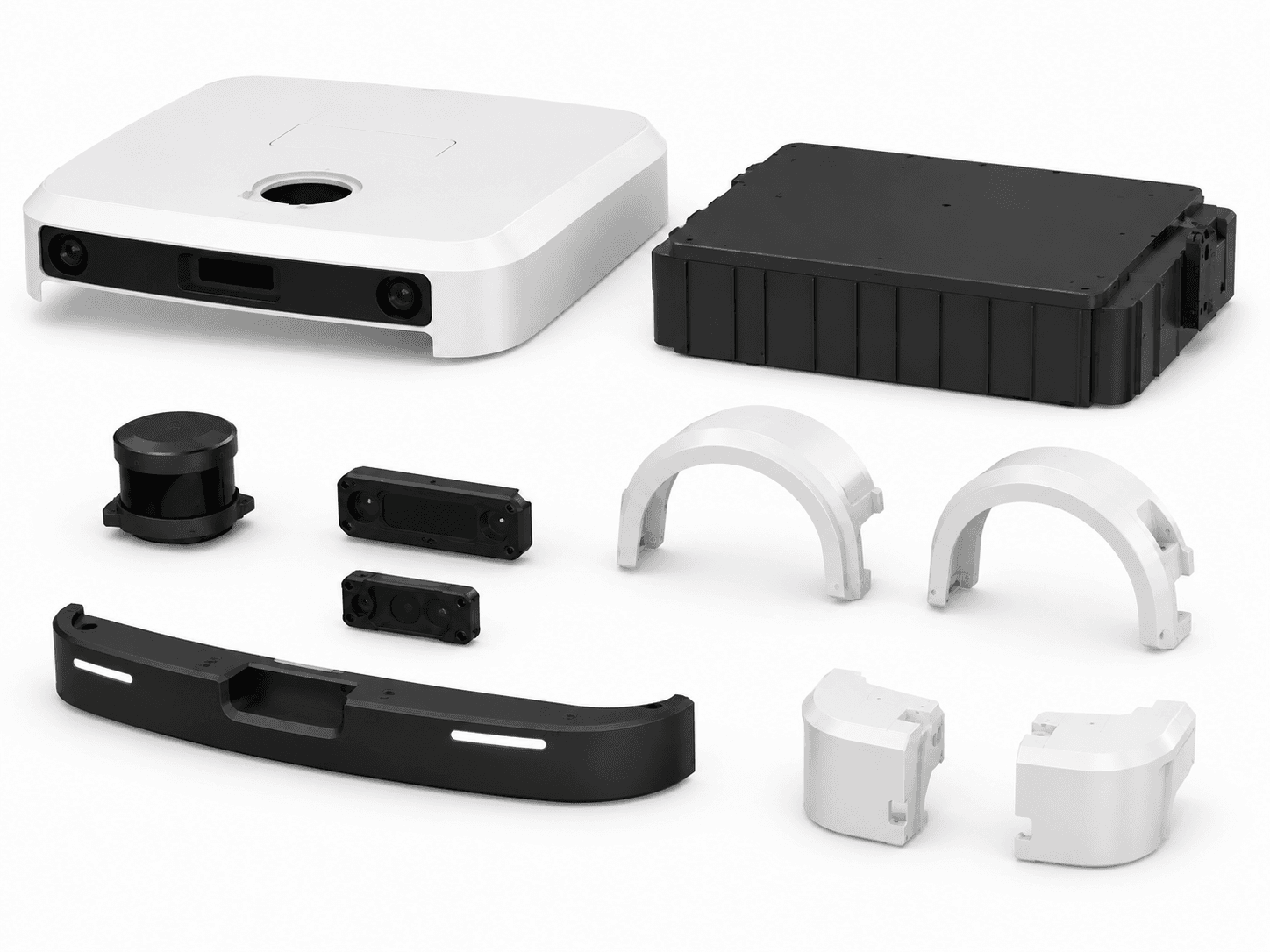
Typical injection molded parts include:

  • Outer body panels
  • أغطية المستشعرات
  • Wheel guards
  • Battery housings
  • Control enclosures
  • Handles
  • مكونات إدارة الكابلات
  • Bumpers

Large AMR panels need to be lightweight while remaining sufficiently rigid.

Ribs, curved surfaces and reinforced mounting structures can improve stiffness without unnecessarily increasing wall thickness.

Impact-resistant plastics are particularly important because mobile robots may experience accidental collisions during service.

AMR Component Requirements

مكونMain Requirement
Outer HousingImpact + appearance
Sensor CoverDimensional precision
Battery CoverStrength + electrical protection
Wheel GuardToughness
BumperImpact absorption
Control Housingعزل كهربائي

Start Your Custom Injection Molding Project

Looking for reliable injection molded parts for robotics, automotive, industrial equipment, or other demanding applications? Send us your drawings, 3D files, materials, quantities, and technical requirements. Our engineering team will review your project and provide professional recommendations for part design, tooling, materials, manufacturing feasibility, and cost optimization.

Send Us Your RFQ for a Fast Evaluation

Have a new plastic part, prototype, or injection mold project? Contact us today and share your RFQ, CAD files, specifications, and expected production volume. We can support your project from design and prototyping to mold manufacturing, injection molding, assembly, and final inspection, providing an efficient one-stop manufacturing solution.
احصل على عرض سعر

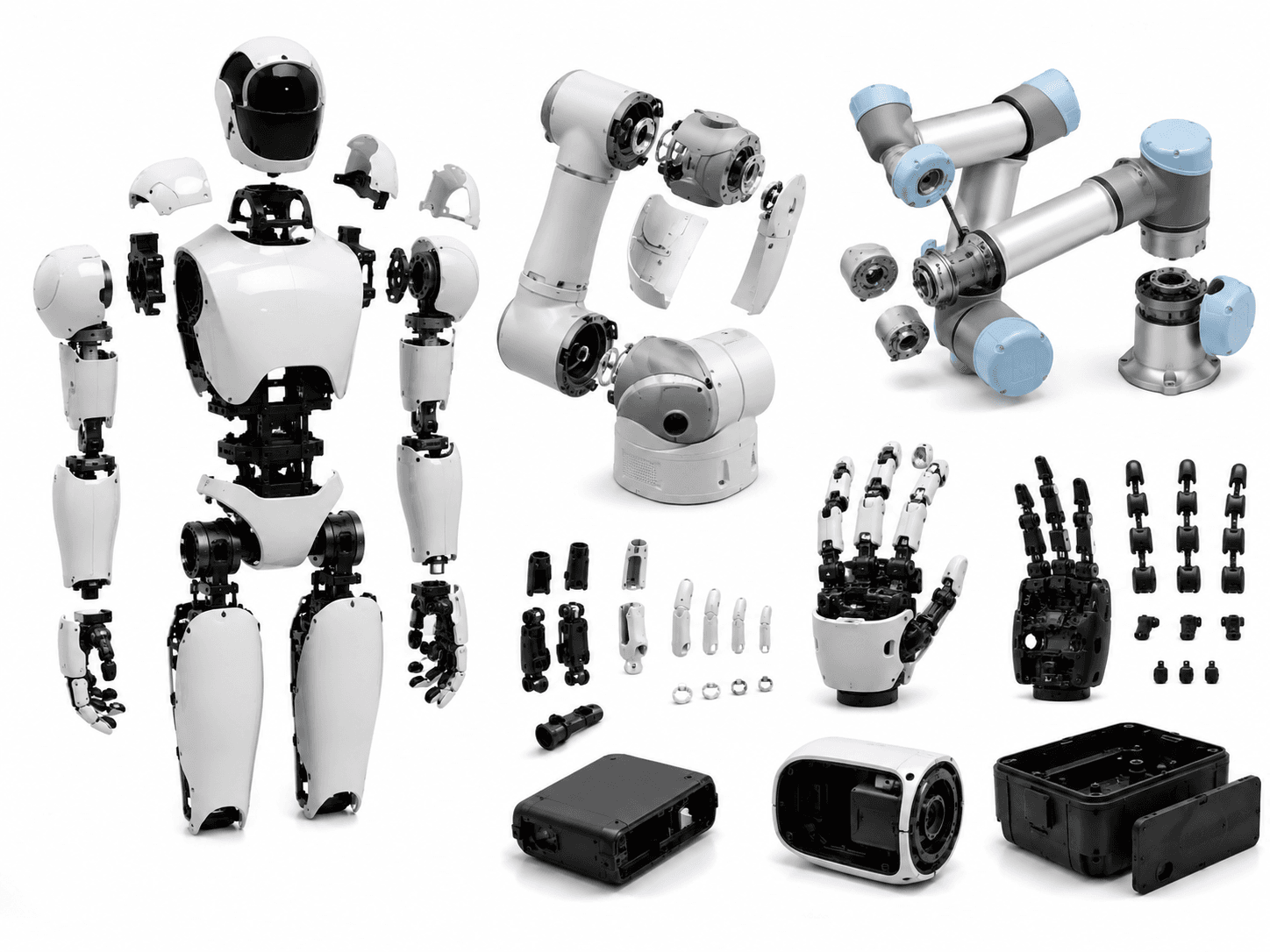
7. Collaborative and Humanoid Robot Plastic Components

Collaborative and humanoid robots place particularly strong emphasis on lightweight construction and external surface design.

Potential injection molded applications include:

  • Arm shells
  • Shoulder covers
  • Joint covers
  • Hand components
  • Finger structures
  • Head housings
  • Electronic enclosures
  • Cable guides
  • أغطية واقية

Because these robots may operate near people, external housings also need smooth geometry and carefully controlled edges.

High-performance polymers can be used even in demanding robotic structures. For example, SABIC has documented PEI-based components used in surgical robot wrist and arm-base applications where stiffness and precision are important.

8. Cable Management and Protective Components

Robots contain moving power, signal, pneumatic and data cables.

Reliable cable management is essential because repeated bending can create fatigue or interfere with robot movement.

Injection molded components can include:

  • مشابك الكابلات
  • Cable guides
  • Strain-relief components
  • هياكل الموصلات
  • Protective sleeves
  • Routing brackets

PA and other tough engineering plastics are suitable candidates where repeated flexing and mechanical durability are important.

These parts are often small, making multi-cavity molds practical for higher-volume production.


9. Engineering Plastics for Robot Components

Robot applications require materials with different combinations of stiffness, impact resistance, wear performance and dimensional stability.

مادةMain AdvantageRobot Application
إيه بي إسAppearance + cost efficiencyExterior shells
بولي كاربونات / أكريلونتريل بوتادين ستيرينImpact + dimensional stabilityRobot housings
PA66-GFصلابة عاليةStructural brackets
POMLow friction + wear resistanceGears and bushings
بي بي تيالخواص الكهربائيةConnectors and sensors
نظام بي بي إسHeat and chemical resistanceHigh-performance components
TPU/TPEFlexibilityGrippers and bumpers
PC/ASAWeather resistanceOutdoor robots

Engineering polyamides are available with combinations of mechanical strength, durability and thermal stability suitable for demanding industrial applications.


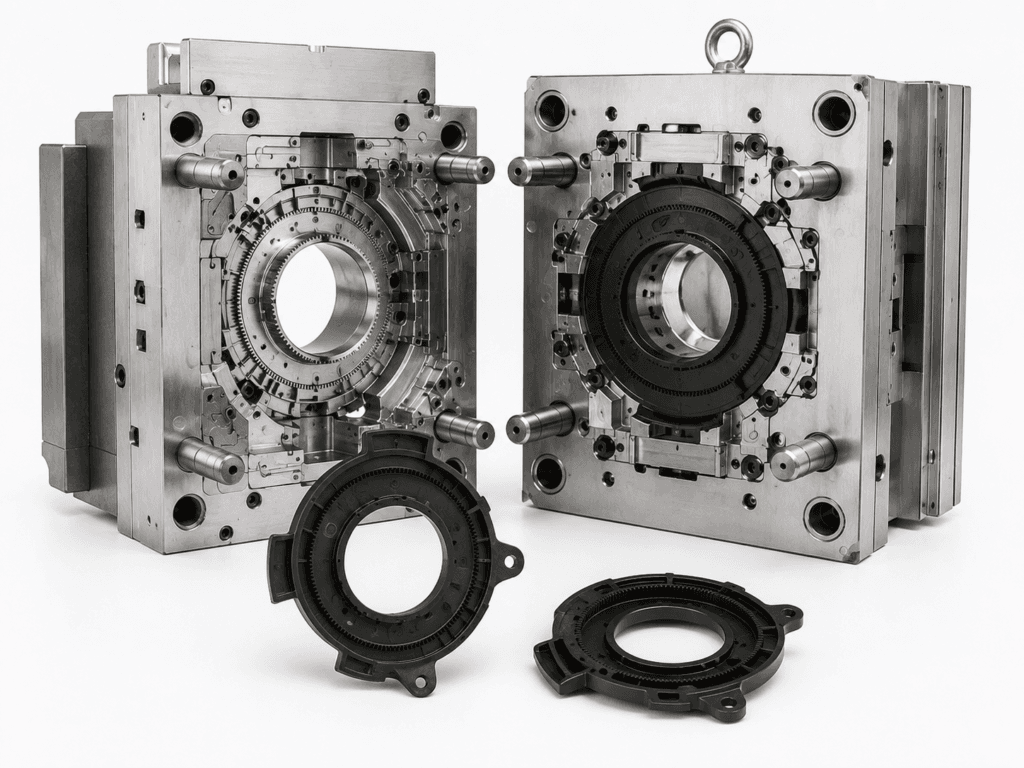
10. Injection Mold Design for Robot Components

Robot components often require tighter dimensional control than conventional consumer housings.

Important tooling considerations include:

Dimensional Accuracy

Joint interfaces, sensor positions, bearing seats and gearbox locations may require precise tolerances.

Warpage Control

Long robot-arm covers and large AMR housings can deform if gate location or cooling is poorly designed.

Fiber Orientation

For PA-GF components, fiber orientation can significantly influence shrinkage and dimensional behavior.

Insert Molding

Metal threaded inserts, shafts and reinforcement pieces can be integrated directly into molded components.

Surface Quality

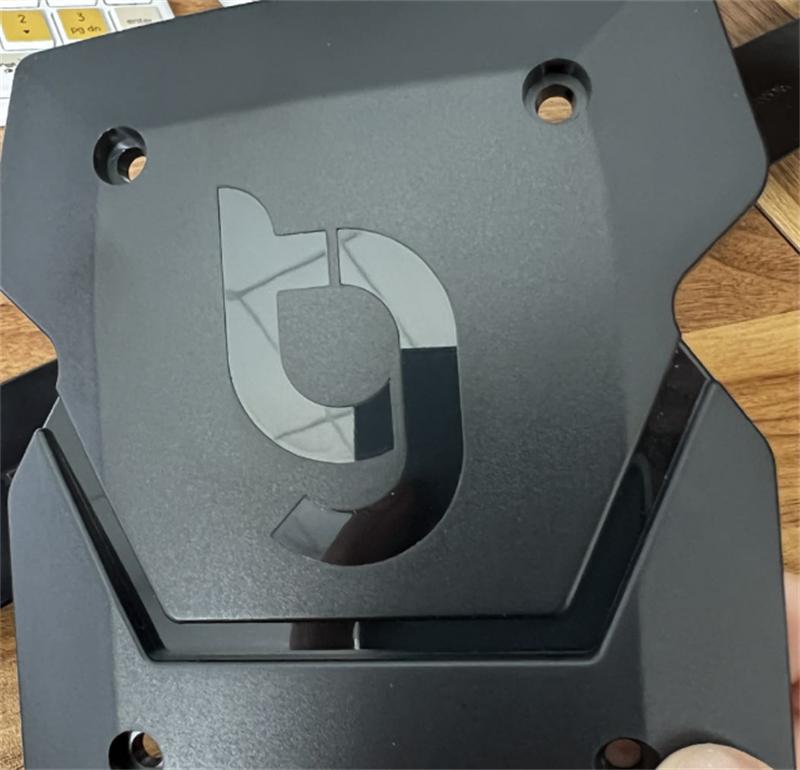
Visible robot shells may require VDI textures, matte finishes or polished surfaces.

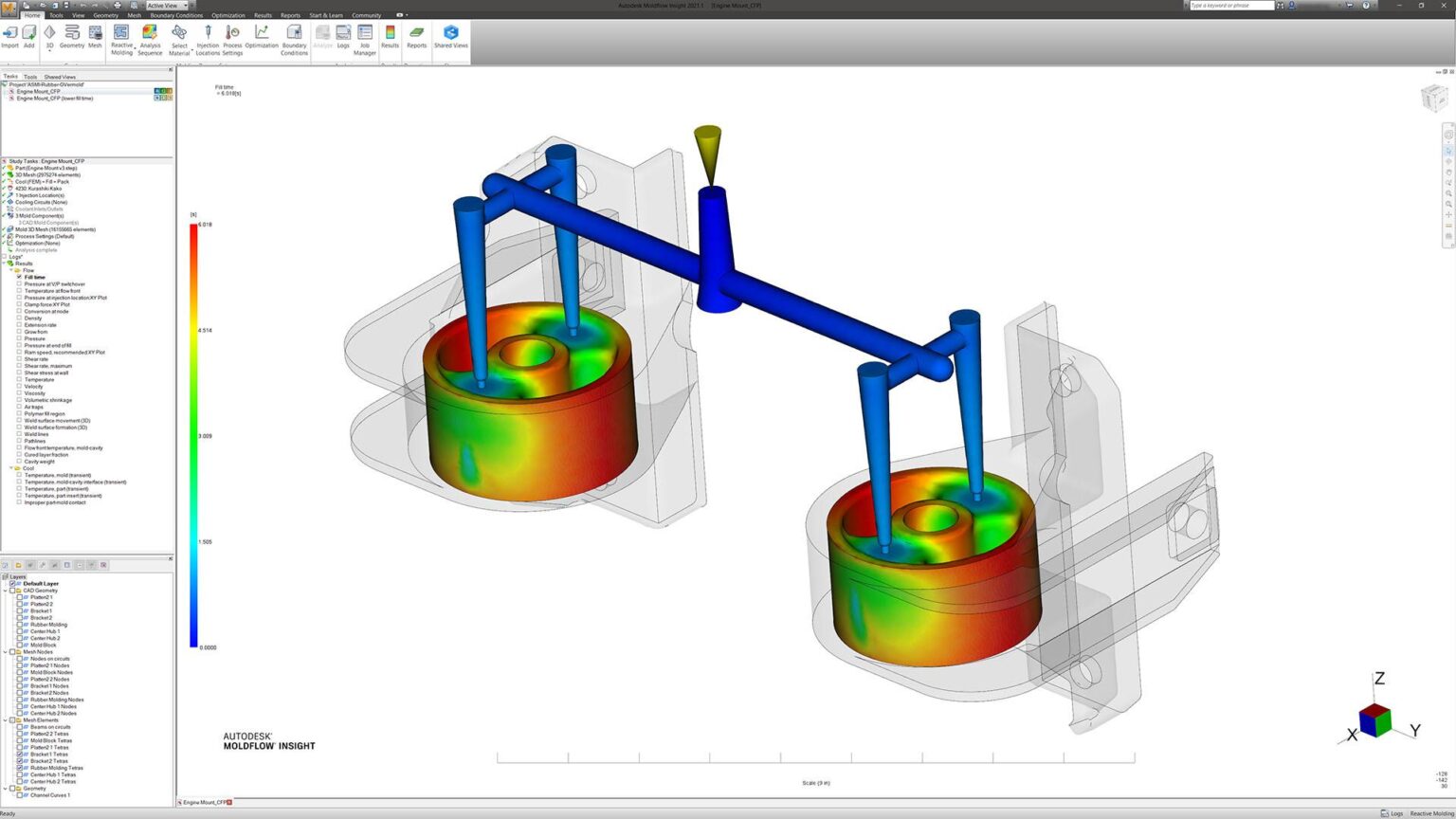
Moldflow can be used to evaluate filling, cooling and warpage before final tooling decisions are made. Autodesk states that Moldflow provides material-flow, cooling and warpage analysis for injection molding.

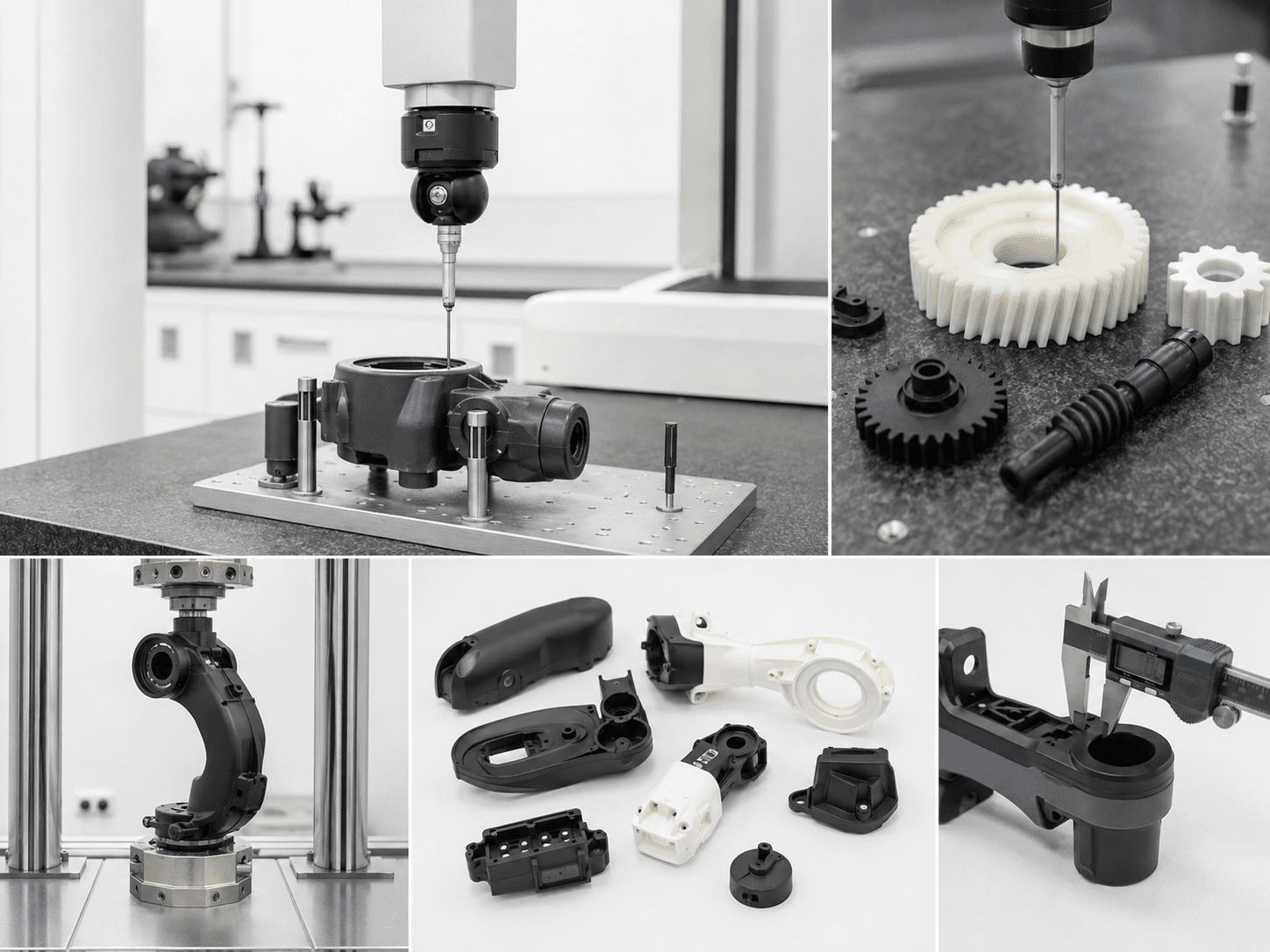
11. Quality Control and Robot Safety

Robotic components may operate through millions of repeated motion cycles, making dimensional stability and durability critical.

Typical testing methods include:

  • CMM dimensional inspection
  • Gear profile measurement
  • Bearing wear testing
  • Torque testing
  • Fatigue testing
  • Impact testing
  • Assembly verification
  • Thermal cycling
  • Functional life-cycle testing

Industrial robot safety is addressed internationally through ISO 10218. ISO published updated editions of ISO 10218-1 and ISO 10218-2 in 2025, covering industrial robots and industrial robot applications/robot cells respectively.

A plastic component should therefore be evaluated not only for moldability but also for its role in the complete robotic system.

Why Choose Samgo for Robot Injection Molding?

Robot product development requires close cooperation between mechanical design, material engineering, tooling and production.

Samgo supports robotic plastic components from initial engineering review through mass production.

CapabilityCustomer Benefit
Product Design SupportOptimize robot structures
DFM AnalysisIdentify manufacturing risks
Material SelectionBalance weight and performance
Moldflow SimulationControl filling and warpage
Precision Mold ManufacturingImprove assembly accuracy
Insert / OvermoldingIntegrate multiple materials
Quality InspectionVerify critical dimensions

Applications can include industrial robots, collaborative robots, AMRs, robot grippers, service robots, humanoid robots, sensor systems and custom automation equipment.


Frequently Asked Questions

Why are plastics used in robots?

Engineering plastics can reduce weight, provide electrical insulation, lower friction, reduce noise and integrate complex features into fewer components.

Which plastic is suitable for robot gears?

POM and engineering nylons are common candidates for lower- and medium-load plastic gear applications. Actual suitability depends on torque, speed, temperature, duty cycle and expected service life.

Can structural robot parts be injection molded?

Yes, particularly secondary structural components, brackets, housings and reinforced interfaces. Glass-fiber-reinforced engineering plastics can provide high stiffness, although primary high-load robot structures may still require metal.

Can injection molding be used for humanoid robots?

Yes. Humanoid robots can use molded plastics for exterior shells, hand components, joint covers, electronic housings, cable-management components and selected structural parts.

Conclusion

Injection molded plastics are becoming increasingly important in modern robotics as manufacturers seek lighter, quieter, more compact and more cost-effective mechanical systems.

Applications extend far beyond decorative covers. Engineering plastics can be used for robot arm housings, joint covers, gears, bearings, grippers, sensor enclosures, cable-management systems, AMR body components and increasingly sophisticated service and humanoid robot parts.

Successful robot injection molding requires a different engineering approach from ordinary consumer products. Weight, moving inertia, wear, friction, dimensional precision, sensor alignment, fatigue life and structural stiffness must all be evaluated.

As robot production volumes increase, injection molding becomes particularly attractive because complex functional geometry can be manufactured repeatedly at a lower unit cost than many machining-based processes.

Through DFM analysis, material selection, Moldflow simulation, precision tooling, insert molding, controlled injection molding and dimensional validation, manufacturers can develop high-performance plastic components that support the next generation of industrial, collaborative, mobile and humanoid robots.

احصل على أحدث سعر؟ سنرد عليك في أقرب وقت ممكن (خلال 12 ساعة)

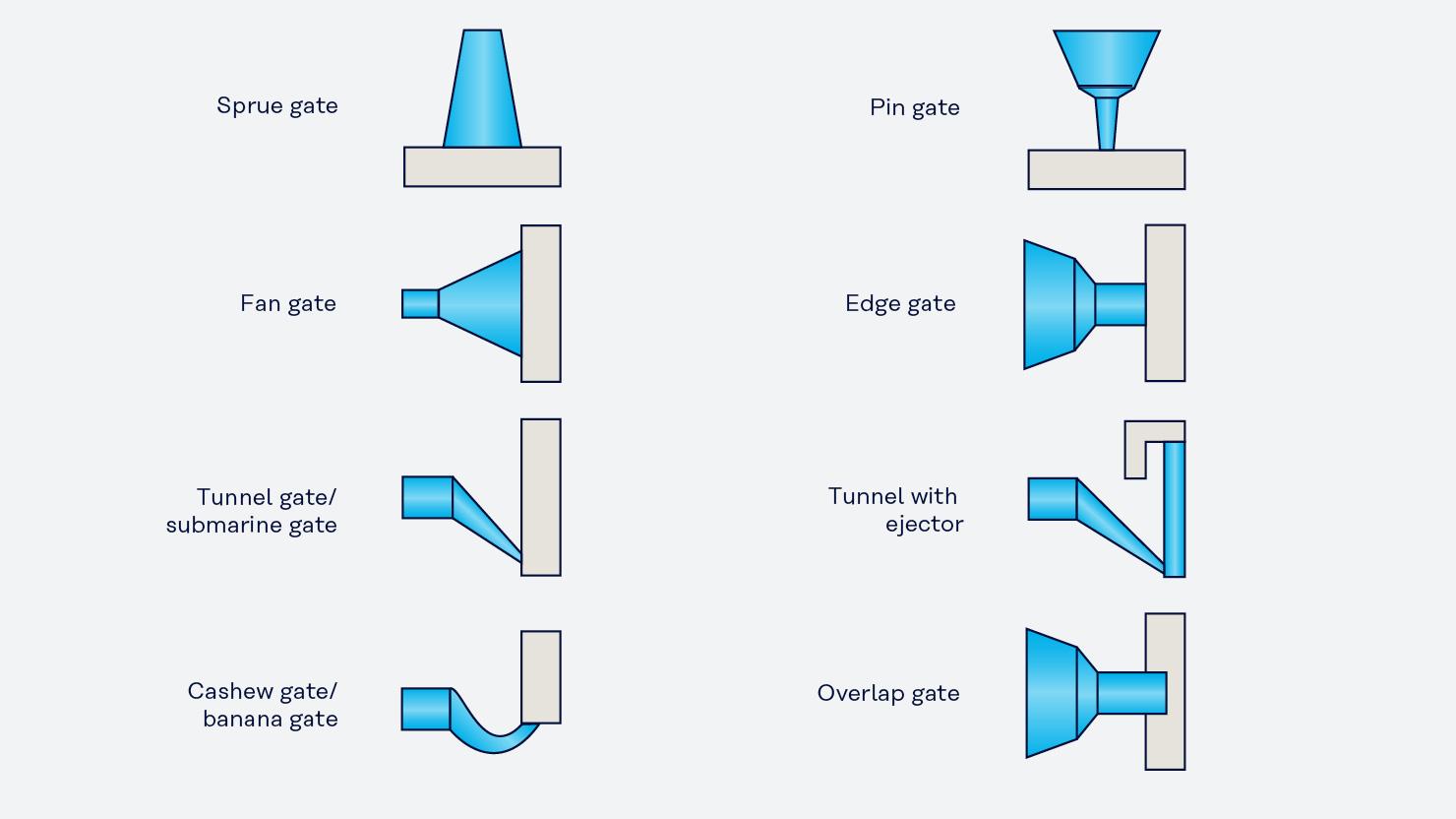
أنواع بوابات القولبة بالحقن البلاستيكي: الاختيار، ومبادئ التصميم، والمزايا، والتطبيقات

تصميم البوابة يُعد أحد أكثر جوانب هندسة قوالب الحقن البلاستيكية أهمية. وعلى الرغم من أن البوابة عادةً ما تكون أصغر معالم نظام التغذية، إلا أن لها تأثيراً كبيراً على تدفق المصهور، وضغط الكبر، وكفاءة التبريد، ومظهر القطعة، وقت الدورة، والجودة الكلية للمنتج.

يمكن أن يتسبب البواب المصمم بشكل سيئ في حدوث العديد من عيوب القولبة، بما في ذلك الحقن الناقص، وعلامات الانكماش، وخطوط اللحام، والتدفق النفاث، وعلامات الحرق، وبقايا البوابة المفرطة، وانهيار الجزء. وفي المقابل، يساعد اختيار نوع البوابة وموقعها المناسب في ضمان التعبئة المتوازنة، ودقة الأبعاد الثابتة، والإنتاج الفعال.
اقرأ المزيد »

مواد البولي بروبيلين (PP): الأنواع، الدرجات، الخصائص، والتطبيقات

البولي بروبيلين (PP) هو أحد أكثر المواد البلاستيكية الحرارية استخداماً في العالم، حيث يستحوذ على حصة كبيرة من إنتاج البلاستيك العالمي. بفضل توازنه الممتاز بين الخواص الميكانيكية، ومقاومته الكيميائية، وخصائصه خفيفة الوزن، وفعاليته من حيث التكلفة، أصبح البولي بروبيلين المادة المفضلة لعدد لا يحصى من منتجات القولبة بالحقن عبر التطبيقات السيارات، المنزلية، الطبية، التعبئة والتغليف، الكهربائية، والصناعية.

يتوفر البولي بروبيلين الحديث في العديد من الدرجات والتركيبات المختلفة. ويمكن للشركات المصنعة الاختيار من بين البولي بروبيلين متجانس البوليمر، والبولي بروبيلين كوبوليمر عشوائي، والبولي بروبيلين كوبوليمر مقاوم للصدمات، والبولي بروبيلين المقوى بالألياف الزجاجية، والبولي بروبيلين المحشو بالمعادن، والبولي بروبيلين المثبط للهب، والبولي بروبيلين المثبت ضد الأشعة فوق البنفسجية، والبولي بروبيلين المخصص للطعام، وذلك اعتماداً على متطلبات المنتج.
اقرأ المزيد »

تحليل تدفق القولون بالحقن: الدليل الشامل لمحاكاة مولد فلو للأجزاء البلاستيكية

في تطوير منتجات البلاستيك الحديثة، لم تعد صناعة القوالب تعتمد فقط على الخبرة الهندسية. لقد أصبحت الهندسة بمساعدة الكمبيوتر (CAE) جزءاً أساسياً من عملية القولبة بالحقن، مما يتيح للمهندسين التنبؤ بعيوب القولبة المحتملة قبل تصنيع القالب. ومن بين هذه التقنيات، يُعد تحليل تدفق قوالب الحقن، والذي يُشار إليه غالباً بتحليل "مولد فلو" (Moldflow)، أحد أكثر الأدوات الهندسية قيمة لتقليل مخاطر التطوير، وتقصير أوقات التوريد، وتحسين جودة الأجزاء.
اقرأ المزيد »

شرح هيكل قوالب الحقن: دليل شامل لمكونات وتصميم القوالب البلاستيكية

يعد القولبة بالحقن البلاستيكي أحد أكثر عمليات التصنيع كفاءة إنتاج مكونات بلاستيكية عالية الجودة بدقة استثنائية وإمكانية تكرار. ومع ذلك، فإن جودة كل منتج مصبوب تعتمد بشكل كبير على تصميم وبناء قالب الحقن نفسه. إن القالب المصمم هندسياً بشكل جيد هو أكثر بكثير من مجرد كتلة من الفولاذ - فهو نظام ميكانيكي معقد يتحكم في تدفق البلاستيك المنصهر، والتبريد، وإخراج القطع، والدقة الأبعاد، وكفاءة الإنتاج.

عادةً ما يتكون قالب الحقن من عشرات أو حتى مئات المكونات المصنعة بدقة والتي تعمل معاً طوال كل دورة تشكيل. ول ٍّكل مكون غرض محدد، بدءاً من توجيه البلاستيك المنصهر إلى التجويف وحتى إخراج المنتج النهائي دون تلف. حتى التحسينات البسيطة في هيكل القالب يمكن أن تقلل بشكل كبير من وقت الدورة، وتتحسن جودة المنتج، وتطيل عمر القالب، وتخفض تكاليف التصنيع.
اقرأ المزيد »

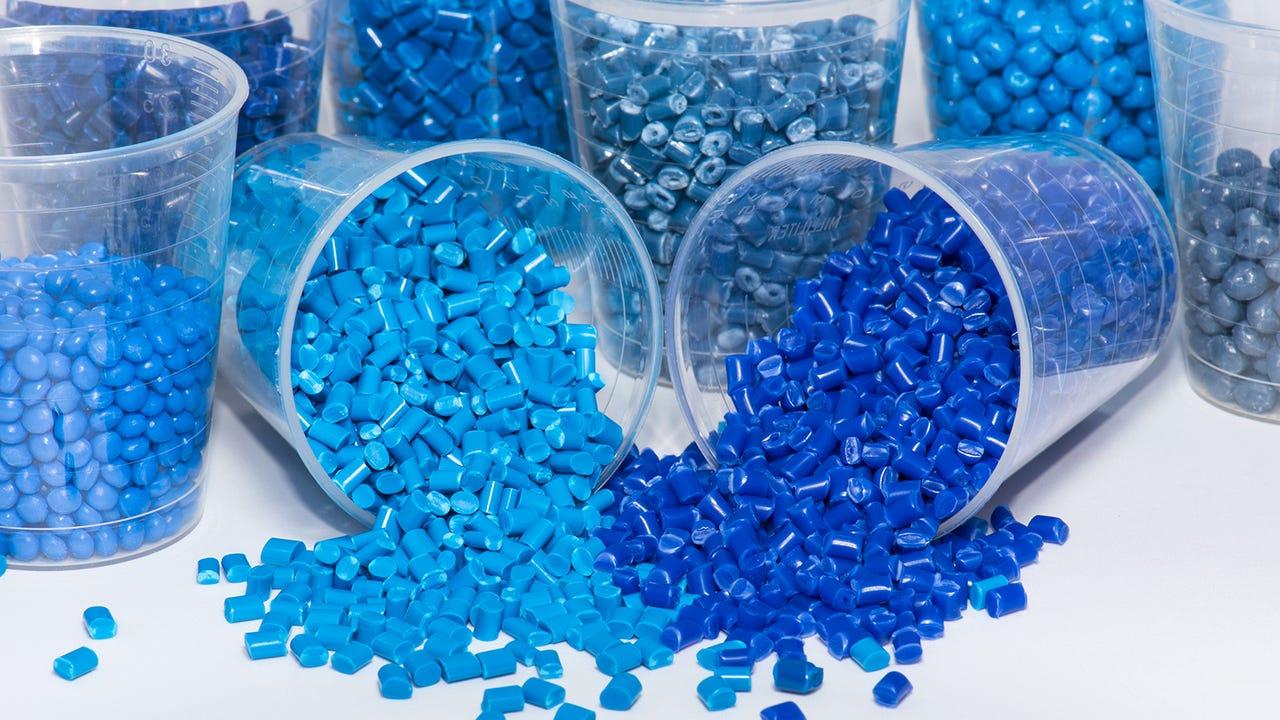
مطابقة ألوان البلاستيك للحقن: الدليل الشامل لألوان رال (RAL)، بانتون (Pantone)، الماسترباتش (Masterbatch)، والألوان المخصصة

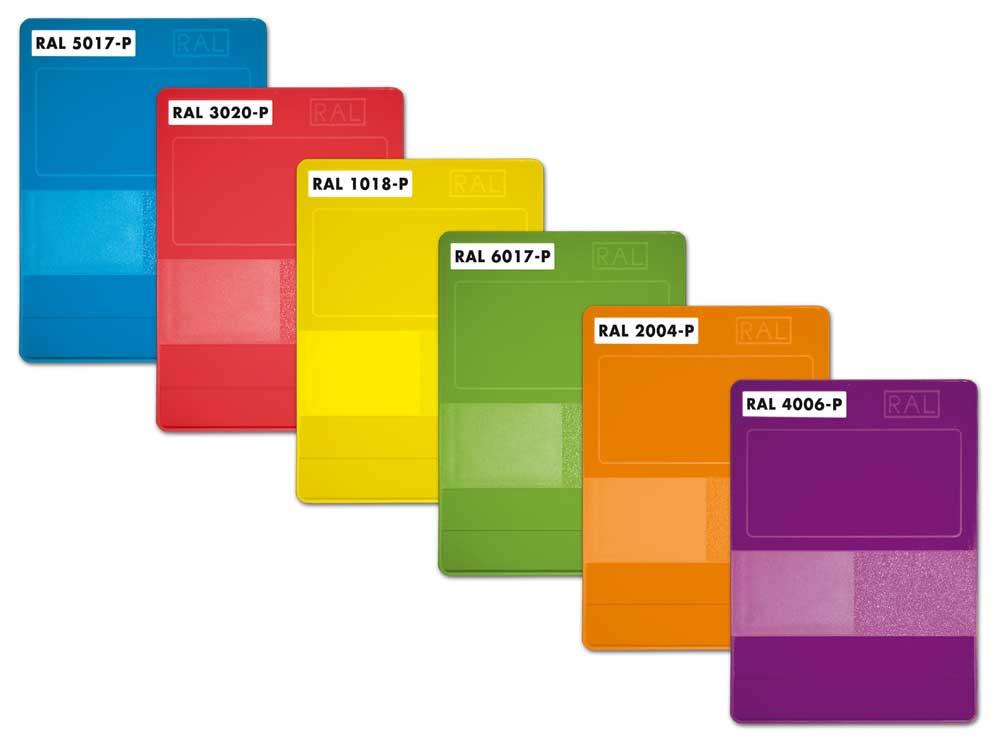
اللون ليس مجرد ميزة جمالية في تشكيل حقن البلاستيك، بل يلعب دوراً حاسماً في العلامة التجارية للمنتج، وإدراك العملاء، ومراقبة الجودة، والتميز في السوق. وسواء كان الأمر يتعلق بتصنيع الأجهزة الإلكترونية الاستهلاكية، أو التصميمات الداخلية للسيارات، أو الأجهزة الطبية، أو المعدات الصناعية، أو المنتجات الخارجية، فإن تحقيق مطابقة دقيقة وثابتة للألوان يعد أمرًا ضروريًا لنجاح المنتج.

اقرأ المزيد »