
Agricultural Injection Molding: Applications, Materials, Manufacturing Standards, and Industry Solutions

Оглавление

Введение

Agriculture has experienced significant technological transformation in recent decades. Modern farming equipment increasingly relies on lightweight, durable, and cost-effective plastic components to improve efficiency, reduce maintenance costs, and support automated agricultural systems.

Plastic injection molding has become an essential manufacturing process for agricultural products due to its ability to produce high-volume components with excellent consistency, complex geometries, and competitive production costs.

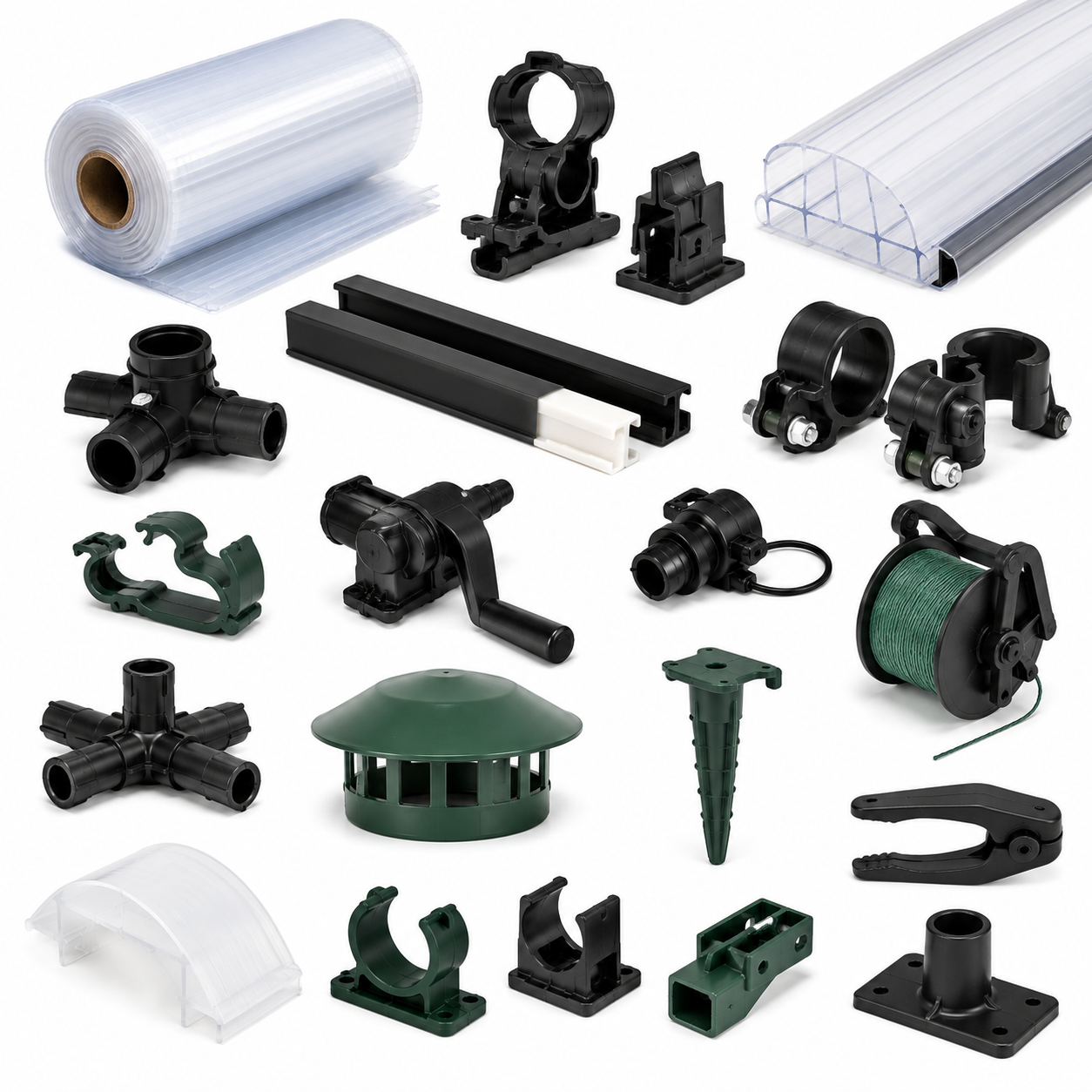
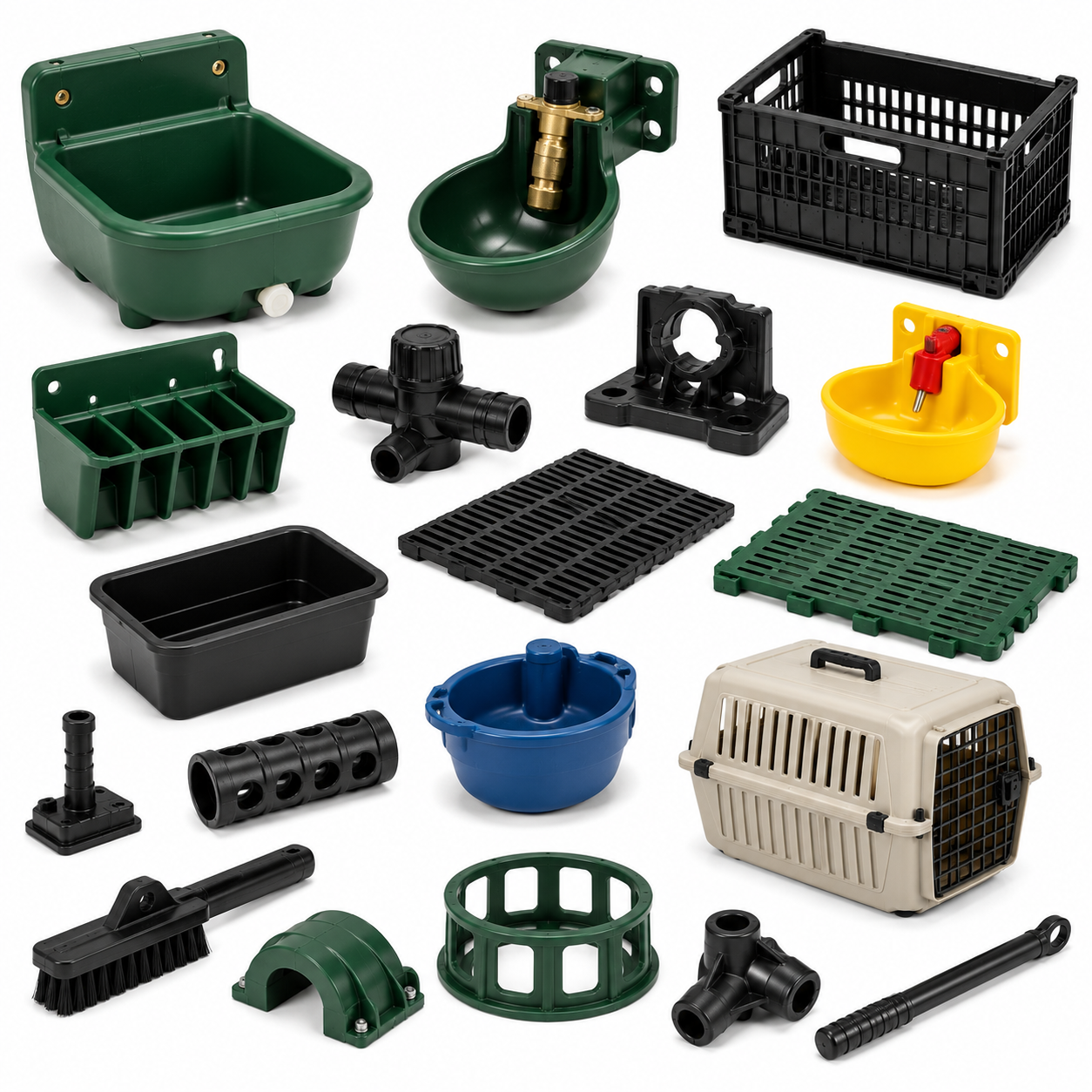
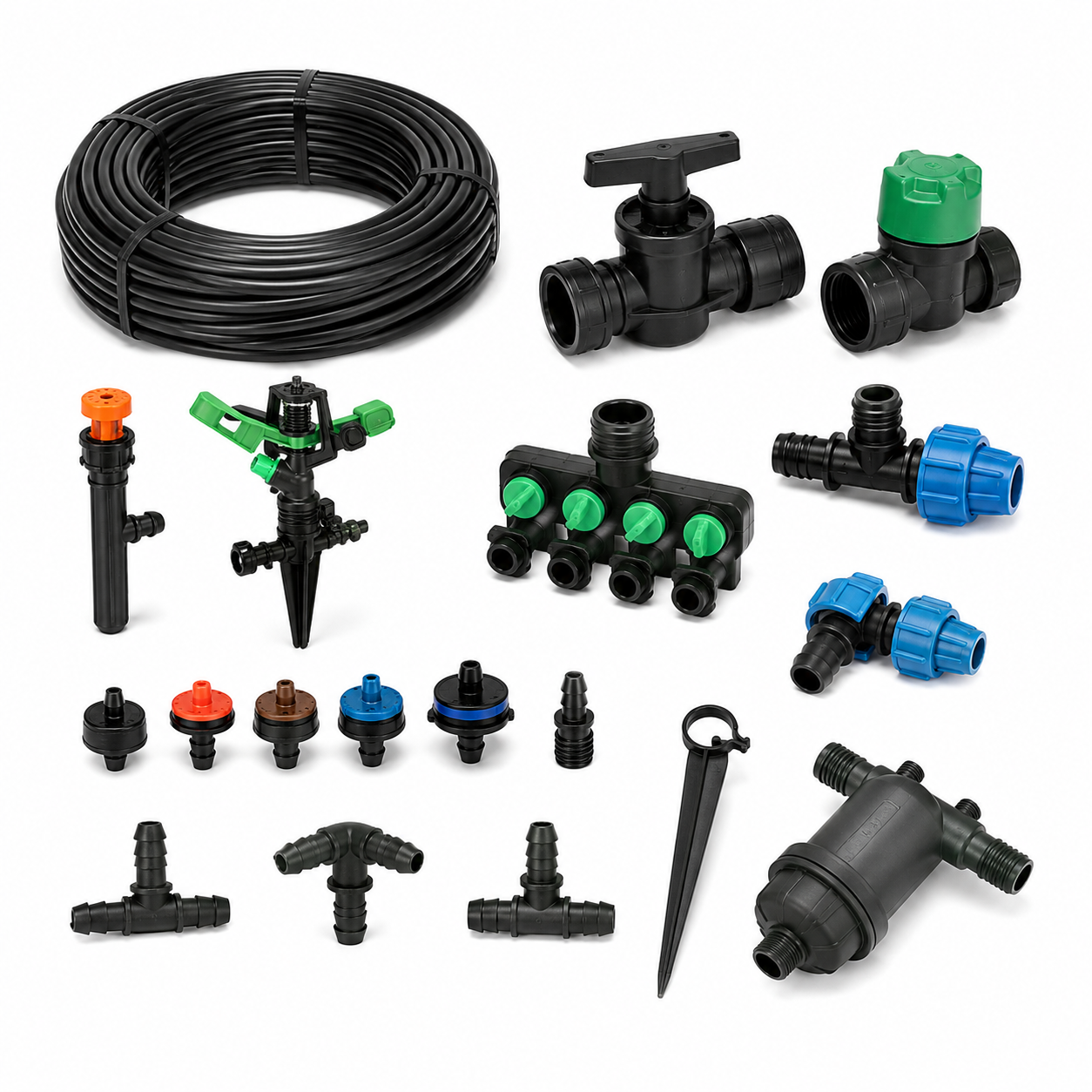
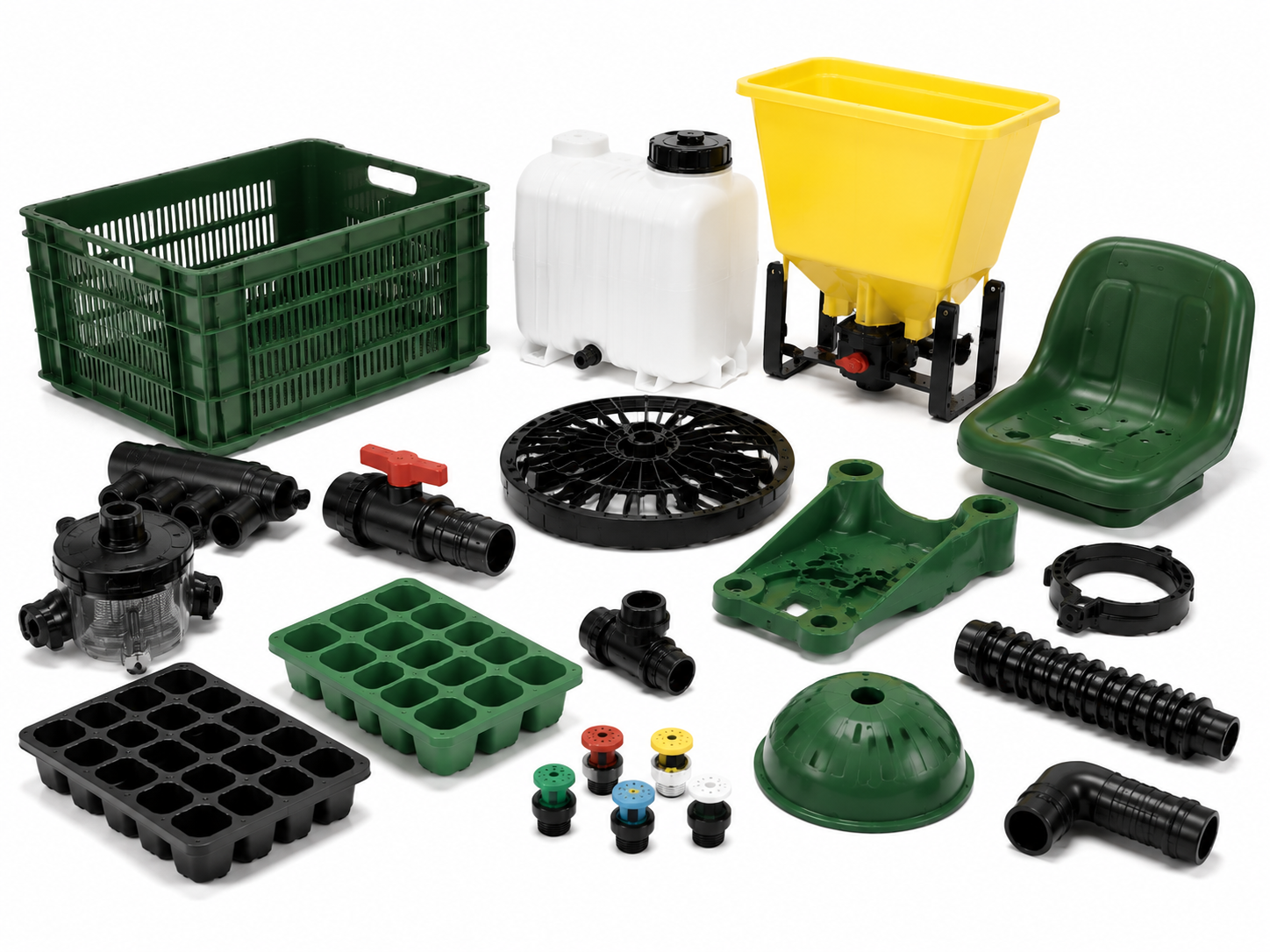
From irrigation fittings and greenhouse accessories to agricultural machinery components and livestock equipment, injection molded plastic parts are widely used throughout the agricultural industry.

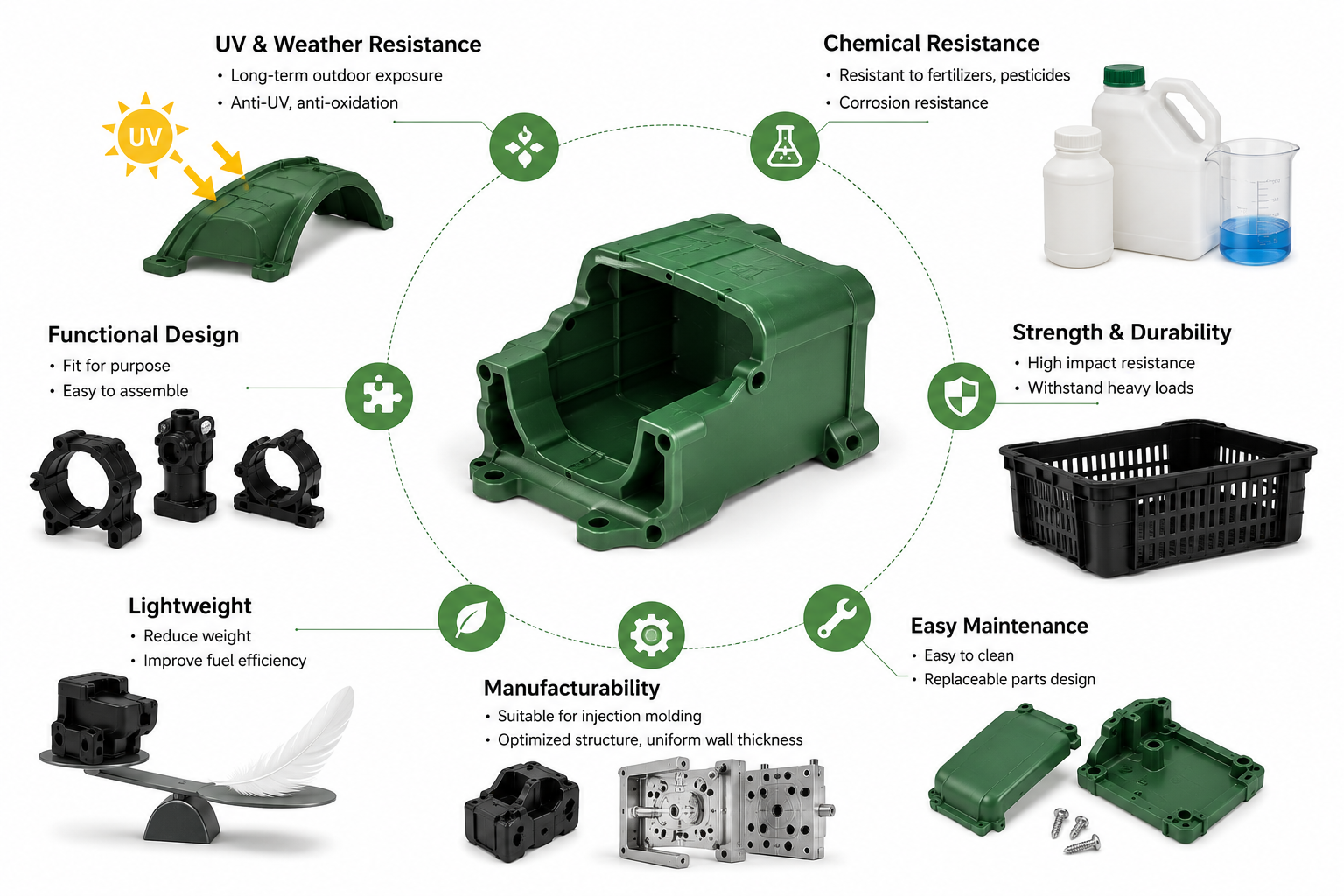
Compared with traditional metal manufacturing, engineering plastics offer several advantages, including corrosion resistance, chemical resistance, lightweight construction, and design flexibility. These characteristics make injection molding an ideal solution for agricultural environments where components are exposed to water, fertilizers, pesticides, UV radiation, and outdoor weather conditions.

At Samgo, we provide complete injection molding solutions for agricultural applications, including product design optimization, DFM analysis, Moldflow simulation, precision mold manufacturing, and high-quality plastic injection molding production.

This article explores the applications of injection molding in agriculture, commonly used materials, product design requirements, manufacturing challenges, and engineering solutions.


Почему Литье под давлением Is Important for Agriculture

Agricultural equipment operates in challenging environments. Components must withstand moisture, chemicals, temperature variations, outdoor exposure, and continuous mechanical stress.

Injection molding provides manufacturers with reliable solutions for producing durable agricultural plastic components at competitive costs.

Ключевые преимущества

  • Excellent chemical resistance
  • High weather durability
  • Lightweight construction
  • Large-scale production capability
  • Complex part geometry
  • Low maintenance requirements
  • Cost-effective manufacturing
  • Стабильное качество продукции

Advantages of Injection Molding for Agriculture

AdvantageValue for Agricultural Products
Corrosion ResistanceSuitable for outdoor environments
Lightweight DesignEasier installation and transportation
Chemical ResistanceCompatible with fertilizers and pesticides
Mass ProductionLower unit cost
Design FlexibilityComplex agricultural components
UV ProtectionLonger outdoor service life

Applications of Injection Molding in Agriculture

Injection molding supports many agricultural applications, from small precision components to large outdoor equipment housings.


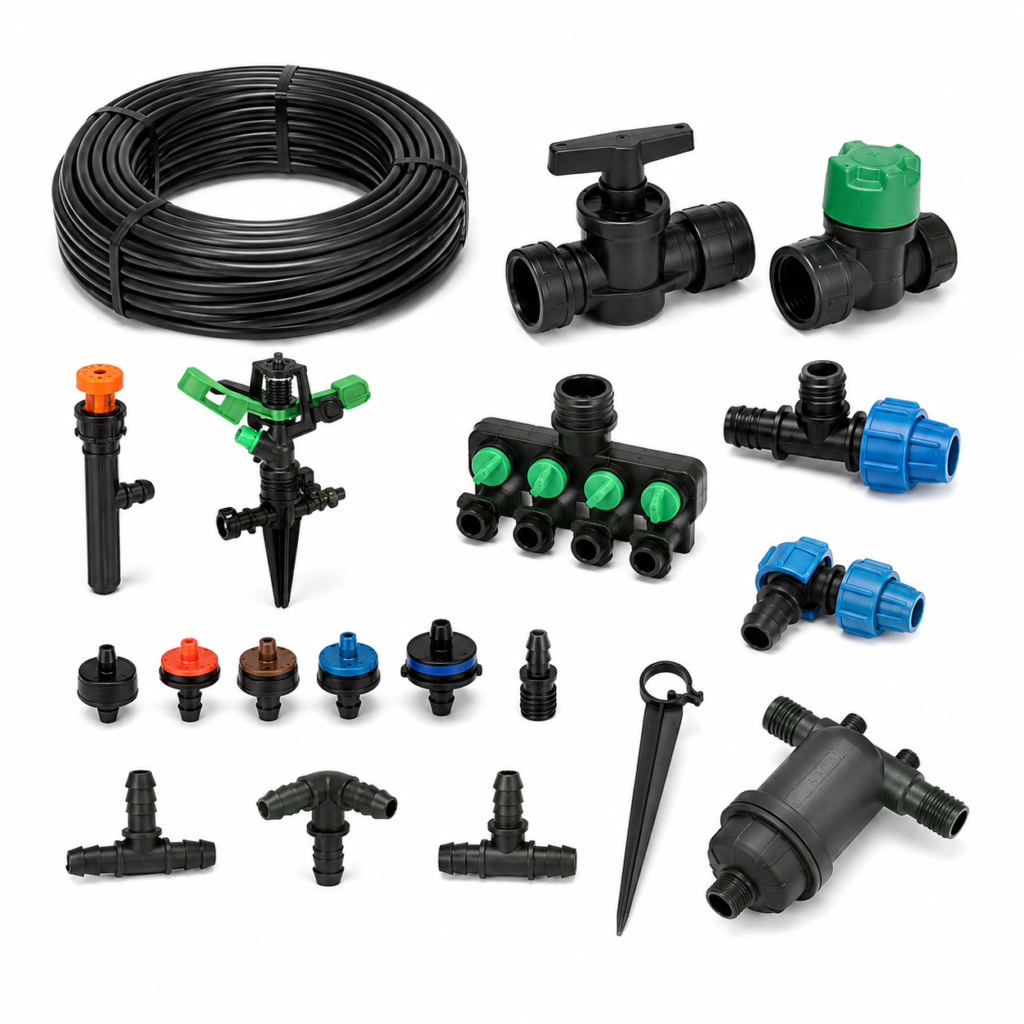
1. Irrigation Systems

Efficient water management is essential for modern agriculture. Injection molded plastic components are widely used in irrigation systems because they provide excellent chemical resistance and long service life.

К типичным продуктам относятся:

  • Irrigation connectors
  • Drip irrigation fittings
  • Spray nozzles
  • Valve housings
  • Water control components
  • Pipe adapters

Materials such as PP, PE, and POM are commonly selected due to their resistance to water, chemicals, and environmental conditions.


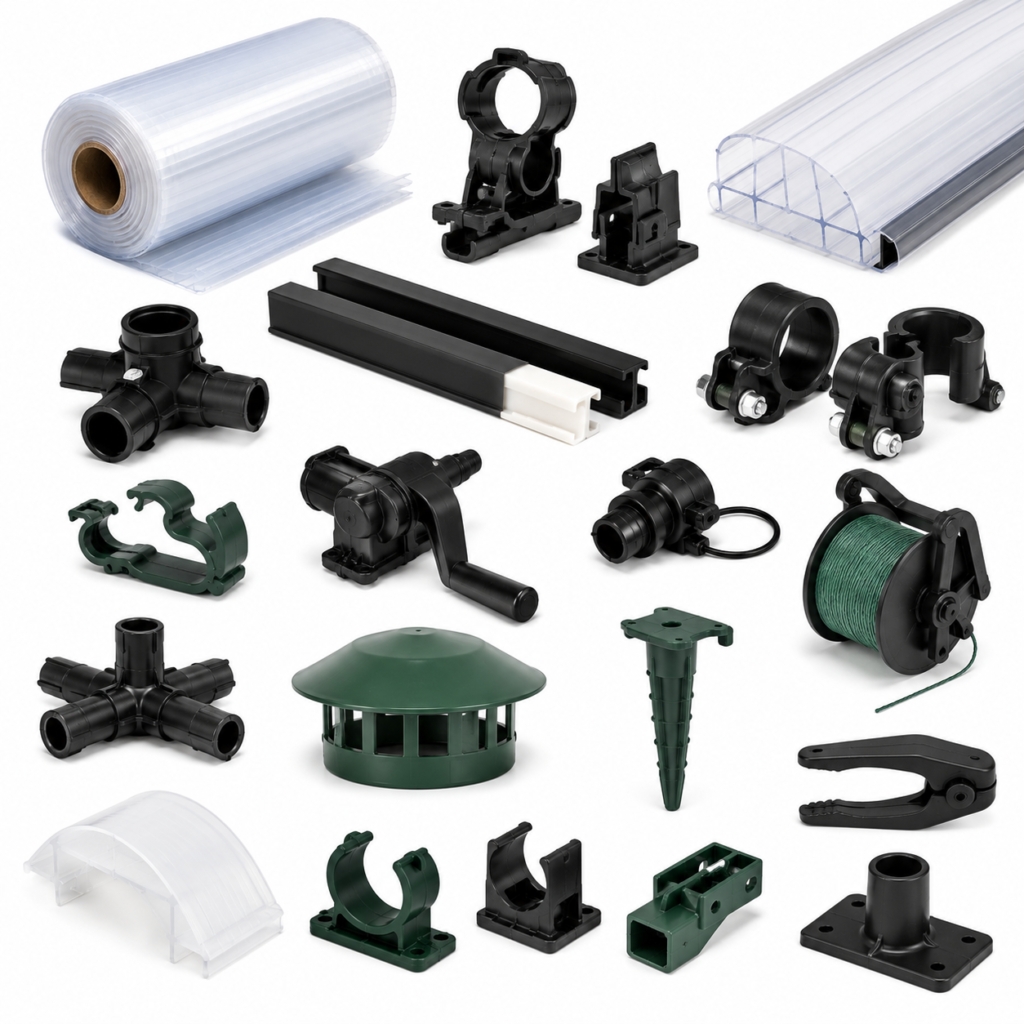
2. Greenhouse Equipment

Modern greenhouses require durable plastic components that can operate under continuous sunlight and humidity.

Injection molded greenhouse components include:

  • Ventilation parts
  • Plant support clips
  • Structural connectors
  • Film fixing components
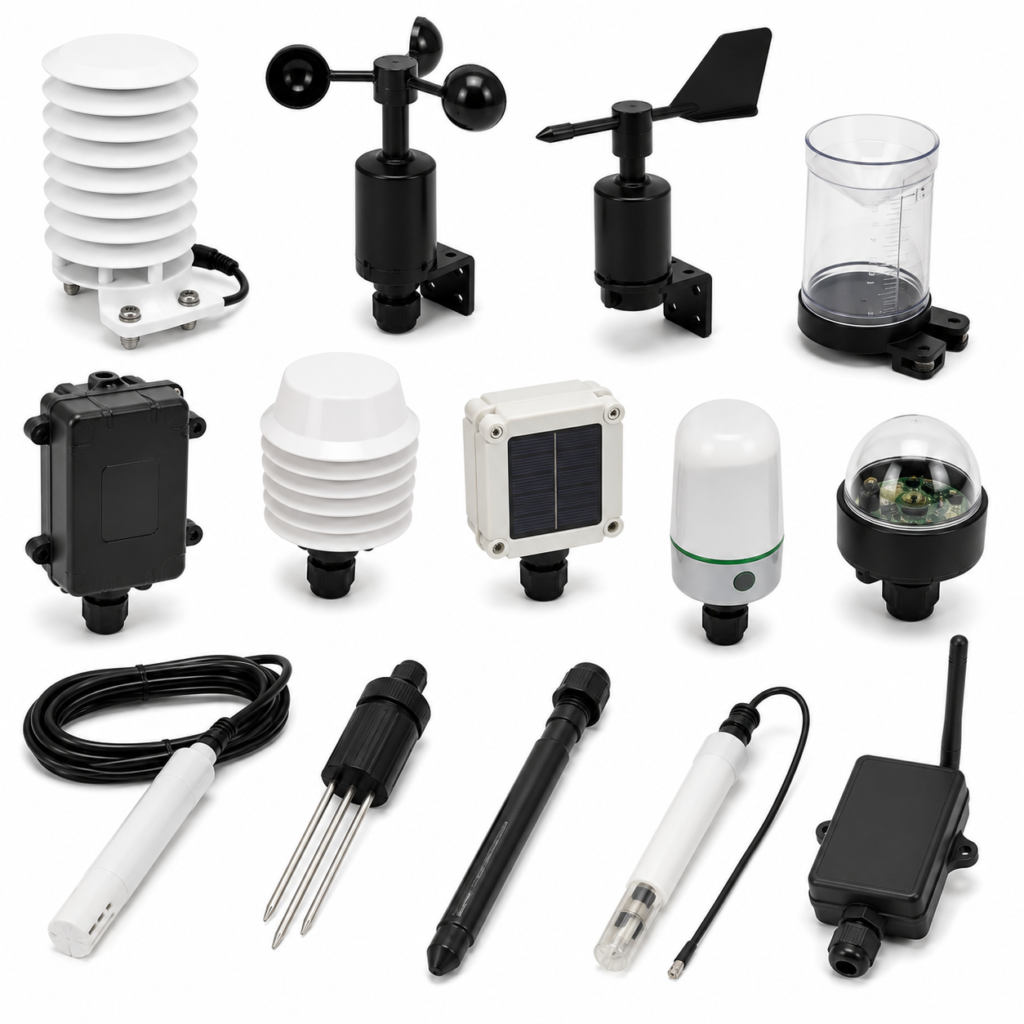
  • Sensor housings

UV-resistant materials such as ASA and UV-stabilized PP are often used to improve outdoor durability.


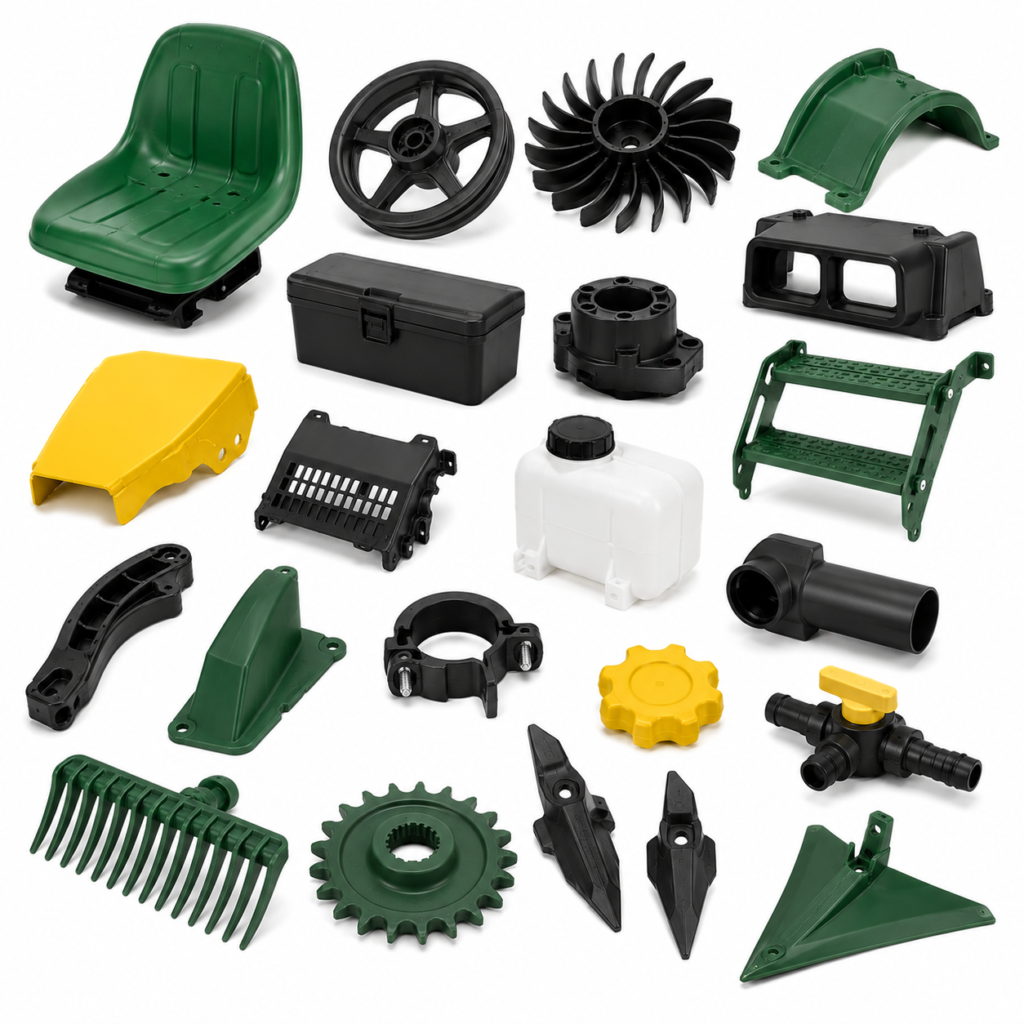
3. Agricultural Machinery Components

Agricultural machines require lightweight but strong plastic parts to reduce equipment weight and improve efficiency.

Common injection molded components include:

  • Защитные чехлы
  • Control panel housings
  • Handles
  • Protective guards
  • Storage containers
  • Machine brackets

Agricultural Application Table

ApplicationInjection Molded ComponentsCommon Materials
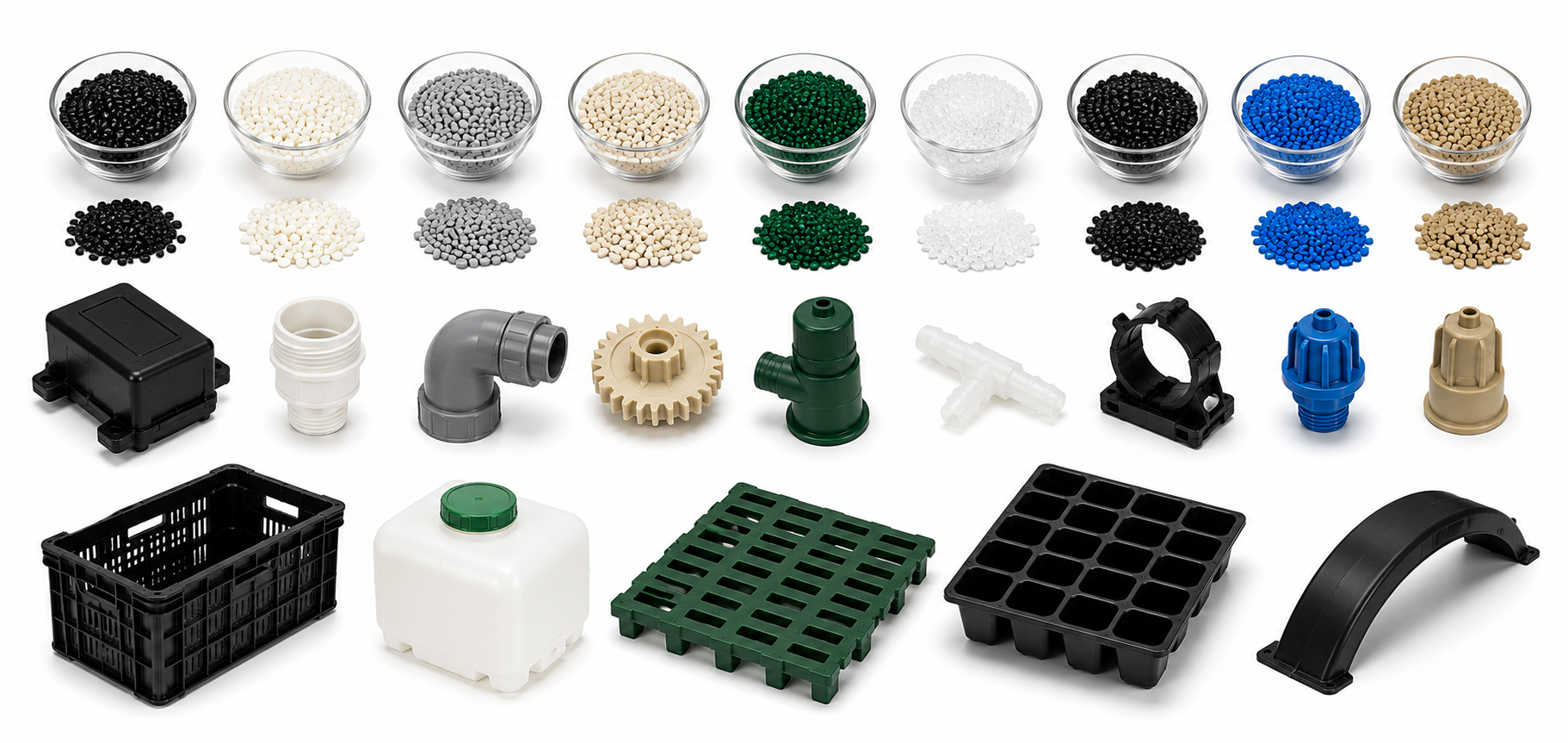
IrrigationValves, connectors, nozzlesPP, PE, POM
GreenhouseClips, brackets, housingsASA, PP, АБС
Farming EquipmentCovers, handles, guardsABS, PC/ABS, PA
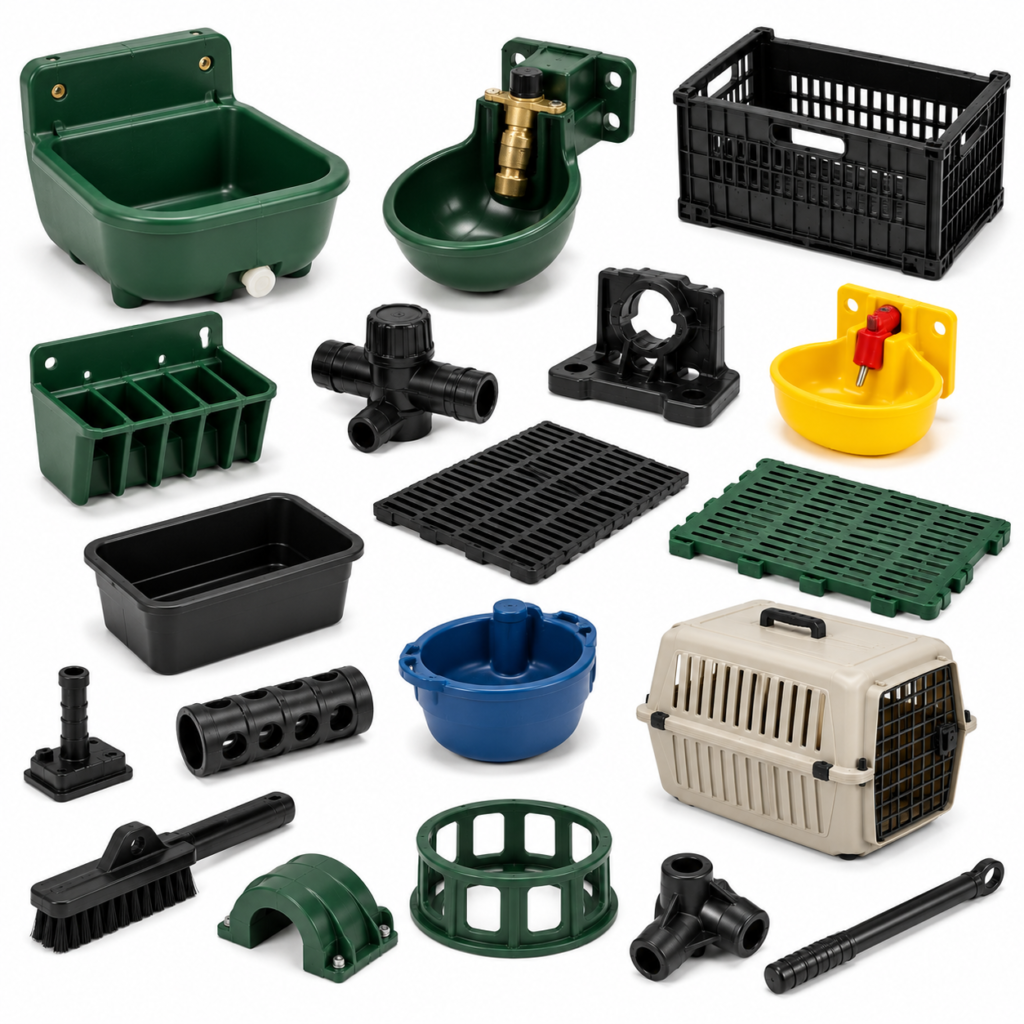
Livestock EquipmentFeeders, containersPP, HDPE
Agricultural SensorsElectronic housingsPC, ABS
Irrigation
Greenhouse
Farming Equipment
Livestock Equipment
Agricultural Sensors
Get a Quote

Common Materials for Agricultural Injection Molding

Material selection is critical because agricultural products often operate outdoors and are exposed to harsh conditions.

Frequently Used Materials

МатериалMain PropertiesAgricultural Applications
PPХимическая стойкость, низкая стоимостьIrrigation parts, containers
PEFlexibility and impact resistanceWater tanks, fittings
АБСGood strength and appearanceКорпуса оборудования
PC/ABSImpact resistance and durabilityElectronic enclosures
PA66 GF30Высокая механическая прочностьStructural components
ASAExcellent UV resistanceOutdoor housings
POMLow friction and precisionValves and gears

Material Selection Considerations

Agricultural plastic components should consider:

UV Resistance

Outdoor products require protection against sunlight degradation.

Chemical Resistance

Components may contact:

  • Fertilizers
  • Pesticides
  • Cleaning chemicals

Mechanical Strength

Moving agricultural equipment requires materials with excellent impact resistance.

Temperature Resistance

Products must operate under seasonal temperature changes.

Product Design Requirements for Agricultural Plastic Parts

Agricultural components require careful design consideration to ensure reliability in outdoor environments.

Important design factors include:

  • Uniform wall thickness
  • Reinforced ribs
  • Proper drainage design
  • UV-resistant material selection
  • Chemical compatibility
  • Easy assembly
  • Weather-resistant structure

For outdoor agricultural products, engineers should avoid water accumulation areas and design sufficient strength around mounting points.


Design Guidelines

Design ElementRecommendation
Wall ThicknessMaintain uniform thickness
RibsImprove strength without increasing weight
CornersUse proper radii to reduce stress
Mounting AreasAdd reinforcement
Surface DesignConsider dirt and water resistance

Outdoor Durability Requirements for Agricultural Plastic Components

Agricultural plastic products are commonly used in outdoor environments where they are exposed to sunlight, rain, fertilizers, pesticides, dust, and temperature fluctuations. Therefore, outdoor durability is one of the most important considerations when selecting materials and designing injection molded agricultural components.

Unlike indoor plastic products, agricultural components must maintain their mechanical properties and appearance after years of outdoor exposure.

Key Environmental Challenges

UV Exposure

Continuous sunlight exposure can cause plastic materials to become brittle, discolored, or cracked.

Solutions include:

  • UV-resistant additives
  • ASA materials
  • UV-stabilized PP
  • Weather-resistant coatings

Chemical Exposure

Agricultural components may contact:

  • Fertilizers
  • Pesticides
  • Cleaning agents
  • Soil chemicals

Materials must provide excellent chemical resistance to ensure long-term reliability.

Temperature Variation

Agricultural equipment often operates in extreme environments, from freezing winters to hot summers.

Materials must maintain:

  • Impact strength
  • Dimensional stability
  • Mechanical performance

Outdoor Material Performance Comparison

МатериалUV ResistanceChemical ResistanceТипичное приложение
PPСреднийОтличноIrrigation parts
PEСреднийОтличноWater tanks
ASAОтличноХорошоOutdoor housings
PC/ABSСреднийХорошоElectronic enclosures
PA66 GF30ХорошоХорошоStructural parts
POMХорошоОтличноPrecision valves

Agricultural Injection Mold Design Considerations

A reliable agricultural plastic component starts with proper mold design. Since many agricultural products require long service life and high-volume production, the mold must provide excellent durability, dimensional stability, and production efficiency.

Important Mold Design Factors

1. Mold Material Selection

Agricultural products often require thousands or millions of production cycles.

Recommended mold materials:

Mold ComponentRecommended Material
Core & CavityS136 / NAK80
Основа пресс-формыP20 / 718H
Wear InsertsH13 / SKD61

2. Cooling System Design

Proper cooling improves:

  • Cycle time
  • Точность размеров
  • Product consistency

3. Gate Design

Correct gate selection helps prevent:

  • Flow marks
  • Warpage
  • Uneven shrinkage

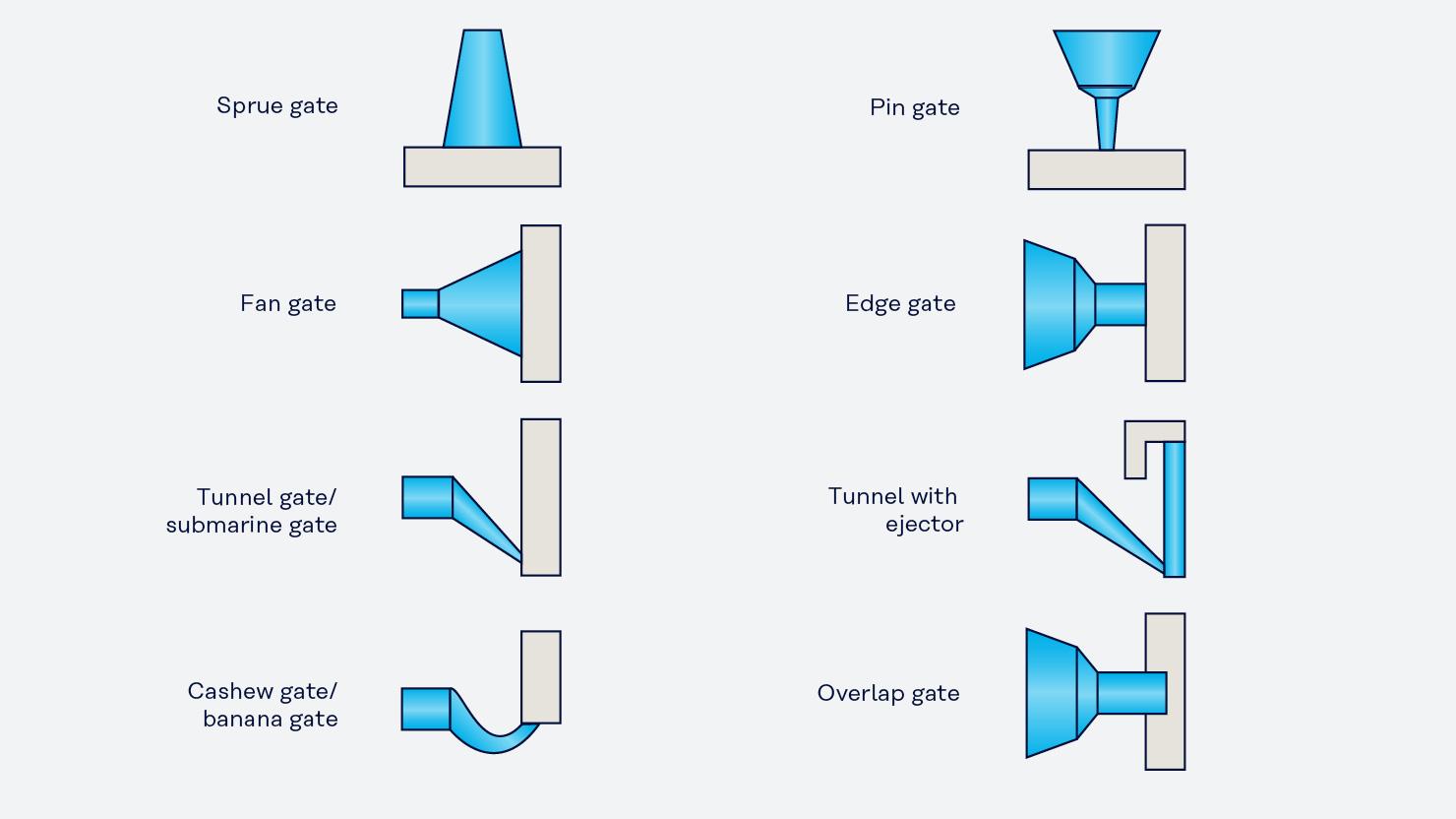
Common gate types:

  • Edge gate
  • Pin gate
  • Submarine gate
  • Hot runner gate

4. Draft Angle Design

Agricultural parts often have deep structures and textured surfaces. Proper draft angles ensure smooth ejection and prevent surface damage.


Agricultural Mold Design Checklist

Design ItemЦель
Охлаждающие каналыStable production
Proper Gate LocationBetter filling
Draft AngleEasy demolding
Reinforced StructureBetter durability
Wear ResistanceLonger mold life

Quality Control and Testing for Agricultural Injection Molding

Agricultural products must maintain reliable performance throughout their service life. Quality control ensures that every molded component meets dimensional, mechanical, and environmental requirements.

Common Inspection Methods

Dimensional Inspection

Used to verify:

  • Product dimensions
  • Assembly accuracy
  • Hole positions
  • Critical tolerances

Equipment:

  • Digital caliper
  • Micrometer
  • CMM inspection

Material Testing

Testing includes:

  • Impact resistance
  • UV aging
  • Chemical resistance
  • Thermal performance

Functional Testing

Examples:

  • Water pressure testing
  • Leakage testing
  • Assembly testing
  • Load testing

Quality Control Process

StageInspection Purpose
Material InspectionConfirm resin quality
Mold TrialVerify tooling performance
First Article InspectionApprove samples
Production InspectionMaintain consistency
Final InspectionShipment approval

Strict quality control management

Отправить запрос

Готовы начать свой проект? Воплотите свое видение в жизнь с помощью наших экспертных производственных решений и многолетнего опыта работы в отрасли
Свяжитесь с нами

Common Manufacturing Challenges and Solutions

Agricultural injection molded parts often involve large dimensions, outdoor requirements, and complex structures. Several manufacturing challenges must be carefully controlled.

ChallengeCauseSolution
WarpageUneven coolingOptimize cooling system
Sink MarksThick wall sectionsImprove product design
Short ShotPoor fillingOptimize gate design
CrackingWrong material selectionChoose suitable resin
Color FadingUV degradationAdd UV stabilizers
LeakagePoor sealing designImprove tolerance control

Engineering Solutions

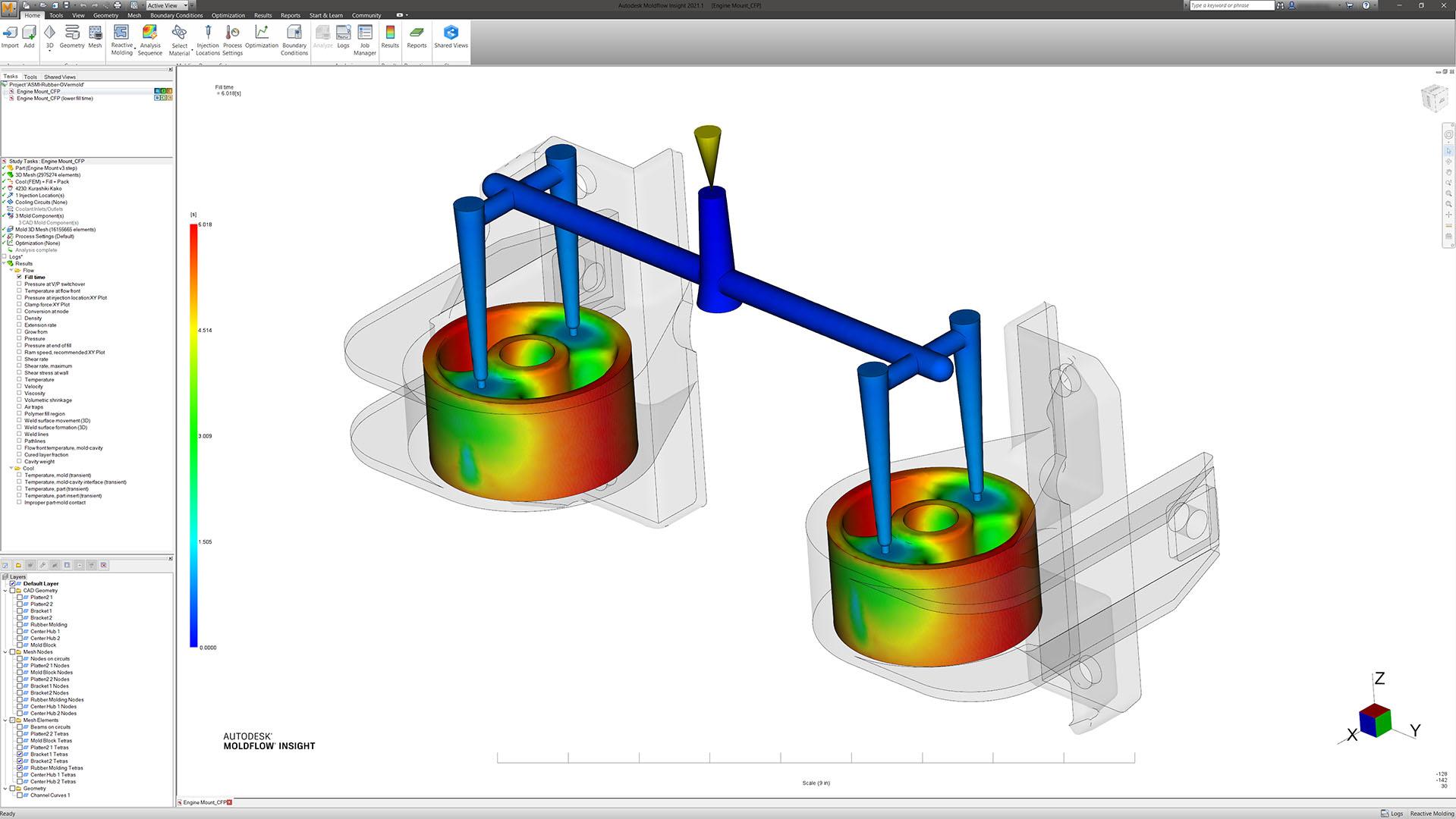
Моделирование методом Moldflow

Before manufacturing, Moldflow analysis helps predict:

  • Filling behavior
  • Weld lines
  • Air traps
  • Pressure distribution
  • Warpage risk

DFM Optimization

Design improvements include:

  • Uniform wall thickness
  • Proper rib structures
  • Improved draft angles
  • Optimized assembly features
https://images.openai.com/static-rsc-4/zRFtm5gNJn5g7u_1cDMKRhGCXUQ3VZeJWwSaWGejx5Ctp0-9FpTDJrK735Gjfz9HZ4HmLXvPGdUNqRkHBf7LyPXKadOXHq_A5qhjFCIiuI_qFvc09grhs9imeJjFQBj1g1fkhashYh_3NC8K-03KfRprcy94KI3OsuBgnowSBbn0UBEpa08Xx0rK_XxFv4hI?purpose=fullsize
 
https://images.openai.com/static-rsc-4/MTZfN5fGWIzBHynwutqXKZWT372D-3BR9TKYlzRHpcB5-qKzNBgfFL6nYzMnkJkmusiKlvzGHh4B9PS8-uFsqvVDfTyGPdzEkxD556zwmaW4JohcUXFwxVe0TVhFNhEFDLt3N4QB2C8LQ40uzJ9PwLqDm_oKH0WsvN0jLCrc6G-TFJtbG-Y1MW8kMA8kPBxu?purpose=fullsize

Why Choose Samgo for Agricultural Injection Molding?

Samgo provides complete plastic injection molding solutions for agricultural equipment manufacturers worldwide.

From initial product development to mass production, our engineering team supports customers with professional manufacturing expertise.

Our Services

СервисПольза для клиента
Дизайн продуктовImproved manufacturability
Анализ технологичности (DFM)Reduced development risk
Моделирование методом MoldflowOptimized filling performance
Injection Mold ManufacturingReliable tooling
Plastic Injection MoldingСтабильное серийное производство
Quality InspectionСтабильное качество продукции

Agricultural Industries We Serve

  • Irrigation equipment
  • Greenhouse systems
  • Agricultural machinery
  • Smart farming equipment
  • Livestock products
  • Water management systems

Our experience with engineering plastics, outdoor materials, and precision tooling allows us to provide reliable solutions for demanding agricultural applications.

https://images.openai.com/static-rsc-4/JSshWzVpNJBPvmVbWVZeWMHhAjllLNM-3U-CIgB7Ib8_RUN3ldbWofqNk2SJU5nOTbZkf4HAe7RkJNbjm14_rh7DtvCsFFK2mFu-9ZfPJxWB6-l1gG3NCcmJrEU_shIBQe_A3tmkDBRSCbd0m3z6mQJ25e_0FNUpX0RCPyNCjxd2fp9dxhGYAiiFozVRyU5B?purpose=fullsize
https://images.openai.com/static-rsc-4/AplqsFG6DREMVHfkcdHihXPwm4VVgLjZtem9H46MJTlrP8pyMUvJhzSnvwhhVGI4lwz0-JTJaL-DPFF5aMAUWA8B8RNbdLwVkdbQRzVC2BdA0k1WFFbmuyyIvbr2Qp5UG5nuZeyyWn3ElvEu8hYgp9thvAW3FK2DkOmgFyY-77U9eBlNTdg4ukAUItTEDC1C?purpose=fullsize

Frequently Asked Questions

What plastics are commonly used for agricultural injection molding?

Common materials include PP, PE, ASA, ABS, PC/ABS, PA66 GF30, and POM. The final selection depends on UV exposure, chemical contact, mechanical requirements, and operating conditions.


Are injection molded agricultural parts suitable for outdoor use?

Yes. With proper material selection and UV stabilization, injection molded parts can provide many years of outdoor service.


How can agricultural plastic products resist fertilizer and pesticide chemicals?

Engineers select chemically resistant materials such as PP, PE, and POM, while avoiding materials that may degrade under chemical exposure.


Can Samgo manufacture large agricultural plastic components?

Yes. Samgo provides custom injection molding solutions for both small precision components and larger agricultural housings and covers.
Узнать актуальную цену? Мы ответим как можно скорее (в течение 12 часов)

Типы литников для литья пластмасс под давлением: выбор, принципы проектирования, преимущества и области применения

Конструкция впускного литника — один из наиболее критических аспектов проектирования пресс-форм для литья пластмасс под давлением. Несмотря на то, что литник обычно является наименьшим элементом литниковой системы, он оказывает существенное влияние на течь расплава, давление выдержки, эффективность охлаждения, внешний вид детали, время цикла и общее качество продукта.

Плохо спроектированный литник может стать причиной многочисленных дефектов литья, включая недолив, утяжины, линии спая, струйное течение, следы ожогов, избыточный литниковый остаток и коробление детали. И наоборот, выбор подходящего типа и расположения литника помогает обеспечить сбалансированное заполнение, стабильную точность размеров и эффективное производство.
Читать далее »

Материалы из полипропилена (ПП): виды, марки, свойства и применение

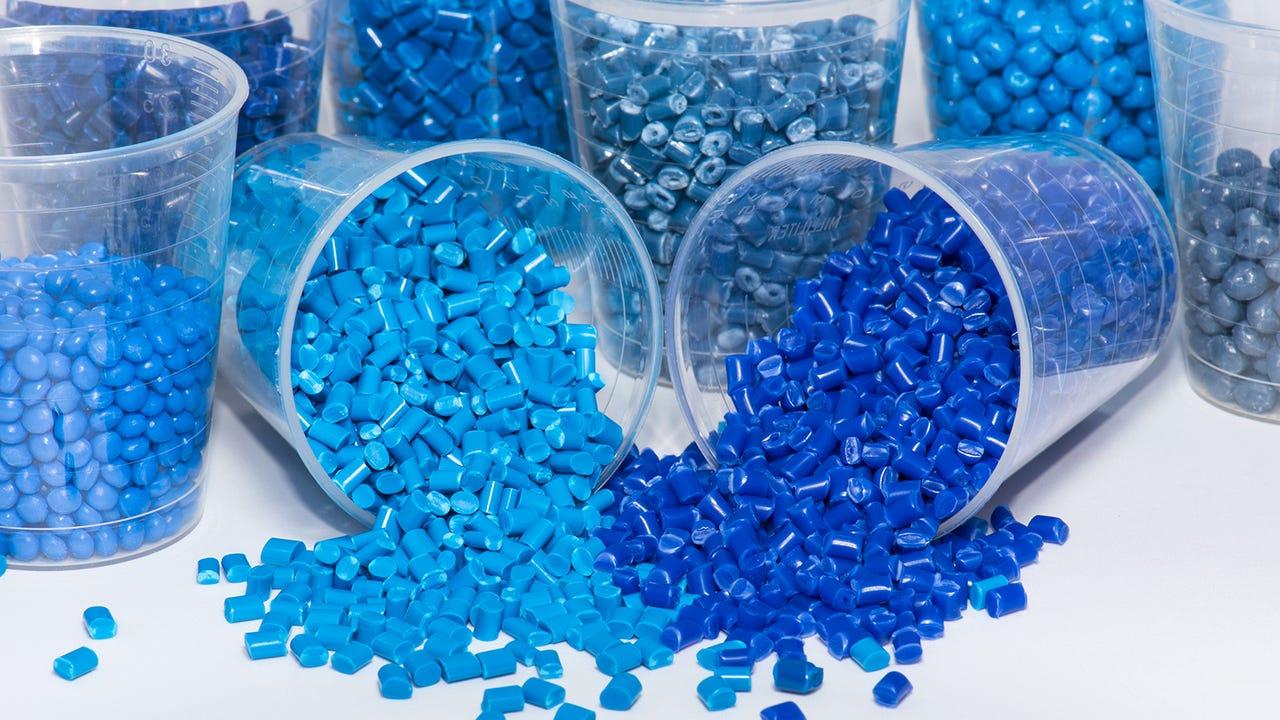
Полипропилен (ПП) является одним из самых широко используемых термопластов в мире, на долю которого приходится значительная часть мирового производства пластика. Благодаря прекрасному балансу механических свойств, химической стойкости, легкости и экономической эффективности, ПП стал предпочтительным материалом для бесчисленных изделий, получаемых методом литья под давлением, в автомобильной, бытовой, медицинской, упаковочной, электротехнической и промышленной отраслях.

Современный полипропилен выпускается во множестве различных марок и рецептур. Производители могут выбирать между гомополимером ПП, статичным сополимером ПП, блок-сополимером ПП, армированным стекловолокном ПП, наполненным минералами ПП, огнестойким ПП, УФ-стабилизированным ПП и пищевым ПП в зависимости от требований к изделию.
Читать далее »

Анализ течения расплава при литье под давлением: Полное руководство по симуляции Moldflow для пластиковых деталей

В современной разработке пластиковых изделий производство пресс-форм больше не опирается исключительно на инженерный опыт. Компьютерное проектирование (CAE) стало неотъемлемой частью процесса литья под давлением, позволяя инженерам прогнозировать потенциальные дефекты формования до изготовления пресс-формы. Среди этих технологий анализ течения расплава при литье под давлением, часто называемый анализом Moldflow, является одним из наиболее ценных инженерных инструментов для снижения рисков разработки, сокращения сроков выполнения заказов и повышения качества деталей.

Читать далее »