
Agricultural Injection Molding: Applications, Materials, Manufacturing Standards, and Industry Solutions


Índice
Introducción
Agriculture has experienced significant technological transformation in recent decades. Modern farming equipment increasingly relies on lightweight, durable, and cost-effective plastic components to improve efficiency, reduce maintenance costs, and support automated agricultural systems.
Plastic injection molding has become an essential manufacturing process for agricultural products due to its ability to produce high-volume components with excellent consistency, complex geometries, and competitive production costs.
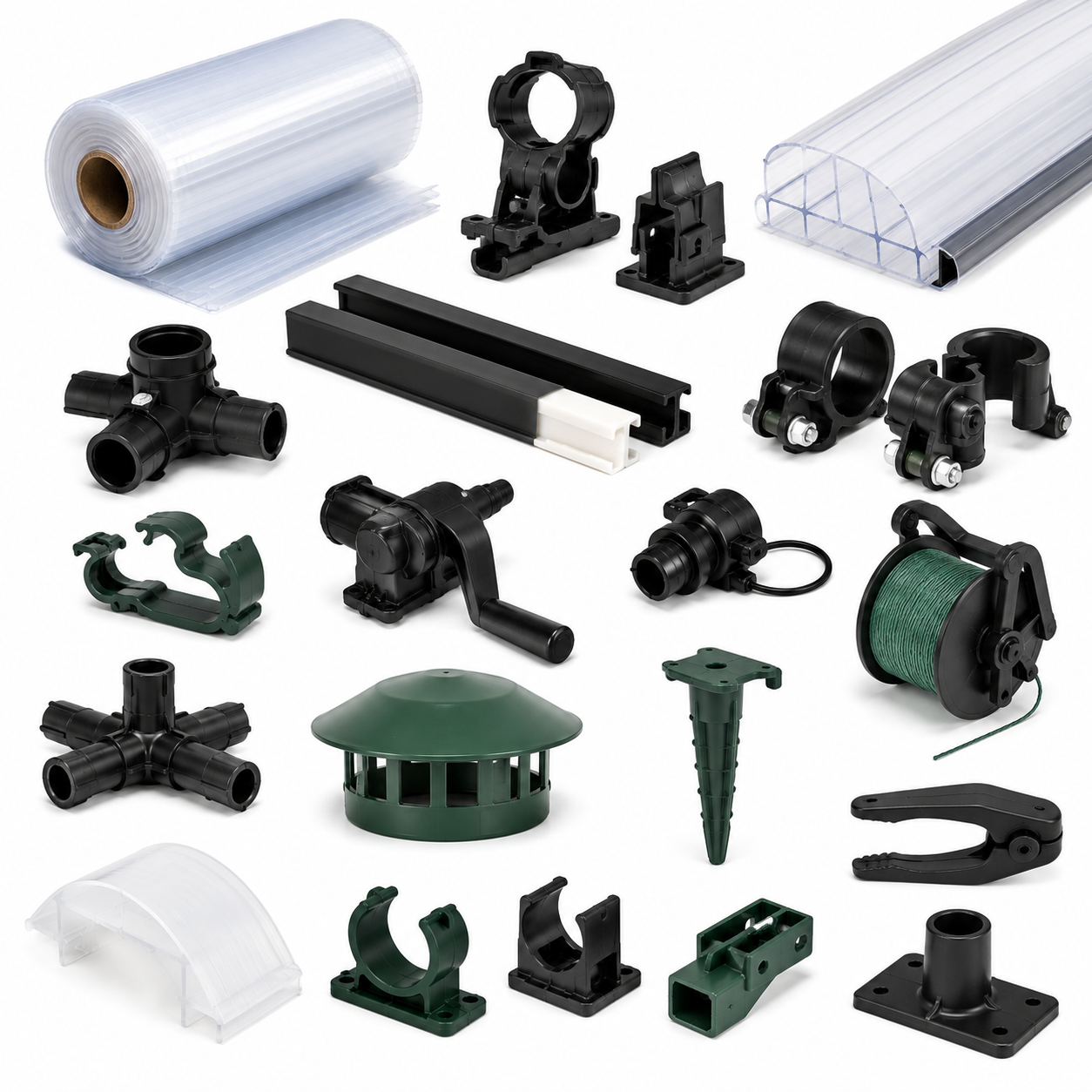
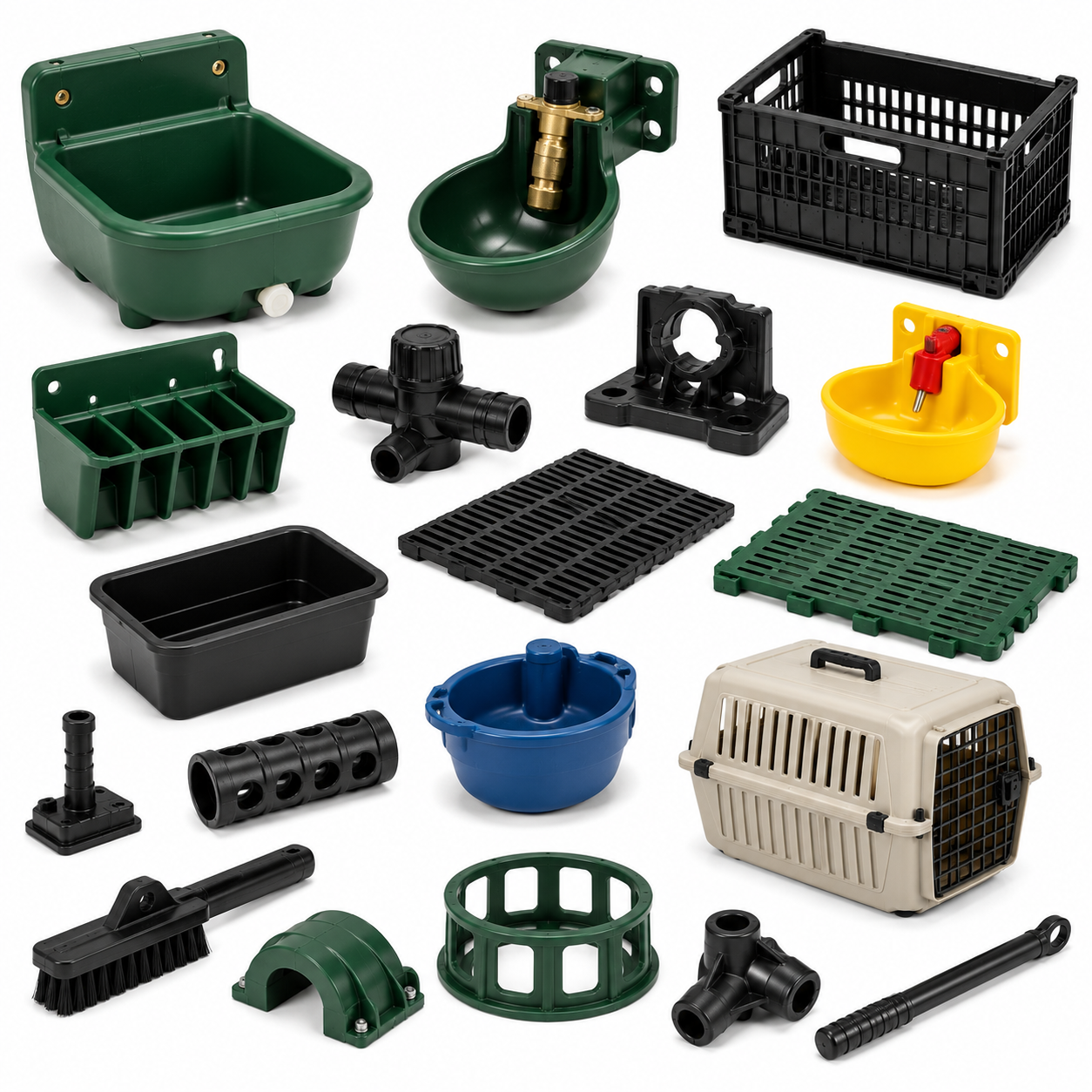
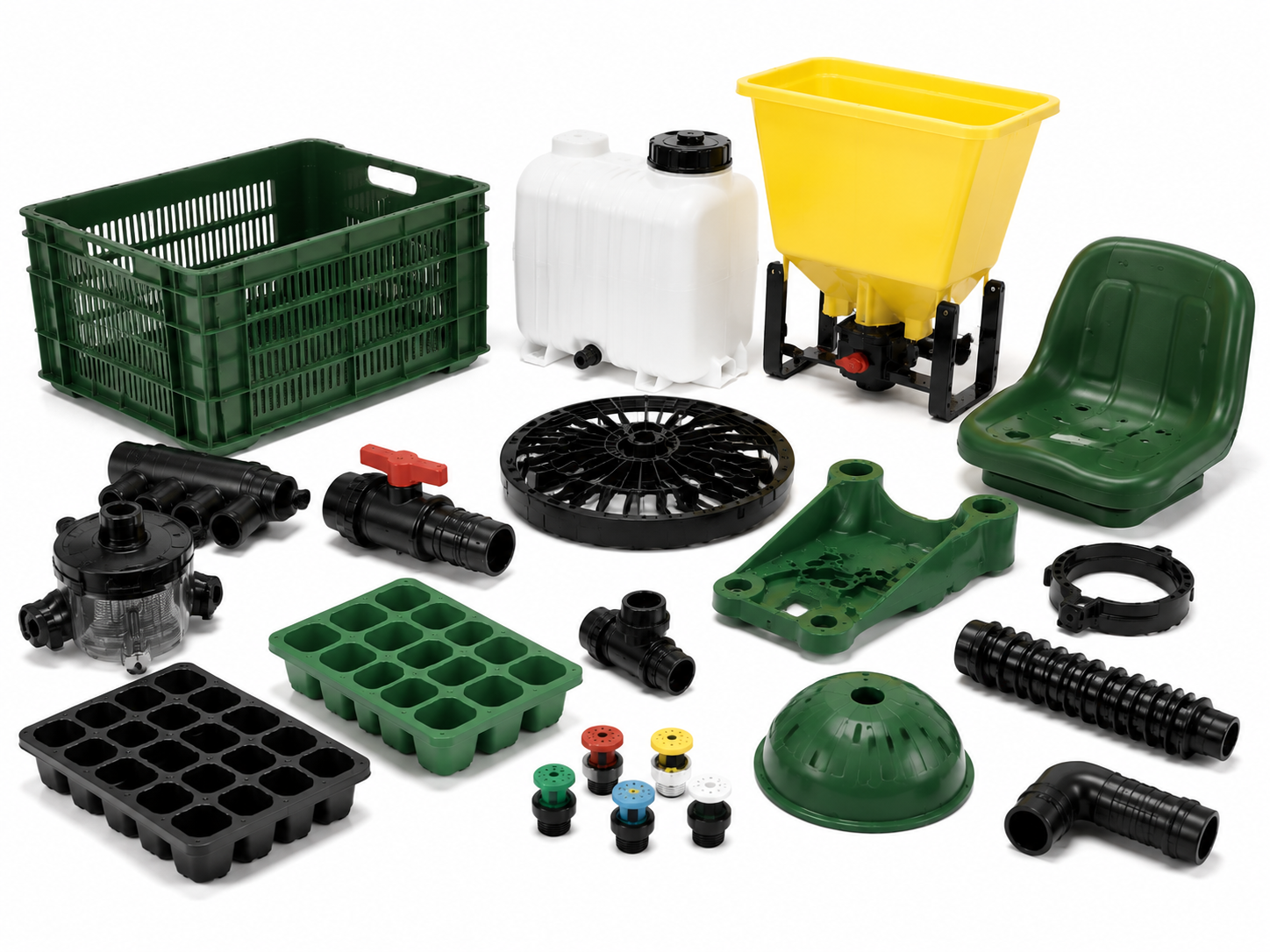
From irrigation fittings and greenhouse accessories to agricultural machinery components and livestock equipment, injection molded plastic parts are widely used throughout the agricultural industry.
Compared with traditional metal manufacturing, engineering plastics offer several advantages, including corrosion resistance, chemical resistance, lightweight construction, and design flexibility. These characteristics make injection molding an ideal solution for agricultural environments where components are exposed to water, fertilizers, pesticides, UV radiation, and outdoor weather conditions.
At Samgo, we provide complete injection molding solutions for agricultural applications, including product design optimization, DFM analysis, Moldflow simulation, precision mold manufacturing, and high-quality plastic injection molding production.
This article explores the applications of injection molding in agriculture, commonly used materials, product design requirements, manufacturing challenges, and engineering solutions.
¿Por qué Moldeo por inyección Is Important for Agriculture
Agricultural equipment operates in challenging environments. Components must withstand moisture, chemicals, temperature variations, outdoor exposure, and continuous mechanical stress.
Injection molding provides manufacturers with reliable solutions for producing durable agricultural plastic components at competitive costs.
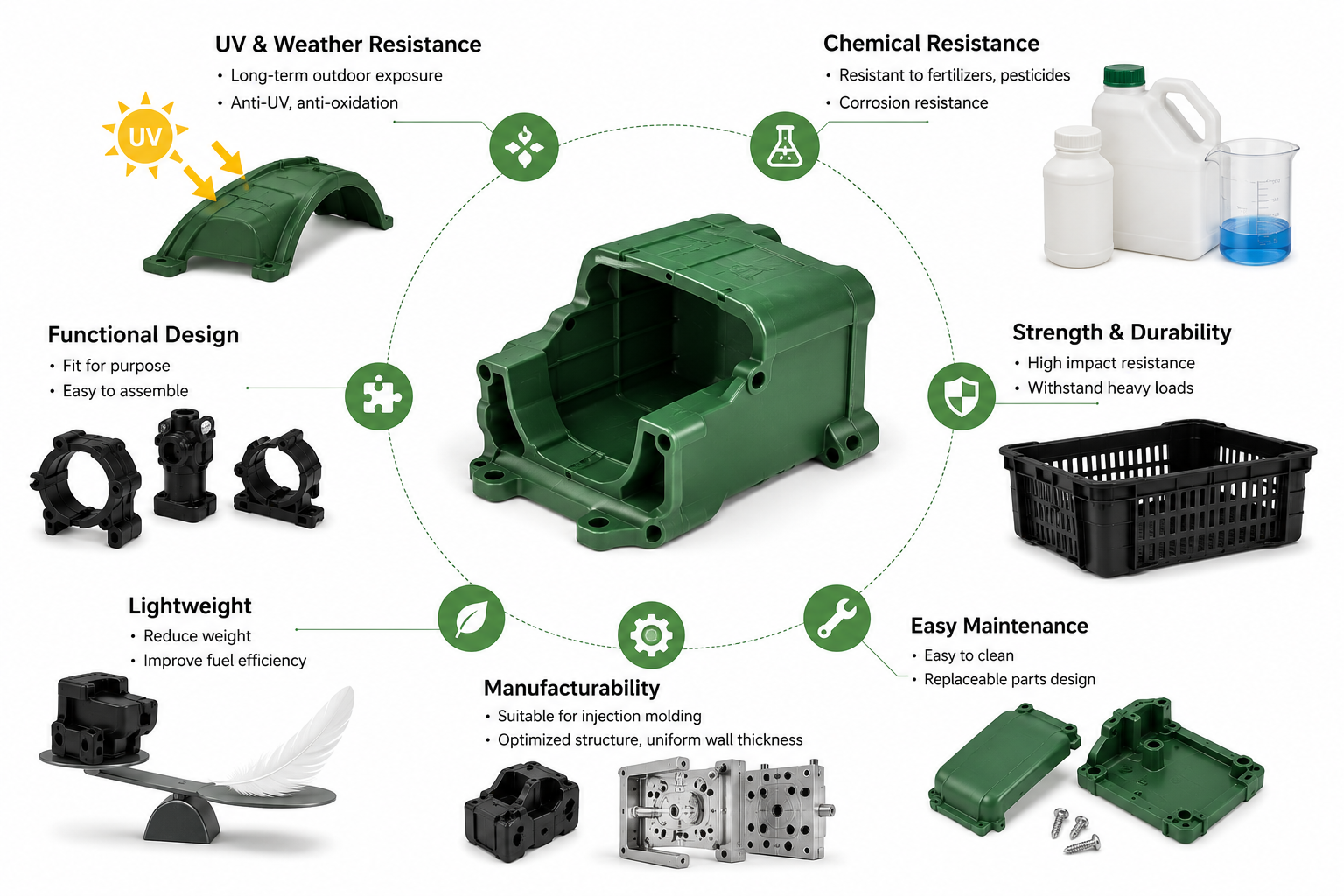
Principales Ventajas
- Excelente resistencia química
- High weather durability
- Lightweight construction
- Large-scale production capability
- Complex part geometry
- Low maintenance requirements
- Cost-effective manufacturing
- Calidad de producto constante
Advantages of Injection Molding for Agriculture
| Advantage | Value for Agricultural Products |
|---|---|
| Corrosion Resistance | Suitable for outdoor environments |
| Diseño ligero | Easier installation and transportation |
| Resistencia química | Compatible with fertilizers and pesticides |
| Mass Production | Lower unit cost |
| Design Flexibility | Complex agricultural components |
| UV Protection | Longer outdoor service life |

Applications of Injection Molding in Agriculture
Injection molding supports many agricultural applications, from small precision components to large outdoor equipment housings.
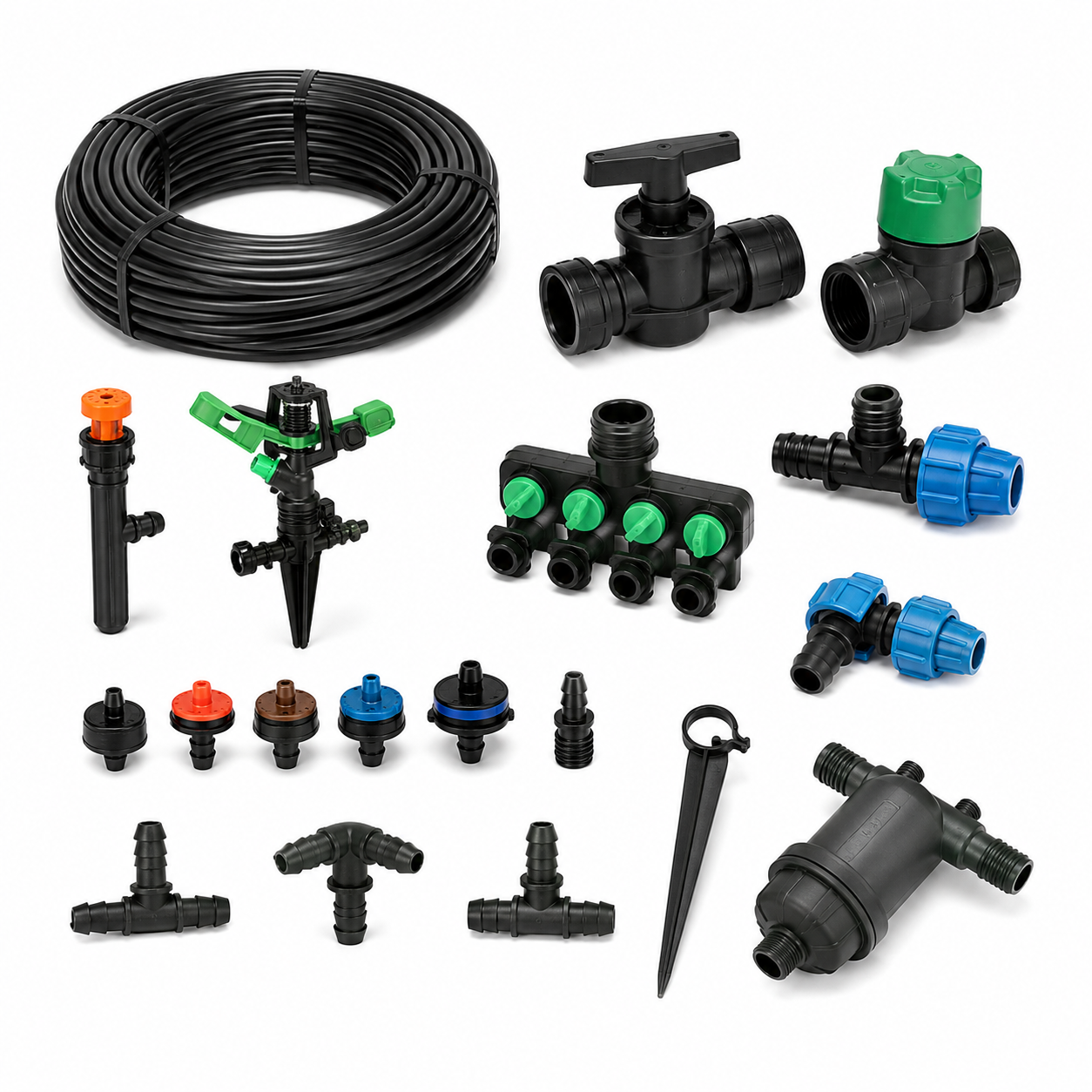
1. Irrigation Systems
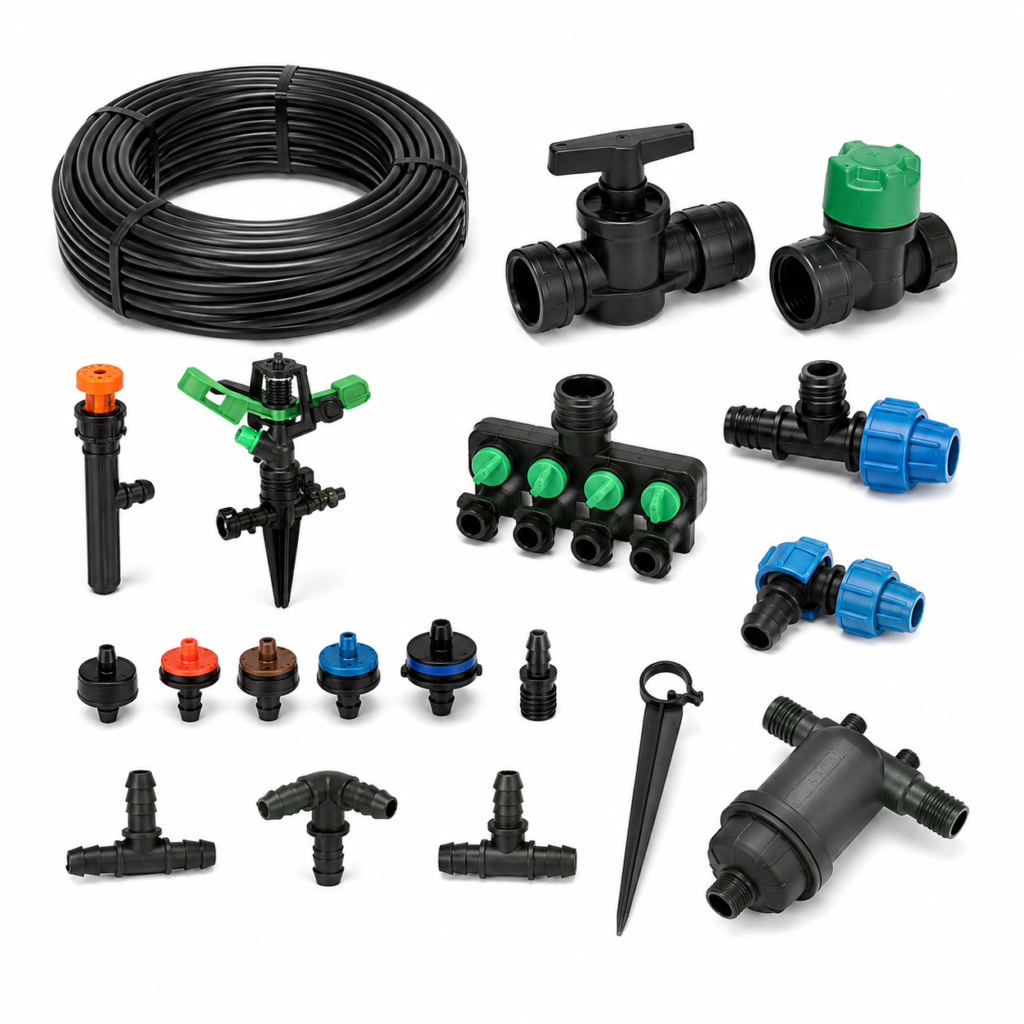
Efficient water management is essential for modern agriculture. Injection molded plastic components are widely used in irrigation systems because they provide excellent chemical resistance and long service life.
Los productos típicos incluyen:
- Irrigation connectors
- Drip irrigation fittings
- Spray nozzles
- Valve housings
- Water control components
- Pipe adapters
Materials such as PP, PE, and POM are commonly selected due to their resistance to water, chemicals, and environmental conditions.
2. Greenhouse Equipment
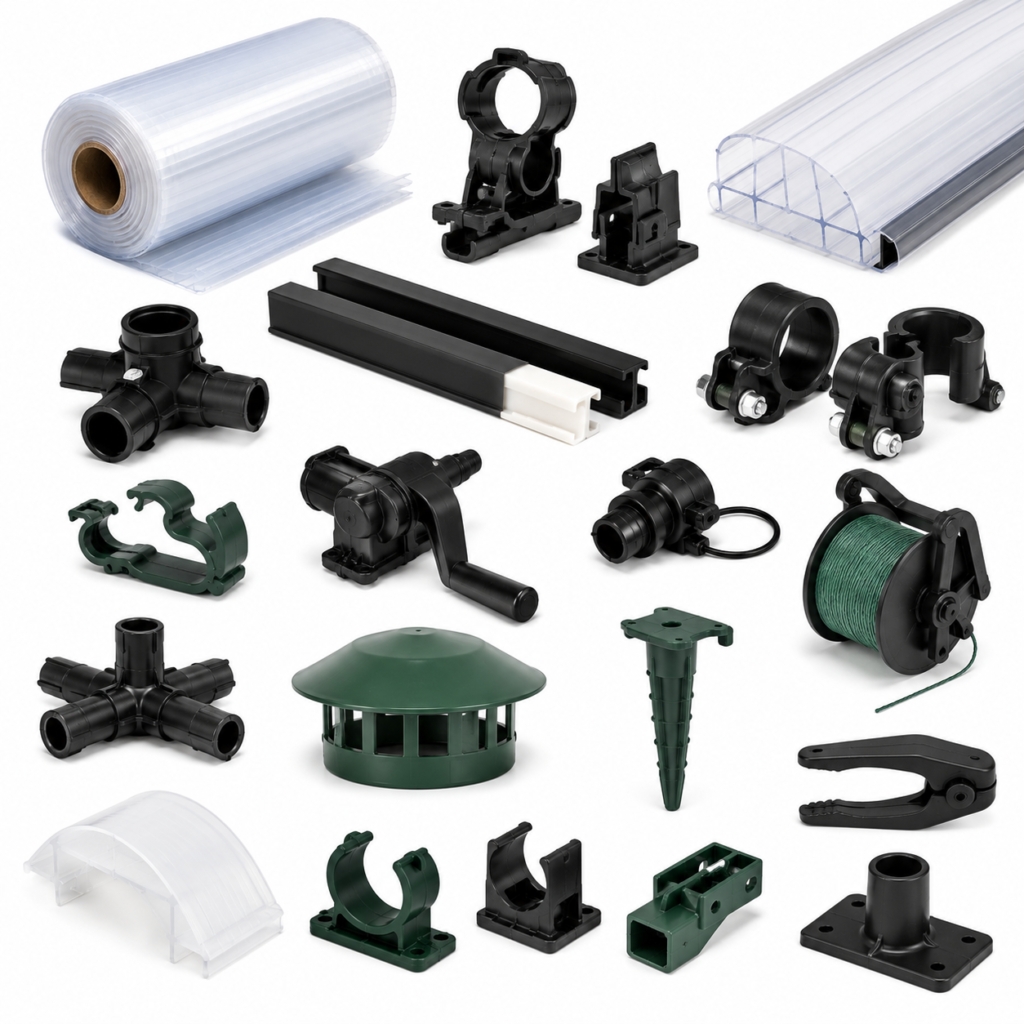
Modern greenhouses require durable plastic components that can operate under continuous sunlight and humidity.
Injection molded greenhouse components include:
- Ventilation parts
- Plant support clips
- Structural connectors
- Film fixing components
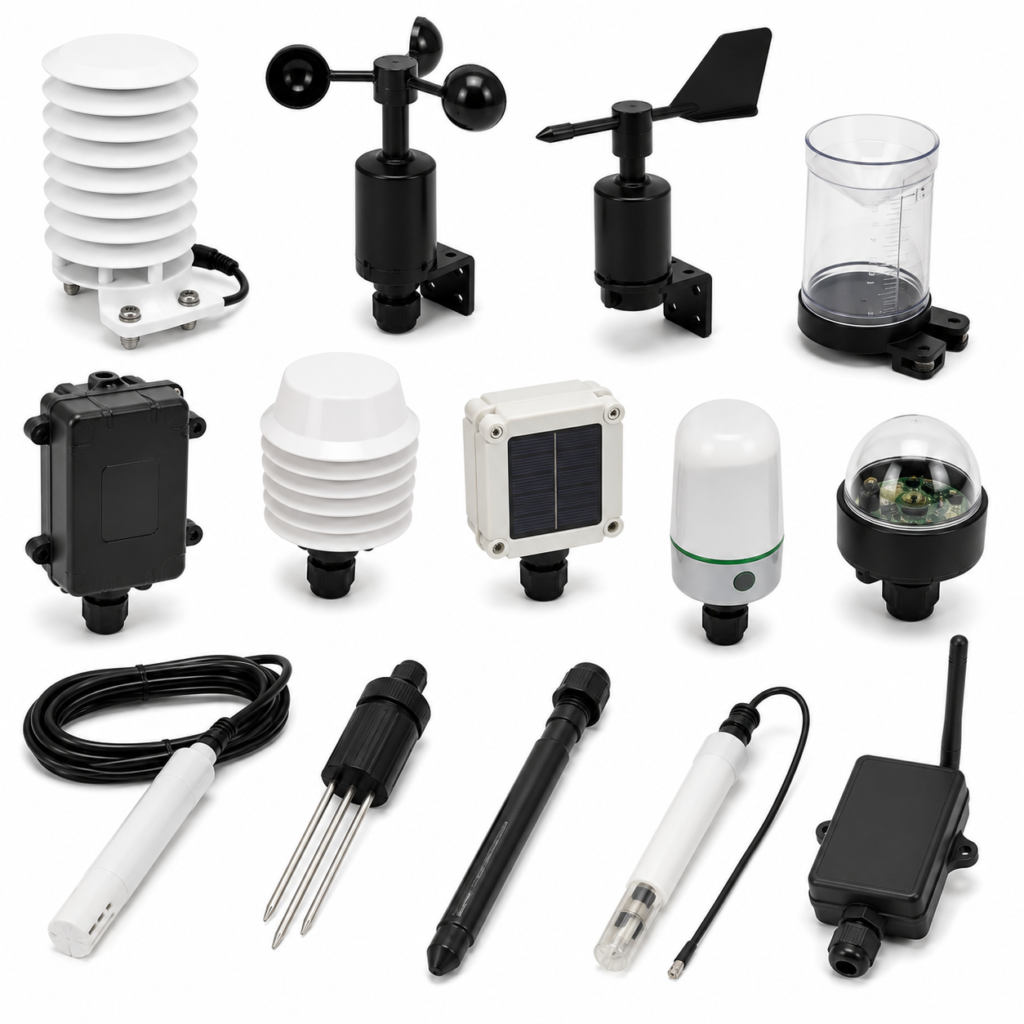
- Alojamientos de sensores
UV-resistant materials such as ASA and UV-stabilized PP are often used to improve outdoor durability.
3. Agricultural Machinery Components
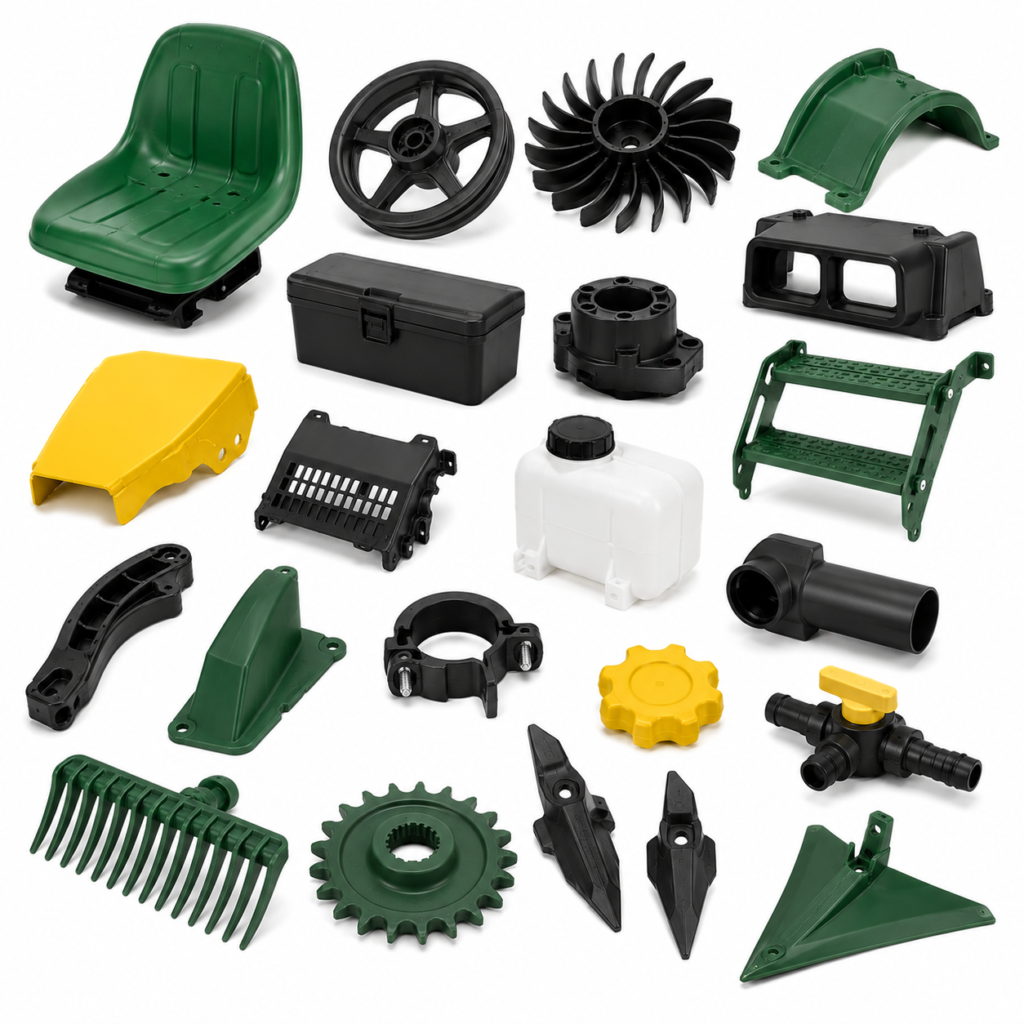
Agricultural machines require lightweight but strong plastic parts to reduce equipment weight and improve efficiency.
Common injection molded components include:
- Fundas protectoras
- Control panel housings
- Handles
- Protective guards
- Storage containers
- Machine brackets
Agricultural Application Table


Common Materials for Agricultural Injection Molding
Material selection is critical because agricultural products often operate outdoors and are exposed to harsh conditions.
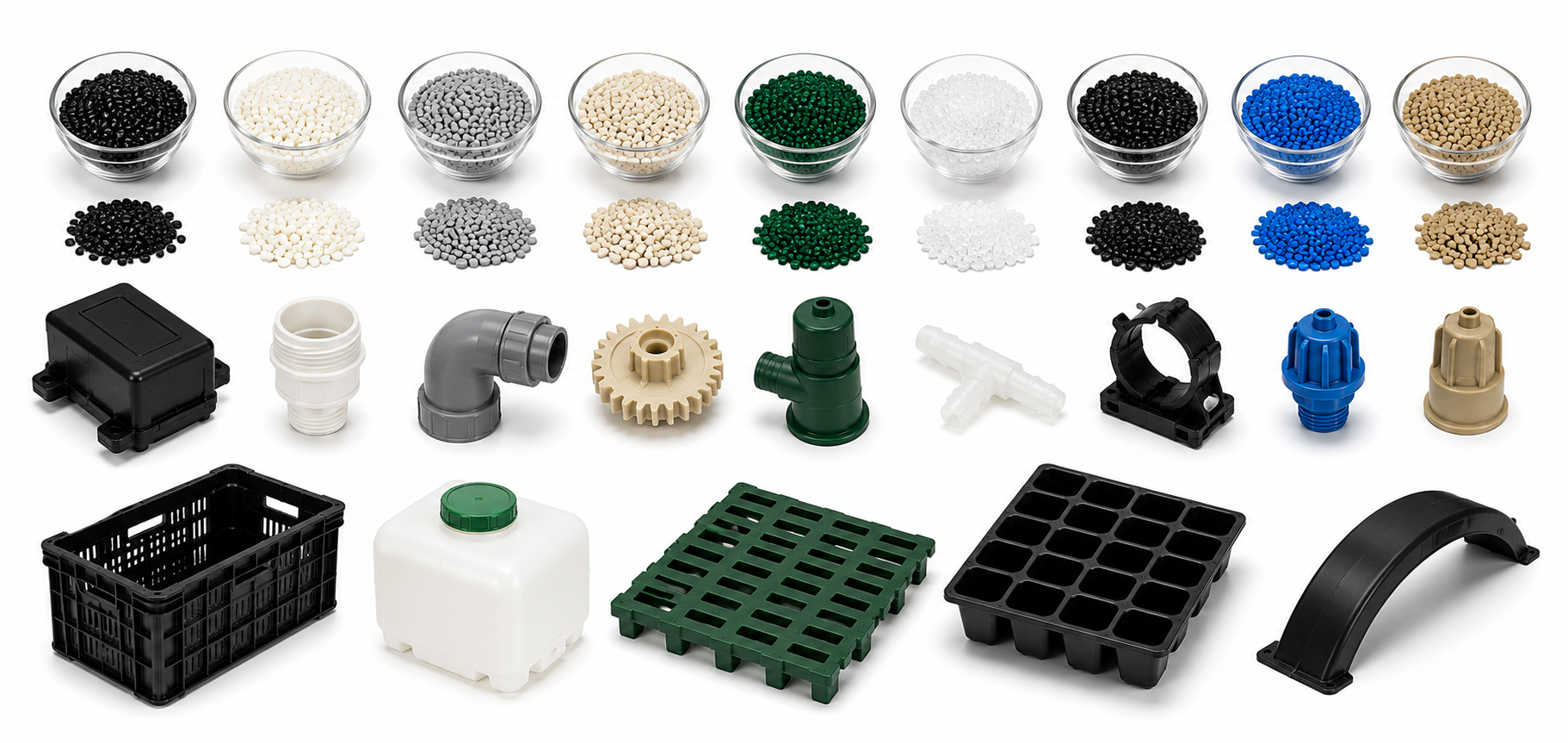
Materiales de uso frecuente
| Material | Main Properties | Agricultural Applications |
|---|---|---|
| PP | Resistencia química, bajo costo | Irrigation parts, containers |
| PE | Flexibility and impact resistance | Water tanks, fittings |
| ABS | Good strength and appearance | Carcasas de equipos |
| PC/ABS | Impact resistance and durability | Electronic enclosures |
| PA66 GF30 | Alta resistencia mecánica | Structural components |
| ASA | Excellent UV resistance | Outdoor housings |
| POM | Low friction and precision | Valves and gears |
Selección de materiales Considerations
Agricultural plastic components should consider:
UV Resistance
Outdoor products require protection against sunlight degradation.
Resistencia química
Components may contact:
- Fertilizers
- Pesticides
- Cleaning chemicals
Mechanical Strength
Moving agricultural equipment requires materials with excellent impact resistance.
Temperature Resistance
Products must operate under seasonal temperature changes.

Product Design Requirements for Agricultural Plastic Parts
Agricultural components require careful design consideration to ensure reliability in outdoor environments.
Important design factors include:
- Espesor de pared uniforme
- Reinforced ribs
- Proper drainage design
- UV-resistant material selection
- Chemical compatibility
- Easy assembly
- Weather-resistant structure
For outdoor agricultural products, engineers should avoid water accumulation areas and design sufficient strength around mounting points.
Design Guidelines
| Design Element | Recomendación |
|---|---|
| Wall Thickness | Maintain uniform thickness |
| Ribs | Improve strength without increasing weight |
| Corners | Use proper radii to reduce stress |
| Mounting Areas | Add reinforcement |
| Surface Design | Consider dirt and water resistance |

Outdoor Durability Requirements for Agricultural Plastic Components
Agricultural plastic products are commonly used in outdoor environments where they are exposed to sunlight, rain, fertilizers, pesticides, dust, and temperature fluctuations. Therefore, outdoor durability is one of the most important considerations when selecting materials and designing injection molded agricultural components.
Unlike indoor plastic products, agricultural components must maintain their mechanical properties and appearance after years of outdoor exposure.
Key Environmental Challenges
UV Exposure
Continuous sunlight exposure can cause plastic materials to become brittle, discolored, or cracked.
Solutions include:
- UV-resistant additives
- ASA materials
- UV-stabilized PP
- Weather-resistant coatings
Chemical Exposure
Agricultural components may contact:
- Fertilizers
- Pesticides
- Cleaning agents
- Soil chemicals
Materials must provide excellent chemical resistance to ensure long-term reliability.
Temperature Variation
Agricultural equipment often operates in extreme environments, from freezing winters to hot summers.
Materials must maintain:
- Impact strength
- Estabilidad dimensional
- Mechanical performance
Outdoor Material Performance Comparison
| Material | UV Resistance | Resistencia química | Aplicación típica |
|---|---|---|---|
| PP | Mediano | Excelente | Irrigation parts |
| PE | Mediano | Excelente | Water tanks |
| ASA | Excelente | Bueno | Outdoor housings |
| PC/ABS | Mediano | Bueno | Electronic enclosures |
| PA66 GF30 | Bueno | Bueno | Structural parts |
| POM | Bueno | Excelente | Precision valves |
Agricultural Injection Mold Design Considerations
A reliable agricultural plastic component starts with proper mold design. Since many agricultural products require long service life and high-volume production, the mold must provide excellent durability, dimensional stability, and production efficiency.
Important Mold Design Factors
1. Mold Material Selection
Agricultural products often require thousands or millions of production cycles.
Recommended mold materials:
| Componente de molde | Material recomendado |
|---|---|
| Núcleo y cavidad | S136 / NAK80 |
| Base de molde | P20 / 718H |
| Wear Inserts | H13 / SKD61 |
2. Cooling System Design
Proper cooling improves:
- Cycle time
- Dimensional accuracy
- Product consistency
3. Gate Design
Correct gate selection helps prevent:
- Flow marks
- Deformación
- Uneven shrinkage
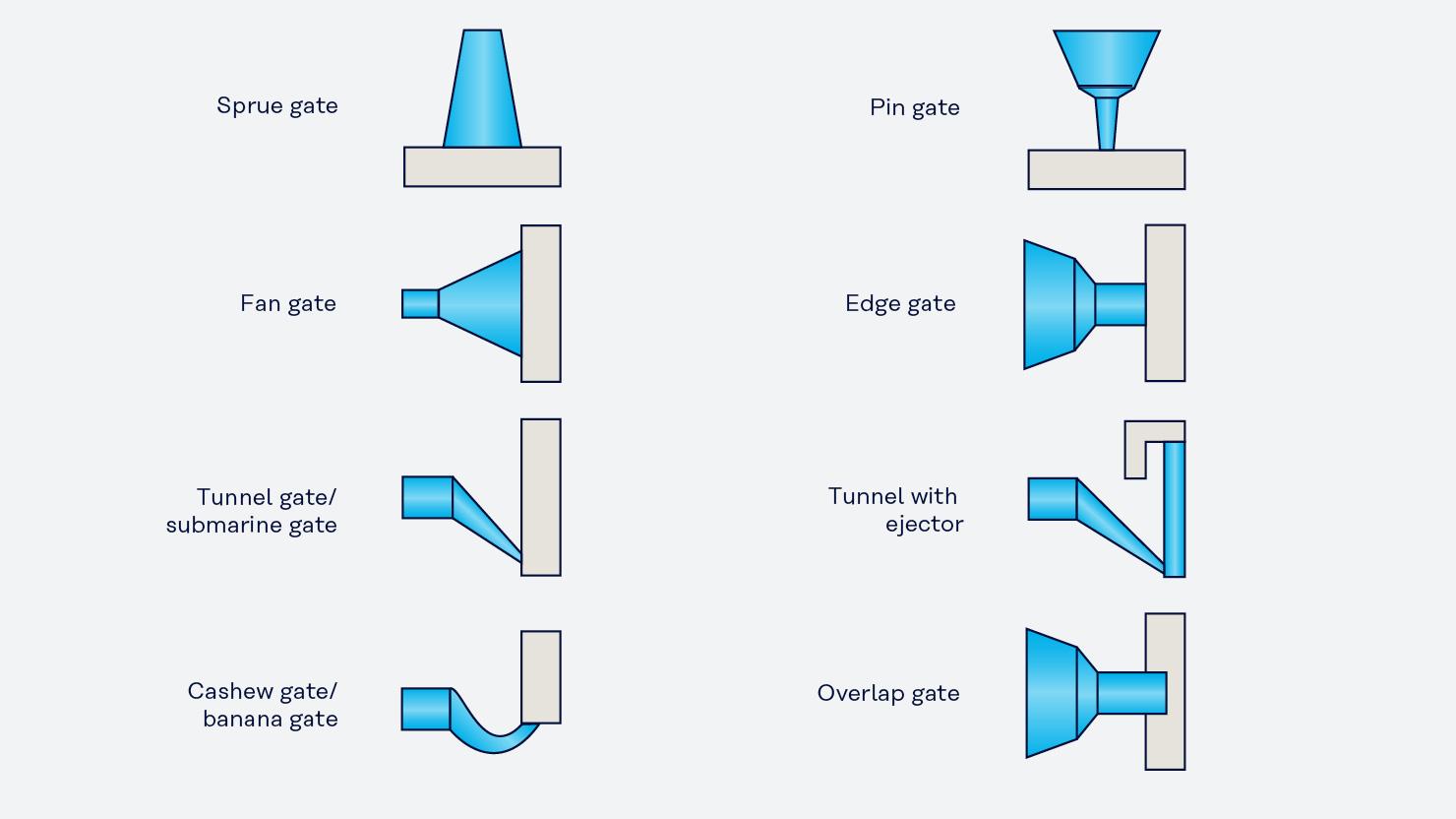
Common gate types:
- Edge gate
- Pin gate
- Submarine gate
- Hot runner gate
4. Draft Angle Design
Agricultural parts often have deep structures and textured surfaces. Proper draft angles ensure smooth ejection and prevent surface damage.
Agricultural Mold Design Checklist
| Design Item | Propósito |
|---|---|
| Cooling Channels | Producción estable |
| Proper Gate Location | Mejor relleno |
| Ángulo de salida | Fácil desmoldeo |
| Reinforced Structure | Mayor durabilidad |
| Resistencia al desgaste | Longer mold life |
Quality Control and Testing for Agricultural Injection Molding
Agricultural products must maintain reliable performance throughout their service life. Quality control ensures that every molded component meets dimensional, mechanical, and environmental requirements.
Common Inspection Methods
Dimensional Inspection
Used to verify:
- Product dimensions
- Assembly accuracy
- Hole positions
- Critical tolerances
Equipment:
- Digital caliper
- Micrometer
- CMM inspection
Material Testing
Testing includes:
- Impact resistance
- Envejecimiento por UV
- Resistencia química
- Thermal performance
Pruebas funcionales
Examples:
- Water pressure testing
- Leakage testing
- Pruebas de ensamblaje
- Pruebas de carga
Quality Control Process
| Stage | Inspection Purpose |
|---|---|
| Material Inspection | Confirm resin quality |
| Mold Trial | Verify tooling performance |
| Inspección del primer artículo | Approve samples |
| Production Inspection | Maintain consistency |
| Inspección final | Aprobación de envío |
Strict quality control management
Enviar una consulta
Desafíos comunes de fabricación y soluciones
Agricultural injection molded parts often involve large dimensions, outdoor requirements, and complex structures. Several manufacturing challenges must be carefully controlled.
| Reto | Cause | Solución |
|---|---|---|
| Deformación | Enfriamiento desigual | Optimize cooling system |
| Marcas de hundimiento | Secciones de pared gruesa | Improve product design |
| Tiro corto | Poor filling | Optimize gate design |
| Cracking | Wrong material selection | Choose suitable resin |
| Color Fading | UV degradation | Add UV stabilizers |
| Leakage | Poor sealing design | Mejorar el control de la tolerancia |
Engineering Solutions
Simulación Moldflow
Before manufacturing, Moldflow analysis helps predict:
- Filling behavior
- Weld lines
- Air traps
- Pressure distribution
- Warpage risk
DFM Optimization
Design improvements include:
- Espesor de pared uniforme
- Proper rib structures
- Improved draft angles
- Optimized assembly features
Why Choose Samgo for Agricultural Injection Molding?
Samgo provides complete plastic injection molding solutions for agricultural equipment manufacturers worldwide.
From initial product development to mass production, our engineering team supports customers with professional manufacturing expertise.
Our Services
| Servicio | Beneficio para el cliente |
|---|---|
| Diseño de productos | Fabricabilidad mejorada |
| Análisis DFM | Reduced development risk |
| Simulación Moldflow | Optimized filling performance |
| Injection Mold Manufacturing | Reliable tooling |
| Moldeo por inyección de plástico | Producción en masa estable |
| Inspección de Calidad | Calidad de producto constante |
Agricultural Industries We Serve
- Irrigation equipment
- Greenhouse systems
- Agricultural machinery
- Smart farming equipment
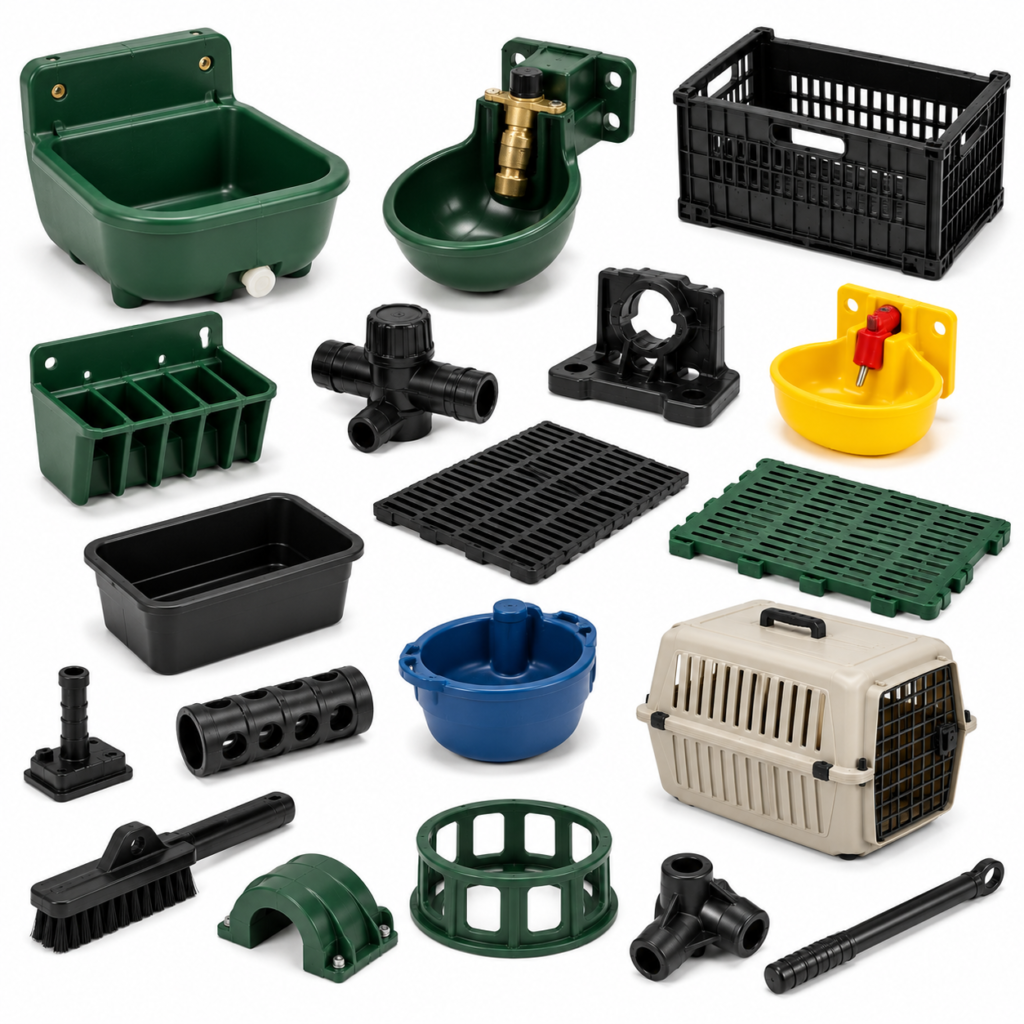
- Livestock products
- Water management systems
Our experience with engineering plastics, outdoor materials, and precision tooling allows us to provide reliable solutions for demanding agricultural applications.
Preguntas frecuentes
What plastics are commonly used for agricultural injection molding?
Common materials include PP, PE, ASA, ABS, PC/ABS, PA66 GF30, and POM. The final selection depends on UV exposure, chemical contact, mechanical requirements, and operating conditions.
Are injection molded agricultural parts suitable for outdoor use?
Yes. With proper material selection and UV stabilization, injection molded parts can provide many years of outdoor service.
How can agricultural plastic products resist fertilizer and pesticide chemicals?
Engineers select chemically resistant materials such as PP, PE, and POM, while avoiding materials that may degrade under chemical exposure.
Can Samgo manufacture large agricultural plastic components?
Yes. Samgo provides custom injection molding solutions for both small precision components and larger agricultural housings and covers.
¿Obtener el último precio? Le responderemos lo antes posible (dentro de las 12 horas)

Tipos de compuertas en el moldeo por inyección de plástico: selección, principios de diseño, ventajas y aplicaciones
El diseño de la compuerta es uno de los aspectos más críticos de la ingeniería de moldes de inyección de plástico. Aunque la compuerta suele ser el elemento más pequeño en el sistema de canales, tiene una influencia significativa en la fusión del flujo, la presión de empaque, la eficiencia de enfriamiento, la apariencia de la pieza, el tiempo de ciclo y la calidad general del producto.
Un diseño deficiente de la compuerta puede causar numerosos defectos en el moldeo, incluyendo tiros cortos, chupones, líneas de unión, chorreado, marcas de quemadura, residuo excesivo de la compuerta y alabeo de la pieza. Por el contrario, seleccionar el tipo y la ubicación adecuados de la compuerta ayuda a garantizar un llenado equilibrado, una precisión dimensional constante y una producción eficiente.
Materiales de polipropileno (PP): tipos, grados, propiedades y aplicaciones
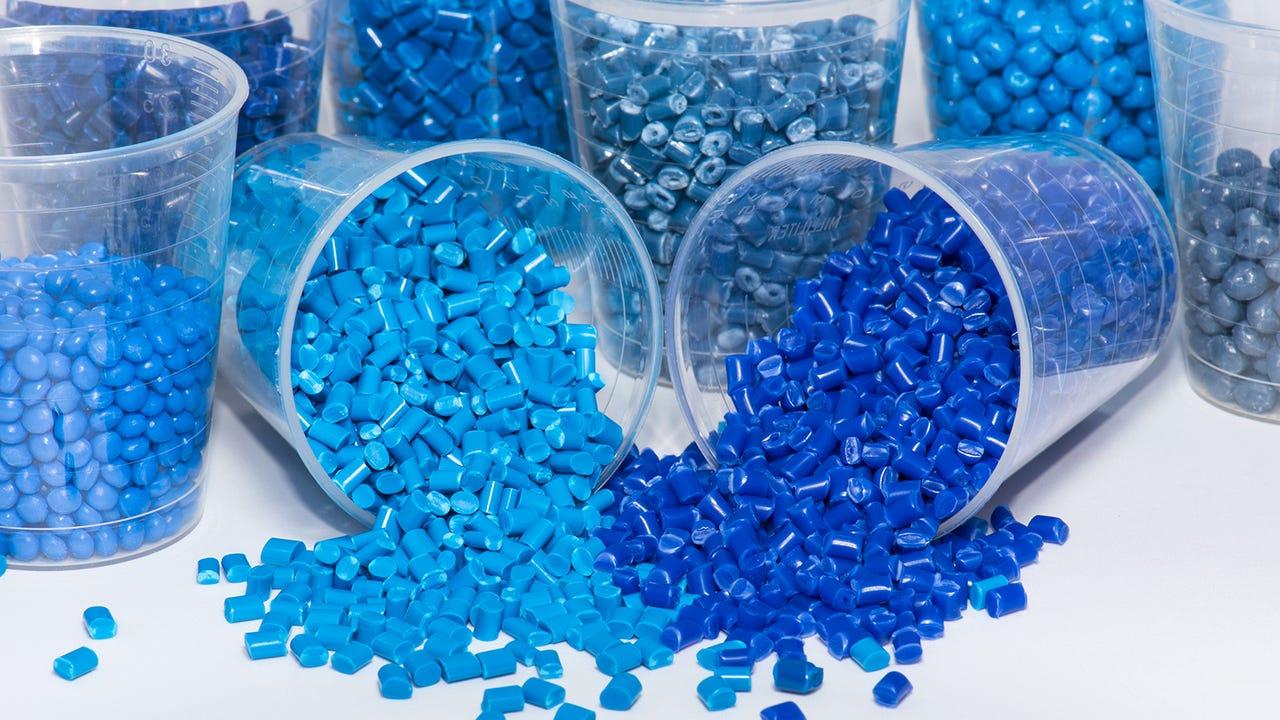
El polipropileno (PP) es uno de los termoplásticos más utilizados del mundo, y representa una parte significativa de la producción mundial de plástico. Gracias a su excelente equilibrio de propiedades mecánicas, resistencia química, características de peso ligero y rentabilidad, el PP se ha convertido en el material preferido para innumerables productos moldeados por inyección en aplicaciones automotrices, domésticas, médicas, de envasado, eléctricas e industriales.
El polipropileno moderno está disponible en muchos grados y formulaciones diferentes. Los fabricantes pueden elegir entre PP homopolímero, PP de copolímero aleatorio, PP de copolímero de impacto, PP reforzado con fibra de vidrio, PP cargado con minerales, PP ignífugo, PP estabilizado contra los rayos UV y PP de grado alimentario, según los requisitos del producto.
Análisis de flujo de molde por inyección: Una guía completa de la simulación Moldflow para piezas de plástico
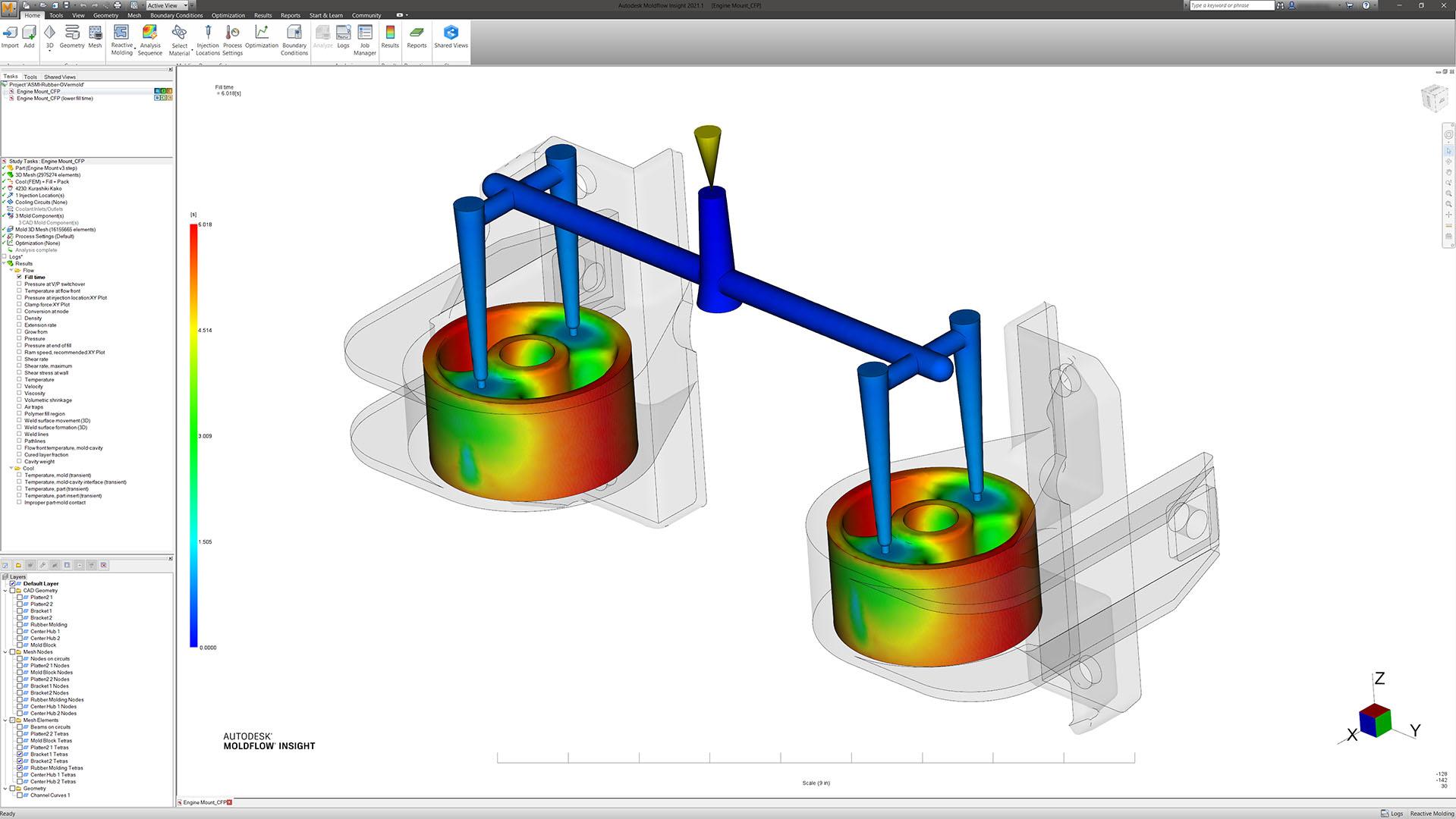
En el desarrollo moderno de productos plásticos, la fabricación de moldes ya no se basa únicamente en la experiencia en ingeniería. La ingeniería asistida por computadora (CAE) se ha convertido en una parte esencial del proceso de moldeo por inyección, permitiendo a los ingenieros predecir posibles defectos de moldeo antes de que se fabrique un molde. Entre estas tecnologías, el análisis de flujo de moldes de inyección, a menudo denominado análisis Moldflow, es una de las herramientas de ingeniería más valiosas para reducir los riesgos de desarrollo, acortar los plazos de entrega y mejorar la calidad de las piezas.