
Agricultural Injection Molding: Applications, Materials, Manufacturing Standards, and Industry Solutions

Table des matières

Introduction

Agriculture has experienced significant technological transformation in recent decades. Modern farming equipment increasingly relies on lightweight, durable, and cost-effective plastic components to improve efficiency, reduce maintenance costs, and support automated agricultural systems.

Plastic injection molding has become an essential manufacturing process for agricultural products due to its ability to produce high-volume components with excellent consistency, complex geometries, and competitive production costs.

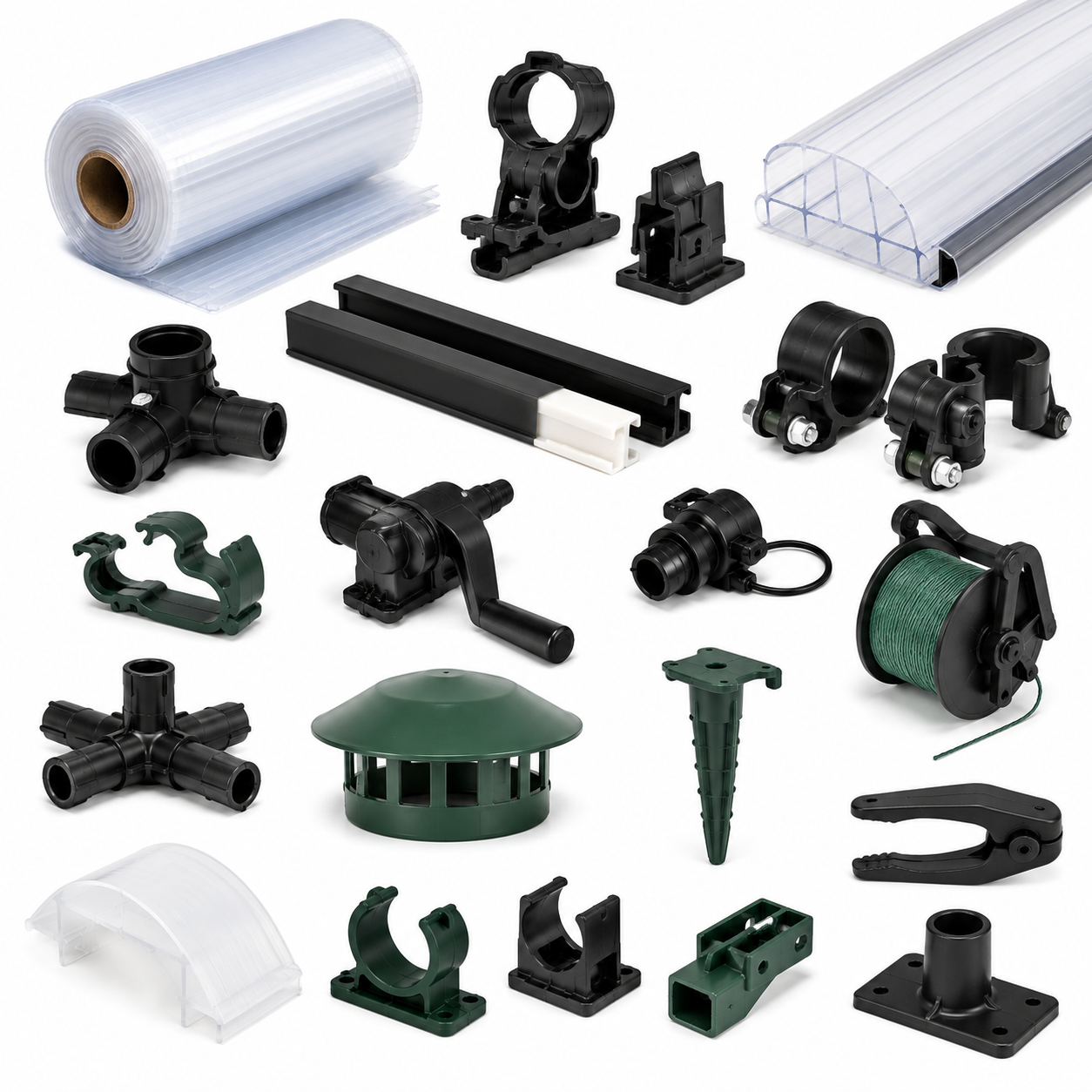
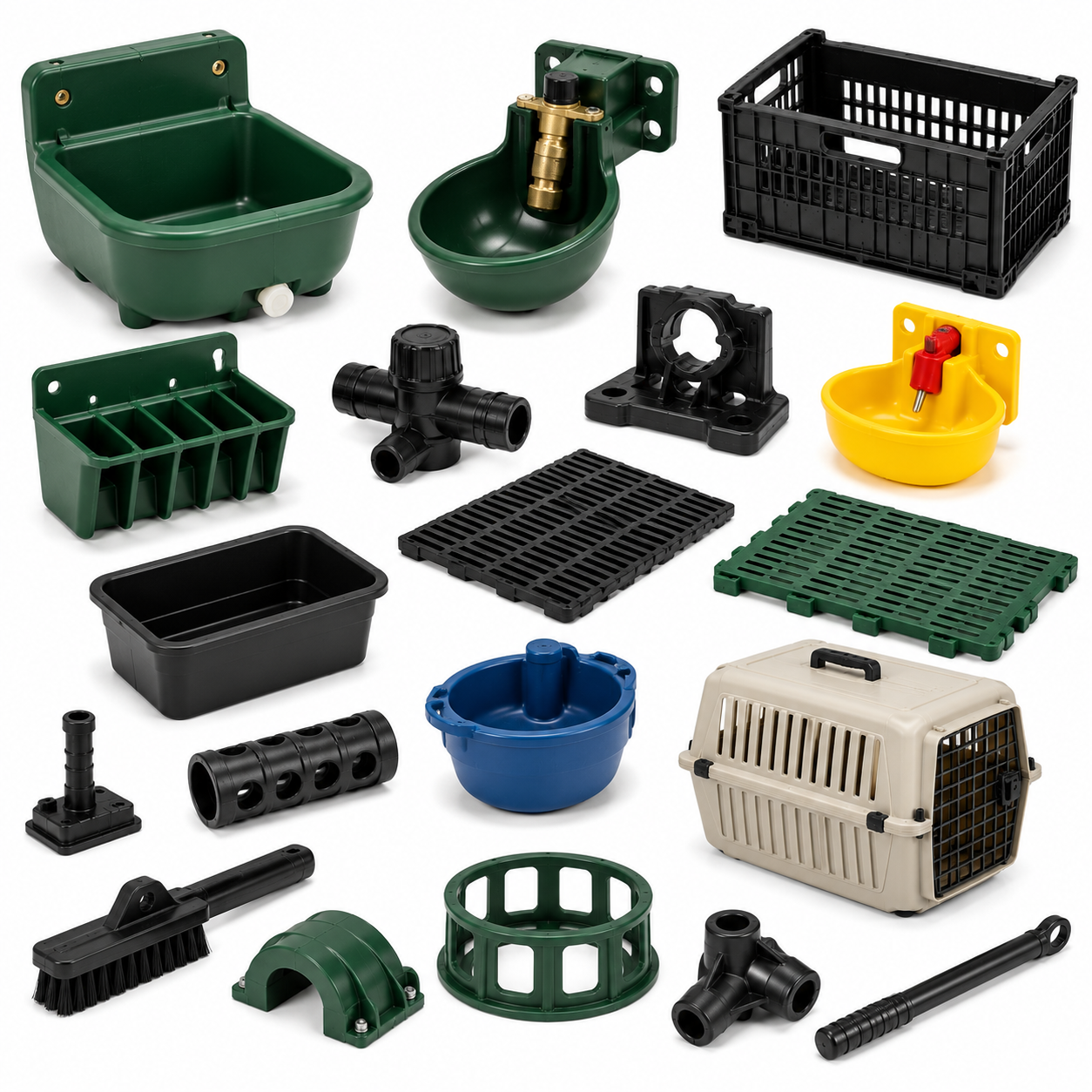
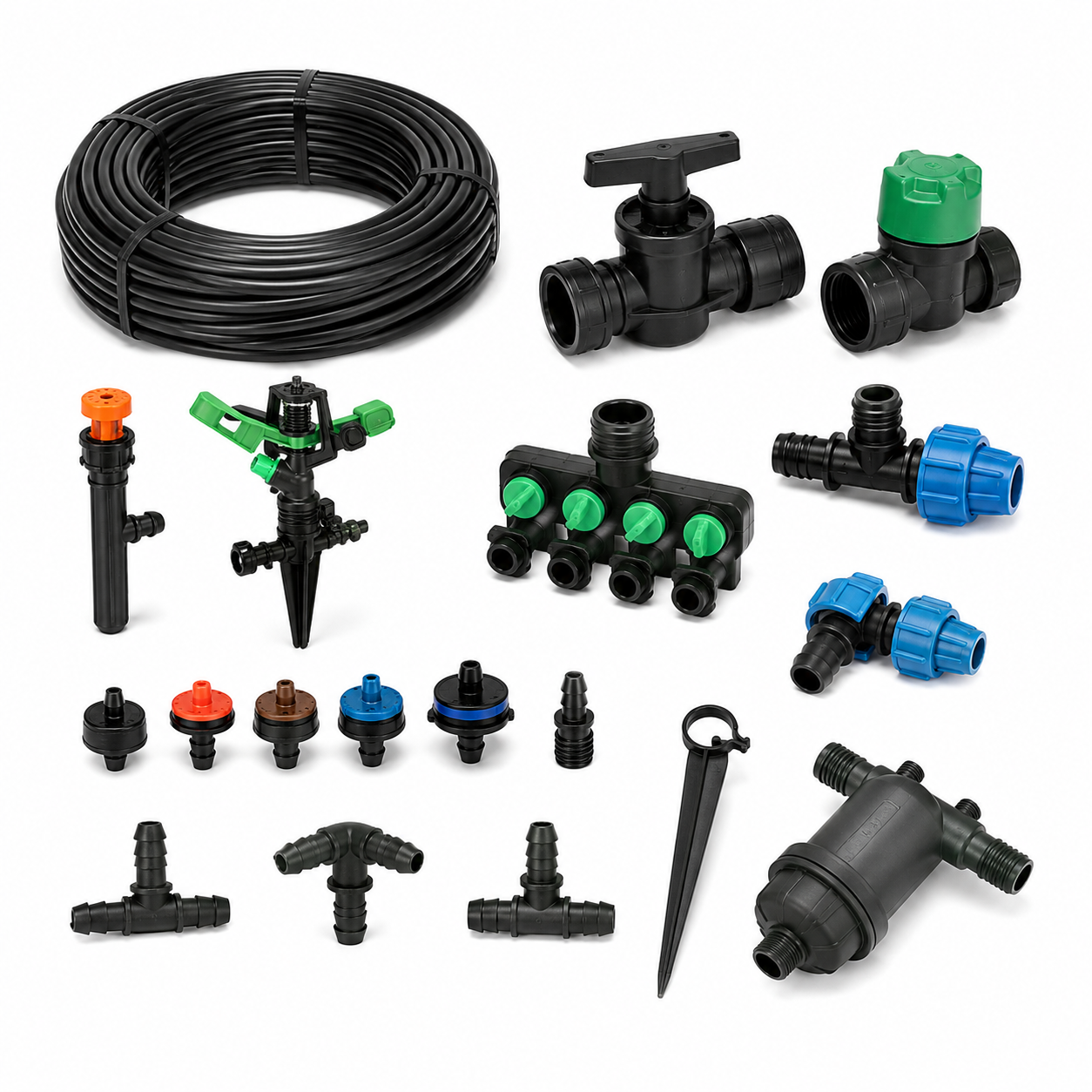
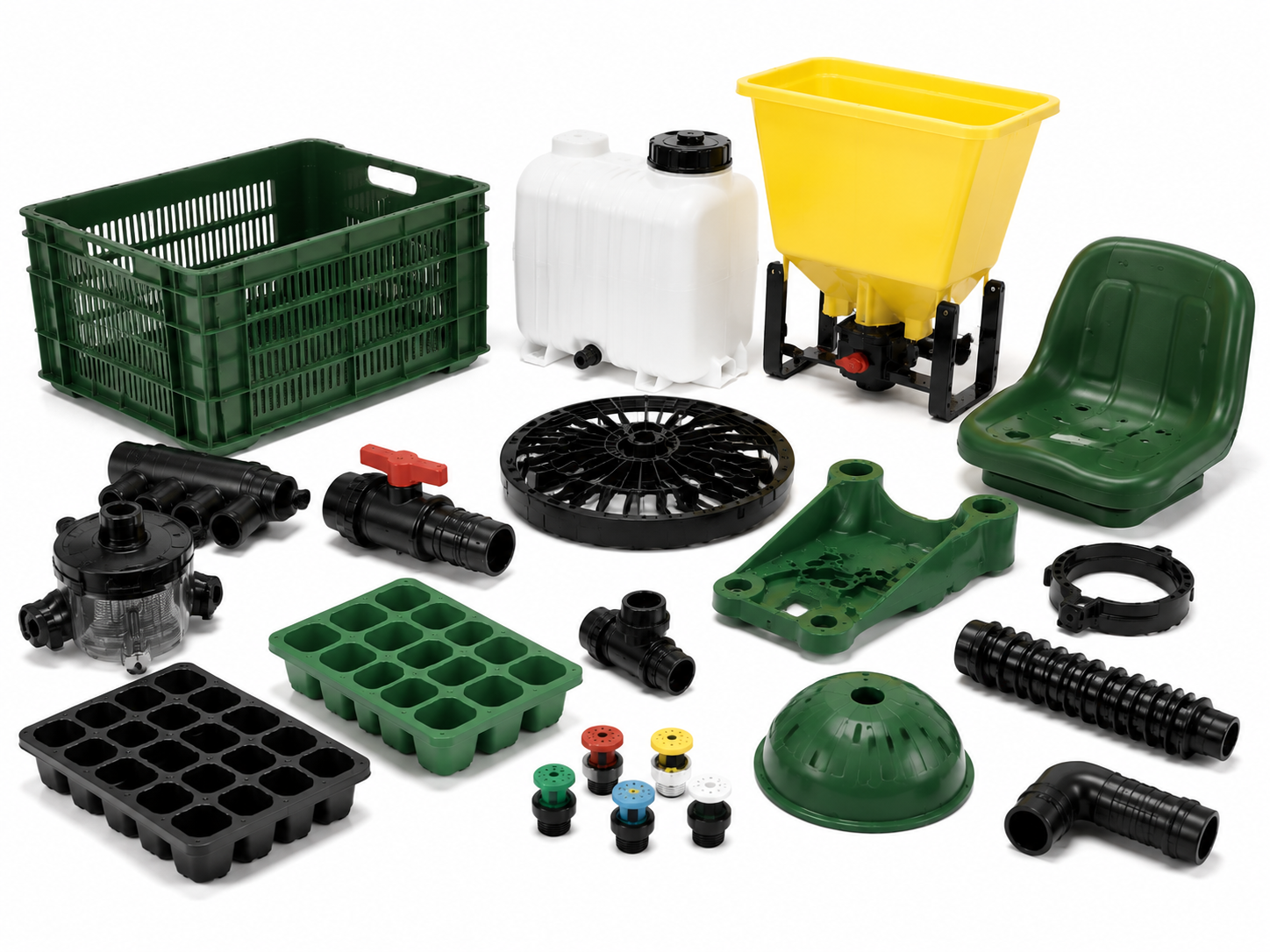
From irrigation fittings and greenhouse accessories to agricultural machinery components and livestock equipment, injection molded plastic parts are widely used throughout the agricultural industry.

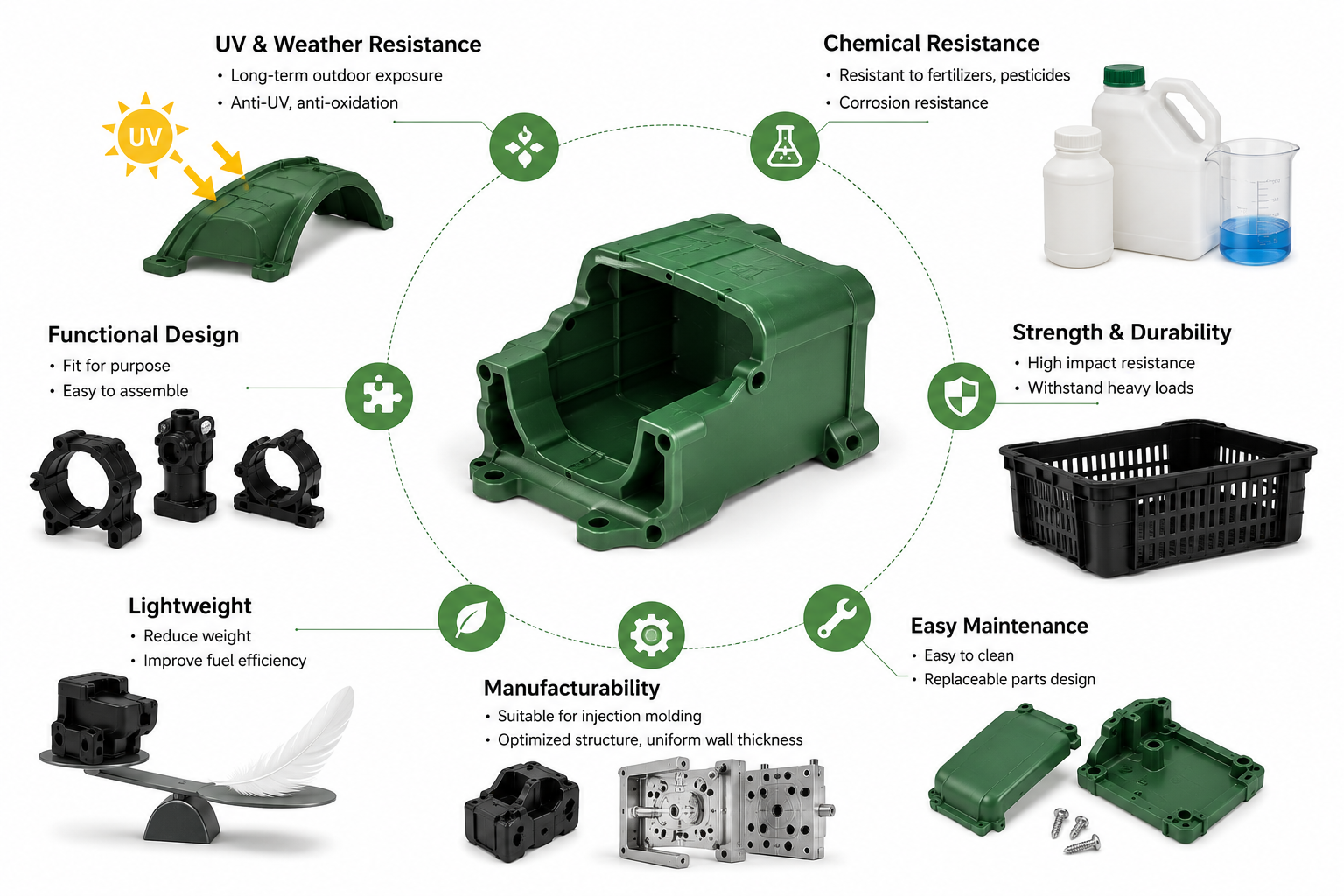
Compared with traditional metal manufacturing, engineering plastics offer several advantages, including corrosion resistance, chemical resistance, lightweight construction, and design flexibility. These characteristics make injection molding an ideal solution for agricultural environments where components are exposed to water, fertilizers, pesticides, UV radiation, and outdoor weather conditions.

At Samgo, we provide complete injection molding solutions for agricultural applications, including product design optimization, DFM analysis, Moldflow simulation, precision mold manufacturing, and high-quality plastic injection molding production.

This article explores the applications of injection molding in agriculture, commonly used materials, product design requirements, manufacturing challenges, and engineering solutions.


Pourquoi Moulage par injection Is Important for Agriculture

Agricultural equipment operates in challenging environments. Components must withstand moisture, chemicals, temperature variations, outdoor exposure, and continuous mechanical stress.

Injection molding provides manufacturers with reliable solutions for producing durable agricultural plastic components at competitive costs.

Principaux avantages

  • Excellent chemical resistance
  • High weather durability
  • Lightweight construction
  • Large-scale production capability
  • Complex part geometry
  • Low maintenance requirements
  • Cost-effective manufacturing
  • Qualité de produit constante

Advantages of Injection Molding for Agriculture

AdvantageValue for Agricultural Products
Corrosion ResistanceSuitable for outdoor environments
Conception légèreEasier installation and transportation
Chemical ResistanceCompatible with fertilizers and pesticides
Mass ProductionLower unit cost
Design FlexibilityComplex agricultural components
UV ProtectionLonger outdoor service life

Applications of Injection Molding in Agriculture

Injection molding supports many agricultural applications, from small precision components to large outdoor equipment housings.


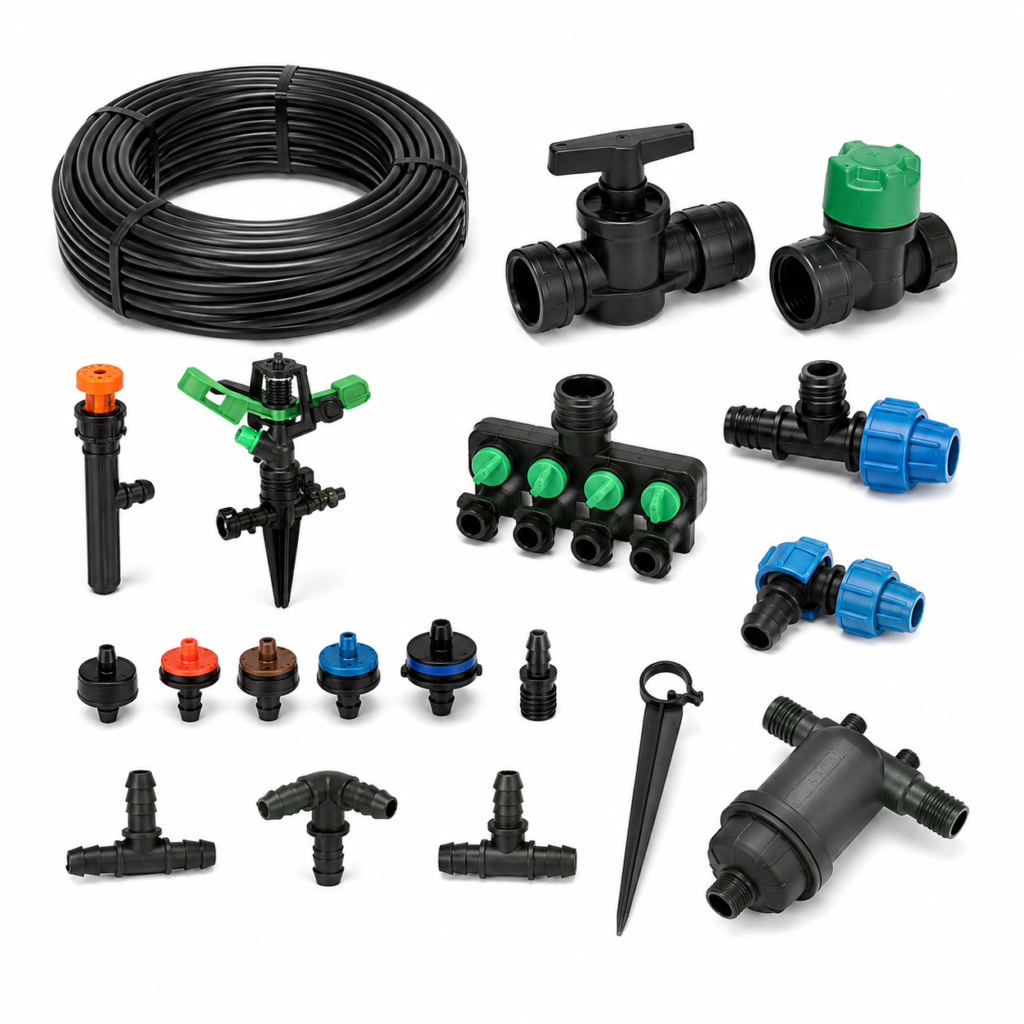
1. Irrigation Systems

Efficient water management is essential for modern agriculture. Injection molded plastic components are widely used in irrigation systems because they provide excellent chemical resistance and long service life.

Les produits typiques comprennent :

  • Irrigation connectors
  • Drip irrigation fittings
  • Spray nozzles
  • Valve housings
  • Water control components
  • Pipe adapters

Materials such as PP, PE, and POM are commonly selected due to their resistance to water, chemicals, and environmental conditions.


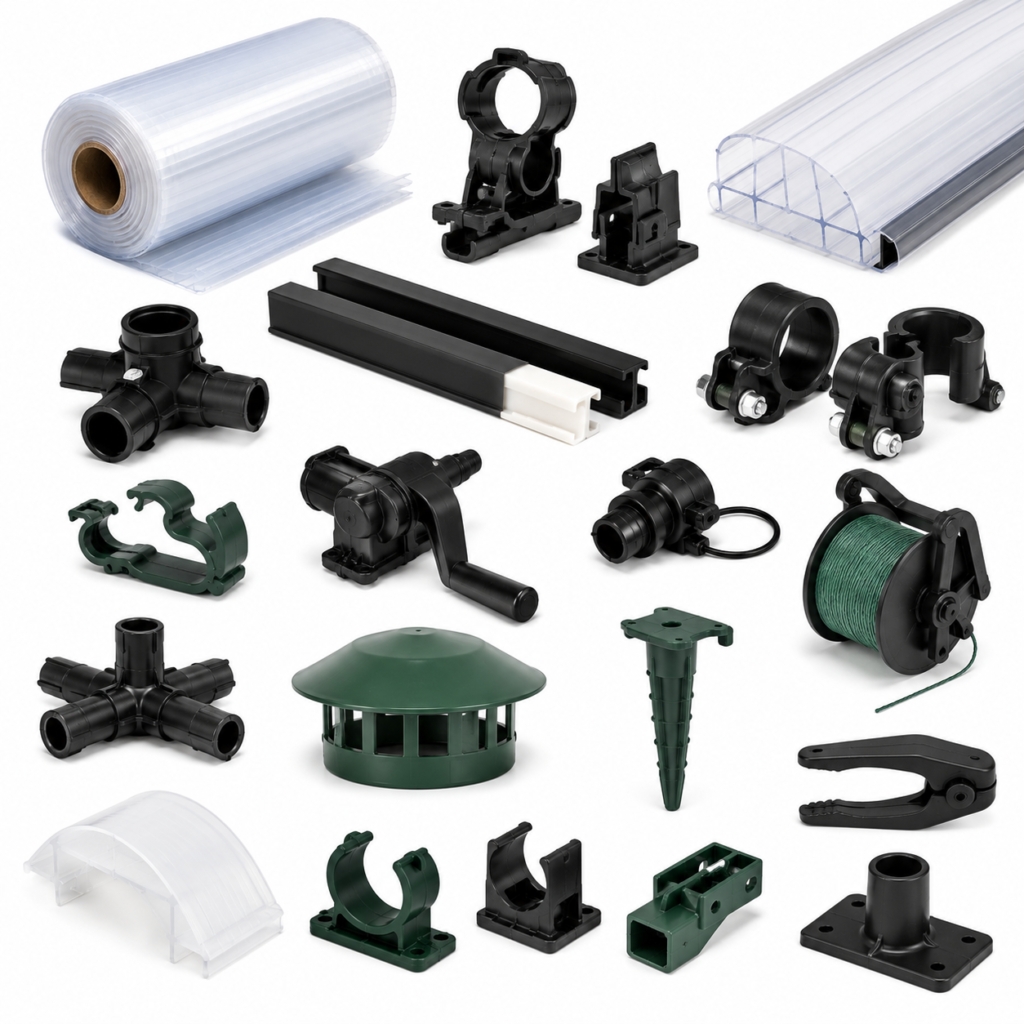
2. Greenhouse Equipment

Modern greenhouses require durable plastic components that can operate under continuous sunlight and humidity.

Injection molded greenhouse components include:

  • Ventilation parts
  • Plant support clips
  • Structural connectors
  • Film fixing components
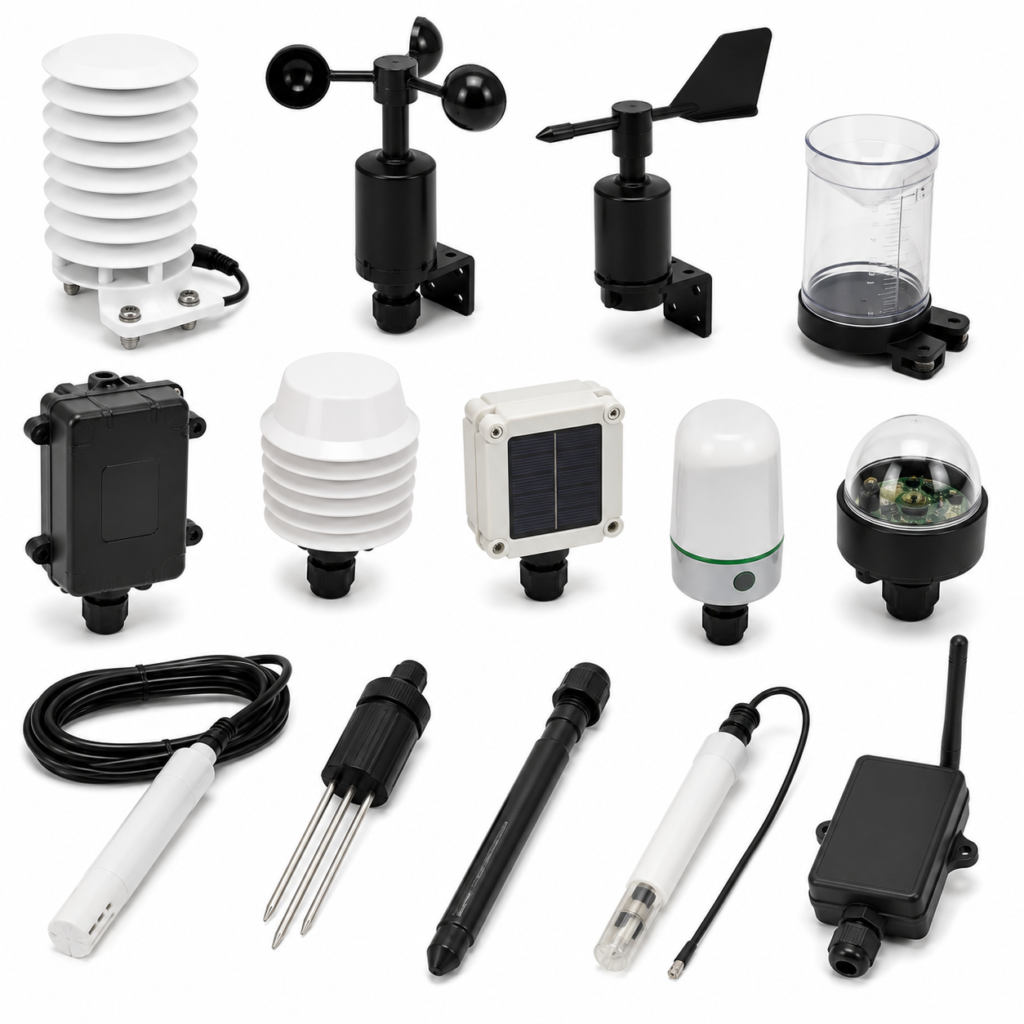
  • Sensor housings

UV-resistant materials such as ASA and UV-stabilized PP are often used to improve outdoor durability.


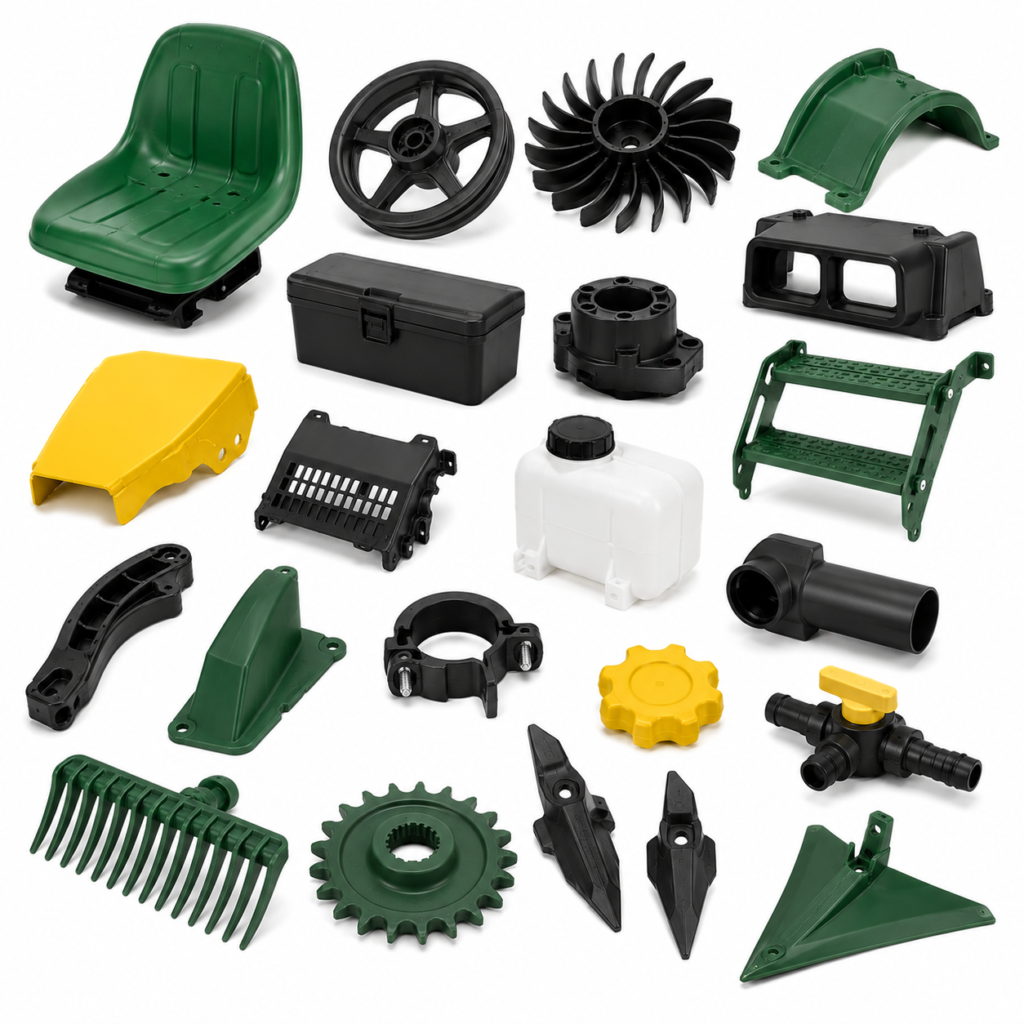
3. Agricultural Machinery Components

Agricultural machines require lightweight but strong plastic parts to reduce equipment weight and improve efficiency.

Common injection molded components include:

  • Housses de protection
  • Control panel housings
  • Handles
  • Protective guards
  • Storage containers
  • Machine brackets

Agricultural Application Table

ApplicationInjection Molded ComponentsCommon Materials
IrrigationValves, connectors, nozzlesPP, PE, POM
GreenhouseClips, brackets, housingsASA, PP, ABS
Farming EquipmentCovers, handles, guardsABS, PC/ABS, PA
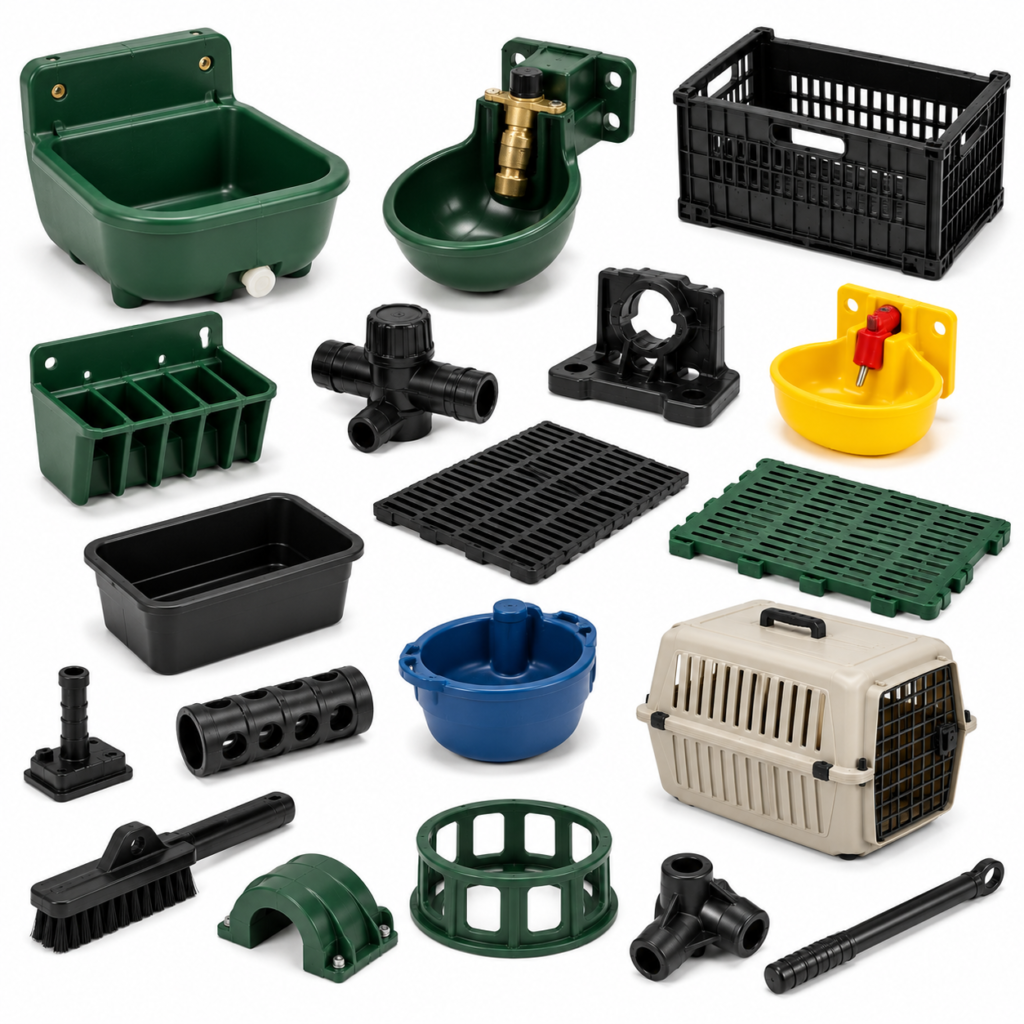
Livestock EquipmentFeeders, containersPP, HDPE
Agricultural SensorsElectronic housingsPC, ABS
Irrigation
Greenhouse
Farming Equipment
Livestock Equipment
Agricultural Sensors
Obtenir un devis

Common Materials for Agricultural Injection Molding

Material selection is critical because agricultural products often operate outdoors and are exposed to harsh conditions.

Matériaux fréquemment utilisés

MatérielMain PropertiesAgricultural Applications
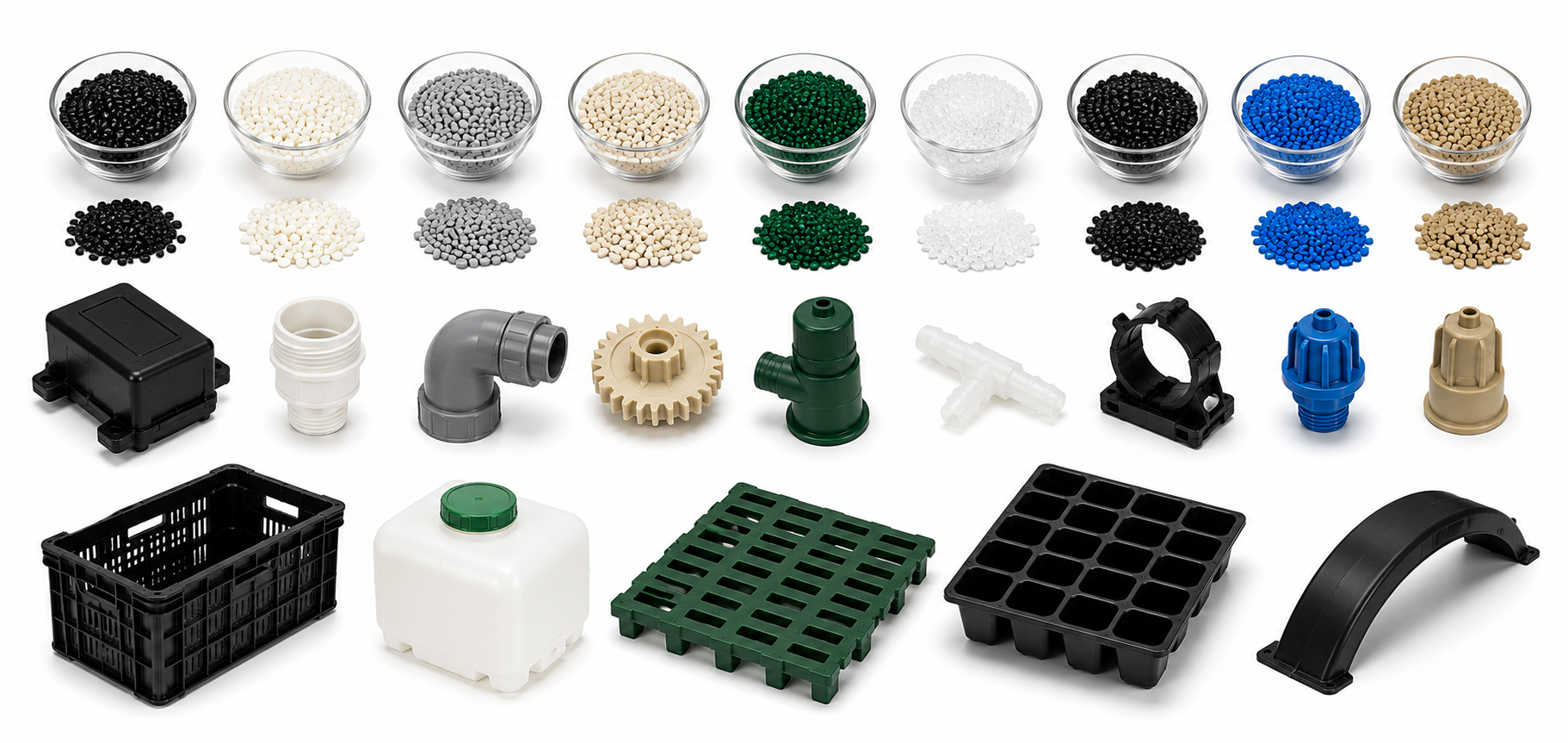
PPRésistance chimique, faible coûtIrrigation parts, containers
PEFlexibility and impact resistanceWater tanks, fittings
ABSGood strength and appearanceBoîtiers d'équipements
PC/ABSImpact resistance and durabilityElectronic enclosures
PA66 GF30High mechanical strengthStructural components
Dès que possibleExcellent UV resistanceOutdoor housings
POMLow friction and precisionValves and gears

Sélection des matériaux Considerations

Agricultural plastic components should consider:

UV Resistance

Outdoor products require protection against sunlight degradation.

Chemical Resistance

Components may contact:

  • Fertilizers
  • Pesticides
  • Cleaning chemicals

Mechanical Strength

Moving agricultural equipment requires materials with excellent impact resistance.

Temperature Resistance

Products must operate under seasonal temperature changes.

Product Design Requirements for Agricultural Plastic Parts

Agricultural components require careful design consideration to ensure reliability in outdoor environments.

Important design factors include:

  • Uniform wall thickness
  • Reinforced ribs
  • Proper drainage design
  • UV-resistant material selection
  • Chemical compatibility
  • Easy assembly
  • Weather-resistant structure

For outdoor agricultural products, engineers should avoid water accumulation areas and design sufficient strength around mounting points.


Design Guidelines

Design ElementRecommendation
Wall ThicknessMaintain uniform thickness
RibsImprove strength without increasing weight
CornersUse proper radii to reduce stress
Mounting AreasAdd reinforcement
Surface DesignConsider dirt and water resistance

Outdoor Durability Requirements for Agricultural Plastic Components

Agricultural plastic products are commonly used in outdoor environments where they are exposed to sunlight, rain, fertilizers, pesticides, dust, and temperature fluctuations. Therefore, outdoor durability is one of the most important considerations when selecting materials and designing injection molded agricultural components.

Unlike indoor plastic products, agricultural components must maintain their mechanical properties and appearance after years of outdoor exposure.

Key Environmental Challenges

UV Exposure

Continuous sunlight exposure can cause plastic materials to become brittle, discolored, or cracked.

Solutions include:

  • UV-resistant additives
  • ASA materials
  • UV-stabilized PP
  • Weather-resistant coatings

Chemical Exposure

Agricultural components may contact:

  • Fertilizers
  • Pesticides
  • Cleaning agents
  • Soil chemicals

Materials must provide excellent chemical resistance to ensure long-term reliability.

Temperature Variation

Agricultural equipment often operates in extreme environments, from freezing winters to hot summers.

Materials must maintain:

  • Impact strength
  • Dimensional stability
  • Mechanical performance

Outdoor Material Performance Comparison

MatérielUV ResistanceChemical ResistanceApplication typique
PPMoyenExcellentIrrigation parts
PEMoyenExcellentWater tanks
Dès que possibleExcellentBienOutdoor housings
PC/ABSMoyenBienElectronic enclosures
PA66 GF30BienBienStructural parts
POMBienExcellentPrecision valves

Agricultural Injection Mold Design Considerations

A reliable agricultural plastic component starts with proper mold design. Since many agricultural products require long service life and high-volume production, the mold must provide excellent durability, dimensional stability, and production efficiency.

Important Mold Design Factors

1. Mold Material Selection

Agricultural products often require thousands or millions of production cycles.

Recommended mold materials:

Mold ComponentRecommended Material
Core & CavityS136 / NAK80
Mold BaseP20 / 718H
Wear InsertsH13 / SKD61

2. Cooling System Design

Proper cooling improves:

  • Cycle time
  • Dimensional accuracy
  • Product consistency

3. Gate Design

Correct gate selection helps prevent:

  • Flow marks
  • Gauchissement
  • Uneven shrinkage

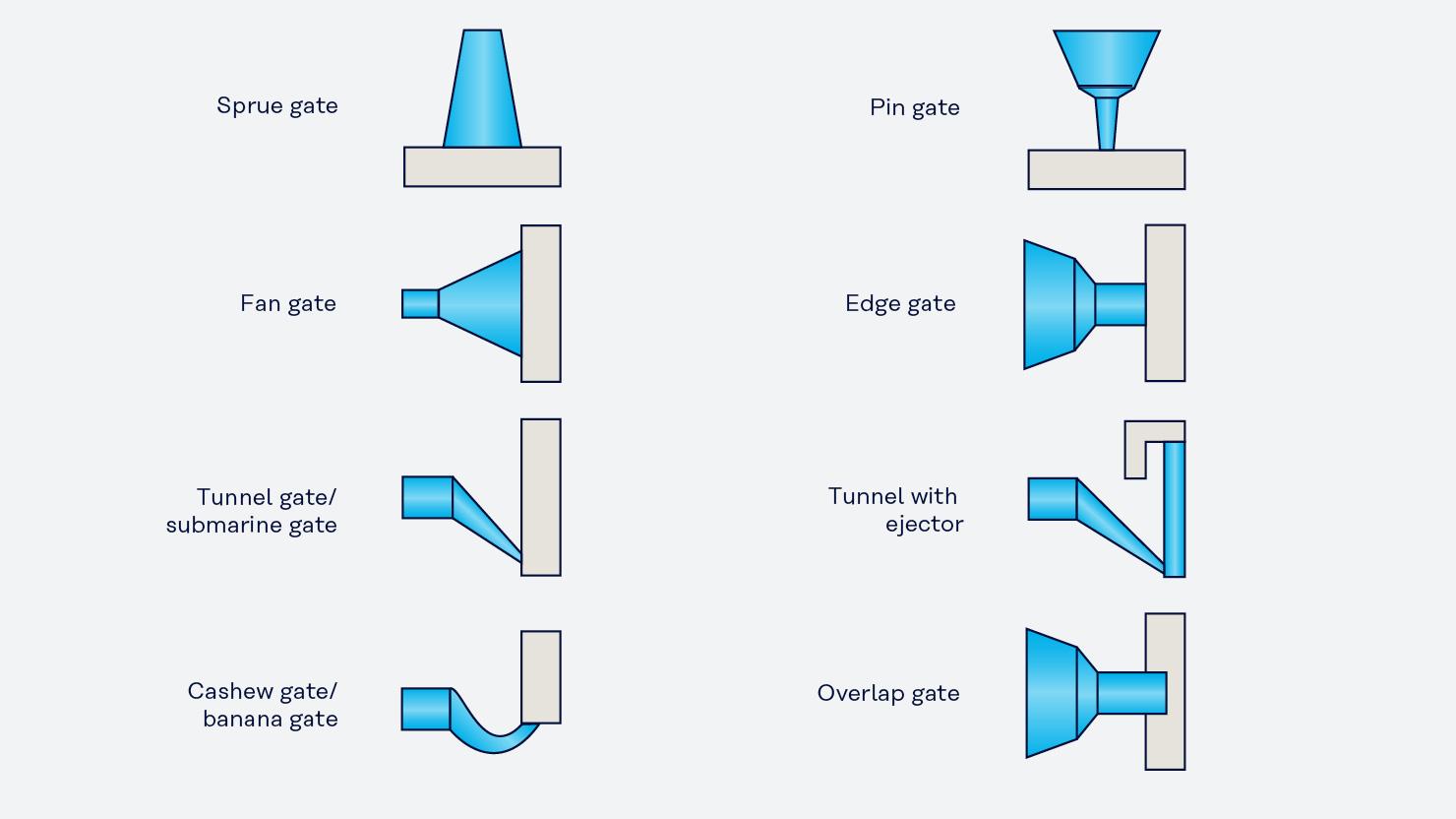
Common gate types:

  • Edge gate
  • Pin gate
  • Submarine gate
  • Hot runner gate

4. Draft Angle Design

Agricultural parts often have deep structures and textured surfaces. Proper draft angles ensure smooth ejection and prevent surface damage.


Agricultural Mold Design Checklist

Design ItemObjectif
Cooling ChannelsProduction stable
Proper Gate LocationBetter filling
DépouilleEasy demolding
Reinforced StructureMeilleure durabilité
Résistance à l'usureLonger mold life

Quality Control and Testing for Agricultural Injection Molding

Agricultural products must maintain reliable performance throughout their service life. Quality control ensures that every molded component meets dimensional, mechanical, and environmental requirements.

Common Inspection Methods

Dimensional Inspection

Used to verify:

  • Product dimensions
  • Assembly accuracy
  • Hole positions
  • Critical tolerances

Equipment:

  • Digital caliper
  • Micrometer
  • CMM inspection

Material Testing

Testing includes:

  • Impact resistance
  • Vieillissement UV
  • Chemical resistance
  • Thermal performance

Test fonctionnel

Examples:

  • Water pressure testing
  • Leakage testing
  • Assembly testing
  • Load testing

Quality Control Process

StageInspection Purpose
Material InspectionConfirm resin quality
Mold TrialVerify tooling performance
Premier contrôle articleApprove samples
Production InspectionMaintain consistency
Inspection finaleApprobation de l'expédition

Strict quality control management

Envoyer une demande

Prêt à démarrer votre projet ? Donnez vie à votre vision grâce à nos solutions de fabrication expertes et à des décennies d'expérience dans l'industrie
Contactez-nous

Défis et solutions courants dans la fabrication

Agricultural injection molded parts often involve large dimensions, outdoor requirements, and complex structures. Several manufacturing challenges must be carefully controlled.

DéfiCauseSolution
GauchissementRefroidissement inégalOptimize cooling system
RetassuresSections à parois épaissesImprove product design
Short ShotPoor fillingOptimize gate design
CrackingWrong material selectionChoose suitable resin
Color FadingUV degradationAdd UV stabilizers
LeakagePoor sealing designAméliorer le contrôle des tolérances

Engineering Solutions

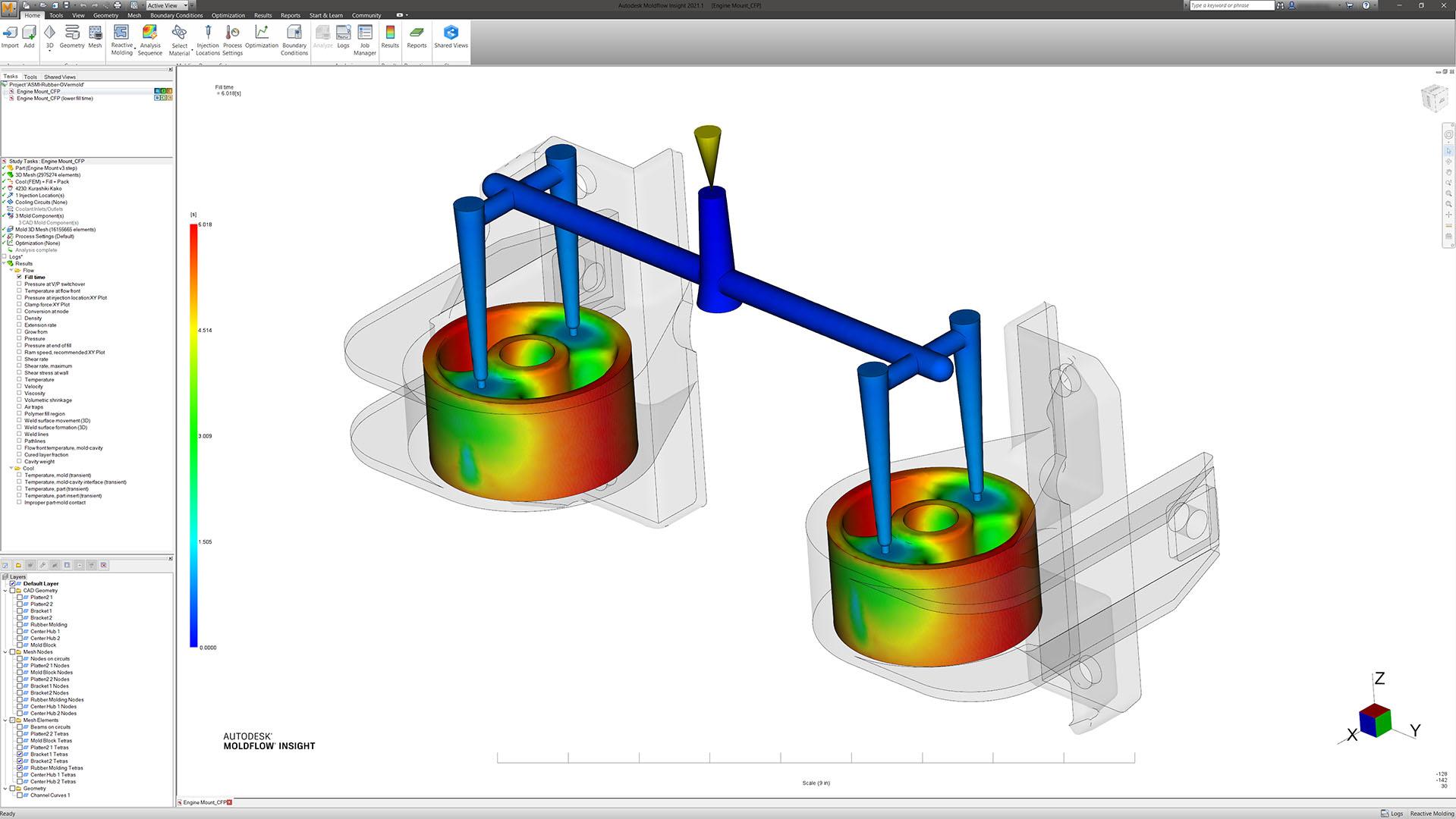
Simulation Moldflow

Before manufacturing, Moldflow analysis helps predict:

  • Filling behavior
  • Lignes de soudure
  • Poches d'air
  • Pressure distribution
  • Warpage risk

DFM Optimization

Design improvements include:

  • Uniform wall thickness
  • Proper rib structures
  • Improved draft angles
  • Optimized assembly features
https://images.openai.com/static-rsc-4/zRFtm5gNJn5g7u_1cDMKRhGCXUQ3VZeJWwSaWGejx5Ctp0-9FpTDJrK735Gjfz9HZ4HmLXvPGdUNqRkHBf7LyPXKadOXHq_A5qhjFCIiuI_qFvc09grhs9imeJjFQBj1g1fkhashYh_3NC8K-03KfRprcy94KI3OsuBgnowSBbn0UBEpa08Xx0rK_XxFv4hI?purpose=fullsize
 
https://images.openai.com/static-rsc-4/MTZfN5fGWIzBHynwutqXKZWT372D-3BR9TKYlzRHpcB5-qKzNBgfFL6nYzMnkJkmusiKlvzGHh4B9PS8-uFsqvVDfTyGPdzEkxD556zwmaW4JohcUXFwxVe0TVhFNhEFDLt3N4QB2C8LQ40uzJ9PwLqDm_oKH0WsvN0jLCrc6G-TFJtbG-Y1MW8kMA8kPBxu?purpose=fullsize

Why Choose Samgo for Agricultural Injection Molding?

Samgo provides complete plastic injection molding solutions for agricultural equipment manufacturers worldwide.

From initial product development to mass production, our engineering team supports customers with professional manufacturing expertise.

Our Services

ServiceAvantage client
Product DesignImproved manufacturability
Analyse DFMAReduced development risk
Simulation MoldflowOptimized filling performance
Injection Mold ManufacturingReliable tooling
Plastic Injection MoldingProduction de masse stable
Contrôle qualitéQualité de produit constante

Agricultural Industries We Serve

  • Irrigation equipment
  • Greenhouse systems
  • Agricultural machinery
  • Smart farming equipment
  • Livestock products
  • Water management systems

Our experience with engineering plastics, outdoor materials, and precision tooling allows us to provide reliable solutions for demanding agricultural applications.

https://images.openai.com/static-rsc-4/JSshWzVpNJBPvmVbWVZeWMHhAjllLNM-3U-CIgB7Ib8_RUN3ldbWofqNk2SJU5nOTbZkf4HAe7RkJNbjm14_rh7DtvCsFFK2mFu-9ZfPJxWB6-l1gG3NCcmJrEU_shIBQe_A3tmkDBRSCbd0m3z6mQJ25e_0FNUpX0RCPyNCjxd2fp9dxhGYAiiFozVRyU5B?purpose=fullsize
https://images.openai.com/static-rsc-4/AplqsFG6DREMVHfkcdHihXPwm4VVgLjZtem9H46MJTlrP8pyMUvJhzSnvwhhVGI4lwz0-JTJaL-DPFF5aMAUWA8B8RNbdLwVkdbQRzVC2BdA0k1WFFbmuyyIvbr2Qp5UG5nuZeyyWn3ElvEu8hYgp9thvAW3FK2DkOmgFyY-77U9eBlNTdg4ukAUItTEDC1C?purpose=fullsize

Foire aux questions

What plastics are commonly used for agricultural injection molding?

Common materials include PP, PE, ASA, ABS, PC/ABS, PA66 GF30, and POM. The final selection depends on UV exposure, chemical contact, mechanical requirements, and operating conditions.


Are injection molded agricultural parts suitable for outdoor use?

Yes. With proper material selection and UV stabilization, injection molded parts can provide many years of outdoor service.


How can agricultural plastic products resist fertilizer and pesticide chemicals?

Engineers select chemically resistant materials such as PP, PE, and POM, while avoiding materials that may degrade under chemical exposure.


Can Samgo manufacture large agricultural plastic components?

Yes. Samgo provides custom injection molding solutions for both small precision components and larger agricultural housings and covers.
Obtenir le dernier prix ? Nous répondrons dès que possible (dans les 12 heures)

Types de seuils de moulage par injection plastique : sélection, principes de conception, avantages et applications

La conception du seuil est l'un des aspects les plus critiques de l'ingénierie des moules d'injection plastique. Bien que le seuil soit généralement le plus petit élément du système de canaux, il a une influence significative sur l'écoulement de la matière fondue, la pression de compactage, l'efficacité du refroidissement, l'aspect de la pièce, le temps de cycle et la qualité globale du produit.

Un seuil mal conçu peut provoquer de nombreux défauts de moulage, notamment des remplissages incomplets, des retassures, des lignes de soudure, des jets, des brûlures, un vestige de seuil excessif et un gauchissement des pièces. Inversement, le choix du type et de l'emplacement de seuil appropriés contribue à garantir un remplissage équilibré, une précision dimensionnelle constante et une production efficace.
En savoir plus »

Matériaux en polypropylène (PP) : types, nuances, propriétés et applications

Le polypropylène (PP) est l'un des thermoplastiques les plus utilisés au monde, représentant une part importante de la production mondiale de plastique. Grâce à son excellent équilibre de propriétés mécaniques, sa résistance chimique, sa légèreté et sa rentabilité, le PP est devenu le matériau de prédilection pour d'innombrables produits moulés par injection dans les secteurs de l'automobile, de l'électroménager, de la médecine, de l'emballage, de l'électricité et de l'industrie.

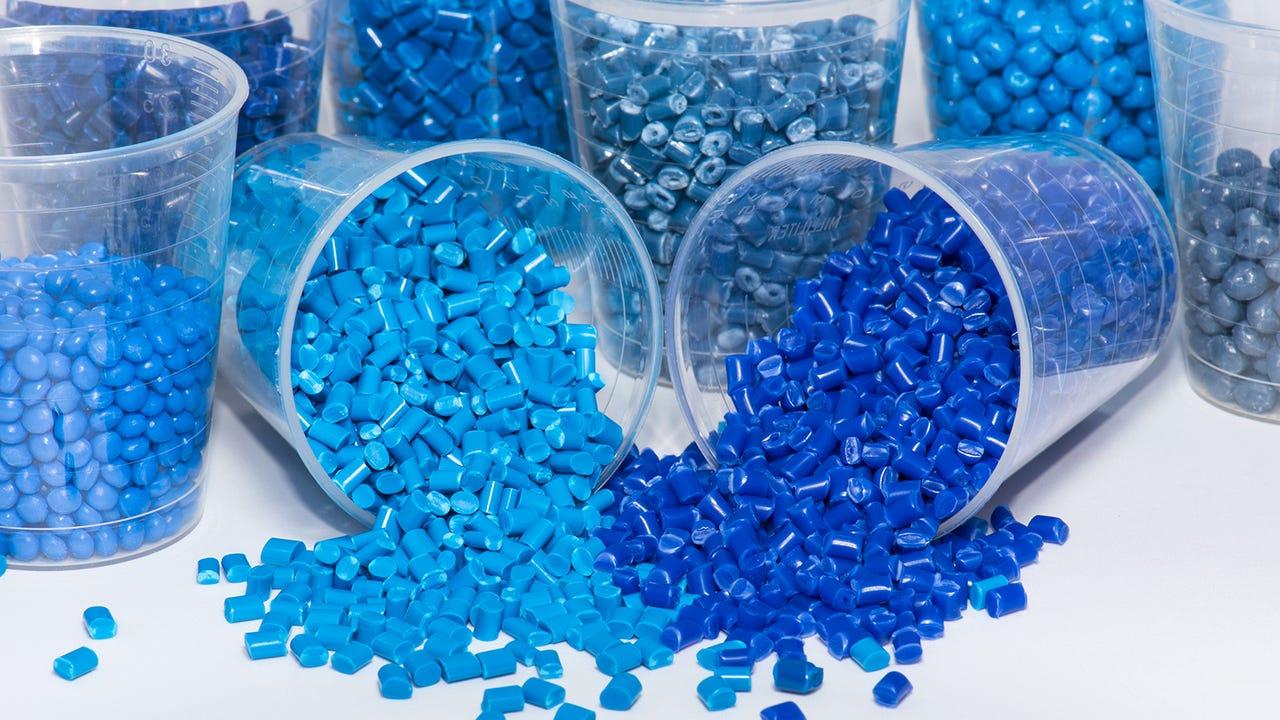
Le polypropylène moderne est disponible dans de nombreuses qualités et formulations différentes. Les fabricants peuvent choisir entre le PP homopolymère, le PP co-polymère statistique, le PP co-polymère bloc, le PP renforcé de fibres de verre, le PP chargé de minéraux, le PP ignifuge, le PP stabilisé aux UV et le PP de qualité alimentaire, selon les exigences du produit.
En savoir plus »

Analyse d'écoulement par moulage par injection : Un guide complet de la simulation Moldflow pour les pièces en plastique

Dans le développement moderne des produits en plastique, la fabrication des moules ne repose plus uniquement sur l'expérience en ingénierie. L'ingénierie assistée par ordinateur (IAO) est devenue un élément essentiel du processus de moulage par injection, permettant aux ingénieurs de prédire les défauts de moulage potentiels avant qu'un moule ne soit fabriqué. Parmi ces technologies, l'analyse de l'écoulement des moules d'injection, souvent appelée analyse Moldflow, est l'un des outils d'ingénierie les plus précieux pour réduire les risques de développement, raccourcir les délais et améliorer la qualité des pièces.

En savoir plus »