
Agricultural Injection Molding: Applications, Materials, Manufacturing Standards, and Industry Solutions


جدول المحتويات
مقدمة
Agriculture has experienced significant technological transformation in recent decades. Modern farming equipment increasingly relies on lightweight, durable, and cost-effective plastic components to improve efficiency, reduce maintenance costs, and support automated agricultural systems.
Plastic injection molding has become an essential manufacturing process for agricultural products due to its ability to produce high-volume components with excellent consistency, complex geometries, and competitive production costs.
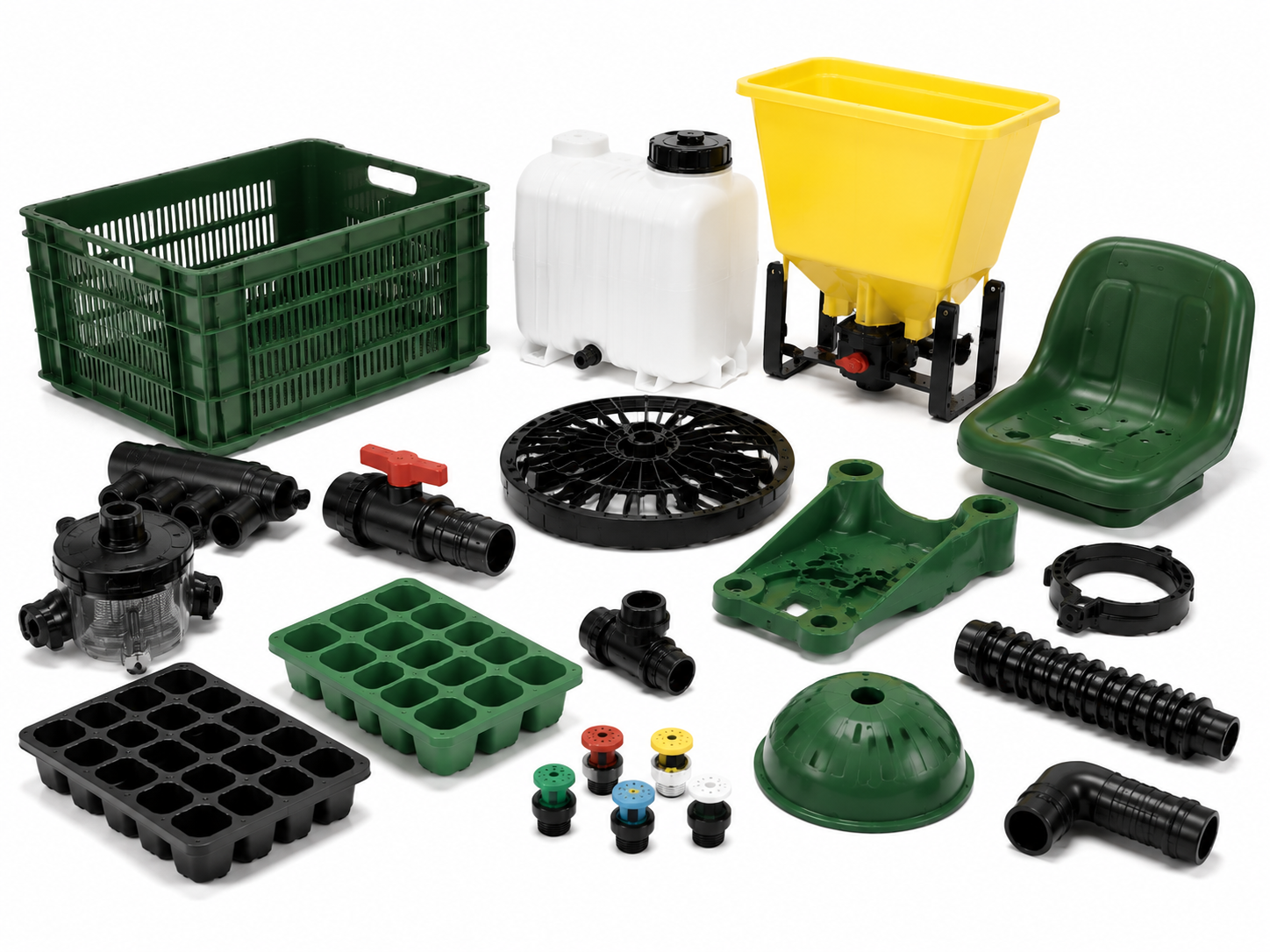
From irrigation fittings and greenhouse accessories to agricultural machinery components and livestock equipment, injection molded plastic parts are widely used throughout the agricultural industry.
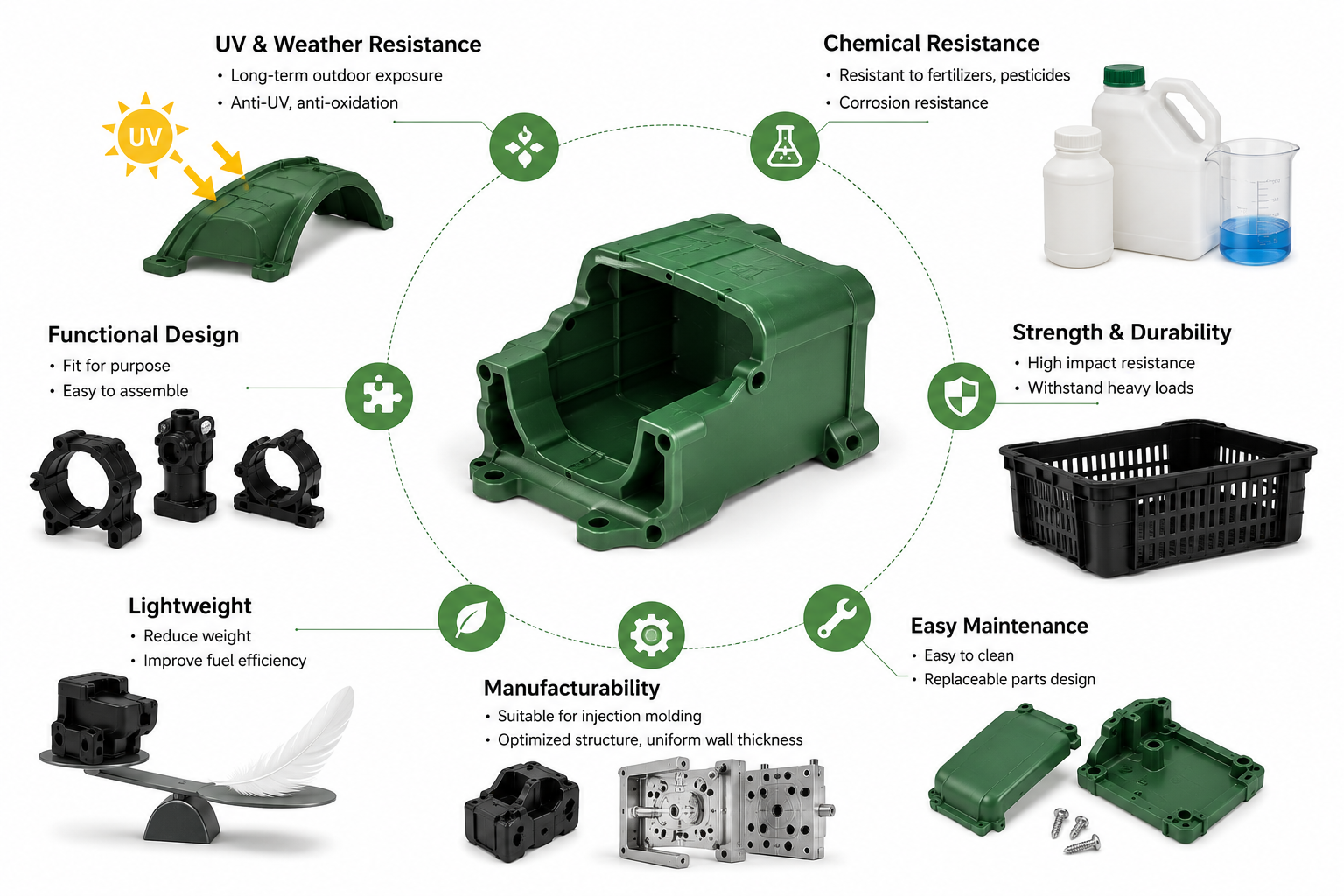
Compared with traditional metal manufacturing, engineering plastics offer several advantages, including corrosion resistance, chemical resistance, lightweight construction, and design flexibility. These characteristics make injection molding an ideal solution for agricultural environments where components are exposed to water, fertilizers, pesticides, UV radiation, and outdoor weather conditions.
At Samgo, we provide complete injection molding solutions for agricultural applications, including product design optimization, DFM analysis, Moldflow simulation, precision mold manufacturing, and high-quality plastic injection molding production.
This article explores the applications of injection molding in agriculture, commonly used materials, product design requirements, manufacturing challenges, and engineering solutions.
Why Injection Molding Is Important for Agriculture
Agricultural equipment operates in challenging environments. Components must withstand moisture, chemicals, temperature variations, outdoor exposure, and continuous mechanical stress.
Injection molding provides manufacturers with reliable solutions for producing durable agricultural plastic components at competitive costs.
المزايا الرئيسية
- Excellent chemical resistance
- High weather durability
- Lightweight construction
- Large-scale production capability
- Complex part geometry
- Low maintenance requirements
- Cost-effective manufacturing
- Consistent product quality
Advantages of Injection Molding for Agriculture
| Advantage | Value for Agricultural Products |
|---|---|
| Corrosion Resistance | Suitable for outdoor environments |
| Lightweight Design | Easier installation and transportation |
| Chemical Resistance | Compatible with fertilizers and pesticides |
| Mass Production | Lower unit cost |
| Design Flexibility | Complex agricultural components |
| UV Protection | Longer outdoor service life |

Applications of Injection Molding in Agriculture
Injection molding supports many agricultural applications, from small precision components to large outdoor equipment housings.
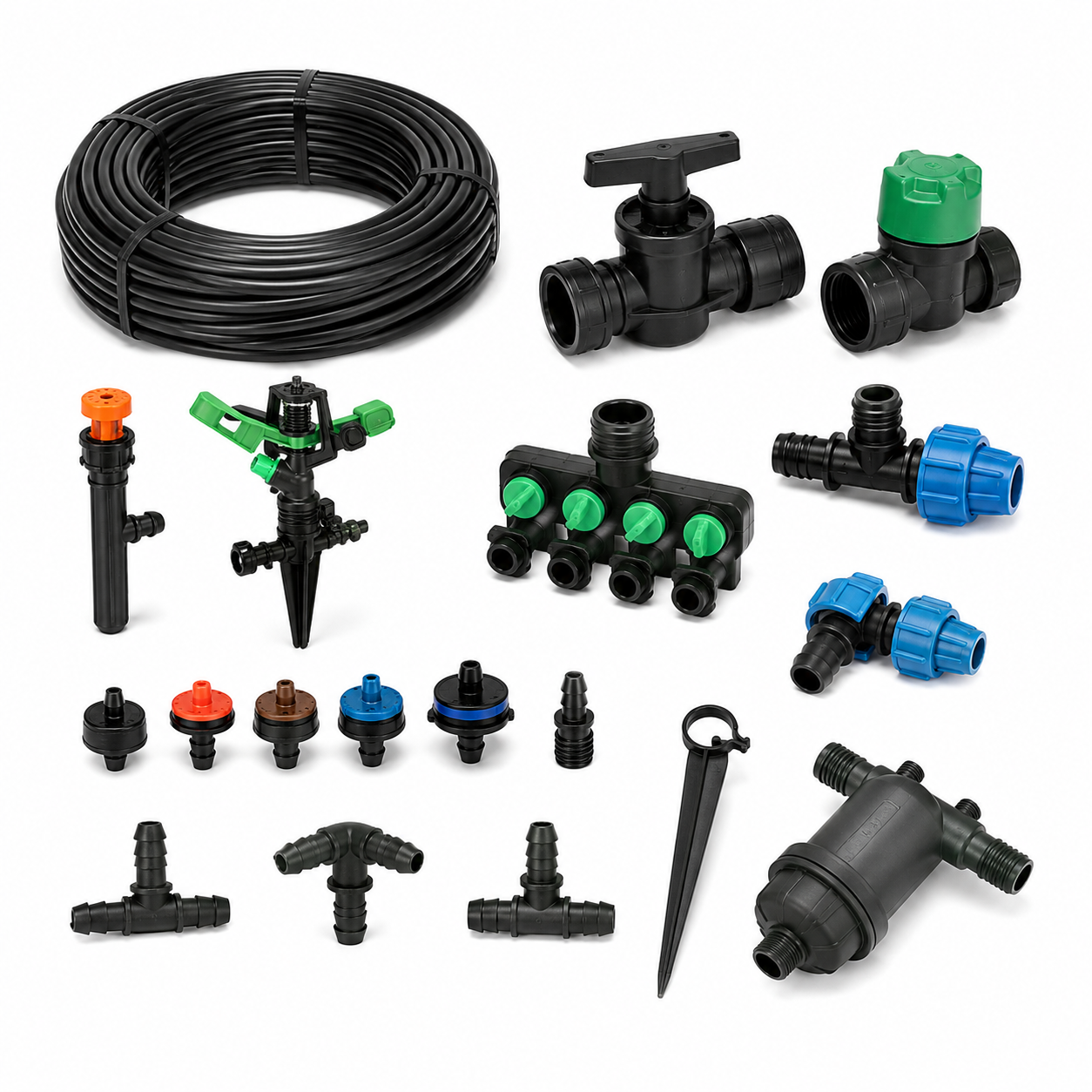
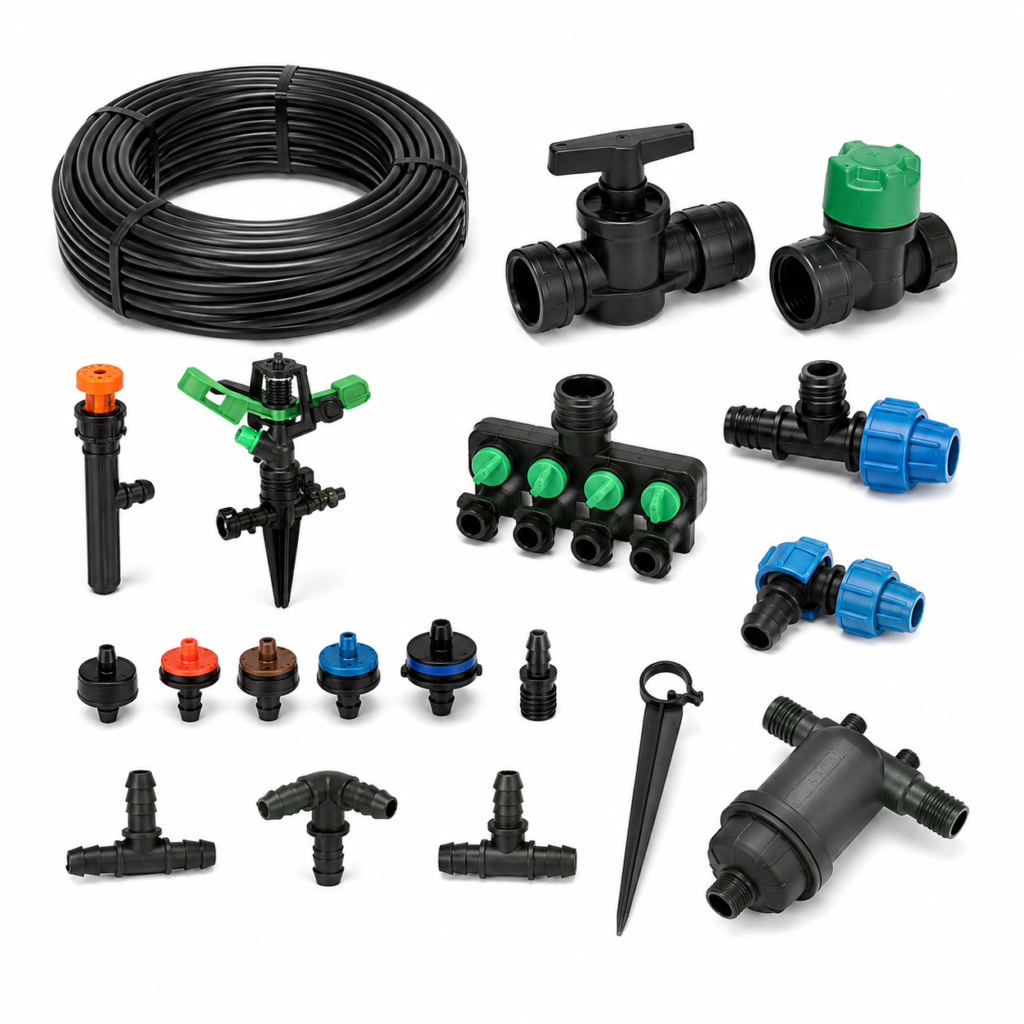
1. Irrigation Systems
Efficient water management is essential for modern agriculture. Injection molded plastic components are widely used in irrigation systems because they provide excellent chemical resistance and long service life.
Typical products include:
- Irrigation connectors
- Drip irrigation fittings
- Spray nozzles
- Valve housings
- Water control components
- Pipe adapters
Materials such as PP, PE, and POM are commonly selected due to their resistance to water, chemicals, and environmental conditions.
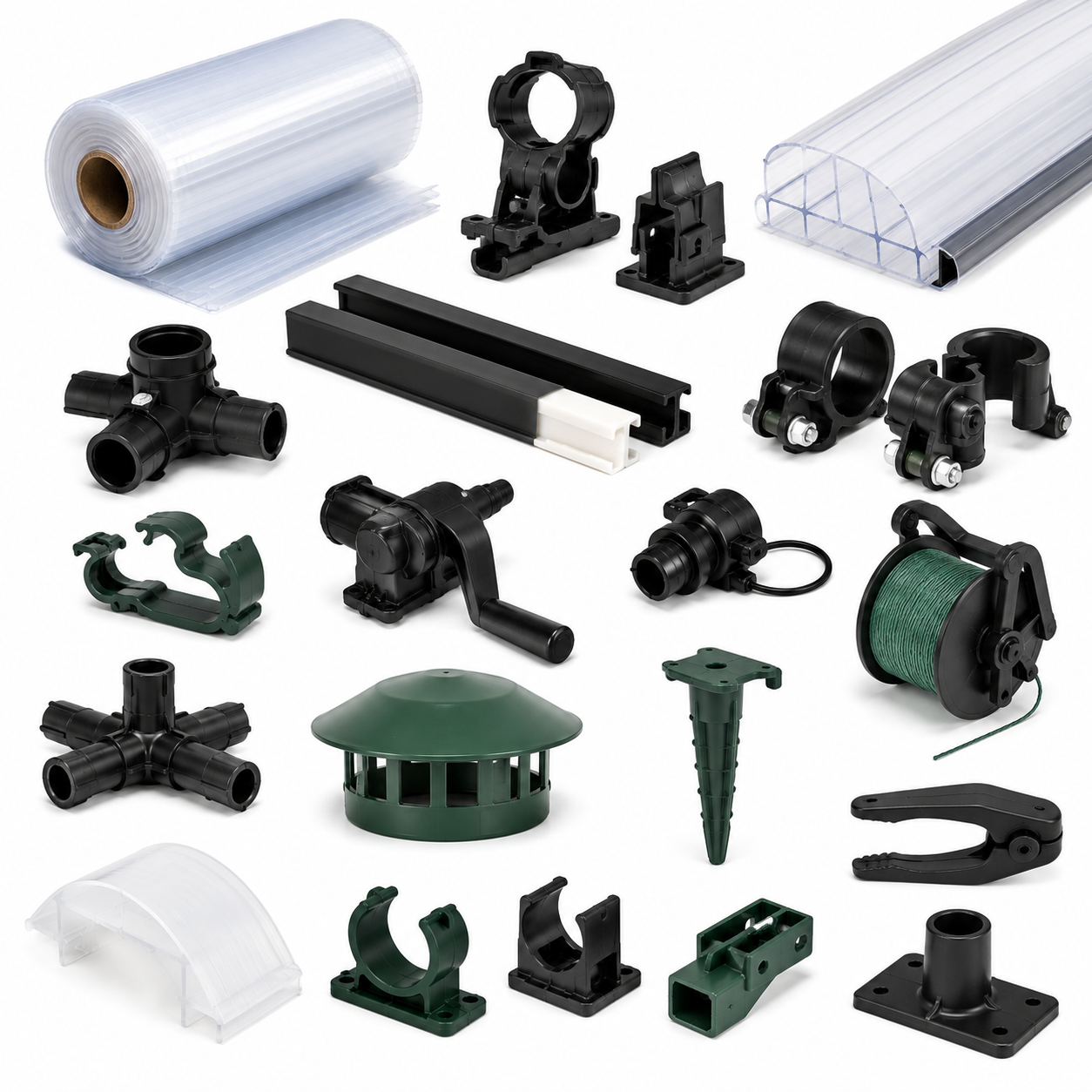
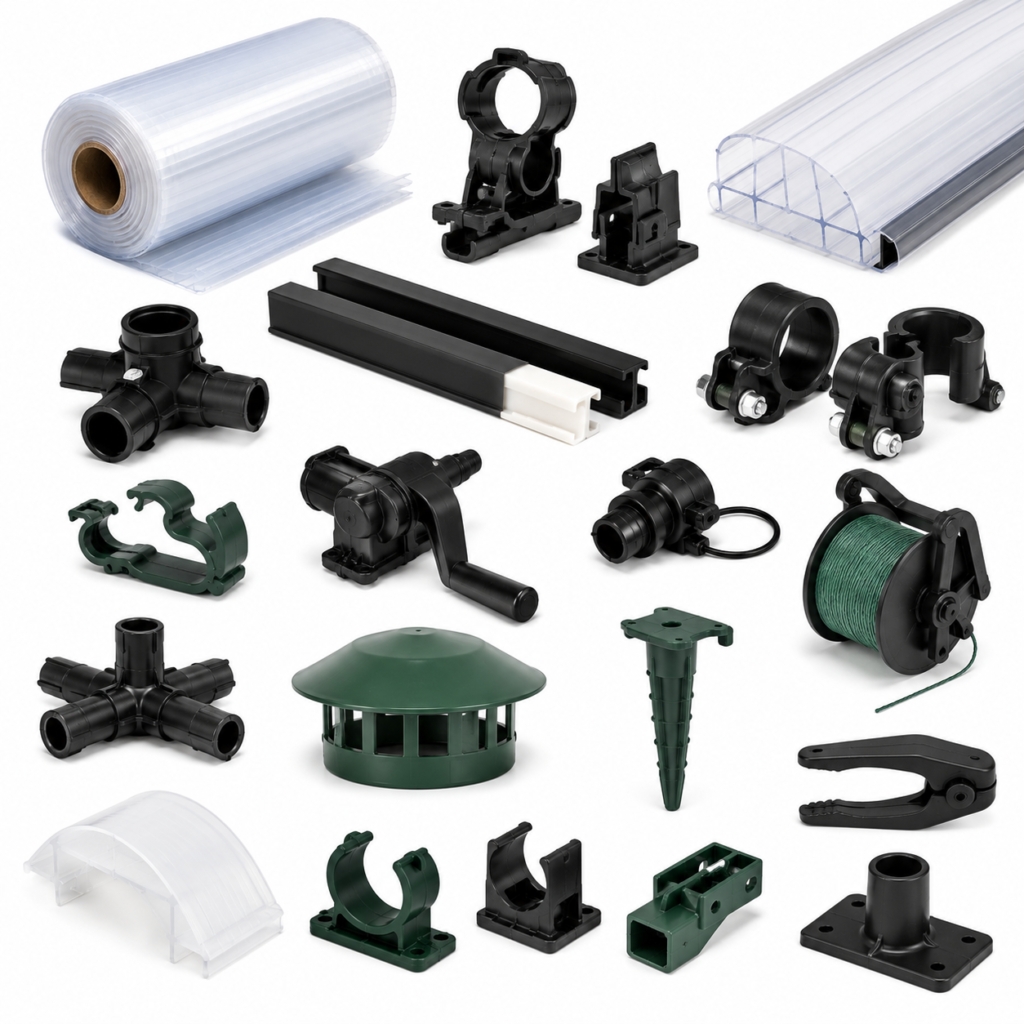
2. Greenhouse Equipment
Modern greenhouses require durable plastic components that can operate under continuous sunlight and humidity.
Injection molded greenhouse components include:
- Ventilation parts
- Plant support clips
- Structural connectors
- Film fixing components
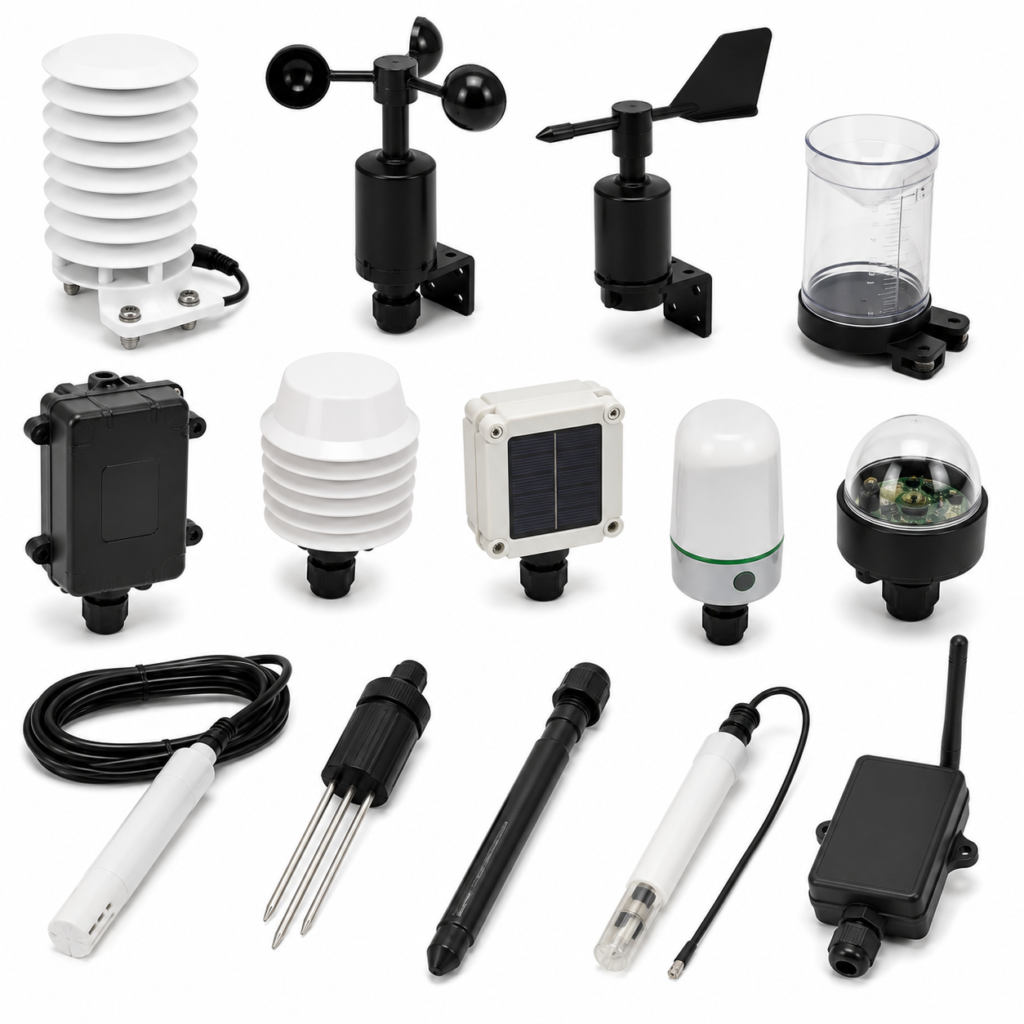
- مبيتات المستشعرات
UV-resistant materials such as ASA and UV-stabilized PP are often used to improve outdoor durability.
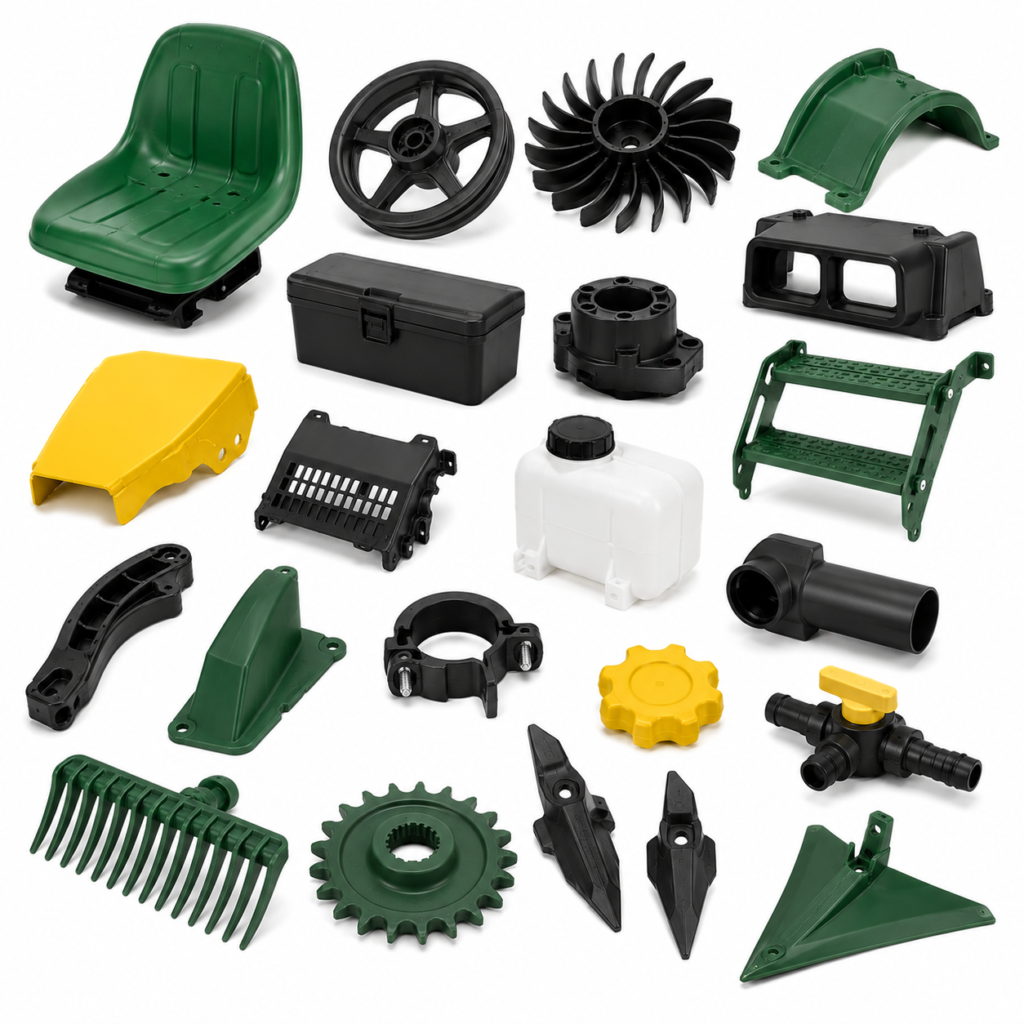
3. Agricultural Machinery Components
Agricultural machines require lightweight but strong plastic parts to reduce equipment weight and improve efficiency.
Common injection molded components include:
- أغطية واقية
- Control panel housings
- Handles
- Protective guards
- Storage containers
- Machine brackets
Agricultural Application Table
| Application | Injection Molded Components | Common Materials |
|---|---|---|
| Irrigation | Valves, connectors, nozzles | بي بي, PE, POM |
| Greenhouse | Clips, brackets, housings | ASA, PP, إيه بي إس |
| Farming Equipment | Covers, handles, guards | ABS, PC/ABS, PA |
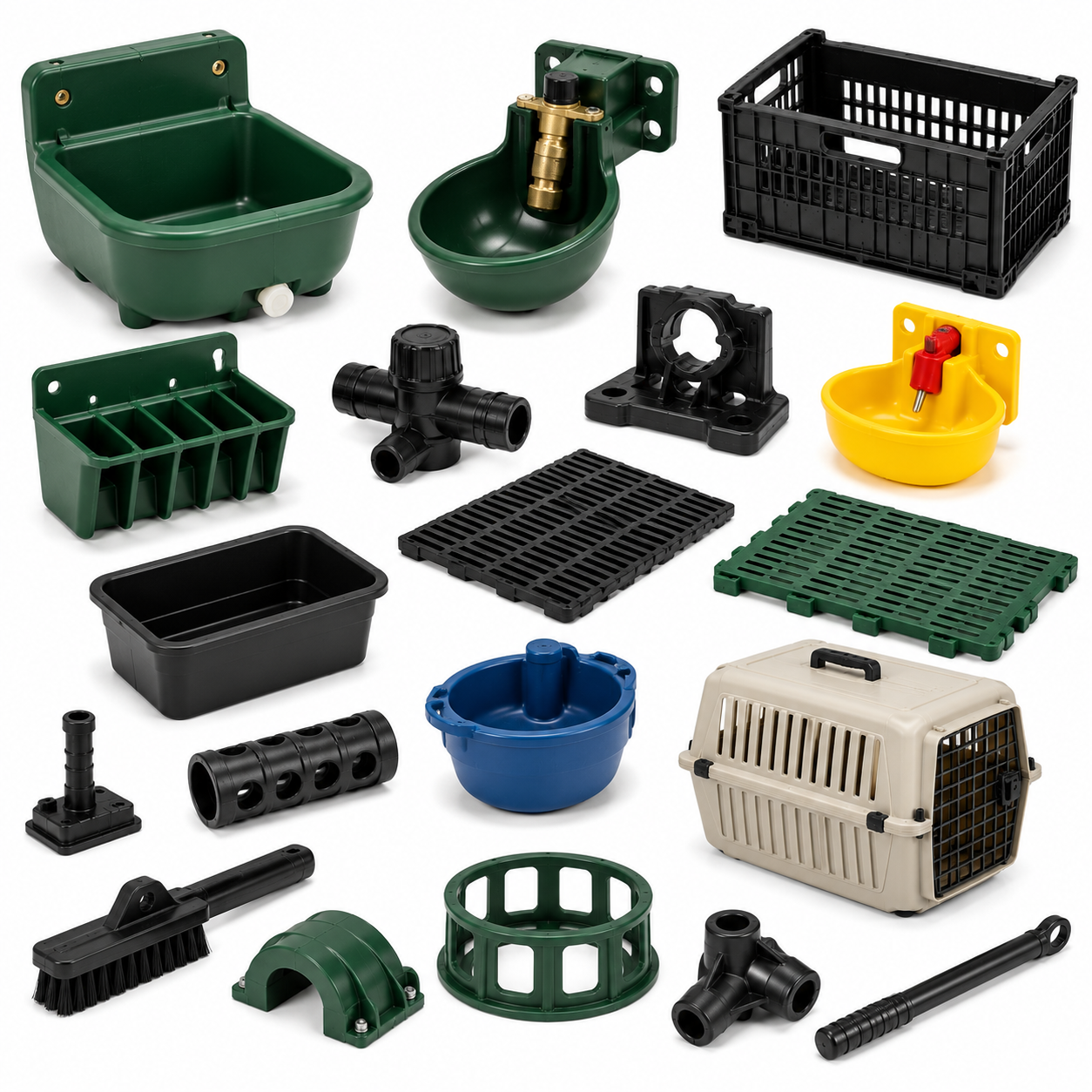
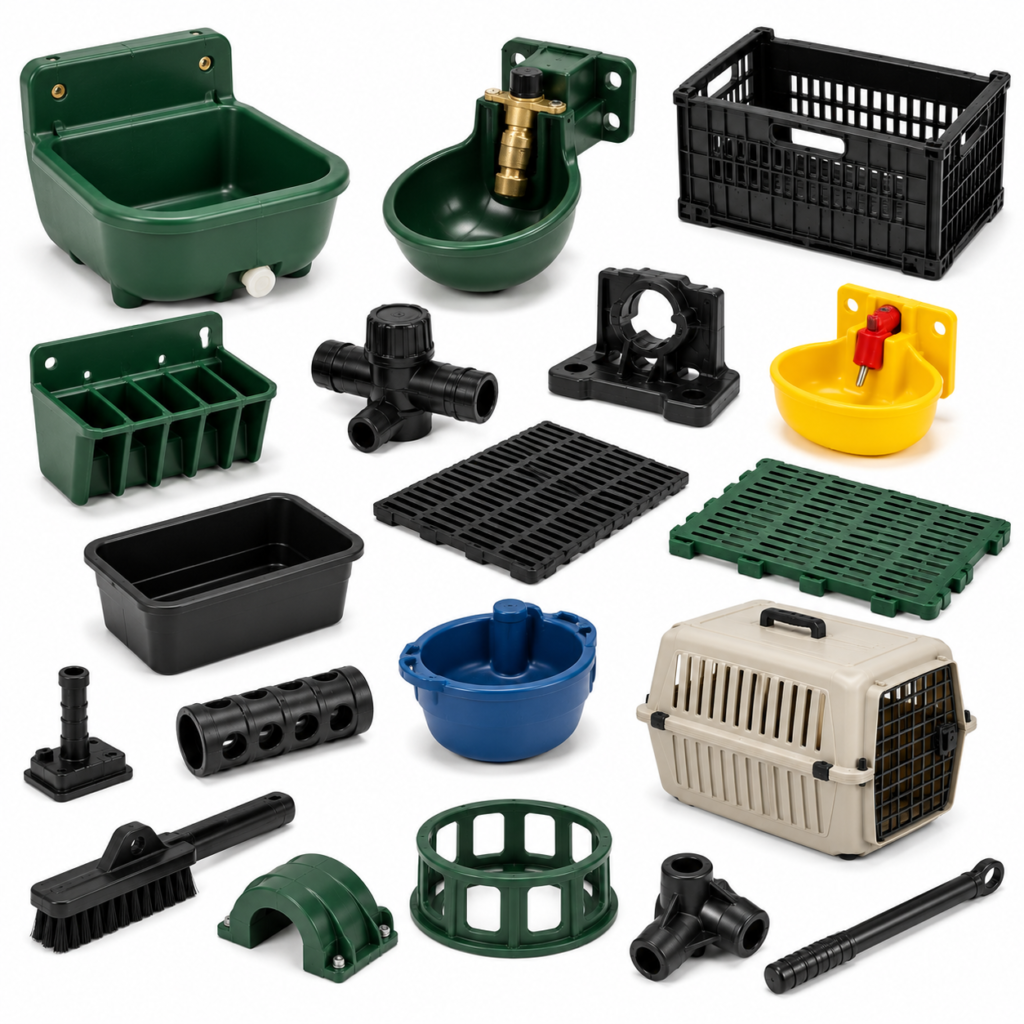
| Livestock Equipment | Feeders, containers | PP, HDPE |
| Agricultural Sensors | Electronic housings | PC, ABS |


Common Materials for Agricultural Injection Molding
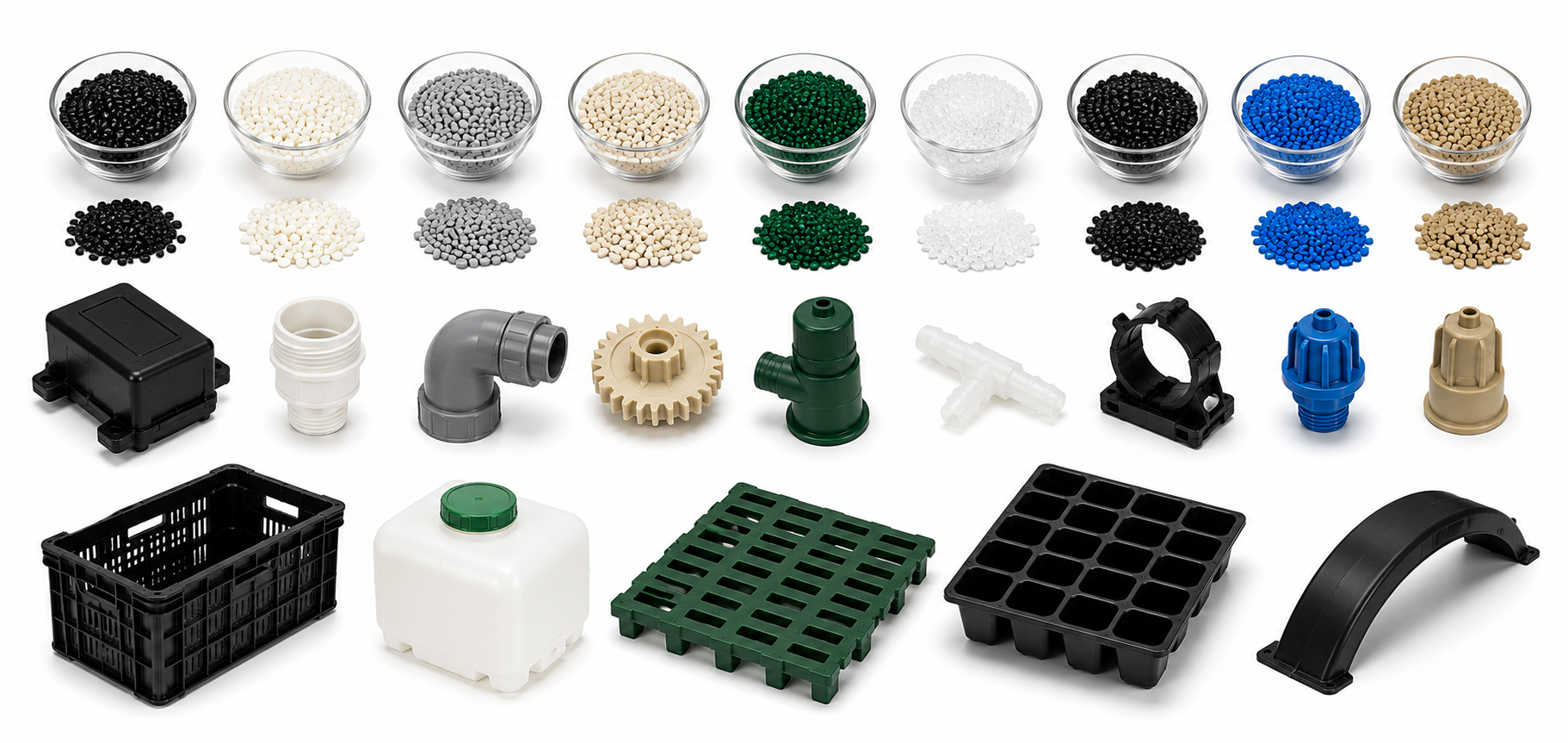
Material selection is critical because agricultural products often operate outdoors and are exposed to harsh conditions.
المواد المستخدمة بشكل متكرر
| مادة | Main Properties | Agricultural Applications |
|---|---|---|
| بي بي | Chemical resistance, low cost | Irrigation parts, containers |
| PE | Flexibility and impact resistance | Water tanks, fittings |
| إيه بي إس | Good strength and appearance | Equipment housings |
| بولي كاربونات / أكريلونتريل بوتادين ستيرين | Impact resistance and durability | Electronic enclosures |
| PA66 GF30 | High mechanical strength | المكونات الهيكلية |
| ASA | Excellent UV resistance | Outdoor housings |
| POM | Low friction and precision | Valves and gears |
Material Selection Considerations
Agricultural plastic components should consider:
UV Resistance
Outdoor products require protection against sunlight degradation.
Chemical Resistance
Components may contact:
- Fertilizers
- Pesticides
- Cleaning chemicals
Mechanical Strength
Moving agricultural equipment requires materials with excellent impact resistance.
Temperature Resistance
Products must operate under seasonal temperature changes.

Product Design Requirements for Agricultural Plastic Parts
Agricultural components require careful design consideration to ensure reliability in outdoor environments.
Important design factors include:
- Uniform wall thickness
- Reinforced ribs
- Proper drainage design
- UV-resistant material selection
- Chemical compatibility
- Easy assembly
- Weather-resistant structure
For outdoor agricultural products, engineers should avoid water accumulation areas and design sufficient strength around mounting points.
Design Guidelines
| Design Element | Recommendation |
|---|---|
| Wall Thickness | Maintain uniform thickness |
| Ribs | Improve strength without increasing weight |
| Corners | Use proper radii to reduce stress |
| Mounting Areas | Add reinforcement |
| Surface Design | Consider dirt and water resistance |

Outdoor Durability Requirements for Agricultural Plastic Components
Agricultural plastic products are commonly used in outdoor environments where they are exposed to sunlight, rain, fertilizers, pesticides, dust, and temperature fluctuations. Therefore, outdoor durability is one of the most important considerations when selecting materials and designing injection molded agricultural components.
Unlike indoor plastic products, agricultural components must maintain their mechanical properties and appearance after years of outdoor exposure.
Key Environmental Challenges
UV Exposure
Continuous sunlight exposure can cause plastic materials to become brittle, discolored, or cracked.
Solutions include:
- UV-resistant additives
- ASA materials
- UV-stabilized PP
- Weather-resistant coatings
Chemical Exposure
Agricultural components may contact:
- Fertilizers
- Pesticides
- Cleaning agents
- Soil chemicals
Materials must provide excellent chemical resistance to ensure long-term reliability.
Temperature Variation
Agricultural equipment often operates in extreme environments, from freezing winters to hot summers.
Materials must maintain:
- Impact strength
- ثبات الأبعاد
- Mechanical performance
Outdoor Material Performance Comparison
| مادة | UV Resistance | Chemical Resistance | Typical Application |
|---|---|---|---|
| بي بي | Medium | Excellent | Irrigation parts |
| PE | Medium | Excellent | Water tanks |
| ASA | Excellent | Good | Outdoor housings |
| بولي كاربونات / أكريلونتريل بوتادين ستيرين | Medium | Good | Electronic enclosures |
| PA66 GF30 | Good | Good | Structural parts |
| POM | Good | Excellent | Precision valves |
Agricultural Injection Mold Design Considerations
A reliable agricultural plastic component starts with proper mold design. Since many agricultural products require long service life and high-volume production, the mold must provide excellent durability, dimensional stability, and production efficiency.
Important Mold Design Factors
1. Mold Material Selection
Agricultural products often require thousands or millions of production cycles.
Recommended mold materials:
| Mold Component | Recommended Material |
|---|---|
| Core & Cavity | S136 / NAK80 |
| قاعدة القالب | P20 / 718H |
| Wear Inserts | H13 / SKD61 |
2. Cooling System Design
Proper cooling improves:
- Cycle time
- دقة الأبعاد
- Product consistency
3. Gate Design
Correct gate selection helps prevent:
- Flow marks
- Warpage
- Uneven shrinkage
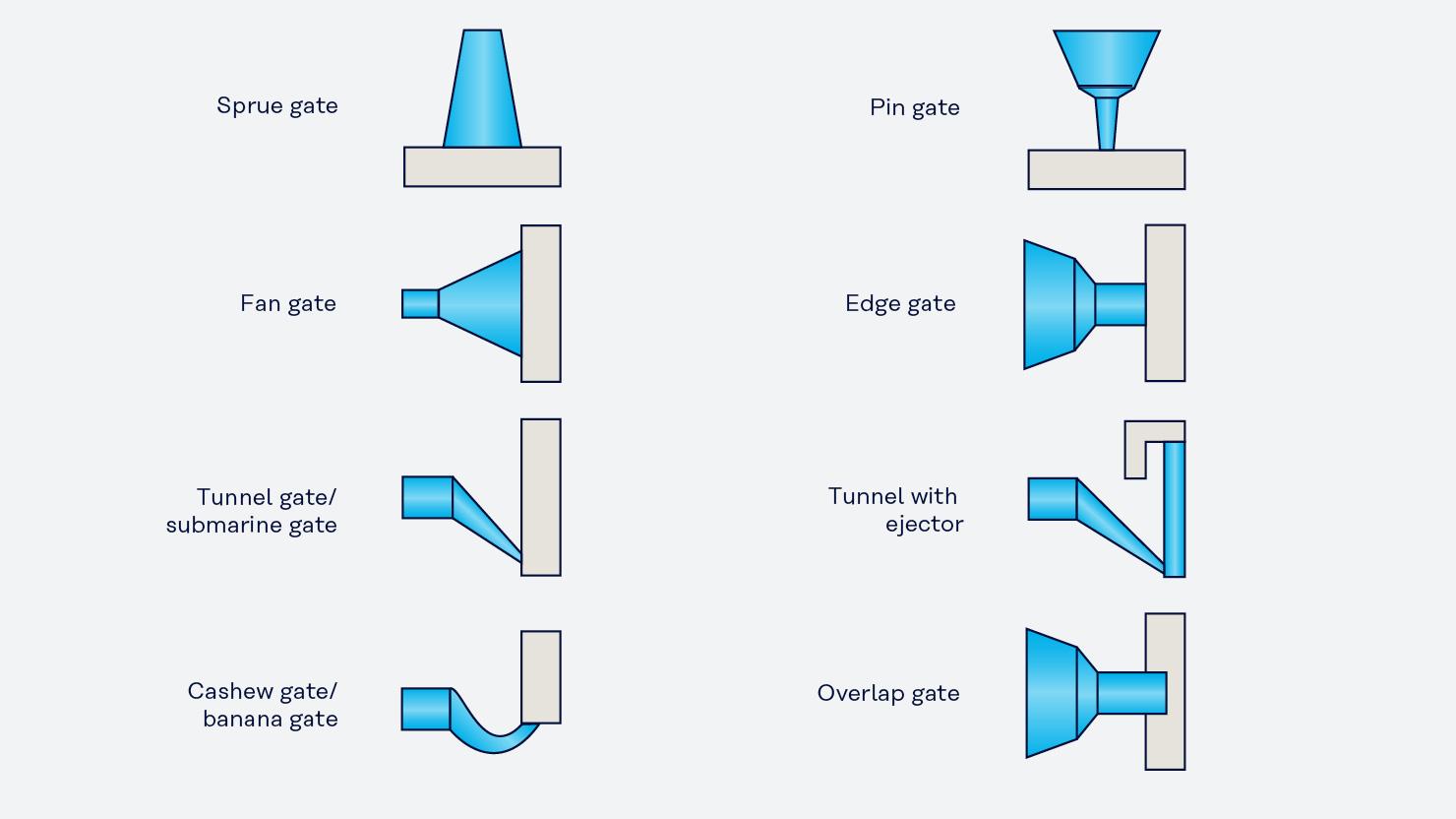
Common gate types:
- Edge gate
- Pin gate
- Submarine gate
- Hot runner gate
4. Draft Angle Design
Agricultural parts often have deep structures and textured surfaces. Proper draft angles ensure smooth ejection and prevent surface damage.
Agricultural Mold Design Checklist
| Design Item | الغرض |
|---|---|
| قنوات التبريد | Stable production |
| Proper Gate Location | Better filling |
| Draft Angle | Easy demolding |
| Reinforced Structure | Better durability |
| Wear Resistance | Longer mold life |
Quality Control and Testing for Agricultural Injection Molding
Agricultural products must maintain reliable performance throughout their service life. Quality control ensures that every molded component meets dimensional, mechanical, and environmental requirements.
Common Inspection Methods
Dimensional Inspection
Used to verify:
- Product dimensions
- Assembly accuracy
- Hole positions
- Critical tolerances
Equipment:
- Digital caliper
- Micrometer
- CMM inspection
Material Testing
Testing includes:
- Impact resistance
- UV aging
- مقاومة كيميائية
- Thermal performance
Functional Testing
Examples:
- Water pressure testing
- Leakage testing
- Assembly testing
- Load testing
Quality Control Process
| Stage | Inspection Purpose |
|---|---|
| Material Inspection | Confirm resin quality |
| Mold Trial | Verify tooling performance |
| First Article Inspection | Approve samples |
| Production Inspection | Maintain consistency |
| Final Inspection | Shipment approval |
Strict quality control management
إرسال استفسار
Common Manufacturing Challenges and Solutions
Agricultural injection molded parts often involve large dimensions, outdoor requirements, and complex structures. Several manufacturing challenges must be carefully controlled.
| Challenge | Cause | Solution |
|---|---|---|
| Warpage | Uneven cooling | Optimize cooling system |
| Sink Marks | Thick wall sections | Improve product design |
| Short Shot | Poor filling | Optimize gate design |
| Cracking | Wrong material selection | Choose suitable resin |
| Color Fading | UV degradation | Add UV stabilizers |
| Leakage | Poor sealing design | Improve tolerance control |
Engineering Solutions
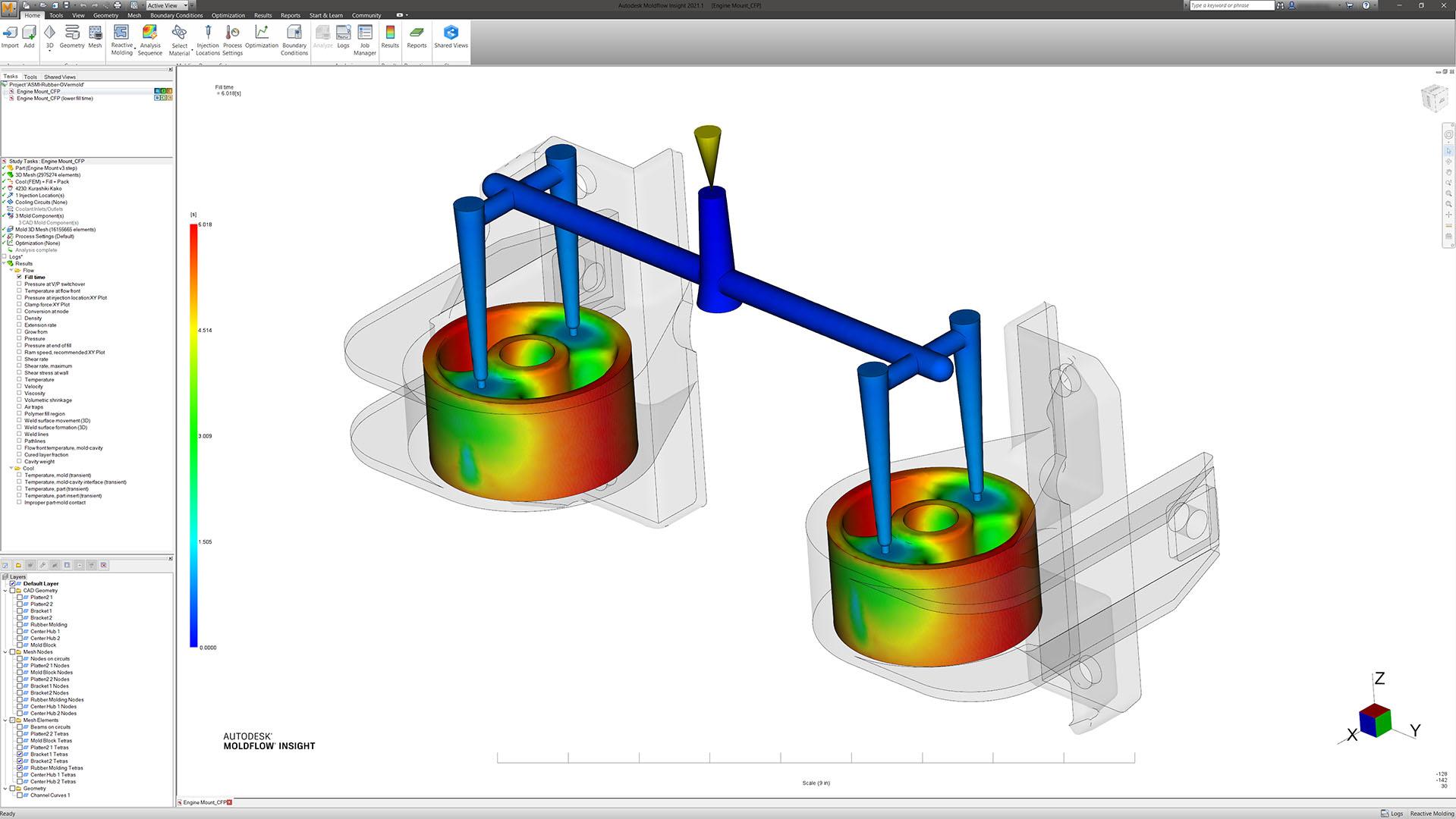
Moldflow Simulation
Before manufacturing, Moldflow analysis helps predict:
- Filling behavior
- Weld lines
- Air traps
- Pressure distribution
- Warpage risk
DFM Optimization
Design improvements include:
- Uniform wall thickness
- Proper rib structures
- Improved draft angles
- Optimized assembly features
Why Choose Samgo for Agricultural Injection Molding?
Samgo provides complete plastic injection molding solutions for agricultural equipment manufacturers worldwide.
From initial product development to mass production, our engineering team supports customers with professional manufacturing expertise.
Our Services
| Service | Customer Benefit |
|---|---|
| Product Design | Improved manufacturability |
| DFM Analysis | Reduced development risk |
| Moldflow Simulation | Optimized filling performance |
| Injection Mold Manufacturing | Reliable tooling |
| Plastic Injection Molding | Stable mass production |
| Quality Inspection | Consistent product quality |
Agricultural Industries We Serve
- Irrigation equipment
- Greenhouse systems
- Agricultural machinery
- Smart farming equipment
- Livestock products
- Water management systems
Our experience with engineering plastics, outdoor materials, and precision tooling allows us to provide reliable solutions for demanding agricultural applications.
Frequently Asked Questions
What plastics are commonly used for agricultural injection molding?
Common materials include PP, PE, ASA, ABS, PC/ABS, PA66 GF30, and POM. The final selection depends on UV exposure, chemical contact, mechanical requirements, and operating conditions.
Are injection molded agricultural parts suitable for outdoor use?
Yes. With proper material selection and UV stabilization, injection molded parts can provide many years of outdoor service.
How can agricultural plastic products resist fertilizer and pesticide chemicals?
Engineers select chemically resistant materials such as PP, PE, and POM, while avoiding materials that may degrade under chemical exposure.
Can Samgo manufacture large agricultural plastic components?
Yes. Samgo provides custom injection molding solutions for both small precision components and larger agricultural housings and covers.
احصل على أحدث سعر؟ سنرد عليك في أقرب وقت ممكن (خلال 12 ساعة)

أنواع بوابات القولبة بالحقن البلاستيكي: الاختيار، ومبادئ التصميم، والمزايا، والتطبيقات
تصميم البوابة يُعد أحد أكثر جوانب هندسة قوالب الحقن البلاستيكية أهمية. وعلى الرغم من أن البوابة عادةً ما تكون أصغر معالم نظام التغذية، إلا أن لها تأثيراً كبيراً على تدفق المصهور، وضغط الكبر، وكفاءة التبريد، ومظهر القطعة، وقت الدورة، والجودة الكلية للمنتج.
يمكن أن يتسبب البواب المصمم بشكل سيئ في حدوث العديد من عيوب القولبة، بما في ذلك الحقن الناقص، وعلامات الانكماش، وخطوط اللحام، والتدفق النفاث، وعلامات الحرق، وبقايا البوابة المفرطة، وانهيار الجزء. وفي المقابل، يساعد اختيار نوع البوابة وموقعها المناسب في ضمان التعبئة المتوازنة، ودقة الأبعاد الثابتة، والإنتاج الفعال.
مواد البولي بروبيلين (PP): الأنواع، الدرجات، الخصائص، والتطبيقات
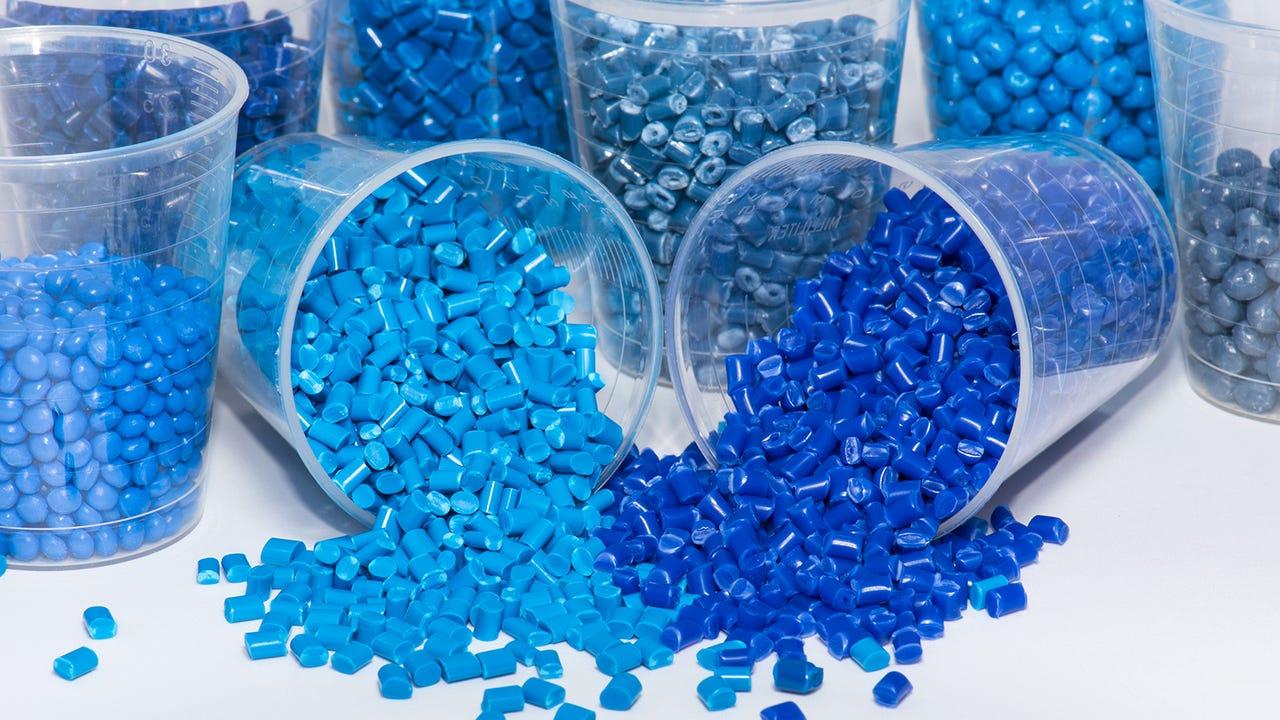
البولي بروبيلين (PP) هو أحد أكثر المواد البلاستيكية الحرارية استخداماً في العالم، حيث يستحوذ على حصة كبيرة من إنتاج البلاستيك العالمي. بفضل توازنه الممتاز بين الخواص الميكانيكية، ومقاومته الكيميائية، وخصائصه خفيفة الوزن، وفعاليته من حيث التكلفة، أصبح البولي بروبيلين المادة المفضلة لعدد لا يحصى من منتجات القولبة بالحقن عبر التطبيقات السيارات، المنزلية، الطبية، التعبئة والتغليف، الكهربائية، والصناعية.
يتوفر البولي بروبيلين الحديث في العديد من الدرجات والتركيبات المختلفة. ويمكن للشركات المصنعة الاختيار من بين البولي بروبيلين متجانس البوليمر، والبولي بروبيلين كوبوليمر عشوائي، والبولي بروبيلين كوبوليمر مقاوم للصدمات، والبولي بروبيلين المقوى بالألياف الزجاجية، والبولي بروبيلين المحشو بالمعادن، والبولي بروبيلين المثبط للهب، والبولي بروبيلين المثبت ضد الأشعة فوق البنفسجية، والبولي بروبيلين المخصص للطعام، وذلك اعتماداً على متطلبات المنتج.
تحليل تدفق القولون بالحقن: الدليل الشامل لمحاكاة مولد فلو للأجزاء البلاستيكية
في تطوير منتجات البلاستيك الحديثة، لم تعد صناعة القوالب تعتمد فقط على الخبرة الهندسية. لقد أصبحت الهندسة بمساعدة الكمبيوتر (CAE) جزءاً أساسياً من عملية القولبة بالحقن، مما يتيح للمهندسين التنبؤ بعيوب القولبة المحتملة قبل تصنيع القالب. ومن بين هذه التقنيات، يُعد تحليل تدفق قوالب الحقن، والذي يُشار إليه غالباً بتحليل "مولد فلو" (Moldflow)، أحد أكثر الأدوات الهندسية قيمة لتقليل مخاطر التطوير، وتقصير أوقات التوريد، وتحسين جودة الأجزاء.