
การใช้งานการฉีดขึ้นรูปในอุตสาหกรรมพลังงานใหม่: วัสดุ ส่วนประกอบ และโซลูชันการผลิต
สารบัญ
บทนำ
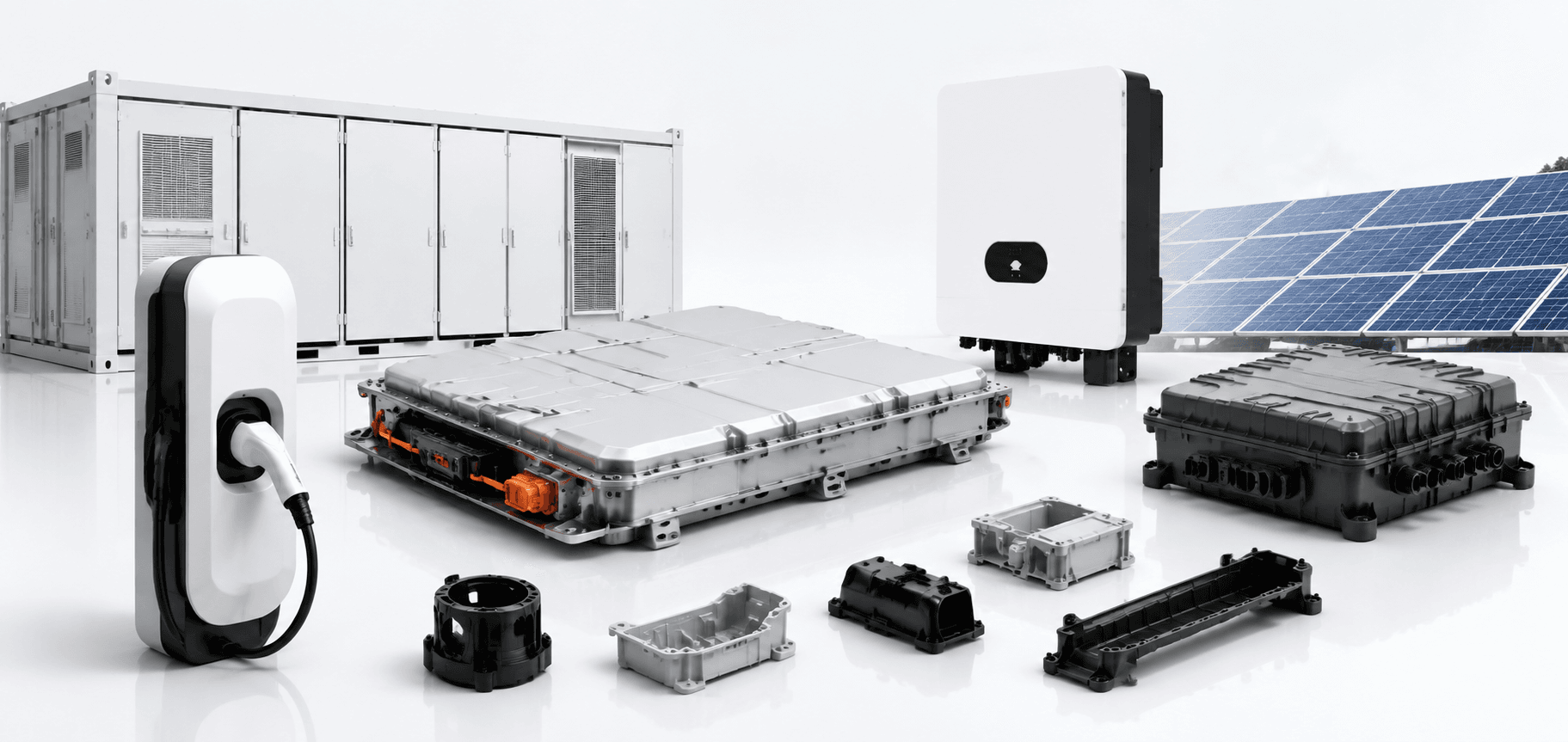
การเปลี่ยนผ่านทั่วโลกไปสู่พลังงานหมุนเวียนและการเปลี่ยนมาใช้พลังงานไฟฟ้า ได้สร้างการเติบโตอย่างรวดเร็วในอุตสาหกรรมพลังงานใหม่ ซึ่งรวมถึงยานยนต์ไฟฟ้า ระบบกักเก็บพลังงาน อุปกรณ์พลังงานแสงอาทิตย์ โครงสร้างพื้นฐานด้านการชาร์จ และอุปกรณ์จัดการพลังงานอัจฉริยะ.
เบื้องหลังเทคโนโลยีเหล่านี้ ชิ้นส่วนพลาสติกประสิทธิภาพสูงมีบทบาทสำคัญในการปกป้องระบบไฟฟ้า เพิ่มความน่าเชื่อถือของผลิตภัณฑ์ ลดน้ำหนัก และปรับต้นทุนการผลิตให้เหมาะสมที่สุด.
การฉีดขึ้นรูป ได้กลายเป็นหนึ่งในวิธีการผลิตที่สำคัญที่สุดสำหรับชิ้นส่วนพลาสติกพลังงานใหม่ เนื่องจากมีความสามารถในการทำซ้ำที่ยอดเยี่ยม ความสามารถในการออกแบบที่ซับซ้อน ประสิทธิภาพการผลิตปริมาณมาก และความเข้ากันได้กับวัสดุวิศวกรรมขั้นสูง.
ไม่เหมือนชิ้นส่วนพลาสติกอุตสาหกรรมแบบดั้งเดิม การใช้งานด้านพลังงานใหม่มักต้องการมาตรฐานประสิทธิภาพที่สูงขึ้น ซึ่งรวมถึง:
- ฉนวนไฟฟ้า
- ทนไฟ
- ความต้านทานต่อสารเคมี
- ความเสถียรทางความร้อน
- ความแม่นยำด้านมิติ
- ความทนทานต่อสภาพแวดล้อมในระยะยาว
ตั้งแต่ส่วนประกอบของโมดูลแบตเตอรี่และตัว C สถานีชาร์จ ไปจนถึงฝาครอบอุปกรณ์พลังงานแสงอาทิตย์และตู้เก็บพลังงาน การฉีดขึ้นรูปช่วยสนับสนุนการพัฒนาผลิตภัณฑ์พลังงานที่ปลอดภัยและมีประสิทธิภาพมากขึ้น.
แซมโก้ให้บริการโซลูชันการฉีดขึ้นรูปที่ครบวงจรสำหรับการใช้งานด้านพลังงานใหม่ ซึ่งรวมถึงการปรับแต่งการออกแบบผลิตภัณฑ์ การวิเคราะห์ DFM การผลิตแม่พิมพ์ที่มีความแม่นยำ การเลือกใช้วัสดุ และการผลิตจำนวนมาก.
ทำไม การฉีดขึ้นรูปพลาสติก มีความสำคัญสำหรับผลิตภัณฑ์พลังงานใหม่
อุปกรณ์พลังงานใหม่มักทำงานภายใต้เงื่อนไขที่ท้าทาย.
ส่วนประกอบต่างๆ อาจประสบกับ:
- สภาพแวดล้อมที่มีอุณหภูมิสูง
- ภาระทางไฟฟ้า
- การสัมผัสกลางแจ้ง
- การสั่นสะเทือน
- การสัมผัสสารเคมี
- ข้อกำหนดด้านอายุการใช้งานยาวนาน
การฉีดขึ้นรูปพลาสติกช่วยให้ผู้ผลิตมีโซลูชันที่เชื่อถือได้สำหรับการผลิตชิ้นส่วนที่มีน้ำหนักเบาและทนทาน.
ข้อดีของการฉีดขึ้นรูปสำหรับงานพลังงานใหม่
| ข้อได้เปรียบ | คุณค่า |
|---|---|
| ฉนวนไฟฟ้า | ปกป้องระบบอิเล็กทรอนิกส์ |
| การออกแบบที่มีน้ำหนักเบา | ลดน้ำหนักรวมของผลิตภัณฑ์ |
| เรขาคณิตเชิงซ้อน | รองรับโครงสร้างขั้นสูง |
| ประสิทธิภาพการผลิตสูง | เหมาะสำหรับการผลิตจำนวนมาก |
| ความยืดหยุ่นของวัสดุ | รองรับพลาสติกวิศวกรรม |
| คุณภาพสม่ำเสมอ | เสถียรภาพการผลิตคงที่ |
1. ชิ้นส่วนพลาสติกสำหรับระบบแบตเตอรี่รถยนต์ไฟฟ้า
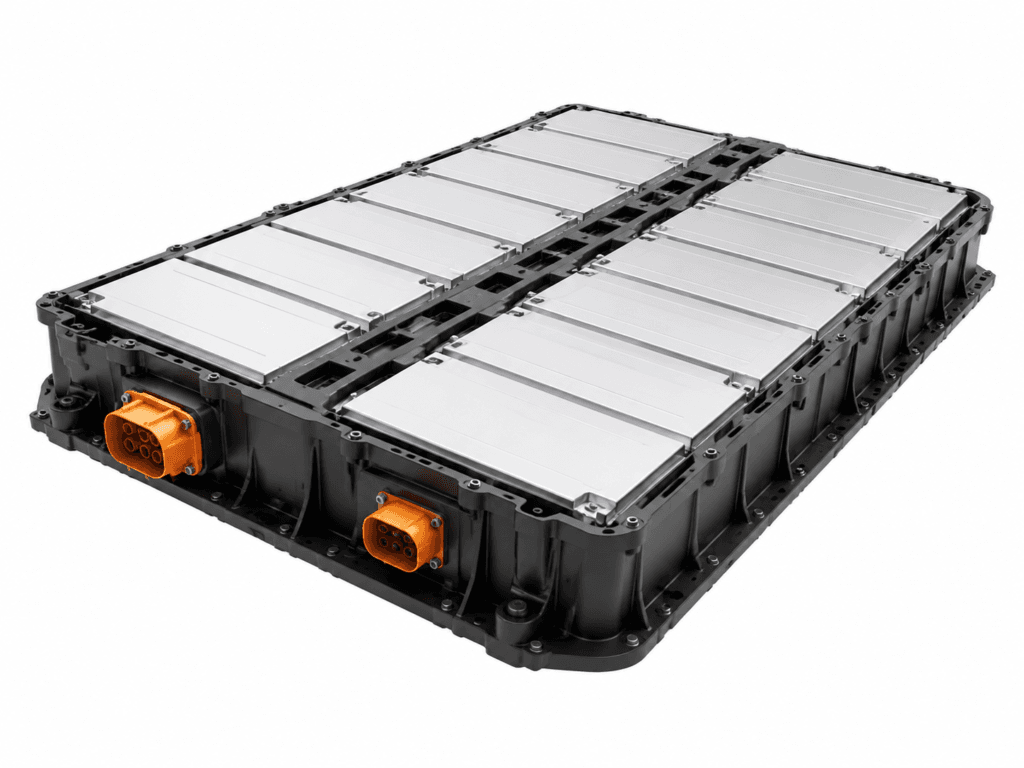
แบตเตอรี่รถยนต์ไฟฟ้าต้องการระบบป้องกันที่เชื่อถือได้เพื่อให้มั่นใจถึงความปลอดภัย สมรรถนะ และความทนทาน.
แม้ว่าเซลล์แบตเตอรี่และโครงสร้างโลหะจะมีความสำคัญ แต่ส่วนประกอบรอบข้างจำนวนมากก็ต้องอาศัยวัสดุพลาสติกที่มีประสิทธิภาพสูง.
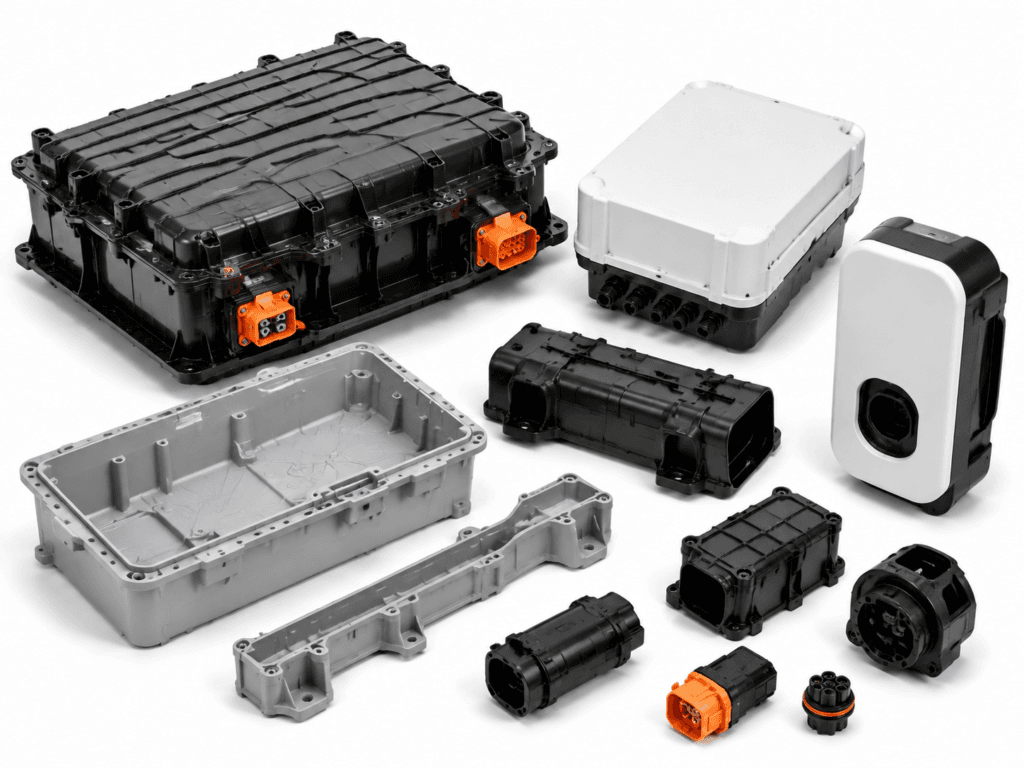
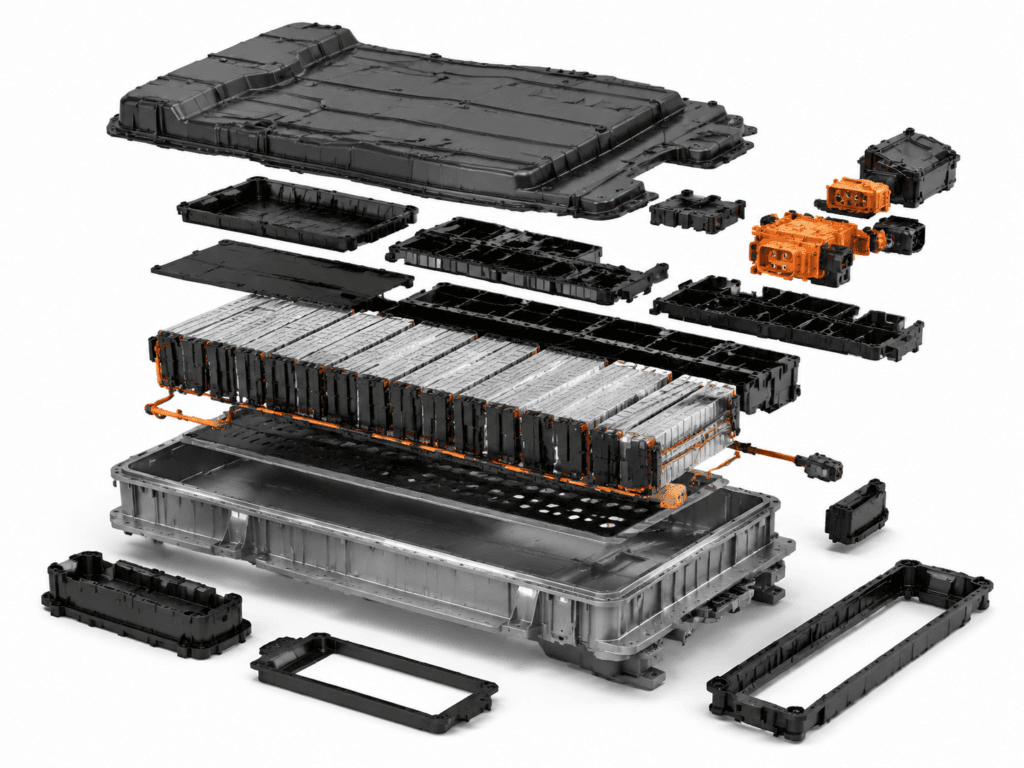
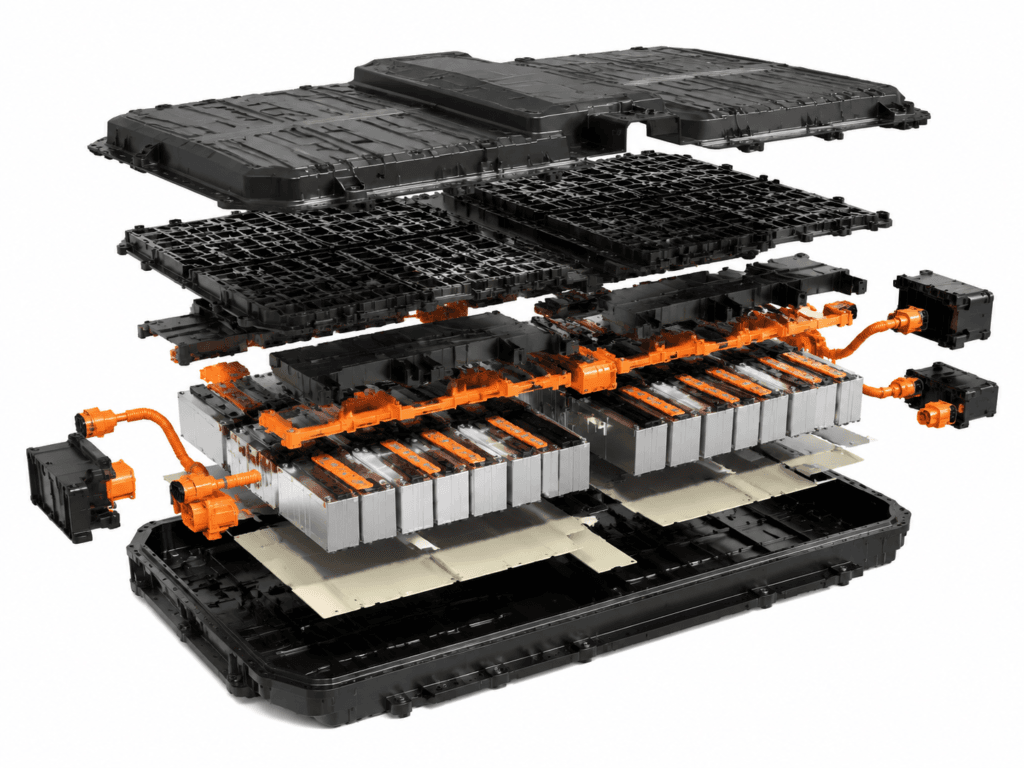
ส่วนประกอบแบตเตอรี่ที่ขึ้นรูปด้วยการฉีดพลาสติกทั่วไป ได้แก่:
- ฝาครอบโมดูลแบตเตอรี่
- ตัวเรือนคอนเนคเตอร์
- ที่วางแบตเตอรี่
- ฉนวนกันความร้อน
- อุปกรณ์ป้องกันสายเคเบิล
- ขา ญึ่ปุ่น
- ส่วนประกอบของระบบหล่อเย็น
วัสดุพลาสติกที่ใช้ในการใช้งานแบตเตอรี่จะต้องมีคุณสมบัติ:
- ฉนวนไฟฟ้า
- การหน่วงไฟ
- ความเสถียรของมิติ
- ความต้านทานต่อสารเคมี
- ทนต่ออุณหภูมิ
วัสดุทั่วไปประกอบด้วย:
- โพลีคาร์บอเนต+อะคริโลไนไตรล์ บิวทาไดอีน สไตรีน ชนิดหน่วงไฟ
- พีเอ 66 จีเอฟ
- PPS
- PBT
- พีพีไม่ลามไฟ
ชิ้นส่วนพลาสติกแบตเตอรี่รถยนต์ไฟฟ้า
| ส่วนประกอบ | ฟังก์ชัน | วัสดุที่แนะนำ |
|---|---|---|
| ฝาครอบแบตเตอรี่ | การป้องกัน | โพลีคาร์บอเนต+อะคริโลไนไตรล์ บิวทาไดอีน สไตรีน ชนิดหน่วงไฟ |
| ที่ใส่ถ่าน | การวางตำแหน่ง | พีเอ 66 จีเอฟ |
| ตัวเรือนคอนเนคเตอร์ | ฉนวนไฟฟ้า | PBT |
| ฉนวนกั้น | การป้องกันความปลอดภัย | พีพีไม่ลามไฟ |
| อุปกรณ์ทำความเย็น | การจัดการความร้อน | PA GF |
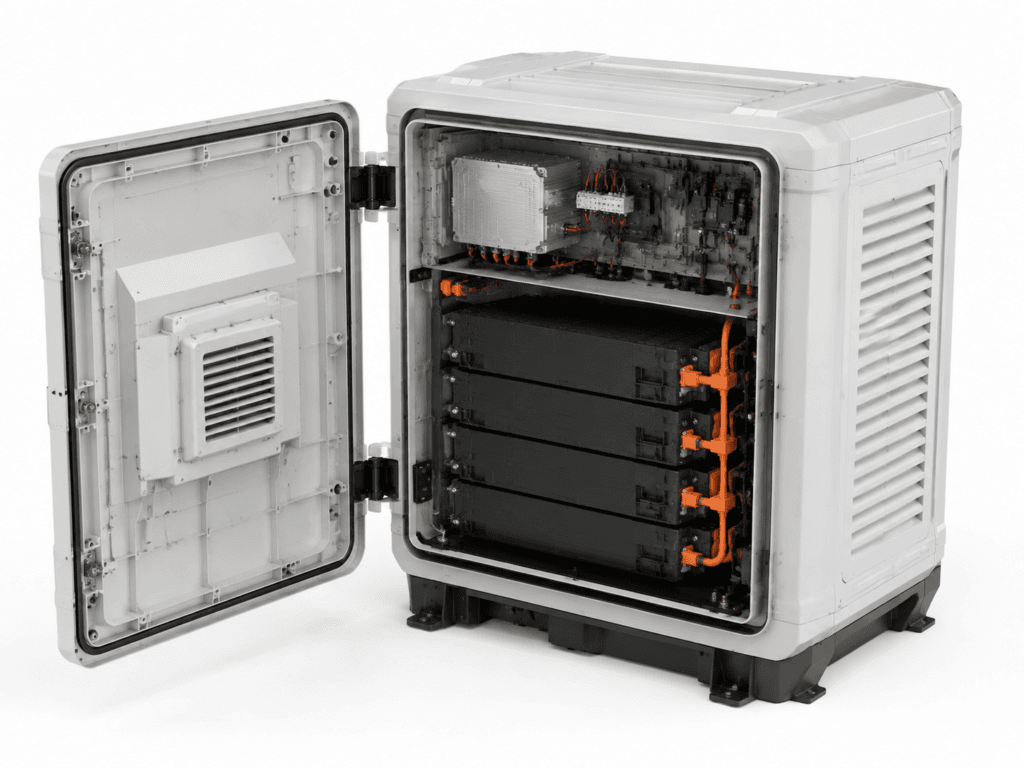
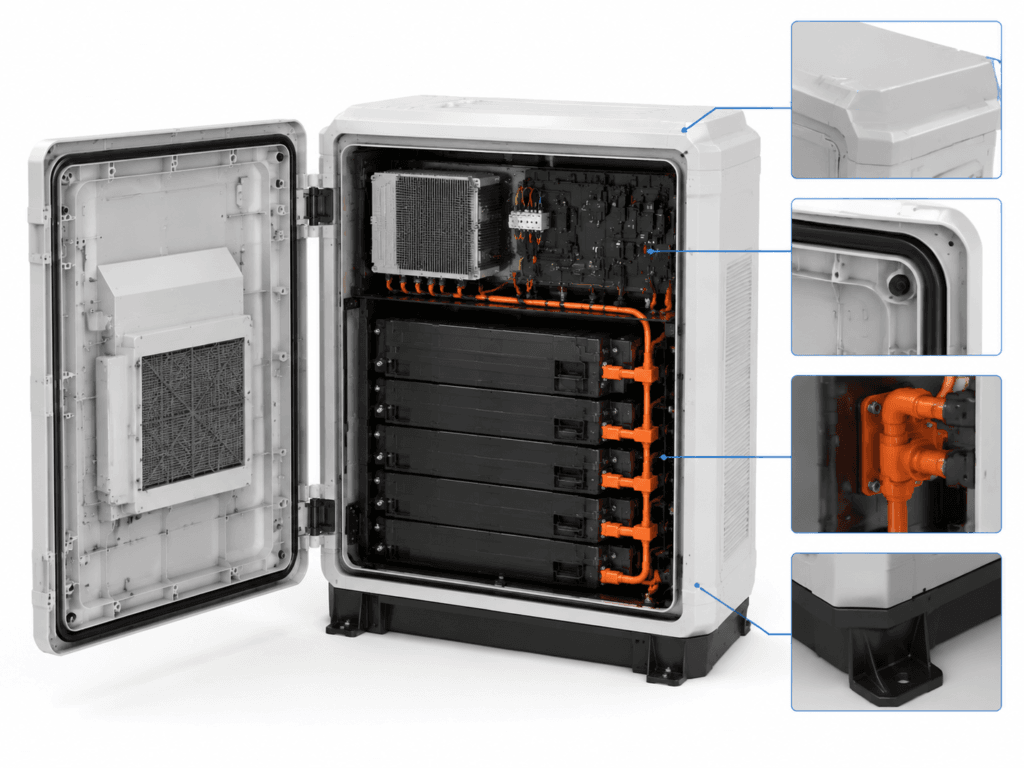
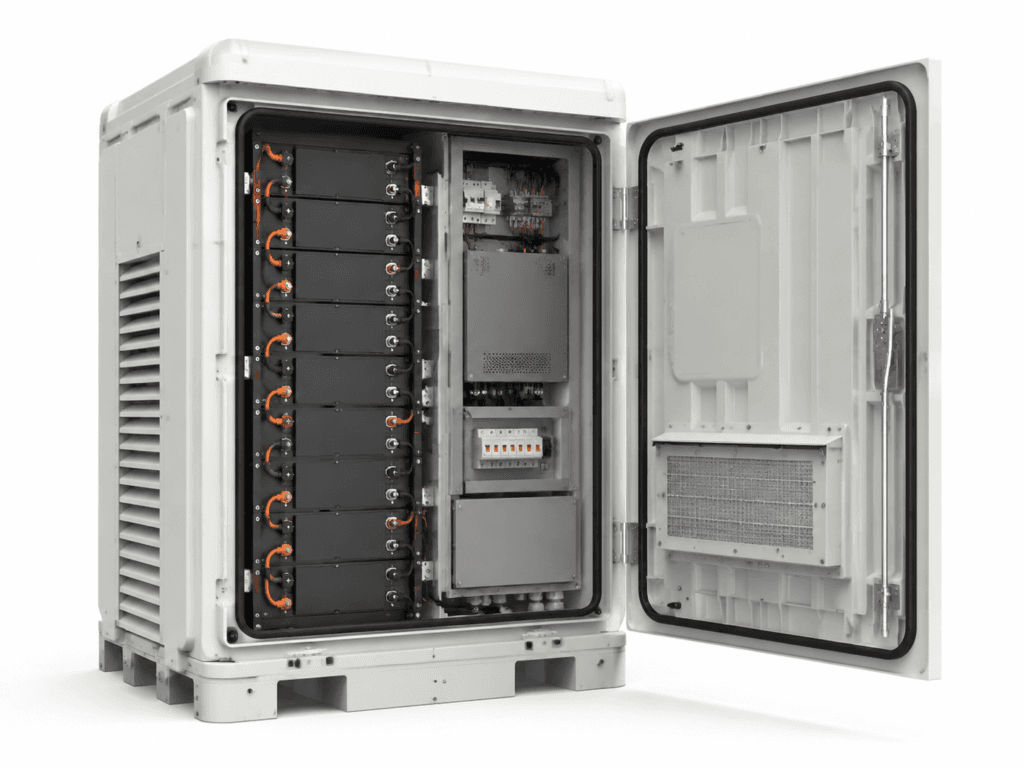
2. ตู้เก็บระบบกักเก็บพลังงาน
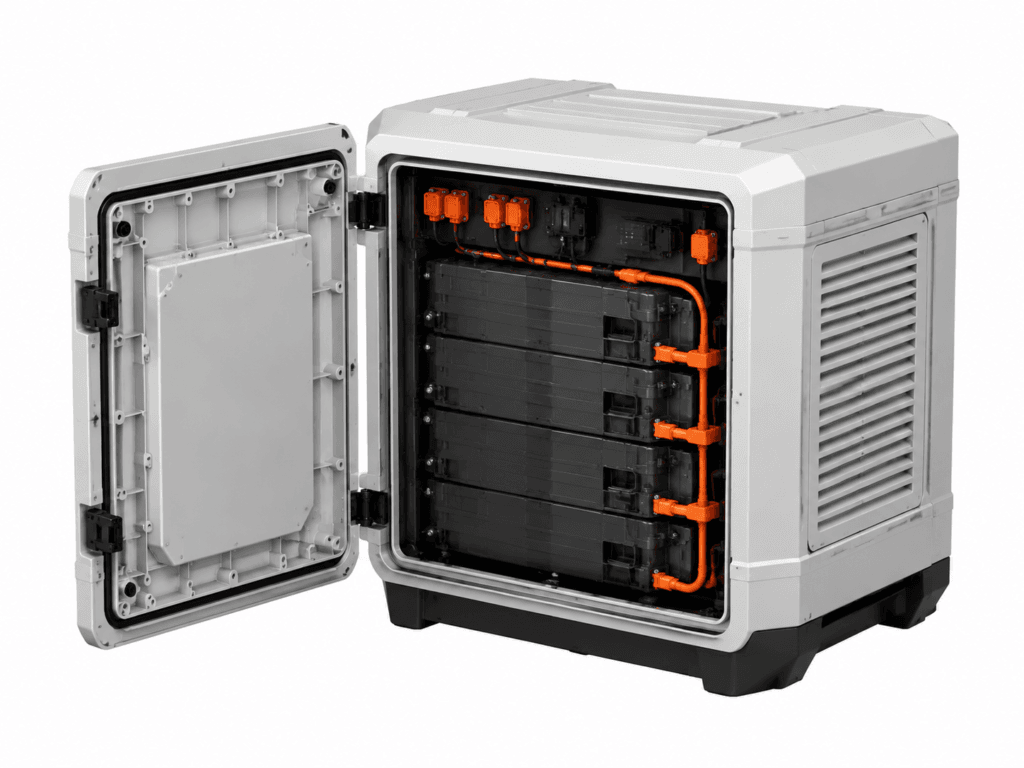
ระบบกักเก็บพลังงาน (ESS) กำลังมีความสำคัญมากขึ้นเรื่อยๆ สำหรับการใช้งานด้านพลังงานหมุนเวียน.
ระบบจัดเก็บพลังงานแบตเตอรี่สำหรับที่อยู่อาศัยและอุตสาหกรรมจำเป็นต้องมีโครงสร้างป้องกันที่ทนทาน ซึ่งสามารถทนทานต่อสภาพแวดล้อมทั้งในร่มและกลางแจ้ง.
ชิ้นส่วนพลาสติกขึ้นรูปด้วยการฉีดถูกนำมาใช้สำหรับ:
- ตัวเรือนระบบจัดการแบตเตอรี่
- ฝาครอบกล่องควบคุม
- กล่องหุ้มเซนเซอร์
- ฝาครอบขั้วต่อ
- วงเล็บป้องกัน
ข้อกำหนดสำคัญประกอบด้วย:
- ทนไฟ
- การป้องกันการกระแทก
- ทนทานต่อสภาพอากาศ
- การจัดการความร้อน
- ความแข็งแรงทางกล
สำหรับระบบกักเก็บพลังงานกลางแจ้ง วัสดุเช่น พีซี/ASA และมักจะพิจารณาใช้วิศวกรรมพลาสติกที่ทนต่อรังสี UV.
ข้อกำหนดเกี่ยวกับที่ตั้งและอาคารสำหรับระบบกักเก็บพลังงาน
| ข้อกำหนด | โซลูชันการออกแบบ |
|---|---|
| ทนต่อสภาพอากาศ | วัสดุที่ทนต่อรังสี UV |
| ความปลอดภัยเกี่ยวกับไฟ | เรซินหน่วงไฟ |
| การป้องกันน้ำเข้า | การซีลปะเก็น |
| การควบคุมความร้อน | การออกแบบเชิงความร้อน |
| ความแข็งแรงเชิงกล | โครงสร้างเสริมแรง |
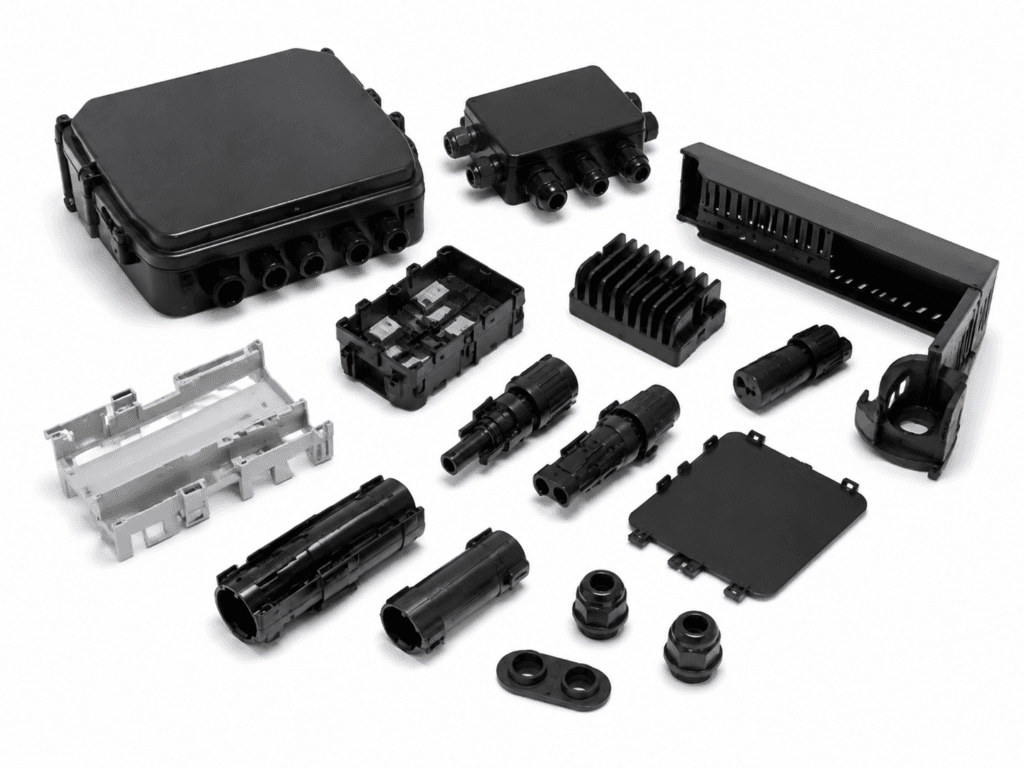
3. ชิ้นส่วนขึ้นรูปด้วยการฉีดพลังงานแสงอาทิตย์
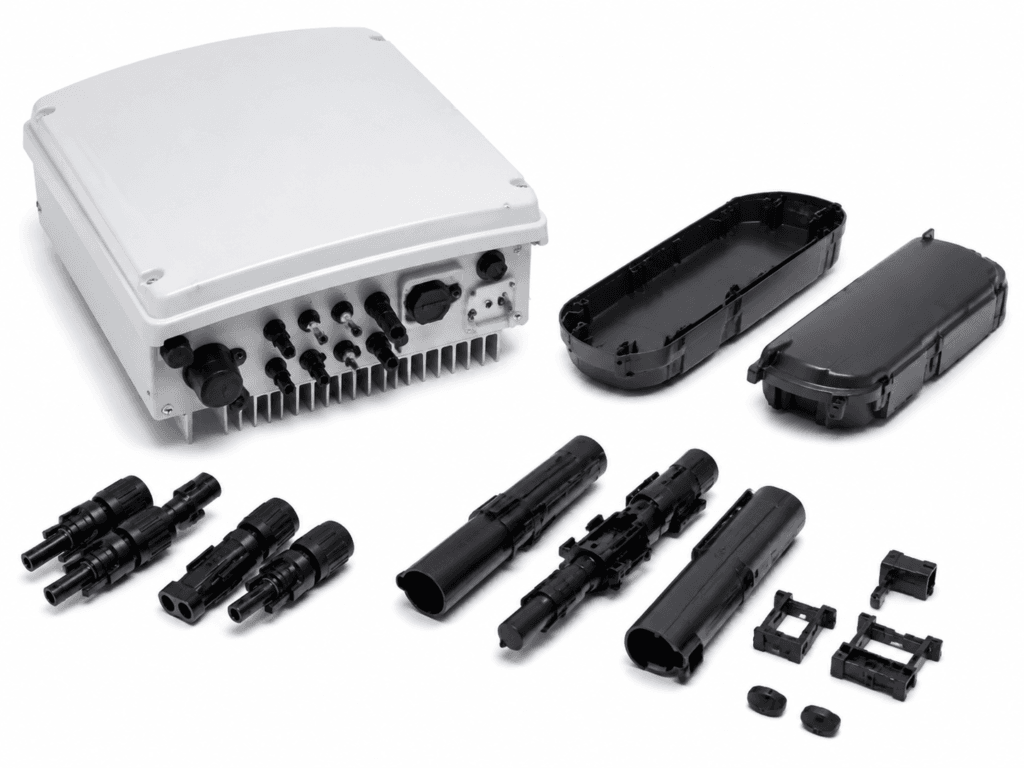
ระบบพลังงานแสงอาทิตย์ต้องการชิ้นส่วนพลาสติกที่ทนทานจำนวนมากสำหรับการใช้งานกลางแจ้ง.
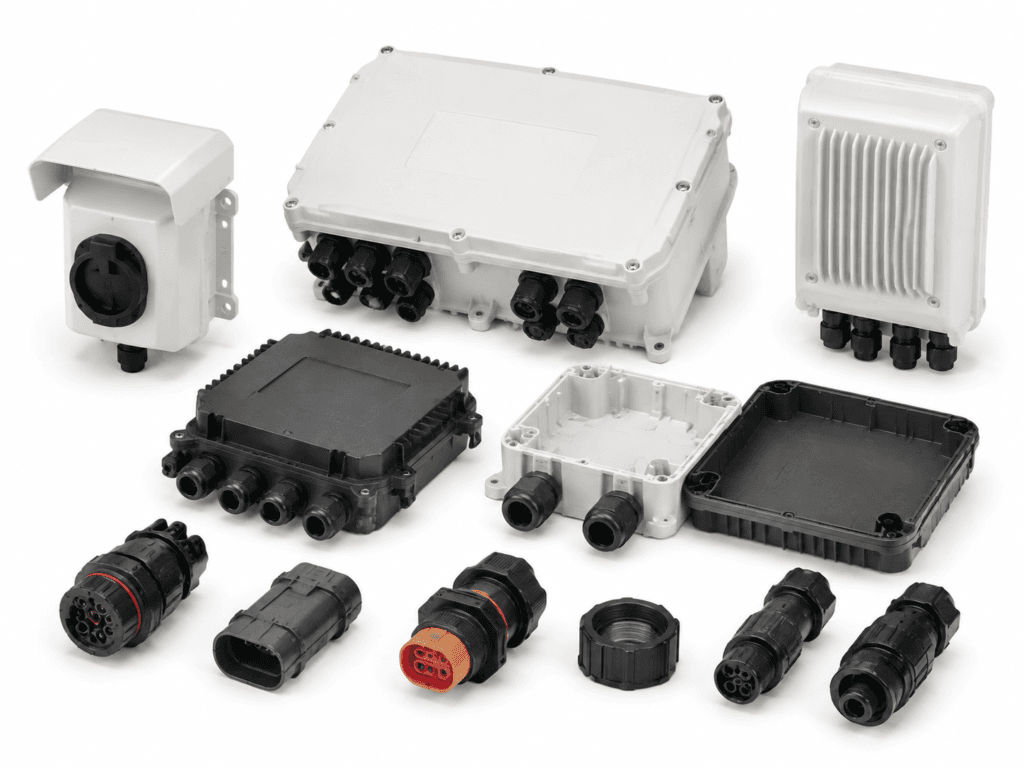
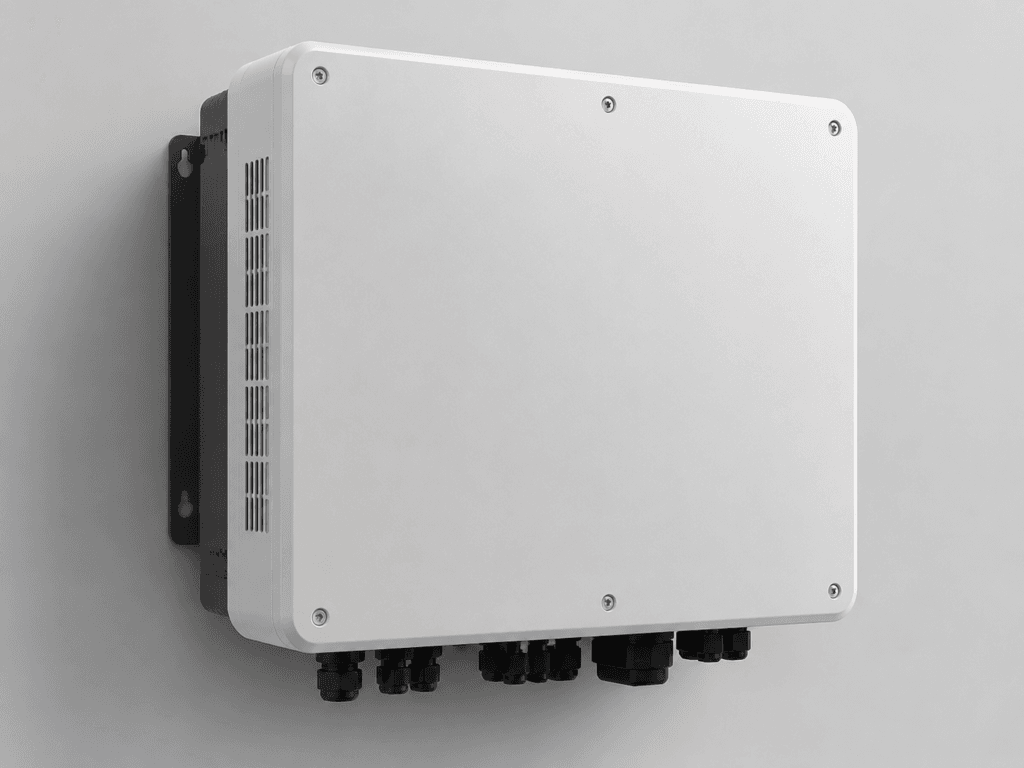
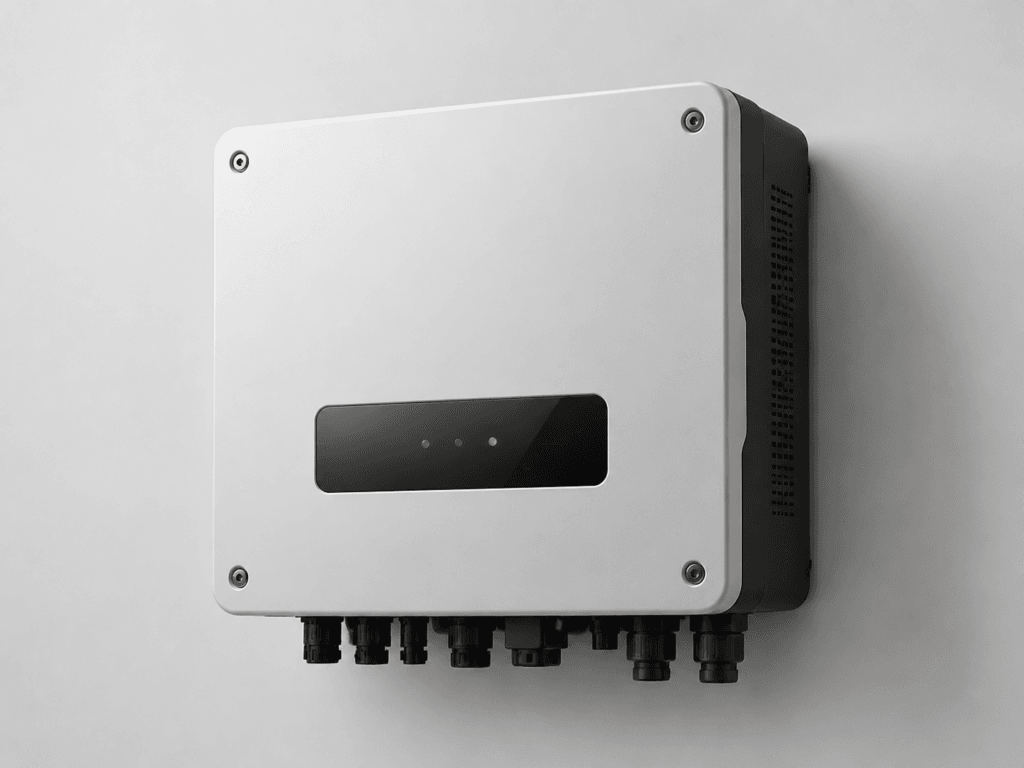
การฉีดขึ้นรูป ถูกใช้อย่างแพร่หลายสำหรับ:
- โครงอินเวอร์เตอร์พลังงานแสงอาทิตย์
- ฝาครอบขั้วต่อ
- ส่วนประกอบของกล่องรวมสัญญาณ
- อุปกรณ์จัดเก็บสายไฟ
- อุปกรณ์ติดตั้ง
- ฝาครอบป้องกัน
ส่วนประกอบเหล่านี้ต้องทนทานต่อ:
- รังสีอัลตราไวโอเลต
- ฝน
- การทดสอบการเปลี่ยนแปลงอุณหภูมิสลับไปมา
- ความชื้น
- การสัมผัสสารเคมี
วัสดุมักจะรวมถึง:
- ASA
- พีซี
- PC/ASA
- โพลีโพรพีลีนทนรังสี UV
- พลาสติกวิศวกรรม
ชิ้นส่วนพลาสติกโซลาร์
| สินค้า | ฟังก์ชัน | วัสดุ |
|---|---|---|
| ตัวเรือนอินเวอร์เตอร์ | ปกป้องอุปกรณ์อิเล็กทรอนิกส์ | PC/ASA |
| กล่องรวมสัญญาณ | การป้องกันทางไฟฟ้า | พีซี |
| ฝาครอบขั้วต่อ | การปกป้องสิ่งแวดล้อม | ผอ. |
| ที่เก็บสายไฟ | การจัดการสายไฟ | พีพี |
4. ตัวเครื่องพลาสติกสำหรับอุปกรณ์ชาร์จ
การขยายตัวของยานยนต์ไฟฟ้าจำเป็นต้องมีโครงสร้างพื้นฐานด้านการชาร์จขนาดใหญ่.
อุปกรณ์ชาร์จต้องการโครงพลาสติกที่ให้:
- ฉนวนไฟฟ้า
- ทนทานต่อสภาพอากาศ
- การป้องกันการกระแทก
- การจัดการความร้อน
- รูปลักษณ์ที่ดึงดูดใจ
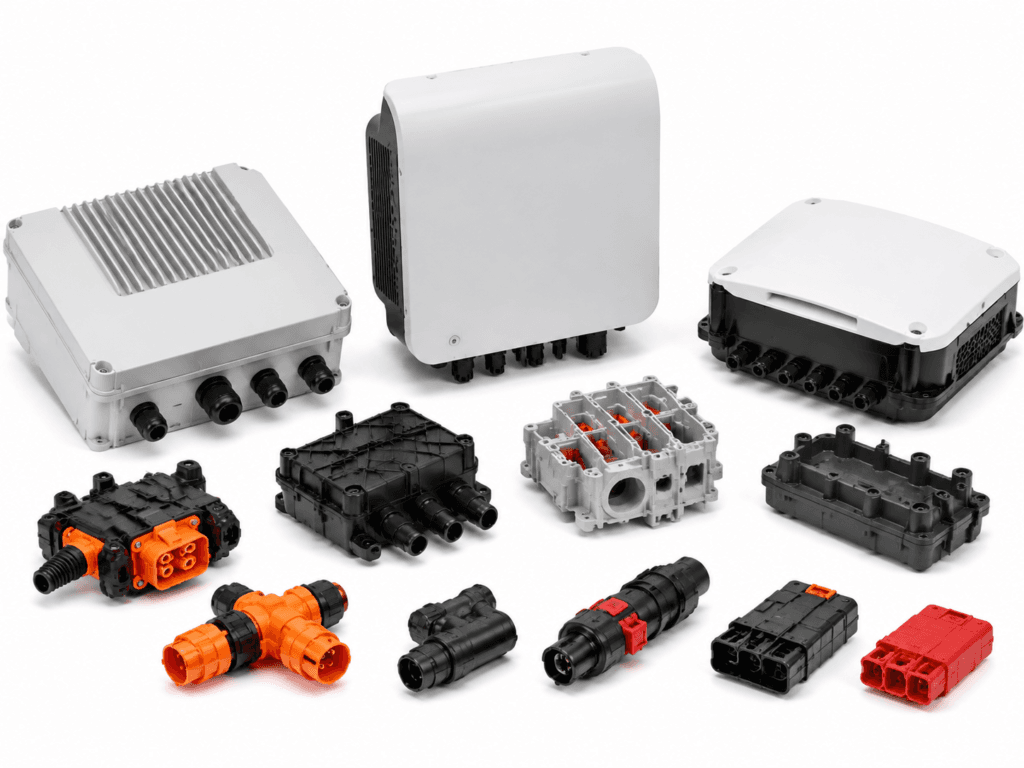
ชิ้นส่วนขึ้นรูปด้วยการฉีดพลาสติกทั่วไป ได้แก่:
- ที่คลุมสถานีชาร์จ
- ที่เก็บสายไฟ
- ตัวเรือนคอนเนคเตอร์
- กรอบแผงควบคุม
- ผ้าคลุมป้องกัน
อุปกรณ์ชาร์จกลางแจ้งมักต้องการการป้องกันระดับ IP, วัสดุที่ทนต่อรังสี UV และโครงสร้างทางกลที่แข็งแรง.
ข้อกำหนดการออกแบบอุปกรณ์ชาร์จ
| ฟีเจอร์ | วัตถุประสงค์ |
|---|---|
| โครงสร้างกันน้ำ | ปกป้องอุปกรณ์อิเล็กทรอนิกส์ |
| ทนต่อรังสี UV | ความทนทานกลางแจ้ง |
| ความต้านทานแรงกระแทก | การปกป้องสิ่งแวดล้อมสาธารณะ |
| การทนต่อเปลวไฟ | ความปลอดภัยทางไฟฟ้า |
| การประกอบที่มีความแม่นยำสูง | การทำงานที่เชื่อถือได้ |
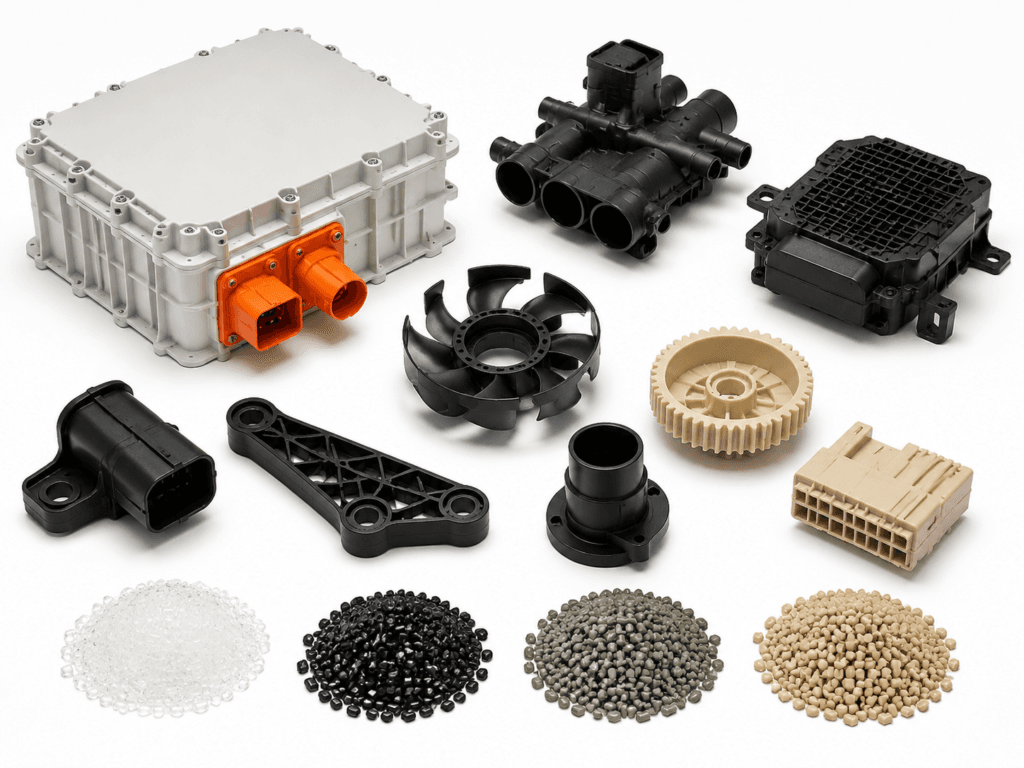
5. การเลือกใช้วัสดุสำหรับการฉีดขึ้นรูปพลังงานใหม่
การเลือกใช้วัสดุเป็นหนึ่งในปัจจัยที่สำคัญที่สุดในการใช้งานพลังงานใหม่.
วิศวกรต้องสร้างความสมดุลระหว่าง:
- ความแข็งแรงทางกล
- ฉนวนไฟฟ้า
- ทนไฟ
- สมรรถนะทางความร้อน
- ค่าใช้จ่าย
วัสดุทั่วไป
การออกแบบการจัดการความร้อนสำหรับชิ้นส่วนพลาสติกพลังงานใหม่
การจัดการความร้อนเป็นหนึ่งในความท้าทายที่สำคัญที่สุดในการใช้งานพลังงานใหม่.
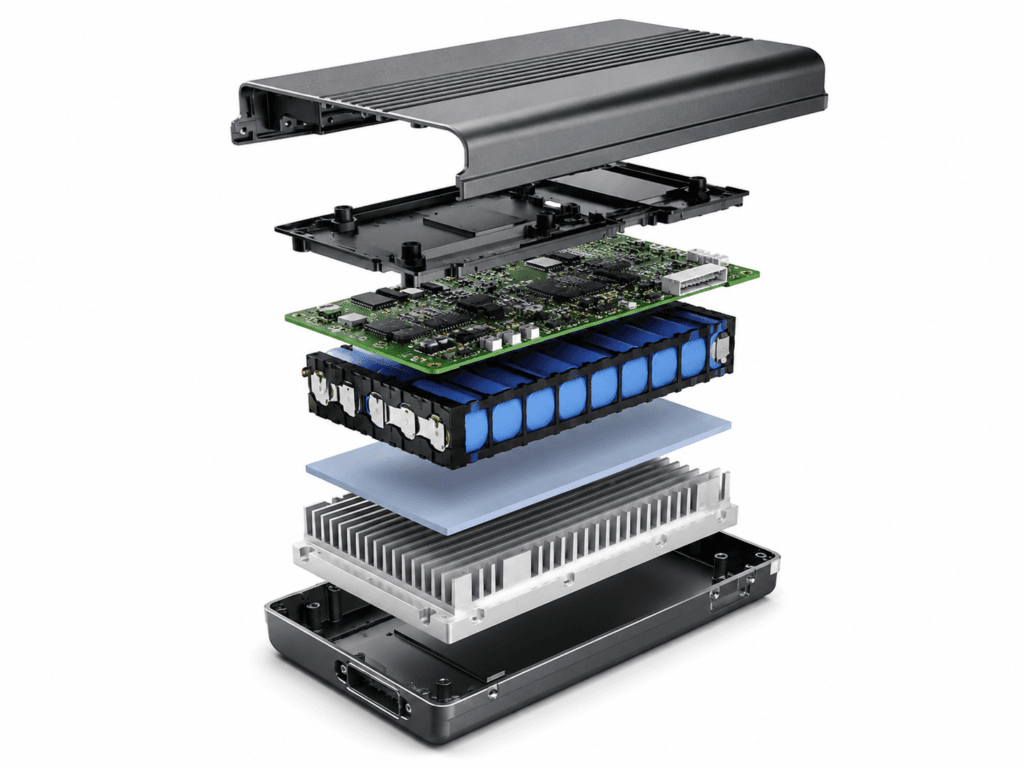
ระบบแบตเตอรี่ อุปกรณ์อิเล็กทรอนิกส์กำลัง อุปกรณ์การชาร์จ และอุปกรณ์กักเก็บพลังงาน ล้วนสร้างความร้อนจำนวนมากในระหว่างการทำงาน การออกแบบการระบายความร้อนที่ไม่ดีอาจลดประสิทธิภาพ ลดอายุการใช้งาน และสร้างความเสี่ยงด้านความปลอดภัย.
แม้ว่าพลาสติกจะมีค่าการนำความร้อนต่ำกว่าเมื่อเทียบกับโลหะ แต่พลาสติกวิศวกรรมขั้นสูงและการออกแบบโครงสร้างช่วยให้ชิ้นส่วนที่ขึ้นรูปด้วยการฉีดสามารถรองรับความต้องการในการจัดการความร้อนได้.
วิธีแก้ปัญหาทั่วไป ได้แก่:
- พลาสติกวิศวกรรมทนความร้อน
- ช่องความเย็น
- โครงสร้างการระบายอากาศ
- วัสดุเชื่อมต่อความร้อน
- แผ่นโลหะเสริม
- โครงสร้างการระบายความร้อน
ตัวอย่างเช่น ส่วนประกอบของโมดูลแบตเตอรี่อาจต้องมีความเสถียรของมิติภายใต้การเปลี่ยนแปลงของอุณหภูมิอย่างต่อเนื่อง ในขณะที่ตัว Inverter (อินเวอร์เตอร์) จำเป็นต้องมีการระบายอากาศและความร้อนที่มีประสิทธิภาพ พร้อมทั้งรักษาความเป็นฉนวนไฟฟ้าไปด้วย.
การเปรียบเทียบโซลูชันการจัดการความร้อน
| โซลูชัน | ข้อได้เปรียบ | แอปพลิเคชัน |
|---|---|---|
| เรซินทนความร้อน | ความสามารถในการทนอุณหภูมิสูงขึ้น | ส่วนประกอบของแบตเตอรี่ |
| ไส้อลูมิเนียม | การถ่ายเทความร้อนที่ดีขึ้น | อิเล็กทรอนิกส์กำลัง |
| โครงสร้างการระบายอากาศ | การทำความเย็นแบบธรรมชาติ | สิ่งที่แนบมาด้วย |
| แผ่นนำความร้อน | การปรับปรุงการถ่ายเทความร้อน | ระบบแผงวงจรพิมพ์ |
| ช่องหล่อเย็น | การควบคุมอุณหภูมิ | อุปกรณ์พลังงาน |
ข้อกำหนดสารหน่วงไฟสำหรับชิ้นส่วนพลาสติกยานยนต์พลังงานใหม่
ความปลอดภัยเป็นข้อกำหนดที่สำคัญในการใช้งานพลังงานใหม่ โดยเฉพาะอย่างยิ่งเกี่ยวกับแบตเตอรี่และระบบไฟฟ้าแรงสูง.
ชิ้นส่วนพลาสติกอาจต้องปฏิบัติตามข้อกำหนดด้านการทนไฟเพื่อลดความเสี่ยงจากอัคคีภัยและปกป้องชิ้นส่วนรอบข้าง.
มาตรฐานสารหน่วงไฟทั่วไปประกอบด้วย:
- ระดับการติดไฟ UL94
- ข้อกำหนดด้านความปลอดภัยทางไฟฟ้าของ IEC
- ข้อกำหนดอุตสาหกรรมยานยนต์และพลังงาน
วัสดุต้านทานเปลวไฟทั่วไปประกอบด้วย:
- โพลีคาร์บอเนต+อะคริโลไนไตรล์ บิวทาไดอีน สไตรีน ชนิดหน่วงไฟ
- PA66 GF FR
- PBT FR
- PPS
- พีพีไม่ลามไฟ
วัสดุที่เลือกขึ้นอยู่กับอุณหภูมิการใช้งาน การรับน้ำหนักทางกล ข้อกำหนดทางไฟฟ้า และข้อกำหนดในการรับรอง.
การเปรียบเทียบวัสดุทนไฟ
| วัสดุ | ประสิทธิภาพของเปลวไฟ | แอปพลิเคชันทั่วไป |
|---|---|---|
| โพลีคาร์บอเนต+อะคริโลไนไตรล์ บิวทาไดอีน สไตรีน ชนิดหน่วงไฟ | ยอดเยี่ยม | เปลือกหุ้มอุปกรณ์ไฟฟ้า |
| PA66 GF FR | ความแข็งแรงสูง | ชิ้นส่วนโครงสร้าง |
| PBT FR | ฉนวนไฟฟ้า | ตัวเชื่อมต่อ |
| PPS | อุณหภูมิสูง | ส่วนประกอบของแบตเตอรี่ |
| พีพี เอฟอาร์ | คุ้มค่าคุ้มราคา | ฝาครอบป้องกัน |
การออกแบบกันน้ำและการป้องกันระดับ IP
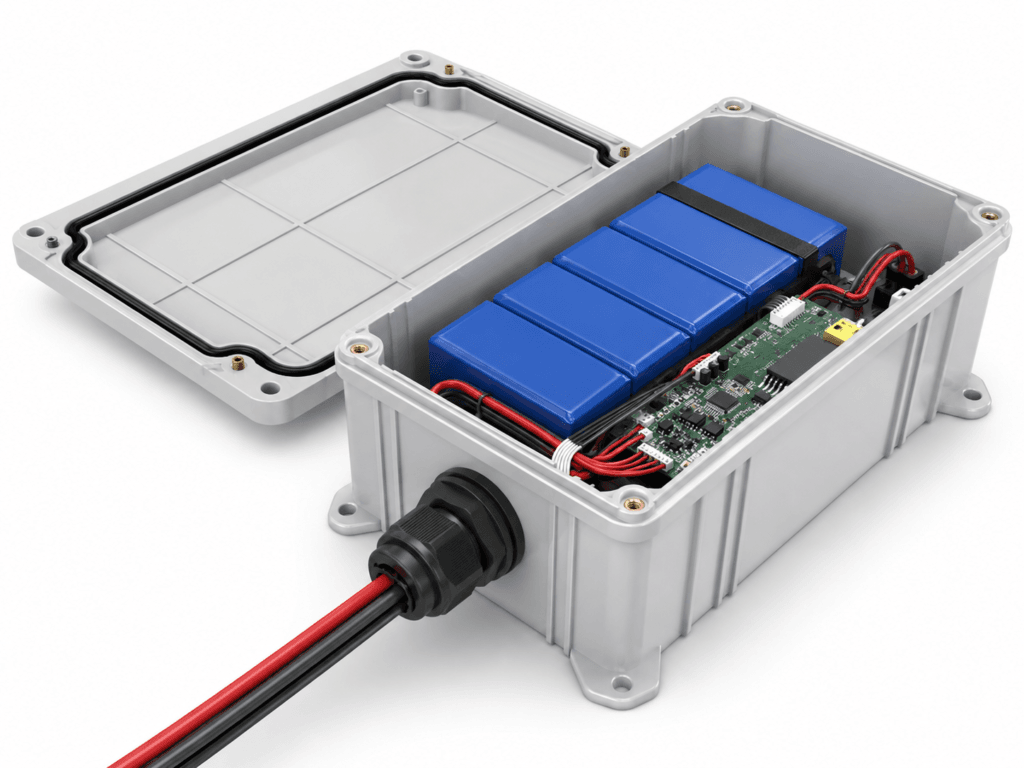
ผลิตภัณฑ์พลังงานใหม่จำนวนมากทำงานกลางแจ้งหรือในสภาพแวดล้อมที่รุนแรง ดังนั้น การป้องกันน้ำจึงเป็นสิ่งสำคัญอย่างยิ่ง.
ตัวอย่างเช่น
- สถานีชาร์จ EV
- ระบบจัดเก็บพลังงานแบตเตอรี่กลางแจ้ง
- อุปกรณ์พลังงานแสงอาทิตย์
- ตัวควบคุมพลังงานอัจฉริยะ
กรอบพลาสติกขึ้นรูปด้วยการฉีดมักจะใช้วัสดุ:
- ประเก็นซิลิโคน
- แหวนซีล TPE
- ข้อต่อสายเคเบิลกันน้ำ
- ขั้วต่อแบบซีล
- โครงสร้างที่อยู่อาศัยที่ซ้อนทับกัน
การออกแบบการซีลต้องคำนึงถึงไม่เพียงแต่ประสิทธิภาพการกันน้ำเริ่มต้นเท่านั้น แต่ยังต้องคำนึงถึงความทนทานระยะยาวหลังจากการหมุนเวียนของอุณหภูมิและความเค้นเชิงกลด้วย.
คุณลักษณะการออกแบบการป้องกันทรัพย์สินทางปัญญา
| ฟีเจอร์ | ฟังก์ชัน |
|---|---|
| ร่องปะเก็น | สร้างแรงอัดเพื่อซีล |
| เคเบิลแกลนด์ | ป้องกันการเข้าของสายไฟ |
| รางระบายน้ำ | ป้องกันการสะสมของน้ำ |
| โครงสร้างที่ซ้อนทับกัน | ขวางทางน้ำไหลโดยตรง |
| ขั้วต่อแบบซีล | ป้องกันอินเทอร์เฟซทางไฟฟ้า |
ข้อควรพิจารณาในการออกแบบแม่พิมพ์ฉีดสำหรับชิ้นส่วนพลังงานใหม่
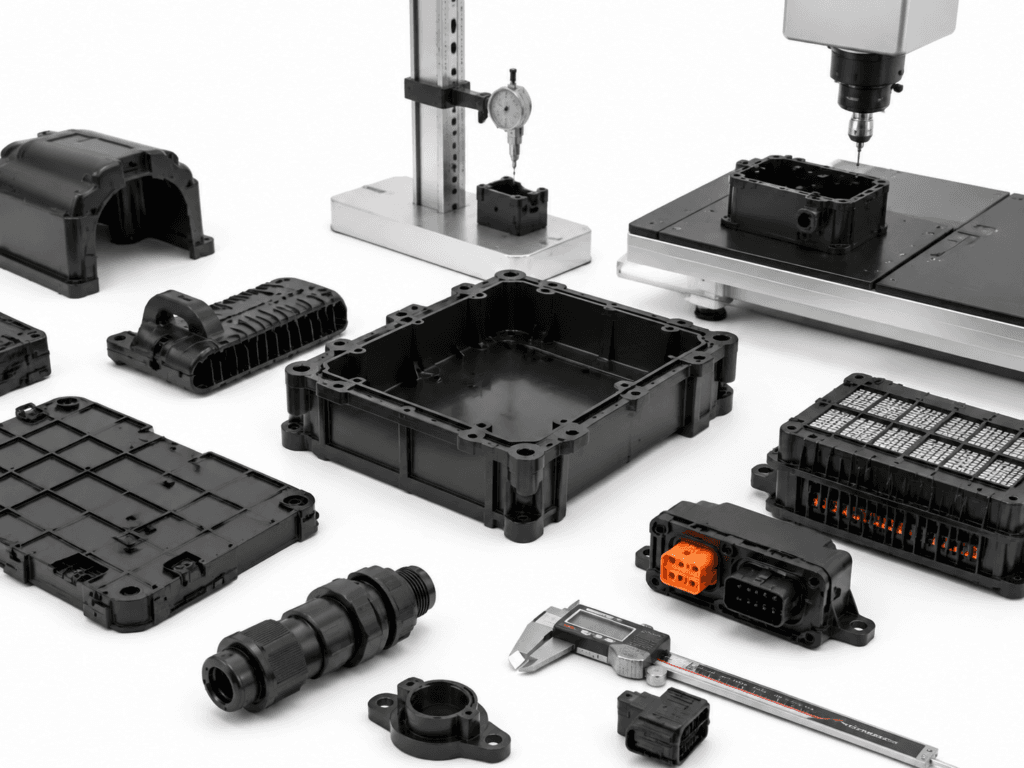
ชิ้นส่วนพลาสติกสำหรับพลังงานใหม่มักต้องการความแม่นยำสูงเนื่องจากต้องประกอบเข้ากับ:
- โมดูลแบตเตอรี่
- ขั้วต่อทางไฟฟ้า
- เซนเซอร์
- การประกอบแผงวงจรพิมพ์
- โครงสร้างโลหะ
การออกแบบแม่พิมพ์ส่งผลโดยตรงต่อความน่าเชื่อถือของผลิตภัณฑ์.
ข้อควรพิจารณาที่สำคัญ ได้แก่
1. ความเสถียรของมิติ
แบตเตอรี่และชิ้นส่วนอิเล็กทรอนิกส์มักต้องการความคลาดเคลื่อนที่แคบ การระบายความร้อนที่ไม่สม่ำเสมอหรือการหดตัวที่มากเกินไปอาจส่งผลต่อความแม่นยำในการประกอบ.
2. การควบคุมการโก่งงอ
โครงสร้างและฝาครอบขนาดใหญ่ต้องการการเติมและการทำความเย็นที่สมดุลเพื่อป้องกันการเสียรูป.
การขึ้นรูปด้วยการแทรกวัสดุ
บางแอปพลิเคชันจำเป็นต้องใช้ชิ้นส่วนโลหะฝังสำหรับ:
- การลงกราวด์
- การถ่ายโอนความร้อน
- การเสริมความแข็งแรงเชิงกล
- การยึดติดความแข็งแรงสูง
4. ข้อกำหนดเกี่ยวกับพื้นผิว
ผลิตภัณฑ์พลังงานกลางแจ้งอาจต้องการ:
- พื้นผิวที่ทนทานต่อรังสี UV
- แบบด้าน
- พื้นผิวกันรอยขีดข่วน
ข้อกำหนดในการออกแบบแม่พิมพ์
| ฟีเจอร์แม่พิมพ์ | วัตถุประสงค์ |
|---|---|
| การออกแบบประตูแบบสมดุล | การเติมสม่ำเสมอ |
| Optimized Cooling | Reduce deformation |
| Precision Inserts | Improve assembly accuracy |
| Proper Venting | Avoid burn marks |
| Surface Texture Control | Improve appearance |
การควบคุมและการทดสอบคุณภาพ
New energy components require strict quality control because failures may affect safety and system reliability.
Typical inspections include:
- การวัดมิติ
- การตรวจสอบวัสดุ
- Flame testing
- Mechanical strength testing
- การวนรอบความร้อน
- Waterproof testing
- การทดสอบการประกอบ
For high-volume production, automated inspection systems can improve consistency and reduce human error.
Quality Testing Methods
| Test | วัตถุประสงค์ |
|---|---|
| การตรวจสอบมิติ | Verify assembly accuracy |
| Thermal Cycling | Evaluate temperature durability |
| Flame Test | Confirm safety performance |
| Waterproof Test | Verify sealing |
| Impact Test | Check mechanical strength |
| Assembly Test | Ensure compatibility |
ความท้าทายทั่วไปในการผลิตและแนวทางแก้ไข
New energy products combine demanding materials, complex structures and strict reliability requirements.
| ความท้าทาย | สาเหตุ | โซลูชัน |
|---|---|---|
| การโก่งตัว | การทำความเย็นที่ไม่สม่ำเสมอ | Optimize mold cooling |
| แคร็ก | การรวมตัวของความเค้น | Improve structure |
| Poor Assembly | ความคลาดเคลื่อนทางมิติ | Tighten mold control |
| Burning Marks | Poor venting | Improve mold vents |
| ช็อตสั้น | Difficult filling | เพิ่มประสิทธิภาพตำแหน่งประตู |
| Surface Defects | Processing issues | Adjust parameters |
Early การวิเคราะห์ DFM and Moldflow simulation can significantly reduce development risks.
Why Choose Samgo for New Energy Injection Molding?
Samgo provides complete injection molding solutions for new energy industries, supporting customers from concept design to mass production.
Our capabilities include:
| บริการ | ประโยชน์ที่ลูกค้าได้รับ |
|---|---|
| การออกแบบผลิตภัณฑ์ รีวิว | ปรับปรุงความสามารถในการผลิต |
| การวิเคราะห์เพื่อการผลิต (DFM) | Reduce development risks |
| การจำลองโมลด์โฟลว์ | Optimize filling and cooling |
| การผลิตแม่พิมพ์ความละเอียดสูง | Ensure accuracy |
| การฉีดขึ้นรูปพลาสติก | การผลิตที่เสถียร |
| Quality Control | Reliable performance |
Our experience covers:
- ส่วนประกอบของแบตเตอรี่
- Energy storage housings
- Solar components
- Charging equipment
- Electrical protection parts
- Smart energy products
คำถามที่พบบ่อย
What plastics are commonly used in new energy injection molding?
Common materials include PC+ABS FR, PA66 GF, PBT, PPS, ASA and flame-retardant PP. The selection depends on temperature, strength, electrical and safety requirements.
Why are plastics used in battery systems?
Plastic materials provide electrical insulation, lightweight construction, corrosion resistance and design flexibility.
Can injection molded parts meet flame-retardant requirements?
Yes. Flame-retardant grades can achieve required safety levels depending on application and certification requirements.
What is important when designing energy storage plastic housings?
Key factors include sealing, thermal management, mechanical strength, material selection, fire safety and dimensional stability.
รับราคาล่าสุด? เราจะตอบกลับโดยเร็วที่สุด (ภายใน 12 ชั่วโมง)

CNC Plastic Prototypes vs. Injection Molded Parts: Key Differences Engineers Should Understand
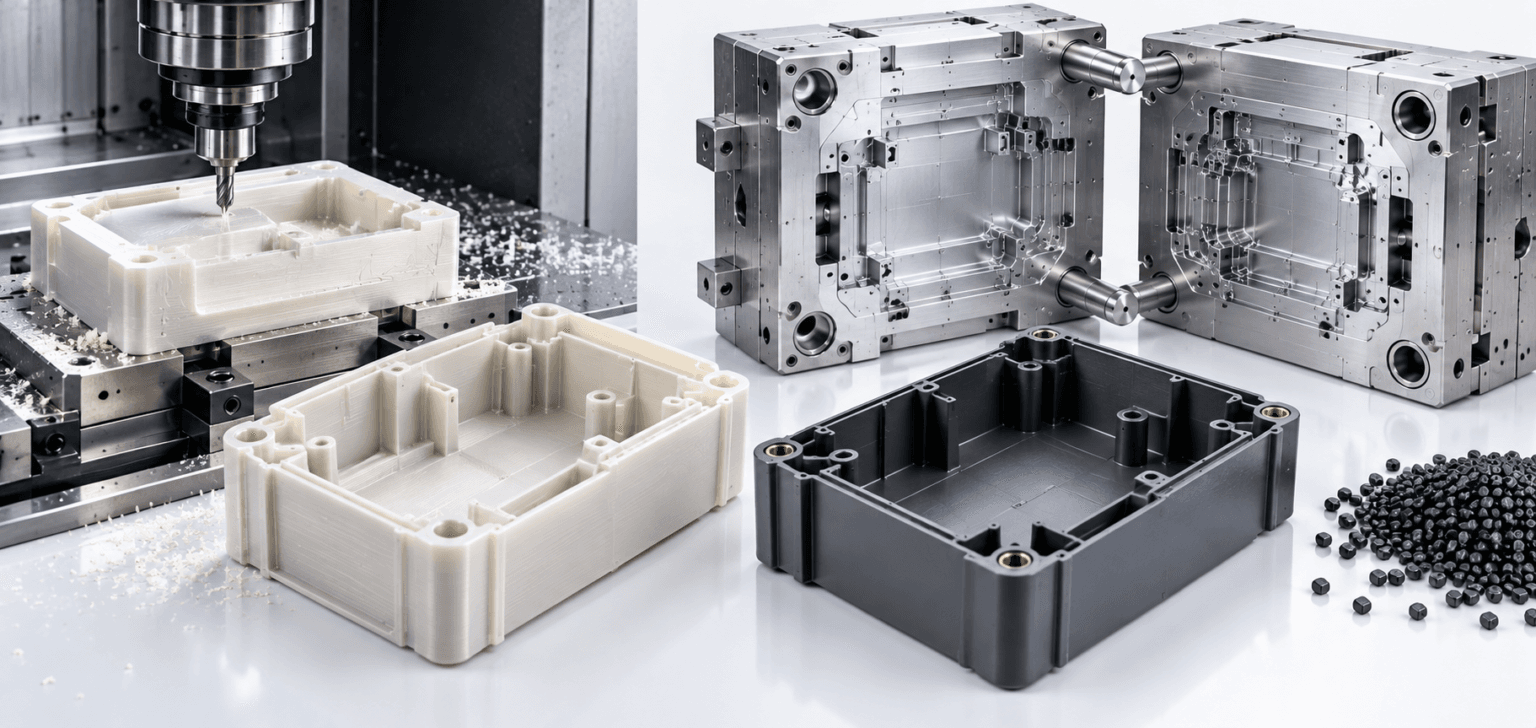
Compare CNC plastic prototypes and injection molded parts in material properties, dimensions, warpage, surface finish, geometry, cost and production performance.
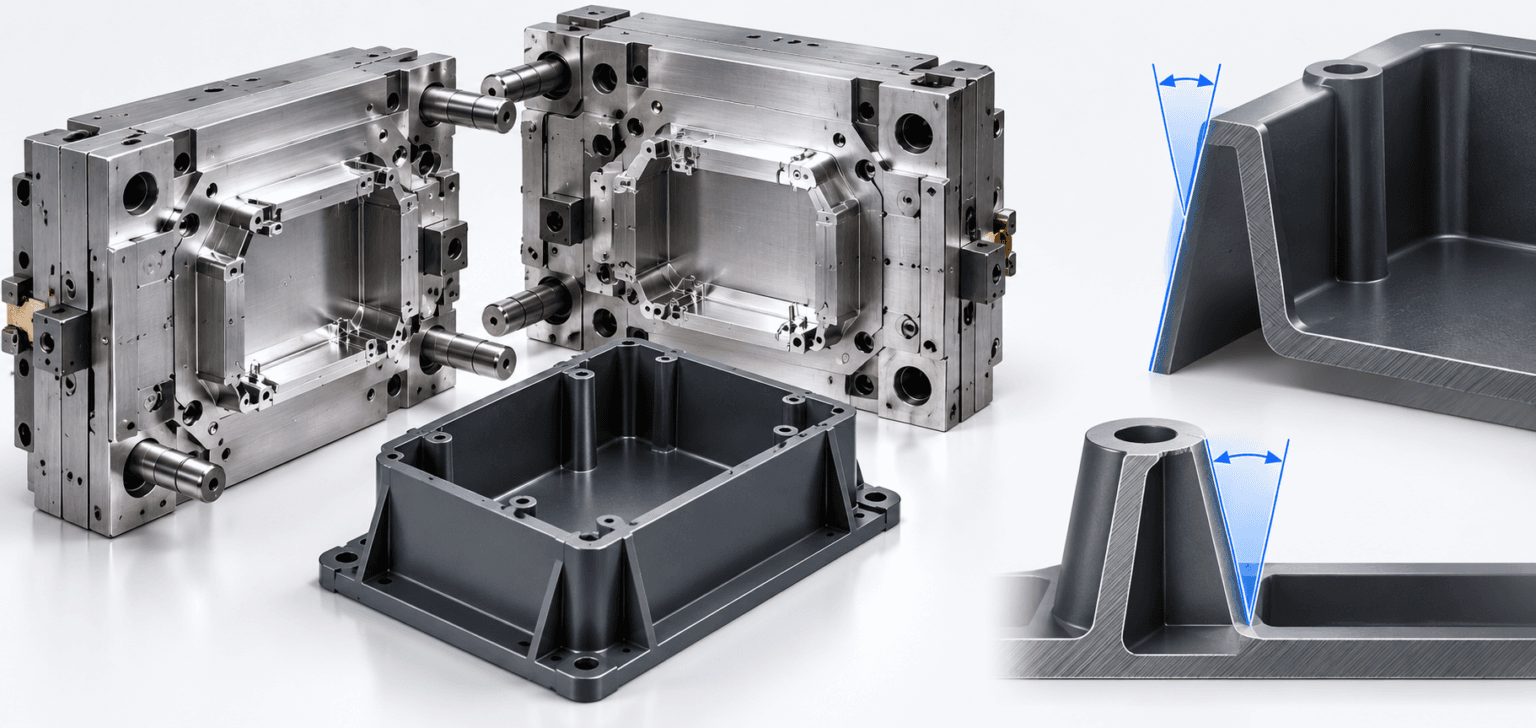
Draft Angle in Injection Mold Design: Improving Part Quality, Ejection and Tooling Efficiency
Discover how draft angles affect injection mold design, part ejection, surface texture, dimensional accuracy, ribs, bosses and long-term tooling performance.
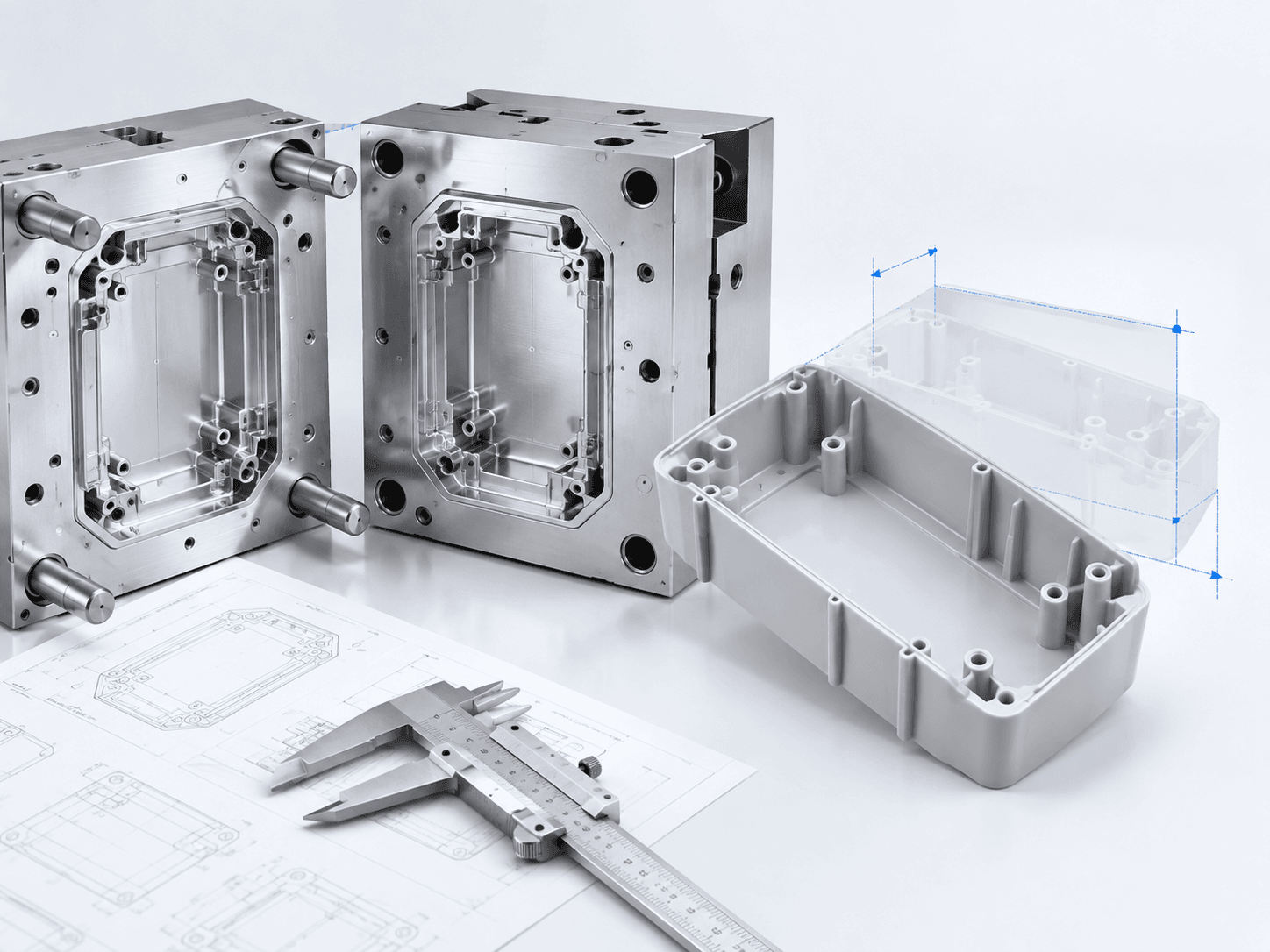
Injection Molding Shrinkage: How to Control Part Dimensions from Mold Design to Production
Learn how injection molding shrinkage affects mold dimensions, tolerances and warpage, and how material, gate design, packing, cooling and mold trials help control final plastic part dimensions.