
สารบัญ
บทนำ
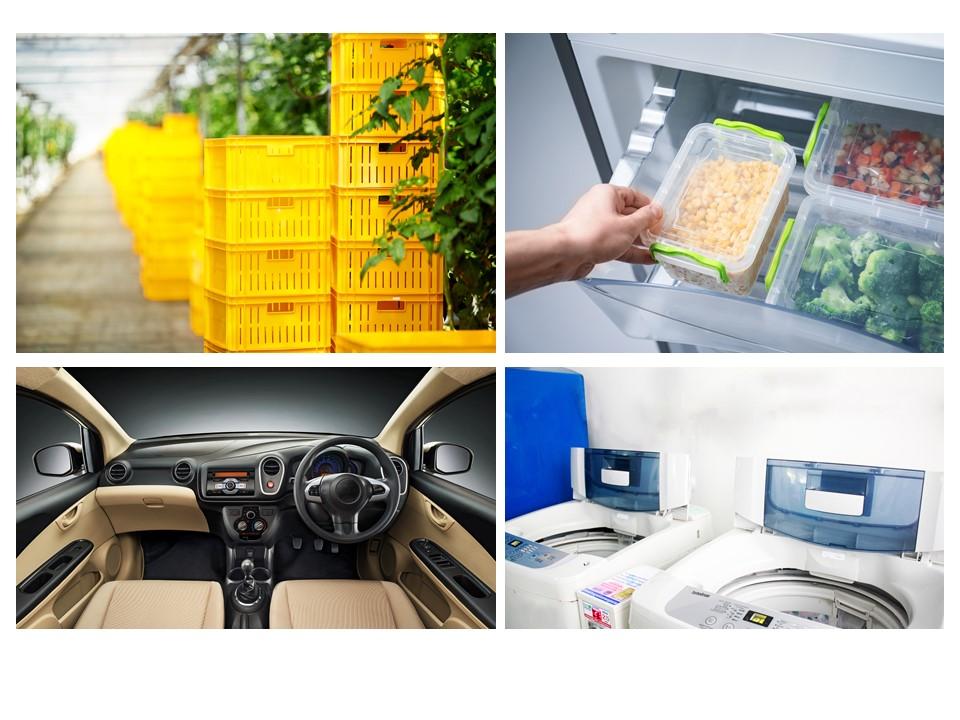
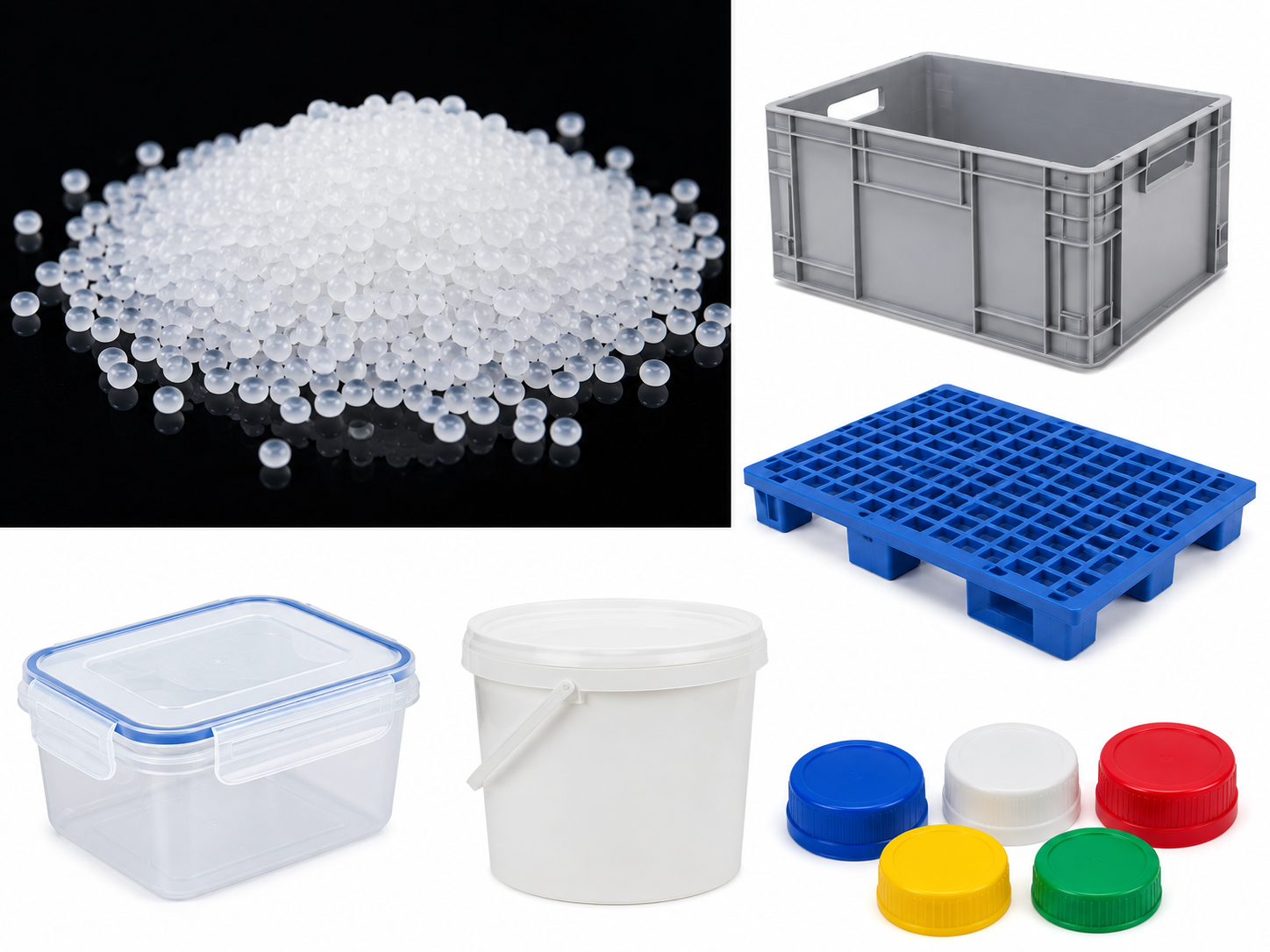
โพลีโพรพีลีน (PP) เป็นหนึ่งในเทอร์โมพลาสติกที่มีการใช้งานมากที่สุดในโลก โดยคิดเป็นสัดส่วนสำคัญของการผลิตพลาสติกทั่วโลก ด้วยความสมดุลที่ยอดเยี่ยมของสมบัติเชิงกล ความทนทานต่อสารเคมี ลักษณะที่มีน้ำหนักเบา และความคุ้มค่าด้านต้นทุน ทำให้ PP กลายเป็นวัสดุที่ได้รับความนิยมสำหรับผลิตภัณฑ์ขึ้นรูปด้วยการฉีดนับไม่ถ้วนในอุตสาหกรรมยานยนต์ ของEใช้ในครัวเรือน การแพทย์ บรรจุภัณฑ์ เครื่องใช้ไฟฟ้า และงานอุตสาหกรรม.
โพลีโพรพีลีนสมัยใหม่มีจำหน่ายในเกรดและสูตรที่หลากหลาย ผู้ผลิตสามารถเลือกใช้โฮโมพอลิเมอร์ PP, แรนดอมโคพอลิเมอร์ PP, อิมแพคโคพอลิเมอร์ PP, PP เสริมใยแก้ว, PP ผสมแร่, PP หน่วงไฟ, PP ทนรังสียูวี และ PP เกรดอาหาร ขึ้นอยู่กับความต้องการของผลิตภัณฑ์.
Selecting the correct PP grade is critical because each formulation offers different stiffness, impact resistance, dimensional stability, processing characteristics, and environmental performance. A well-selected material can improve product quality, reduce manufacturing costs, and extend service life.
At Samgo, we assist customers in selecting the most appropriate polypropylene material during product development. By combining material selection, DFM analysis, Moldflow simulation, precision mold manufacturing, and การฉีดขึ้นรูป expertise, we help ensure optimal product performance and efficient production.
This guide explains the major types of polypropylene, common commercial grades, mechanical properties, injection molding considerations, and industry applications.

Why Polypropylene Is So Popular
Polypropylene offers one of the best cost-to-performance ratios among engineering thermoplastics.
ข้อดีหลัก
- Low density (approximately 0.90 g/cm³)
- มีความทนทานต่อสารเคมีดีเยี่ยม
- Good fatigue resistance
- ประสิทธิภาพการผลิตสูง
- Easy injection molding
- Excellent living hinge performance
- Low material cost
- Recyclable material
These advantages make PP an ideal choice for high-volume manufacturing.
Property Overview
| Property | Typical Value |
|---|---|
| Density | 0.90–0.91 g/cm³ |
| Water Absorption | Very Low |
| ความต้านทานต่อสารเคมี | ยอดเยี่ยม |
| Impact Resistance | Good (Copolymer grades) |
| Heat Resistance | Up to 100–120°C (continuous service, depending on grade) |
| ค่าใช้จ่าย | Low |


Types of Polypropylene
Polypropylene is not a single material. Different molecular structures provide different performance characteristics.
1. PP Homopolymer (PP-H)
PP Homopolymer provides high stiffness, good chemical resistance, and excellent processability.
การใช้งานทั่วไป
- Food containers
- กล่องเก็บของ
- Industrial housings
- Battery cases
2. Random Copolymer PP (PP-R)
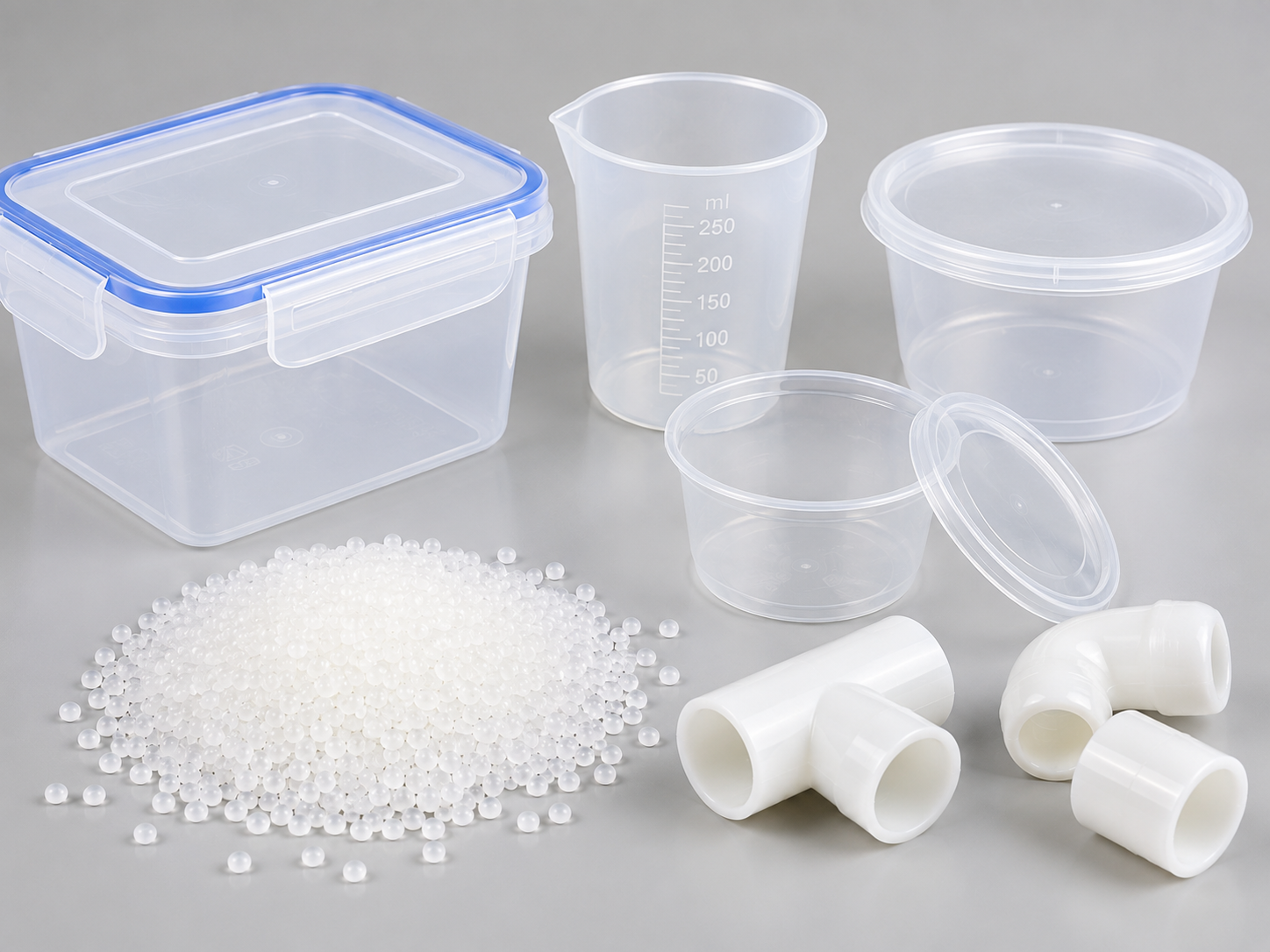
Random copolymer PP offers improved transparency and impact resistance.
ผลิตภัณฑ์ทั่วไปประกอบด้วย:
- Medical containers
- Water pipe systems
- สินค้าภายในบ้าน
- Cosmetic packaging
3. Impact Copolymer PP (PP-B)
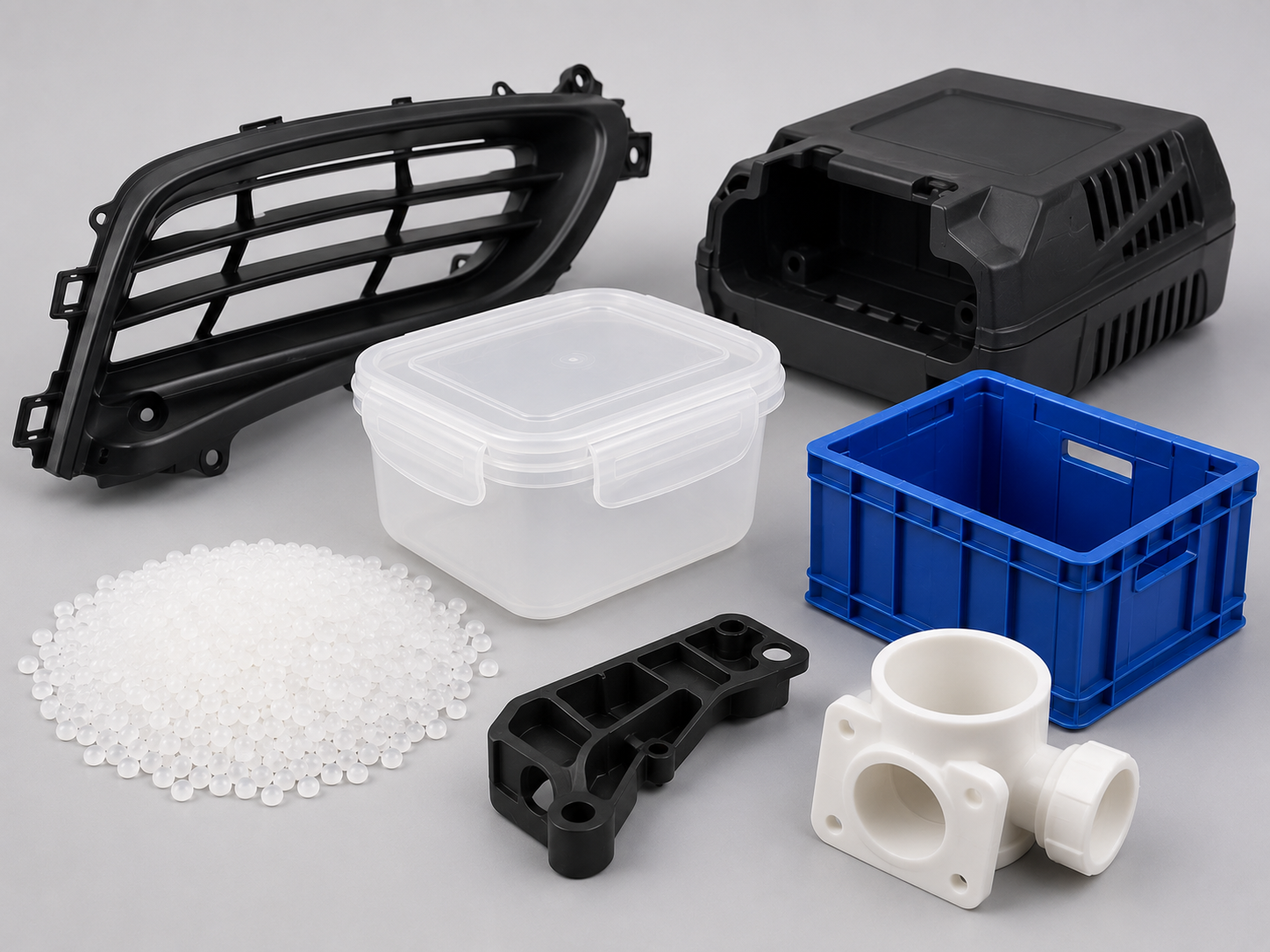
Impact copolymer contains an ethylene phase that greatly improves impact performance, particularly at low temperatures.
การใช้งานทั่วไป:
- Automotive bumpers
- Power tool housings
- สินค้ากลางแจ้ง
- Industrial containers
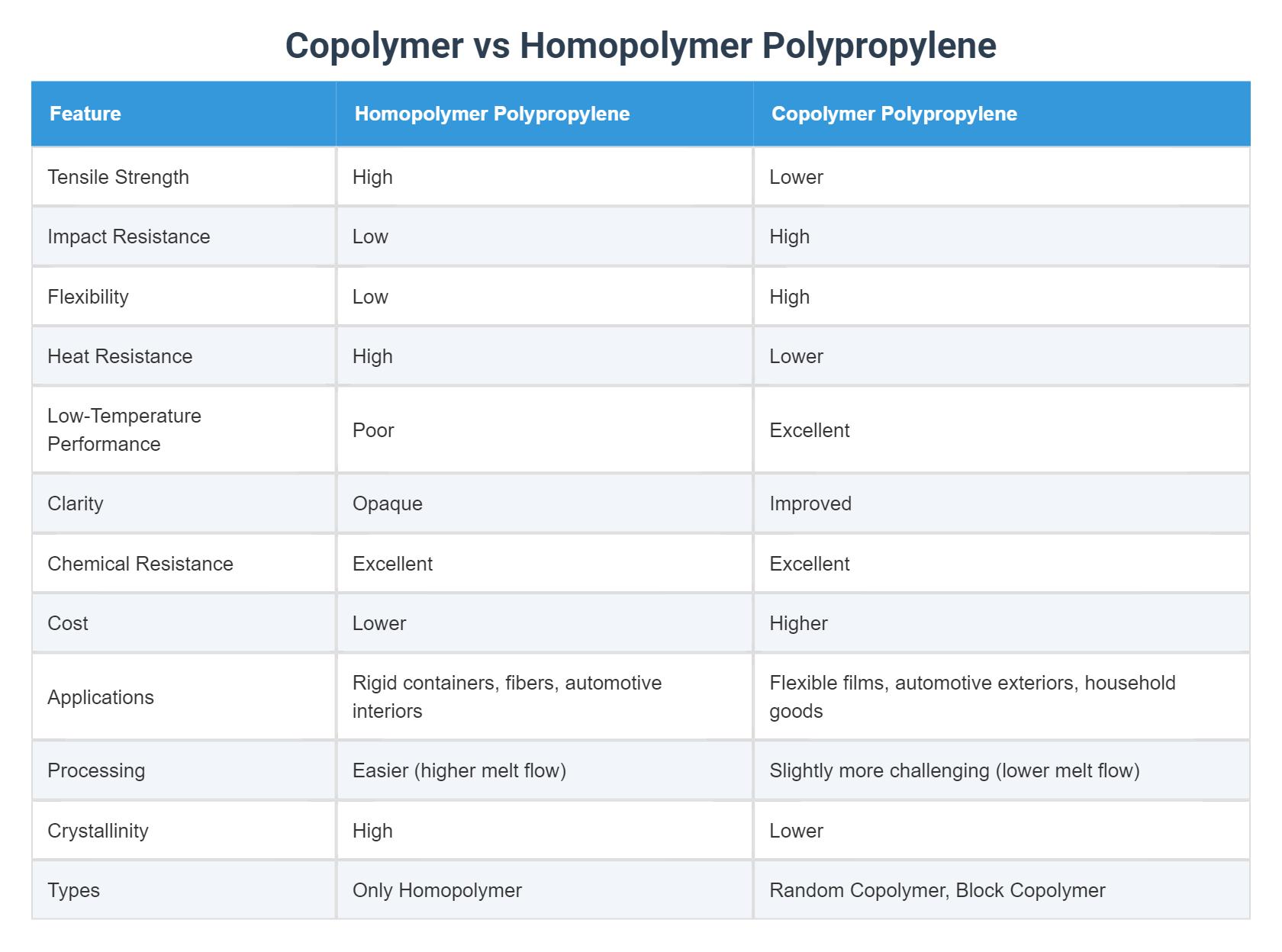
Comparison Table
| PP Type | Stiffness | ความต้านทานแรงกระแทก | Transparency | การใช้งานทั่วไป |
|---|---|---|---|---|
| Homopolymer | ยอดเยี่ยม | Moderate | Low | Industrial parts |
| Random Copolymer | ดี | ดี | ยอดเยี่ยม | Medical & packaging |
| Impact Copolymer | Moderate | ยอดเยี่ยม | Low | Automotive & outdoor |


Modified Polypropylene Grades
To meet higher engineering requirements, PP is frequently modified with reinforcements or additives.
Common Modified Grades
| Grade | Main Benefit | แอปพลิเคชันทั่วไป |
|---|---|---|
| PP GF20 | Increased stiffness | โครงเครื่องใช้ไฟฟ้า |
| PP GF30 | ความแข็งแรงสูง | Automotive components |
| Mineral Filled PP | ความเสถียรของมิติ | Interior automotive trim |
| Flame-Retardant PP | Fire safety | Electrical enclosures |
| UV-Stabilized PP | ความทนทานกลางแจ้ง | Garden products |
| Food-Grade PP | Regulatory compliance | Food containers |
Common Commercial PP Grades
Different resin manufacturers provide polypropylene under various trade names and grade numbers.
| Manufacturer | Example Grades | Typical Features |
|---|---|---|
| Borealis | BB series | Automotive & packaging |
| LyondellBasell | Moplen series | General-purpose injection molding |
| SABIC | PP series | Consumer and industrial applications |
| ExxonMobil | Achieve™ PP | High-performance impact grades |
| Sinopec | T30S, K8003 | Commodity and industrial injection molding |
| CNPC | EP548R, EPS30R | General injection molding |
Note: Material availability varies by region, and equivalent grades from different suppliers may have similar performance. Always review the latest technical data sheet before final material selection.
Mechanical Properties
| Property | Homopolymer | Impact Copolymer | PP GF30 |
|---|---|---|---|
| Tensile Strength | สูง | ปานกลาง | Very High |
| Flexural Modulus | สูง | ปานกลาง | ยอดเยี่ยม |
| Impact Resistance | Moderate | ยอดเยี่ยม | ดี |
| Heat Distortion Temperature | ปานกลาง | ปานกลาง | สูง |
| ความเสถียรของมิติ | ดี | ดี | ยอดเยี่ยม |
Injection Molding Guidelines
Recommended Processing Parameters
| พารามิเตอร์ | Typical Range |
|---|---|
| Melt Temperature | 200–250°C |
| Mold Temperature | 20–60°C |
| Injection Pressure | 60–120 MPa |
| Holding Pressure | 40–80 MPa |
| Drying | Generally not required (unless material has absorbed moisture during storage) |
Proper gate design, balanced wall thickness, and efficient cooling are essential for achieving high-quality PP molded parts.
การใช้งานทั่วไป
Polypropylene is used in nearly every manufacturing industry.
ยานยนต์
- Battery cases
- ชุดตกแต่งภายใน
- Air ducts
- Wheel arch liners
ทางการแพทย์
- กระบอกฉีดยา
- ภาชนะเก็บสิ่งส่งตรวจ
- วัสดุสิ้นเปลืองในห้องปฏิบัติการ
ครัวเรือน
- กล่องเก็บของ
- Kitchenware
- Furniture components
Electrical
- Junction boxes
- Cable management products
บรรจุภัณฑ์
- Food containers
- ฝาขวด
- Thin-wall packaging
Material Selection Guide
| ข้อกำหนด | Recommended PP Grade |
|---|---|
| High Stiffness | PP Homopolymer |
| High Impact | PP Impact Copolymer |
| Outdoor Use | UV-Stabilized PP |
| Structural Parts | PP GF30 |
| Food Contact | Food-Grade PP |
| การทนต่อเปลวไฟ | Flame-Retardant PP |
ทำไมต้องเลือก Samgo
Samgo supports customers from material selection through mass production.
Our Engineering Services
| บริการ | ประโยชน์ที่ลูกค้าได้รับ |
|---|---|
| การเลือกวัสดุ | Optimized performance and cost |
| การออกแบบผลิตภัณฑ์ | ปรับปรุงความสามารถในการผลิต |
| การวิเคราะห์เพื่อการผลิต (DFM) | ลดความเสี่ยงด้านเครื่องมือ |
| การจำลองโมลด์โฟลว์ | Better filling and cooling |
| การผลิตแม่พิมพ์ความละเอียดสูง | อายุการใช้งานแม่พิมพ์ยาวนาน |
| การฉีดขึ้นรูปพลาสติก | Stable high-volume production |
Our engineering team helps customers select the most suitable PP grade for each application, ensuring reliable performance and efficient manufacturing.
ลิงก์ภายในที่แนะนำ
บทสรุป
Polypropylene remains one of the most versatile and cost-effective materials for injection molding. From commodity homopolymers to high-performance glass fiber reinforced and flame-retardant grades, PP offers solutions for a wide range of industries and applications.
Selecting the correct grade requires balancing mechanical properties, chemical resistance, environmental conditions, processing requirements, and cost. By understanding the differences between PP types and working with experienced engineering teams, manufacturers can develop durable, efficient, and competitive plastic products.
At Samgo, we combine material expertise, engineering analysis, precision mold manufacturing, and advanced injection molding capabilities to help customers choose the right polypropylene solution for every project.