
การฉีดขึ้นรูปพลาสติกยานยนต์: การใช้งาน, วัสดุ, การออกแบบแม่พิมพ์, และโซลูชันการผลิต
สารบัญ
บทนำ
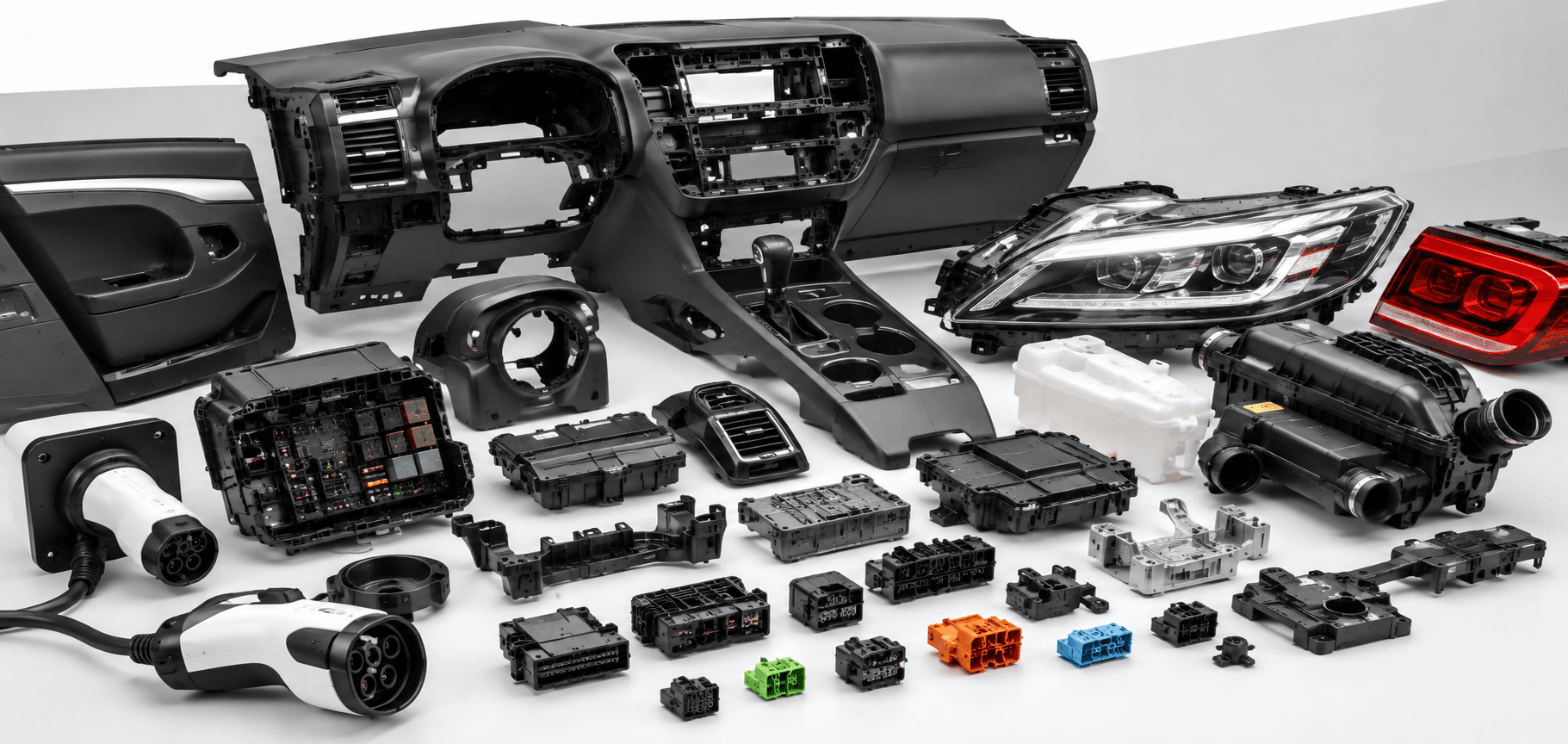
การฉีดขึ้นรูปพลาสติก มีบทบาทสำคัญอย่างยิ่งในการผลิตรถยนต์สมัยใหม่ ตั้งแต่อุปกรณ์ตกแต่งภายในและขั้วต่อทางไฟฟ้า ไปจนถึงชิ้นส่วนใต้ฝากระโปรงและตัวถังภายนอก พลาสติกขึ้นรูปด้วยการฉีดช่วยให้ผู้ผลิตรถยนต์สามารถลดน้ำหนัก รวมฟังก์ชันที่ซับซ้อนเข้าด้วยกัน ปรับปรุงความสวยงาม และรองรับการผลิตจำนวนมากได้.
การใช้งานในยานยนต์มีความต้องการสูงกว่าผลิตภัณฑ์สำหรับผู้บริโภคทั่วไปหลายประเภท ส่วนประกอบต่างๆ อาจต้องทนทานต่อแรงสั่นสะเทือน การกระแทก สารเคมี รังสีอัลตราไวโอเลต การเปลี่ยนแปลงอุณหภูมิความชื้น การรับน้ำหนักตามมิติ และการใช้งานอย่างต่อเนื่องนานหลายปี.
การเปลี่ยนผ่านไปสู่ยานยนต์ไฟฟ้ากำลังเพิ่มความสำคัญของพลาสติกวิศวกรรมมากยิ่งขึ้น ระบบแบตเตอรี่ อุปกรณ์ชาร์จ เซ็นเซอร์ โมดูลควบคุมอิเล็กทรอนิกส์ และตัวเชื่อมต่อแรงดันไฟฟ้าสูง ล้วนต้องการวัสดุที่มีน้ำหนักเบาพร้อมทั้งมีฉนวนไฟฟ้าที่ดีเยี่ยมและคุณสมบัติหน่วงไฟ.
ดังนั้น การฉีดขึ้นรูปชิ้นส่วนยานยนต์ที่ประสบความสำเร็จจึงเป็นมากกว่าแค่การผลิตชิ้นส่วนพลาสติก การคัดเลือกวัสดุ การออกแบบผลิตภัณฑ์ วิศวกรรมแม่พิมพ์ การควบคุมกระบวนการ การตรวจสอบความถูกต้องของมิติ และความน่าเชื่อถือในระยะยาว จะต้องได้รับการพิจารณาว่าเป็นระบบการผลิตที่สมบูรณ์.
บทความนี้นำเสนอการใช้งานหลัก วัสดุ หลักการออกแบบ ข้อกำหนดของแม่พิมพ์ และข้อพิจารณาในการควบคุมคุณภาพที่เกี่ยวข้องกับการฉีดขึ้นรูปชิ้นส่วนยานยนต์.
1. ชิ้นส่วนพลาสติกภายในรถยนต์
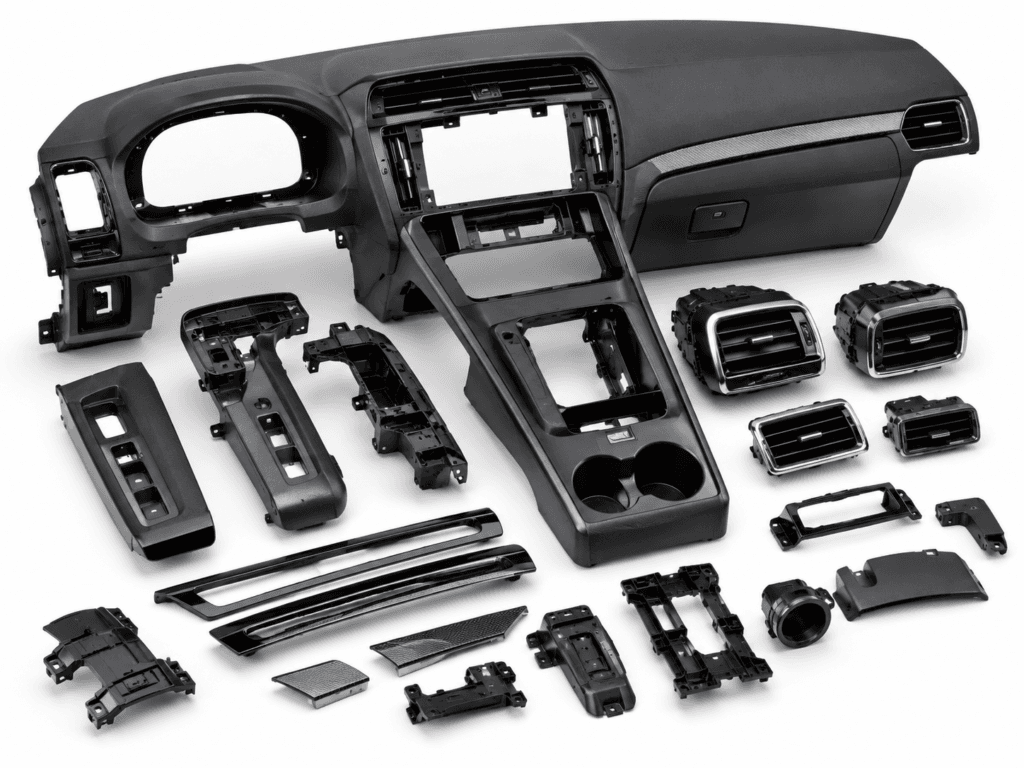
ภายในห้องโดยสารของยานพาหนะประกอบด้วยชิ้นส่วนขึ้นรูปด้วยการฉีดจำนวนมาก เนื่องจากกระบวนการดังกล่าวสามารถผลิตรูปทรงที่ซับซ้อนพร้อมทั้งมีความสามารถในการทำซ้ำและคุณภาพพื้นผิวที่ยอดเยี่ยม.
แอปพลิเคชันทั่วไปประกอบด้วย:
- องค์ประกอบของแดชบอร์ด
- คอนโซลกลาง
- โครงสร้างแผงขอบประตู
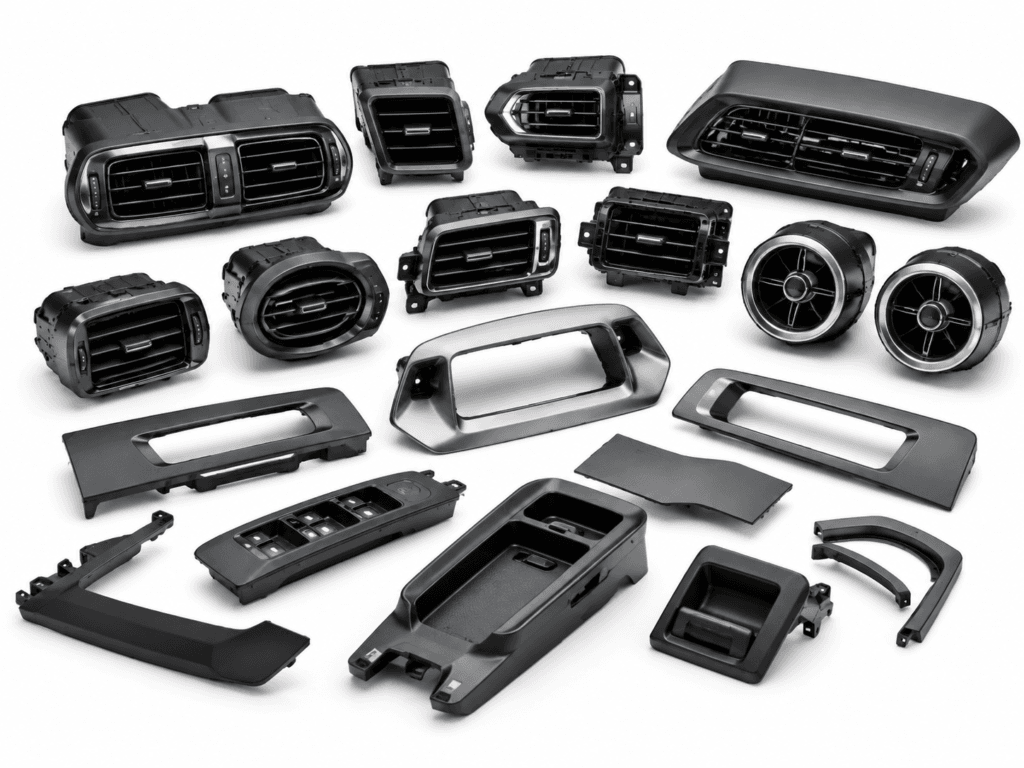
- ช่องแอร์
- ตัวเรือนแผงหน้าปัด
- ที่วางแก้ว
- ชิ้นส่วนปรับตำแหน่งที่นั่ง
- ช่องเก็บของ
- ตัวเรือนสวิตช์
ชิ้นส่วนภายในต้องสร้างความสมดุลระหว่างความสวยงาม ความเสถียรด้านมิติ คุณภาพการสัมผัส ความแข็งแรงทางกล และต้นทุน.
วัสดุ เช่น ABS, PC/ABS, PP และพลาสติกวิศวกรรมดัดแปลง ได้รับการพิจารณาอย่างกว้างขวางขึ้นอยู่กับการใช้งาน.
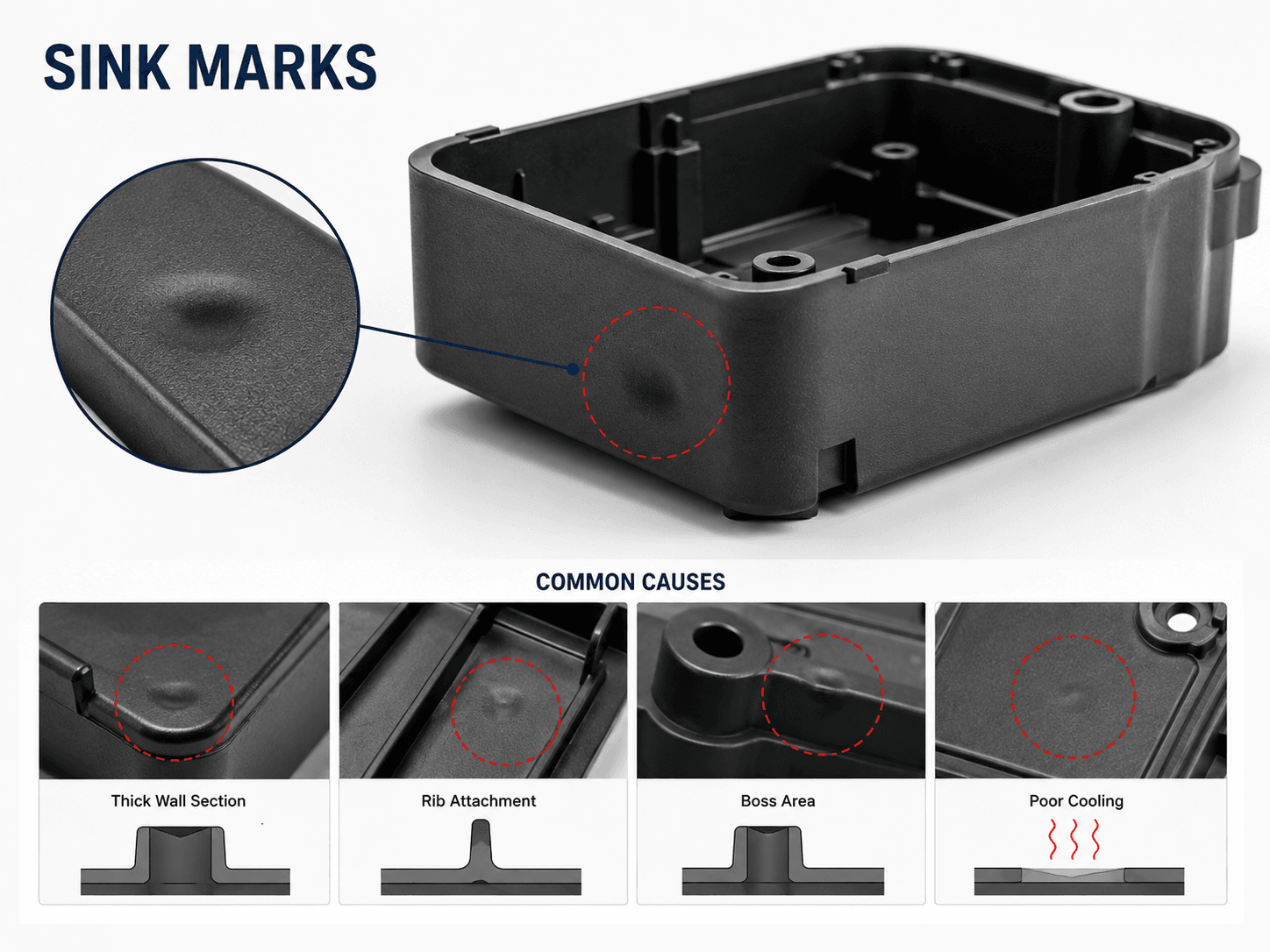
สำหรับพื้นผิวประเภท A ที่มองเห็นได้ ความละเอียดของแม่พิมพ์และเงื่อนไขการผลิตมีความสำคัญเป็นพิเศษ รอยไหล รอยต่อ รอยยุบ ความไม่สม่ำเสมอของความเงา หรือการบิดเบี้ยว สามารถส่งผลโดยตรงต่อคุณภาพของรถยนต์ที่ผู้บริโภครับรู้.
ตัวอย่างวัสดุตกแต่งภายในรถยนต์
| ส่วนประกอบ | ข้อกำหนดทั่วไป | วัสดุที่มีศักยภาพ |
|---|---|---|
| แดชบอร์ดที่อยู่อาศัย | รูปลักษณ์ + ความต้านทานแรงกระแทก | พีซี/เอบีเอส |
| โครงสร้างแผงประตูด้านข้าง | น้ำหนักเบา + ความเหนียวทนทาน | พีพี |
| ช่องระบายอากาศ | ความเสถียรของมิติ | เอบีเอส |
| ตัวเรือนสวิตช์ | ความแม่นยำ + รูปลักษณ์ | พีซี/เอบีเอส |
| คอมโพเนนต์คอนโซล | คุณภาพพื้นผิว | ABS / PC+ABS |
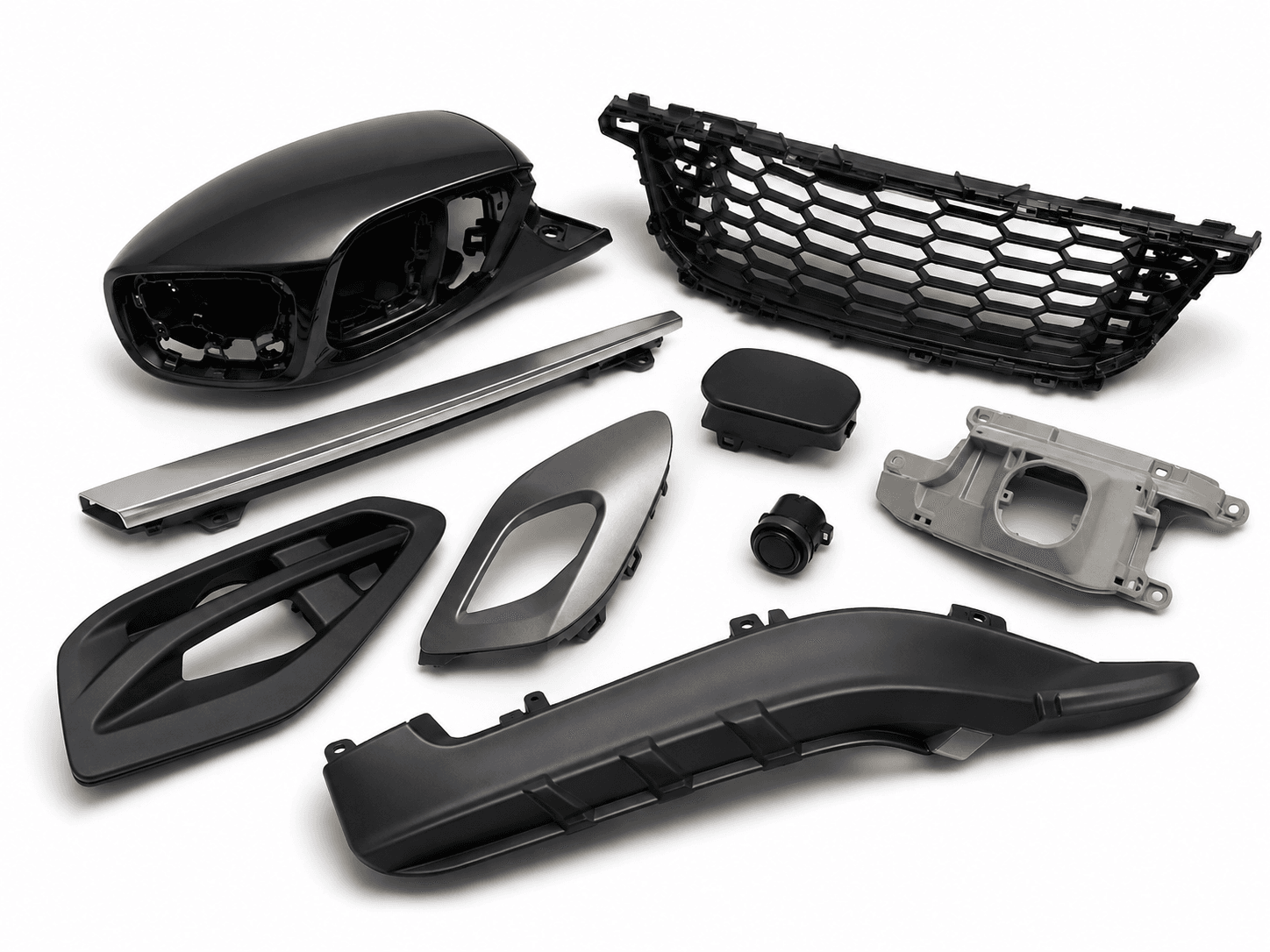
2. ชิ้นส่วนพลาสติกภายนอกของรถยนต์
ชิ้นส่วนภายนอกรถยนต์ต้องทนทานต่อแสงแดด ฝน สิ่งสกปรกจากท้องถนน การเปลี่ยนแปลงของอุณหภูมิ แรงสั่นสะเทือน และการกระแทกทางกล.
การฉีดขึ้นรูปใช้สำหรับผลิตภัณฑ์ เช่น:
- ส่วนตกแต่งภายนอก
- ครอบกระจกมองข้าง
- ชิ้นส่วนกระจังหน้า
- ฝาครอบเซ็นเซอร์
- ชิ้นส่วนซุ้มล้อ
- ฝาครอบป้องกัน
- โคมไฟ
- ชิ้นส่วนตกแต่งภายนอก
ความทนต่อรังสี UV และความคงตัวของขนาดจึงกลายเป็นปัจจัยที่สำคัญเป็นพิเศษ.
อาจเลือกใช้วัสดุประเภท ASA, PC/ASA, วัสดุที่มีพื้นฐานเป็น PP, พลาสติกวิศวกรรมเสริมแรง และเกรดที่ทนทานต่อสภาพอากาศอื่นๆ ทั้งนี้ขึ้นอยู่กับข้อกำหนดทางกลและความสวยงาม.
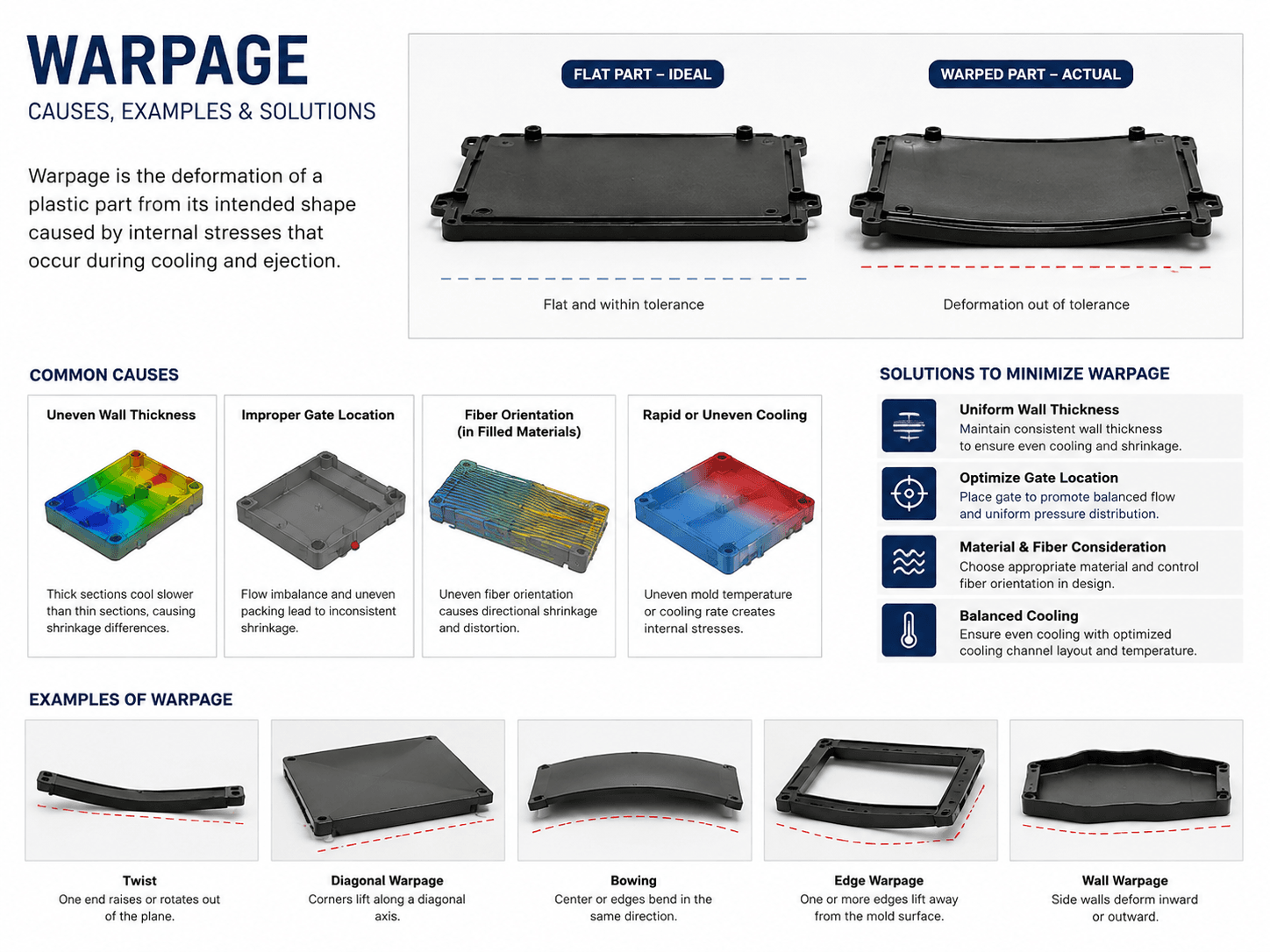
ชิ้นส่วนภายนอกที่มีขนาดใหญ่ยังจำเป็นต้องควบคุมการบิดเบี้ยวอย่างระมัดระวัง ความหนาของผนังที่ไม่สม่ำเสมอ ตำแหน่งช่องฉีดที่ไม่เหมาะสม หรือการระบายความร้อนที่ไม่สมดุล อาจก่อให้เกิดการบิดเบี้ยวที่มองเห็นได้หลังการฉีดขึ้นรูป.
3. ชิ้นส่วนขึ้นรูปฉีดใต้ฝากระโปรงรถ
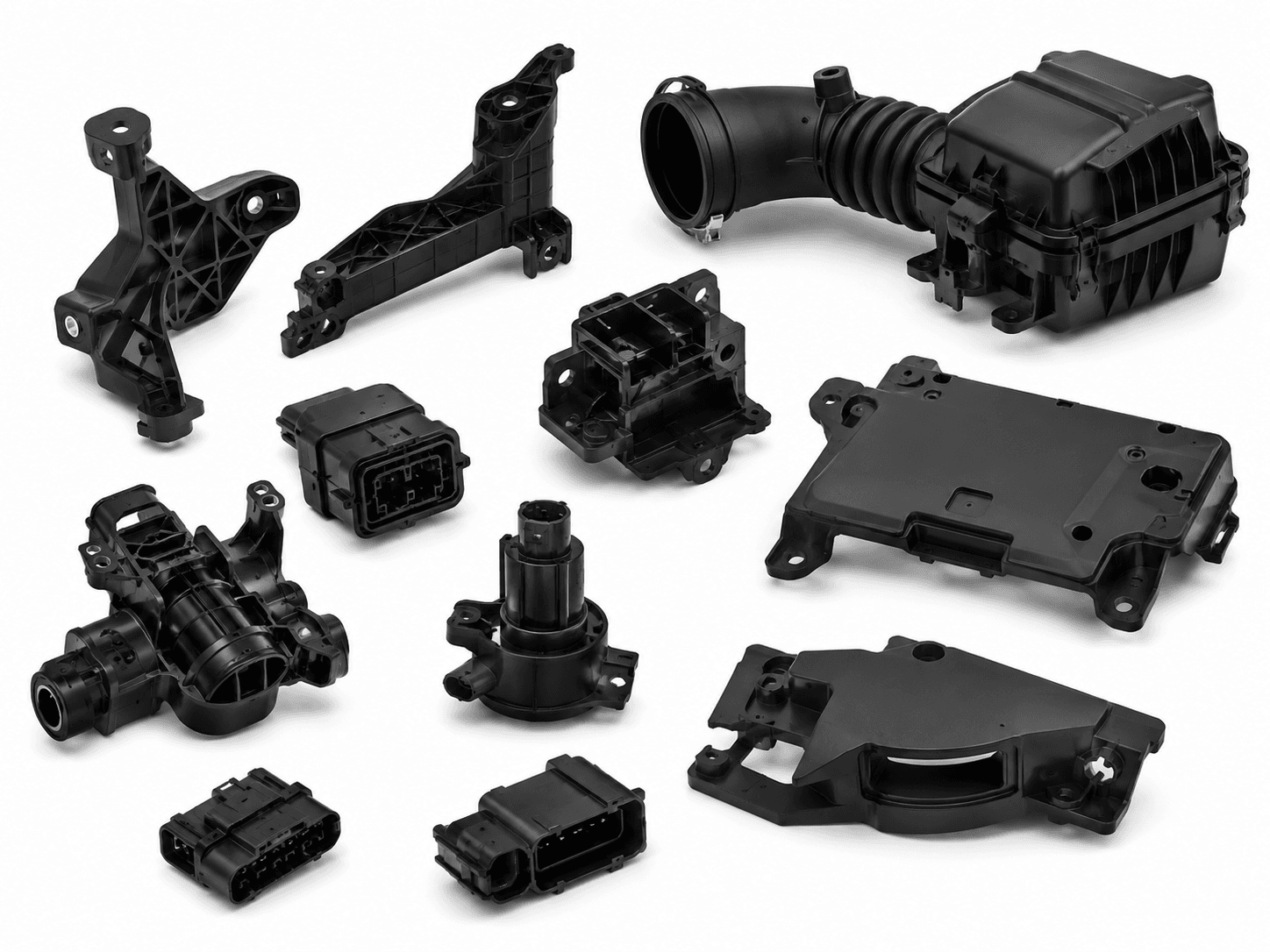
ห้องเครื่องยนต์เป็นหนึ่งในสภาพแวดล้อมที่ท้าทายที่สุดสำหรับชิ้นส่วนพลาสติก.
ชิ้นส่วนอาจสัมผัสกับ:
- อุณหภูมิสูงขึ้น
- น้ำมัน
- สารหล่อเย็น
- ไอระเหยน้ำมันเชื้อเพลิง
- การสั่นสะเทือนเชิงกล
- การให้ความร้อนและความเย็นสลับกันซ้ำๆ
ชิ้นส่วนขึ้นรูปทั่วไปได้แก่:
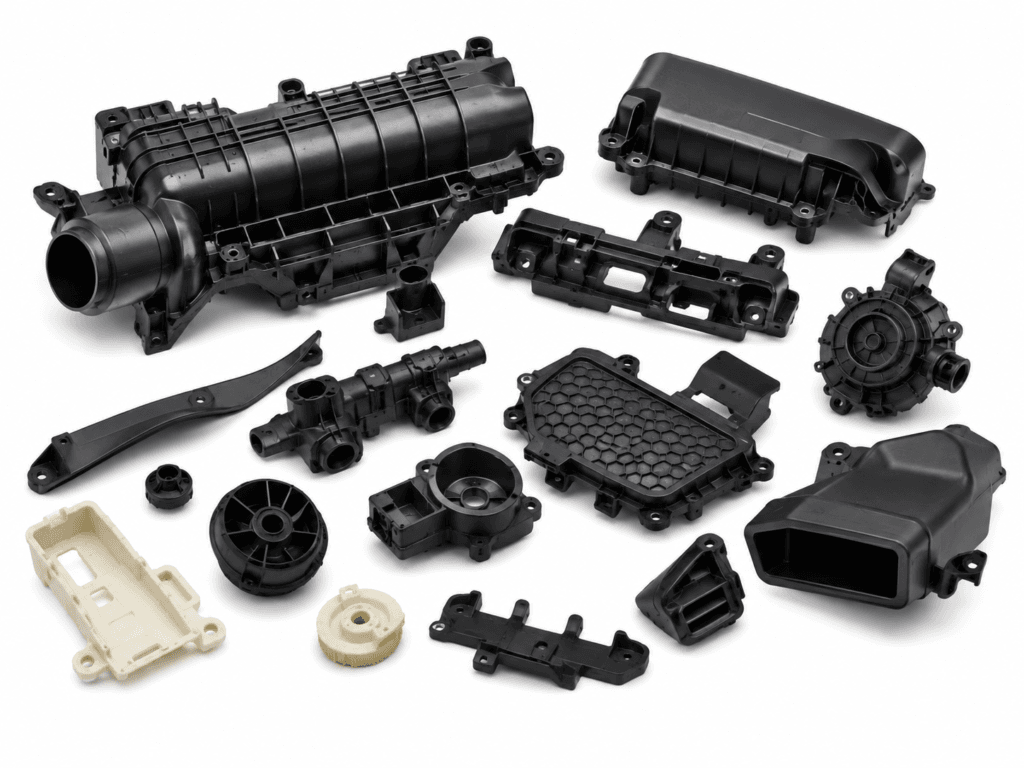
- ชิ้นส่วนท่อไอดี
- เปลือกหุ้มอุปกรณ์ไฟฟ้า
- ส่วนประกอบของพัดลม
- ข้อต่อระบบของไหล
- คลิปหนีบสายไฟ
- ตัวเรือนเซนเซอร์
- ฝาครอบป้องกัน
พลาสติกวิศวกรรม เช่น PA66-GF, PBT, PPS, และอาจจำเป็นต้องใช้โพลิเมอร์ทนความร้อนสูง.
การเสริมแรงด้วยใยแก้วสามารถเพิ่มความแข็งและความทนทานต่อความร้อนได้ แต่ก็อาจทำให้เกิดการหดตัวแบบไม่สมมาตรและปัญหาด้านคุณภาพพื้นผิว ดังนั้น การออกแบบแม่พิมพ์และตำแหน่งเกตจึงมีความสำคัญเป็นพิเศษ.
การเปรียบเทียบวัสดุใต้ฝากระโปรงรถ
| วัสดุ | ข้อได้เปรียบหลัก | การใช้งานทั่วไป |
| PA66-GF | ความต้านทานความร้อนและความแข็งแรง | องค์ประกอบโครงสร้าง |
| PBT | คุณสมบัติทางไฟฟ้า | ตัวเชื่อมต่อ |
| PPS | ประสิทธิภาพในอุณหภูมิสูง | งานด้านความร้อนและไฟฟ้า |
| พีพีโมดิฟายด์ | ความต้านทานต่อสารเคมี | ผ้าคลุม |
| พีซี/เอบีเอส | ประสิทธิภาพในการกระแทก | โครงหุ้มอิเล็กทรอนิกส์แบบป้องกัน |
4. ชิ้นส่วนระบบไฟฟ้าและอิเล็กทรอนิกส์ยานยนต์
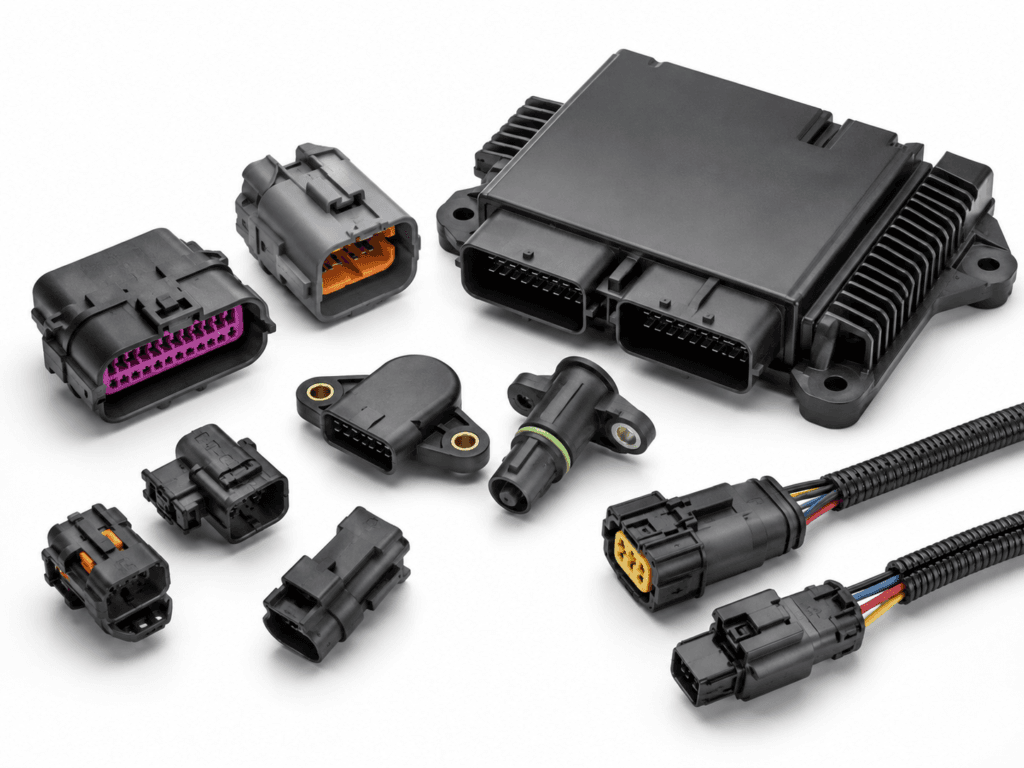
ยานพาหนะสมัยใหม่ประกอบด้วยระบบอิเล็กทรอนิกส์ที่มีความซับซ้อนมากขึ้นเรื่อยๆ ระบบช่วยเหลือผู้ขับขี่ขั้นสูง เซ็นเซอร์ กล้อง 20 โมดูลควบคุม อุปกรณ์อินโฟเทนเมนต์ และระบบเครือข่ายในรถยนต์ ล้วนอาศัยชิ้นส่วนพลาสติกขึ้นรูปที่มีความแม่นยำสูง.
การใช้งานทั่วไปประกอบด้วย:
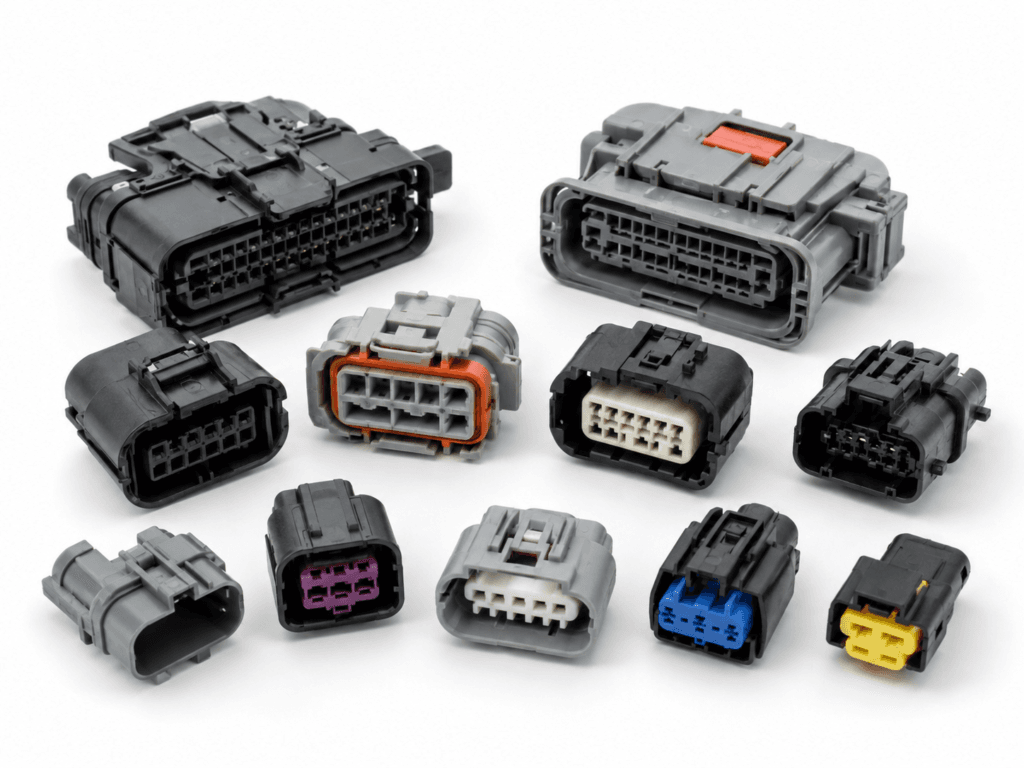
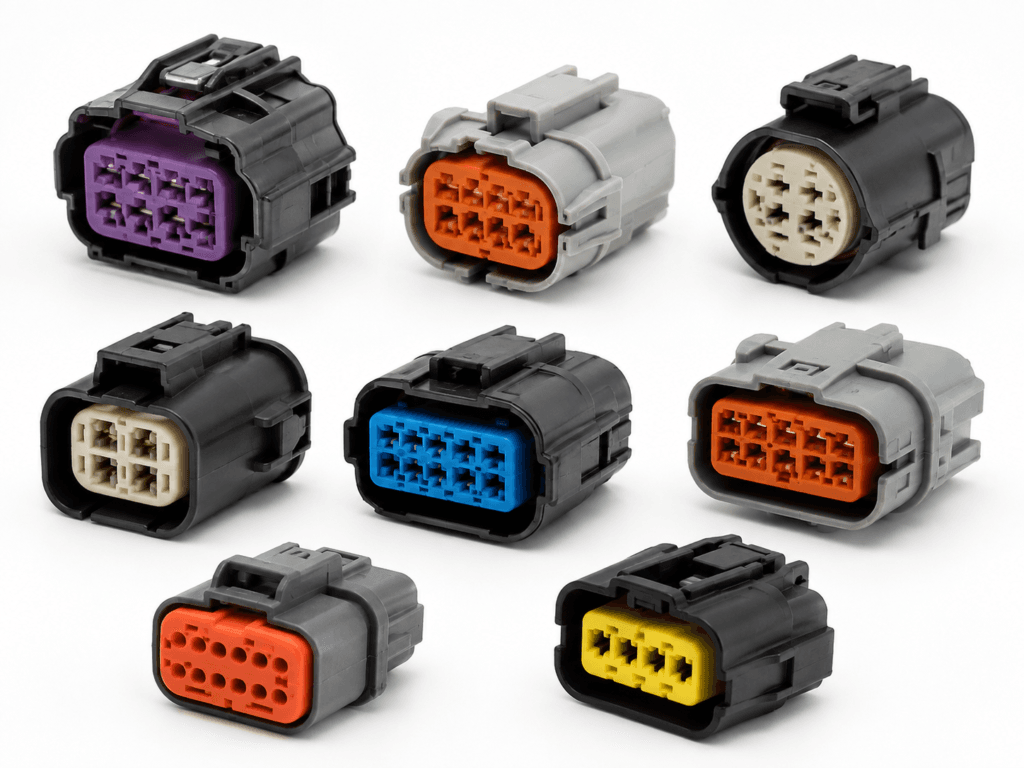
- ตัวเรือนคอนเนคเตอร์
- กล่องหุ้มกล่อง ECU
- ตัวเรือนเซนเซอร์
- ขาจับกล้อง
- อุปกรณ์ในกล่องฟิวส์
- ตัวเรือนสวิตช์
- อุปกรณ์จัดเก็บสายไฟ
ชิ้นส่วนเหล่านี้มักต้องการความเผื่อที่แคบและมิติที่เสถียร เนื่องจากความเบี่ยงเบนเพียงเล็กน้อยอาจส่งผลต่อหน้าสัมผัสทางไฟฟ้าและการประกอบได้.
สำหรับงานด้านไฟฟ้า สมบัติของวัสดุอาจรวมถึง:
- ฉนวนไฟฟ้า
- การหน่วงไฟ
- ความต้านทานความร้อน
- ความเสถียรของมิติ
- มีความไวต่อความชื้นต่ำ
PBT และเอ็นจิเนียริ่งไนลอนมักได้รับการพิจารณาสำหรับใช้งานเป็นขั้วต่อ ในขณะที่ PC/ABS และวัสดุกันไฟลามชนิดอื่น ๆ สามารถนำมาใช้สำหรับ1โครงสร้างอุปกรณ์อิเล็กทรอนิกส์ได้.
5. ชิ้นส่วนขึ้นรูปด้วยการฉีดพลาสติกสำหรับยานยนต์ไฟฟ้า
ยานยนต์ไฟฟ้ากำลังสร้างโอกาสเพิ่มเติมสำหรับการฉีดขึ้นรูปพลาสติก.
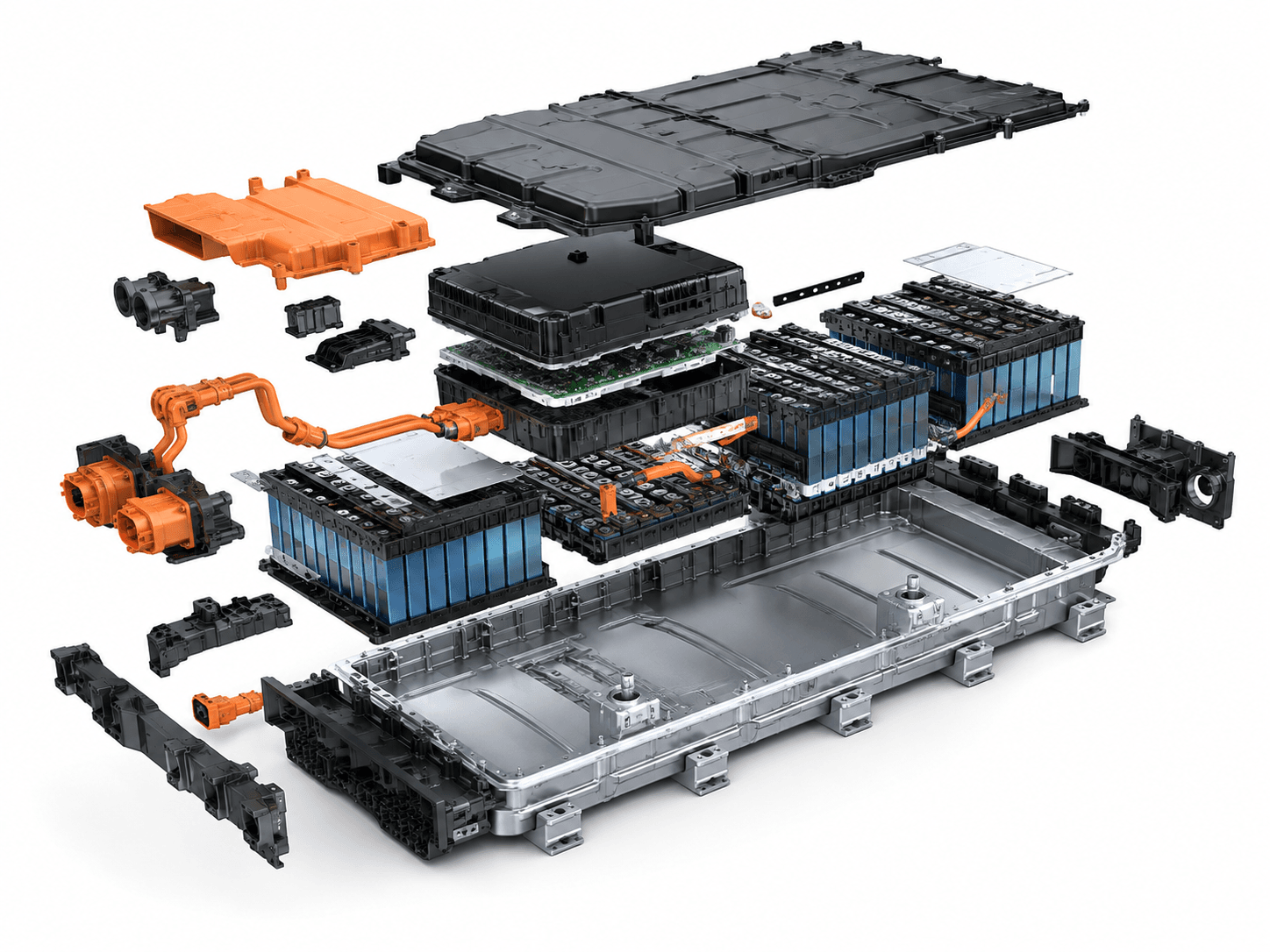
แม้ว่าเซลล์แบตเตอรี่และโครงสร้างเฟรมแบตเตอรี่อาจใช้โลหะ แต่ส่วนประกอบรอบข้างจำนวนมากได้รับประโยชน์จากพลาสติกวิศวกรรม.
ตัวอย่างเช่น
- ตัวเรือนตัวต่อสายไฟแรงดันสูง
- ฝาครอบป้องกันแบตเตอรี่
- ที่วางแบตเตอรี่
- โครงสร้างบีเอ็มเอส
- ส่วนประกอบขั้วต่อการชาร์จ
- ฉนวนกันความร้อน
- อุปกรณ์เดินสายเคเบิล
- ฝาครอบป้องกันไฟฟ้า
การลดน้ำหนักมีความสำคัญเป็นพิเศษในงานประยุกต์ใช้ยานยนต์ไฟฟ้า (EV) เนื่องจากทุกๆ กิโลกรัมสามารถส่งผลต่อประสิทธิภาพของยานพาหนะได้.
ในขณะเดียวกัน ความปลอดภัยทางไฟฟ้าก็มีความสำคัญมากขึ้น วัสดุอาจจำเป็นต้องมีความต้านทานเปลวไฟ ฉนวนไฟฟ้า เสถียรภาพทางความร้อน และความแม่นยำทางมิติ.
ชิ้นส่วนพลาสติกยานยนต์ EV
| ส่วนประกอบ | ข้อกำหนดหลัก | วัสดุที่มีศักยภาพ |
| ขั้วต่อไฟฟ้าแรงสูง | ฉนวน + ความแม่นยำ | PBT FR |
| ฝาครอบแบตเตอรี่ | ทนต่อแรงกระแทกและหน่วงการติดไฟ | พีซี/เอบีเอส ไม่ลามไฟ |
| ที่ใส่ถ่าน | ความแข็งแกร่ง | PA66-GF |
| เคหสถานบีเอ็มเอส | การป้องกันทางไฟฟ้า | พีซี/เอบีเอส |
| อุปกรณ์ชาร์จ | ความทนทานต่อสภาพอากาศ + ฉนวนกันความร้อน | พีซีASA |
6. ส่วนประกอบไฟฟ้ารถยนต์
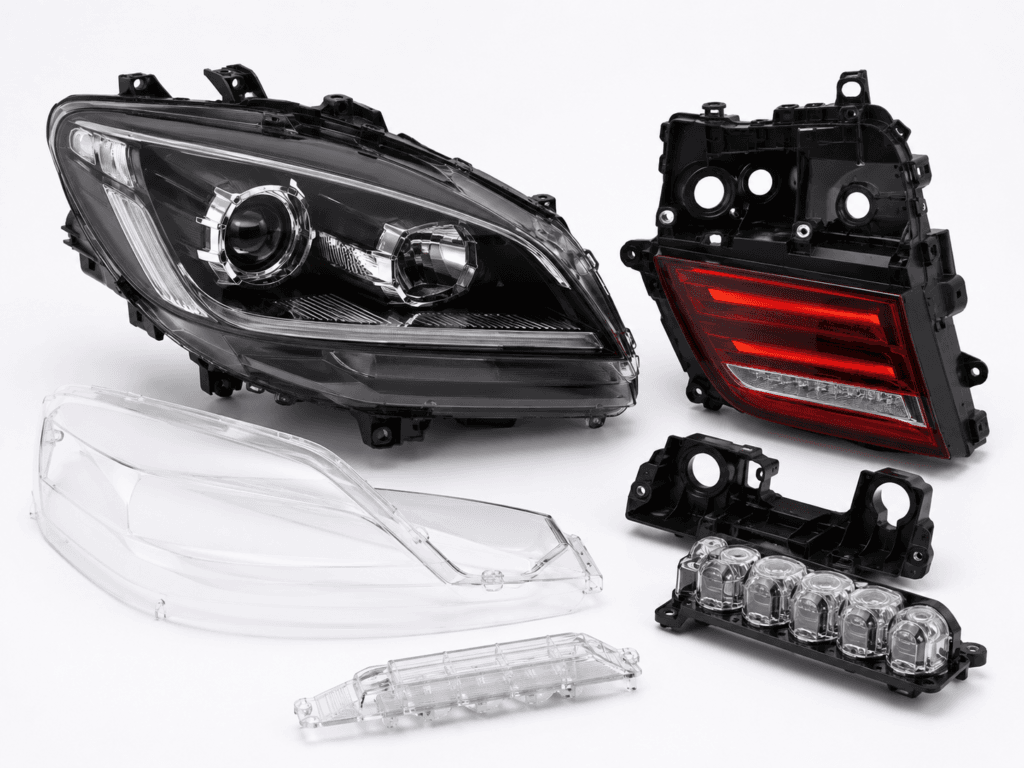
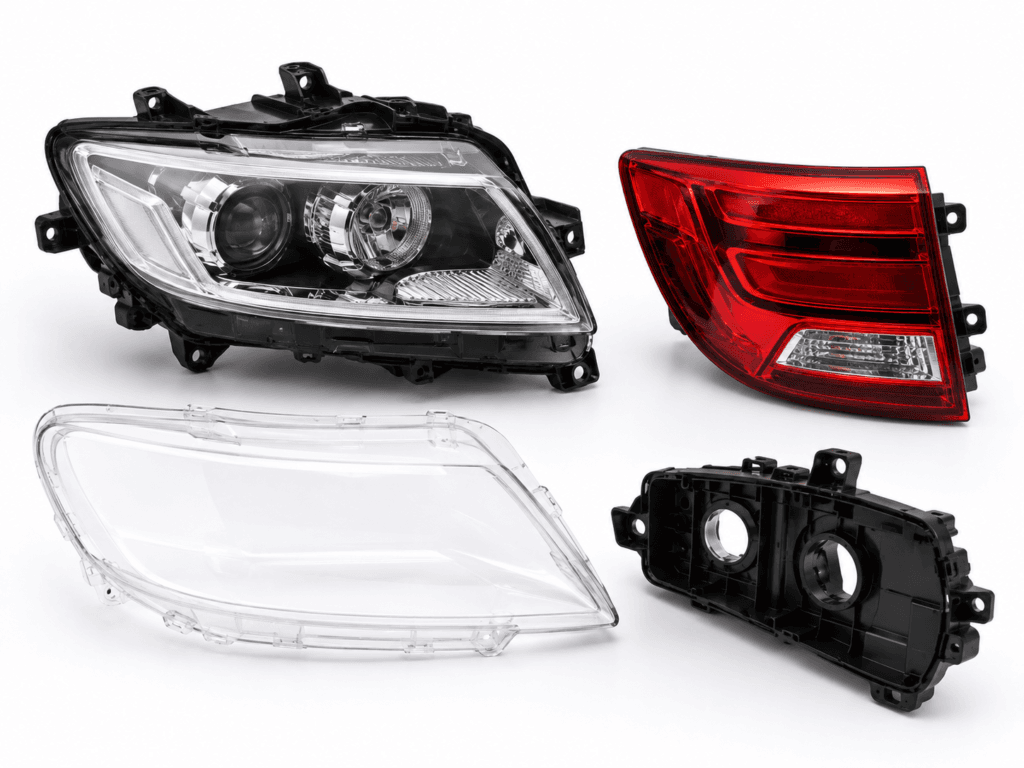
ระบบไฟส่องสว่างยานยนต์ผสานรวมรูปลักษณ์ สมรรถนะด้านออปติก การจัดการความร้อน และความแม่นยำด้านมิติเข้าด้วยกัน.
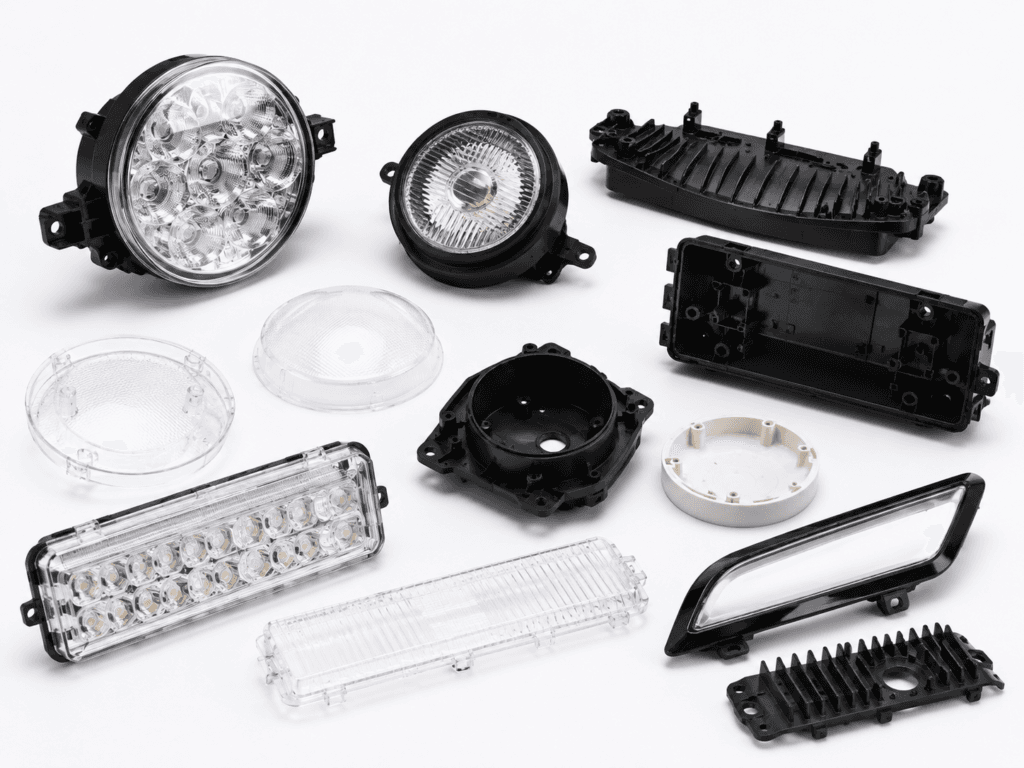
ชิ้นส่วนที่ผ่านกระบวนการฉีดขึ้นรูปอาจประกอบด้วย:
- โคมไฟหน้า
- กรอบไฟท้าย
- โครงสร้างตัวสะท้อนแสง
- ฝาครอบโมดูล LED
- อินเทอร์เฟซตัวเชื่อมต่อ
- ขายึด
PC มักเกี่ยวข้องกับการใช้งานด้านไฟฟ้ารถยนต์แบบโปร่งใส เนื่องจากมีความทนทานต่อแรงกระแทกและมีคุณสมบัติทางแสง ในขณะที่พลาสติกวิศวกรรมชนิดอื่นอาจถูกนำมาใช้ทำตัวเรือนเชิงโครงสร้าง.
พื้นผิวแม่พิมพ์ การระบายอากาศ การควบคุมอุณหภูมิ และการจัดการวัสดุมีความสำคัญเป็นพิเศษในจุดที่รูปลักษณ์ทางอوبتิกมีความสำคัญ.
7. วัสดุหลักที่ใช้ในการฉีดขึ้นรูปชิ้นส่วนยานยนต์
พลาสติกสำหรับยานยนต์ได้รับการคัดเลือกตามข้อกำหนดด้านกลศาสตร์ ความร้อน ไฟฟ้า ความสวยงาม และสิ่งแวดล้อม.
| วัสดุ | คุณสมบัติหลัก | การใช้งานทั่วไปในยานยนต์ |
| พีพี | น้ำหนักเบา ทนต่อสารเคมี | ชุดตกแต่งภายใน |
| เอบีเอส | รูปลักษณ์ภายนอก, ความสามารถในการแปรรูป | ชิ้นส่วนภายใน |
| พีซี/เอบีเอส | แรงกระแทก + ความเสถียรของมิติ | แผงหน้าปัด, ตัวเรือน |
| PA66-GF | ความแข็งแรง + ทนความร้อน | ชิ้นส่วนใต้ฝากระโปรงรถ |
| PBT | คุณสมบัติทางไฟฟ้า | ตัวเชื่อมต่อ |
| ปอม | ความต้านทานการสึกหรอ | เฟืองและกลไก |
| พีซี | ผลกระทบและความโปร่งใส | ส่วนประกอบของระบบไฟฟ้าแสงสว่าง |
| ASA | ทนต่อรังสี UV | ชิ้นส่วนภายนอก |
| PPS | ทนอุณหภูมิสูง | ชิ้นส่วนไฟฟ้าขั้นสูง |
การเลือกใช้วัสดุควรพิจารณาจากชิ้นงานสำเร็จรูปเสมอ มากกว่าการดูแค่เอกสารข้อมูลของเรซินเท่านั้น.
ความหนาของผนัง แนวเชื่อม การเรียงตัวของเส้นใย การดูดซึมความชื้น การสัมผัสสารเคมี อุณหภูมิในการทำงาน และอายุการใช้งานที่คาดหวัง ล้วนสามารถส่งผลต่อประสิทธิภาพการทำงานจริงได้.
8. การออกแบบแม่พิมพ์ฉีดขึ้นรูปชิ้นส่วนยานยนต์
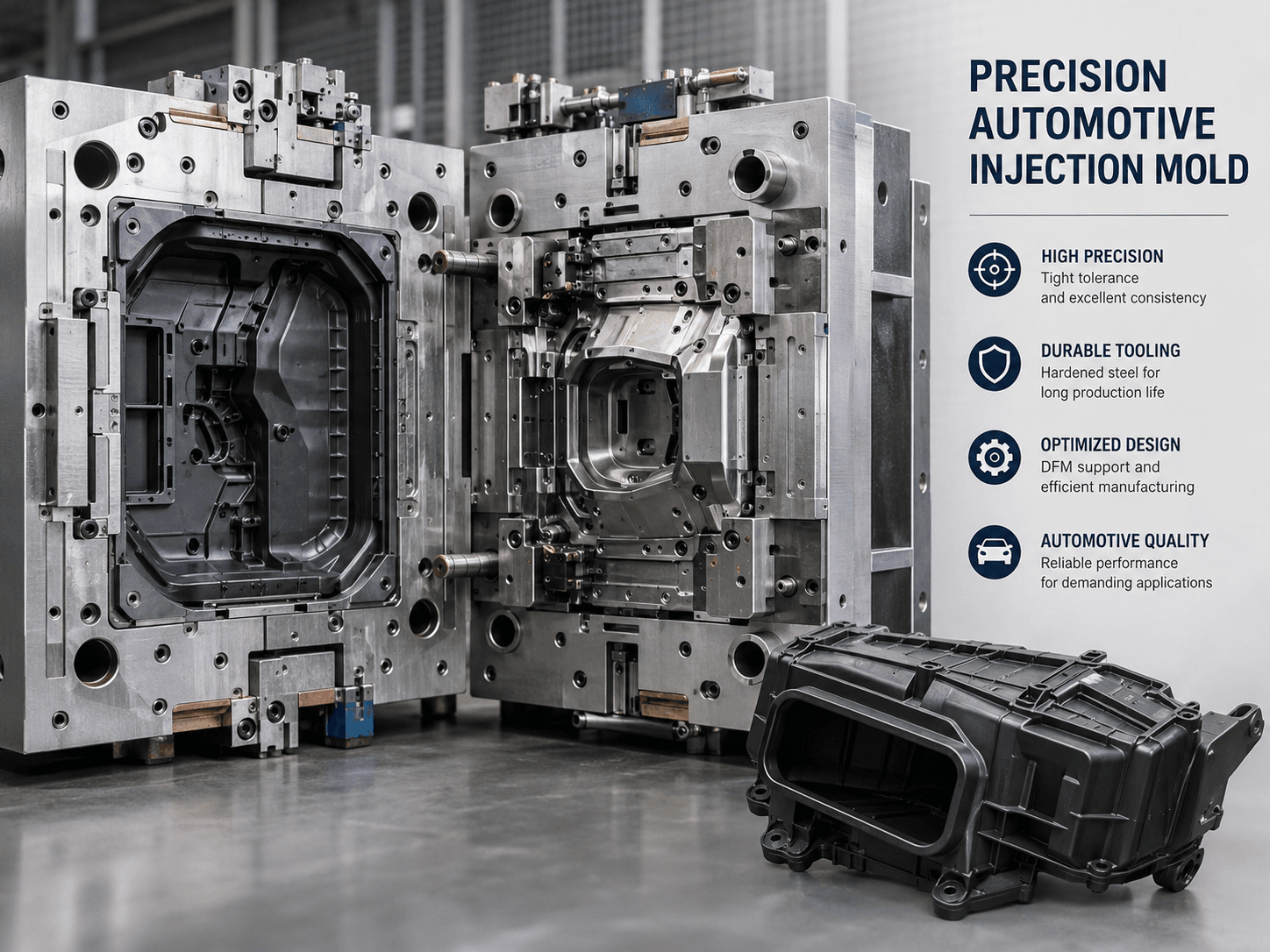
แม่พิมพ์สำหรับอุตสาหกรรมยานยนต์ต้องรักษาความแม่นยำของมิติให้คงที่ตลอดการผลิตจำนวนมากอย่างต่อเนื่อง.
พื้นที่วิศวกรรมแม่พิมพ์ที่สำคัญประกอบด้วย:
การออกแบบประตู
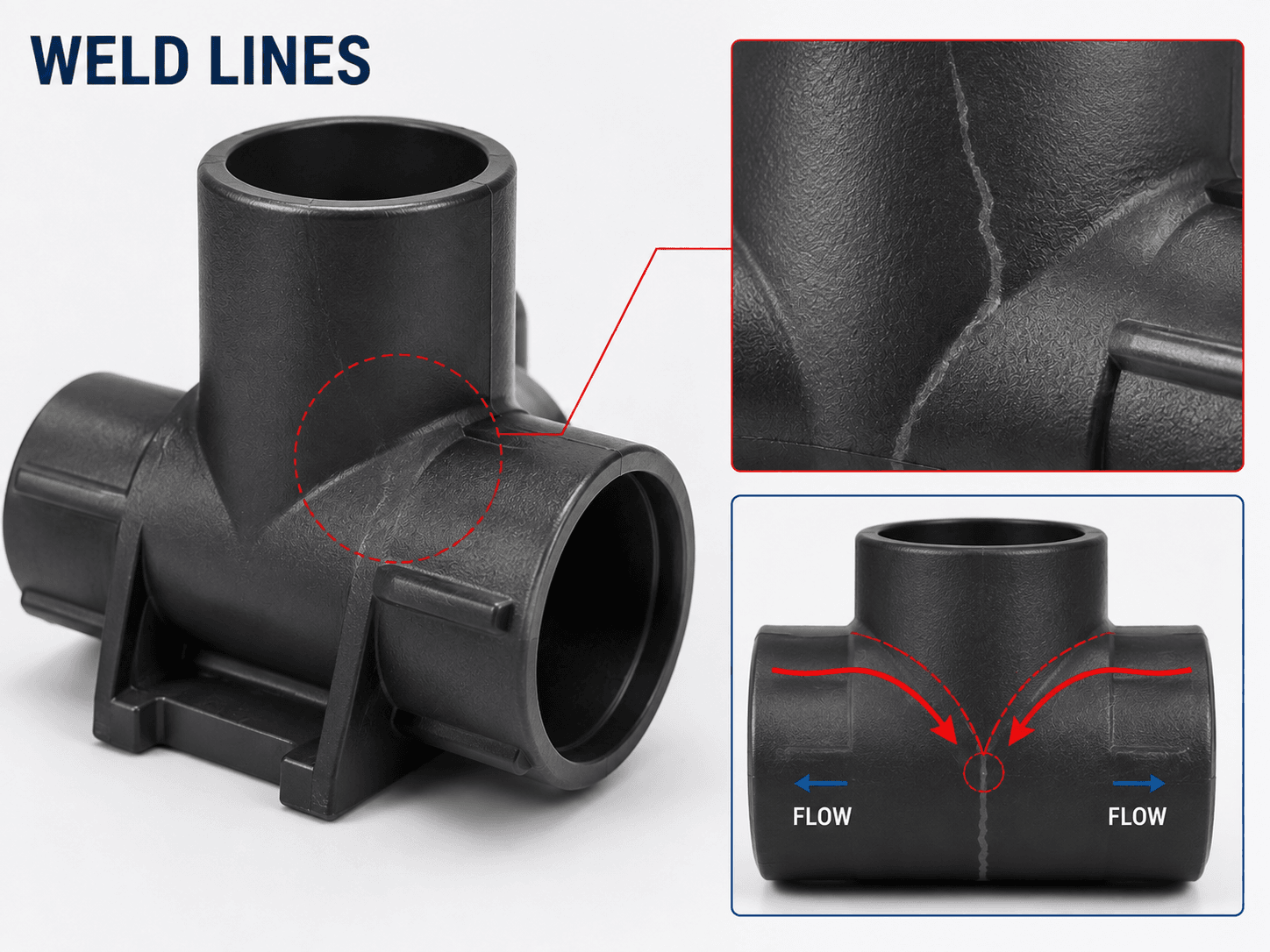
ตำแหน่งของเกทมีผลต่อความสมดุลในการเติมเนื้อพลาสติก ตำแหน่งของแนวประสาน (เวลด์ไลน์) แรงดันอัด และความสวยงามของผิวงาน.
ระบบหล่อเย็น
การทำความเย็นที่สมดุลช่วยควบคุมเวลาในแต่ละรอบและลดการโก่งงอ.
ระบายอารมณ์
การระบายอากาศที่เหมาะสมช่วยป้องกันแก๊สที่ติดอยู่ งานฉีดพลาสติกไม่เต็ม รอยไหม้ และคุณภาพพื้นผิวที่ไม่ดี.
สไลด์และลิฟเตอร์
ชิ้นส่วนยานยนต์มักจะมีรูด้านข้าง ตะขอเกี่ยว คลิปหนีบ และส่วนใต้ตัดอื่นๆ ที่ต้องอาศัยกลไกการทำงานด้านข้าง.
ผิวแม่พิมพ์
พื้นผิว ผิวขัดมัน และลวดลายของเสี้ยนไม้ต้องได้รับการสร้างขึ้นใหม่อย่างสม่ำเสมอทั่วทั้งกระบวนการผลิต.
สำหรับชิ้นส่วนยานยนต์ที่มีความซับซ้อน การจำลองด้วย Moldflow สามารถช่วยทำนายพฤติกรรมการไหลของการเติมเนื้อพลาสติก แนวประสาน แรงดัน การระบายความร้อน การหดตัว และการเสียรูปที่อาจเกิดขึ้นได้ก่อนการสร้างแม่พิมพ์.
9. ข้อบกพร่องทั่วไปในการฉีดขึ้นรูปชิ้นส่วนยานยนต์
ข้อกำหนดด้านคุณภาพยานยนต์ทำให้การป้องกันข้อบกพร่องเป็นสิ่งสำคัญยิ่ง.
| ข้อบกพร่อง | สาเหตุที่เป็นไปได้ | โซลูชันทางวิศวกรรม |
| การโก่งตัว | การทำความเย็นที่ไม่สมดุล | เพิ่มประสิทธิภาพการจัดวางระบบระบายความร้อน |
| รอยยุบตัว | ส่วนท้องถิ่นที่หนา | เพิ่มความหนาของผนัง |
| รอยประสาน | รูปแบบการไหลไม่ดี | ปรับตำแหน่งประตูให้เหมาะสมที่สุด |
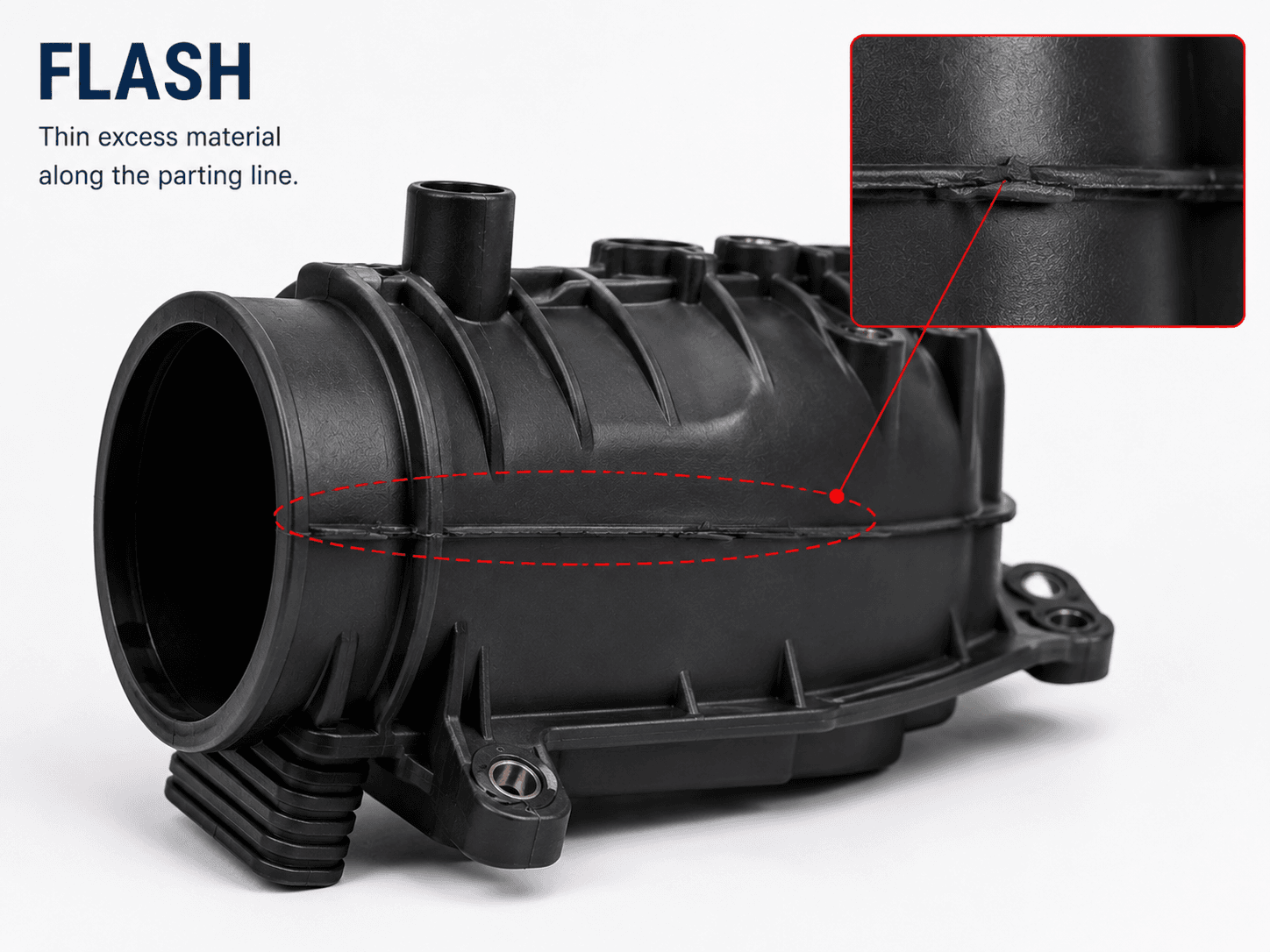
| แฟลช | การสึกหรอของแม่พิมพ์หรือแรงดันที่มากเกินไป | ปรับปรุงความพอดีของแม่พิมพ์ |
| ช็อตสั้น | การไหลถูกจำกัด | ปรับเกต/กระบวนการ |
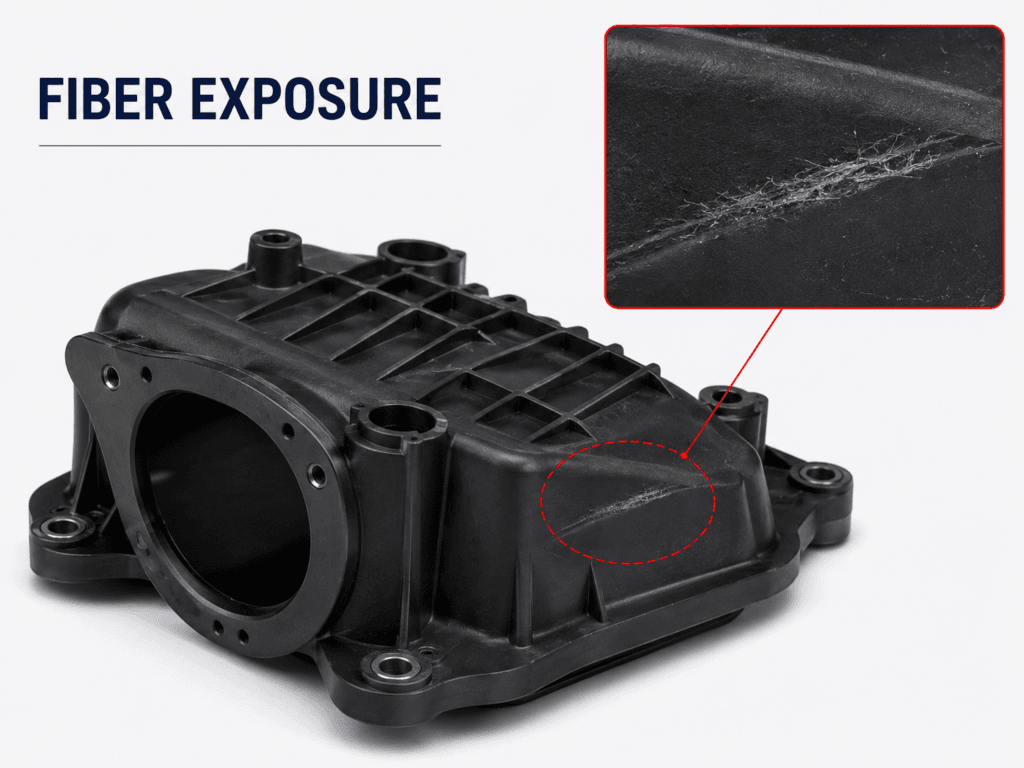
| การสัมผัสเส้นใย | วัสดุเสริมแรง/เงื่อนไขกระบวนการ | ปรับปรุงแม่พิมพ์และพารามิเตอร์ |
| ความแปรผันทางมิติ | การหดตัว/ความไม่เสถียรของกระบวนการ | ปรับปรุงการควบคุมกระบวนการ |
การตรวจสอบ DFM ตั้งแต่เนิ่นๆ ช่วยระบุปัญหาเหล่านี้ได้มากมายก่อนที่จะเริ่มกระบวนการทำแม่พิมพ์.
10. การควบคุมคุณภาพยานยนต์
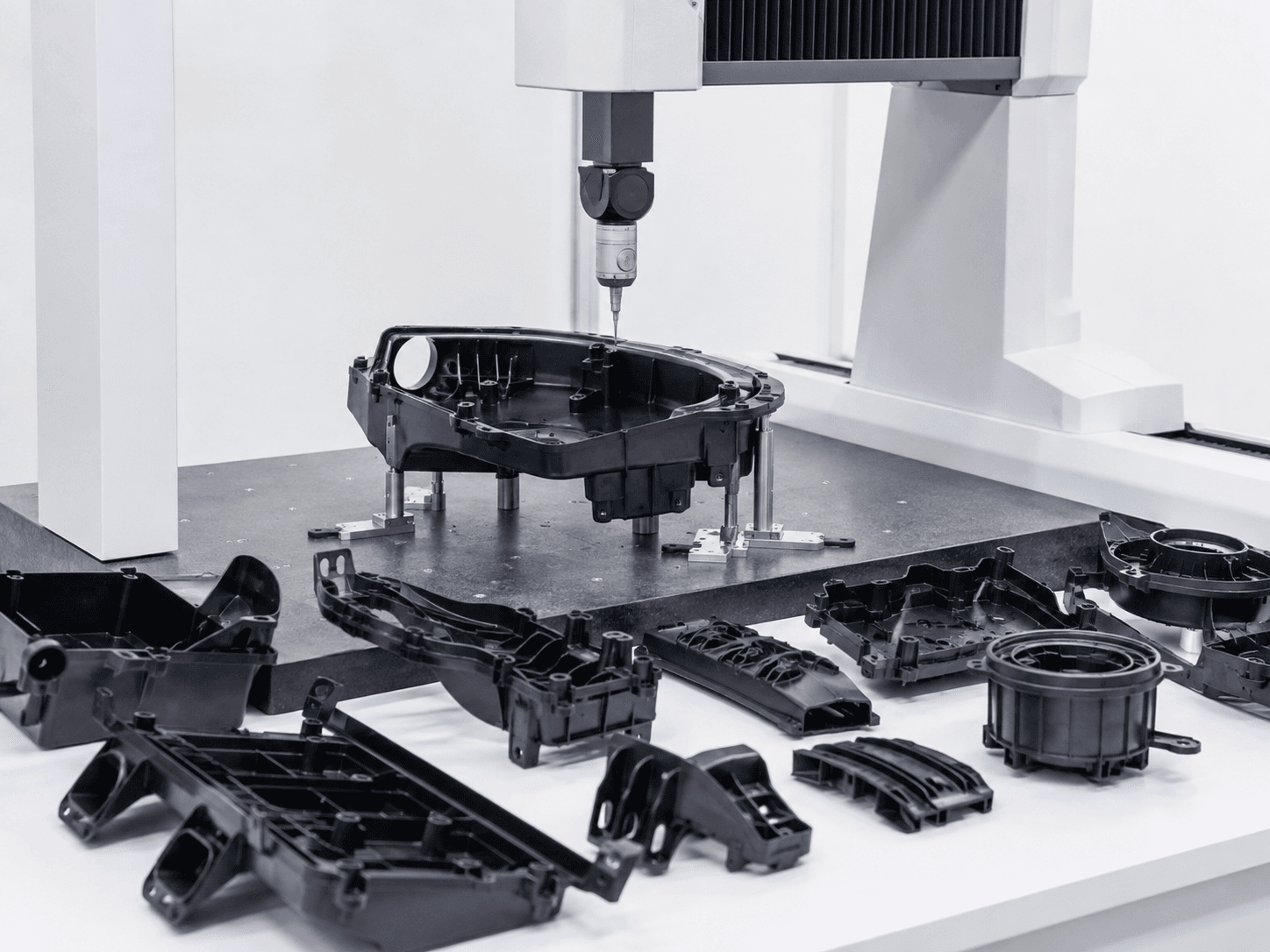
ชิ้นส่วนยานยนต์มักจะต้องมีการตรวจสอบอย่างเข้มงวดและการตรวจสอบย้อนกลับในการผลิต.
วิธีการทั่วไปประกอบด้วย:
- การตรวจสอบมิติด้วยเครื่อง CMM
- การวัดทางแสง
- เกรดเกจวัดแบบผ่าน/ไม่ผ่าน
- อุปกรณ์จับยึดสำหรับประกอบชิ้นงาน
- การตรวจสอบวัสดุ
- การทดสอบการกระแทก
- การเสื่อมสภาพเนื่องจากความร้อน
- การทดสอบสิ่งแวดล้อม
- การทดสอบการทำงาน
การควบคุมกระบวนการทางสถิติอาจถูกนำมาใช้เพื่อตรวจสอบขนาดที่สำคัญในระหว่างการผลิตด้วยเช่นกัน.
ขึ้นอยู่กับโครงการ ซัพพลายเออร์ในอุตสาหกรรมยานยนต์อาจดำเนินงานตามระบบการจัดการคุณภาพ เช่น IATF 16949 และข้อกำหนดเฉพาะของลูกค้า.
ทำไมจึงควรเลือก Samgo สำหรับการฉีดขึ้นรูปชิ้นส่วนยานยนต์
การฉีดขึ้นรูปชิ้นส่วนยานยนต์ต้องอาศัยการประสานงานอย่างใกล้ชิดระหว่างวิศวกรรมผลิตภัณฑ์ การทำแม่พิมพ์ การเลือกวัสดุ และการผลิต.
Samgo สนับสนุนโครงการยานยนต์ตั้งแต่การประเมินการออกแบบ ไปจนถึงการผลิตแม่พิมพ์และการผลิตจำนวนมาก.
| ความสามารถ | ประโยชน์ที่ลูกค้าได้รับ |
| การออกแบบผลิตภัณฑ์ รีวิว | ปรับปรุงความสามารถในการผลิต |
| การวิเคราะห์เพื่อการผลิต (DFM) | ระบุความเสี่ยงก่อนใช้เครื่องมือ |
| การจำลองโมลด์โฟลว์ | เพิ่มประสิทธิภาพการไหลและการบิดงอ |
| เครื่องมือความแม่นยำสูง | ความเสถียรของมิติ |
| การฉีดขึ้นรูปพลาสติก | การผลิตที่ทำซ้ำได้ |
| การตรวจสอบคุณภาพ | ตรวจสอบข้อมูลจำเพาะที่สำคัญ |
| ฝ่ายสนับสนุนการประกอบ | ทำให้ห่วงโซ่อุปทานง่ายขึ้น |
การใช้งานสามารถรวมถึงชิ้นส่วนภายใน ตัวเรือนภายนอก ขั้วต่อ ผลิตภัณฑ์ส่องสว่าง ชิ้นส่วนใต้ฝากระโปรง ส่วนประกอบแบตเตอรี่รถยนต์ไฟฟ้า และชิ้นส่วนพลาสติกยานยนต์สั่งทำพิเศษอื่นๆ.
คำถามที่พบบ่อย
พลาสติกชนิดใดที่นิยมใช้มากที่สุดในการฉีดขึ้นรูปชิ้นส่วนยานยนต์
PP, ABS, PC/ABS, PA66-GF, PBT, POM, PC, ASA และ PPS ถูกนำมาใช้อย่างแพร่广ขึ้นอยู่กับการใช้งาน.
ทำไมพลาสติกจึงถูกนำมาใช้ในรถยนต์ไฟฟ้ามากขึ้นเรื่อยๆ
พลาสติกวิศวกรรมสามารถลดน้ำหนัก เป็นฉนวนไฟฟ้า ทนทานต่อการกัดกร่อน และรวมคุณสมบัติที่ซับซ้อนเข้าไว้ในชิ้นส่วนที่น้อยลง.
สิ่งสำคัญในการขึ้นรูปตัว องค์ประกอบขั้วต่อยานยนต์ (Automotive connector housings) คืออะไร
ความแม่นยำด้านมิติ, คุณสมบัติทางไฟฟ้า, ความเสถียรของวัสดุ, ความแม่นยำของแม่พิมพ์, และการควบคุมกระบวนการที่เชื่อถือได้ มีความสำคัญเป็นพิเศษ.
ทำไม Moldflow ถึงมีประโยชน์สำหรับชิ้นส่วนยานยนต์
ชิ้นส่วนยานยนต์มักมีรูปทรงเรขาคณิตที่ซับซ้อนและข้อกำหนดด้านมิติที่เข้มงวด การจำลองด้วยคอมพิวเตอร์สามารถช่วยคาดการณ์การไหลเติมเนื้อวัสดุ แนวประสาน การระบายความร้อน การหดตัว และการบิดงอก่อนที่จะมีการผลิตแม่พิมพ์จริง.
บทสรุป
การฉีดขึ้นรูปเป็นสิ่งสำคัญต่อการผลิตยานยนต์สมัยใหม่ ชิ้นส่วนตกแต่งภายใน ตัวเรือนภายนอก ขั้วต่อไฟฟ้า ส่วนประกอบใต้ฝากระโปรง ระบบไฟส่องสว่าง และชิ้นส่วนแบตเตอรี่รถยนต์ไฟฟ้า ล้วนได้รับประโยชน์จากโครงสร้างที่มีน้ำหนักเบา เรขาคณิตที่ซับซ้อน และประสิทธิภาพในการผลิตจำนวนมากของพลาสติกขึ้นรูป.
อย่างไรก็ตาม ชิ้นส่วนยานยนต์จะต้องเป็นไปตามมาตรฐานที่เข้มงวดในด้านความแม่นยำทางมิติ ความทนทานต่อความร้อน ความทนทานต่อแรงกระแทก ความสวยงาม ความทนทานต่อสิ่งแวดล้อม และความน่าเชื่อถือในระยะยาว.
การผลิตที่ประสบความสำเร็จเริ่มต้นด้วยการเลือกพลาสติกวิศวกรรมที่เหมาะสมและการออกแบบผลิตภัณฑ์สำหรับการฉีดขึ้นรูป จากนั้นการวิเคราะห์ DFM, การจำลอง Moldflow, การผลิตแม่พิมพ์ที่มีความแม่นยำ, การระบายความร้อนที่สมดุล, การควบคุมกระบวนการ และการตรวจสอบอย่างเข้มงวด จะช่วยแปลงการออกแบบให้เป็นชิ้นส่วนการผลิตที่มีเสถียรภาพ.
ในขณะที่ยานพาหนะขับเคลื่อนด้วยไฟฟ้ามากขึ้นและมีความซับซ้อนทางอิเล็กทรอนิกส์สูงขึ้น บทบาทของพลาสติกขึ้นรูปฉีดประสิทธิภาพสูงจะยังคงขยายตัวอย่างต่อเนื่องในแพลตฟอร์มยานยนต์ทั้งแบบดั้งเดิมและแบบไฟฟ้า.
รับราคาล่าสุด? เราจะตอบกลับโดยเร็วที่สุด (ภายใน 12 ชั่วโมง)
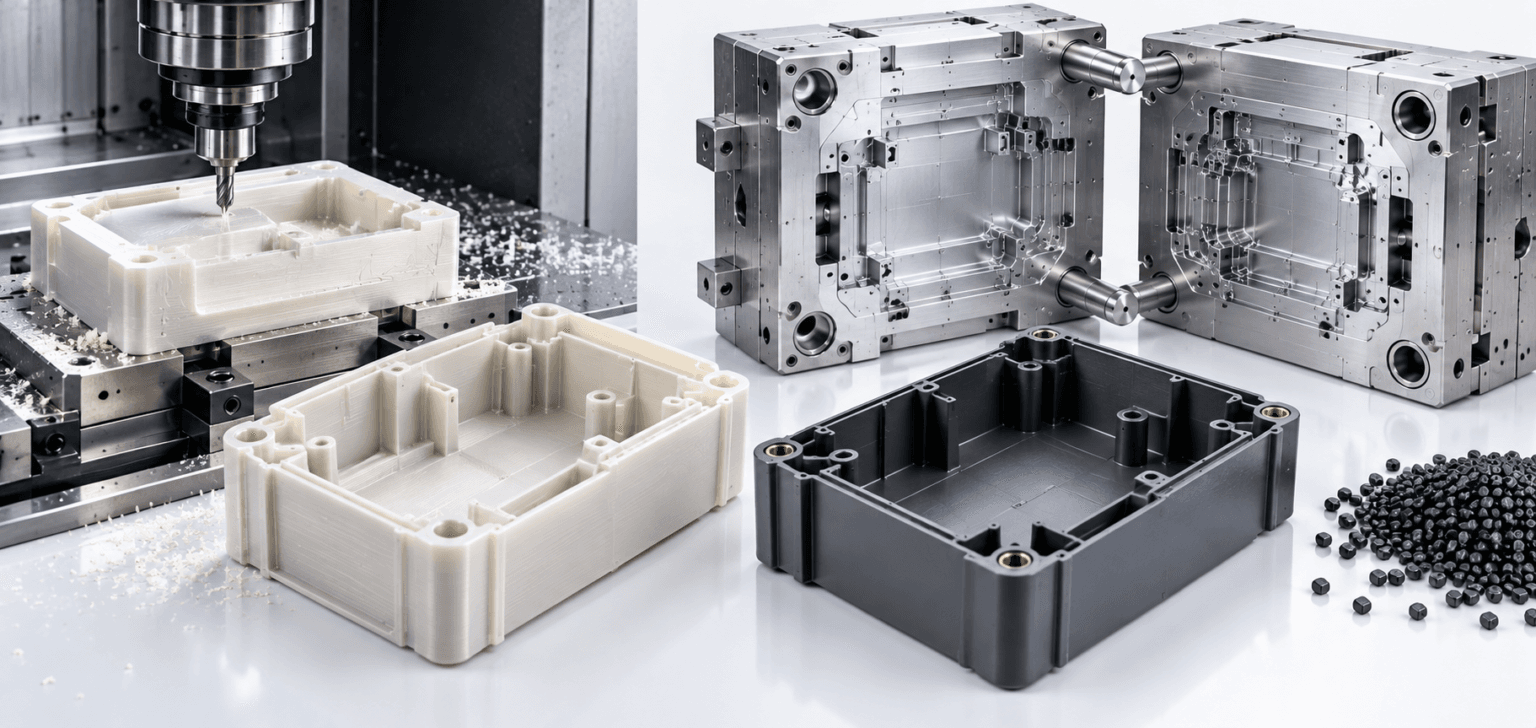

CNC Plastic Prototypes vs. Injection Molded Parts: Key Differences Engineers Should Understand
Compare CNC plastic prototypes and injection molded parts in material properties, dimensions, warpage, surface finish, geometry, cost and production performance.
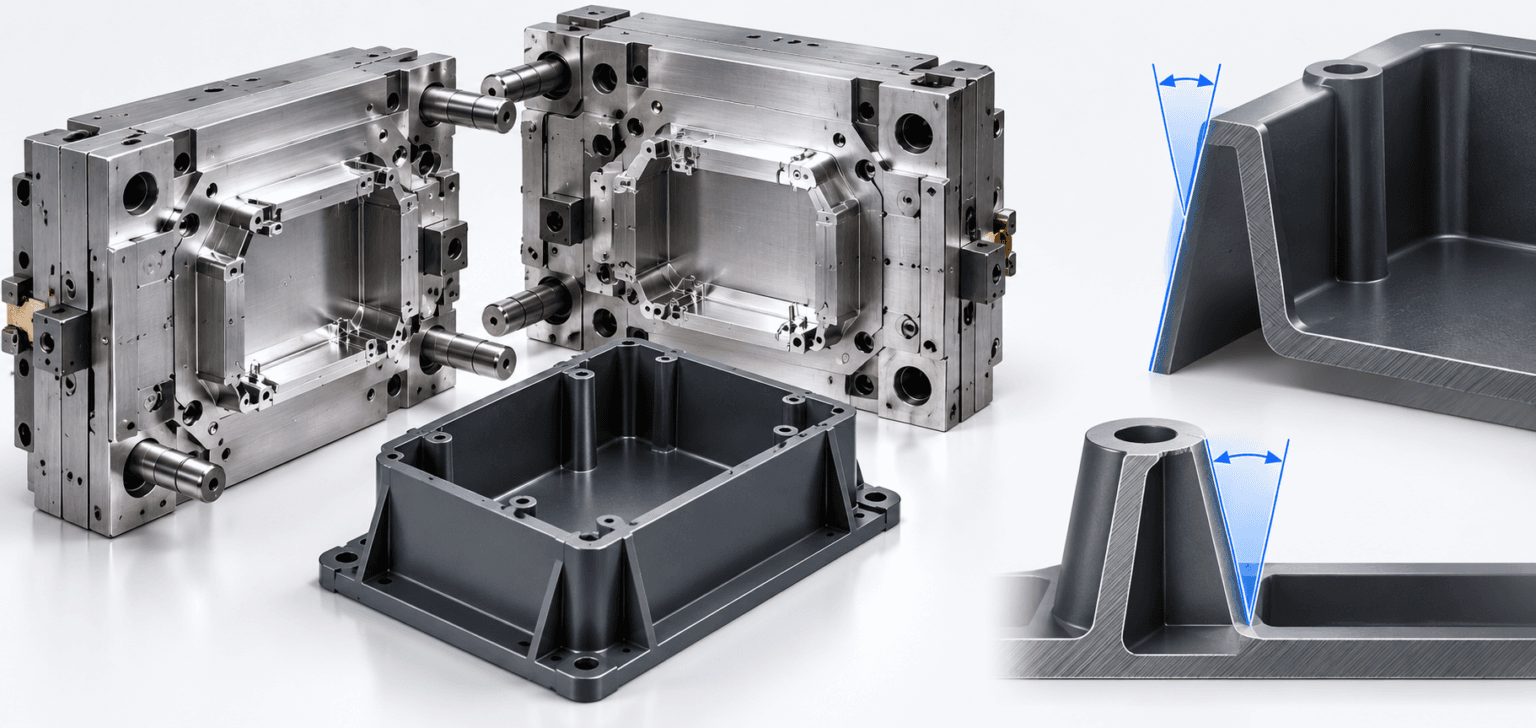
Draft Angle in Injection Mold Design: Improving Part Quality, Ejection and Tooling Efficiency
Discover how draft angles affect injection mold design, part ejection, surface texture, dimensional accuracy, ribs, bosses and long-term tooling performance.
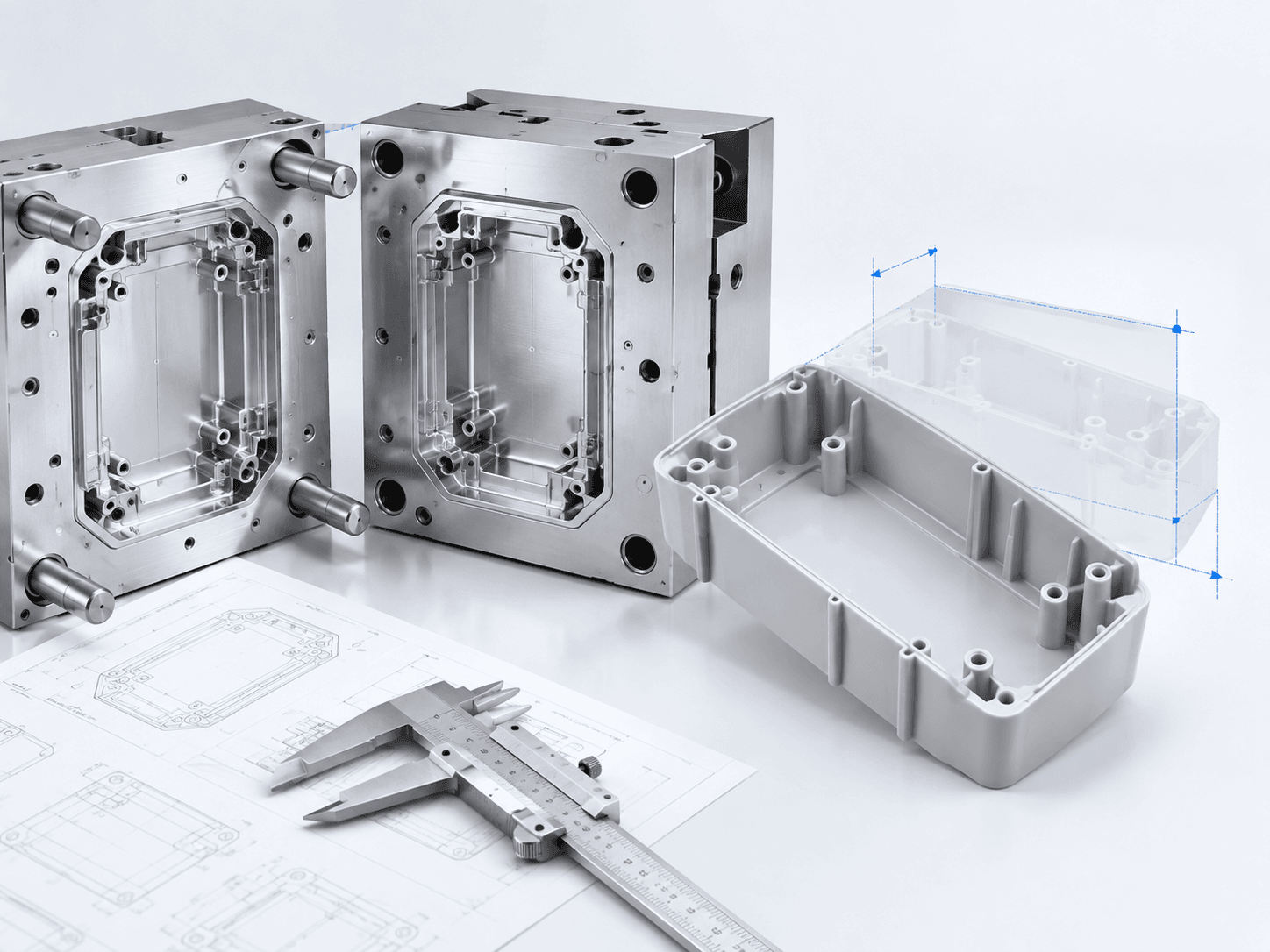
Injection Molding Shrinkage: How to Control Part Dimensions from Mold Design to Production
Learn how injection molding shrinkage affects mold dimensions, tolerances and warpage, and how material, gate design, packing, cooling and mold trials help control final plastic part dimensions.