
Machinery Injection Molding: Applications, Materials, Mold Design, and Manufacturing Solutions
Введение
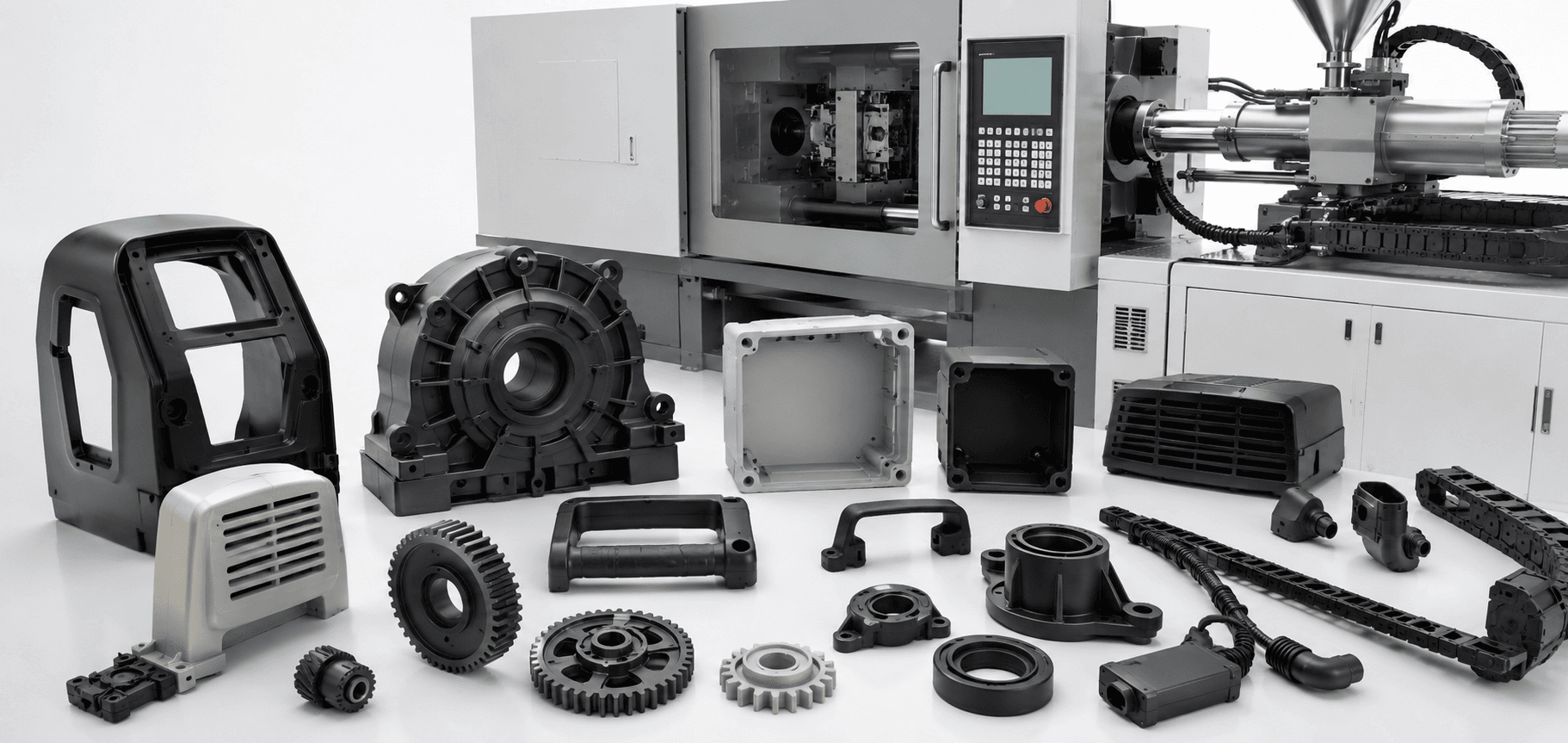
Литье пластмасс под давлением has become an important manufacturing technology in the machinery industry. Modern industrial equipment contains far more plastic components than simple decorative covers. Engineering thermoplastics are now used for gears, bearings, machine guards, electrical housings, handles, sensor enclosures, conveyor components, cable-management parts, fluid-system components, and precision mechanical assemblies.
The main advantages are not limited to lower weight. Injection molding allows manufacturers to integrate ribs, bosses, clips, bearing seats, cable guides, sealing grooves, threads, and mounting features into a single component. For sufficiently high production volumes, this can reduce secondary machining and assembly operations while providing highly repeatable geometry.
Materials such as POM, PA66-GF, PBT, PC/ABS, PPS, and specialized wear-resistant polymers allow plastic parts to serve increasingly demanding mechanical applications. BASF, for example, identifies injection molding as a major processing method for POM and describes applications including technically stressed components such as bearings and gears.
However, successful machinery injection molding requires careful consideration of loads, wear, temperature, chemicals, dimensional tolerances, safety, and long-term operating conditions.
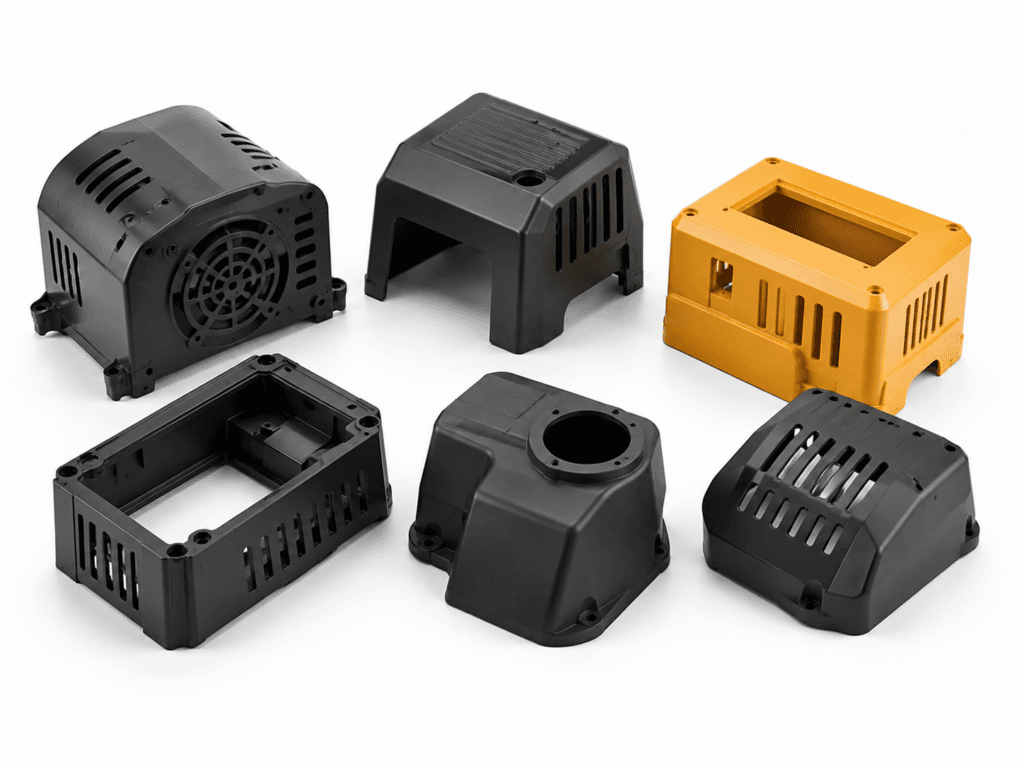
1. Machine Guards, Covers, and Protective Housings
Industrial machines frequently require covers and guards to protect internal mechanisms, electrical components, operators, and surrounding equipment.
Typical injection molded components include:
- Motor covers
- Gearbox protective covers
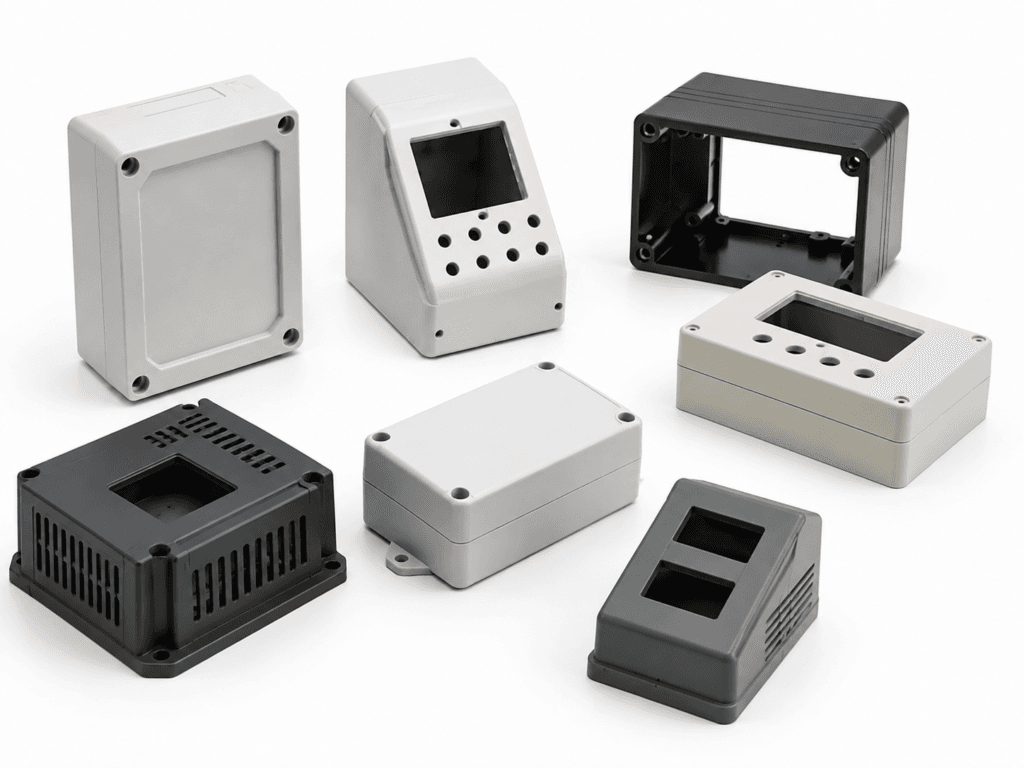
- Control-panel housings
- Machine side covers
- Belt and pulley guards
- Sensor covers
- Electrical junction housings
- Inspection covers
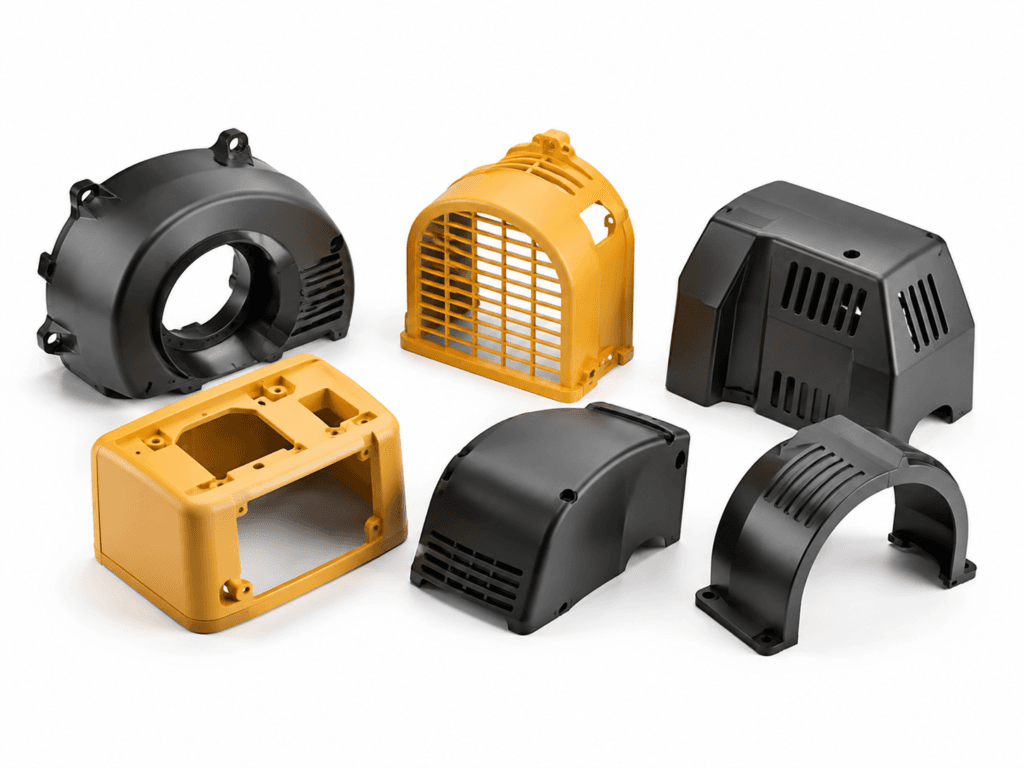
Compared with fabricated sheet-metal covers, molded plastics can provide complex integrated geometry, electrical insulation, corrosion resistance, lower weight, and greater freedom in industrial design.
Large machinery covers require particular attention to stiffness and warpage. Instead of simply increasing wall thickness, engineers can use ribs, curved surfaces, edge flanges, and reinforced mounting points to improve rigidity.
Machinery safety must always be addressed at the system level. ISO 12100 provides general principles and methodology for machinery risk assessment and risk reduction rather than treating the enclosure material itself as a complete safety solution.
2. Plastic Gears and Transmission Components
One of the most technically interesting uses of injection molding in machinery is the production of gears and transmission components.
Applications may include:
- Spur gears
- Worm gears
- Bevel gears
- Gear racks
- Timing components
- Small transmission mechanisms
- Adjustment systems
- Actuator components
Engineering polymers can offer lower weight, corrosion resistance, reduced operating noise, and the potential for dry-running designs in appropriately engineered applications. Commercial polymer gear systems are available in injection molded configurations for high-volume production.
POM is particularly important in precision mechanical applications because of its dimensional stability, stiffness, low friction, and wear characteristics. BASF notes that complex POM components can be economically mass-produced by injection molding.
However, plastic gears are not automatically replacements for metal gears. Torque, temperature, speed, tooth loading, creep, lubrication conditions, and expected service life must all be considered during material and geometry selection.
Gear Material Considerations
| Материал | Key Advantage | Типичное приложение |
|---|---|---|
| POM | Low friction, dimensional stability | Precision gears |
| PA66 | Toughness and wear resistance | Mechanical gears |
| PA66-GF | High stiffness | Structural transmission parts |
| PPS | Heat and chemical resistance | High-temperature mechanisms |
| Wear-Modified Polymers | Reduced friction | Dry-running applications |
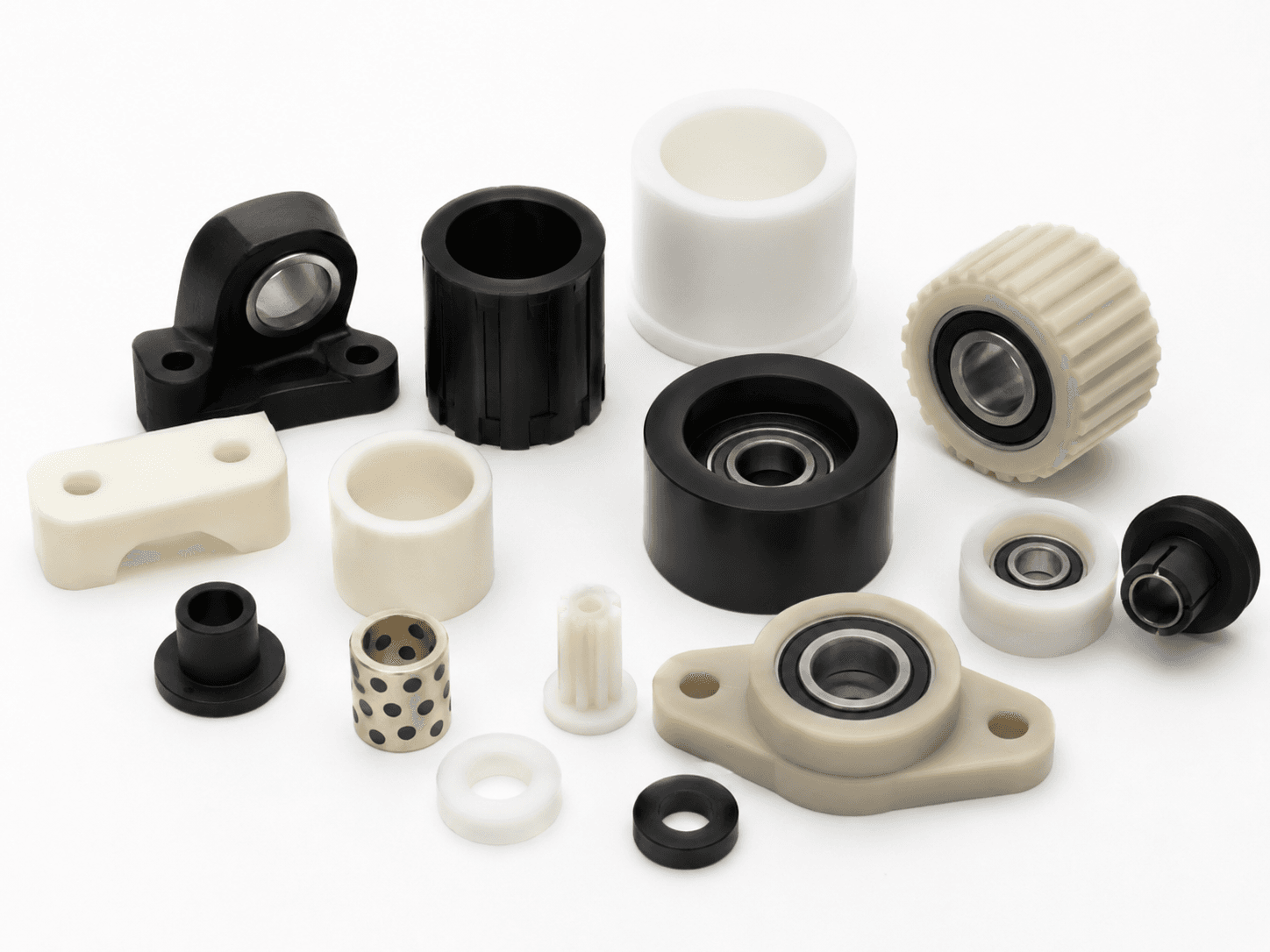
3. Bearings, Bushings, and Wear Components
Plastic bearings and bushings are widely used where reduced maintenance, corrosion resistance, low weight, or lubricant-free operation is desirable.
Typical machinery applications include:
- Plain bearings
- Bushings
- Guide sleeves
- Wear pads
- Rollers
- Sliding blocks
- Linear guides
Injection molding is particularly attractive when the geometry must include flanges, locking features, lubrication structures, or installation features that would otherwise require secondary machining.
Specialized polymer-bearing manufacturers offer custom wear parts through injection molding as well as machining and additive manufacturing, demonstrating the broad use of polymers in mechanical motion applications.
Material selection should be based on pressure, sliding speed, shaft material, operating temperature, chemical exposure, and expected wear life.
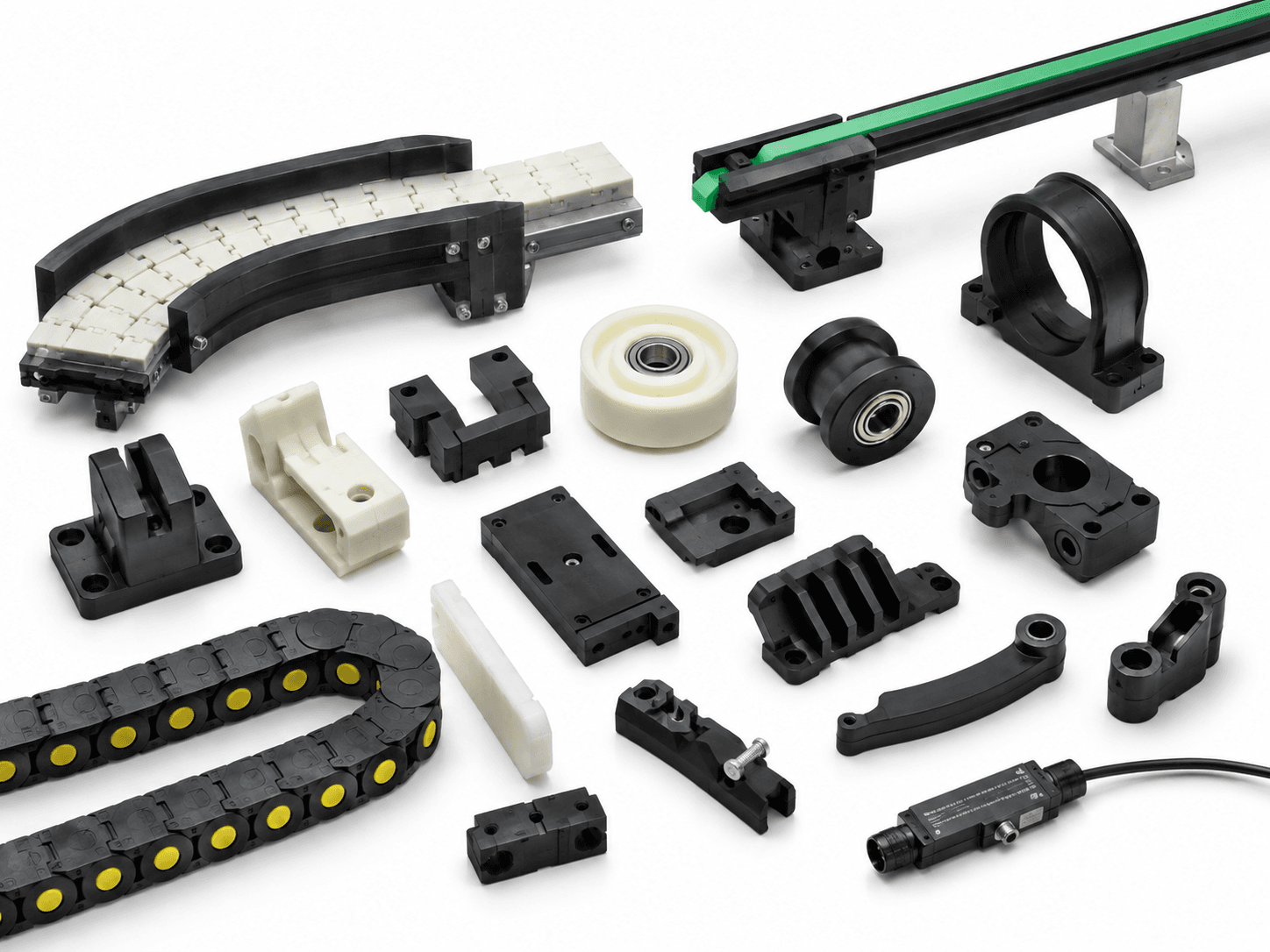
4. Automation and Conveyor System Components
Automated production lines contain many injection molded components that operate continuously.
Applications include:
- Conveyor guides
- Chain guides
- Sensor brackets
- Robot cable supports
- End-effectors
- Adjustment knobs
- Roller components
- Positioning blocks
- Protective caps
The ability to integrate multiple functions into one molded component can simplify assembly and reduce part count.
Injection molded parts can also be designed with metal inserts, threaded inserts, or overmolded features where additional mechanical strength is required.
For high-volume automation equipment, repeatability is particularly important because dimensional variation can influence sensor positions, conveyor alignment, or assembly interfaces.
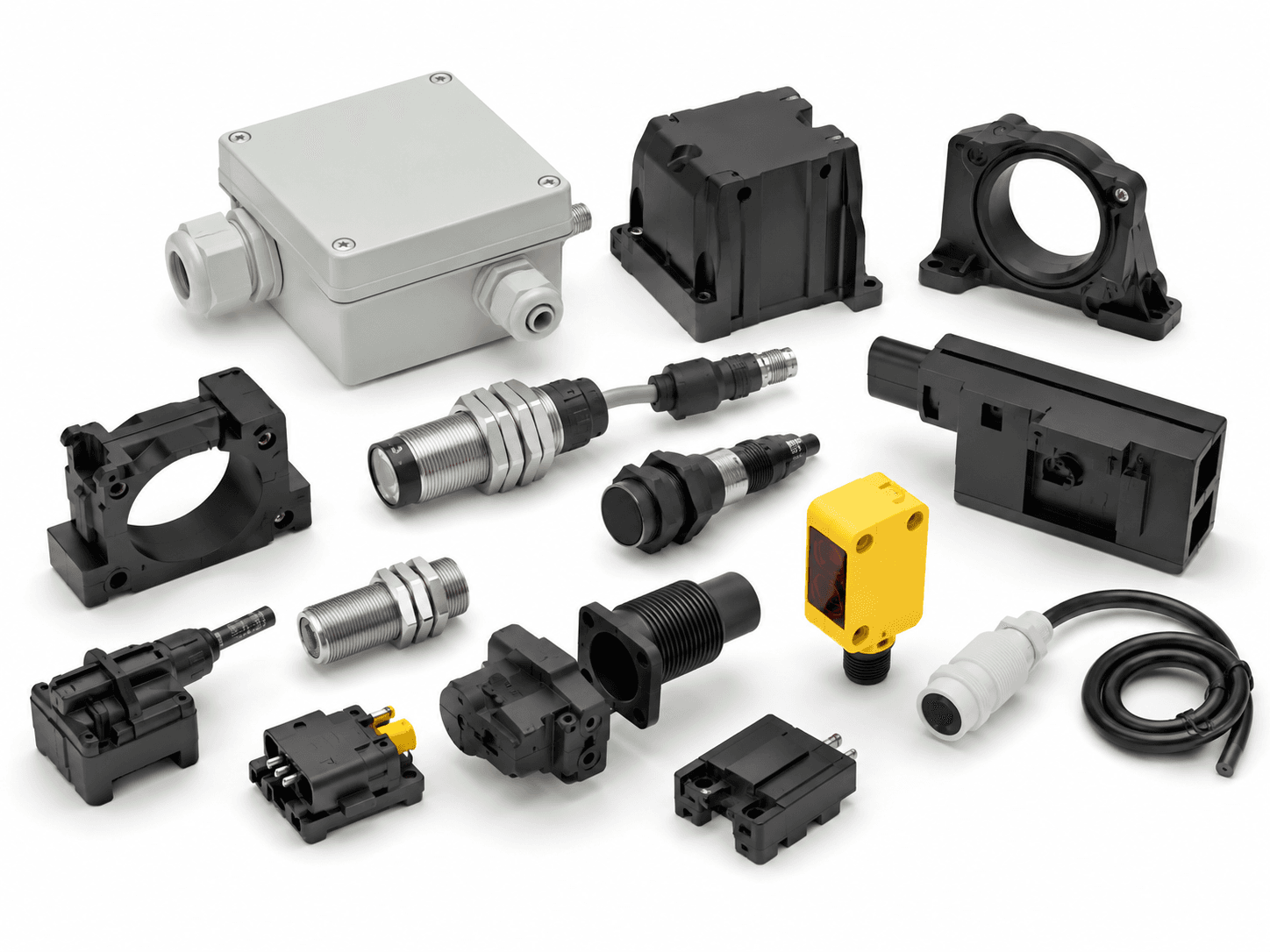
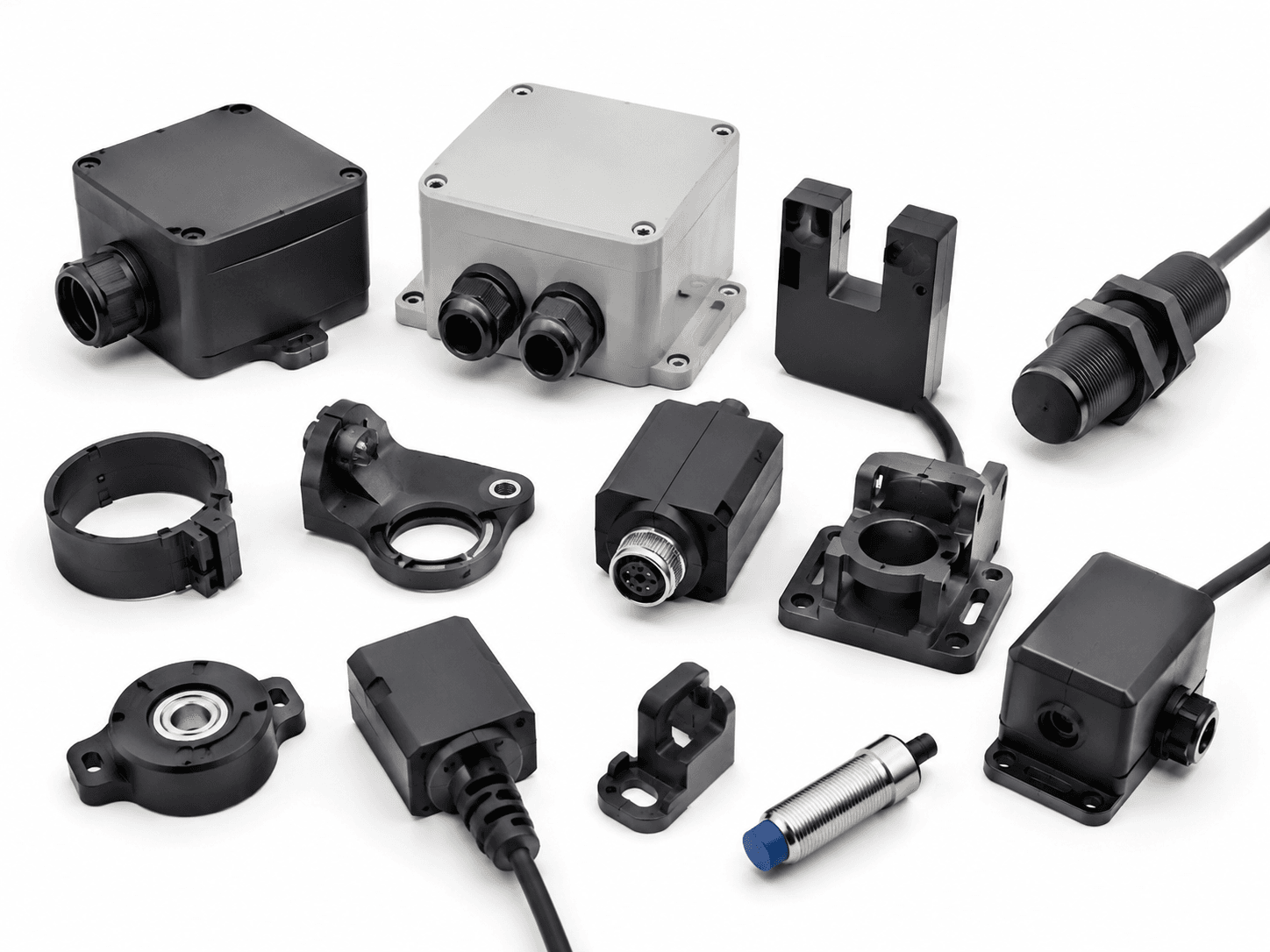
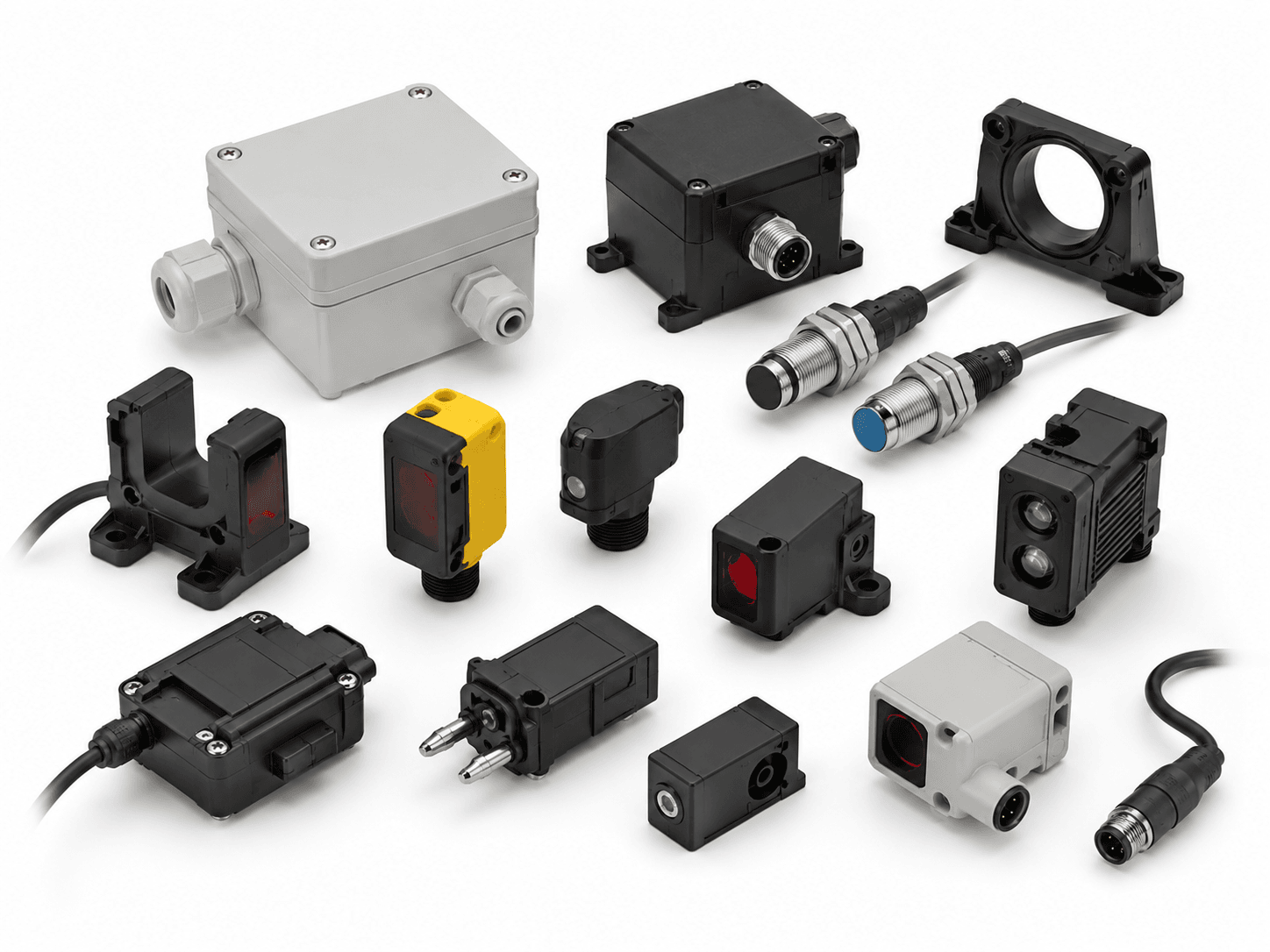
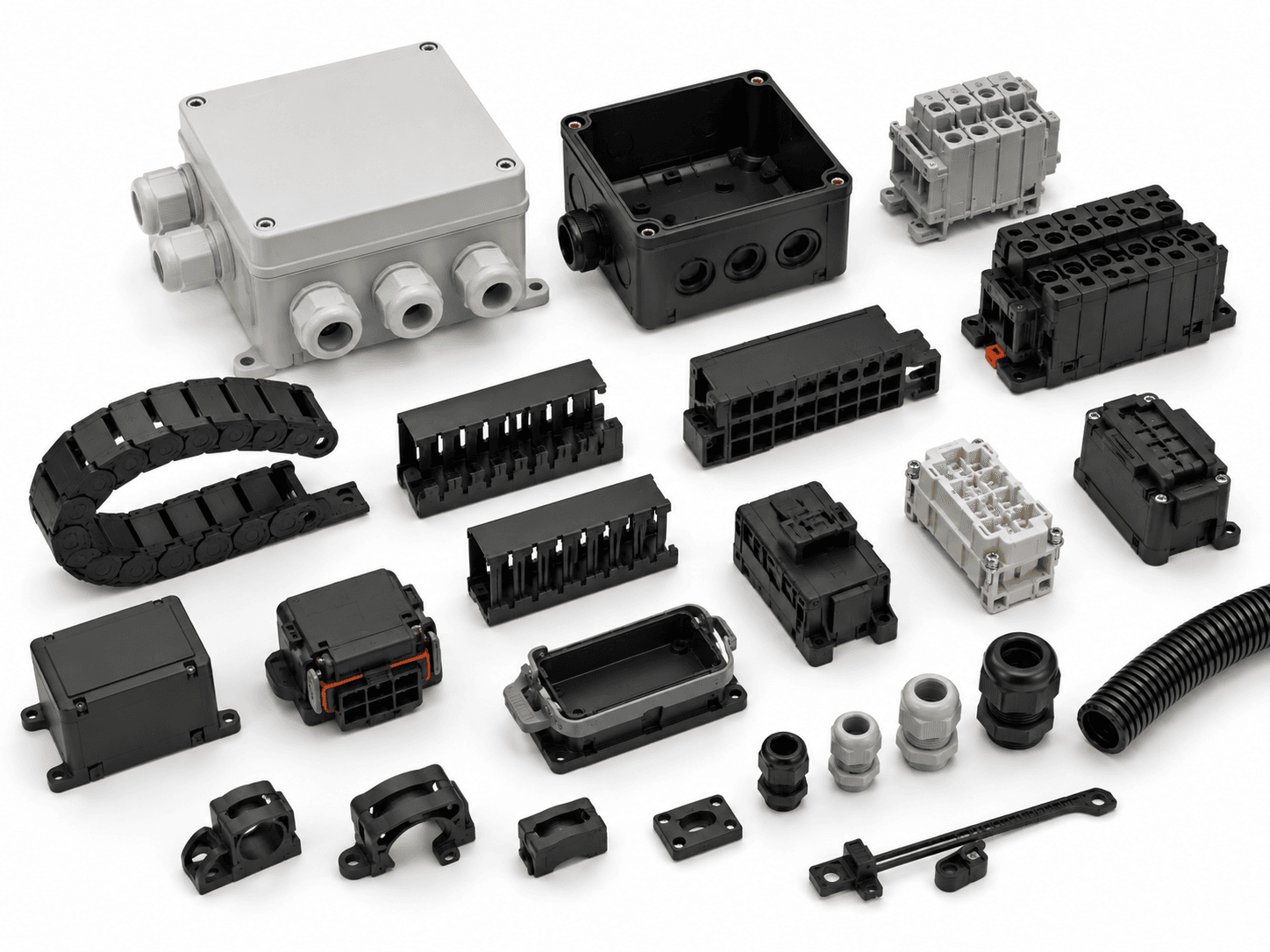
5. Electrical Control and Sensor Components
Modern machinery relies heavily on electrical and electronic control systems.
Injection molded components may include:
- Sensor housings
- PLC-related enclosures
- Terminal housings
- Switch housings
- Connector bodies
- Cable glands
- Control-panel components
- Electrical protective covers
Materials must provide suitable electrical insulation, dimensional stability, heat resistance, and, where required, flame-retardant performance.
PBT and engineering nylons are frequently used for electrical components, while PC/ABS may be suitable for larger control housings.
Electrical systems on machinery may also fall within the scope of IEC 60204-1. The current consolidated edition, IEC 60204-1:2016+A1:2021, addresses electrical, electronic, and programmable electronic equipment and systems associated with machinery.
Electrical Machinery Components
| Компонент | Main Requirement | Potential Material |
| Connector Housing | Electrical insulation | PBT |
| Sensor Housing | Precision + durability | PA / PBT |
| Control Enclosure | Impact + appearance | PC/ABS |
| Terminal Component | Heat + electrical performance | PBT FR |
| Cable Management Part | Toughness | PA |
6. Fluid Handling and Pneumatic Components
Industrial machinery often includes water, air, oil, cooling, and pneumatic systems.
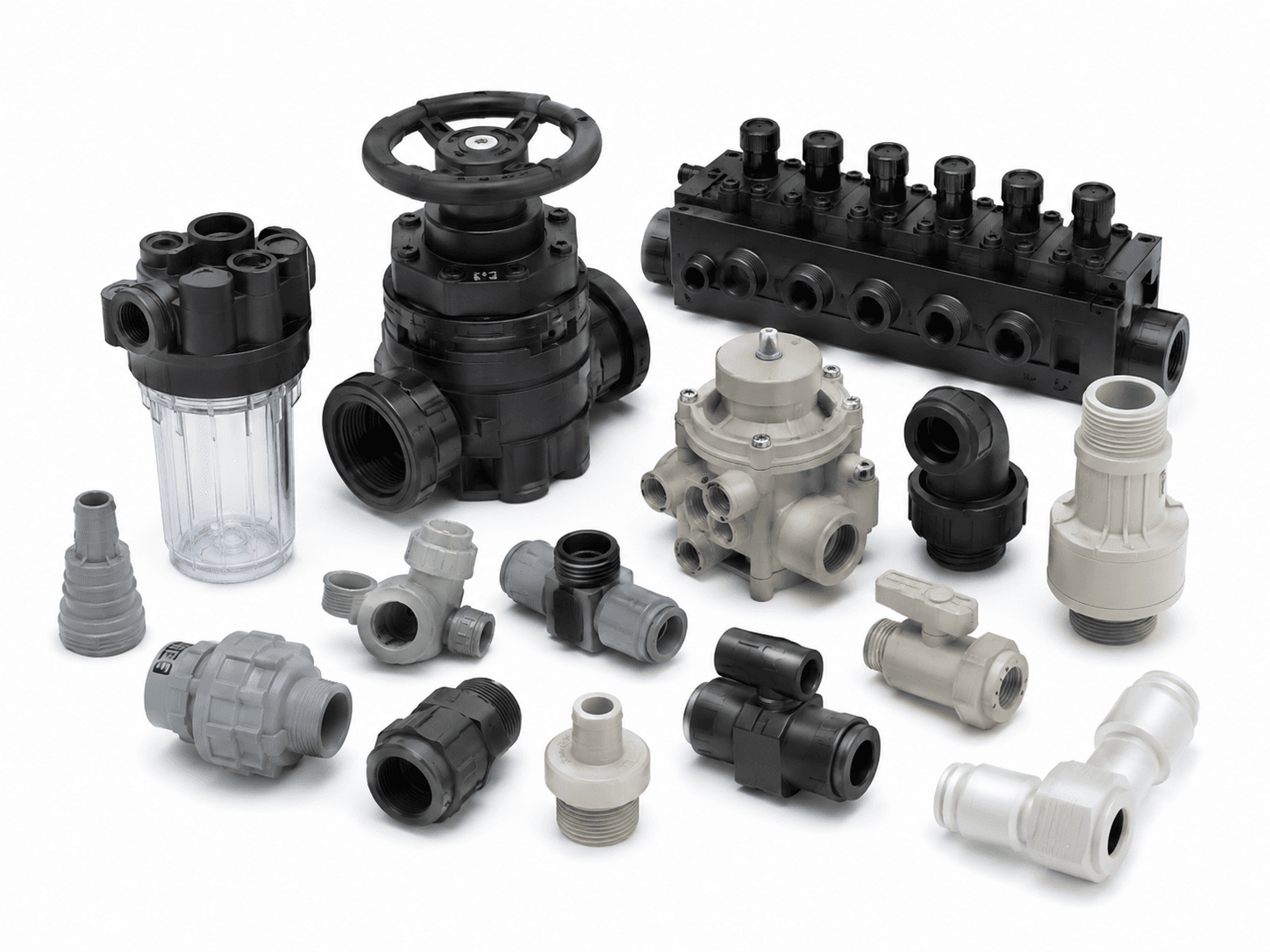
Injection molded components can include:
- Valve bodies
- Hose connectors
- Pneumatic fittings
- Manifolds
- Корпуса фильтров
- Pump components
- Protective caps
- Fluid-control knobs
Material selection must consider pressure, temperature, chemicals, creep, and sealing requirements.
POM, PA, PP, PPS, and other engineering materials may be evaluated depending on the operating environment.
For pressure-containing components, parting lines, weld lines, threads, wall thickness, and sealing surfaces require careful design because local defects can directly affect leakage performance.
7. Handles, Knobs, and Operator Interfaces
Not every machinery component requires high-temperature engineering plastics. Handles, knobs, levers, buttons, and adjustment components represent another large category of injection molded products.
Common examples include:
- Machine handles
- Hand wheels
- Adjustment knobs
- Lever grips
- Control buttons
- Locking handles
- Positioning knobs
Two-material molding or TPE overmolding can be used to create soft-touch surfaces and improve grip.
Metal threaded inserts can also be integrated where repeated tightening or higher mechanical loads are expected.
8. Engineering Plastics for Machinery Components
Machinery parts often operate under much higher loads than ordinary household plastic components.
Material selection should therefore consider mechanical properties together with the actual working environment.
| Материал | Key Properties | Typical Machinery Application |
| POM | Low friction, dimensional stability | Gears, bushings |
| PA6 / PA66 | Toughness, wear resistance | Mechanical components |
| PA66-GF | High stiffness and strength | Structural brackets |
| PBT | Electrical + dimensional performance | Connectors |
| PC/ABS | Impact resistance | Machine housings |
| PPS | High heat and chemical resistance | Demanding industrial components |
| TPE | Flexibility and grip | Handles and seals |
Thermally conductive plastics can also be considered for specialized equipment where a polymer component must contribute to thermal management. Celanese, for example, offers thermally conductive engineering plastics for applications where heat transfer is an important design requirement.
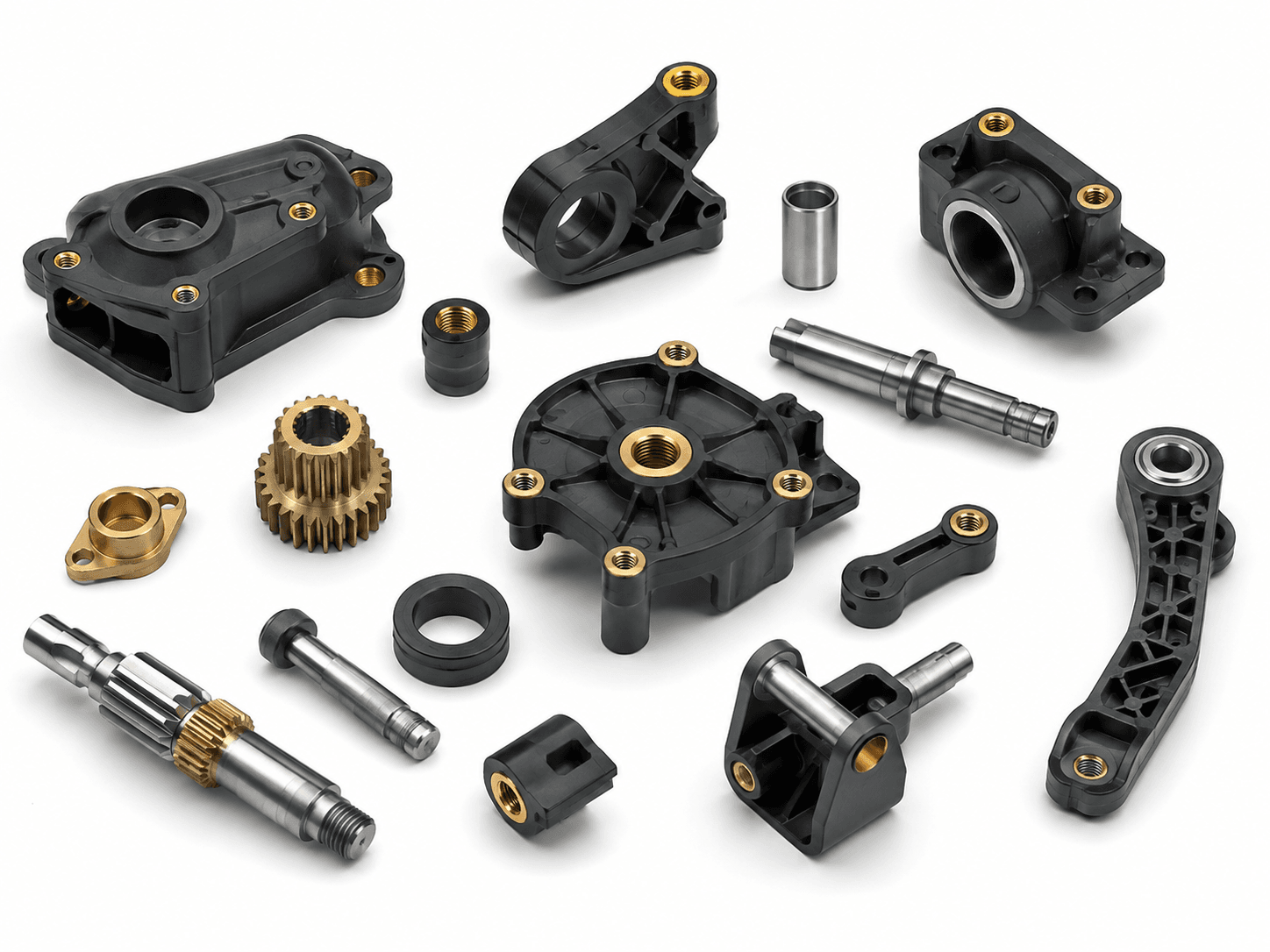
9. Insert Molding for Machinery Parts
Machinery components often combine plastic with metal.
Insert molding can integrate:
- Threaded brass inserts
- Steel shafts
- Bearing sleeves
- Electrical terminals
- Metal reinforcement
- Mounting plates
This approach can reduce secondary assembly while creating strong mechanical interfaces.
However, designers must account for differences in thermal expansion between plastic and metal. Excessive plastic thickness around an insert can also lead to sink marks or residual stress.
Insert location must be controlled accurately in the mold to maintain dimensional consistency during repeated production cycles.
10. Mold Design for Industrial Machinery Components
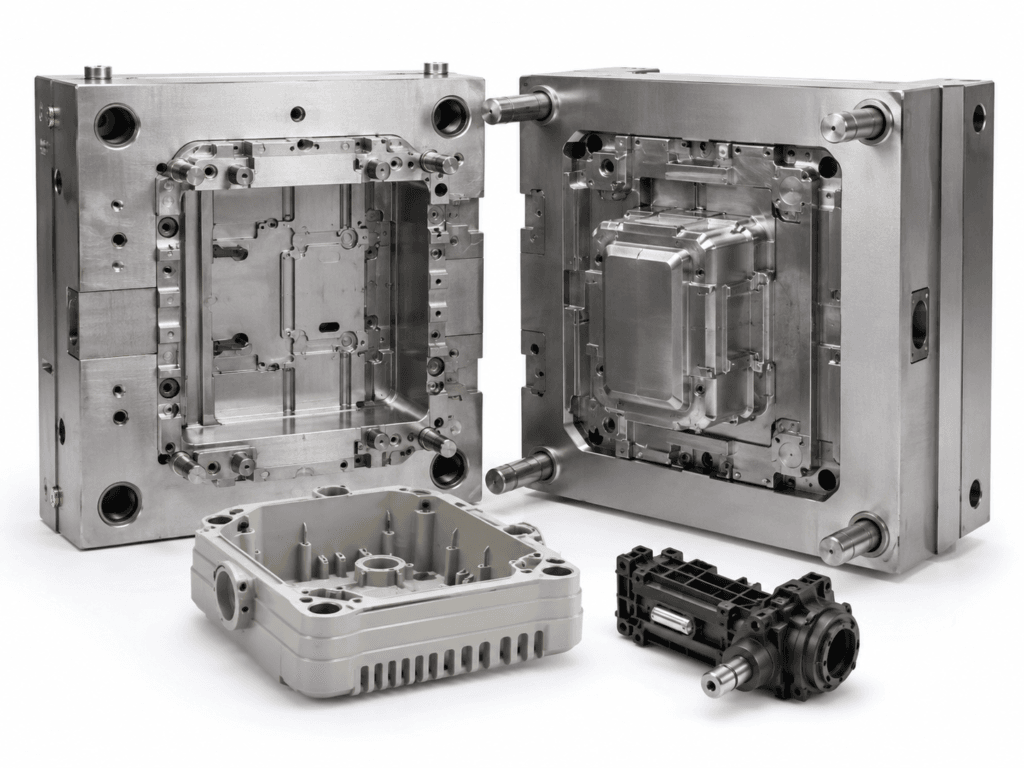
Machinery parts often require long service life and stable dimensions, making precision tooling essential.
Important mold-design considerations include:
Gate Location
Gate position affects weld lines, filling balance, fiber orientation, and dimensional accuracy.
Охлаждение
Uniform cooling helps reduce cycle time and minimize warpage.
Вентиляция
Adequate venting reduces trapped gas, burn marks, and incomplete filling.
Undercuts
Side holes, clips, grooves, and locking features may require sliders or lifters.
Reinforced Plastics
Glass-filled materials may produce anisotropic shrinkage and greater mold wear, requiring appropriate mold steel and processing strategies.
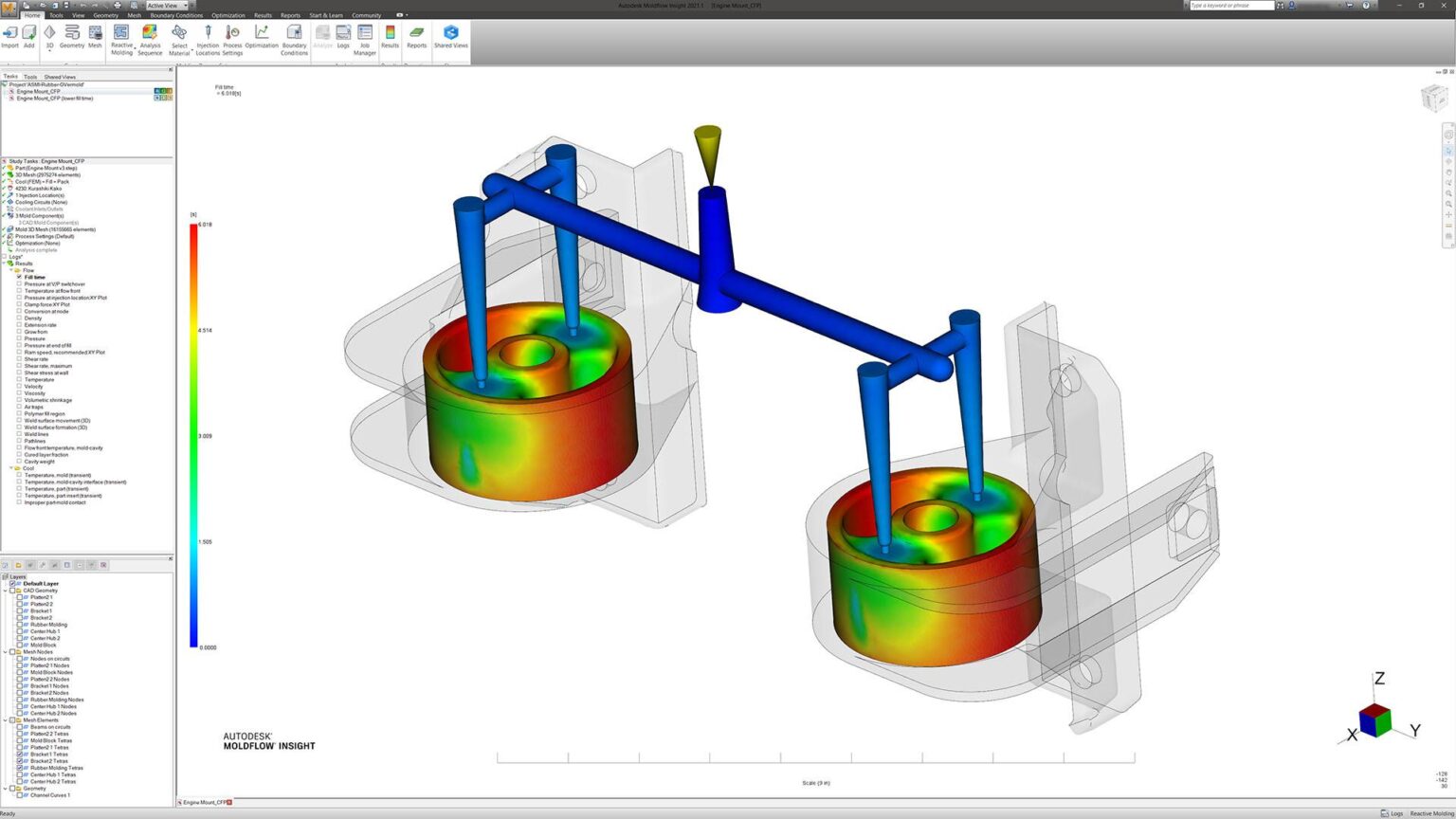
Simulation can be particularly valuable for complex machinery components. Autodesk states that Moldflow can evaluate filling, packing, cooling, warpage, material selection, and cooling-channel performance before production tooling is finalized.
11. Common Machinery Injection Molding Defects
| Defect | Possible Cause | Recommended Solution |
| Warpage | Uneven cooling or fiber orientation | Optimize gate and cooling |
| Sink Marks | Excessive local thickness | Improve ribs and bosses |
| Weld Lines | Multiple flow fronts | Optimize gate location |
| Flash | Mold wear or excessive pressure | Improve mold fit |
| Short Shot | Restricted melt flow | Optimize processing |
| Dimensional Variation | Shrinkage/process instability | Improve process control |
| Fiber Exposure | Reinforced resin/process conditions | Optimize temperature and mold surface |
BASF maintains dedicated injection-molding troubleshooting resources covering common manufacturing defects and potential corrective measures.
12. Quality Control and Machinery Safety
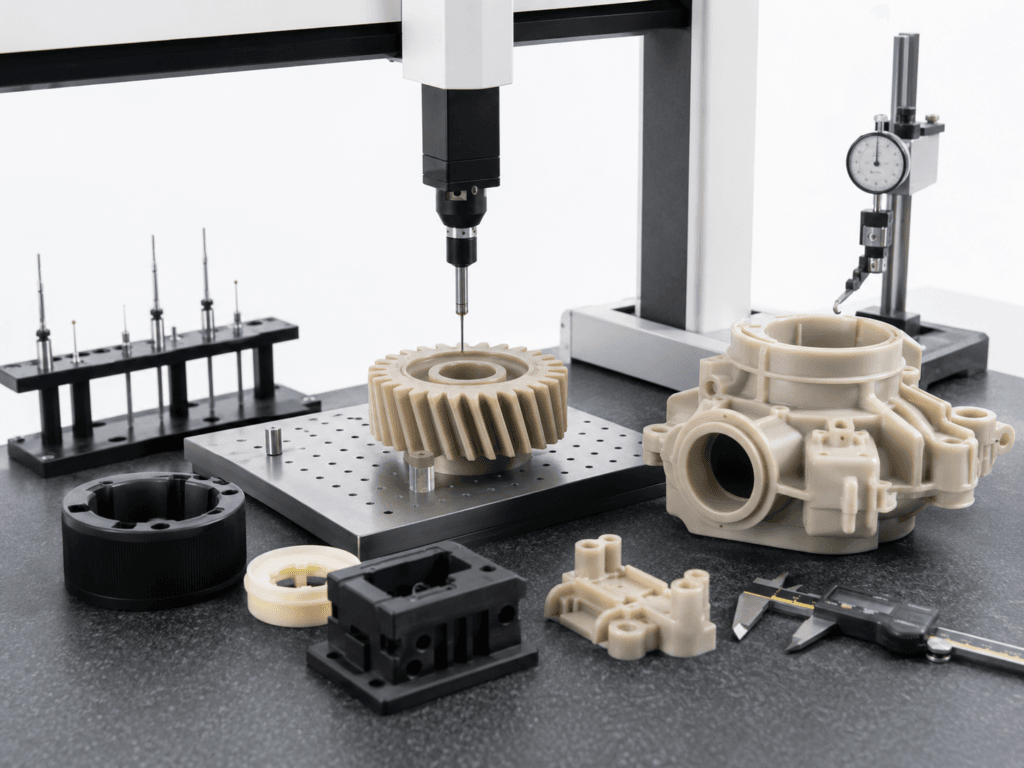
Industrial components may operate continuously for thousands of hours, so dimensional and functional validation should reflect actual service conditions.
Common inspection methods include:
- CMM dimensional inspection
- Gear profile inspection
- Go/No-Go gauges
- Torque testing
- Load testing
- Wear testing
- Thermal aging
- Chemical resistance testing
- Assembly testing
- Functional cycle testing
Where a molded component performs a safety-related function, its design must be evaluated as part of the complete machine risk-reduction strategy. ISO 12100 provides the overall framework for machinery design risk assessment and reduction.
Why Choose Samgo for Machinery Injection Molding?
Industrial machinery components require more than cosmetic molding. Mechanical loads, dimensional tolerances, wear, temperature, and long-term production stability must be considered from the beginning.
Samgo supports machinery plastic projects from early engineering review to tooling and mass production.
| Capability | Польза для клиента |
| Product Design Review | Improve manufacturability |
| Анализ технологичности (DFM) | Identify tooling risks |
| Material Selection Support | Match resin to operating conditions |
| Моделирование методом Moldflow | Optimize filling and warpage |
| Производство прецизионных пресс-форм | Improve dimensional stability |
| Литье с закладными элементами | Integrate metal and plastic |
| Quality Inspection | Verify mechanical requirements |
Applications can include industrial equipment housings, gears, bearings, automation components, sensor housings, electrical parts, fluid-system components, handles, and other custom machinery plastic parts.
Frequently Asked Questions
Can injection molded plastic parts replace metal machinery components?
In selected applications, yes. Gears, bushings, covers, brackets, guides, and other components can sometimes be converted from metal to engineering plastics. Load, temperature, wear, creep, and safety requirements must be evaluated before making the change.
Which plastic is best for machinery gears?
POM and engineering nylons are common candidates because of their mechanical and wear characteristics. The correct material depends on torque, speed, temperature, lubrication, and service life.
Why use glass-fiber-reinforced nylon in machinery?
Glass reinforcement can significantly improve stiffness, mechanical strength, and dimensional performance, making reinforced nylon suitable for structural brackets and mechanical components.
Is Moldflow useful for machinery components?
Yes. It can help evaluate filling, fiber orientation, cooling, shrinkage, weld lines, and warpage before mold manufacturing, particularly for reinforced or dimensionally critical parts.
Conclusion
Injection molding is increasingly important in the machinery industry because engineering plastics can perform structural, mechanical, electrical, protective, and motion-control functions within modern equipment.
Applications range from machine guards and electrical housings to gears, bearings, conveyor components, sensor enclosures, fluid-system parts, handles, and precision mechanisms.
The greatest value often comes from integrating functions. A properly designed molded component can combine ribs, bearing locations, cable guides, snap fits, mounting bosses, threads, and protective structures into a single part, reducing assembly complexity and supporting high-volume manufacturing.
However, machinery applications place demanding requirements on plastics. Wear, temperature, dimensional stability, chemical exposure, vibration, mechanical loading, and long service life must all be considered.
Through proper material selection, DFM analysis, Moldflow simulation, precision mold manufacturing, insert molding, controlled production, and functional validation, injection molded engineering plastic components can provide reliable and cost-effective solutions for a wide range of industrial machinery applications.
Узнать актуальную цену? Мы ответим как можно скорее (в течение 12 часов)
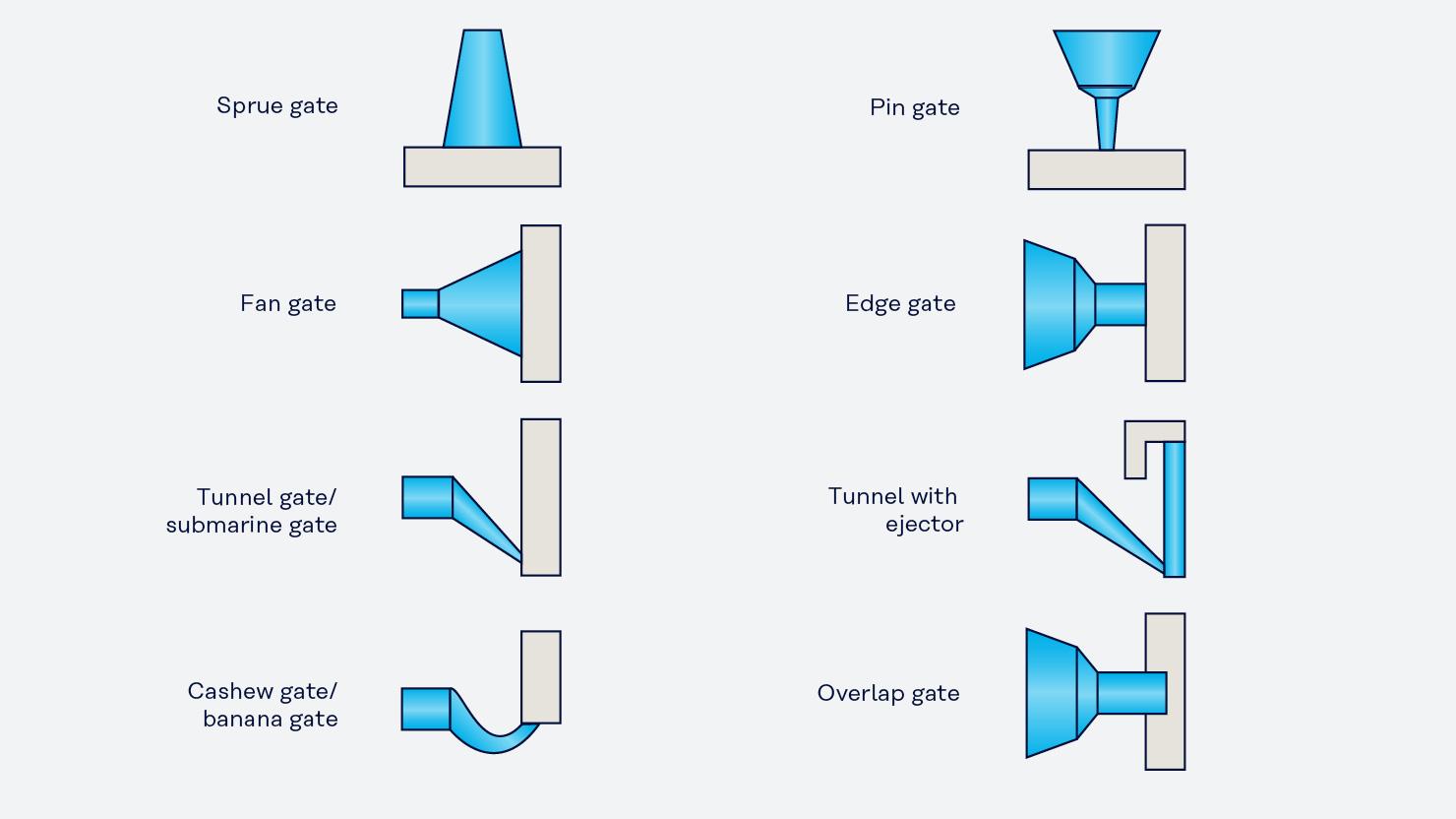
Типы литников для литья пластмасс под давлением: выбор, принципы проектирования, преимущества и области применения
Конструкция впускного литника — один из наиболее критических аспектов проектирования пресс-форм для литья пластмасс под давлением. Несмотря на то, что литник обычно является наименьшим элементом литниковой системы, он оказывает существенное влияние на течь расплава, давление выдержки, эффективность охлаждения, внешний вид детали, время цикла и общее качество продукта.
Плохо спроектированный литник может стать причиной многочисленных дефектов литья, включая недолив, утяжины, линии спая, струйное течение, следы ожогов, избыточный литниковый остаток и коробление детали. И наоборот, выбор подходящего типа и расположения литника помогает обеспечить сбалансированное заполнение, стабильную точность размеров и эффективное производство.
Материалы из полипропилена (ПП): виды, марки, свойства и применение
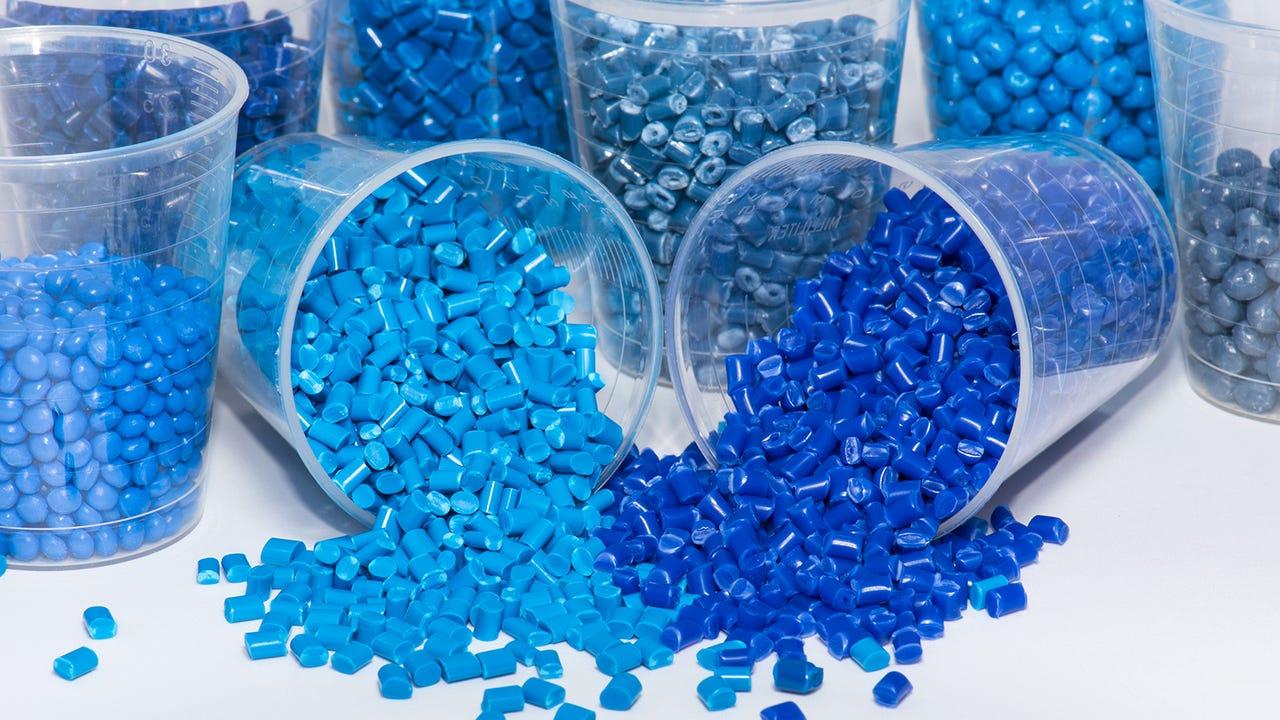
Полипропилен (ПП) является одним из самых широко используемых термопластов в мире, на долю которого приходится значительная часть мирового производства пластика. Благодаря прекрасному балансу механических свойств, химической стойкости, легкости и экономической эффективности, ПП стал предпочтительным материалом для бесчисленных изделий, получаемых методом литья под давлением, в автомобильной, бытовой, медицинской, упаковочной, электротехнической и промышленной отраслях.
Современный полипропилен выпускается во множестве различных марок и рецептур. Производители могут выбирать между гомополимером ПП, статичным сополимером ПП, блок-сополимером ПП, армированным стекловолокном ПП, наполненным минералами ПП, огнестойким ПП, УФ-стабилизированным ПП и пищевым ПП в зависимости от требований к изделию.
Анализ течения расплава при литье под давлением: Полное руководство по симуляции Moldflow для пластиковых деталей
В современной разработке пластиковых изделий производство пресс-форм больше не опирается исключительно на инженерный опыт. Компьютерное проектирование (CAE) стало неотъемлемой частью процесса литья под давлением, позволяя инженерам прогнозировать потенциальные дефекты формования до изготовления пресс-формы. Среди этих технологий анализ течения расплава при литье под давлением, часто называемый анализом Moldflow, является одним из наиболее ценных инженерных инструментов для снижения рисков разработки, сокращения сроков выполнения заказов и повышения качества деталей.