
Table of Contents

Introduction

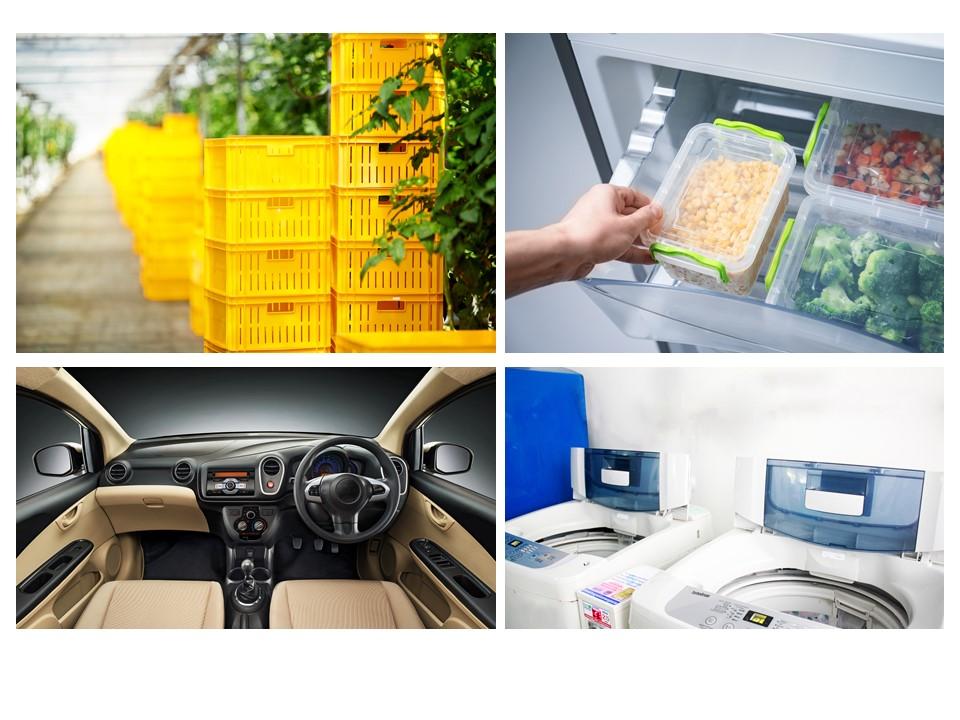
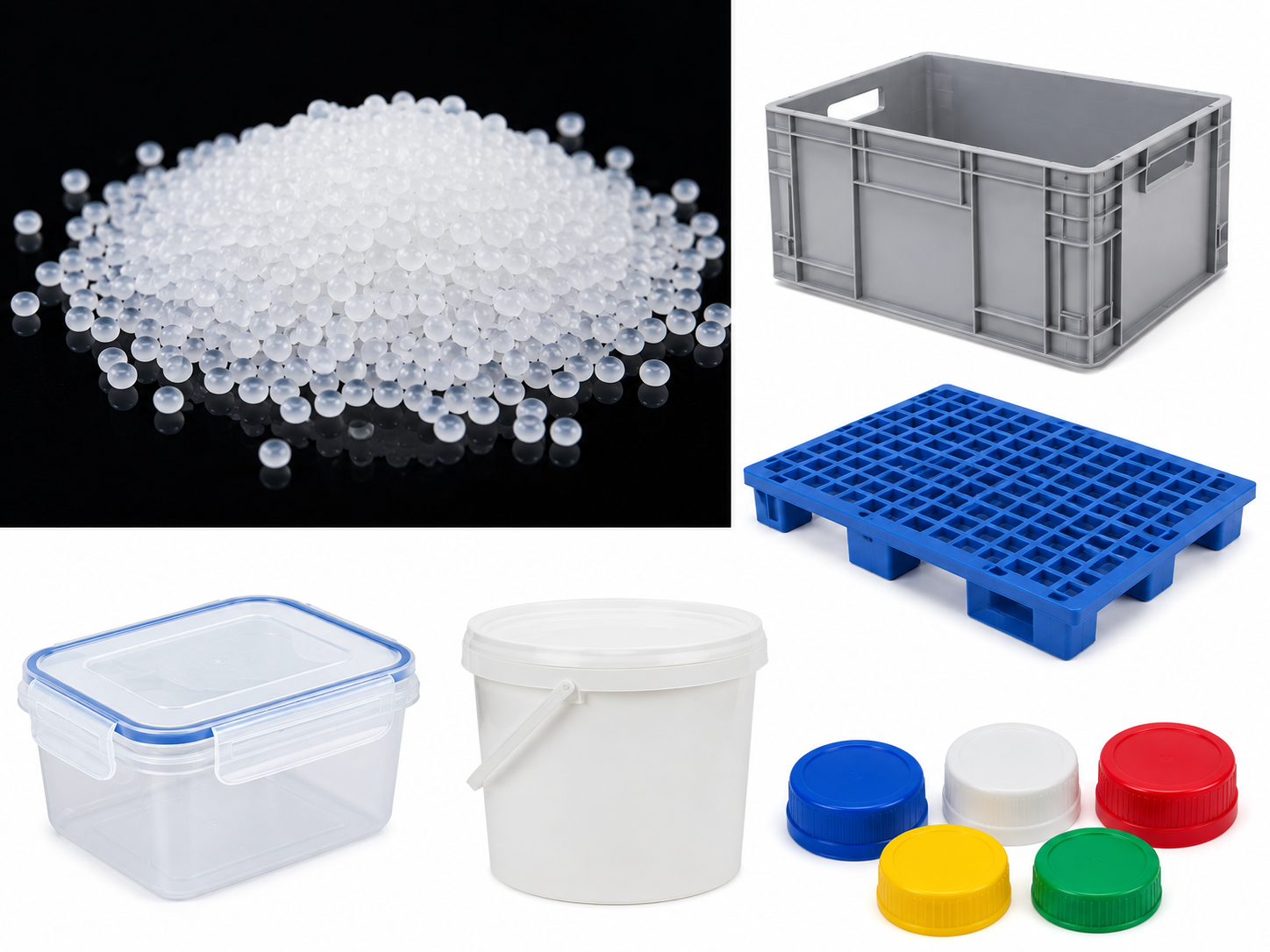
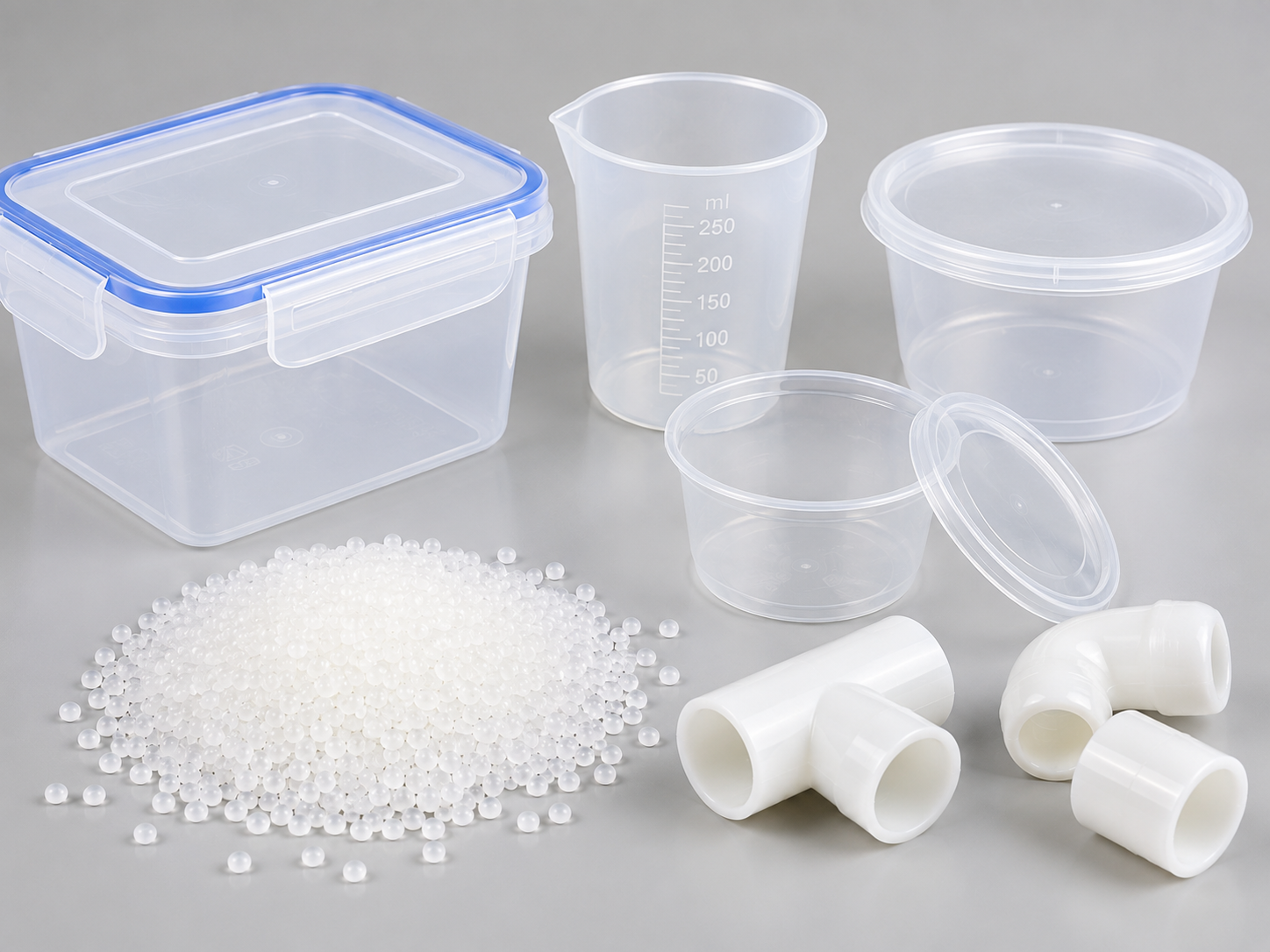
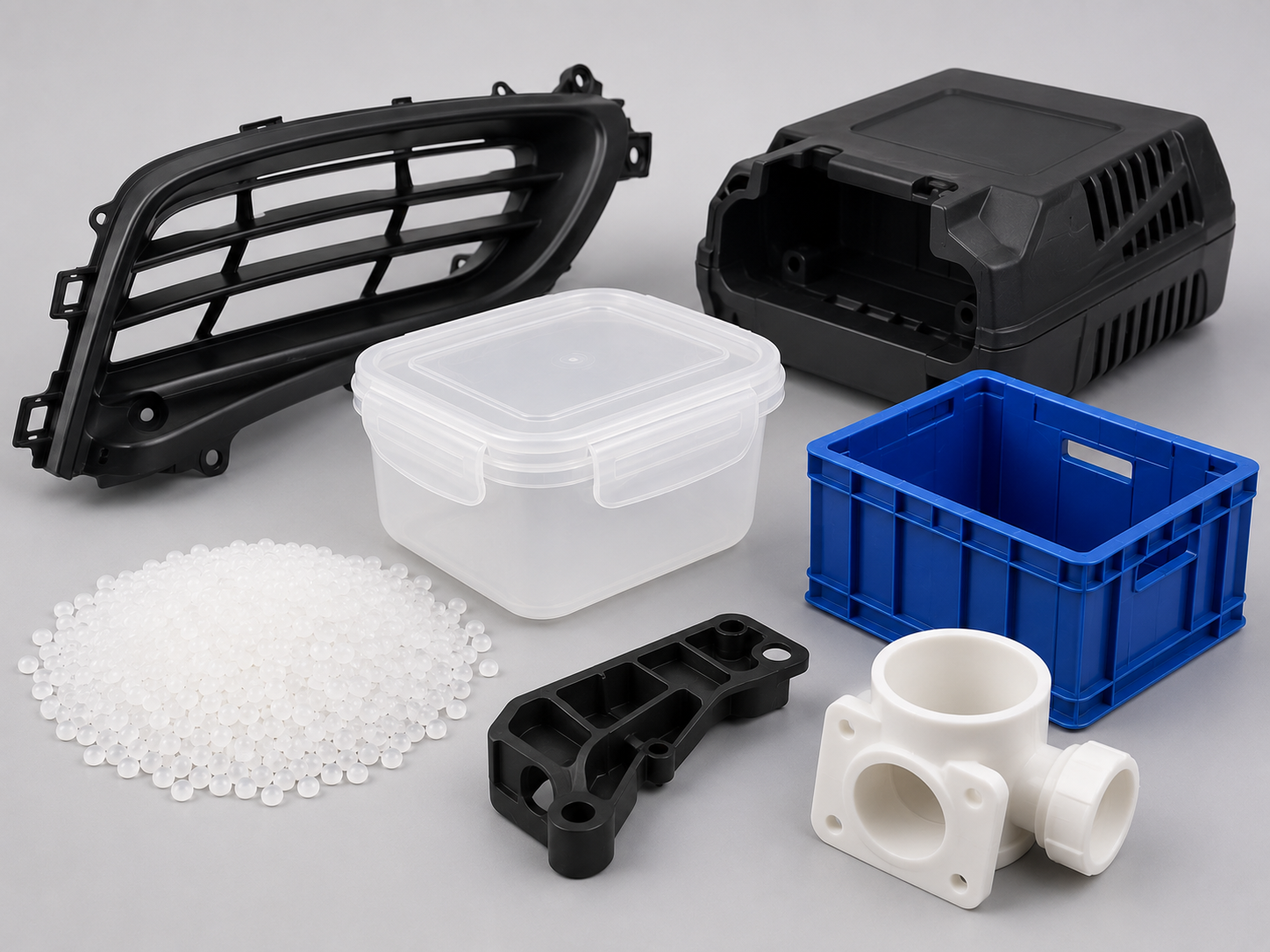
Polypropylene (PP) is one of the world’s most widely used thermoplastics, accounting for a significant share of global plastic production. Thanks to its excellent balance of mechanical properties, chemical resistance, lightweight characteristics, and cost-effectiveness, PP has become the preferred material for countless injection molded products across automotive, household, medical, packaging, electrical, and industrial applications.

Modern polypropylene is available in many different grades and formulations. Manufacturers can choose from homopolymer PP, random copolymer PP, impact copolymer PP, glass fiber reinforced PP, mineral-filled PP, flame-retardant PP, UV-stabilized PP, and food-grade PP depending on product requirements.

Selecting the correct PP grade is critical because each formulation offers different stiffness, impact resistance, dimensional stability, processing characteristics, and environmental performance. A well-selected material can improve product quality, reduce manufacturing costs, and extend service life.

At Samgo, we assist customers in selecting the most appropriate polypropylene material during product development. By combining material selection, DFM analysis, Moldflow simulation, precision mold manufacturing, and injection molding expertise, we help ensure optimal product performance and efficient production.

This guide explains the major types of polypropylene, common commercial grades, mechanical properties, injection molding considerations, and industry applications.

Send an inquiry

Why Polypropylene Is So Popular

Polypropylene offers one of the best cost-to-performance ratios among engineering thermoplastics.

Key Advantages

  • Low density (approximately 0.90 g/cm³)
  • Excellent chemical resistance
  • Good fatigue resistance
  • High production efficiency
  • Easy injection molding
  • Excellent living hinge performance
  • Low material cost
  • Recyclable material

These advantages make PP an ideal choice for high-volume manufacturing.


Property Overview

PropertyTypical Value
Density0.90–0.91 g/cm³
Water AbsorptionVery Low
Chemical ResistanceExcellent
Impact ResistanceGood (Copolymer grades)
Heat ResistanceUp to 100–120°C (continuous service, depending on grade)
CostLow

Types of Polypropylene

Polypropylene is not a single material. Different molecular structures provide different performance characteristics.

1. PP Homopolymer (PP-H)

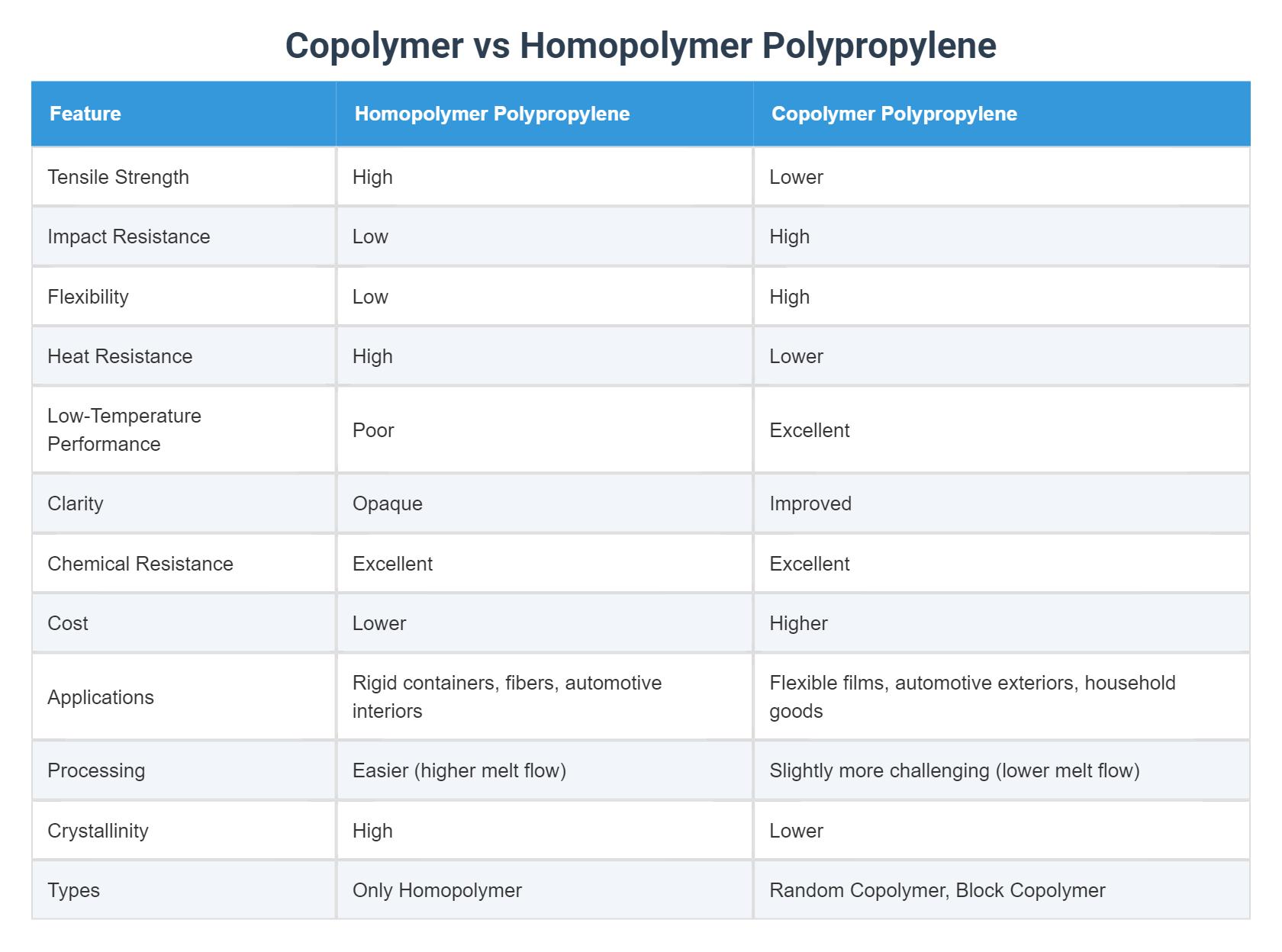
PP Homopolymer provides high stiffness, good chemical resistance, and excellent processability.

Typical Applications

  • Food containers
  • Storage boxes
  • Industrial housings
  • Battery cases

2. Random Copolymer PP (PP-R)

Random copolymer PP offers improved transparency and impact resistance.

Typical products include:

  • Medical containers
  • Water pipe systems
  • Household products
  • Cosmetic packaging

3. Impact Copolymer PP (PP-B)

Impact copolymer contains an ethylene phase that greatly improves impact performance, particularly at low temperatures.

Typical applications:

  • Automotive bumpers
  • Power tool housings
  • Outdoor products
  • Industrial containers

Comparison Table

PP TypeStiffnessImpact StrengthTransparencyTypical Use
HomopolymerExcellentModerateLowIndustrial parts
Random CopolymerGoodGoodExcellentMedical & packaging
Impact CopolymerModerateExcellentLowAutomotive & outdoor

Modified Polypropylene Grades

To meet higher engineering requirements, PP is frequently modified with reinforcements or additives.

Common Modified Grades

GradeMain BenefitTypical Application
PP GF20Increased stiffnessAppliance housings
PP GF30High strengthAutomotive components
Mineral Filled PPDimensional stabilityInterior automotive trim
Flame-Retardant PPFire safetyElectrical enclosures
UV-Stabilized PPOutdoor durabilityGarden products
Food-Grade PPRegulatory complianceFood containers

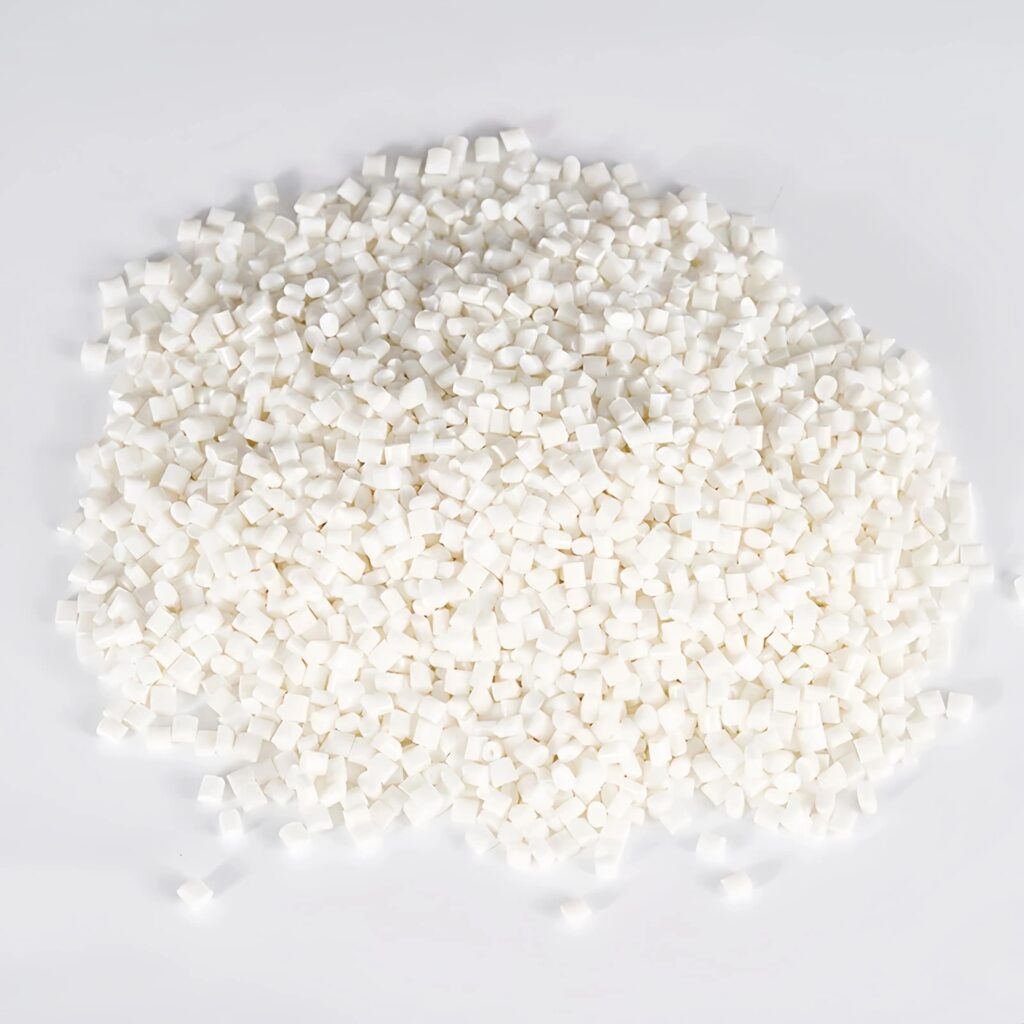
Polymer Plastic Granules Polypropylene with Mineral Filled PP Td20 Pellets - PP+Td20 and PP Td20 Plastic ResinFábrica y fabricante de polipropileno reforzado con fibra de vidrio (GF 30 %), materia prima de fibra de vidrio PP, al por mayor | Kingoda

Common Commercial PP Grades

Different resin manufacturers provide polypropylene under various trade names and grade numbers.

ManufacturerExample GradesTypical Features
BorealisBB seriesAutomotive & packaging
LyondellBasellMoplen seriesGeneral-purpose injection molding
SABICPP seriesConsumer and industrial applications
ExxonMobilAchieve™ PPHigh-performance impact grades
SinopecT30S, K8003Commodity and industrial injection molding
CNPCEP548R, EPS30RGeneral injection molding

Note: Material availability varies by region, and equivalent grades from different suppliers may have similar performance. Always review the latest technical data sheet before final material selection.

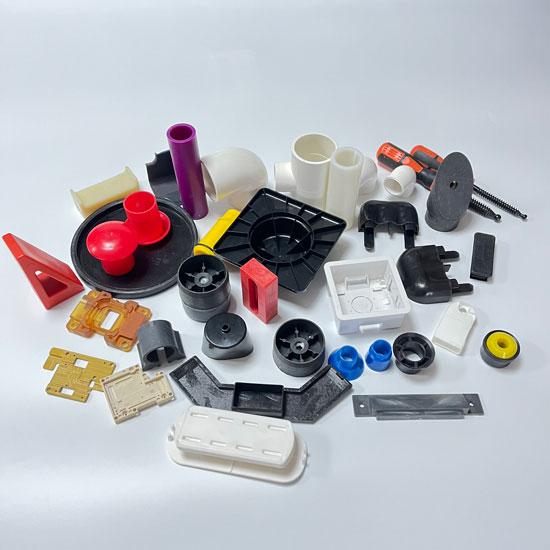
ExxonMobil PP - High Quality Polypropylene ResinsPP Polypropylene - Impact Copolymer High Strength MFI 25-35Wholesale Petrochemical Raw Materials High-Quality HDPE Granules | Alibaba.com

Mechanical Properties

PropertyHomopolymerImpact CopolymerPP GF30
Tensile StrengthHighMediumVery High
Flexural ModulusHighMediumExcellent
Impact ResistanceModerateExcellentGood
Heat Distortion TemperatureMediumMediumHigh
Dimensional StabilityGoodGoodExcellent

Injection Molding Guidelines

Recommended Processing Parameters

ParameterTypical Range
Melt Temperature200–250°C
Mold Temperature20–60°C
Injection Pressure60–120 MPa
Holding Pressure40–80 MPa
DryingGenerally not required (unless material has absorbed moisture during storage)

Proper gate design, balanced wall thickness, and efficient cooling are essential for achieving high-quality PP molded parts.

Stack of polypropylene containers on conveyor belt of automatic plastic injection molding machine,automated technology concept

Typical Applications

Polypropylene is used in nearly every manufacturing industry.

Automotive

  • Battery cases
  • Interior trim
  • Air ducts
  • Wheel arch liners

Medical

  • Syringes
  • Specimen containers
  • Laboratory consumables

Household

  • Storage boxes
  • Kitchenware
  • Furniture components

Electrical

  • Junction boxes
  • Cable management products

Packaging

  • Food containers
  • Bottle caps
  • Thin-wall packaging

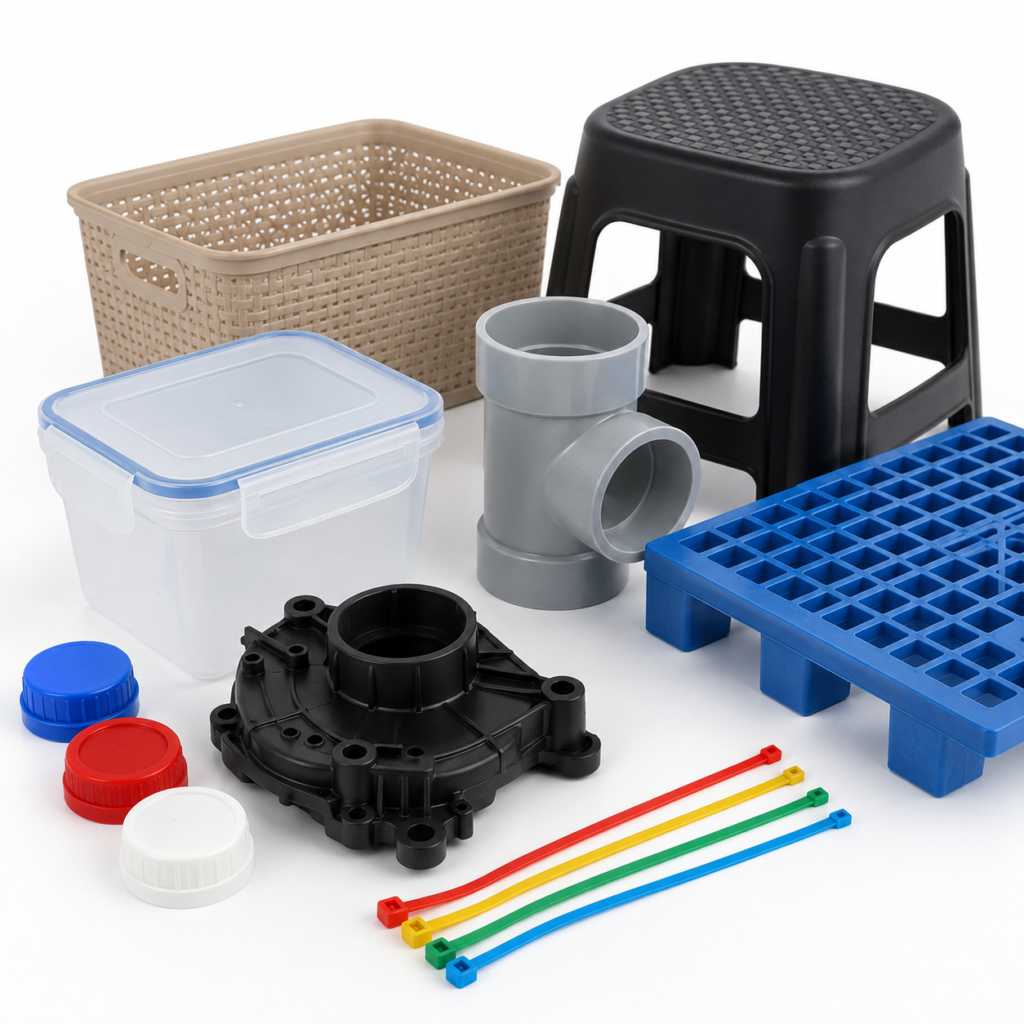
Auto battery plastic housingШприц SteriPlast® , ПП, Объем 100 мл, Цена деления 2 мл - 6228562Caixa Arrumação Plástico Branca Kasa - 1 un | Continente Online

Material Selection Guide

RequirementRecommended PP Grade
High StiffnessPP Homopolymer
High ImpactPP Impact Copolymer
Outdoor UseUV-Stabilized PP
Structural PartsPP GF30
Food ContactFood-Grade PP
Flame ResistanceFlame-Retardant PP

Why Choose Samgo?

Samgo supports customers from material selection through mass production.

Our Engineering Services

ServiceCustomer Benefit
Material SelectionOptimized performance and cost
Product DesignImproved manufacturability
DFM AnalysisReduced tooling risks
Moldflow SimulationBetter filling and cooling
Precision Mold ManufacturingLong mold life
Plastic Injection MoldingStable high-volume production

Our engineering team helps customers select the most suitable PP grade for each application, ensuring reliable performance and efficient manufacturing.


Recommended Internal Links

Conclusion

Polypropylene remains one of the most versatile and cost-effective materials for injection molding. From commodity homopolymers to high-performance glass fiber reinforced and flame-retardant grades, PP offers solutions for a wide range of industries and applications.

Selecting the correct grade requires balancing mechanical properties, chemical resistance, environmental conditions, processing requirements, and cost. By understanding the differences between PP types and working with experienced engineering teams, manufacturers can develop durable, efficient, and competitive plastic products.

At Samgo, we combine material expertise, engineering analysis, precision mold manufacturing, and advanced injection molding capabilities to help customers choose the right polypropylene solution for every project.

Get the latest price? We will reply as soon as possible (within 12 hours)