
How to Choose the Right Injection Molding Supplier: A Practical Buyer’s Guide
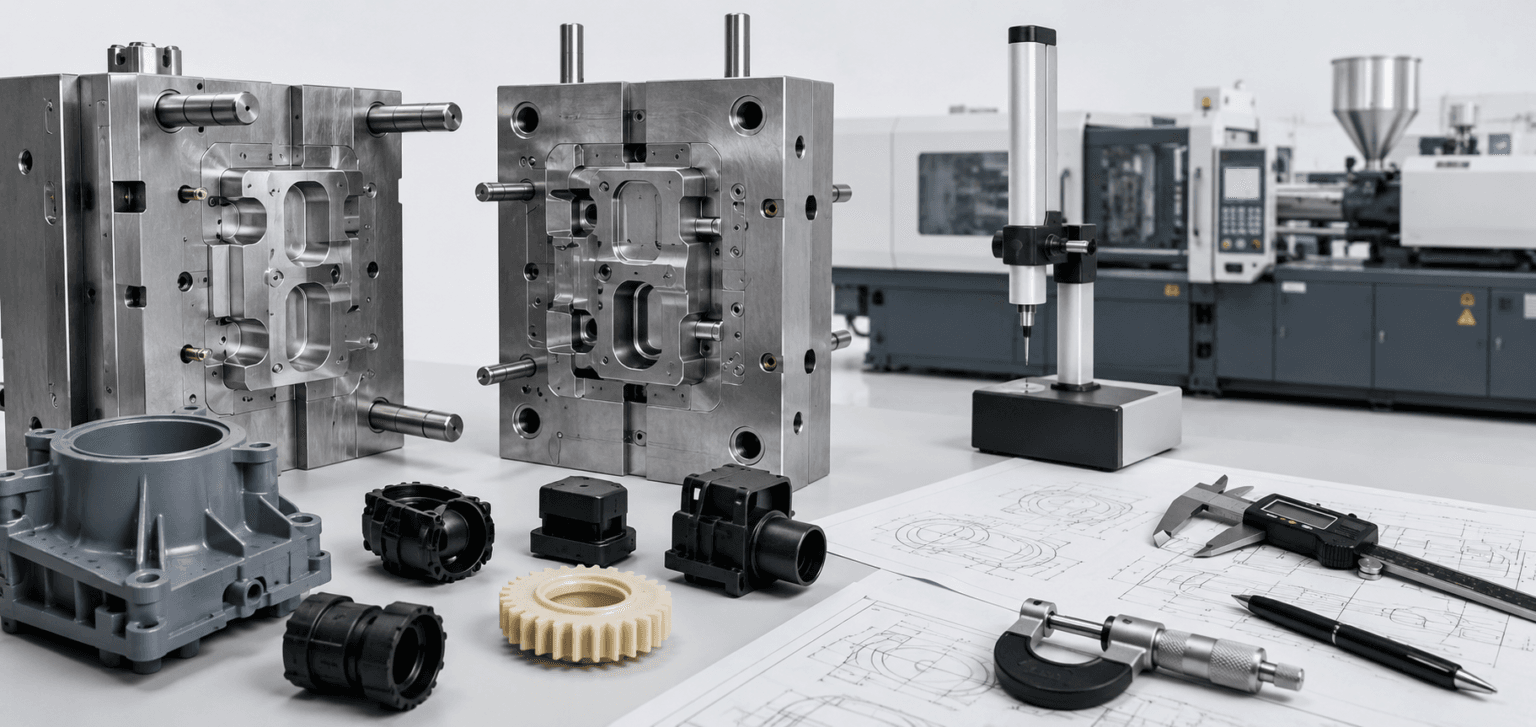
Choosing the right moldeo por inyección supplier is one of the most important decisions in a plastic product development project. A capable supplier can help control tooling risk, stabilize product quality, shorten lead time, and reduce long-term manufacturing costs. A poor supplier, however, may create dimensional problems, inconsistent materials, delayed deliveries, excessive mold repairs, or repeated quality issues.
For buyers, supplier selection should therefore go far beyond comparing mold quotations or plastic part prices.
The best injection molding partner should demonstrate strong engineering capability, reliable tooling, stable production capacity, material control, quality management, and clear project communication.
1. Evaluate Engineering Capability
The first thing to evaluate is not the injection molding machine—it is the supplier’s engineering team.
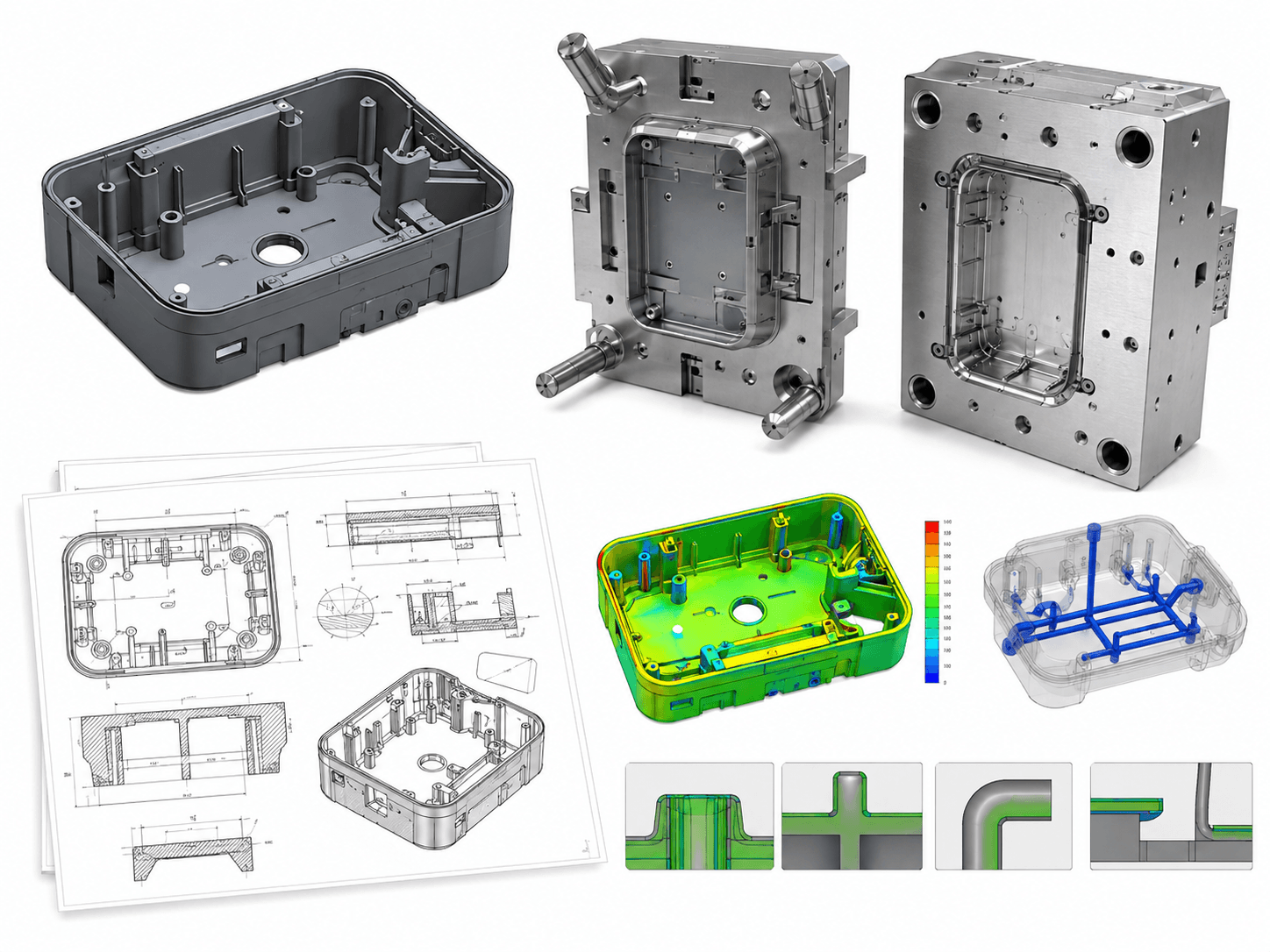
Before manufacturing a mold, an experienced supplier should be able to review your 3D model and identify potential manufacturing risks.
A professional DFM review may include:
- Mold opening direction
- Parting line
- Draft angles
- Wall thickness
- Cortes undercut
- Gate location
- Ejection method
- Ribs and bosses
- Tolerancias críticas
- Surface requirements
A supplier that immediately quotes and starts tooling without discussing these issues may create expensive problems later.
For more complex parts, the supplier should also be capable of supporting Moldflow analysis to evaluate filling, weld lines, air traps, cooling, shrinkage, and warpage.
2. Check Fabricación de moldes Capacidad
The mold determines the long-term stability of the injection molding process.
Buyers should understand whether the supplier manufactures molds internally or relies heavily on subcontractors.
Important capabilities include:
- CNC machining
- EDM
- Wire cutting
- Grinding
- Mold assembly
- Polishing
- Mold trial
- Mold maintenance
You should also confirm the mold specifications before placing the order.
These may include:
- Mold steel
- Mold base
- Number of cavities
- Hot runner or cold runner
- Expected mold life
- Slider and lifter structure
- Cooling system
- Spare components
A detailed mold specification makes supplier quotations easier to compare.
3. Evaluate Injection Molding Equipment and Capacity
The supplier should have molding machines suitable for your product size, material, and annual production quantity.
Machine requirements may include:
- Appropriate clamping force
- Sufficient shot capacity
- Stable injection control
- Mold temperature controllers
- Material dryers
- Automated robots
- Central material feeding systems
Production capacity is equally important.
A factory may successfully produce 5,000 parts per month but struggle if your demand later increases to 100,000 parts.
Ask about current machine utilization, shift arrangements, available capacity, and future expansion capability.
Supplier Evaluation Checklist
| Evaluation Area | What Buyers Should Check |
|---|---|
| Engineering | DFM, Moldflow, mold design |
| Tooling | CNC, EDM, mold assembly, maintenance |
| Moldeo por inyección | Machine tonnage and capacity |
| Materials | Resin traceability and drying control |
| Quality | CMM, gauges, inspection reports |
| Production | Stable capacity and scalability |
| Communication | Technical and responsive support |
| Mold Management | Maintenance and ownership policy |
4. Verify Material Control
Material selection directly affects product performance.
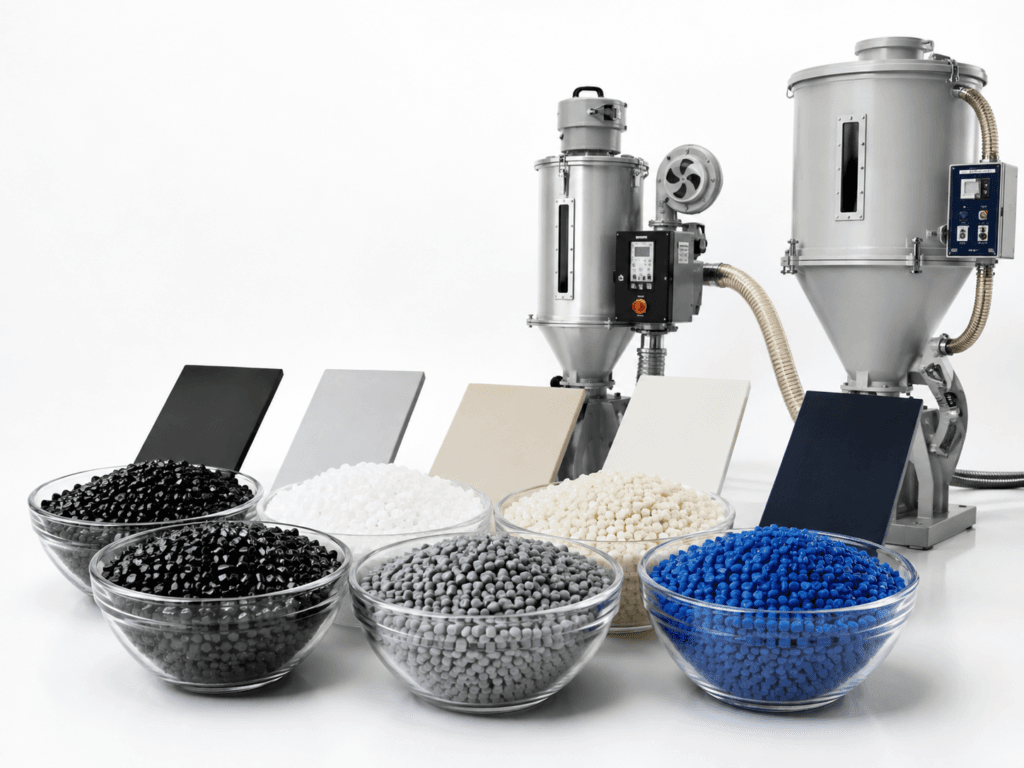
A reliable supplier should clearly identify the exact material being used, including:
- Fabricante
- Resin grade
- Color specification
- Glass-fiber percentage
- Flame-retardant classification
- UV stabilization
- Recycled-content requirements
For engineering plastics such as PA66, PC, PBT, PPS, or glass-filled nylon, material drying and processing conditions are especially important.
Poor moisture control can reduce mechanical properties or create unstable molding conditions.
For critical projects, buyers should request material certificates or batch traceability.
5. Review Quality Control Capability
Quality inspection should not begin only after production is complete.
A reliable supplier should establish inspection requirements before mass production.
Entre los métodos de inspección más habituales se incluyen:
- Digital calipers
- Micrometers
- Height gauges
- CMM measurement
- Calibres Pasa/No Pasa
- Assembly fixtures
- Color inspection
- Pruebas funcionales
For dimensional products, ask whether the supplier can provide first-article inspection reports.
For high-volume production, the supplier should also monitor process stability rather than simply inspecting finished parts.
Important process variables may include:
- Part weight
- Mold temperature
- Presión de inyección
- Holding pressure
- Tiempo de ciclo
- Material drying conditions
6. Do Not Select a Supplier Based Only on Price
The cheapest quotation is not always the lowest-cost solution.
A low mold price may result from:
- Lower-grade mold steel
- Simplified cooling
- Cheaper mold components
- Outsourced tooling
- Lower mold-life expectations
- Limited mold trials
Similarly, a low part price may exclude material, inspection, packaging, or secondary operations.
When comparing quotations, compare the complete scope.
| Cost Item | Questions to Ask |
| Mold Cost | What steel and mold life are included? |
| Part Cost | Is resin included? |
| Trial Cost | How many mold trials are included? |
| Modification | Which changes are chargeable? |
| Inspección | Is dimensional reporting included? |
| Embalaje | Is packaging included in the part price? |
Total manufacturing cost should include scrap, maintenance, communication, delays, and quality risk—not just the original quotation.
7. Check Mold Ownership and Maintenance
For long-term projects, mold ownership should be clearly defined.
Before placing an order, confirm:
- Who owns the mold after payment?
- Where will the mold be stored?
- Can the mold be transferred to another factory?
- Who pays for normal maintenance?
- Are mold maintenance records available?
Injection molds contain moving components such as sliders, lifters, ejector pins, springs, and seals that require periodic maintenance.
Cooling channels can also develop deposits that reduce cooling efficiency.
A supplier with a preventive maintenance system can help extend mold life and maintain stable production.
8. Evaluate Communication and Project Management
Technical communication can have a major impact on project success.
Injection molding projects often require decisions about:
- Product design revisions
- Material changes
- Gate location
- Surface texture
- Mold modifications
- Trial results
- Dimensional corrections
A strong supplier should explain problems clearly and provide engineering solutions rather than simply reporting that something cannot be done.
Good communication is especially important for international projects because buyers may not be able to visit the factory frequently.
Regular progress reports, mold photos, trial videos, dimensional reports, and clear project schedules can significantly improve transparency.
9. Review Similar Project Experience
A supplier with experience in similar products will usually understand the technical risks more quickly.
For example, if you are developing:
- Componentes de automoción
- Carcasas para exteriores
- Medical products
- Gears
- Nylon parts
- Gabinetes electrónicos
- Large structural components
ask the supplier to show similar tooling or production examples.
However, do not evaluate experience only by photographs.
Ask technical questions about:
- Materials
- Tolerances
- Mold structure
- Production volume
- Testing requirements
A technically capable supplier should be able to explain how similar projects were manufactured.
10. Start With Samples or a Trial Project
Before committing to a large production program, evaluate the supplier’s actual manufacturing performance.
You can request:
- Mold samples
- Injection molded parts
- Inspection reports
- Factory videos
- Similar project references
For some projects, starting with a smaller mold or production order can help evaluate:
- Product quality
- Delivery performance
- Communication
- Embalaje
- Quality response
This is often more reliable than making a supplier decision based only on a website or quotation.
Warning Signs to Watch For
Be cautious if a supplier:
- Does not provide DFM analysis
- Cannot explain mold structure clearly
- Offers an unusually low quotation without details
- Frequently changes material brands
- Cannot provide dimensional reports
- Avoids discussing mold ownership
- Has no mold maintenance system
- Promises unrealistic tooling lead times
- Cannot explain the root cause of molding defects
These issues may indicate higher long-term project risk.
Conclusión
Choosing an injection molding supplier should be treated as an engineering decision as much as a purchasing decision.
The right supplier should provide more than injection molding machines.
A strong manufacturing partner should offer:
- DFM and engineering support
- Reliable mold manufacturing
- Stable production capacity
- Controlled material management
- Professional quality inspection
- Preventive mold maintenance
- Transparent project communication
When comparing suppliers, evaluate their complete manufacturing system rather than focusing only on mold price or unit cost.
A slightly higher initial tooling investment can often be justified if it provides better mold life, lower reject rates, more stable dimensions, faster technical support, and reliable long-term production.
For custom plastic products, choosing the right injection molding supplier before tooling begins is one of the most effective ways to reduce project risk and protect future production.
¿Obtener el último precio? Le responderemos lo antes posible (dentro de las 12 horas)
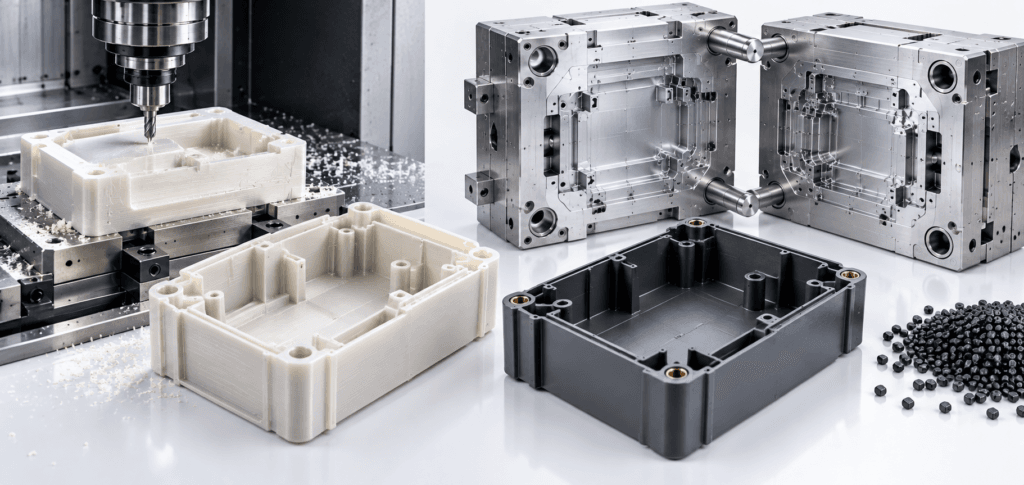
CNC Plastic Prototypes vs. Injection Molded Parts: Key Differences Engineers Should Understand
Compare CNC plastic prototypes and injection molded parts in material properties, dimensions, warpage, surface finish, geometry, cost and production performance.
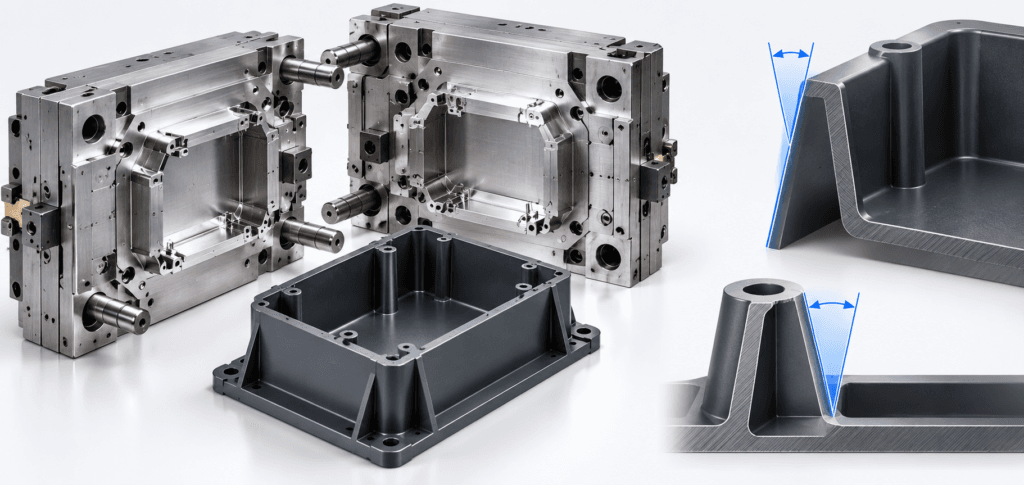
Draft Angle in Injection Mold Design: Improving Part Quality, Ejection and Tooling Efficiency
Discover how draft angles affect injection mold design, part ejection, surface texture, dimensional accuracy, ribs, bosses and long-term tooling performance.
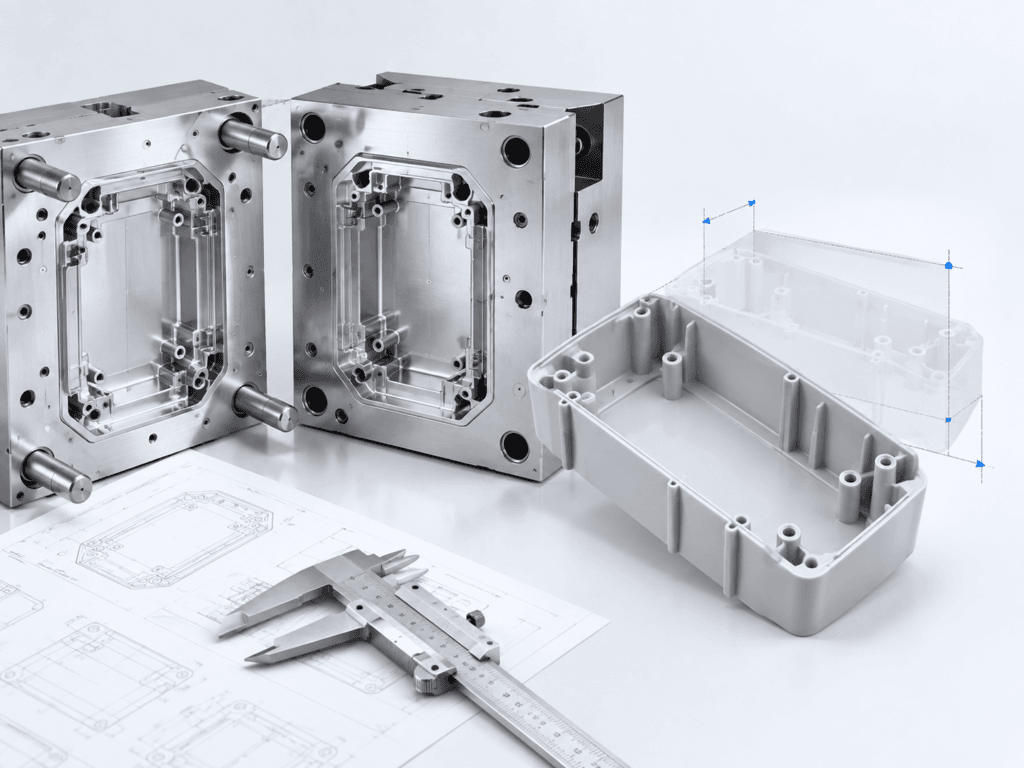
Injection Molding Shrinkage: How to Control Part Dimensions from Mold Design to Production
Learn how injection molding shrinkage affects mold dimensions, tolerances and warpage, and how material, gate design, packing, cooling and mold trials help control final plastic part dimensions.