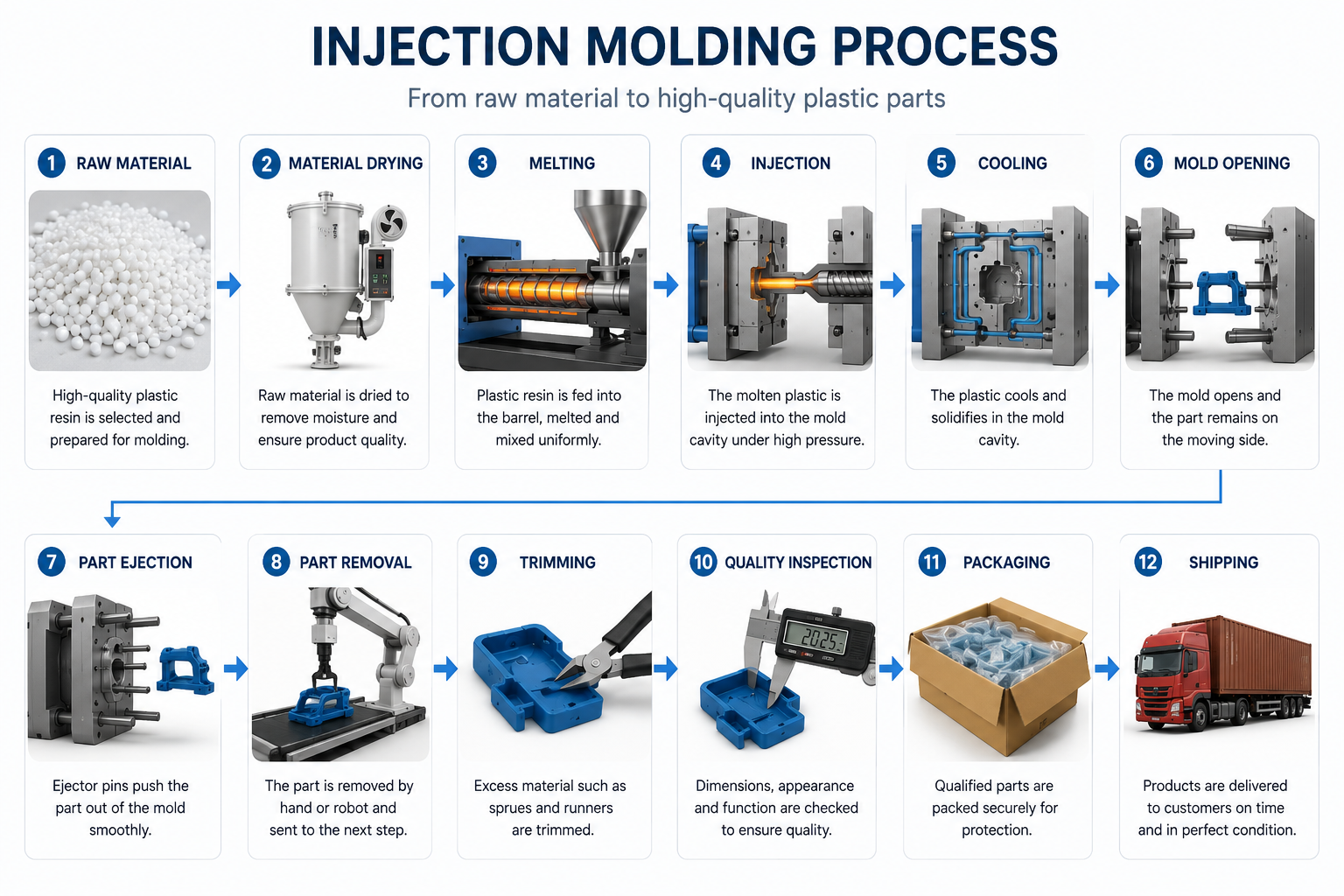
Paso 1: Revisión del diseño del producto
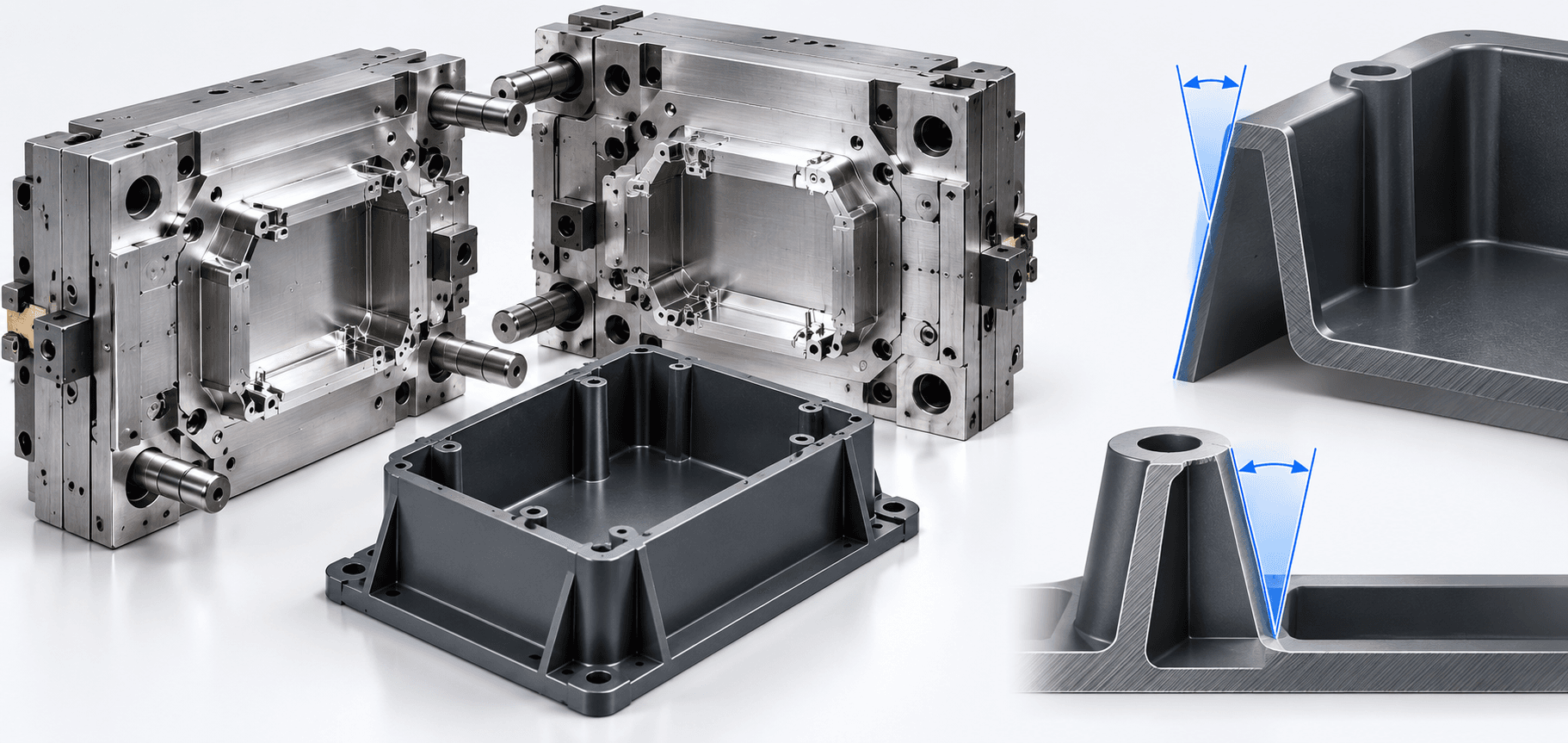
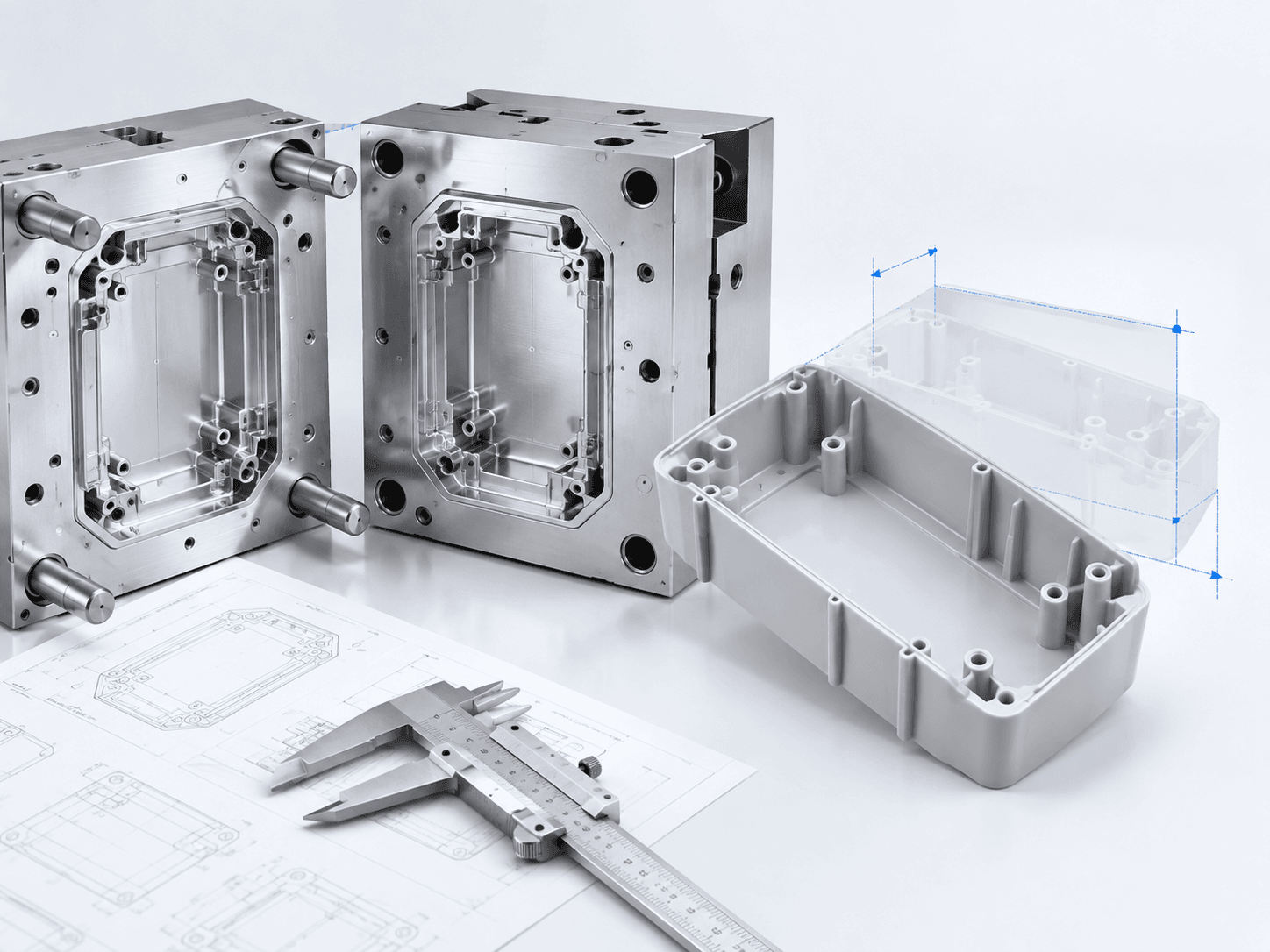
Nuestros ingenieros evalúan el modelo 3D del cliente, identifican problemas de fabricabilidad y proporcionan recomendaciones de Diseño para la Fabricabilidad (DFM).
Paso 2 – Selección de materiales
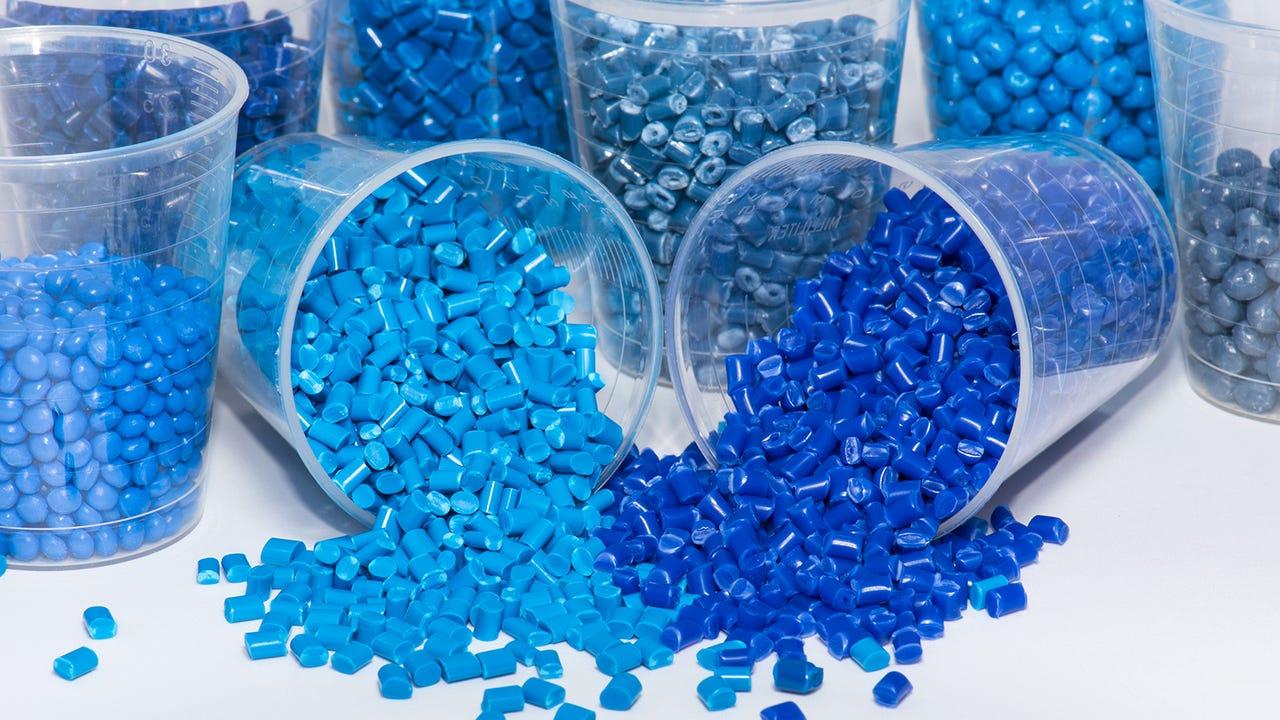
Elegir el material plástico correcto es fundamental para el rendimiento del producto. Ayudamos a los clientes a seleccionar materiales basándonos en la resistencia mecánica, la resistencia al impacto, la exposición a los rayos UV, la retardancia de llama, la resistencia química y la temperatura de funcionamiento.
Paso 3 – Diseño del molde
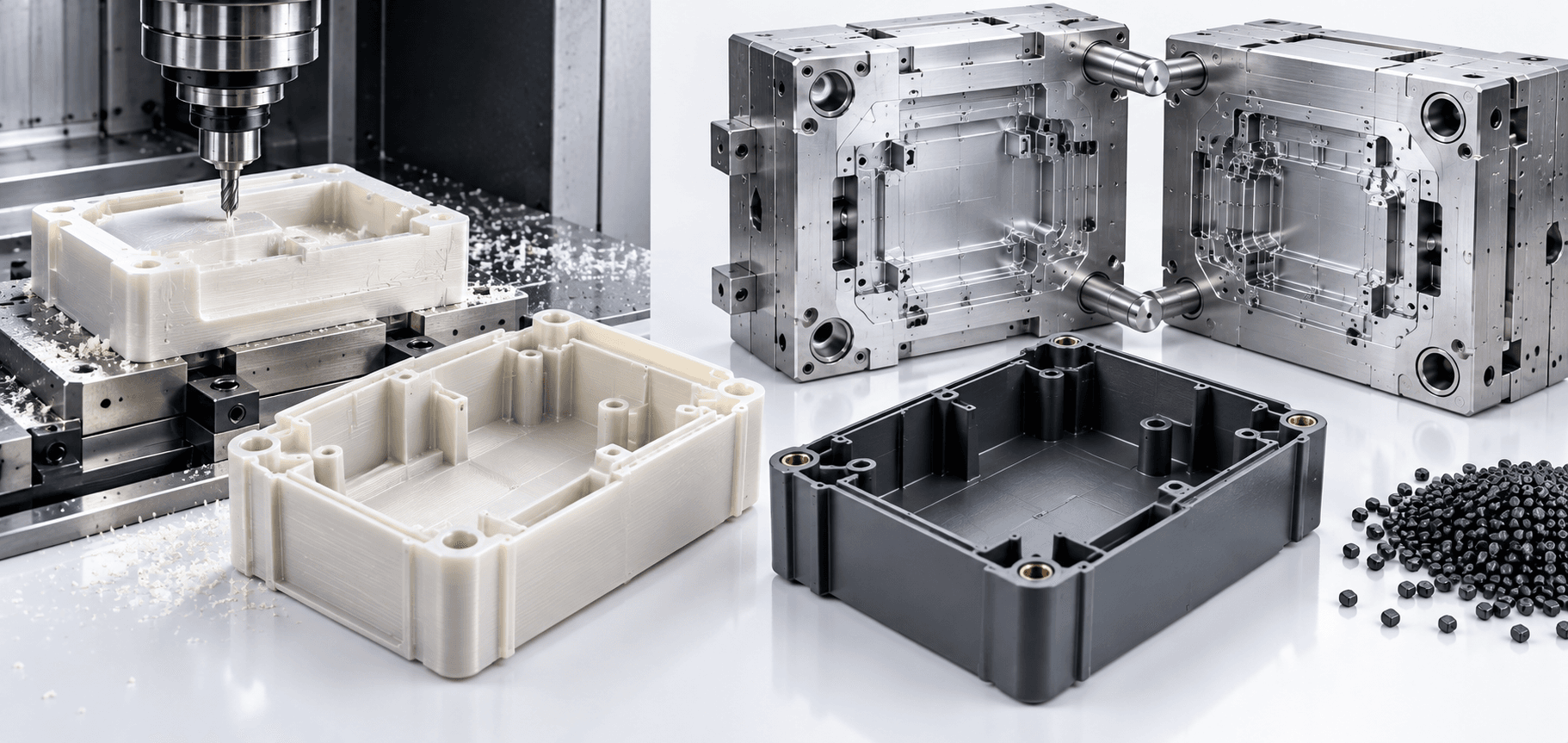
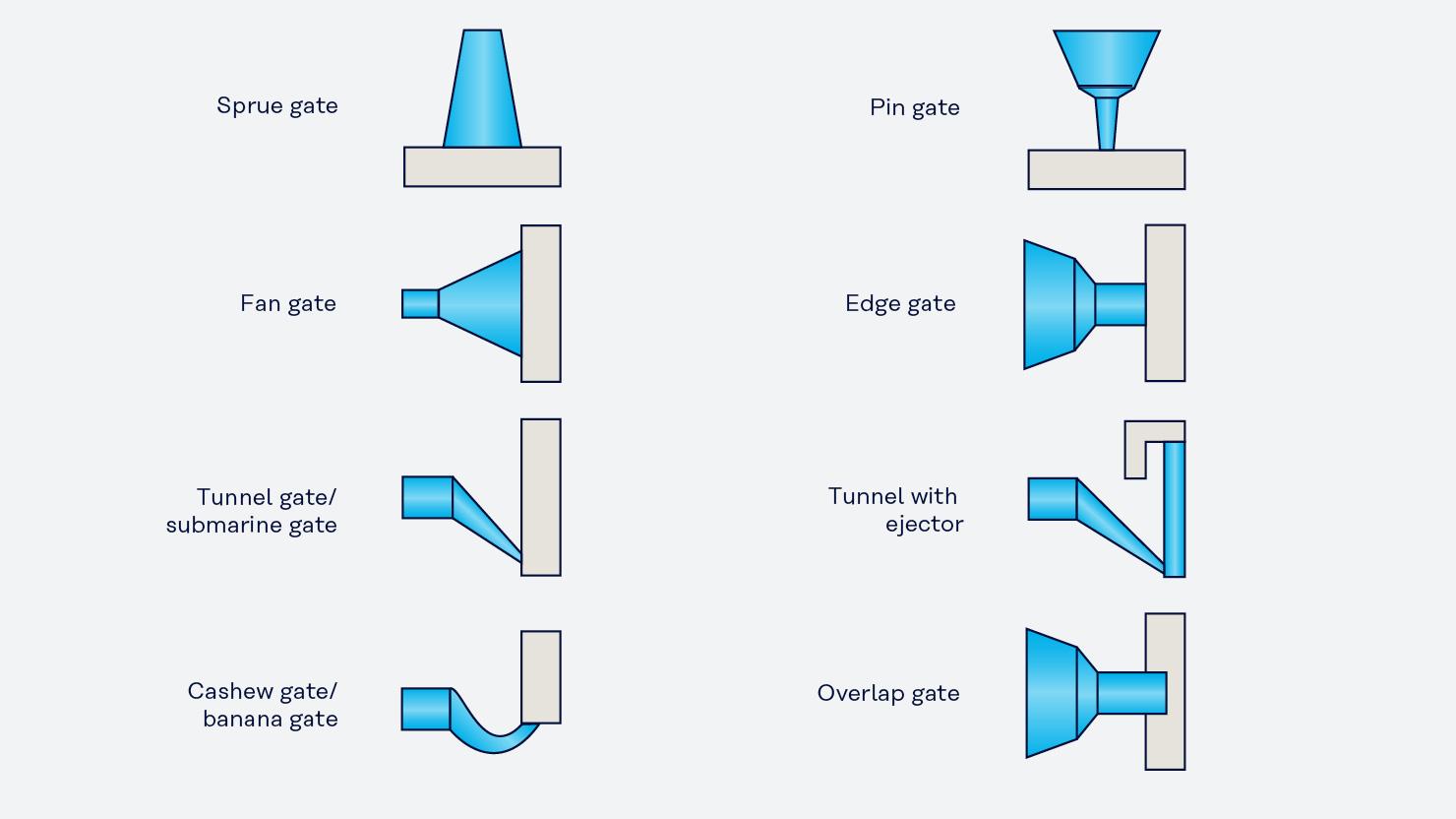
Utilizando software CAD/CAM avanzado, diseñamos moldes optimizados para un llenado equilibrado, refrigeración eficaz, desgasificación eficiente y una larga vida útil del molde.
Paso 4 – Fabricación de moldes
El mecanizado CNC de precisión, la electroerosión, el corte por hilo, el rectificado, el pulido y el montaje garantizan una calidad excepcional en las herramientas.
Paso 5 – Producción por moldeo por inyección
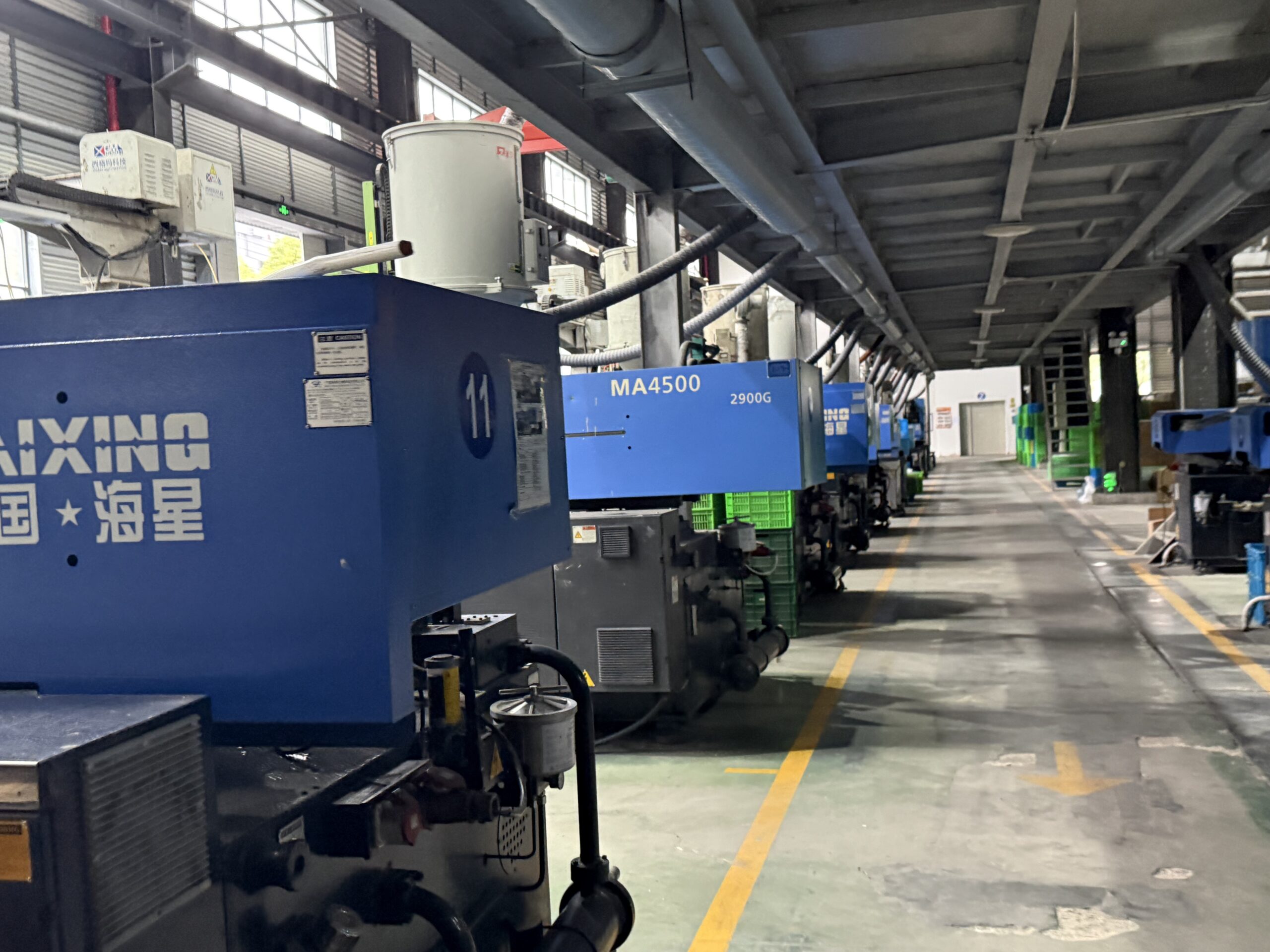
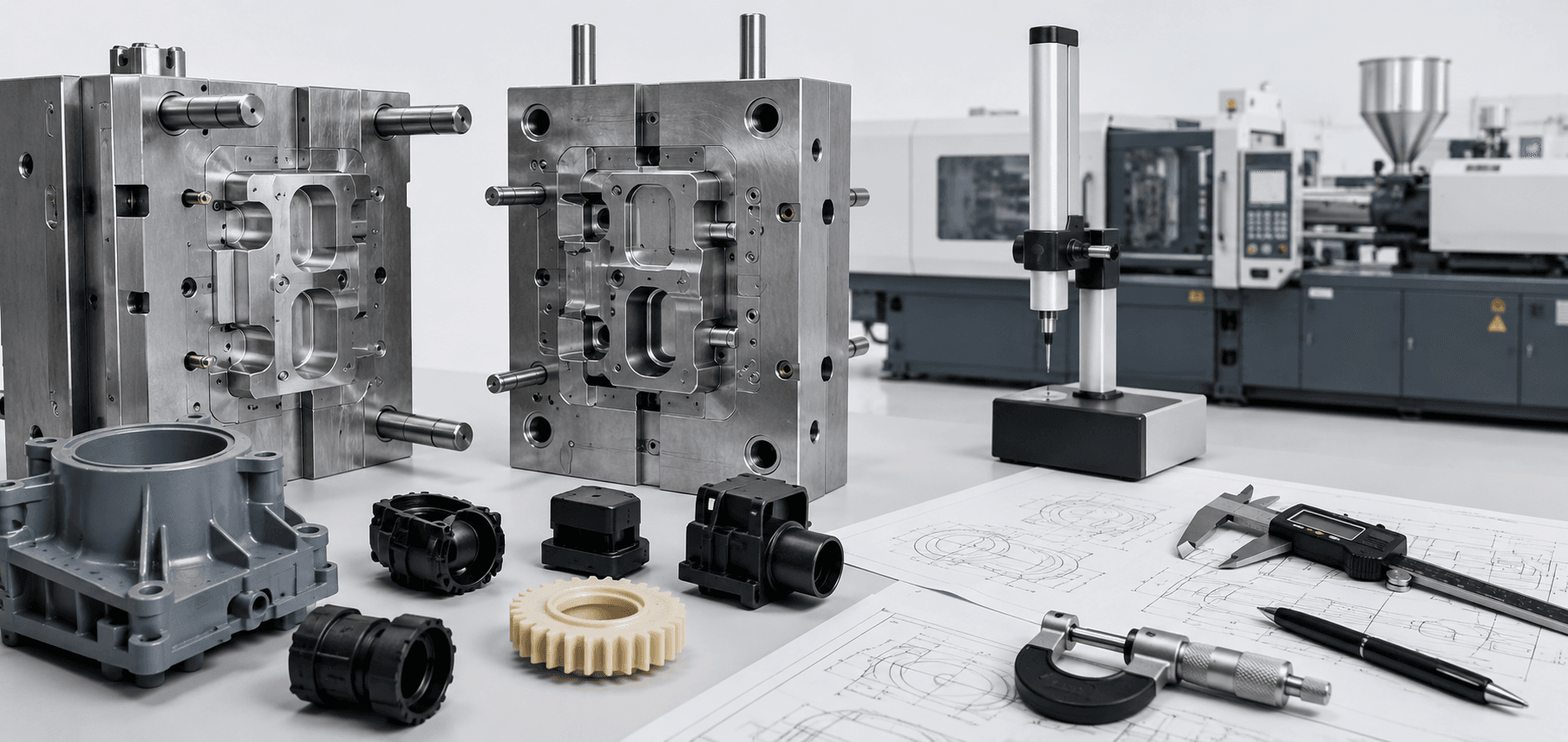
Las máquinas de moldeo por inyección modernas operan bajo un control de procesos científico para lograr una producción estable con una variación mínima.
Paso 6 – Inspección de calidad
Cada lote de producción se somete a inspección dimensional, inspección visual, verificación funcional e inspección de embalaje.
Plásticos de ingeniería
Samgo admite una amplia gama de plásticos de ingeniería.
| Material | Aplicaciones típicas |
| ABS | Electrónica de consumo |
| PC | Componentes ópticos |
| PC+ABS | Armarios eléctricos |
| PP | Productos para el hogar |
| PE | Contenedores |
| PA6 / PA66 | Piezas de automóviles |
| POM | Engranajes de precisión |
| ASA | Productos para exteriores |
| PMMA | Componentes de iluminación |
| PD | Piezas para alta temperatura |
| PBT | Conectores eléctricos |
| TPU | Componentes de tacto suave |
Nuestras recomendaciones de materiales consideran el rendimiento, el costo, las características de procesamiento y la fiabilidad a largo plazo.
Equipos de Fabricación Avanzada
Nuestra planta opera modernas máquinas de moldeo por inyección que abarcan varios rangos de tonelaje para fabricar tanto componentes de precisión pequeños como piezas estructurales grandes.
Nuestras ventajas de producción incluyen:
- Parámetros de moldeo científico
- Extracción automática de piezas por robot
- Monitoreo de producción en tiempo real
- Control de temperatura estable
- Optimización eficiente del tiempo de ciclo
- Alta repetibilidad de producción
Estas capacidades nos permiten cumplir con exigentes programas de producción mientras mantenemos una calidad constante.
Industrias a las que servimos
Samgo fabrica componentes de plástico para una amplia gama de industrias.
| Industria | Productos típicos |
| Automoción | Piezas interiores y exteriores |
| Médico | Carcasas de dispositivos |
| Electrónica de consumo | Carcasas de plástico |
| Telecomunicaciones | Armarios de exterior |
| Equipo industrial | Componentes de máquinas |
| Productos para exteriores | Productos de jardinería |
| Productos para el hogar | Cajas de almacenamiento |
| Productos para mascotas | Alimentadores y Transportadores |
| Dispositivos inteligentes | Armarios para IoT |
| Eléctrico | Cajas de derivación |
Nuestra amplia experiencia nos permite comprender los requisitos de fabricación específicos de cada sector.
Control de calidad durante toda la producción
La calidad está integrada en cada etapa de fabricación.
Procedimientos de inspección
| Inspección | Propósito |
| Inspección de material entrante | Verificación de material |
| Inspección del primer artículo | Aprobación inicial |
| Inspección en proceso | Estabilidad del proceso |
| Medición dimensional | Cumplimiento de planos |
| Inspección de aspecto | Calidad estética |
| Pruebas funcionales | Rendimiento del producto |
| Inspección final | Aprobación de envío |
El equipo de inspección incluye CMM, calibradores digitales, medidores de altura, sistemas de medición de color y dispositivos de inspección personalizados.
Servicios de fabricación OEM y ODM
Samgo apoya a los clientes desde el concepto hasta la producción.
Nuestros servicios incluyen:
- Apoyo en diseño de productos
- Análisis DFM
- Análisis de flujo de molde
- Diseño de moldes
- Herramientas de Precisión
- Moldeo por inyección
- Procesamiento secundario
- Soldadura ultrasónica
- Serigrafía
- Tampografía
- Marcado láser
- Asamblea
- Embalaje
- Envío Global
Ya sea que los clientes requieran una producción piloto de bajo volumen o millones de piezas de producción al año, ofrecemos soluciones de fabricación flexibles.
¿Por qué elegir Samgo?
Elegir al socio de fabricación adecuado es fundamental para el éxito del proyecto.
Nuestras Ventajas
| Capacidad | Beneficio para el cliente |
| Equipo de ingeniería con experiencia | Soporte técnico profesional |
| Fabricación propia completa | Tiempos de entrega más rápidos |
| Fabricación de moldes de precisión | Larga vida útil del molde |
| Equipo avanzado de moldeo por inyección | Producción estable |
| Gestión de Calidad Estricta | Consistencia fiable del producto |
| Servicios flexibles OEM y ODM | Soluciones personalizadas |
| Experiencia de Exportación Global | Envío a todo el mundo |
| Comunicación receptiva | Gestión de proyectos eficiente |
Nuestro objetivo es convertirnos en un socio de fabricación a largo plazo en lugar de ser simplemente un proveedor.
Asóciate con Samgo para tu próximo proyecto de moldeo por inyección
Ya sea que esté desarrollando un nuevo producto de consumo, un componente industrial, una carcasa de dispositivo médico, una pieza de plástico para automoción o equipo para exteriores, Samgo ofrece la experiencia en ingeniería y las capacidades de fabricación para respaldar su proyecto desde el diseño inicial hasta la producción a gran escala.
Al combinar ingeniería de moldes avanzada, tecnología de moldeo por inyección de precisión, estricto control de calidad y un servicio al cliente atento, ofrecemos componentes de plástico confiables que cumplen con las más altas expectativas de calidad, rendimiento y rentabilidad.
Contacte a Samgo hoy mismo para analizar su proyecto de moldeo por inyección personalizado y descubra cómo nuestras soluciones de fabricación integrales pueden ayudarle a llevar sus ideas al mercado de manera más rápida y eficiente.