
Automotive Injection Molding: Applications, Materials, Mold Design, and Manufacturing Solutions
Índice
Introducción
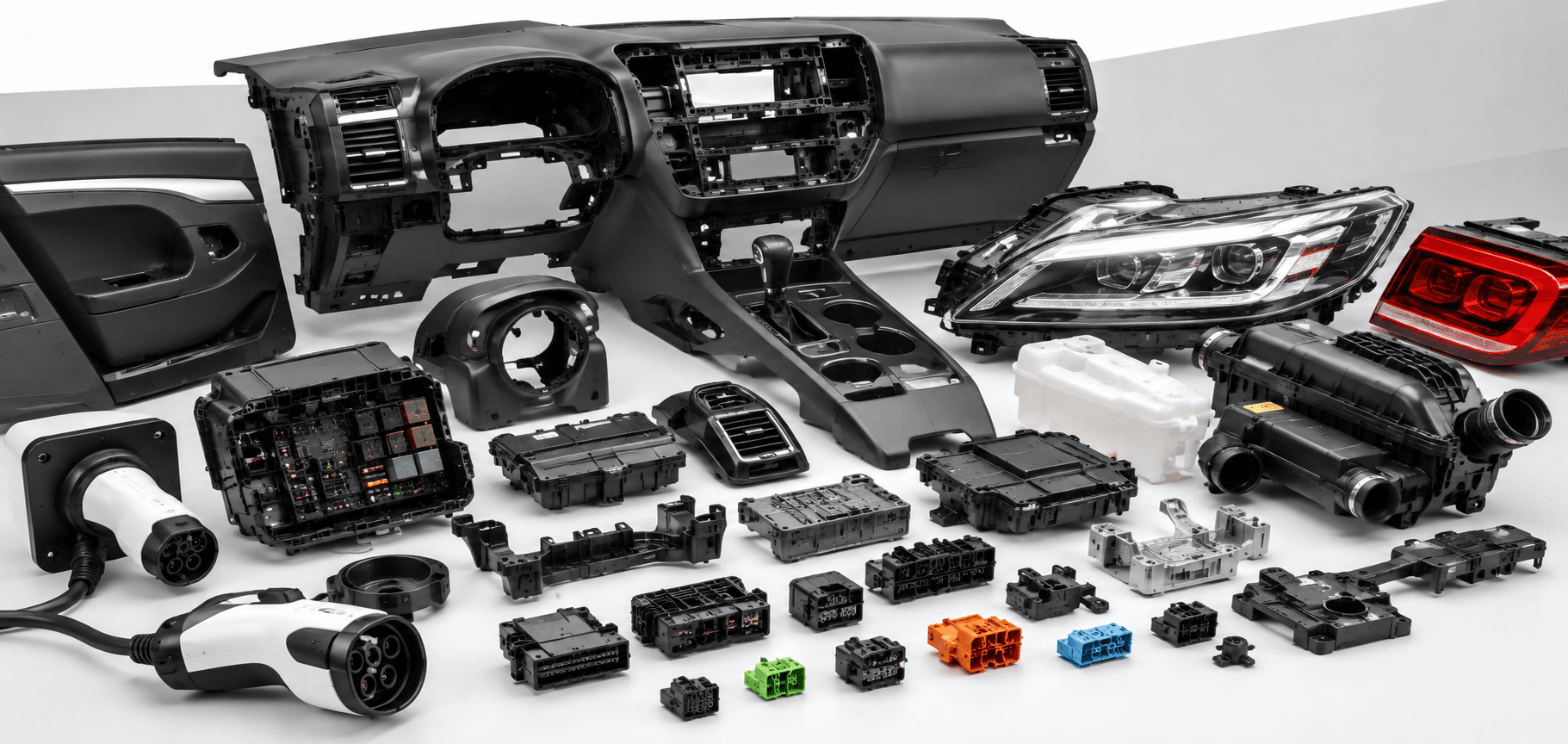
Moldeo por inyección de plástico plays a critical role in modern automotive manufacturing. From interior trim and electrical connectors to under-hood components and exterior housings, injection molded plastics help vehicle manufacturers reduce weight, integrate complex functions, improve appearance, and support high-volume production.
Automotive applications are more demanding than many general consumer products. Components may need to withstand vibration, impact, chemicals, ultraviolet radiation, temperature cycling, moisture, dimensional loading, and years of continuous service.
The transition toward electric vehicles is further increasing the importance of engineering plastics. Battery systems, charging equipment, sensors, electronic control modules, and high-voltage connectors require lightweight materials with strong electrical insulation and flame-retardant performance.
Successful automotive injection molding therefore requires more than simply producing a plastic part. Material selection, product design, mold engineering, process control, dimensional validation, and long-term reliability must be considered as a complete manufacturing system.
This article explores the major applications, materials, design principles, mold requirements, and quality-control considerations involved in automotive injection molding.
1. Automotive Interior Plastic Components
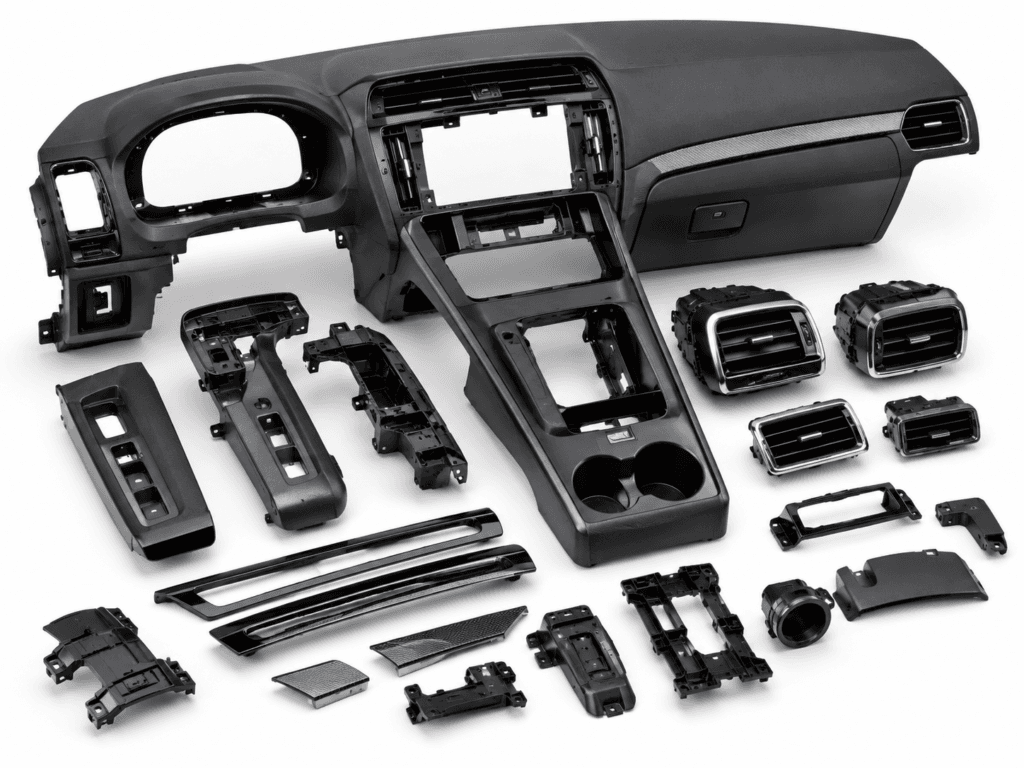
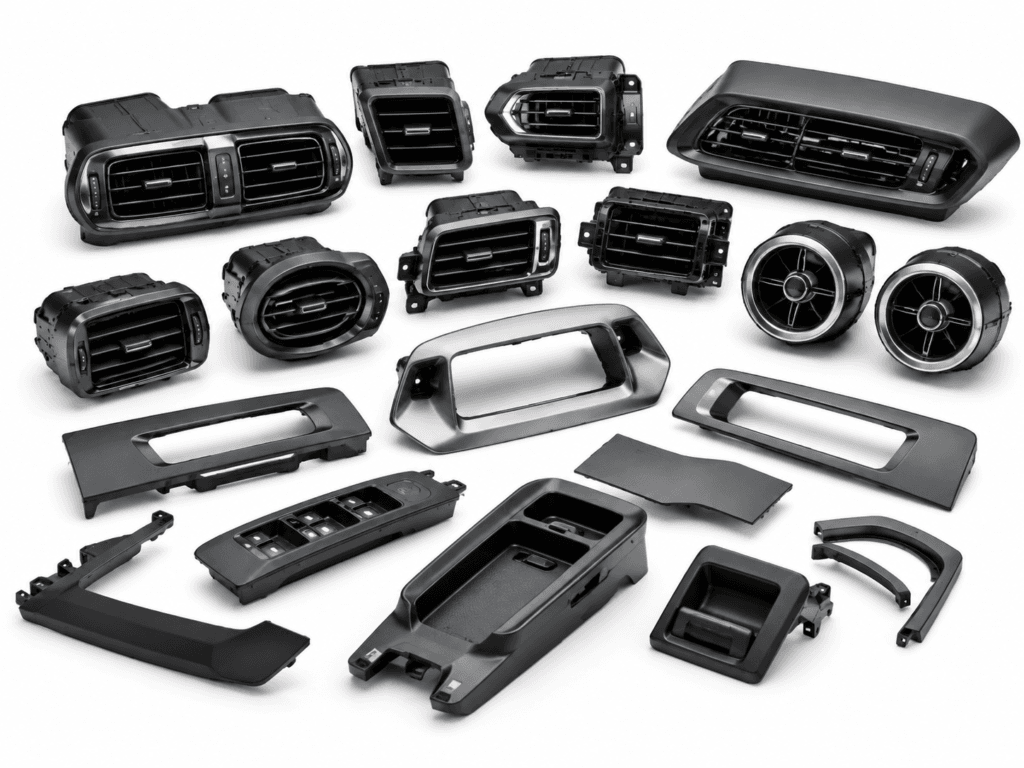
Vehicle interiors contain a large number of injection molded components because the process can produce complex shapes with excellent repeatability and surface quality.
Las aplicaciones comunes incluyen:
- Dashboard components
- Center consoles
- Door trim structures
- Air-conditioning vents
- Instrument panel housings
- Cup holders
- Seat adjustment components
- Storage compartments
- Cajas de interruptores
Interior components must balance appearance, dimensional stability, tactile quality, mechanical strength, and cost.
Materials such as ABS, PC/ABS, PP, and modified engineering plastics are widely considered depending on the application.
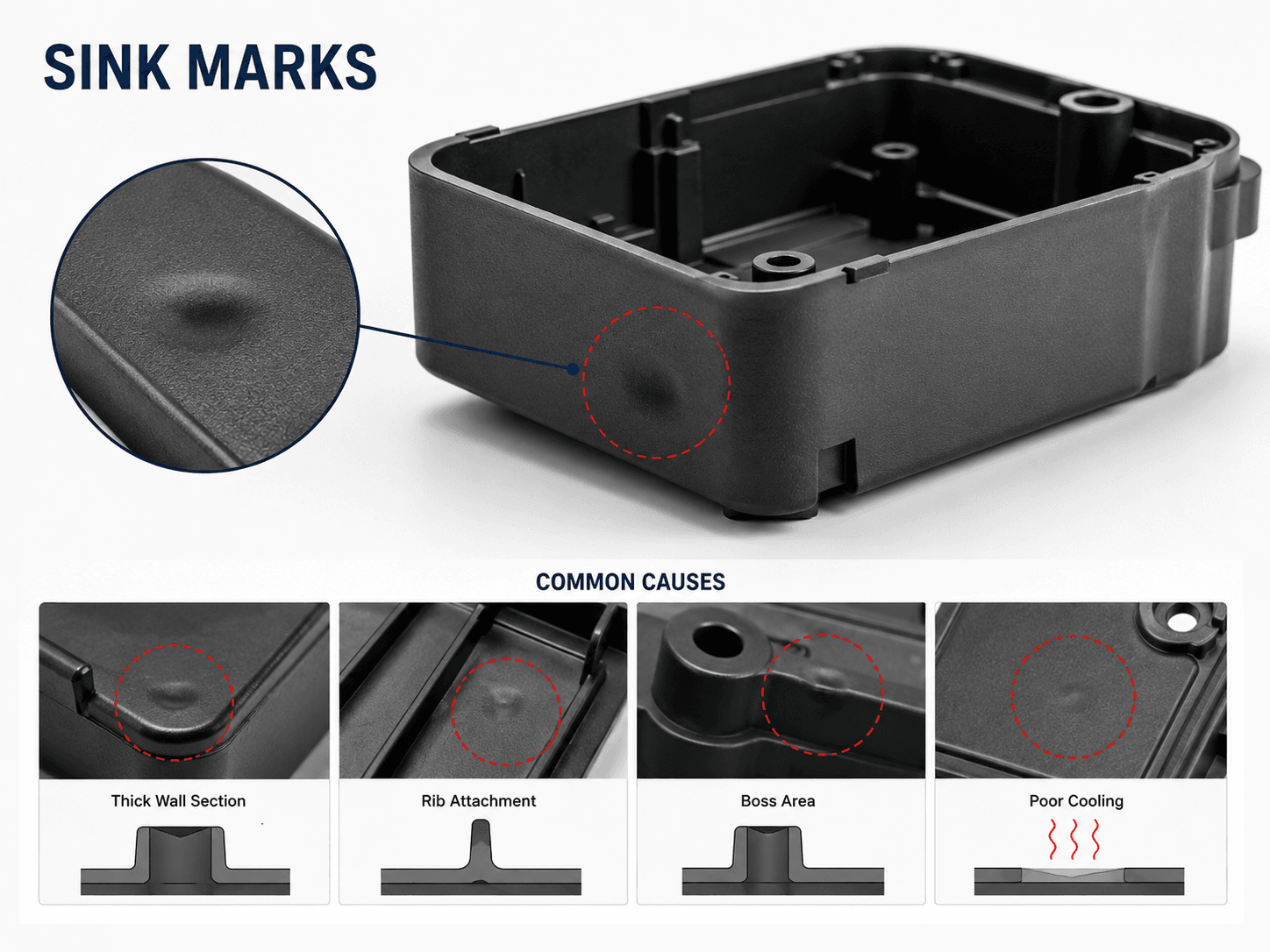
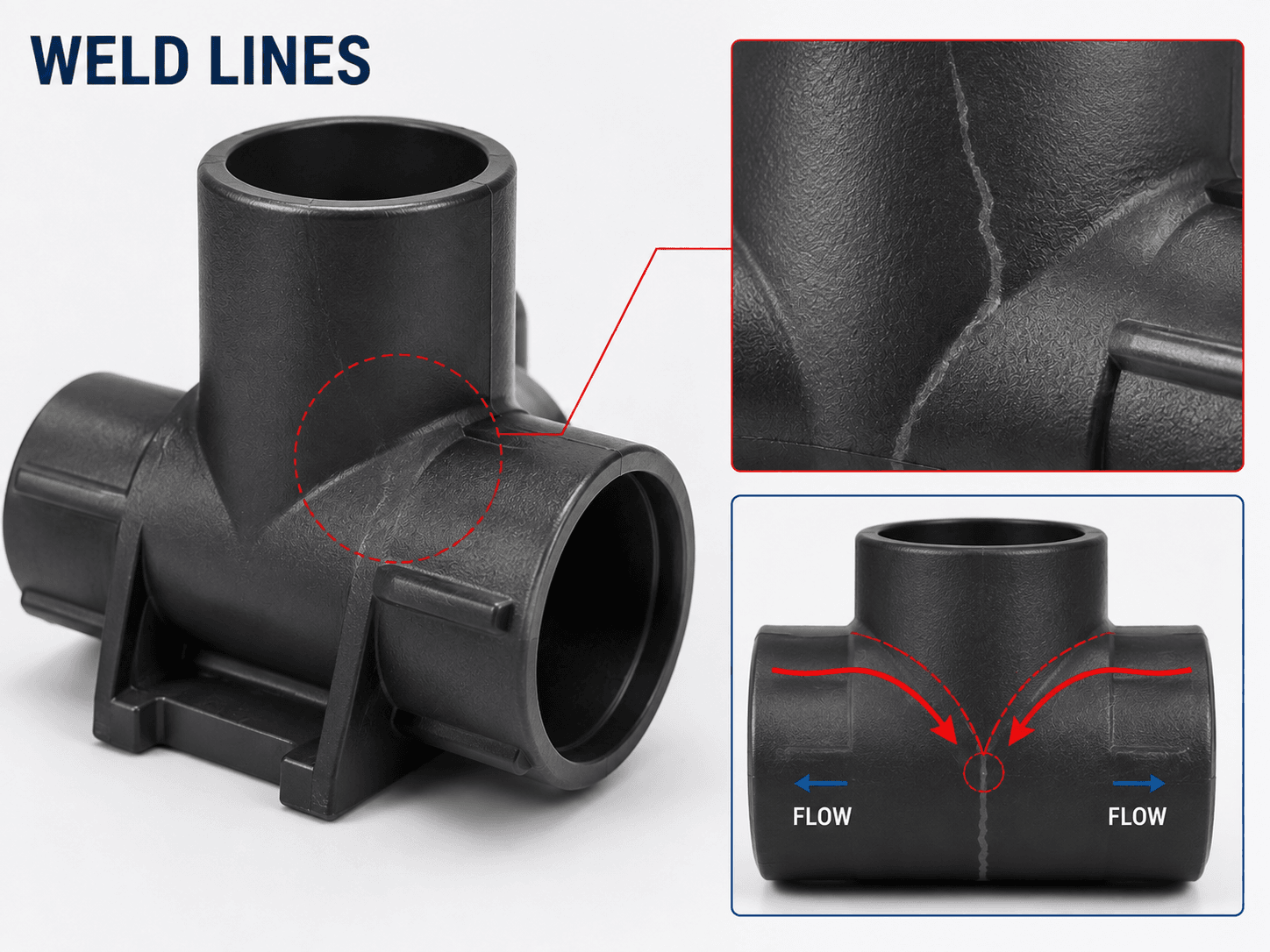
For visible Class-A surfaces, mold texture and processing conditions are especially important. Flow marks, weld lines, sink marks, gloss variation, or warpage can directly affect perceived vehicle quality.
Automotive Interior Material Examples
| Componente | Typical Requirement | Material potencial |
|---|---|---|
| Dashboard Housing | Apariencia + resistencia al impacto | PC/ABS |
| Door Trim Structure | Lightweight + toughness | PP |
| Air Vent | Estabilidad dimensional | ABS |
| Caja del interruptor | Precision + appearance | PC/ABS |
| Console Component | Surface quality | ABS / PC+ABS |
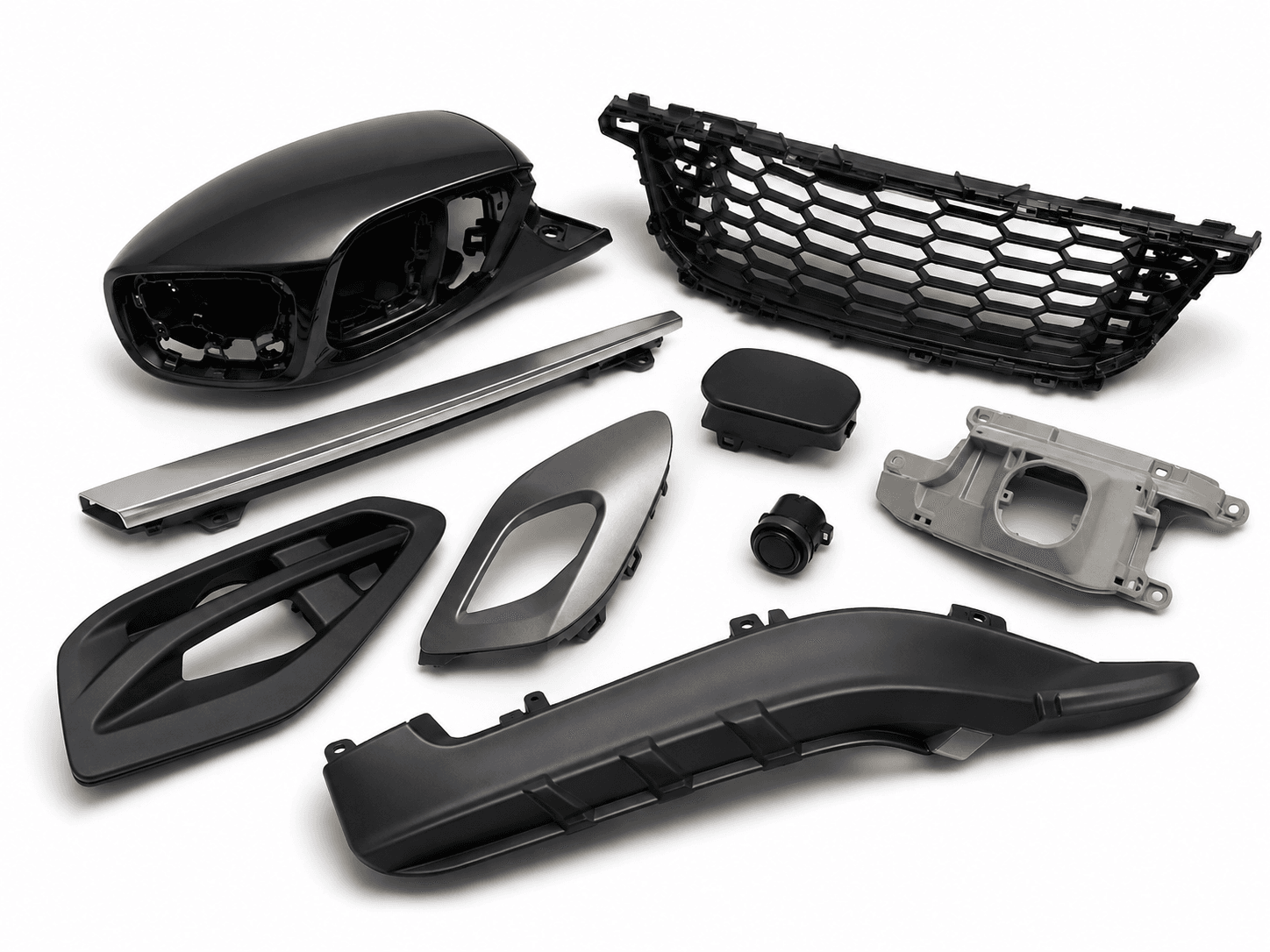
2. Exterior Automotive Plastic Parts
Exterior automotive components must withstand sunlight, rain, road contamination, temperature changes, vibration, and mechanical impact.
Injection molding is used for products such as:
- Exterior trim
- Mirror housings
- Grille components
- Cubiertas para sensores
- Wheel-arch components
- Fundas protectoras
- Lighting housings
- Decorative exterior parts
UV resistance and dimensional stability become particularly important.
ASA, PC/ASA, PP-based materials, reinforced engineering plastics, and other weather-resistant grades may be selected depending on the mechanical and cosmetic requirements.
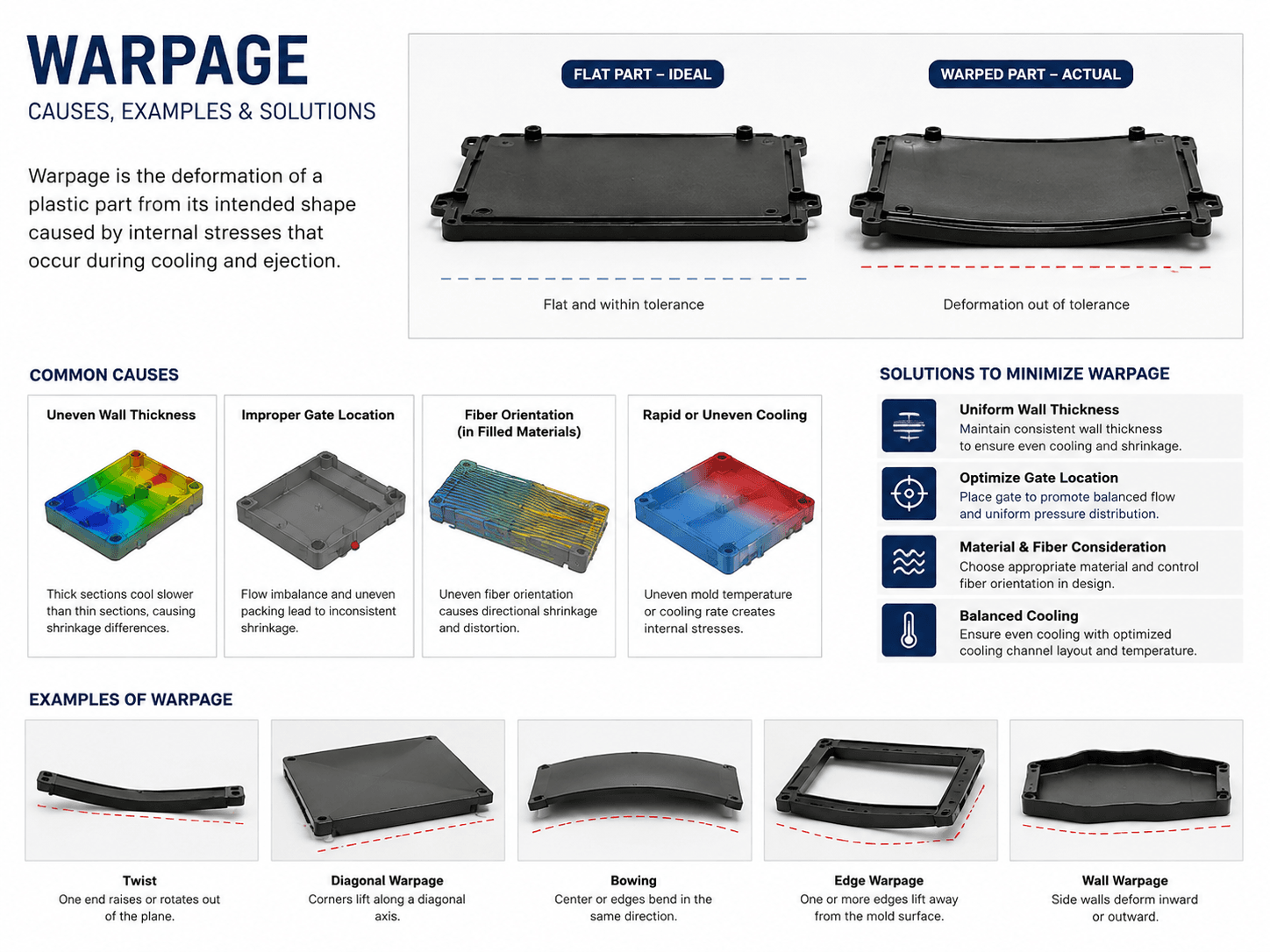
Large exterior components also require careful warpage control. Uneven wall thickness, poorly positioned gates, or unbalanced cooling can create visible distortion after molding.
3. Under-the-Hood Injection Molded Components
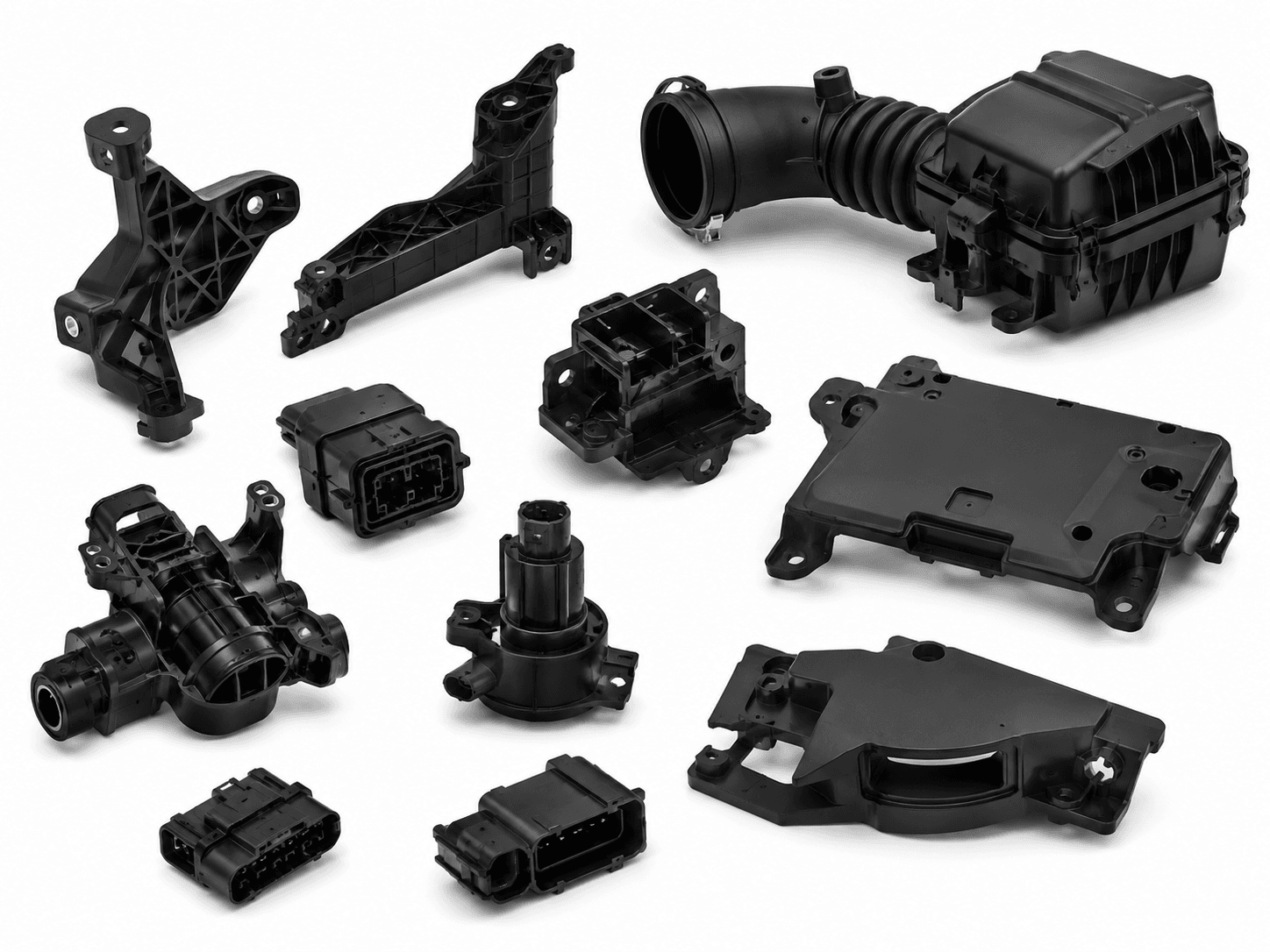
The engine compartment is one of the most demanding environments for plastic components.
Parts may be exposed to:
- Elevated temperatures
- Oil
- Coolant
- Fuel vapors
- Mechanical vibration
- Repeated thermal cycling
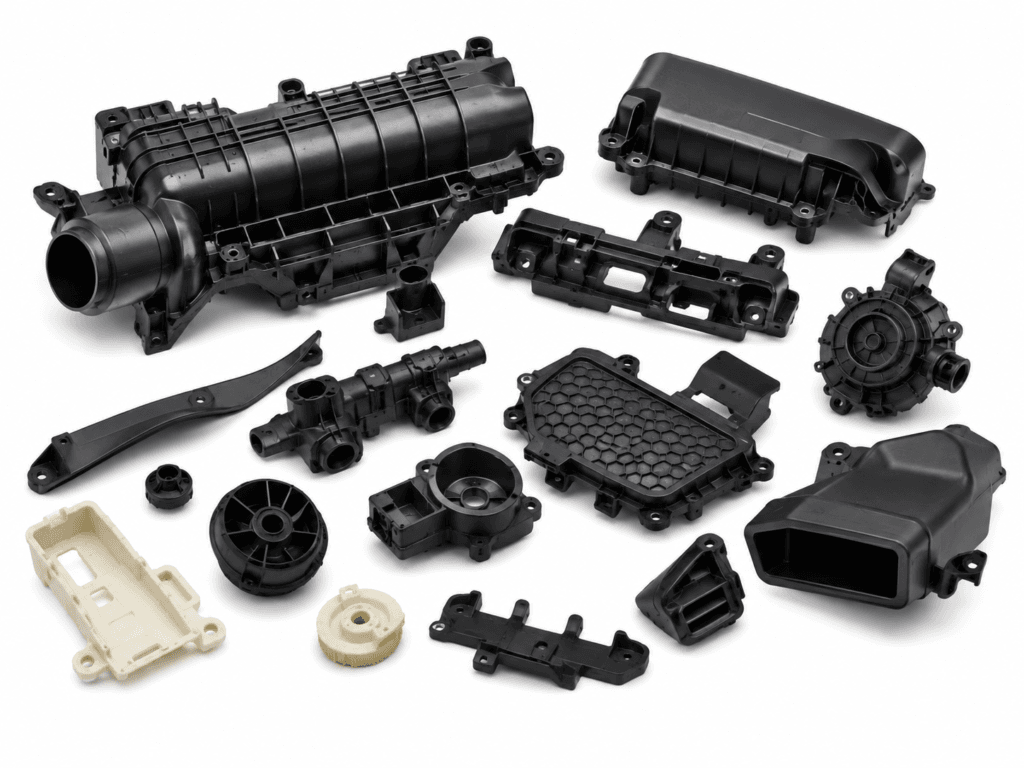
Typical molded components include:
- Air intake parts
- Carcasas eléctricas
- Fan components
- Fluid-system connectors
- Cable clips
- Alojamientos de sensores
- Fundas protectoras
Engineering plastics such as PA66-GF, PBT, PD, and high-temperature polymers may be required.
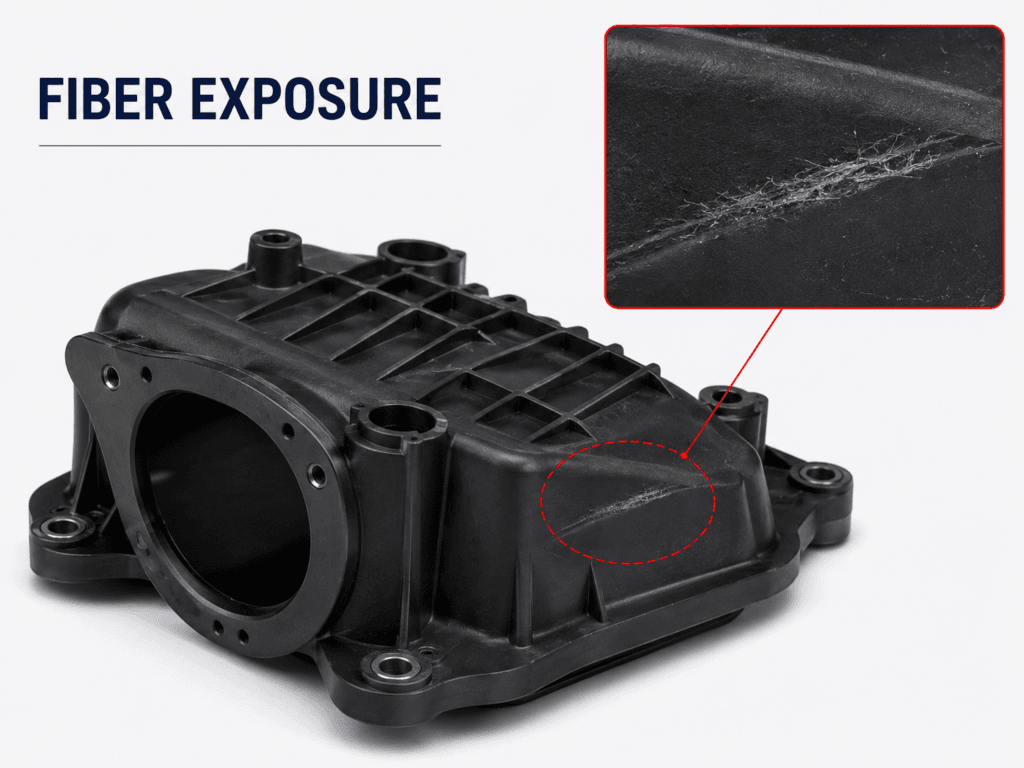
Glass-fiber reinforcement can increase stiffness and heat resistance, but it can also introduce anisotropic shrinkage and surface-quality challenges. Mold design and gate position therefore become particularly important.
Under-Hood Material Comparison
| Material | Major Advantage | Uso típico |
| PA66-GF | Heat resistance and strength | Componentes estructurales |
| PBT | Electrical properties | Conectores |
| PD | High-temperature performance | Thermal/electrical applications |
| PP Modified | Resistencia química | Covers |
| PC/ABS | Impact performance | Protected electronic housings |
4. Automotive Electrical and Electronic Components
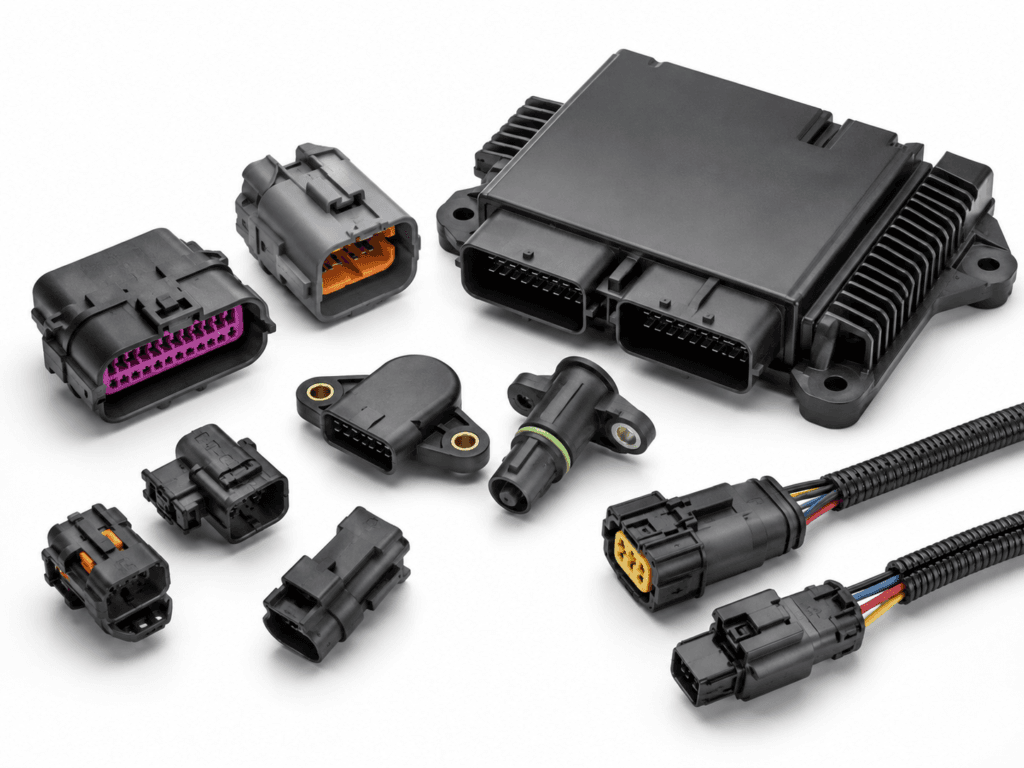
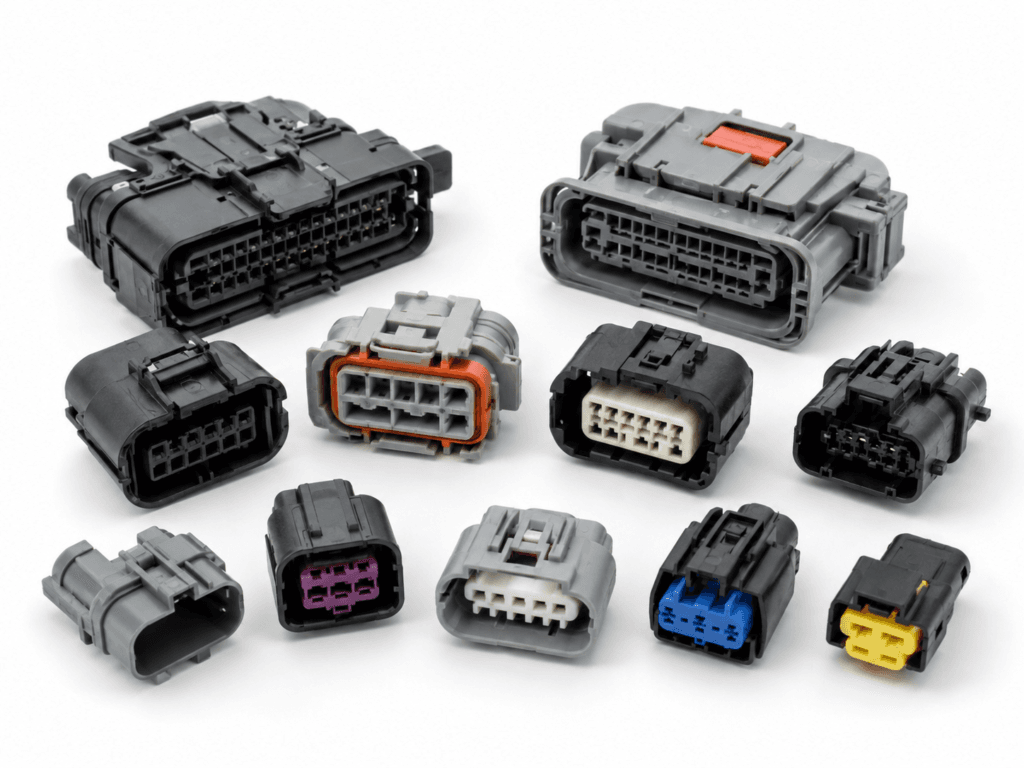
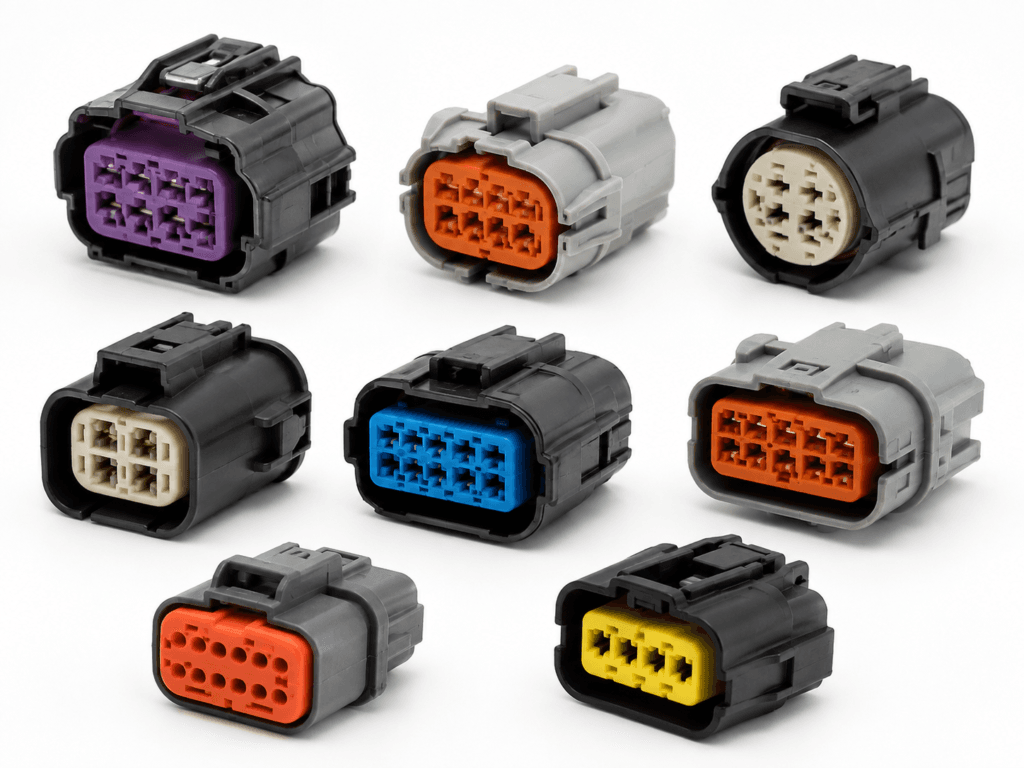
Modern vehicles contain increasingly complex electronic systems. Advanced driver-assistance systems, sensors, cameras, control modules, infotainment equipment, and vehicle networking all depend on precision molded plastic components.
Las aplicaciones típicas incluyen:
- Carcasas de conectores
- ECU enclosures
- Alojamientos de sensores
- Soportes para cámaras
- Fuse-box components
- Cajas de interruptores
- Cable-management components
These parts often require tight tolerances and stable dimensions because small deviations can affect electrical interfaces and assembly.
For electrical applications, material properties may include:
- Aislamiento eléctrico
- Retardancia de llama
- Heat resistance
- Estabilidad dimensional
- Low moisture sensitivity
PBT and engineering nylons are commonly considered for connectors, while PC/ABS and other flame-retardant materials can be used for electronic housings.
5. Injection Molded Components for Electric Vehicles
Electric vehicles are creating additional opportunities for plastic injection molding.
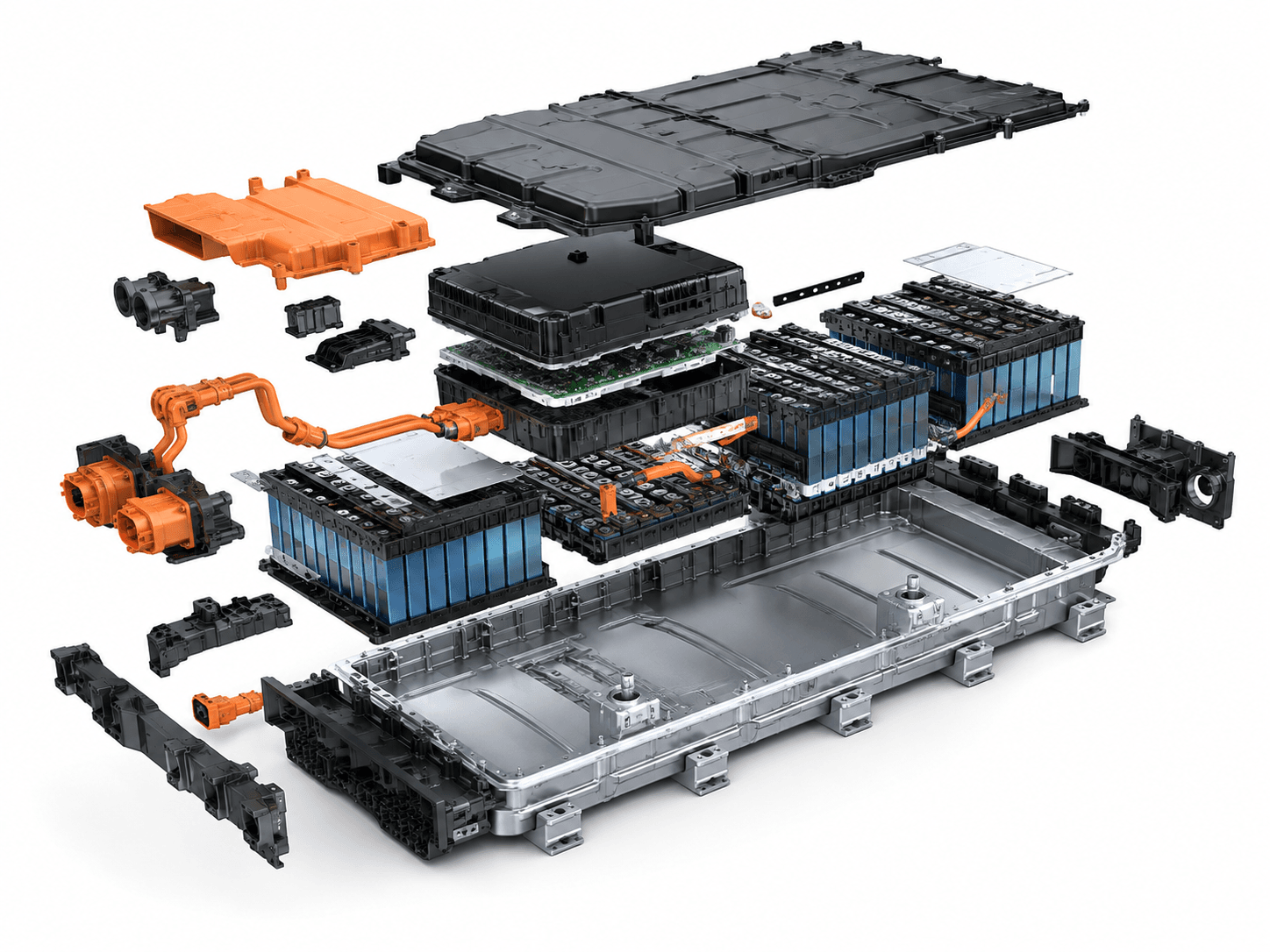
While battery cells and structural battery frames may use metal, many surrounding components benefit from engineering plastics.
Los ejemplos incluyen:
- High-voltage connector housings
- Battery protection covers
- Soportes para pilas
- BMS housings
- Charging connector components
- Barreras de aislamiento
- Cable-routing components
- Cubiertas protectoras eléctricas
Weight reduction is particularly valuable in EV applications because every kilogram can influence vehicle efficiency.
At the same time, electrical safety becomes more critical. Materials may need to provide flame resistance, electrical insulation, heat stability, and dimensional accuracy.
EV Automotive Plastic Components
| Componente | Requisito principal | Material potencial |
| HV Connector | Insulation + precision | PBT FR |
| Tapa de la batería | Impacto + resistencia a las llamas | PC/ABS FR |
| Portapilas | Strength | PA66-GF |
| BMS Housing | Protección eléctrica | PC/ABS |
| Charging Component | Weatherability + insulation | PC/ASA |
6. Automotive Lighting Components
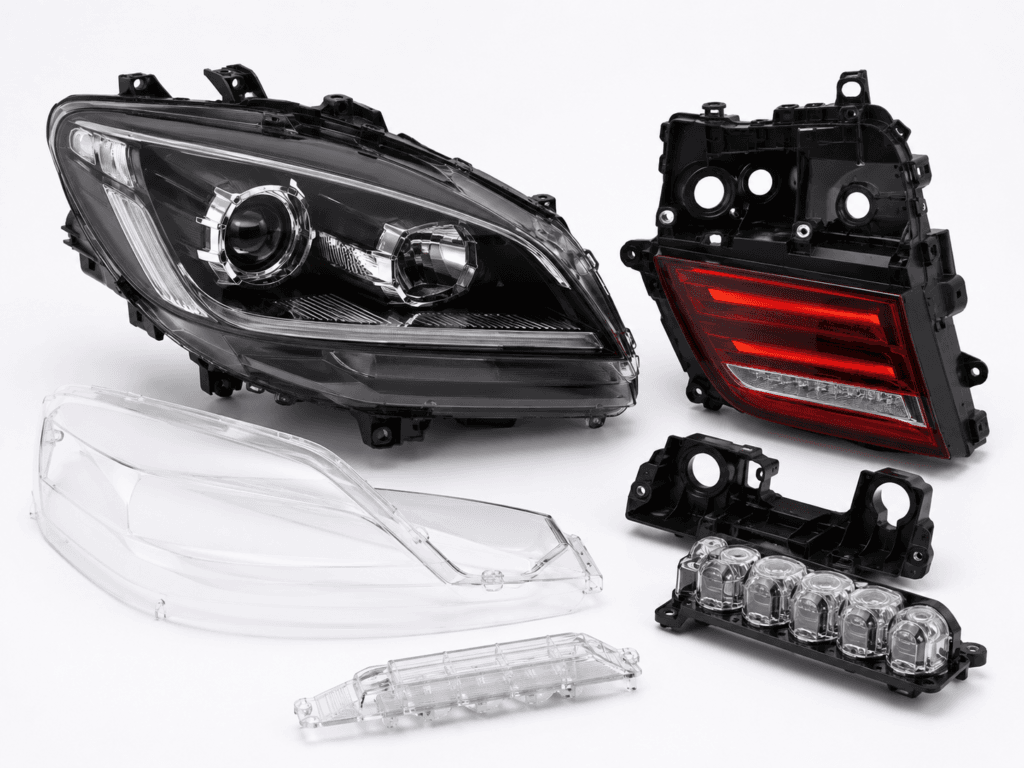
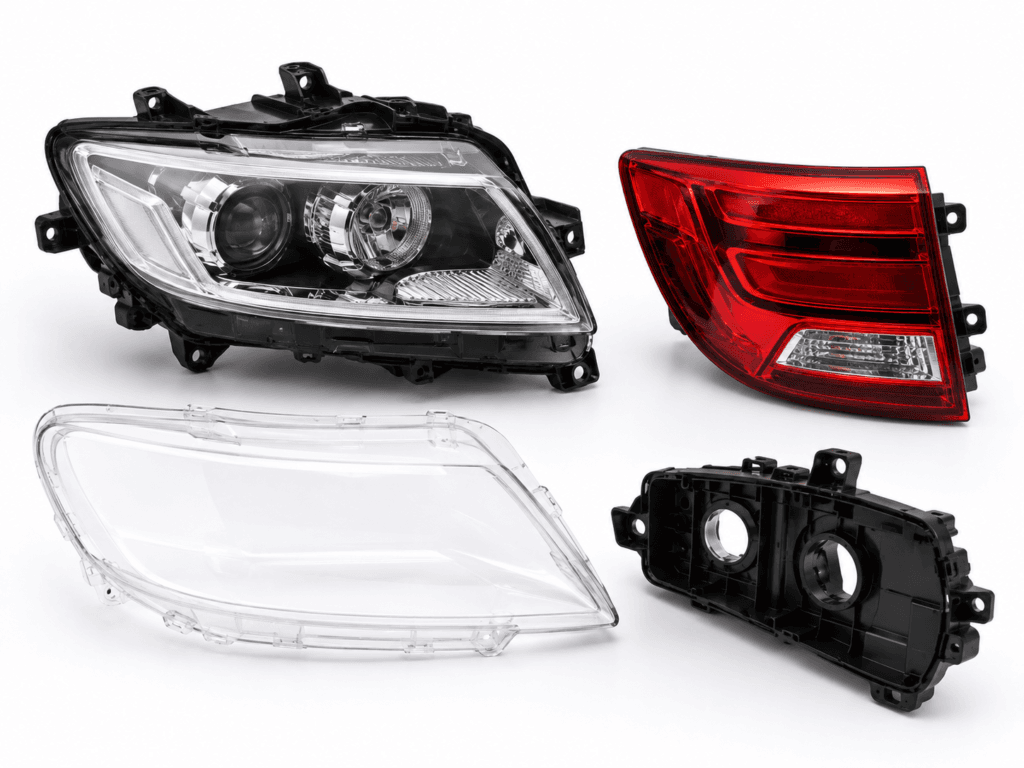
Automotive lighting systems combine appearance, optical performance, heat management, and dimensional accuracy.
Los componentes moldeados por inyección pueden incluir:
- Headlamp housings
- Rear lamp housings
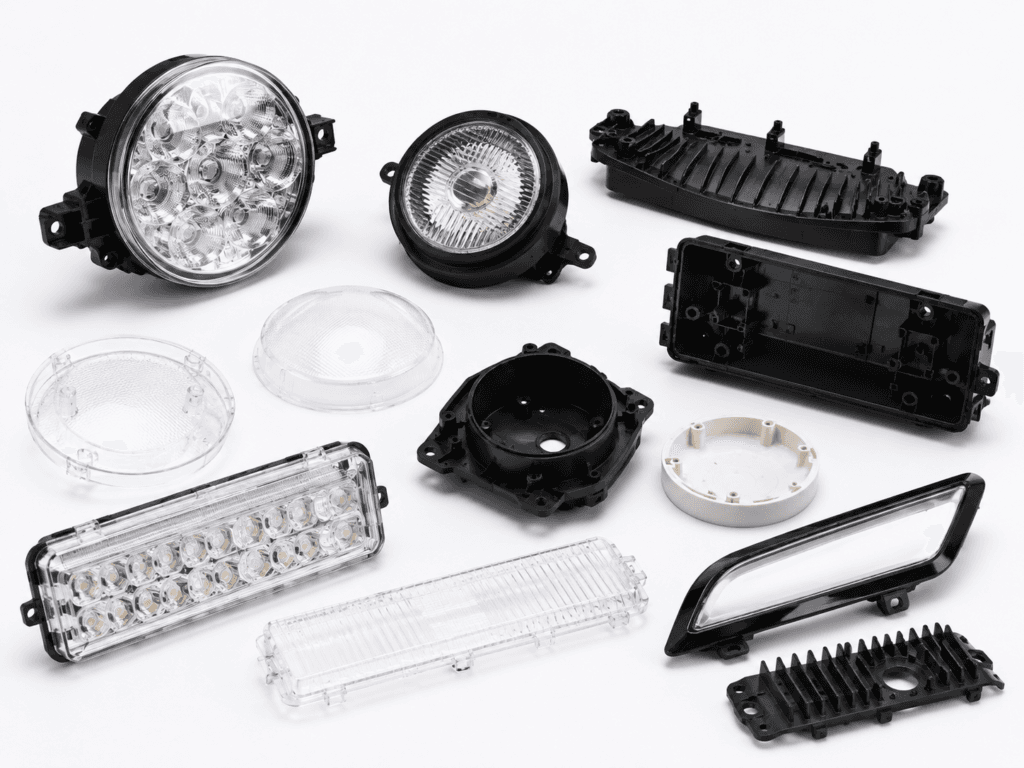
- Reflector structures
- LED module covers
- Connector interfaces
- Mounting brackets
PC is widely associated with transparent automotive lighting applications because of its impact resistance and optical properties, while other engineering plastics may be used for structural housings.
The mold surface, venting, temperature control, and material handling are particularly important where optical appearance is critical.
7. Key Materials Used in Automotive Injection Molding
Automotive plastics are selected according to mechanical, thermal, electrical, cosmetic, and environmental requirements.
| Material | Propiedades principales | Common Automotive Applications |
| PP | Lightweight, chemical resistant | Moldura interior |
| ABS | Appearance, processability | Interior components |
| PC/ABS | Impact + dimensional stability | Dashboards, housings |
| PA66-GF | Strength + heat resistance | Under-hood parts |
| PBT | Electrical properties | Conectores |
| POM | Wear resistance | Engranajes y mecanismos |
| PC | Impact and transparency | Lighting components |
| ASA | Resistencia a los rayos UV | Exterior parts |
| PD | High-temperature resistance | Advanced electrical parts |
Material selection should always be based on the finished component rather than only the resin datasheet.
Wall thickness, weld lines, fiber orientation, moisture absorption, chemical exposure, operating temperature, and expected lifetime can all influence real-world performance.
8. Automotive Injection Mold Design
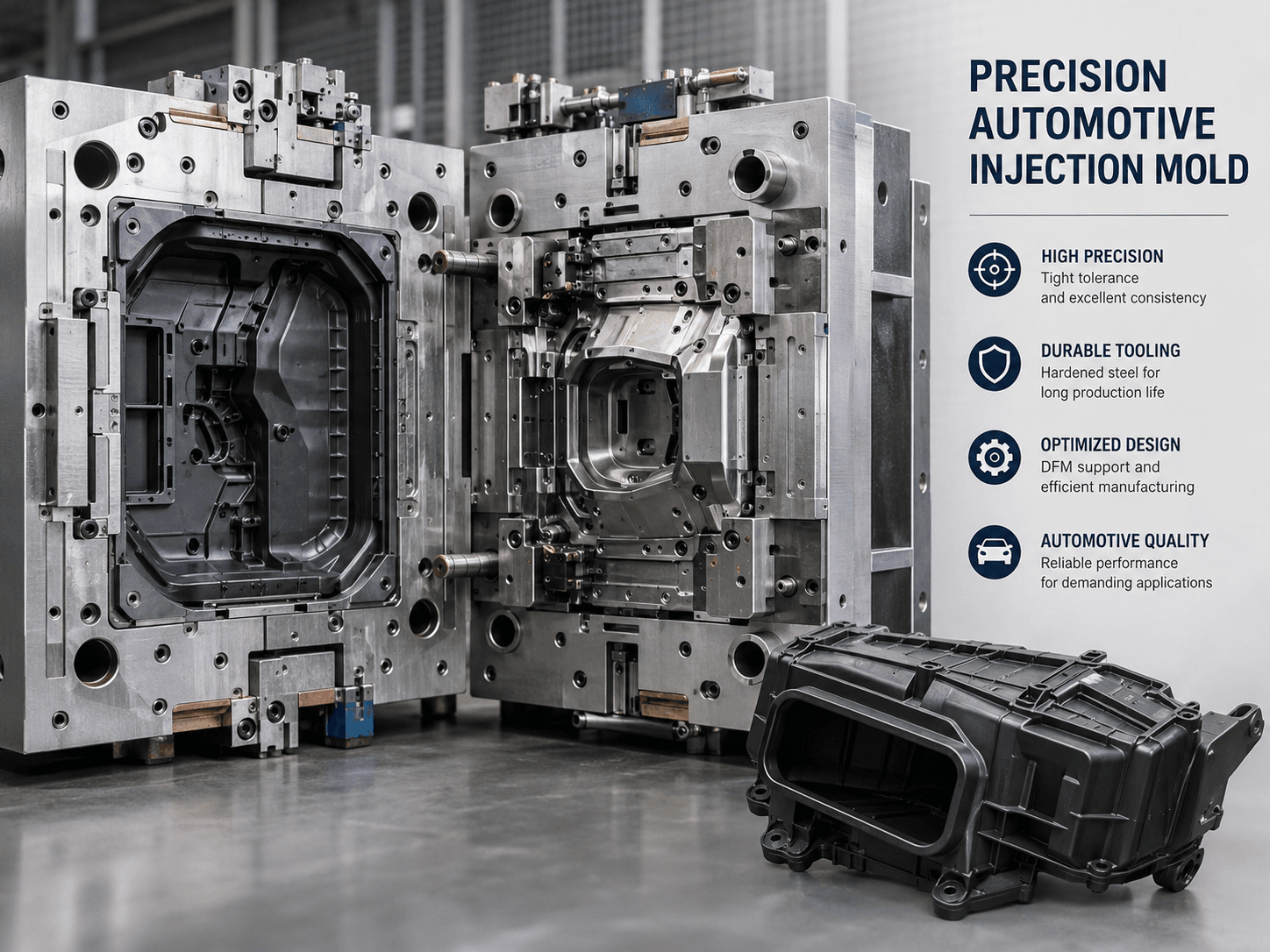
Automotive molds must deliver repeatable dimensional accuracy over long production runs.
Important mold engineering areas include:
Gate Design
Gate position affects filling balance, weld-line location, packing pressure, and cosmetic appearance.
Cooling System
Balanced cooling helps control cycle time and reduce warpage.
Desahogo
Proper venting prevents trapped gas, short shots, burn marks, and poor surface quality.
Deslizadores y levantadores
Automotive parts frequently contain side holes, snap hooks, clips, and other undercuts requiring side-action mechanisms.
Mold Surface
Textures, polished surfaces, and grain patterns must be reproduced consistently across production.
For complex automotive parts, Moldflow simulation can help predict filling behavior, weld lines, pressure, cooling, shrinkage, and potential deformation before mold manufacturing.
9. Common Automotive Injection Molding Defects
Automotive quality requirements make defect prevention essential.
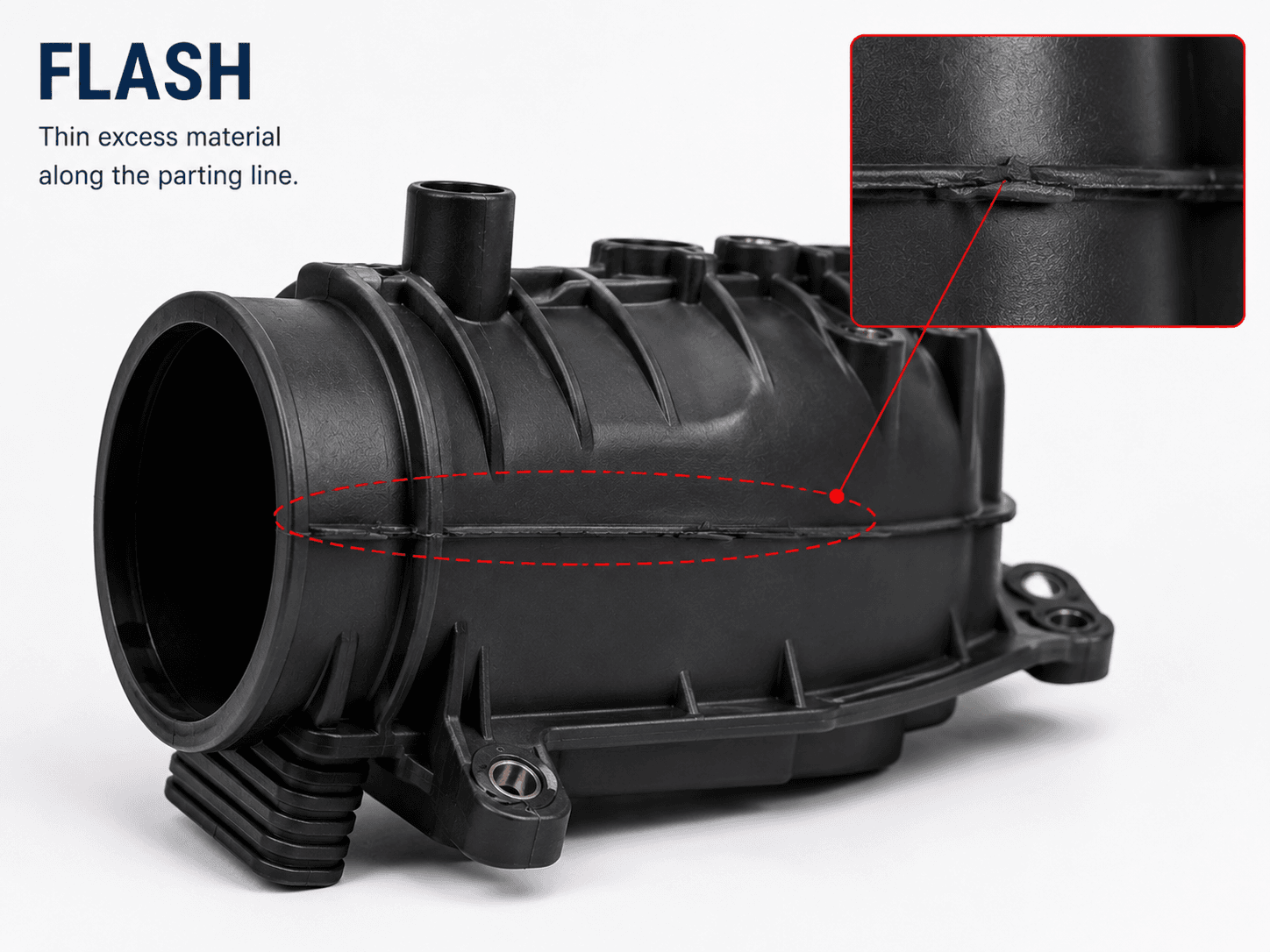
| Defecto | Posible causa | Solución de ingeniería |
| Deformación | Unbalanced cooling | Optimize cooling layout |
| Marcas de hundimiento | Thick local sections | Improve wall thickness |
| Líneas de soldadura | Poor flow pattern | Optimize gate position |
| Destello | Desgaste del molde o presión excesiva | Mejorar el ajuste del molde |
| Tiro corto | Restricted flow | Adjust gate/process |
| Exposición a la fibra | Reinforced material/process conditions | Optimize mold and parameters |
| Variación dimensional | Merma / inestabilidad del proceso | Mejorar el control de procesos |
Early DFM review helps identify many of these problems before tooling begins.
10. Automotive Quality Control
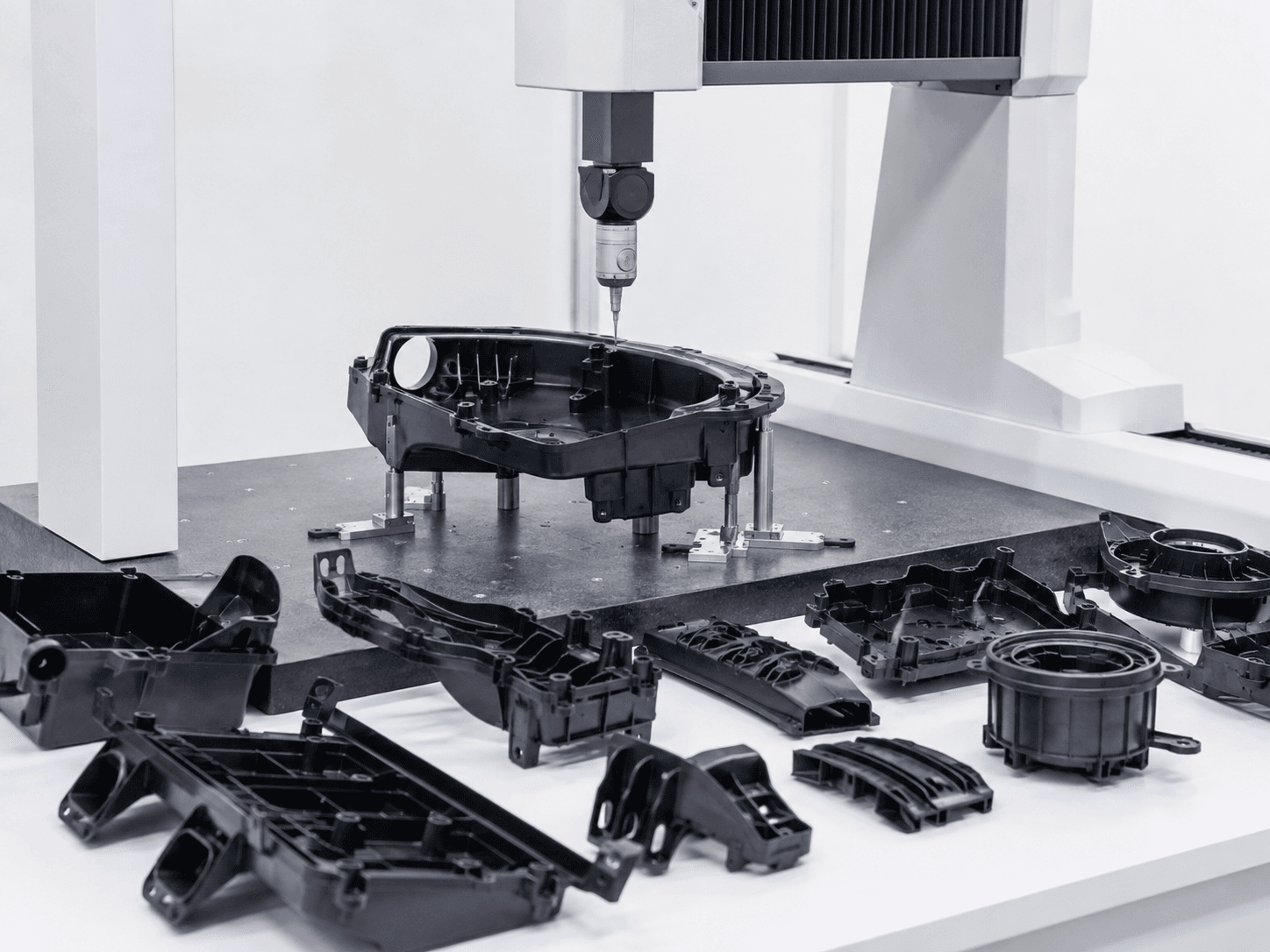
Automotive parts typically require strict inspection and production traceability.
Common methods include:
- inspección dimensional por MMC
- Optical measurement
- Calibres Pasa/No Pasa
- Assembly fixtures
- Verificación de material
- Impact testing
- Envejecimiento térmico
- Pruebas ambientales
- Pruebas funcionales
Statistical process control may also be used to monitor critical dimensions during production.
Depending on the project, automotive suppliers may operate according to quality-management systems such as IATF 16949 and customer-specific requirements.
Why Choose Samgo for Automotive Injection Molding?
Automotive injection molding requires close coordination between product engineering, tooling, material selection, and production.
Samgo supports automotive projects from design evaluation through mold manufacturing and mass production.
| Capacidad | Beneficio para el cliente |
| Diseño de productos Reseña | Mejorar la fabricabilidad |
| Análisis DFM | Identify risks before tooling |
| Simulación Moldflow | Optimizar el llenado y la alabeo |
| Herramientas de Precisión | Stable dimensional accuracy |
| Moldeo por inyección | Repeatable production |
| Inspección de Calidad | Verify critical specifications |
| Assembly Support | Simplify supply chain |
Applications can include interior components, exterior housings, connectors, lighting products, under-hood parts, EV battery components, and other custom automotive plastic parts.
Preguntas frecuentes
Which plastics are most commonly used in automotive injection molding?
PP, ABS, PC/ABS, PA66-GF, PBT, POM, PC, ASA, and PPS are widely used depending on the application.
Why are plastics increasingly used in electric vehicles?
Engineering plastics can reduce weight, provide electrical insulation, resist corrosion, and integrate complex features into fewer components.
What is important when molding automotive connector housings?
Dimensional accuracy, electrical properties, material stability, mold precision, and reliable process control are particularly important.
Why is Moldflow useful for automotive parts?
Automotive parts often have complex geometries and strict dimensional requirements. Simulation can help predict filling, weld lines, cooling, shrinkage, and warpage before tooling is manufactured.
Conclusión
Injection molding is essential to modern automotive manufacturing. Interior trim, exterior housings, electrical connectors, under-hood components, lighting systems, and electric-vehicle battery parts all benefit from the lightweight construction, complex geometry, and high-volume efficiency of molded plastics.
However, automotive components must meet demanding standards for dimensional accuracy, heat resistance, impact strength, appearance, environmental durability, and long-term reliability.
Successful manufacturing begins with selecting the appropriate engineering plastic and designing the product for injection molding. DFM analysis, Moldflow simulation, precision mold manufacturing, balanced cooling, process control, and rigorous inspection then help convert the design into a stable production component.
As vehicles become increasingly electrified and electronically sophisticated, the role of high-performance injection molded plastics will continue to expand across both conventional and electric automotive platforms.
¿Obtener el último precio? Le responderemos lo antes posible (dentro de las 12 horas)
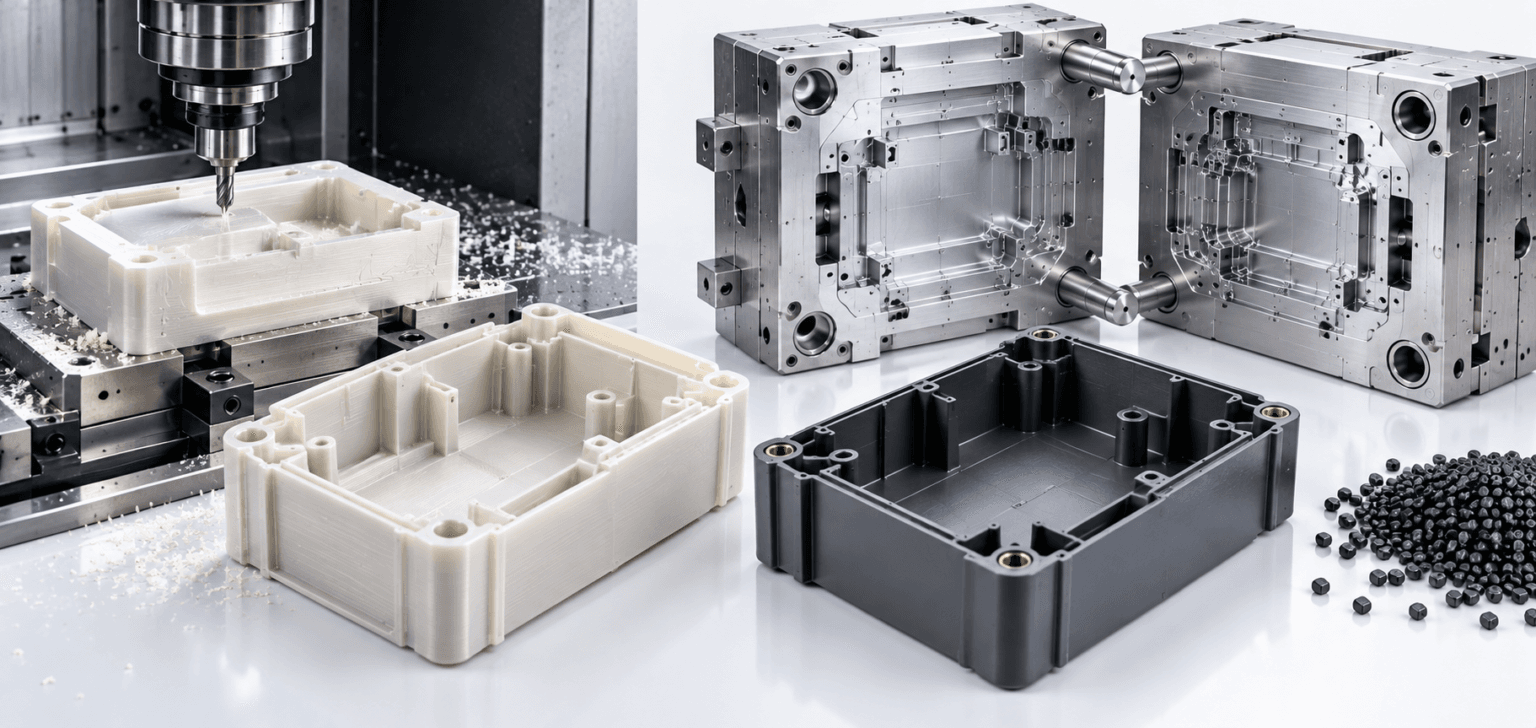

CNC Plastic Prototypes vs. Injection Molded Parts: Key Differences Engineers Should Understand
Compare CNC plastic prototypes and injection molded parts in material properties, dimensions, warpage, surface finish, geometry, cost and production performance.
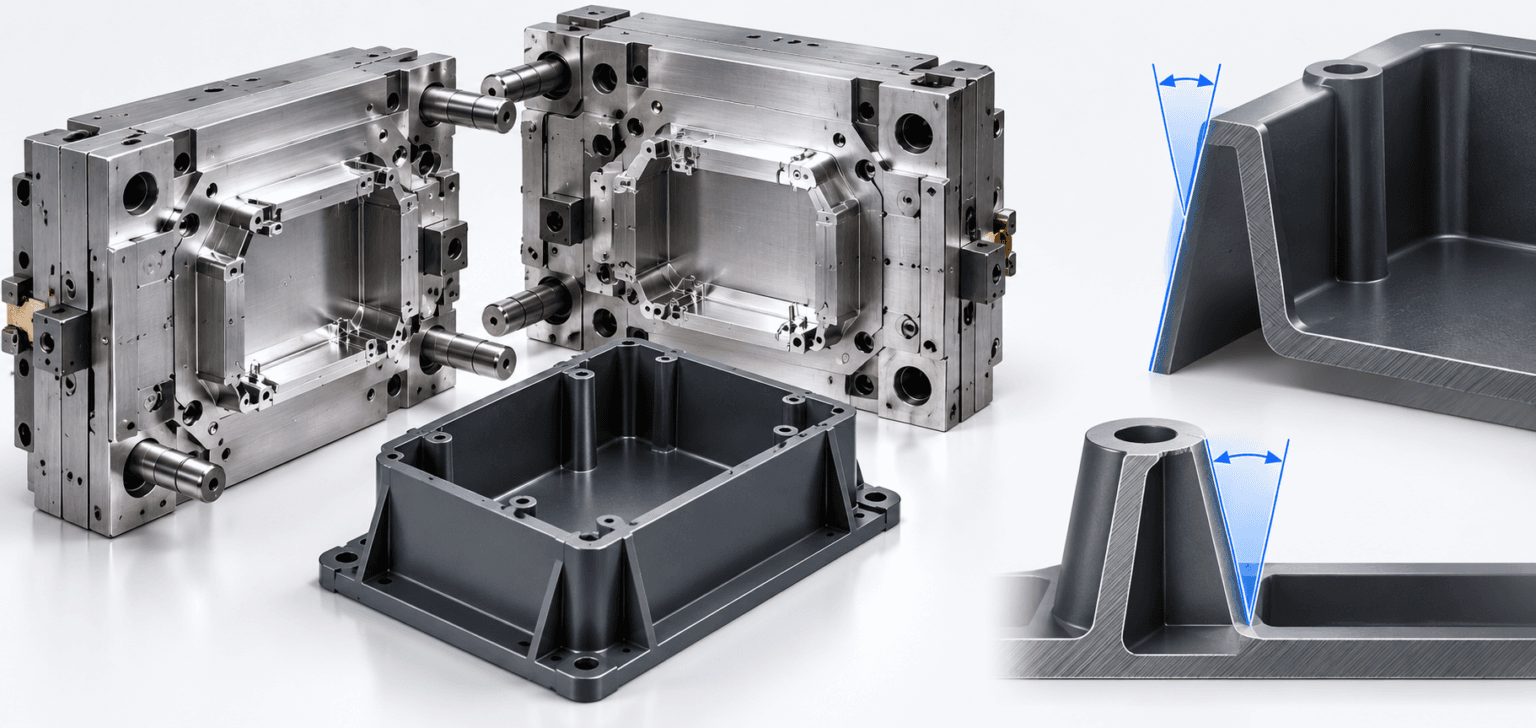
Draft Angle in Injection Mold Design: Improving Part Quality, Ejection and Tooling Efficiency
Discover how draft angles affect injection mold design, part ejection, surface texture, dimensional accuracy, ribs, bosses and long-term tooling performance.
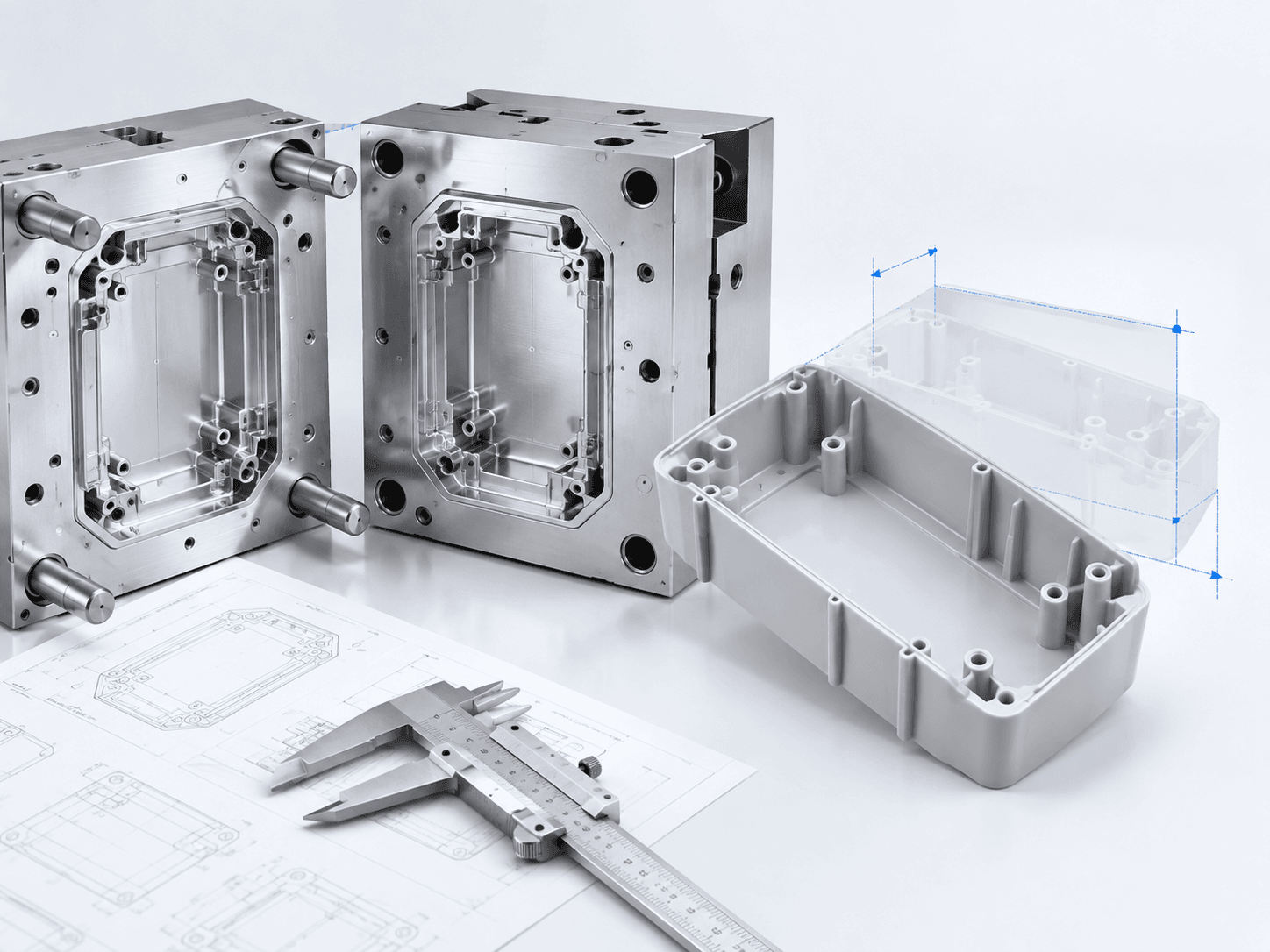
Injection Molding Shrinkage: How to Control Part Dimensions from Mold Design to Production
Learn how injection molding shrinkage affects mold dimensions, tolerances and warpage, and how material, gate design, packing, cooling and mold trials help control final plastic part dimensions.