
Automotive Injection Molding: Applications, Materials, Mold Design, and Manufacturing Solutions

Get a Quote

Table of Contents

Introduction

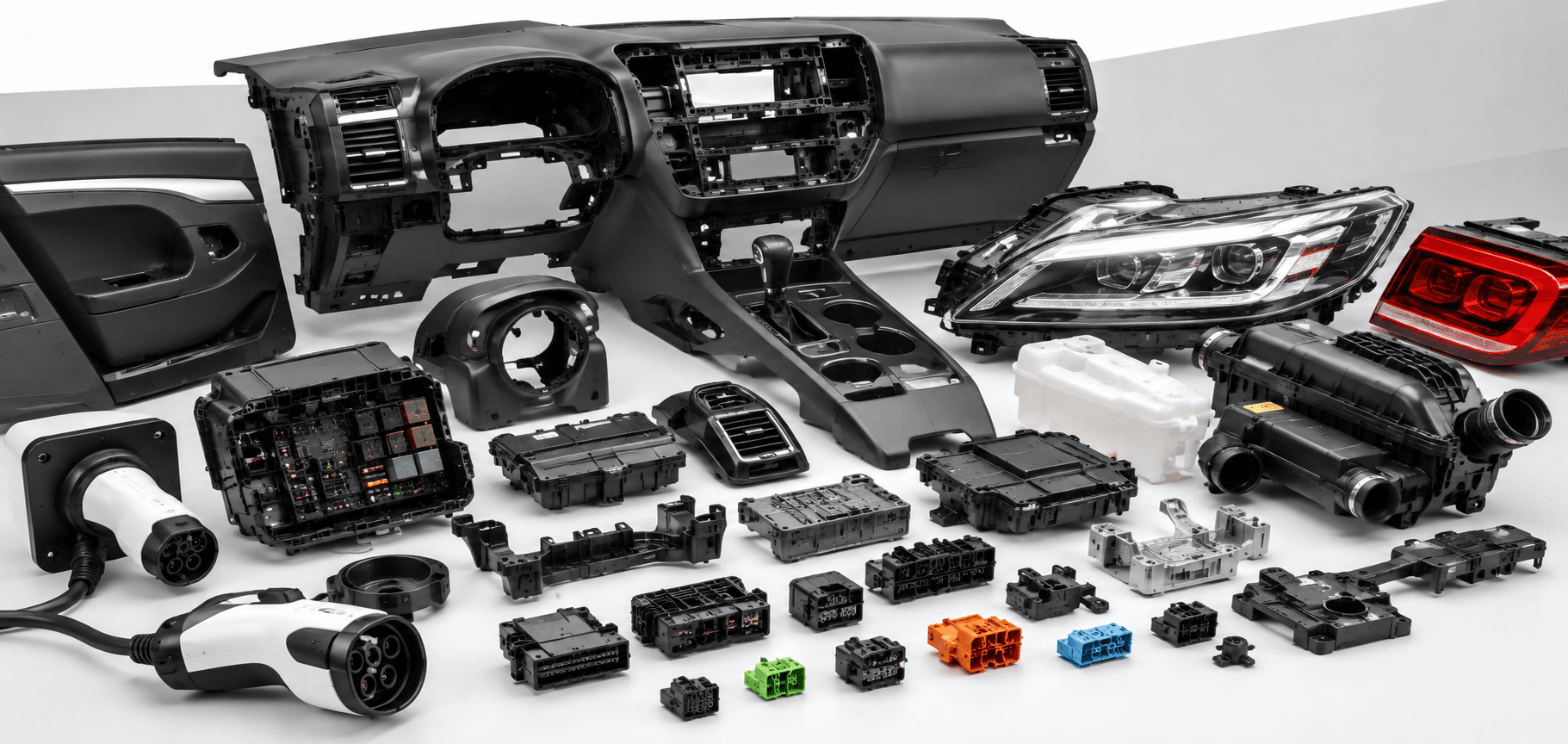
Plastic injection molding plays a critical role in modern automotive manufacturing. From interior trim and electrical connectors to under-hood components and exterior housings, injection molded plastics help vehicle manufacturers reduce weight, integrate complex functions, improve appearance, and support high-volume production.

Automotive applications are more demanding than many general consumer products. Components may need to withstand vibration, impact, chemicals, ultraviolet radiation, temperature cycling, moisture, dimensional loading, and years of continuous service.

The transition toward electric vehicles is further increasing the importance of engineering plastics. Battery systems, charging equipment, sensors, electronic control modules, and high-voltage connectors require lightweight materials with strong electrical insulation and flame-retardant performance.

Successful automotive injection molding therefore requires more than simply producing a plastic part. Material selection, product design, mold engineering, process control, dimensional validation, and long-term reliability must be considered as a complete manufacturing system.

This article explores the major applications, materials, design principles, mold requirements, and quality-control considerations involved in automotive injection molding.


1. Automotive Interior Plastic Components

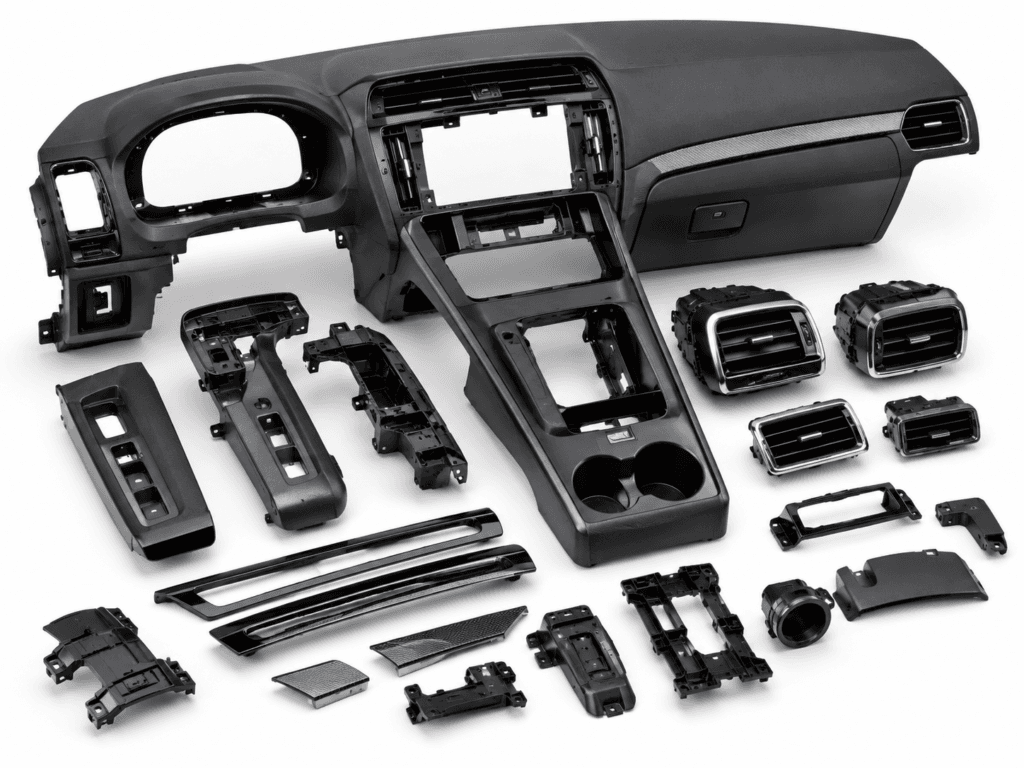
Vehicle interiors contain a large number of injection molded components because the process can produce complex shapes with excellent repeatability and surface quality.

Common applications include:

  • Dashboard components
  • Center consoles
  • Door trim structures
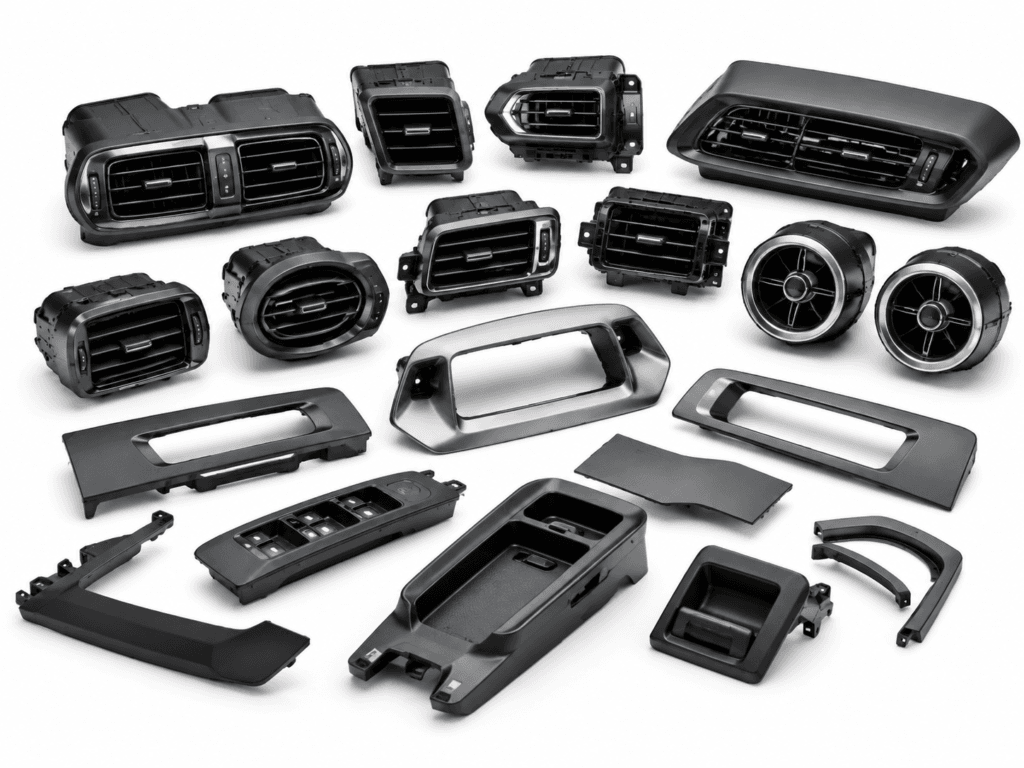
  • Air-conditioning vents
  • Instrument panel housings
  • Cup holders
  • Seat adjustment components
  • Storage compartments
  • Switch housings

Interior components must balance appearance, dimensional stability, tactile quality, mechanical strength, and cost.

Materials such as ABS, PC/ABS, PP, and modified engineering plastics are widely considered depending on the application.

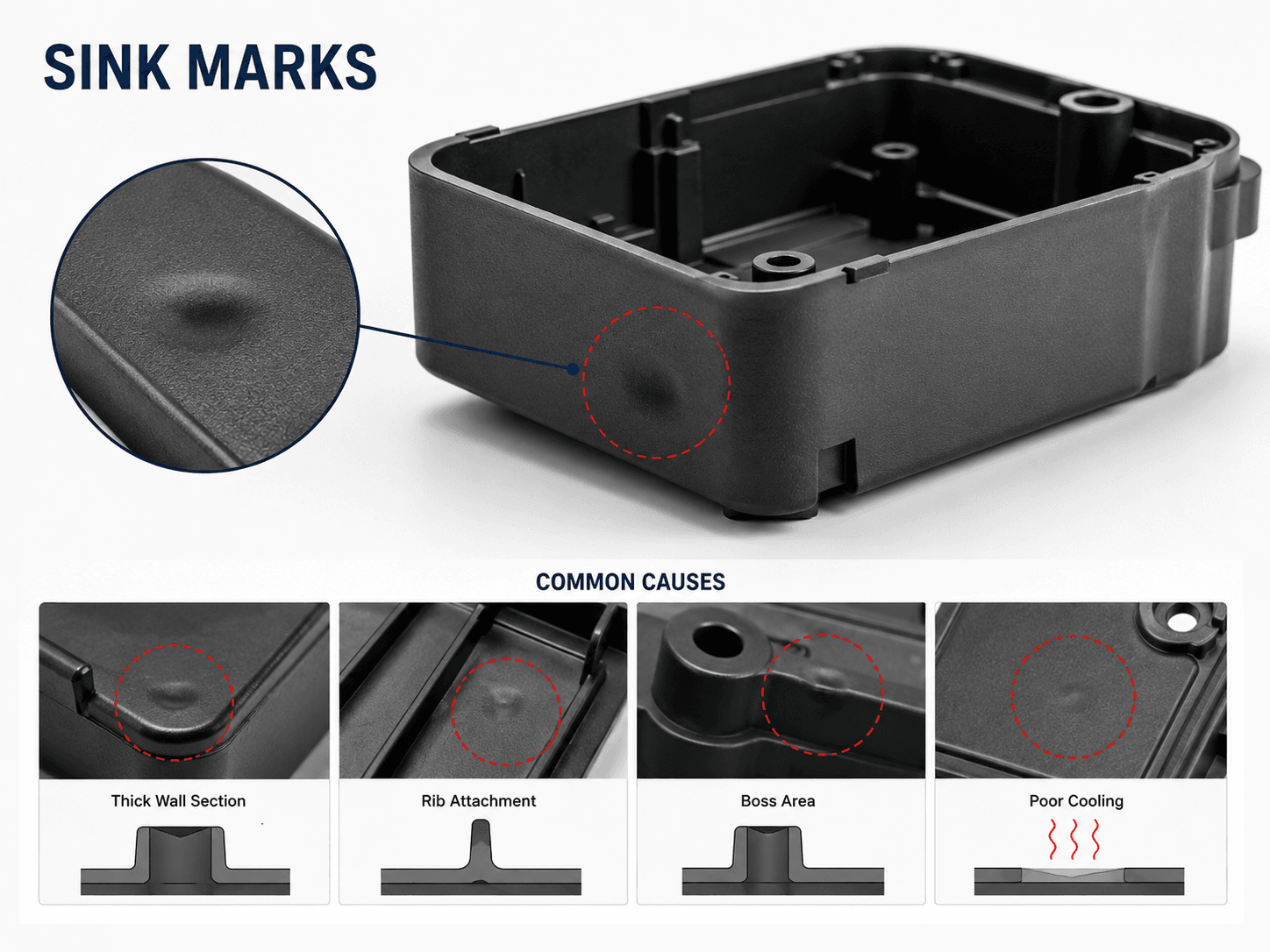
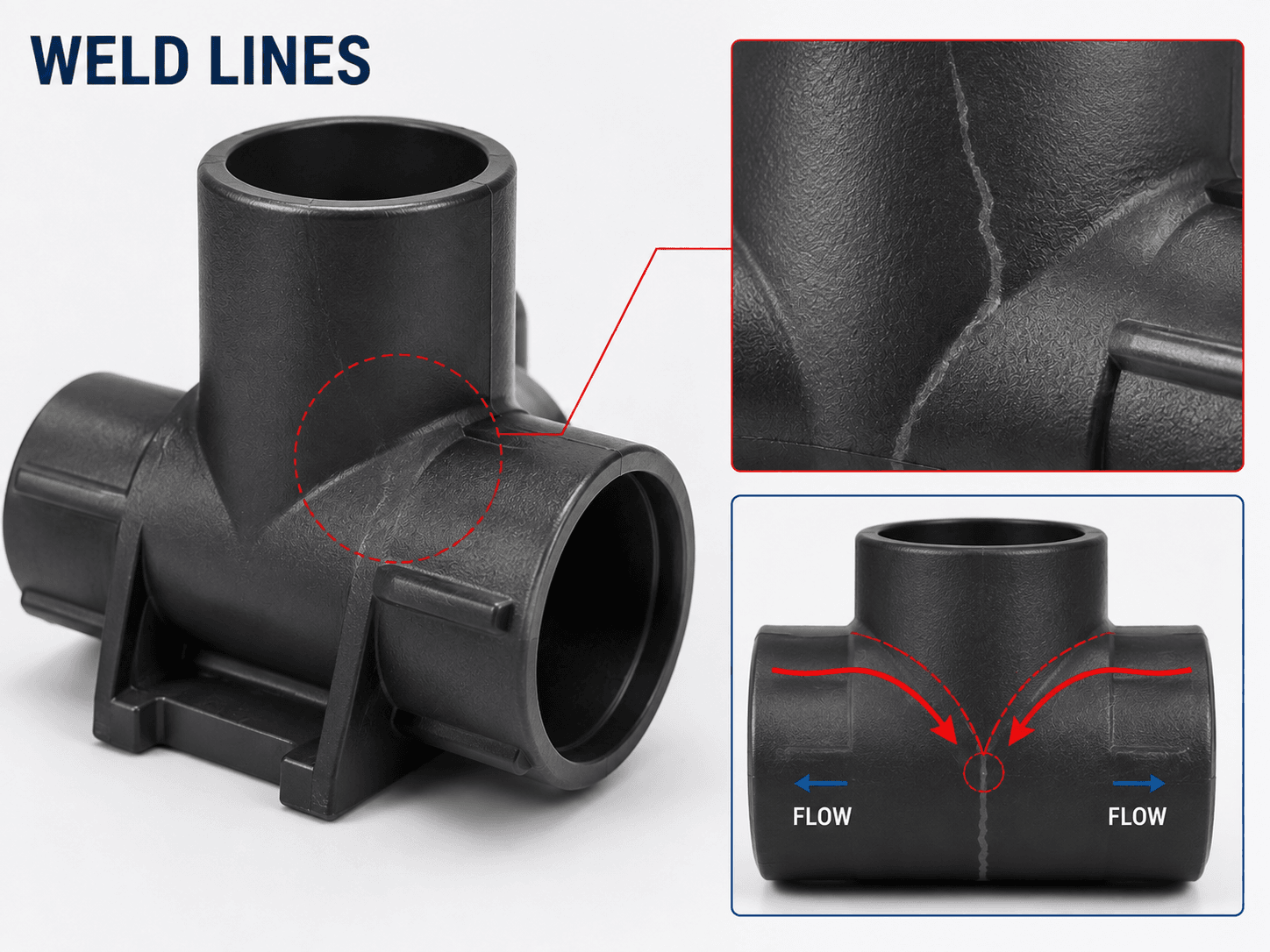
For visible Class-A surfaces, mold texture and processing conditions are especially important. Flow marks, weld lines, sink marks, gloss variation, or warpage can directly affect perceived vehicle quality.

Automotive Interior Material Examples

ComponentTypical RequirementPotential Material
Dashboard HousingAppearance + impact resistancePC/ABS
Door Trim StructureLightweight + toughnessPP
Air VentDimensional stabilityABS
Switch HousingPrecision + appearancePC/ABS
Console ComponentSurface qualityABS / PC+ABS

2. Exterior Automotive Plastic Parts

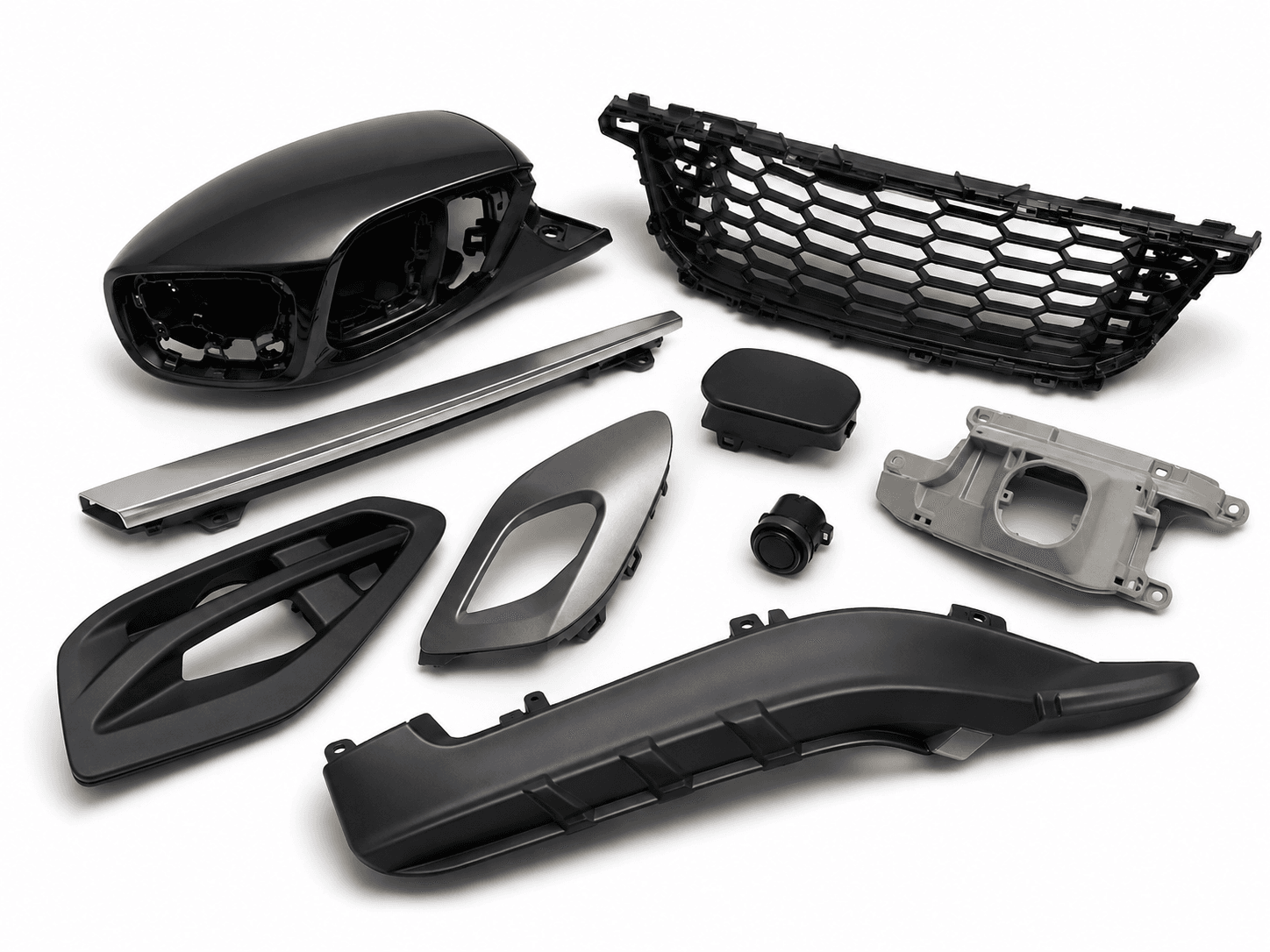
Exterior automotive components must withstand sunlight, rain, road contamination, temperature changes, vibration, and mechanical impact.

Injection molding is used for products such as:

  • Exterior trim
  • Mirror housings
  • Grille components
  • Sensor covers
  • Wheel-arch components
  • Protective covers
  • Lighting housings
  • Decorative exterior parts

UV resistance and dimensional stability become particularly important.

ASA, PC/ASA, PP-based materials, reinforced engineering plastics, and other weather-resistant grades may be selected depending on the mechanical and cosmetic requirements.

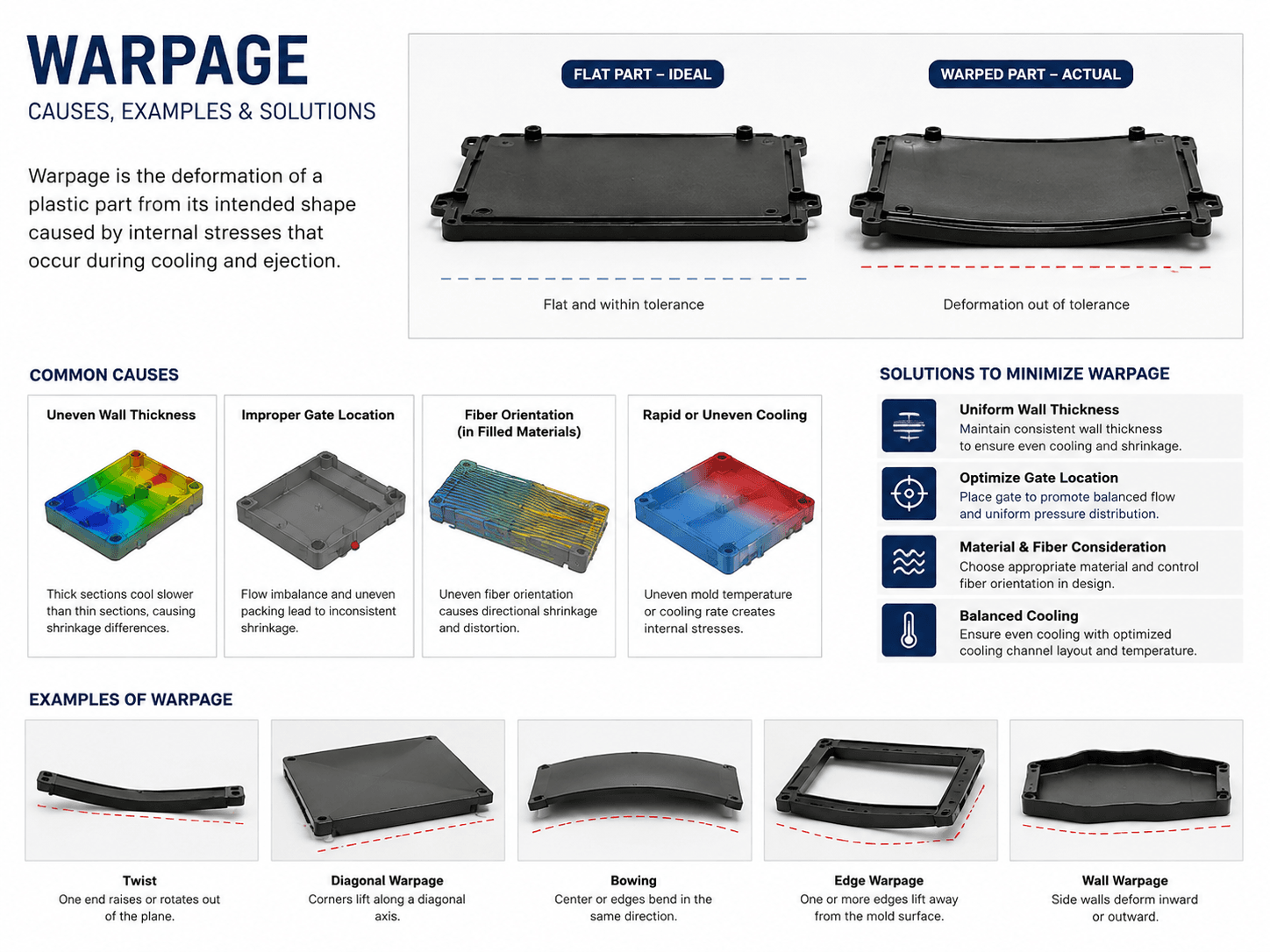
Large exterior components also require careful warpage control. Uneven wall thickness, poorly positioned gates, or unbalanced cooling can create visible distortion after molding.

3. Under-the-Hood Injection Molded Components

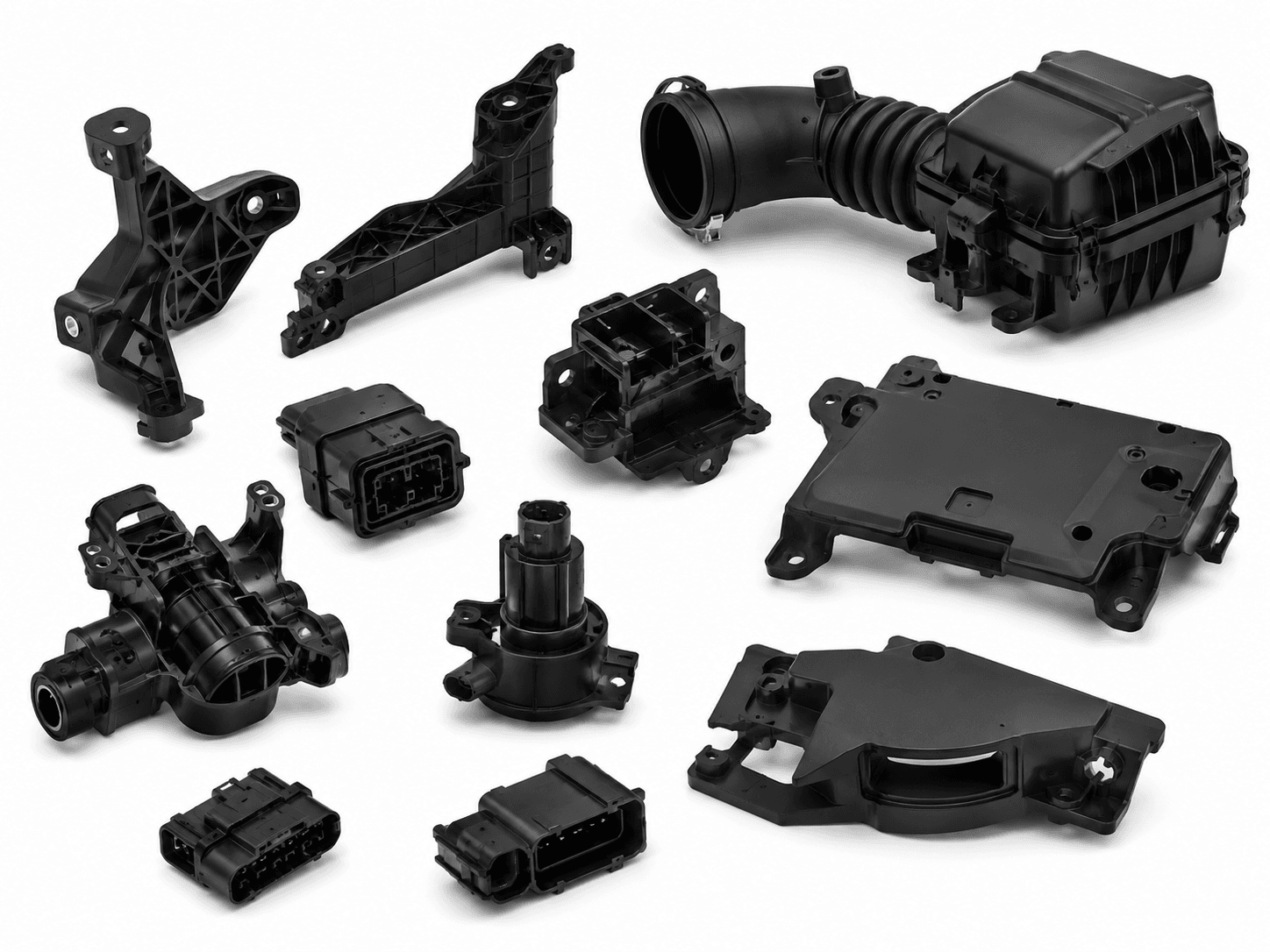
The engine compartment is one of the most demanding environments for plastic components.

Parts may be exposed to:

  • Elevated temperatures
  • Oil
  • Coolant
  • Fuel vapors
  • Mechanical vibration
  • Repeated thermal cycling

Typical molded components include:

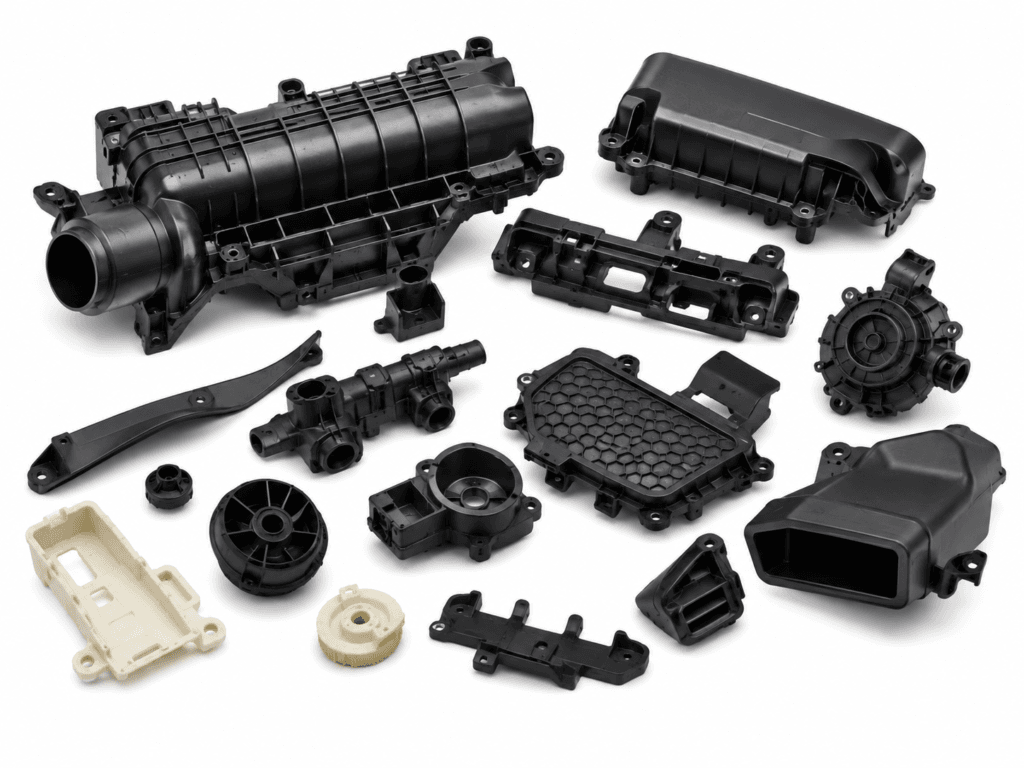
  • Air intake parts
  • Electrical housings
  • Fan components
  • Fluid-system connectors
  • Cable clips
  • Sensor housings
  • Protective covers

Engineering plastics such as PA66-GF, PBT, PPS, and high-temperature polymers may be required.

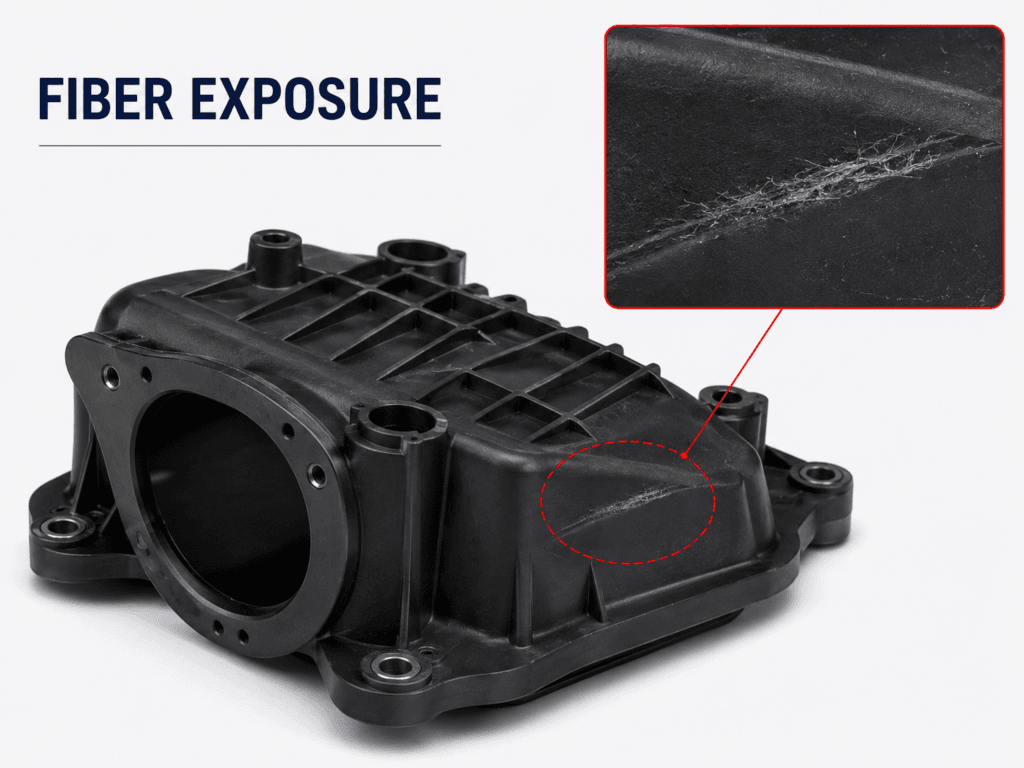
Glass-fiber reinforcement can increase stiffness and heat resistance, but it can also introduce anisotropic shrinkage and surface-quality challenges. Mold design and gate position therefore become particularly important.

Under-Hood Material Comparison

MaterialMajor AdvantageTypical Use
PA66-GFHeat resistance and strengthStructural components
PBTElectrical propertiesConnectors
PPSHigh-temperature performanceThermal/electrical applications
PP ModifiedChemical resistanceCovers
PC/ABSImpact performanceProtected electronic housings

4. Automotive Electrical and Electronic Components

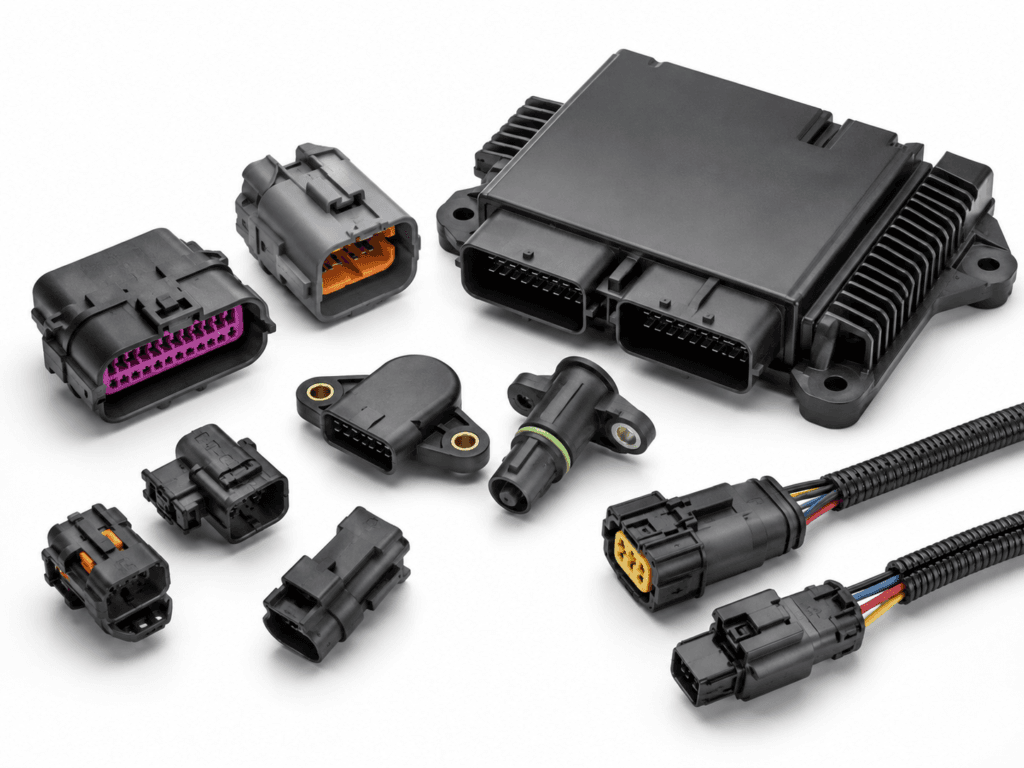
Modern vehicles contain increasingly complex electronic systems. Advanced driver-assistance systems, sensors, cameras, control modules, infotainment equipment, and vehicle networking all depend on precision molded plastic components.

Typical applications include:

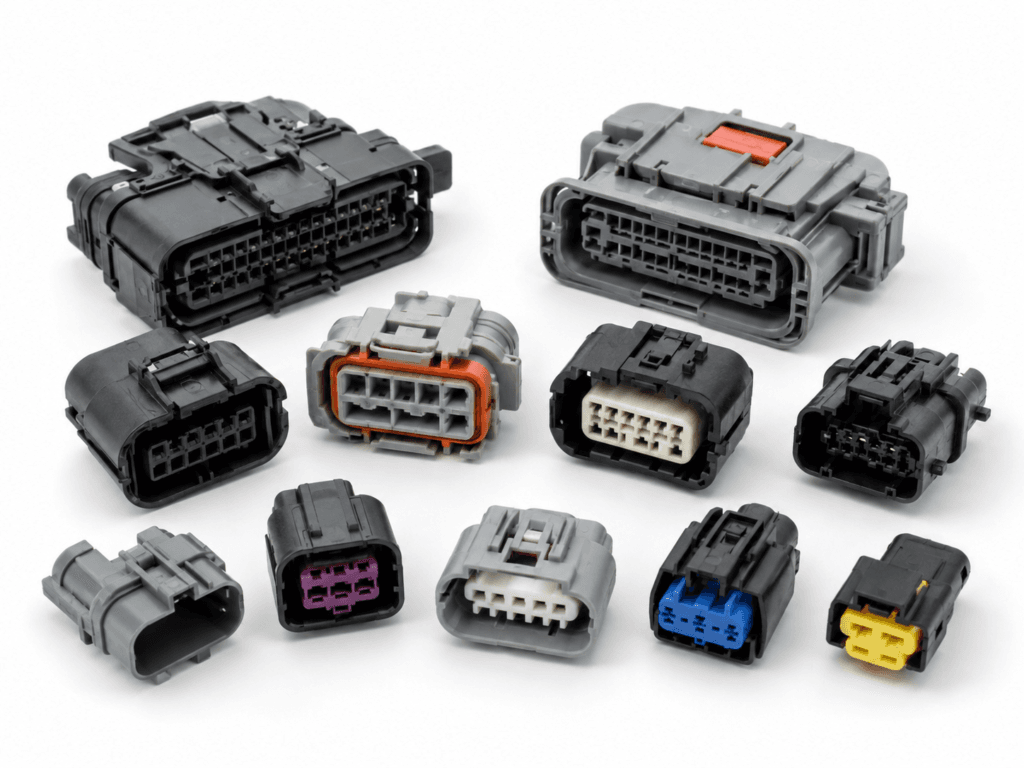
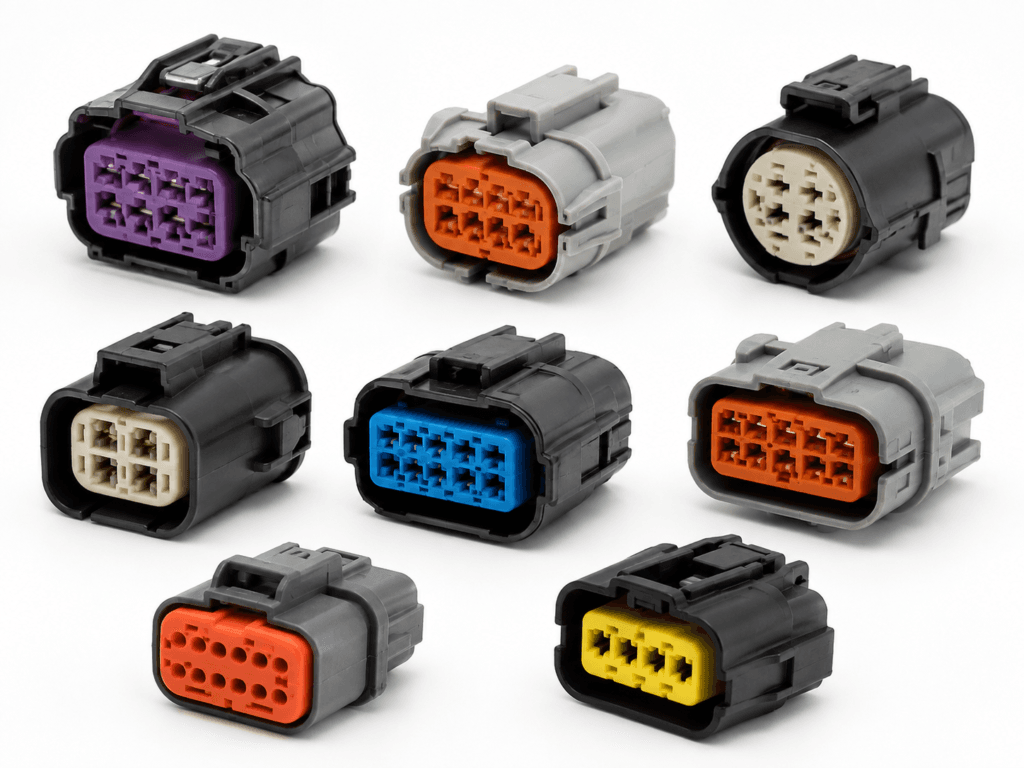
  • Connector housings
  • ECU enclosures
  • Sensor housings
  • Camera brackets
  • Fuse-box components
  • Switch housings
  • Cable-management components

These parts often require tight tolerances and stable dimensions because small deviations can affect electrical interfaces and assembly.

For electrical applications, material properties may include:

  • Electrical insulation
  • Flame retardancy
  • Heat resistance
  • Dimensional stability
  • Low moisture sensitivity

PBT and engineering nylons are commonly considered for connectors, while PC/ABS and other flame-retardant materials can be used for electronic housings.

5. Injection Molded Components for Electric Vehicles

Electric vehicles are creating additional opportunities for plastic injection molding.

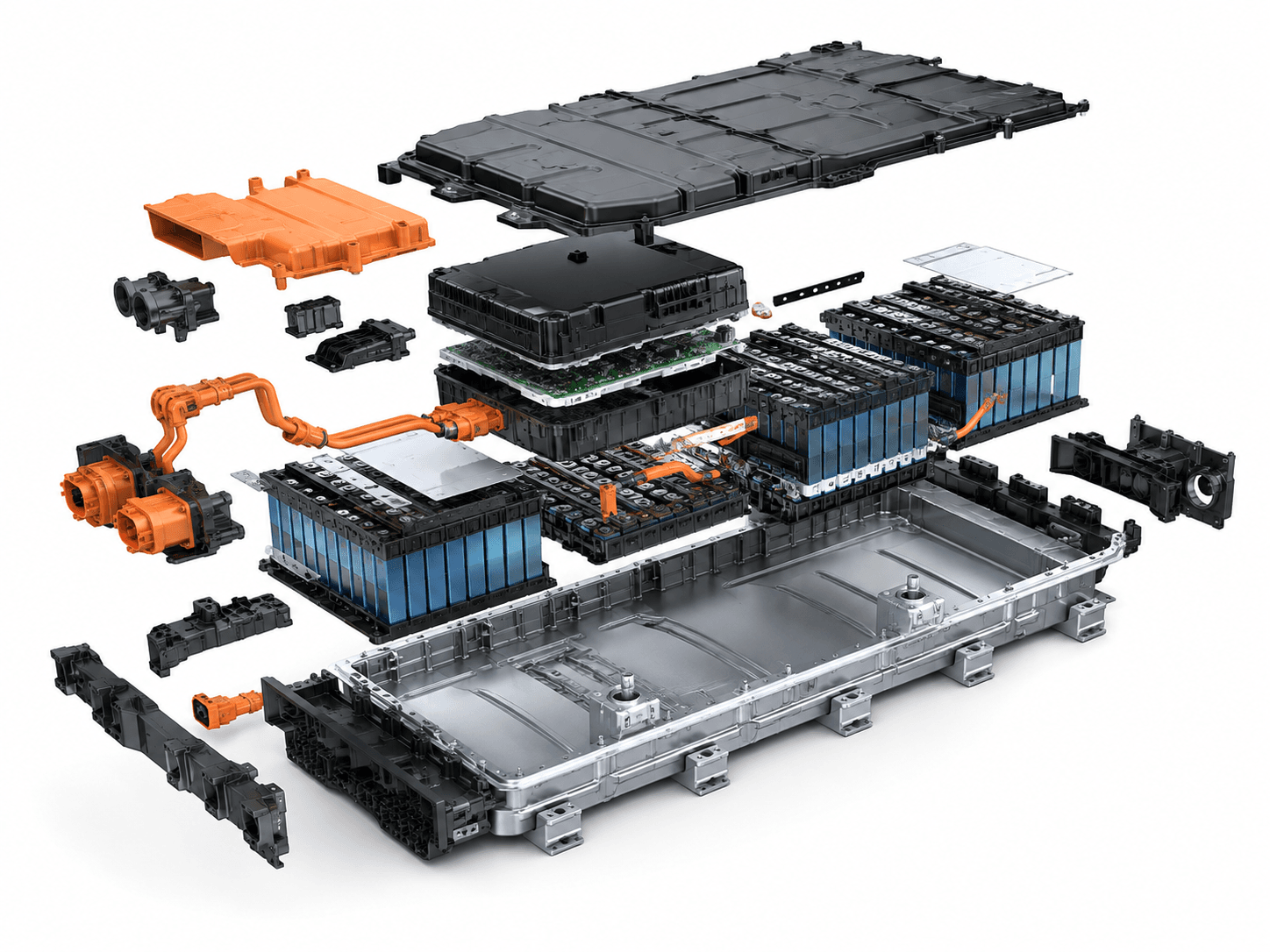
While battery cells and structural battery frames may use metal, many surrounding components benefit from engineering plastics.

Examples include:

  • High-voltage connector housings
  • Battery protection covers
  • Cell holders
  • BMS housings
  • Charging connector components
  • Insulation barriers
  • Cable-routing components
  • Electrical protective covers

Weight reduction is particularly valuable in EV applications because every kilogram can influence vehicle efficiency.

At the same time, electrical safety becomes more critical. Materials may need to provide flame resistance, electrical insulation, heat stability, and dimensional accuracy.

EV Automotive Plastic Components

ComponentMain RequirementPotential Material
HV ConnectorInsulation + precisionPBT FR
Battery CoverImpact + flame resistancePC/ABS FR
Cell HolderStrengthPA66-GF
BMS HousingElectrical protectionPC/ABS
Charging ComponentWeatherability + insulationPC/ASA

6. Automotive Lighting Components

Automotive lighting systems combine appearance, optical performance, heat management, and dimensional accuracy.

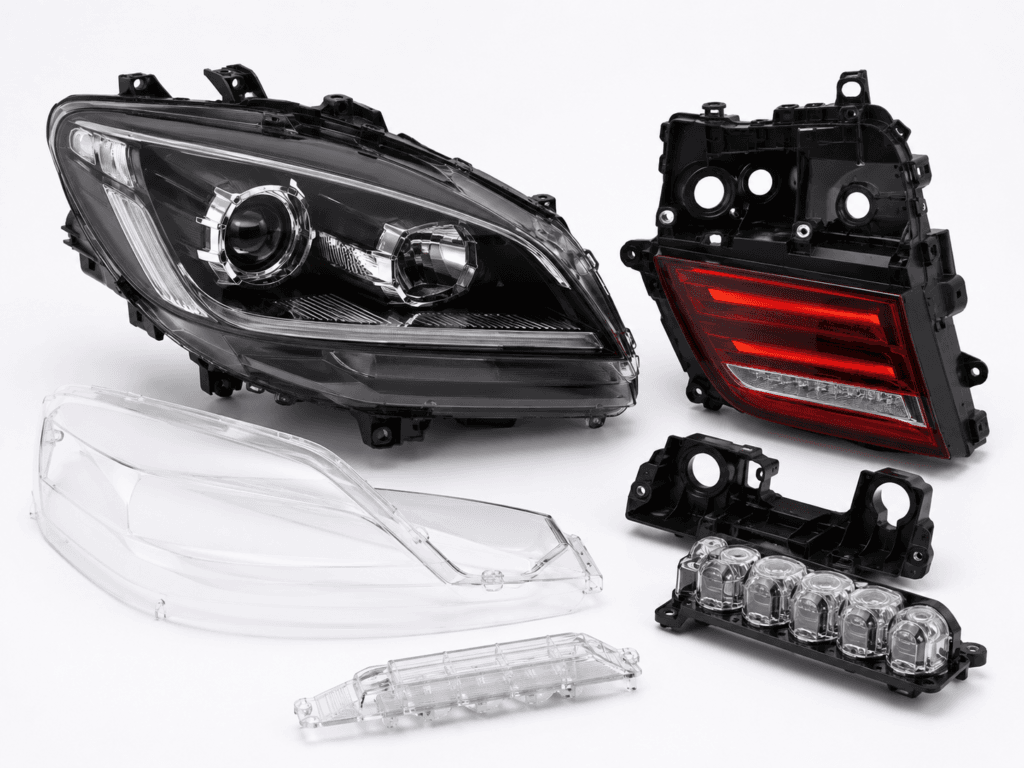
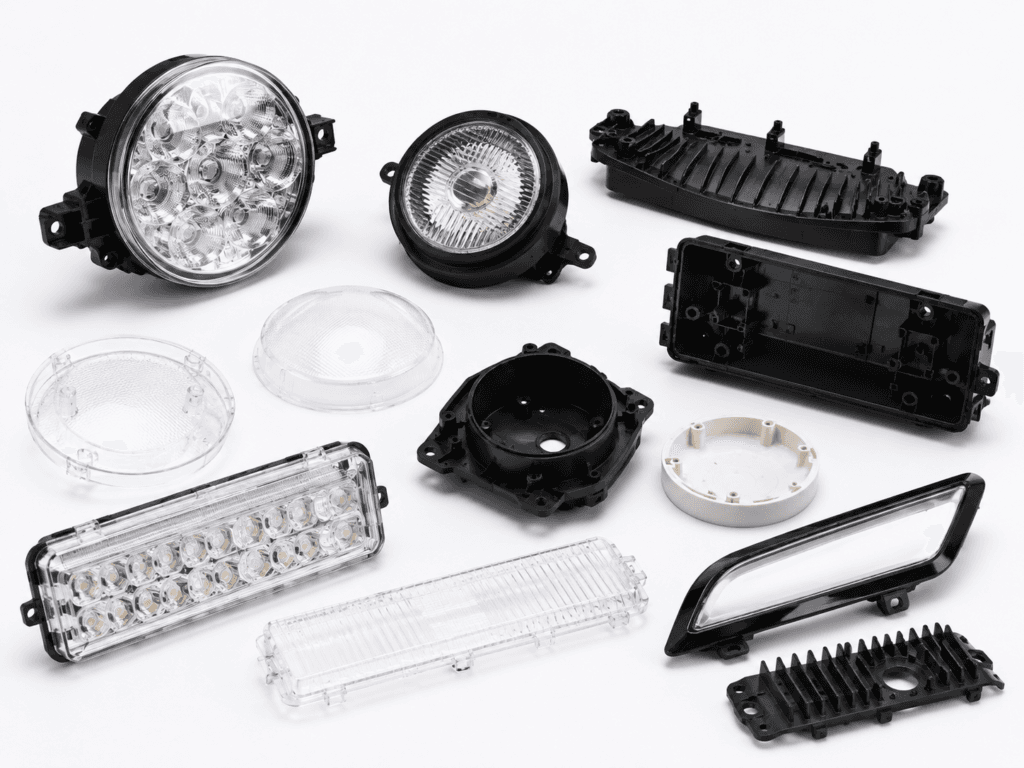
Injection molded components may include:

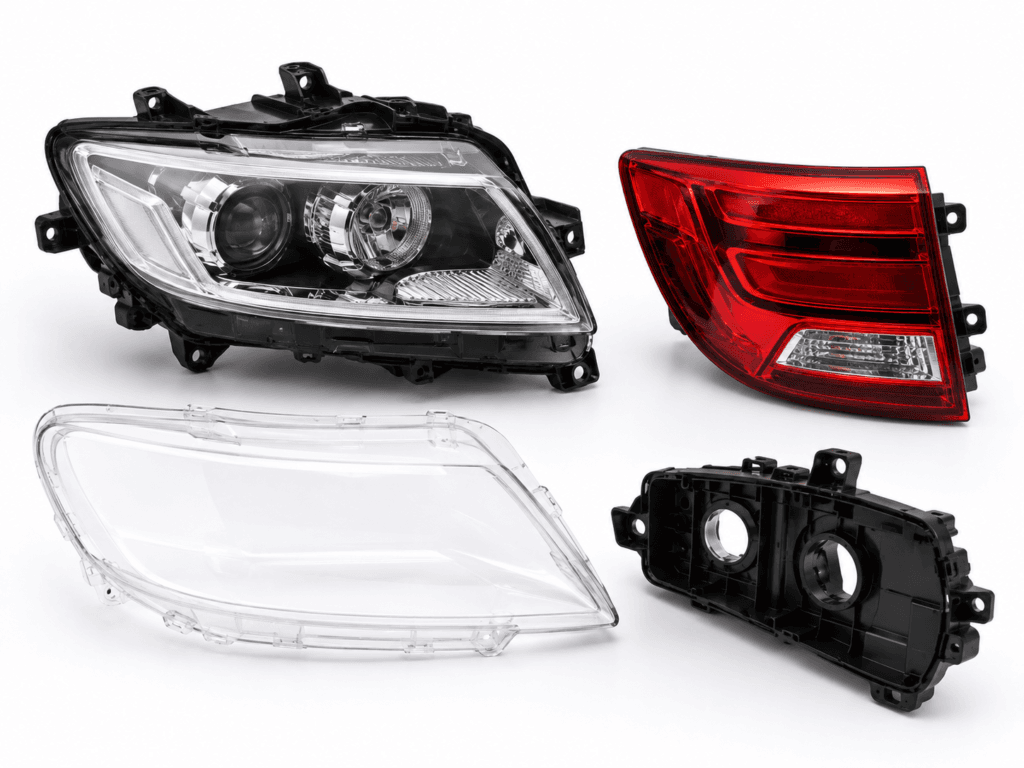
  • Headlamp housings
  • Rear lamp housings
  • Reflector structures
  • LED module covers
  • Connector interfaces
  • Mounting brackets

PC is widely associated with transparent automotive lighting applications because of its impact resistance and optical properties, while other engineering plastics may be used for structural housings.

The mold surface, venting, temperature control, and material handling are particularly important where optical appearance is critical.

7. Key Materials Used in Automotive Injection Molding

Automotive plastics are selected according to mechanical, thermal, electrical, cosmetic, and environmental requirements.

MaterialMain PropertiesCommon Automotive Applications
PPLightweight, chemical resistantInterior trim
ABSAppearance, processabilityInterior components
PC/ABSImpact + dimensional stabilityDashboards, housings
PA66-GFStrength + heat resistanceUnder-hood parts
PBTElectrical propertiesConnectors
POMWear resistanceGears and mechanisms
PCImpact and transparencyLighting components
ASAUV resistanceExterior parts
PPSHigh-temperature resistanceAdvanced electrical parts

Material selection should always be based on the finished component rather than only the resin datasheet.

Wall thickness, weld lines, fiber orientation, moisture absorption, chemical exposure, operating temperature, and expected lifetime can all influence real-world performance.

8. Automotive Injection Mold Design

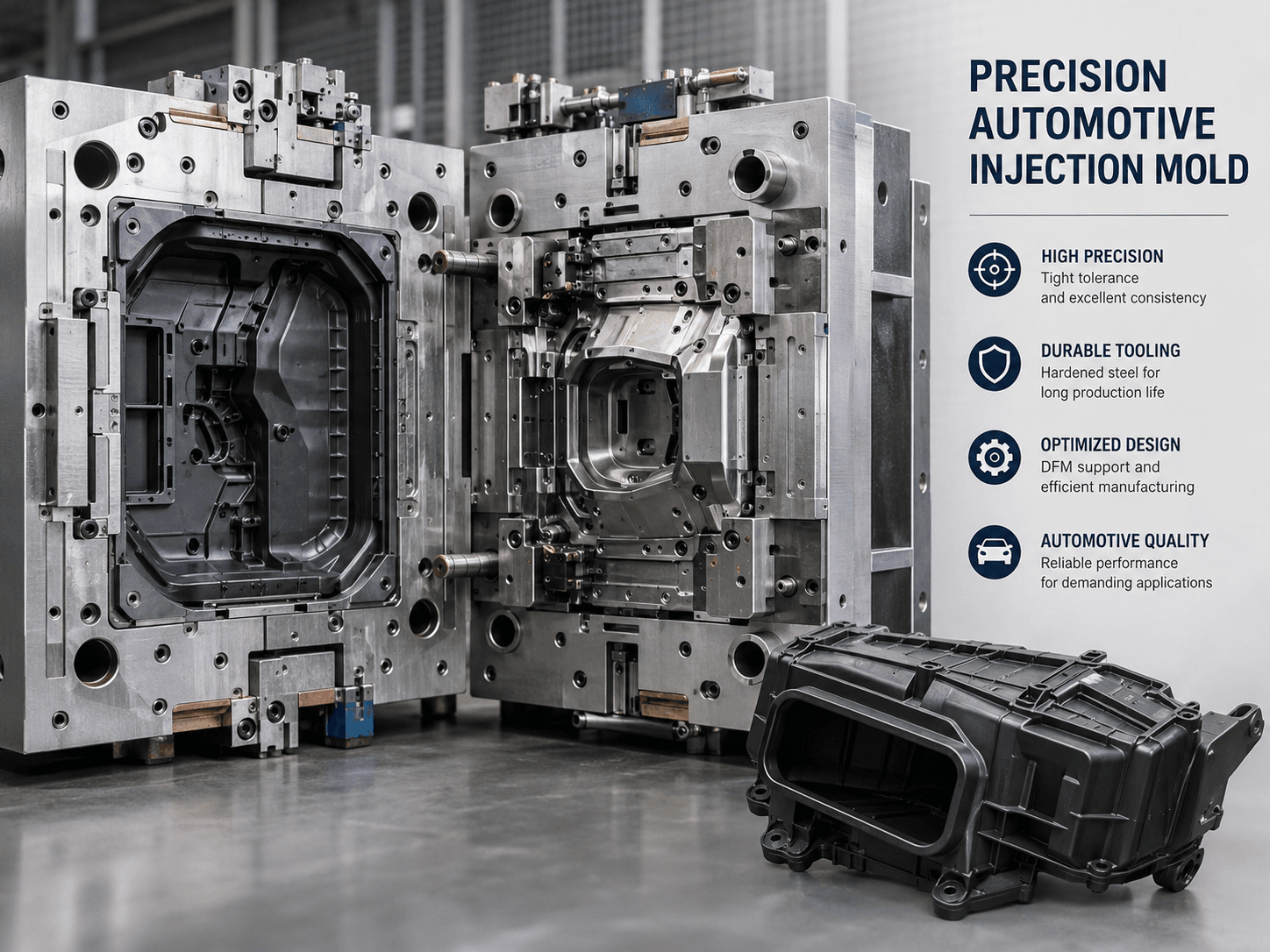
Automotive molds must deliver repeatable dimensional accuracy over long production runs.

Important mold engineering areas include:

Gate Design

Gate position affects filling balance, weld-line location, packing pressure, and cosmetic appearance.

Cooling System

Balanced cooling helps control cycle time and reduce warpage.

Venting

Proper venting prevents trapped gas, short shots, burn marks, and poor surface quality.

Sliders and Lifters

Automotive parts frequently contain side holes, snap hooks, clips, and other undercuts requiring side-action mechanisms.

Mold Surface

Textures, polished surfaces, and grain patterns must be reproduced consistently across production.

For complex automotive parts, Moldflow simulation can help predict filling behavior, weld lines, pressure, cooling, shrinkage, and potential deformation before mold manufacturing.

9. Common Automotive Injection Molding Defects

Automotive quality requirements make defect prevention essential.

DefectPossible CauseEngineering Solution
WarpageUnbalanced coolingOptimize cooling layout
Sink MarksThick local sectionsImprove wall thickness
Weld LinesPoor flow patternOptimize gate position
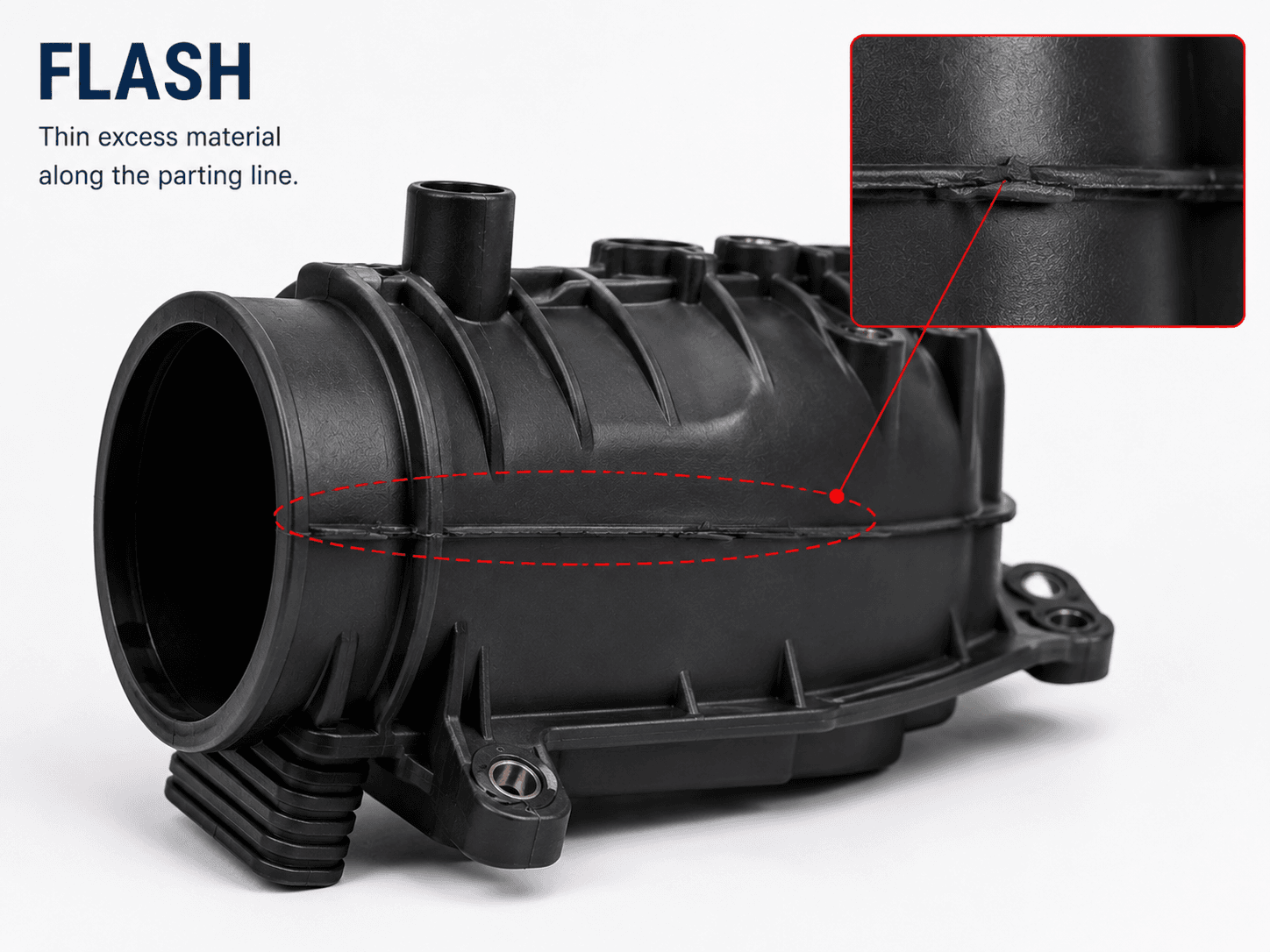
FlashMold wear or excessive pressureImprove mold fit
Short ShotRestricted flowAdjust gate/process
Fiber ExposureReinforced material/process conditionsOptimize mold and parameters
Dimensional VariationShrinkage/process instabilityImprove process control

Early DFM review helps identify many of these problems before tooling begins.

10. Automotive Quality Control

Automotive parts typically require strict inspection and production traceability.

Common methods include:

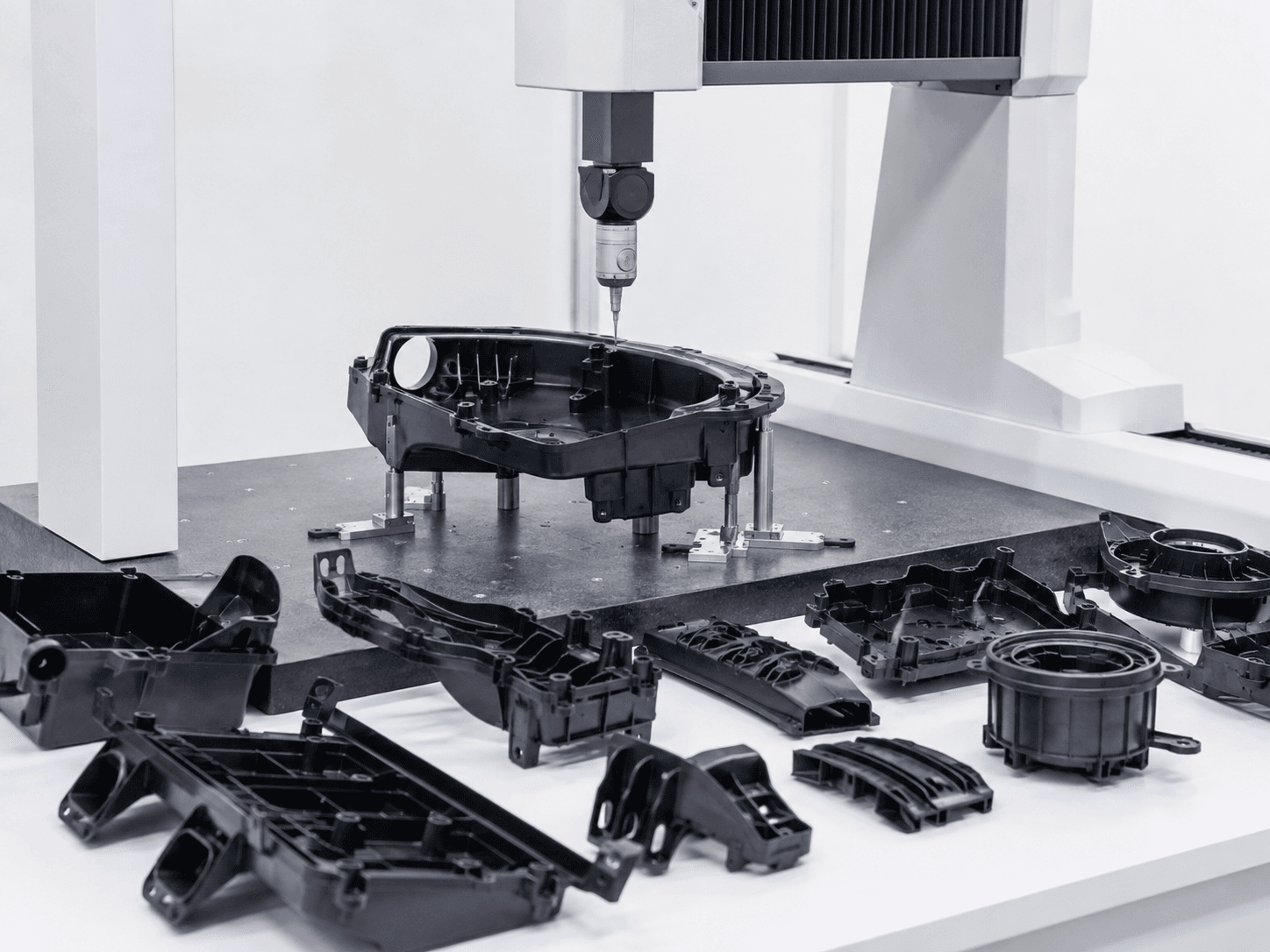
  • CMM dimensional inspection
  • Optical measurement
  • Go/No-Go gauges
  • Assembly fixtures
  • Material verification
  • Impact testing
  • Thermal aging
  • Environmental testing
  • Functional testing

Statistical process control may also be used to monitor critical dimensions during production.

Depending on the project, automotive suppliers may operate according to quality-management systems such as IATF 16949 and customer-specific requirements.

Why Choose Samgo for Automotive Injection Molding?

Automotive injection molding requires close coordination between product engineering, tooling, material selection, and production.

Samgo supports automotive projects from design evaluation through mold manufacturing and mass production.

CapabilityCustomer Benefit
Product Design ReviewImprove manufacturability
DFM AnalysisIdentify risks before tooling
Moldflow SimulationOptimize filling and warpage
Precision ToolingStable dimensional accuracy
Injection MoldingRepeatable production
Quality InspectionVerify critical specifications
Assembly SupportSimplify supply chain

Applications can include interior components, exterior housings, connectors, lighting products, under-hood parts, EV battery components, and other custom automotive plastic parts.


Frequently Asked Questions

Which plastics are most commonly used in automotive injection molding?

PP, ABS, PC/ABS, PA66-GF, PBT, POM, PC, ASA, and PPS are widely used depending on the application.

Why are plastics increasingly used in electric vehicles?

Engineering plastics can reduce weight, provide electrical insulation, resist corrosion, and integrate complex features into fewer components.

What is important when molding automotive connector housings?

Dimensional accuracy, electrical properties, material stability, mold precision, and reliable process control are particularly important.

Why is Moldflow useful for automotive parts?

Automotive parts often have complex geometries and strict dimensional requirements. Simulation can help predict filling, weld lines, cooling, shrinkage, and warpage before tooling is manufactured.

Conclusion

Injection molding is essential to modern automotive manufacturing. Interior trim, exterior housings, electrical connectors, under-hood components, lighting systems, and electric-vehicle battery parts all benefit from the lightweight construction, complex geometry, and high-volume efficiency of molded plastics.

However, automotive components must meet demanding standards for dimensional accuracy, heat resistance, impact strength, appearance, environmental durability, and long-term reliability.

Successful manufacturing begins with selecting the appropriate engineering plastic and designing the product for injection molding. DFM analysis, Moldflow simulation, precision mold manufacturing, balanced cooling, process control, and rigorous inspection then help convert the design into a stable production component.

As vehicles become increasingly electrified and electronically sophisticated, the role of high-performance injection molded plastics will continue to expand across both conventional and electric automotive platforms.

Get the latest price? We will reply as soon as possible (within 12 hours)

Mold technical
tomasonzx@gmail.com

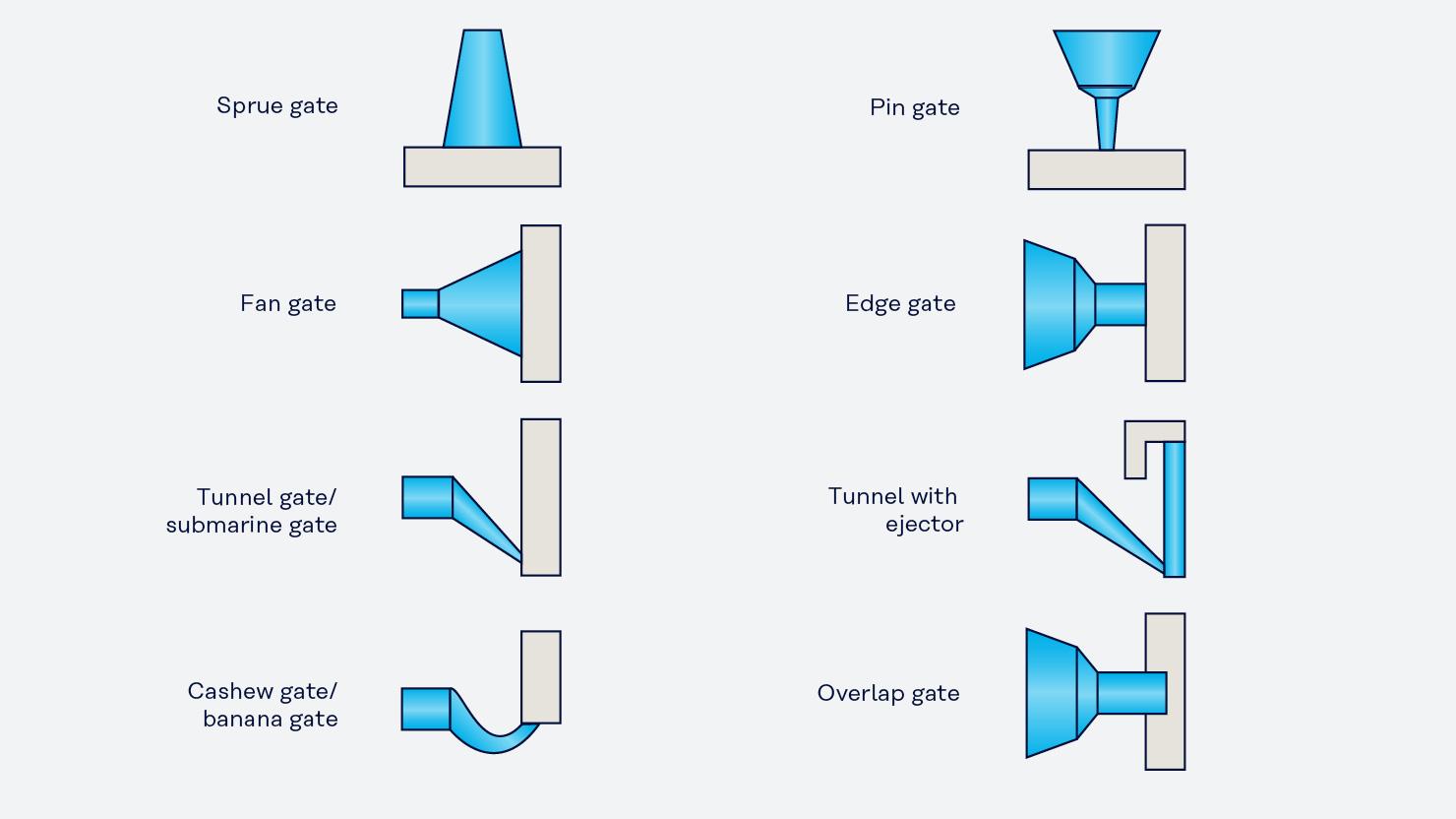
Plastic Injection Molding Gate Types: Selection, Design Principles, Advantages, and Applications

Gate design is one of the most critical aspects of plastic injection mold engineering. Although the gate is usually the smallest feature in the runner system, it has a significant influence on melt flow, packing pressure, cooling efficiency, part appearance, cycle time, and overall product quality.

A poorly designed gate can cause numerous molding defects, including short shots, sink marks, weld lines, jetting, burn marks, excessive gate vestige, and part warpage. Conversely, selecting the appropriate gate type and location helps ensure balanced filling, consistent dimensional accuracy, and efficient production.
Read More »
Material application
tomasonzx@gmail.com

Polypropylene (PP) Materials: Types, Grades, Properties, and Applications

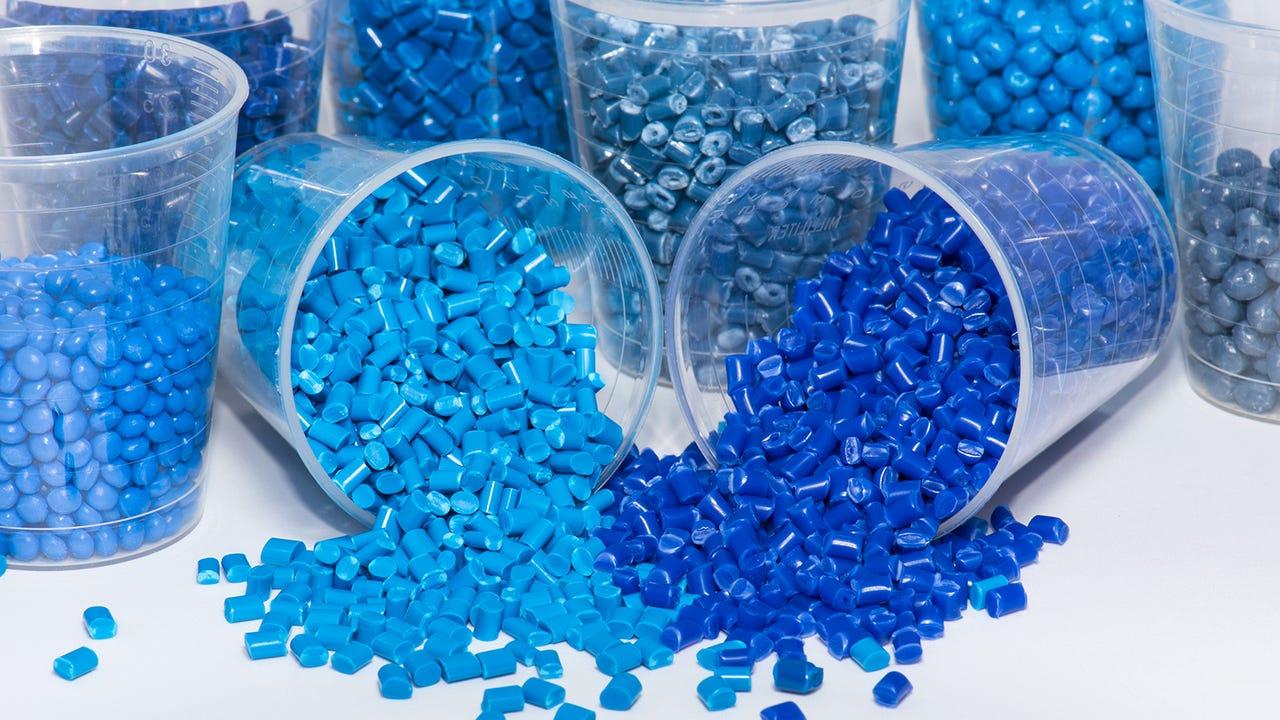
Polypropylene (PP) is one of the world’s most widely used thermoplastics, accounting for a significant share of global plastic production. Thanks to its excellent balance of mechanical properties, chemical resistance, lightweight characteristics, and cost-effectiveness, PP has become the preferred material for countless injection molded products across automotive, household, medical, packaging, electrical, and industrial applications.

Modern polypropylene is available in many different grades and formulations. Manufacturers can choose from homopolymer PP, random copolymer PP, impact copolymer PP, glass fiber reinforced PP, mineral-filled PP, flame-retardant PP, UV-stabilized PP, and food-grade PP depending on product requirements.
Read More »
Mold technical
tomasonzx@gmail.com

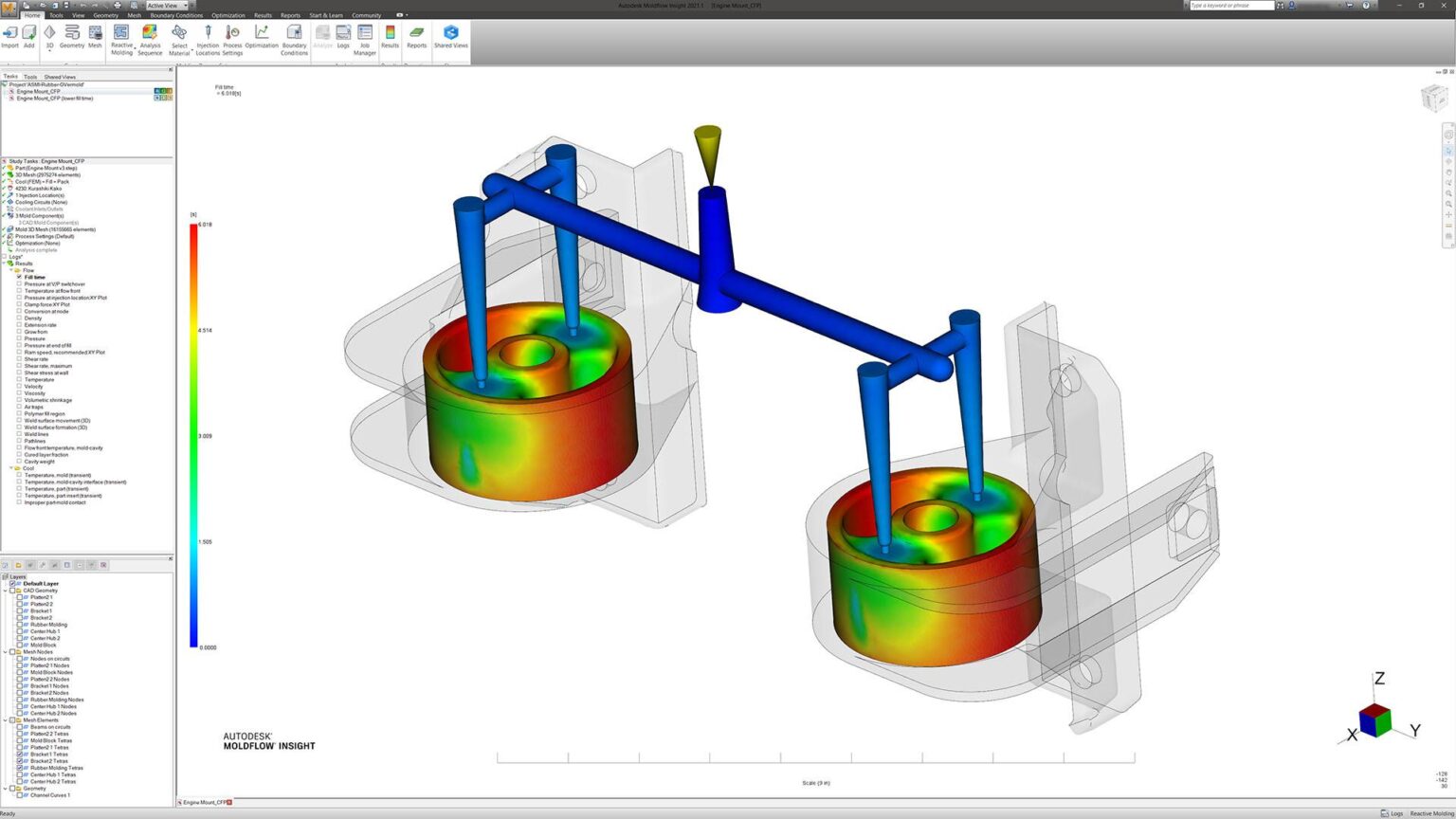
Injection Mold Flow Analysis: A Complete Guide to Moldflow Simulation for Plastic Parts

In modern plastic product development, mold manufacturing is no longer based solely on engineering experience. Computer-Aided Engineering (CAE) has become an essential part of the injection molding process, enabling engineers to predict potential molding defects before a mold is manufactured. Among these technologies, Injection Mold Flow Analysis, often referred to as Moldflow Analysis, is one of the most valuable engineering tools for reducing development risks, shortening lead times, and improving part quality.

Read More »