
Plastic housings are widely used in modern products because they offer an excellent combination of lightweight construction, durability, design flexibility, electrical insulation, and cost efficiency. From consumer electronics and medical devices to outdoor lighting, industrial equipment, and communication systems, plastic enclosures play a critical role in protecting internal components while enhancing product appearance.
Selecting the right housing material is one of the most important decisions during product development. Different applications require different performance characteristics, including impact resistance, weather resistance, flame retardancy, chemical resistance, UV stability, and dimensional accuracy.
Today, engineers can choose from a wide range of thermoplastic materials, each designed to meet specific performance requirements. Understanding the properties and applications of these materials helps manufacturers develop reliable, cost-effective, and long-lasting products.
In this article, we will explore the most common plastic housing materials, their advantages, limitations, and typical applications across various industries.


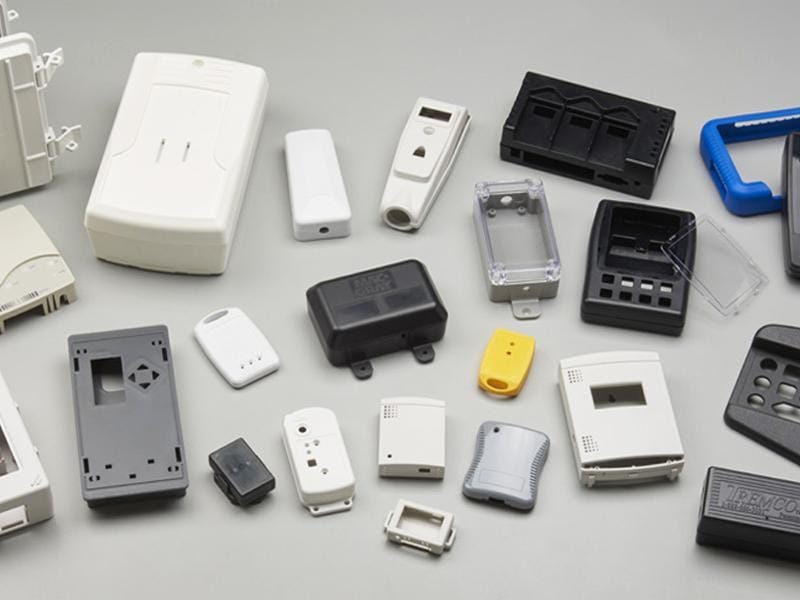
Various plastic housings including electrical enclosures, communication equipment housings, medical device shells, and outdoor lighting enclosures displayed on a clean white background.
Compared with metal enclosures, plastic housings offer several significant advantages.
Plastic materials are substantially lighter than aluminum or steel, reducing transportation costs and improving product portability.
Injection molding allows designers to create:
For medium and high-volume production, injection molding offers low per-part costs and excellent repeatability.
Most engineering plastics provide outstanding electrical insulation, making them ideal for electronic and electrical products.
Several thermoplastic materials dominate the housing market.
| Material | Impact Resistance | UV Resistance | Flame Retardancy | Typical Applications |
|---|---|---|---|---|
| ABS | Excellent | Moderate | Optional | Electronics |
| PC | Excellent | Good | Good | Lighting, Medical |
| PC+ABS | Excellent | Good | Good | Consumer Electronics |
| ASA | Good | Excellent | Optional | Outdoor Products |
| PA66 | Excellent | Moderate | Optional | Industrial Equipment |
| PBT | Good | Good | Excellent | Electrical Products |
| PP | Moderate | Excellent | Limited | General Applications |
Each material offers unique benefits depending on the intended application.


PC, ABS, PC+ABS, ASA, PA66, PBT, and PP resin pellets arranged professionally on a white background.
ABS (Acrylonitrile Butadiene Styrene) is one of the most widely used materials for plastic housings.
ABS is commonly used for:
Standard ABS has limited UV resistance and may discolor when exposed to prolonged sunlight.
For outdoor products, alternative materials such as ASA or UV-stabilized PC are often preferred.
Polycarbonate is known for its exceptional toughness and optical clarity.
PC is widely used for:
Because of its strength and transparency, PC is often selected when both protection and visibility are required.


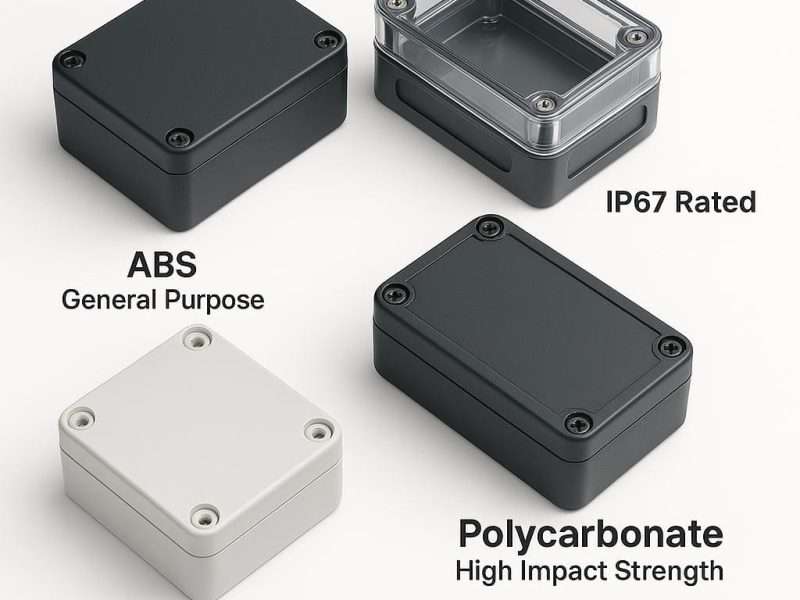
Transparent and opaque polycarbonate housings used in lighting and industrial equipment applications.
PC+ABS combines the advantages of both polycarbonate and ABS.
Many premium consumer electronic products utilize PC+ABS because it provides an ideal balance between appearance and performance.
ASA (Acrylonitrile Styrene Acrylate) is specifically designed for outdoor applications.
ASA is frequently used in:
Products manufactured from ASA can maintain their appearance and performance after years of outdoor exposure.


Outdoor communication equipment housings and electrical enclosures made from ASA material on a white background.
Many electronic products require flame-retardant plastics to meet safety standards.
Common flame-retardant materials include:
| Material | UL94 Rating Options |
| ABS FR | V-0 |
| PC FR | V-0 |
| PC+ABS FR | V-0 |
| PBT FR | V-0 |
| PA66 FR | V-0 |
Flame-retardant housings are commonly used in:
Selecting the appropriate flame-retardant grade helps improve product safety and regulatory compliance.
Plastic housings are essential in industrial environments.
Common products include:
Important material requirements include:
Materials such as PA66, PBT, and reinforced engineering plastics are often selected for these applications.
Medical equipment requires materials with excellent dimensional accuracy and surface quality.
Typical medical housings include:
Popular materials include:
These materials provide durability, clean appearance, and consistent manufacturing quality.

Modern medical device plastic housings and instrument enclosures displayed on a clean white background.
Choosing the correct material depends on the application environment.
| Application | Recommended Material |
| Indoor Electronics | ABS |
| Premium Electronics | PC+ABS |
| Outdoor Products | ASA |
| Outdoor Lighting | PC, ASA |
| Medical Equipment | PC, PC+ABS |
| Industrial Controls | PA66, PBT |
| Electrical Enclosures | PBT, PC |
Proper material selection can significantly improve product lifespan and reliability.
The plastics industry continues to evolve through:
Manufacturers are increasingly using:
New formulations offer:
Advanced materials help reduce product weight while maintaining structural strength.
These innovations continue expanding the capabilities of plastic housing applications.
Plastic housings have become indispensable across industries due to their versatility, lightweight construction, cost efficiency, and excellent performance characteristics. Materials such as ABS, PC, PC+ABS, ASA, PA66, and PBT each offer unique advantages that support specific product requirements.
Whether designing consumer electronics, medical devices, outdoor lighting products, or industrial equipment, selecting the appropriate housing material is critical to achieving optimal performance, durability, and cost efficiency. As material technology continues advancing, plastic housings will remain a key component in modern product development and manufacturing.