
Introduction
Dans le développement de produits en plastique modernes, la fabrication de moules ne repose plus uniquement sur l'expérience en ingénierie. L'ingénierie assistée par ordinateur (IAO) est devenue un élément essentiel du processus de moulage par injection, permettant aux ingénieurs de prédire les défauts de moulage potentiels avant qu'un moule ne soit fabriqué. Parmi ces technologies, Moule d'injection Analyse des flux, souvent appelé Analyse Moldflow, est l'un des outils d'ingénierie les plus précieux pour réduire les risques de développement, raccourcir les délais et améliorer la qualité des pièces.
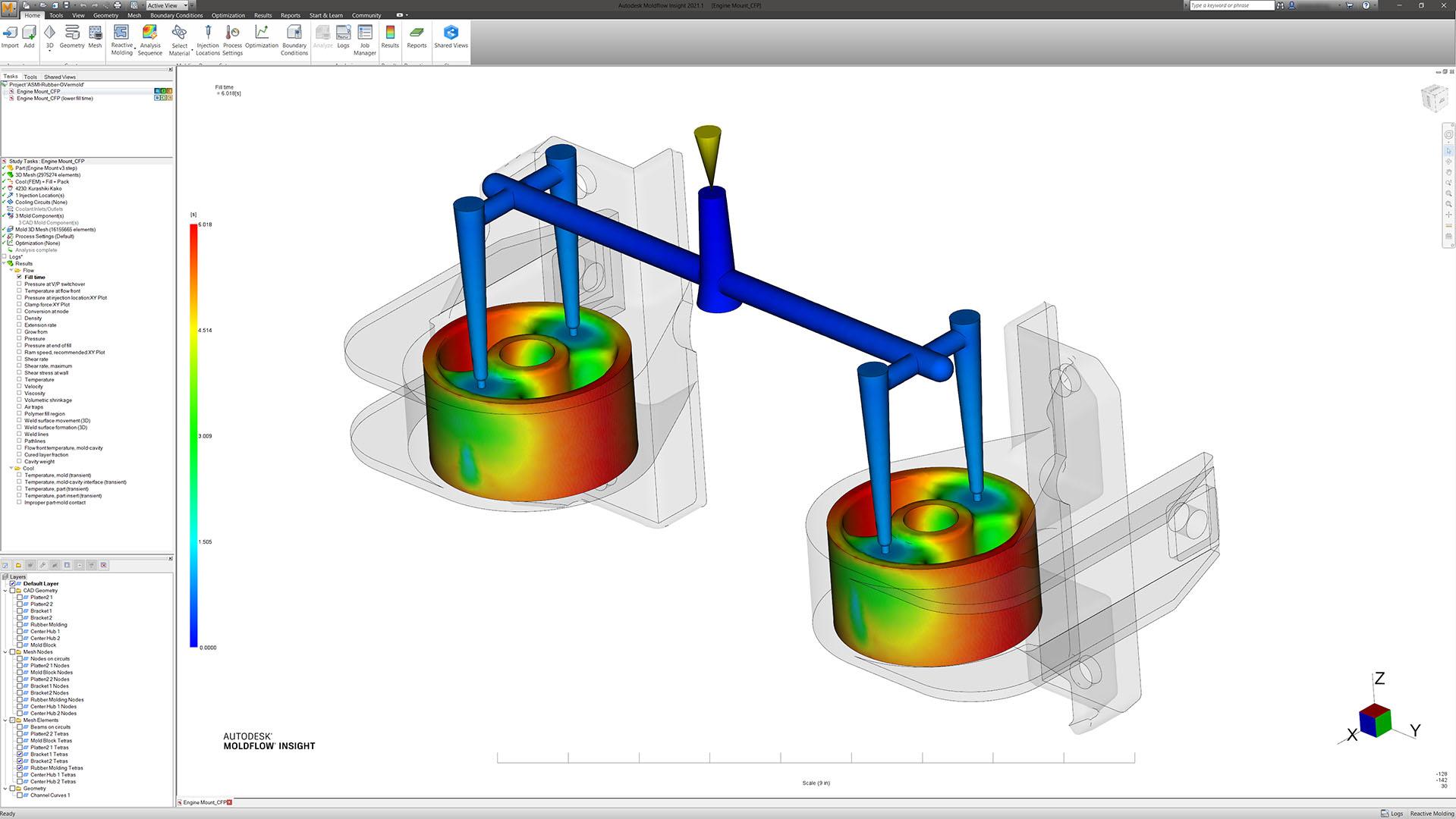
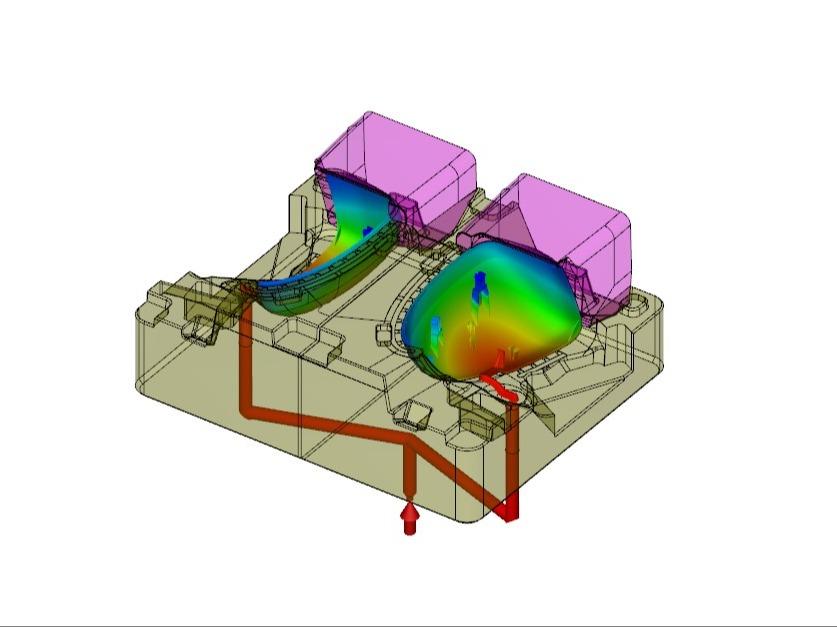
La simulation d'écoulement de matière utilise des algorithmes numériques avancés pour analyser la façon dont le plastique fondu remplit la empreinte d'un moule dans des conditions de production réelles. Les ingénieurs peuvent visualiser l'écoulement de la matière, la répartition de la pression, l'efficacité du refroidissement, le retrait, les lignes de soudure, les piégeages d'air et le gauchissement avant d'usiner l'acier. Au lieu de résoudre les problèmes après les essais de moules, les fabricants peuvent optimiser l'emplacement des points d'injection, l'épaisseur des parois, la disposition des canaux et les systèmes de refroidissement dès la phase de conception.
Pour les composants en plastique complexes utilisés dans l'automobile, le secteur médical, l'électronique grand public, les équipements industriels et les produits d'extérieur, l'analyse Moldflow améliore considérablement la fiabilité des produits tout en réduisant les modifications d'ingénierie coûteuses.
Chez Samgo, la simulation Moldflow est intégrée à notre processus d'analyse DFM et de conception de moules. En combinant notre expérience en ingénierie et la technologie de simulation, nous aidons nos clients à obtenir des cycles de développement plus rapides, une meilleure qualité de produits et une production plus efficace.
Pourquoi l'analyse d'écoulement de moule est importante
Le développement de moules traditionnels repose souvent sur des essais de moules répétés pour identifier les problèmes de transformation. Chaque modification de moule augmente le coût de développement et retarde la production.
L'analyse de l'écoulement de moulage réduit l'incertitude en prédisant le comportement du moulage avant le début de la fabrication.
Principaux avantages
- Réduire les coûts de modification des moules
- Améliorer l'équilibre du remplissage
- Optimiser l'emplacement de la porte
- Prédire les lignes de soudure
- Détecter les poches d'air
- Réduire le gauchissement
- Améliorer l'efficacité du refroidissement
- Raccourcir les cycles d'essais de moules
- Améliorer la stabilité de la production
Comparaison des avantages
| Développement traditionnel | Analyse d'écoulement de moule |
|---|---|
| Essais de moules multiples | Simulation virtuelle avant l'outillage |
| Coût de développement plus élevé | Modifications d'ingénierie réduites |
| Optimisation par essais et erreurs | Décisions fondées sur les données |
| Délai de livraison plus long | Lancement de produit plus rapide |


Le flux de travail de l'analyse d'écoulement de moule
Un projet Moldflow professionnel suit un processus d'ingénierie structuré.
Flux de travail typique
- Importer un modèle CAO 3D
- Réparer et simplifier la géométrie
- Générer le maillage de simulation
- Attribuer la matière plastique
- Définir l'emplacement du seuil
- Définir les paramètres de moulage
- Exécuter la simulation de remplissage
- Analyser la pression et la température
- Évaluer le refroidissement
- Prédire le gauchissement
- Optimiser la conception
- Générer un rapport d'ingénierie
Tableau des flux de travail
| Stage | Objectif |
|---|---|
| Préparation CAO | Créer un modèle de simulation |
| Génération de maillage | Construire un modèle par éléments finis |
| Sélection des matériaux | Appliquer les propriétés de la résine |
| Analyse de remplissage | Simuler l'écoulement de fusion |
| Analyse du conditionnement | Prévoir la compensation du retrait |
| Analyse thermique | Évaluer l'évacuation de la chaleur |
| Analyse du gauchissement | Prédire la déformation dimensionnelle |


Analyse de remplissage
L'analyse de remplissage est la base de toute simulation Moldflow.
Il prédit :
- Schéma d'écoulement
- Temps de remplissage
- Progression du front d'écoulement
- Zones d'hésitation
- Risque de tir à court terme
Les ingénieurs utilisent l'analyse de remplissage pour déterminer si le plastique fondu atteint chaque section de la cavité en douceur.


Optimisation de l'emplacement des portes
L'emplacement du seuil a une influence majeure sur la qualité de la pièce.
Une porte optimisée peut :
- Réduire les lignes de soudure
- Améliorer l'équilibre des pressions
- Réduire les retassures
- Minimiser le gauchissement
- Améliorer l'apparence esthétique
Comparaison de portes
| Mauvais emplacement de la porte | Porte optimisée |
|---|---|
| Remplissage irrégulier | Remplissage équilibré |
| Pression plus élevée | Baisser la pression |
| Plus de lignes de soudure | Moins de lignes de soudure |
| Déformation plus élevée | Meilleure stabilité dimensionnelle |


Analyse de pression
L'analyse de pression évalue la force requise pour remplir la empreinte.
Une pression excessive peut indiquer :
- Murs minces
- Longs chemins d'écoulement
- Petites portes
- Mauvaise conception de la goulotte
L'équilibrage de la pression dans l'empreinte contribue à réduire la charge sur la machine et améliore la régularité des pièces.


Analyse thermique
L'efficacité du refroidissement affecte directement le temps de cycle et la stabilité dimensionnelle.
La simulation évalue :
- Efficacité du canal de refroidissement
- Distribution de température
- Points chauds
- Temps de refroidissement
Un refroidissement uniforme minimise le retrait différentiel et réduit le gauchissement.
Comparaison du refroidissement
| Refroidissement efficace | Mauvais refroidissement |
|---|---|
| Temps de cycle court | Temps de cycle long |
| Dimensions stables | Gauchissement |
| Retrait uniforme | Points chauds |


Prédiction des lignes de soudure et des pièges à air
Le logiciel de rhéologie (ou Moldflow) prédit où de multiples fronts de fusion se rencontrent et où l'air piégé est susceptible de s'accumuler.
Défauts typiques
- Lignes de soudure
- Brûlures
- Poches d'air
- Remplissage incomplet
Ces problèmes peuvent souvent être éliminés en modifiant la position du seuil, l'évacuation d'air ou l'épaisseur de paroi.


Analyse du gauchissement
Le gauchissement est causé par un retrait inégal lors du refroidissement.
La simulation prédit la déformation avant la fabrication de l'outillage.
Les méthodes d'optimisation typiques comprennent :
- Amélioration de l'équilibre thermique
- Ajustement de l'épaisseur des murs
- Modification de l'emplacement de la porte
- Optimisation de la pression de compactage


Rapports d'analyse de moulage courants
| Type d'analyse | Objectif |
|---|---|
| Temps de remplissage | Progression du flux |
| Pression | Pression d'injection |
| Température | Distribution des fondus |
| Refroidissement | Transfert thermique |
| Ligne de soudure | Prédiction de soudage |
| Piège à air | Accumulation de gaz |
| Évier Mark | Défauts de surface |
| Retrait volumétrique | Prédiction du retrait |
| Gauchissement | Déformation finale |
Pourquoi choisir Samgo ?
Chez Samgo, l'analyse de flux de matière (Mold Flow) est intégrée à chaque projet de développement de moules de précision.
Nos capacités en ingénierie comprennent :
| Service | Valeur client |
|---|---|
| Analyse DFMA | Optimiser la fabricabilité des pièces |
| Simulation d'écoulement de moule | Prédire le comportement de moulage |
| Conception de moules | Optimisation en ingénierie |
| Fabrication de moules de précision | Outils fiables |
| Moulage par injection | Production stable |
| Contrôle qualité | Qualité de produit constante |
En combinant la simulation et l'expérience réelle en fabrication, nous réduisons les risques de développement et livrons des moules qui fonctionnent de manière fiable dès le premier essai de production.
Liens internes recommandés
- Services de design de produits
- Guide d'analyse DFM
- Explication de la structure d'un moule d'injection
- Guide de conception de l'épaisseur de paroi des pièces en plastique
- Moule d'injection plastique sur mesure
- Services de moulage par injection plastique
Références externes recommandées
Pour plus d'informations techniques, pensez à consulter :
Conclusion
L'analyse par simulation d'injection plastique est devenue un outil d'ingénierie indispensable pour le développement moderne de produits en plastique. En simulant le comportement de remplissage, la distribution de la pression, la performance de refroidissement, la formation de lignes de soudure, les pièges à air, le retrait et le gauchissement avant la fabrication du moule, les ingénieurs peuvent optimiser les conceptions en amont, réduire les modifications d'outillage coûteuses et accélérer la mise sur le marché.
Pour les fabricants qui recherchent des produits moulés par injection de haute qualité, l'analyse Moldflow n'est pas seulement un rapport logiciel : il s'agit d'un processus d'ingénierie stratégique qui améliore la fiabilité, réduit les risques et accroît l'efficacité de la fabrication. Chez Samgo, nous combinons une simulation CAE avancée avec une expertise pratique en ingénierie des moules pour aider nos clients à développer des solutions robustes et prêtes pour la production, qui fonctionnent de manière fiable du prototype à la production de masse.