
Maquinaria de moldeo por inyección: Aplicaciones, materiales, diseño de moldes y soluciones de fabricación
Introducción
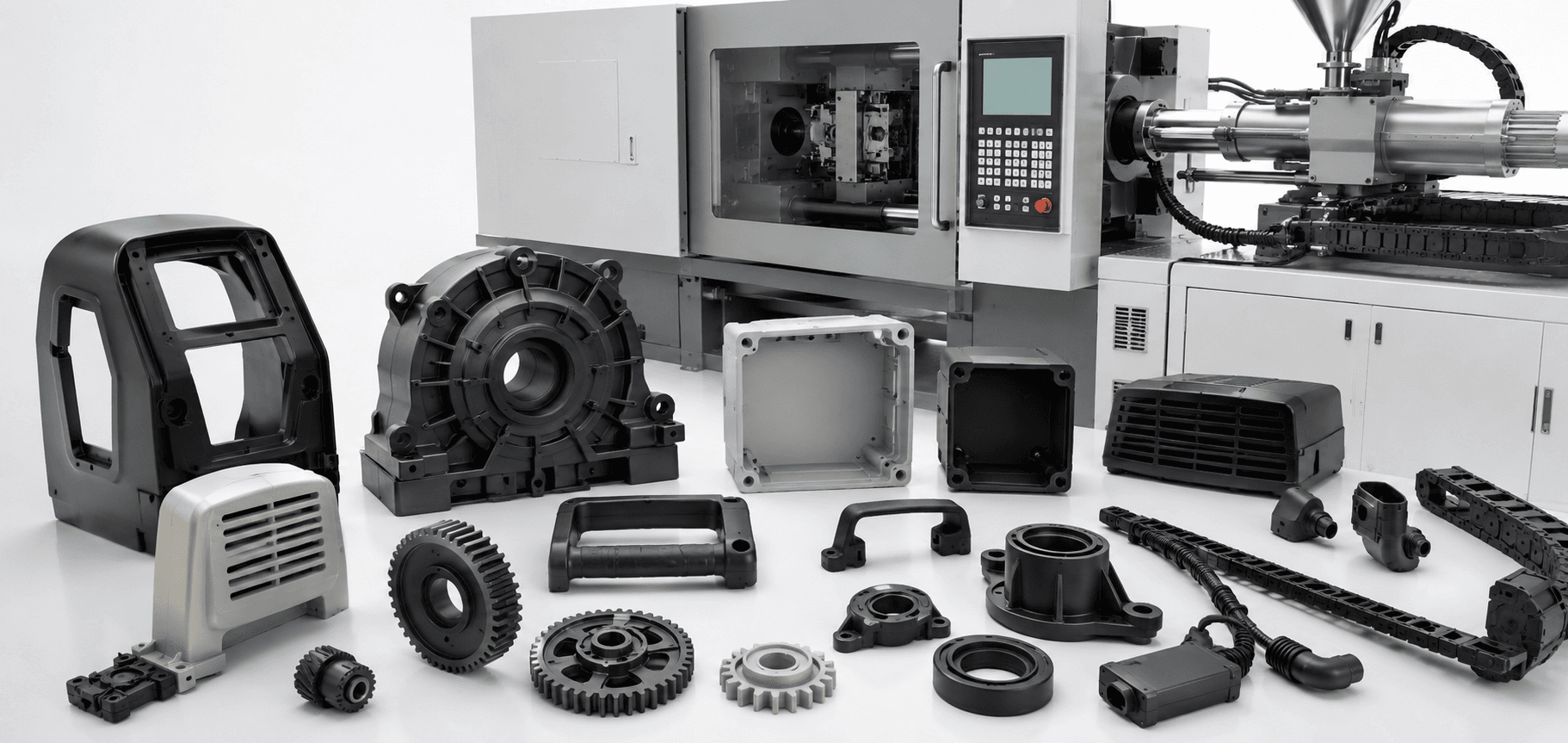
Moldeo por inyección de plástico se ha convertido en una importante tecnología de fabricación en la industria de la maquinaria. Los equipos industriales modernos contienen muchos más componentes de plástico que simples cubiertas decorativas. Los termoplásticos de ingeniería se utilizan ahora para engranajes, cojinetes, protecciones de máquinas, carcasas eléctricas, manijas, cajas de sensores, componentes de transportadores, piezas de gestión de cables, componentes de sistemas de fluidos y conjuntos mecánicos de precisión.
Las principales ventajas no se limitan a un menor peso. El moldeo por inyección permite a los fabricantes integrar nervios, soportes, clips, asientos de cojinetes, guías de cables, ranuras de sellado, roscas y elementos de montaje en un solo componente. Para volúmenes de producción suficientemente altos, esto puede reducir las operaciones secundarias de mecanizado y montaje, al tiempo que proporciona una geometría altamente repetible.
Materiales como POM, PA66-GF, PBT, PC/ABS, PD, y los polímeros especializados resistentes al desgaste permiten que las piezas de plástico sirvan para aplicaciones mecánicas cada vez más exigentes. BASF, por ejemplo, identifica el moldeo por inyección como un método de procesamiento importante para el POM y describe aplicaciones que incluyen componentes técnicamente estresados, como cojinetes y engranajes.
Sin embargo, el moldeo por inyección de maquinaria exitoso requiere una cuidadosa consideración de las cargas, el desgaste, la temperatura, los productos químicos, las tolerancias dimensionales, la seguridad y las condiciones de operación a largo plazo.
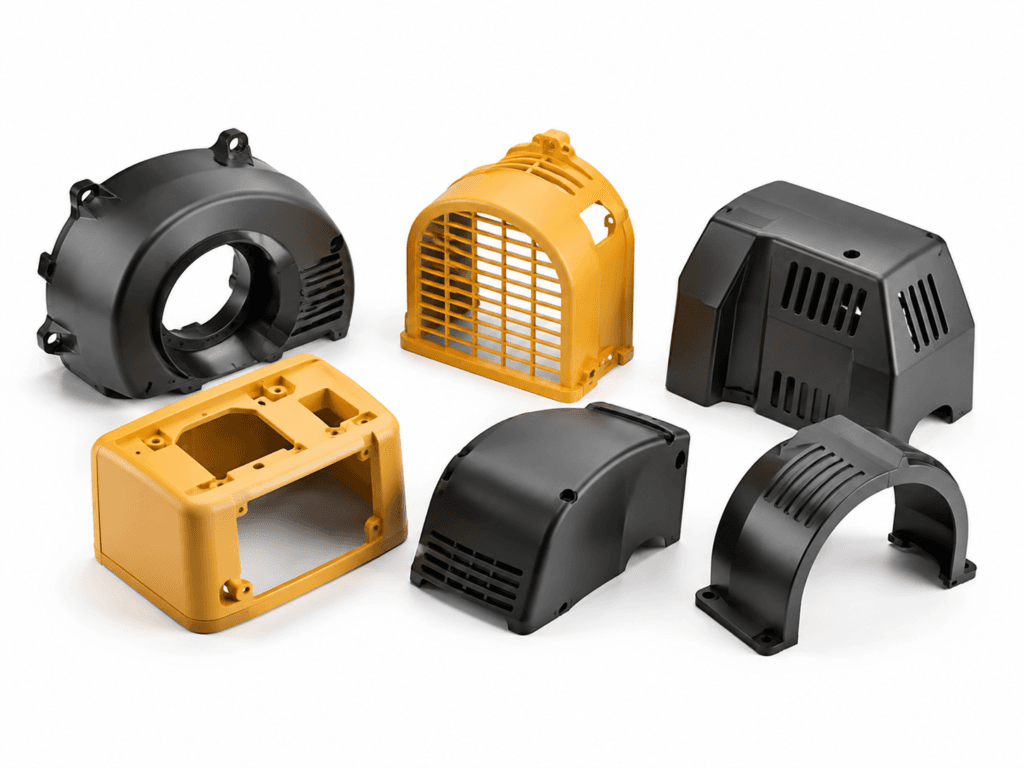
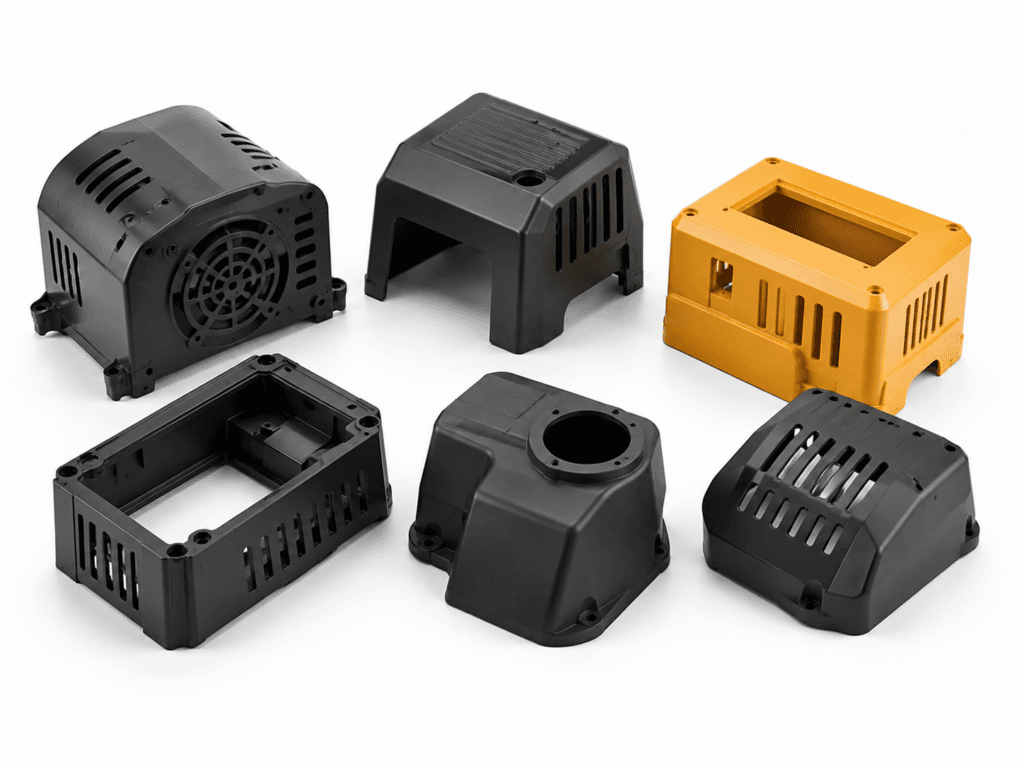
1. Protectores de máquinas, cubiertas y carcasas de protección
Las máquinas industriales requieren frecuentemente cubiertas y protecciones para salvaguardar los mecanismos internos, los componentes eléctricos, los operadores y los equipos circundantes.
Los componentes moldeados por inyección típicos incluyen:
- Cubiertas de motor
- Cubiertas protectoras para cajas de cambios
- Carcasas de paneles de control
- Cubiertas laterales de la máquina
- Guardas de correas y poleas
- Cubiertas para sensores
- Cajas de conexiones eléctricas
- Tapas de inspección
En comparación con las cubiertas de chapa metálica fabricadas, los plásticos moldeados pueden proporcionar geometría integrada compleja, aislamiento eléctrico, resistencia a la corrosión, menor peso y mayor libertad en el diseño industrial.
Las cubiertas de maquinaria grande requieren especial atención a la rigidez y alabeo. En lugar de simplemente aumentar el espesor de pared, los ingenieros pueden utilizar nervaduras, superficies curvas, pestañas en los bordes y puntos de montaje reforzados para mejorar la rigidez.
La seguridad de las máquinas debe abordarse siempre a nivel de sistema. La norma ISO 12100 proporciona principios generales y una metodología para la evaluación de riesgos y la reducción de riesgos en las máquinas, en lugar de considerar el material del cerramiento en sí mismo como una solución de seguridad completa.
2. Engranajes de plástico y componentes de transmisión
Uno de los usos técnicamente más interesantes del moldeo por inyección en maquinaria es la producción de engranajes y componentes de transmisión.
Las aplicaciones pueden incluir:
- Engranajes rectos
- Engranajes de tornillo sin fin
- Engranajes cónicos
- Cremalleras
- Componentes de sincronización
- Pequeños mecanismos de transmisión
- Sistemas de ajuste
- Componentes del actuador
Los polímeros de ingeniería pueden ofrecer un menor peso, resistencia a la corrosión, menor ruido de funcionamiento y el potencial de diseños sin lubricación en aplicaciones diseñadas adecuadamente. Los sistemas comerciales de engranajes de polímeros están disponibles en configuraciones moldeadas por inyección para producción de alto volumen.
El POM es particularmente importante en aplicaciones de mecánica de precisión debido a su estabilidad dimensional, rigidez, baja fricción y características de desgaste. BASF señala que los componentes complejos de POM se pueden producir en masa de manera económica mediante moldeo por inyección.
Sin embargo, los engranajes de plástico no son automáticamente reemplazos de los engranajes metálicos. El par, la temperatura, la velocidad, la carga en los dientes, la fluencia, las condiciones de lubricación y la vida útil esperada deben considerarse durante la selección del material y la geometría.
Consideraciones sobre el material de los engranajes
| Material | Ventaja clave | Aplicación típica |
|---|---|---|
| POM | Baja fricción, estabilidad dimensional | Engranajes de precisión |
| PA66 | Tenacidad y resistencia al desgaste | Engranajes mecánicos |
| PA66-GF | Alta rigidez | Piezas de transmisión estructural |
| PD | Resistencia al calor y a los productos químicos | Mecanismos de alta temperatura |
| Polímeros modificados contra el desgaste | Fricción reducida | Simulación de aplicaciones |
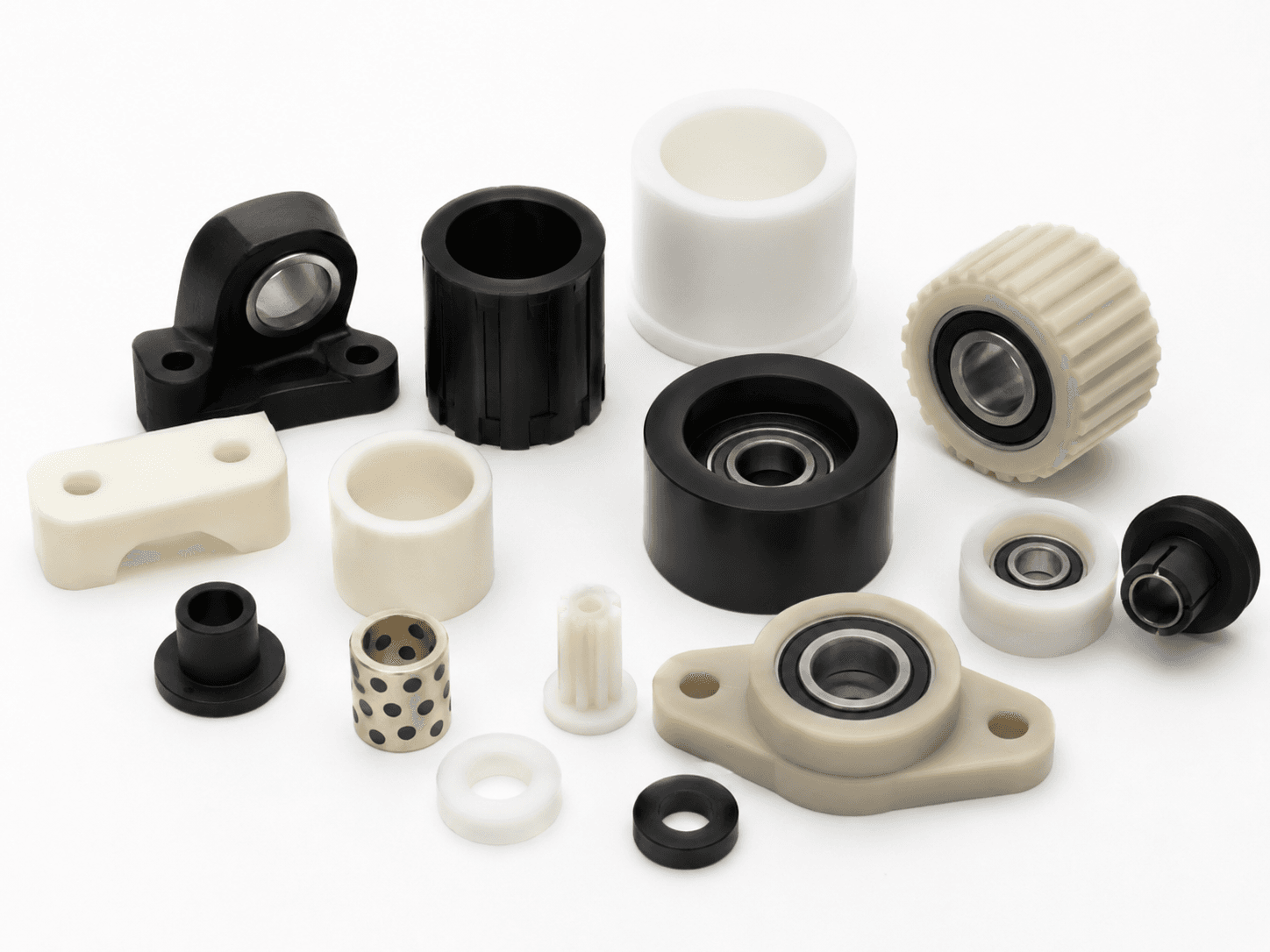
3. Cojinetes, casquillos y componentes de desgaste
Los cojinetes y casquillos de plástico se utilizan ampliamente donde se desea un menor mantenimiento, resistencia a la corrosión, bajo peso o funcionamiento sin lubricantes.
Las aplicaciones típicas de la maquinaria incluyen:
- Cojinetes de fricción
- Casquillos
- Casquillos de guía
- Use rodilleras
- Rodillos
- Bloques deslizantes
- Guías lineales
El moldeo por inyección es particularmente atractivo cuando la geometría debe incluir bridas, elementos de bloqueo, estructuras de lubricación o características de instalación que de otro modo requerirían un mecanizado secundario.
Los fabricantes especializados de cojinetes de polímero ofrecen piezas de desgaste personalizadas mediante moldeo por inyección, así como mecanizado y fabricación aditiva, lo que demuestra el uso generalizado de los polímeros en aplicaciones de movimiento mecánico.
La selección de materiales debe basarse en la presión, la velocidad de deslizamiento, el material del eje, la temperatura de funcionamiento, la exposición química y la vida útil esperada por desgaste.
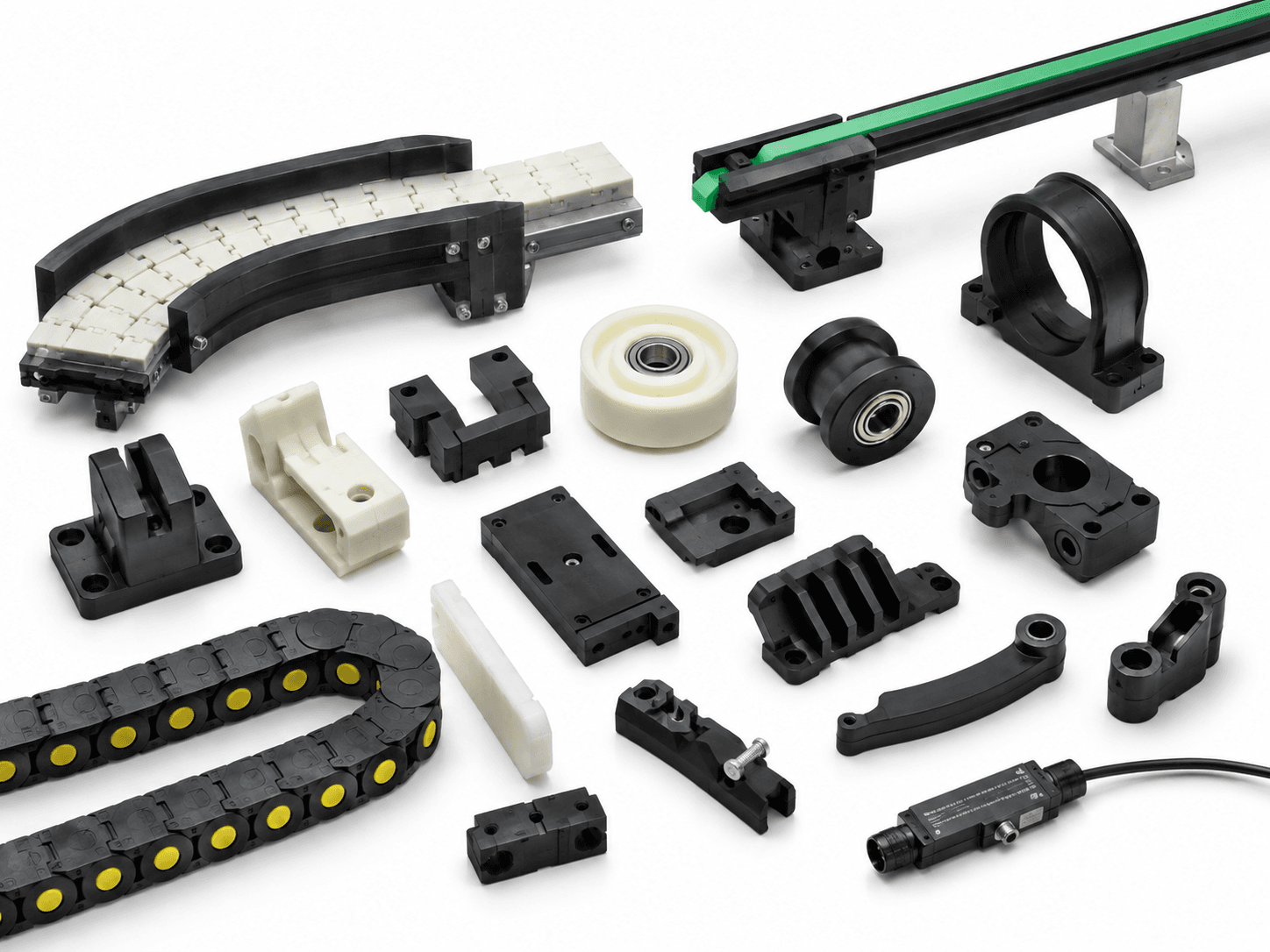
4. Componentes de Automatización y Sistemas de Transportadores
Las líneas de producción automatizadas contienen muchos componentes moldeados por inyección que operan de manera continua.
Las aplicaciones incluyen:
- Guías de transportadores
- Guías de cadena
- Soportes para sensores
- Soportes de cables para robots
- Efectores finales
- Perillas de ajuste
- Componentes del rodillo
- Bloques de posicionamiento
- Tapas protectoras
La capacidad de integrar múltiples funciones en un solo componente moldeado puede simplificar el montaje y reducir el número de piezas.
Las piezas moldeadas por inyección también se pueden diseñar con inserciones metálicas, inserciones roscadas o elementos sobremoldeados cuando se requiere mayor resistencia mecánica.
Para los equipos de automatización de alto volumen, la repetibilidad es especialmente importante porque la variación dimensional puede influir en las posiciones de los sensores, la alineación de las cintas transportadoras o las interfaces de ensamblaje.
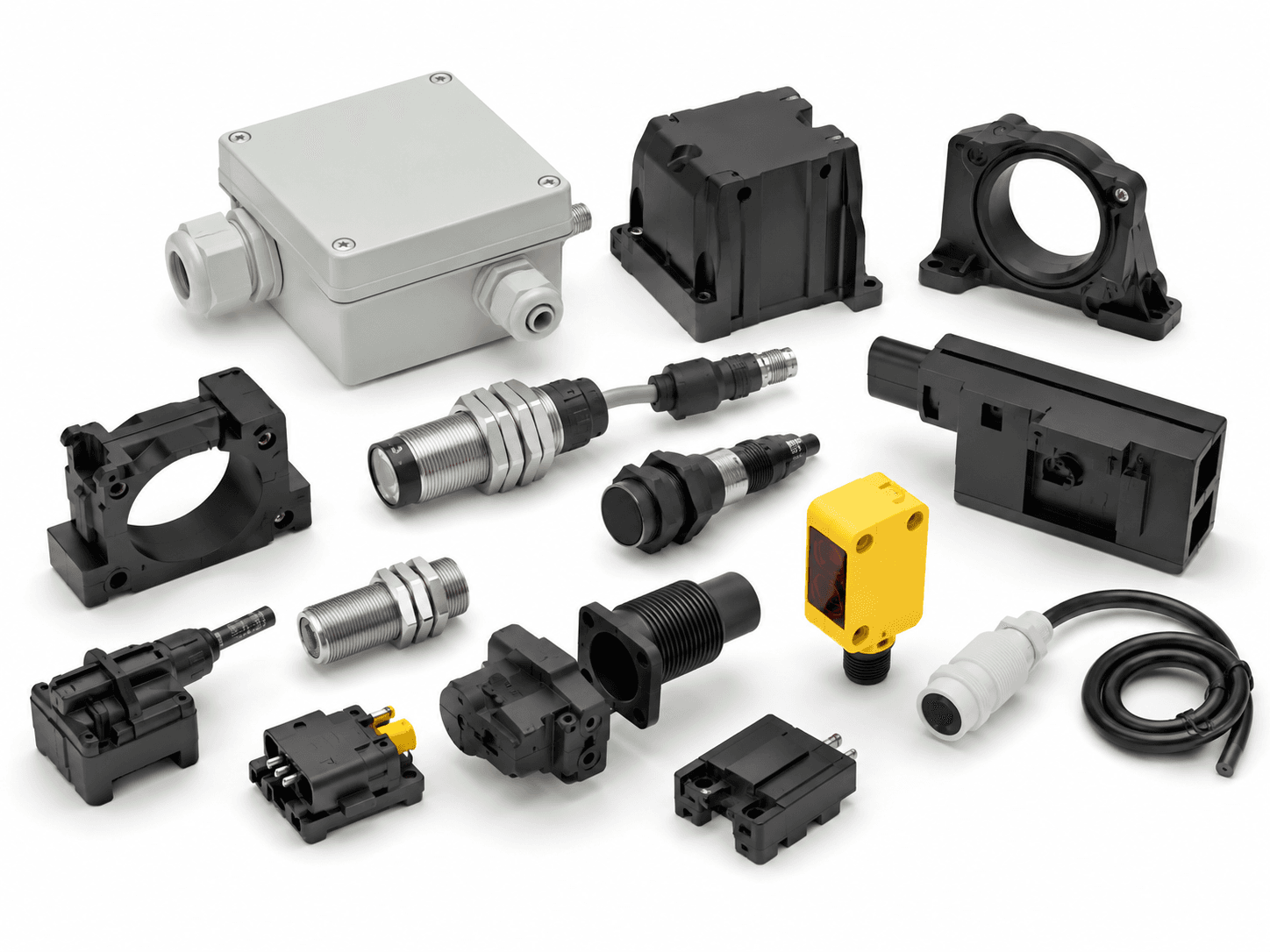
5. Componentes de Control Eléctrico y Sensores
La maquinaria moderna depende en gran medida de sistemas de control eléctricos y electrónicos.
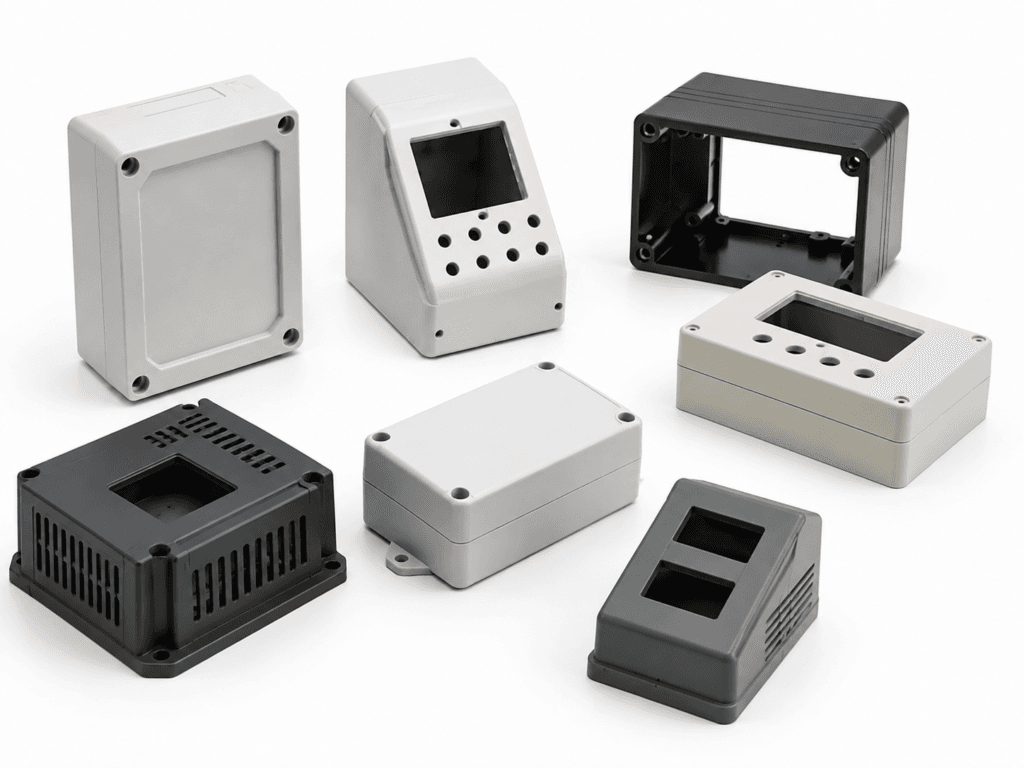
Los componentes moldeados por inyección pueden incluir:
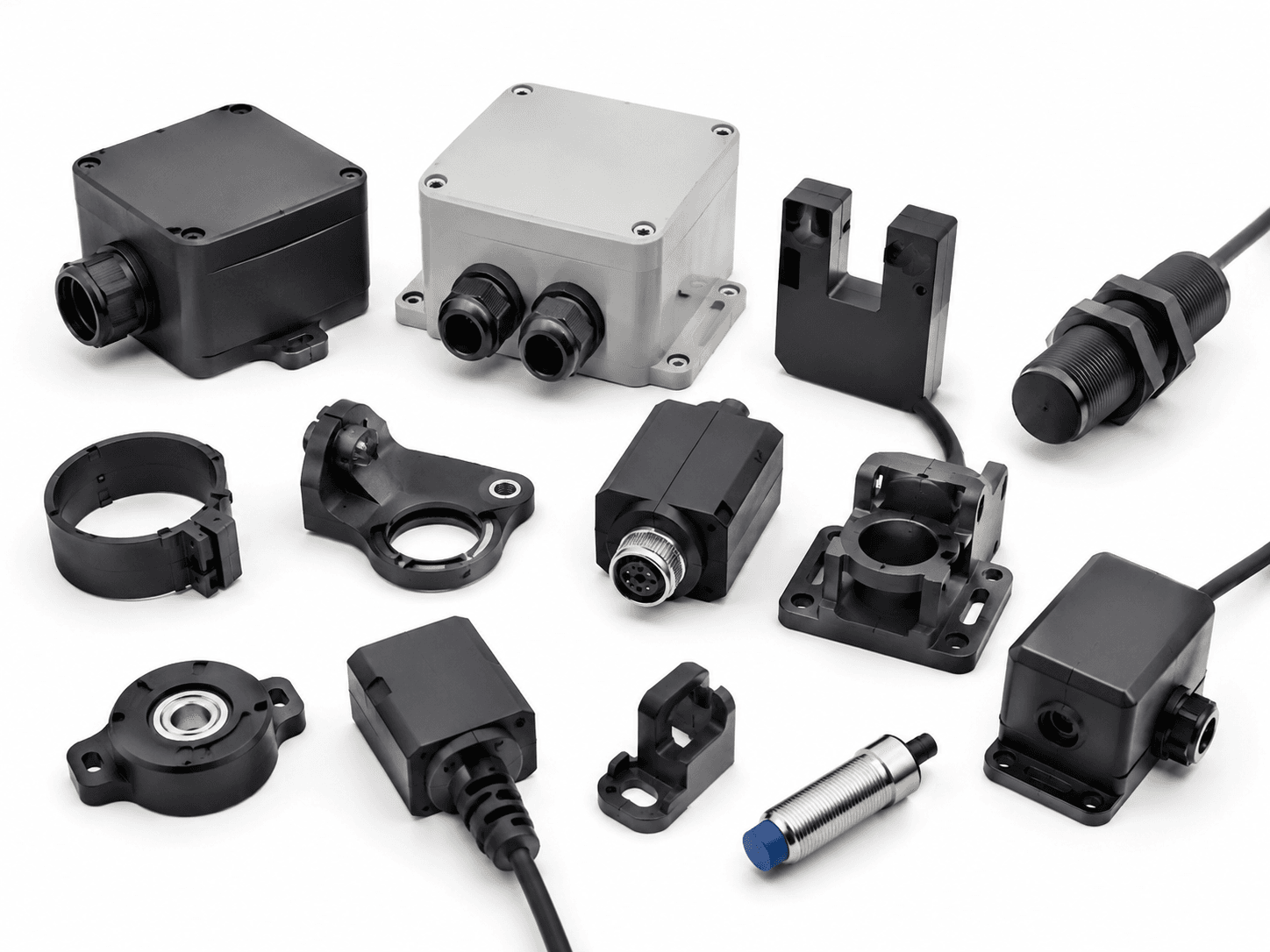
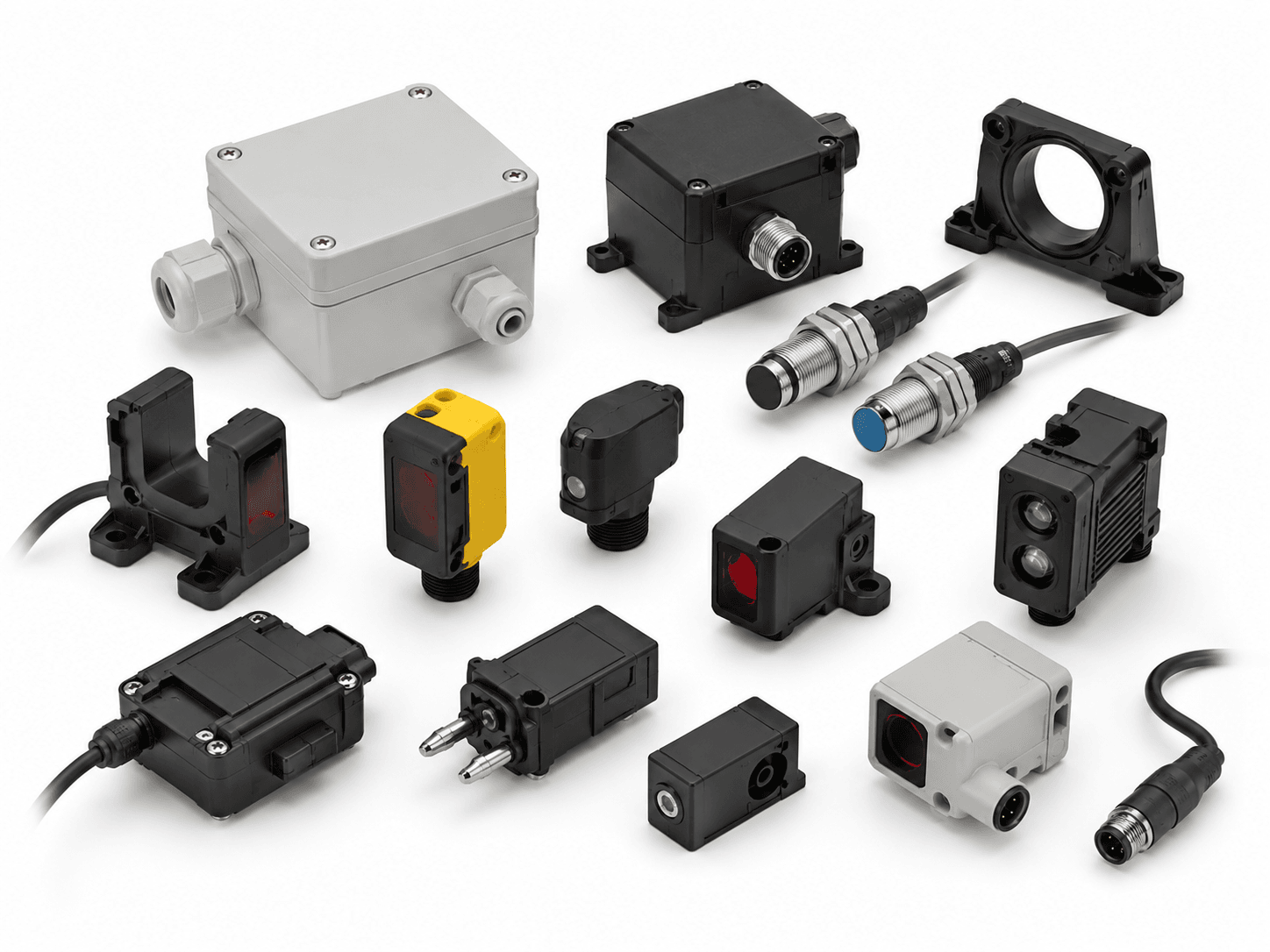
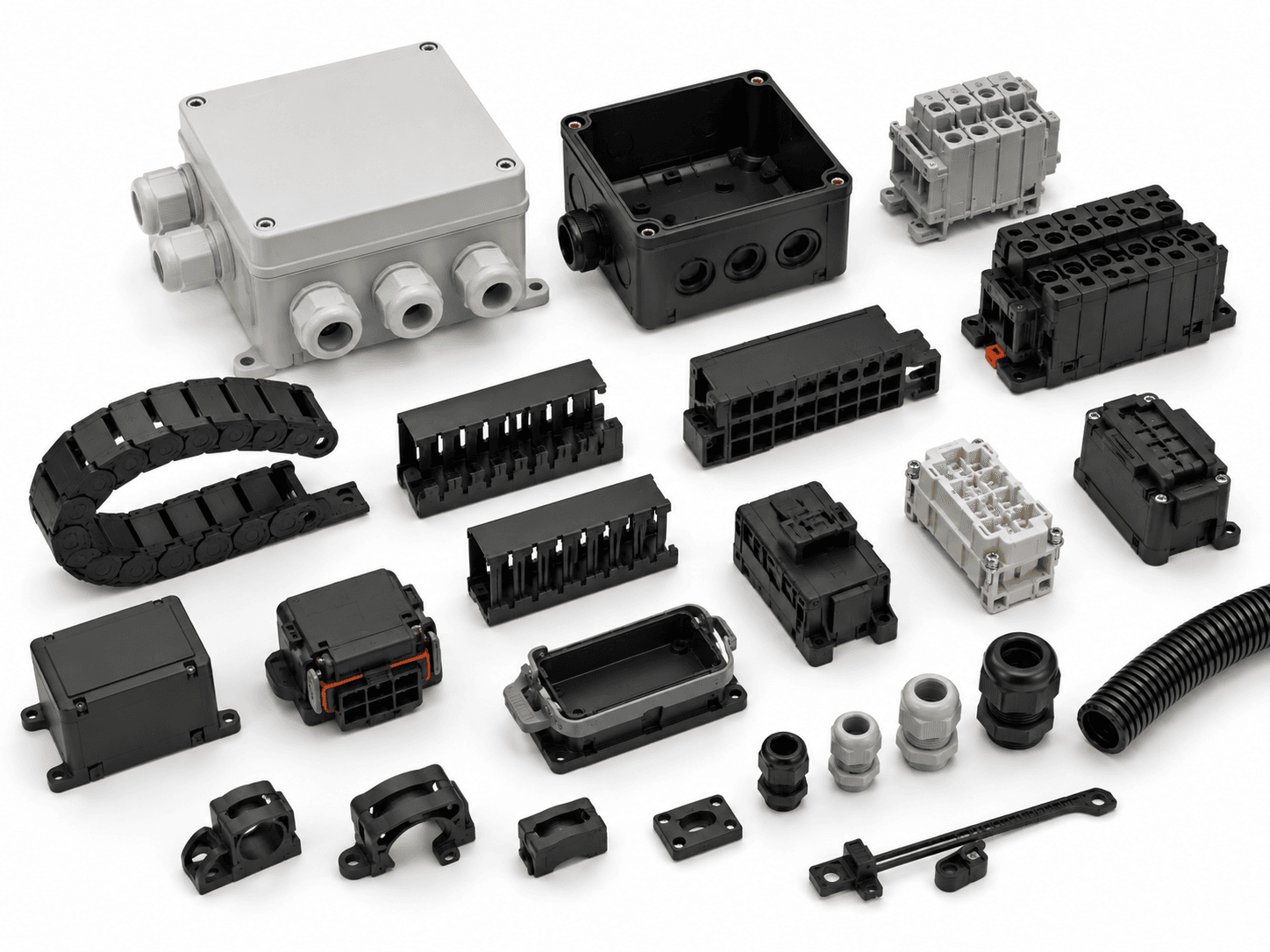
- Alojamientos de sensores
- Gabinetes relacionados con PLC
- Carcasas de terminales
- Cajas de interruptores
- Cuerpos de conectores
- Prensacables
- Componentes del panel de control
- Cubiertas protectoras eléctricas
Los materiales deben proporcionar un aislamiento eléctrico adecuado, estabilidad dimensional, resistencia al calor y, cuando sea necesario, rendimiento ignífugo.
El PBT y las poliamidas de ingeniería se utilizan frecuentemente para componentes eléctricos, mientras que el PC/ABS puede ser adecuado para carcasas de control más grandes.
Los sistemas eléctricos de la maquinaria también pueden estar dentro del ámbito de aplicación de la norma IEC 60204-1. La edición consolidada actual, IEC 60204-1:2016+A1:2021, aborda los equipos y sistemas eléctricos, electrónicos y electrónicos programables asociados a la maquinaria.
Componentes de maquinaria eléctrica
| Componente | Requisito principal | Material potencial |
| Carcasa de conector | Aislamiento eléctrico | PBT |
| Carcasa del sensor | Precisión + durabilidad | PA / PBT |
| Gabinete de control | Impacto + apariencia | PC/ABS |
| Componente Terminal | Rendimiento térmico y eléctrico | PBT FR |
| Pieza de gestión de cables | Dureza | PA |
6. Manejo de fluidos y componentes neumáticos
La maquinaria industrial a menudo incluye sistemas de agua, aire, aceite, refrigeración y neumáticos.
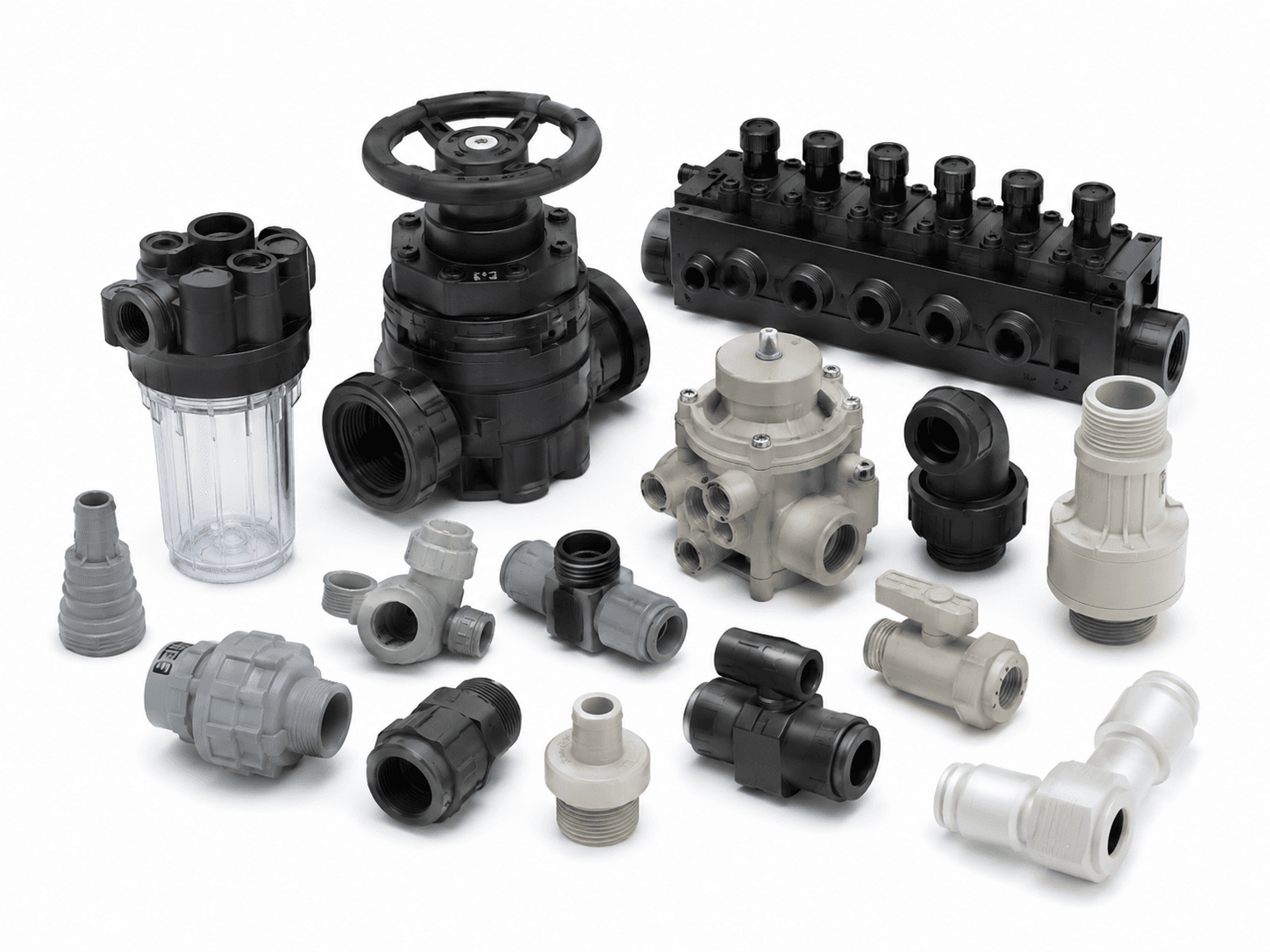
Los componentes moldeados por inyección pueden incluir:
- Cuerpos de válvulas
- Conectores de manguera
- Accesorios neumáticos
- Variadores
- Carcasas de filtros
- Componentes de bomba
- Tapas protectoras
- Mandos de control de fluidos
La selección de materiales debe tener en cuenta la presión, la temperatura, los productos químicos, la fluencia y los requisitos de sellado.
POM, PA, PP, PPS y otros materiales de ingeniería pueden evaluarse según el entorno operativo.
Para los componentes que contienen presión, las líneas de separación, las líneas de soldadura, las roscas, el grosor de las paredes y las superficies de sellado requieren un diseño cuidadoso porque los defectos locales pueden afectar directamente el rendimiento de la estanqueidad.
7. Manillas, pomos e interfaces de operador
No todos los componentes de maquinaria requieren plásticos de ingeniería de alta temperatura. Las manijas, perillas, palancas, botones y componentes de ajuste representan otra gran categoría de productos moldeados por inyección.
Los ejemplos comunes incluyen:
- Manillas de máquina
- Volantes de mano
- Perillas de ajuste
- Fundas para manetas
- Botones de control
- Manijas de bloqueo
- Botones de posicionamiento
El moldeo bicomponente o el sobremoldeo de TPE se pueden utilizar para crear superficies de tacto suave y mejorar el agarre.
También se pueden integrar insertos roscados metálicos cuando se prevean aprietes repetidos o cargas mecánicas más elevadas.
8. Plásticos de ingeniería para componentes de maquinaria
Las piezas de maquinaria suelen funcionar bajo cargas mucho mayores que los componentes de plástico de uso doméstico ordinario.
Por lo tanto, la selección de materiales debe tener en cuenta las propiedades mecánicas junto con el entorno de trabajo real.
| Material | Propiedades Clave | Aplicación de maquinaria típica |
| POM | Baja fricción, estabilidad dimensional | Engranajes, bujes |
| PA6 / PA66 | Tenacidad, resistencia al desgaste | Componentes mecánicos |
| PA66-GF | Alta rigidez y resistencia | Corchetes estructurales |
| PBT | Rendimiento eléctrico y dimensional | Conectores |
| PC/ABS | Resistencia al impacto | Carcasas de máquinas |
| PD | Alta resistencia al calor y a los productos químicos | Componentes industriales exigentes |
| TPE | Flexibilidad y agarre | Manijas y sellos |
Los plásticos térmicamente conductores también pueden considerarse para equipos especializados en los que un componente de polímero debe contribuir a la gestión térmica. Celanese, por ejemplo, ofrece plásticos de ingeniería térmicamente conductores para aplicaciones en las que la transferencia de calor es un requisito de diseño importante.
Moldeo por inserción para piezas de maquinaria
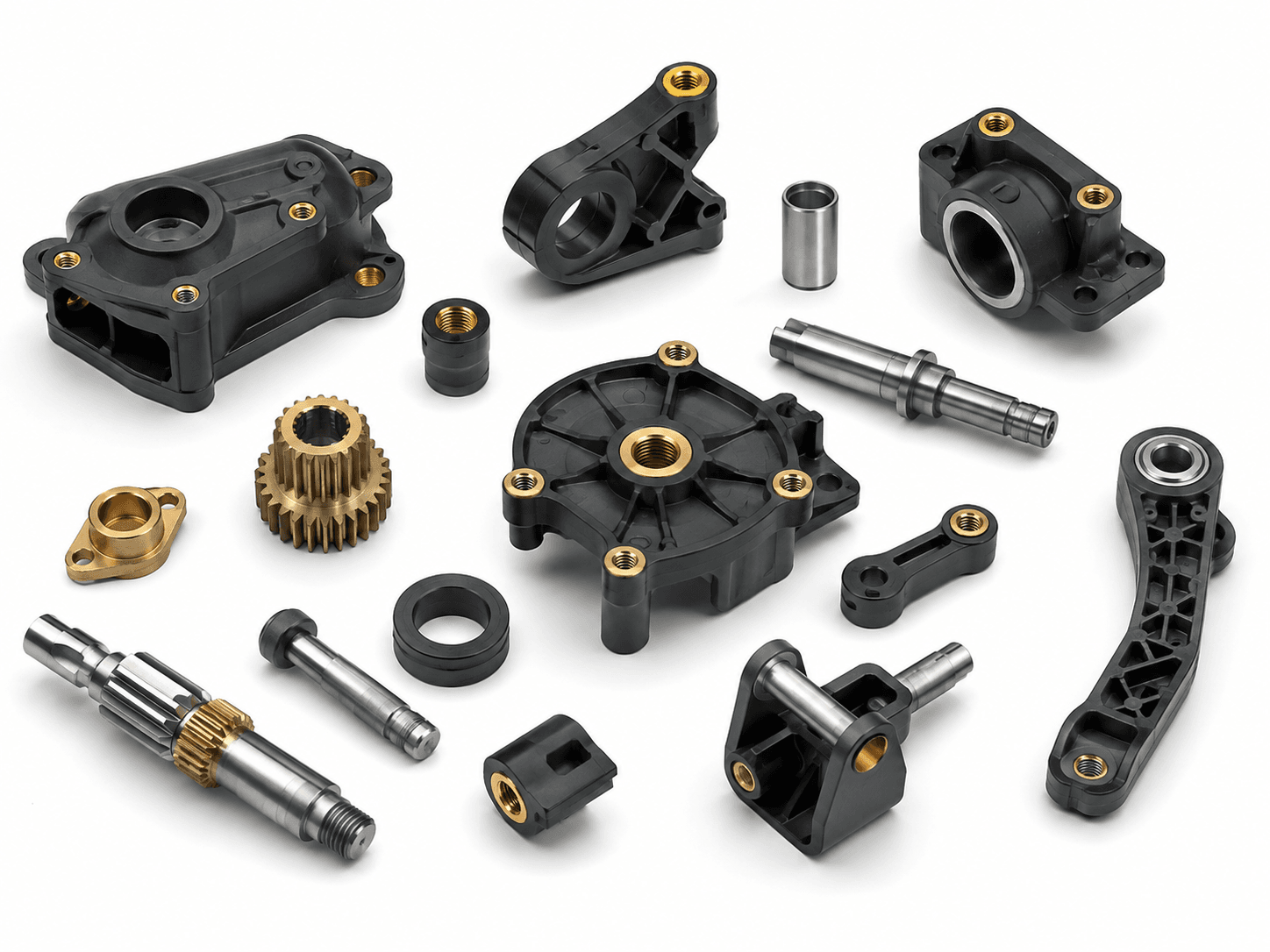
Los componentes de maquinaria suelen combinar plástico con metal.
El moldeo por inserción puede integrar:
- Inserciones de latón roscadas
- Ejes de acero
- Casquillos de cojinete
- Terminales eléctricos
- Refuerzo de metal
- Placas de montaje
Este enfoque puede reducir el ensamblaje secundario al tiempo que crea interfaces mecánicas fuertes.
Sin embargo, los diseñadores deben tener en cuenta las diferencias de expansión térmica entre el plástico y el metal. Un espesor excesivo de plástico alrededor de un inserto también puede provocar marcas de hundimiento o tensiones residuales.
La ubicación de inserción debe controlarse con precisión en el molde para mantener la consistencia dimensional durante los ciclos de producción repetidos.
10. Diseño de moldes para componentes de maquinaria industrial
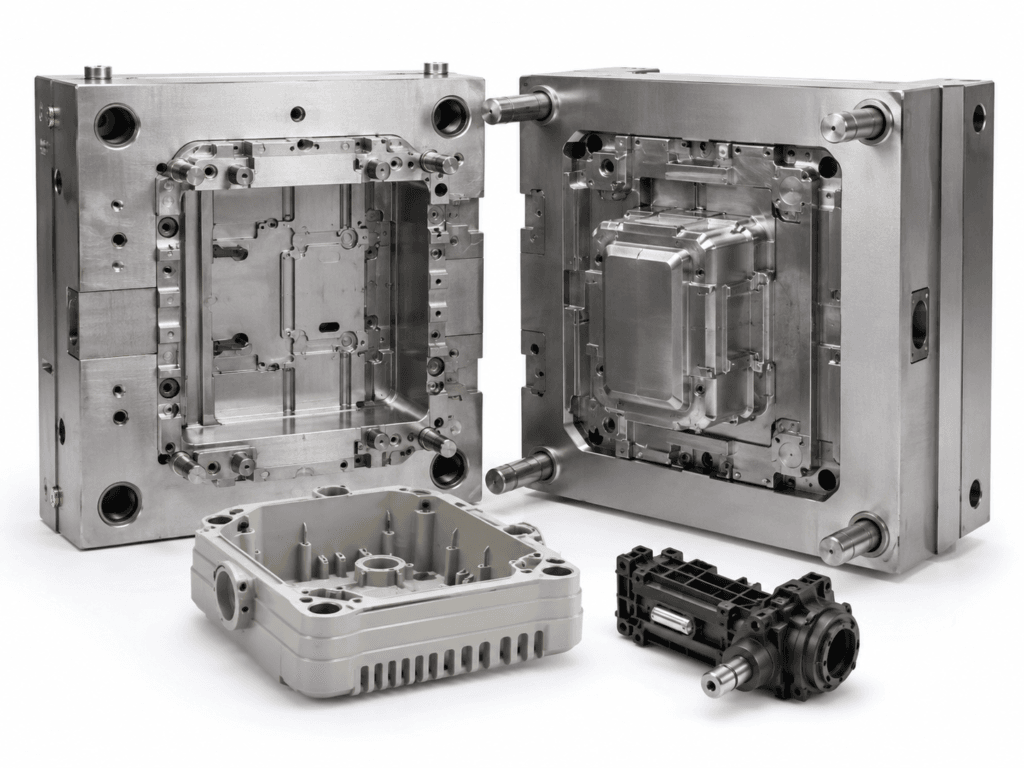
Las piezas de maquinaria a menudo requieren una larga vida útil y dimensiones estables, por lo que el mecanizado de precisión es esencial.
Las consideraciones importantes para el diseño de moldes incluyen:
Ubicación de la puerta
La posición de la compuerta afecta las líneas de soldadura, el equilibrio de llenado, la orientación de la fibra y la precisión dimensional.
Enfriamiento
El enfriamiento uniforme ayuda a reducir el tiempo de ciclo y a minimizar la deformación.
Desahogo
Una ventilación adecuada reduce el gas atrapado, las marcas de quemaduras y el llenado incompleto.
Cortes undercut
Los agujeros laterales, clips, ranuras y elementos de bloqueo pueden requerir correderas o expulsores inclinados.
Plásticos reforzados
Los materiales cargados de vidrio pueden producir una contracción anisótropa y un mayor desgaste del molde, lo que requiere un acero para moldes y estrategias de procesamiento adecuados.
La simulación puede ser especialmente valiosa para componentes de maquinaria compleja. Autodesk afirma que Moldflow puede evaluar el llenado, la compactación, el enfriamiento, la deformación, la selección de materiales y el rendimiento de los canales de refrigeración antes de finalizar las herramientas de producción.
11. Defectos comunes en el moldeo por inyección de maquinaria
| Defecto | Posible causa | Solución recomendada |
| Deformación | Enfriamiento irregular u orientación de las fibras | Optimizar la compuerta y la refrigeración |
| Marcas de hundimiento | Grosor local excesivo | Mejorar los nervios y los soportes |
| Líneas de soldadura | Frentes de flujo múltiples | Optimizar la ubicación de la puerta |
| Destello | Desgaste del molde o presión excesiva | Mejorar el ajuste del molde |
| Tiro corto | Índice de fluidez restringido | Optimizar el procesamiento |
| Variación dimensional | Merma / inestabilidad del proceso | Mejorar el control de procesos |
| Exposición a la fibra | Resina reforzada / condiciones de proceso | Optimizar la temperatura y la superficie del molde |
BASF cuenta con recursos dedicados a la solución de problemas de moldeo por inyección que cubren defectos comunes de fabricación y posibles medidas correctivas.
12. Control de Calidad y Seguridad de la Maquinaria
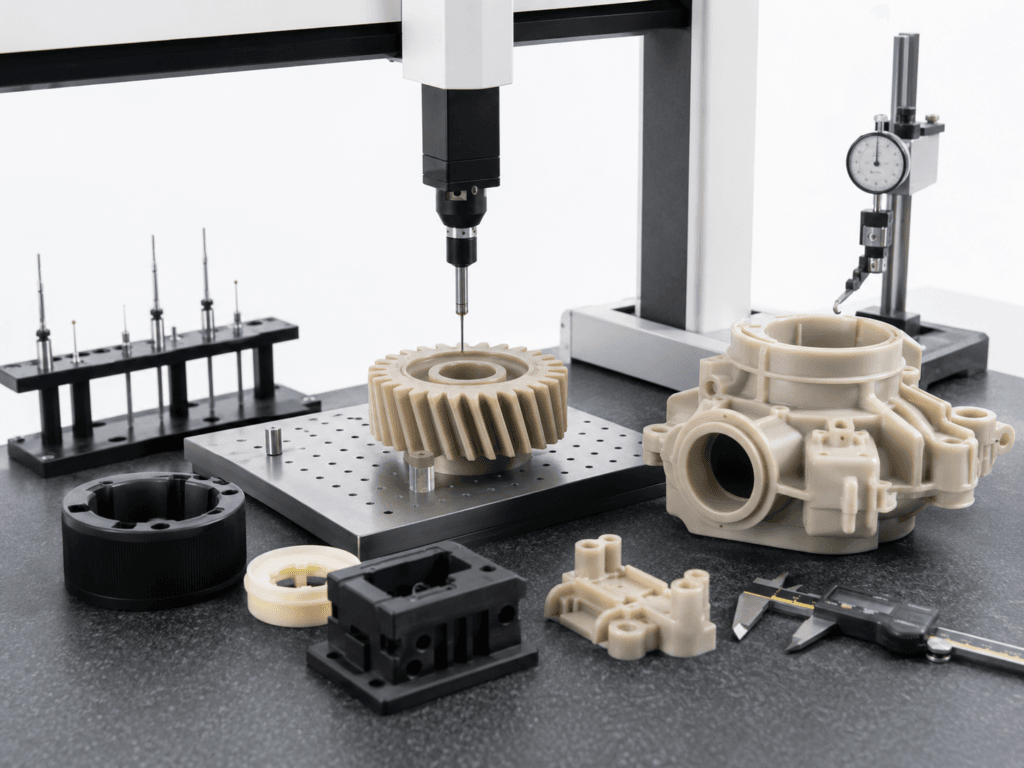
Los componentes industriales pueden funcionar de manera continua durante miles de horas, por lo que la validación dimensional y funcional debe reflejar las condiciones reales de servicio.
Entre los métodos de inspección más habituales se incluyen:
- inspección dimensional por MMC
- Inspección del perfil de engranajes
- Calibres Pasa/No Pasa
- Prueba de torque
- Pruebas de carga
- Pruebas de uso
- Envejecimiento térmico
- Prueba de resistencia química
- Pruebas de ensamblaje
- Pruebas de ciclo funcional
Cuando un componente moldeado cumple una función relacionada con la seguridad, su diseño debe evaluarse como parte de la estrategia global de reducción de riesgos de la máquina. La norma ISO 12100 proporciona el marco general para la evaluación y reducción de riesgos en el diseño de maquinaria.
¿Por qué elegir Samgo para el moldeo por inyección de maquinaria?
Los componentes de maquinaria industrial requieren más que un moldeado estético. Las cargas mecánicas, las tolerancias dimensionales, el desgaste, la temperatura y la estabilidad de la producción a largo plazo deben considerarse desde el principio.
Samgo apoya proyectos de plásticos para maquinaria, desde la revisión de ingeniería inicial hasta el utillaje y la producción en masa.
| Capacidad | Beneficio para el cliente |
| Revisión de diseño de producto | Mejorar la fabricabilidad |
| Análisis DFM | Identificar los riesgos de las herramientas |
| Apoyo en la selección de materiales | Relacionar la resina con las condiciones de operación |
| Simulación Moldflow | Optimizar el llenado y la alabeo |
| Fabricación de moldes de precisión | Mejorar la estabilidad dimensional |
| Moldeo por inserción | Integrar metal y plástico |
| Inspección de Calidad | Verificar los requisitos mecánicos |
Las aplicaciones pueden incluir carcasas de equipos industriales, engranajes, rodamientos, componentes de automatización, carcasas de sensores, piezas eléctricas, componentes de sistemas de fluidos, manijas y otras piezas de plástico para maquinaria personalizada.
Preguntas frecuentes
¿Pueden las piezas de plástico moldeadas por inyección reemplazar a los componentes de maquinaria de metal?
En aplicaciones seleccionadas, sí. Los engranajes, casquillos, cubiertas, soportes, guías y otros componentes a veces se pueden convertir de metal a plásticos de ingeniería. Se deben evaluar los requisitos de carga, temperatura, desgaste, fluencia y seguridad antes de realizar el cambio.
¿Qué plástico es mejor para los engranajes de maquinaria?
El POM y los nilones de ingeniería son candidatos comunes debido a sus características mecánicas y de desgaste. El material correcto depende del par, la velocidad, la temperatura, la lubricación y la vida útil.
¿Por qué utilizar nailon reforzado con fibra de vidrio en maquinaria?
El refuerzo de vidrio puede mejorar significativamente la rigidez, la resistencia mecánica y el rendimiento dimensional, lo que hace que el nailon reforzado sea adecuado para soportes estructurales y componentes mecánicos.
¿Es útil Moldflow para componentes de maquinaria?
Sí. Puede ayudar a evaluar el llenado, la orientación de la fibra, el enfriamiento, la contracción, las líneas de unión y la deformación antes de la fabricación del molde, en particular para piezas reforzadas o dimensionalmente críticas.
Conclusión
El moldeo por inyección es cada vez más importante en la industria de la maquinaria porque los plásticos de ingeniería pueden realizar funciones estructurales, mecánicas, eléctricas, de protección y de control de movimiento dentro de los equipos modernos.
Las aplicaciones van desde protecciones de maquinaria y carcasas eléctricas hasta engranajes, cojinetes, componentes de transportadores, cajas de sensores, piezas de sistemas de fluidos, manijas y mecanismos de precisión.
El mayor valor suele provenir de la integración de funciones. Un componente moldeado diseñado adecuadamente puede combinar nervaduras, ubicaciones de rodamientos, guías de cables, ajustes a presión, soportes de montaje, roscas y estructuras protectoras en una sola pieza, lo que reduce la complejidad del montaje y favorece la fabricación a gran escala.
Sin embargo, las aplicaciones de maquinaria imponen exigencias rigurosas a los plásticos. Deben tenerse en cuenta el desgaste, la temperatura, la estabilidad dimensional, la exposición química, la vibración, la carga mecánica y una larga vida útil.
Mediante una selección adecuada de materiales, análisis DFM, simulación Moldflow, fabricación de moldes de precisión, moldeo por inserción, producción controlada y validación funcional, los componentes de plástico técnico moldeados por inyección pueden proporcionar soluciones confiables y rentables para una amplia gama de aplicaciones de maquinaria industrial.
¿Obtener el último precio? Le responderemos lo antes posible (dentro de las 12 horas)
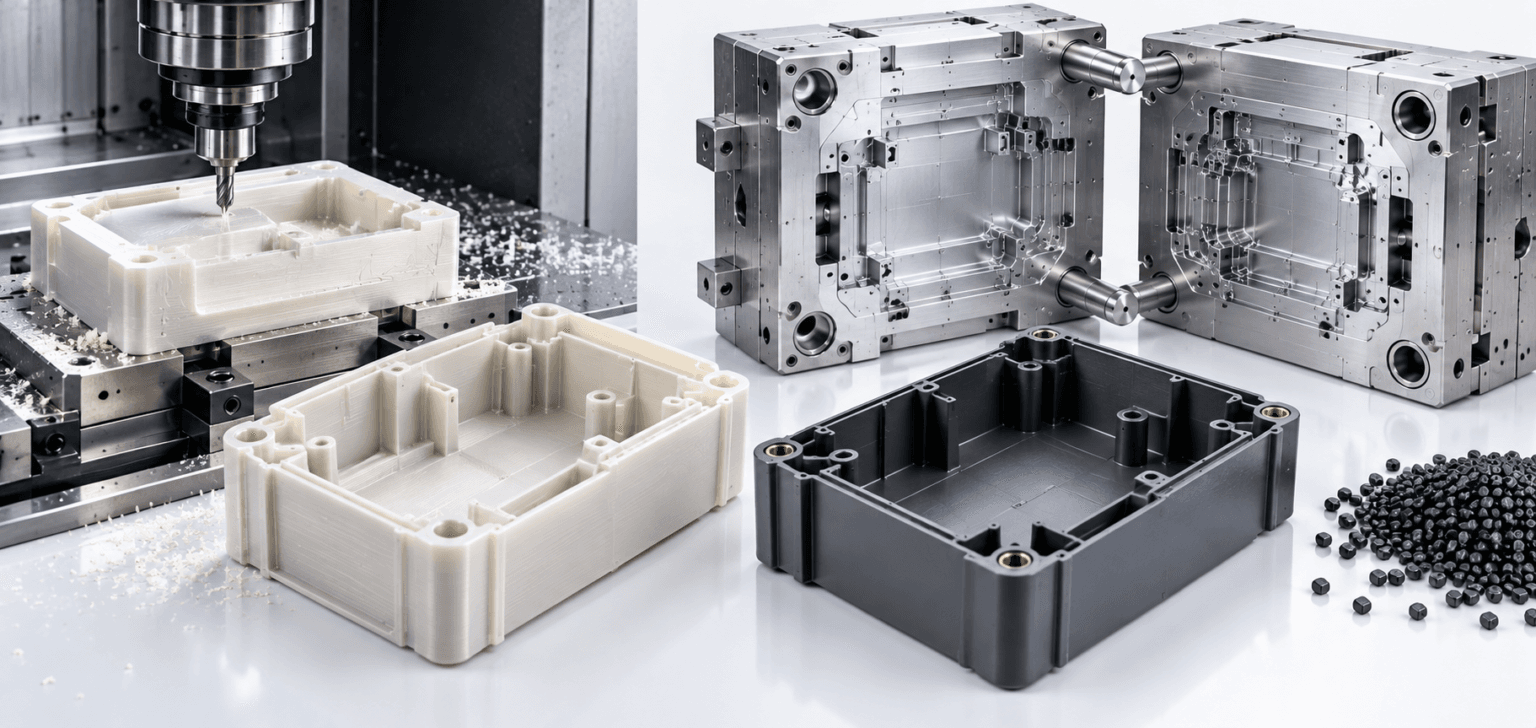
CNC Plastic Prototypes vs. Injection Molded Parts: Key Differences Engineers Should Understand
Compare CNC plastic prototypes and injection molded parts in material properties, dimensions, warpage, surface finish, geometry, cost and production performance.
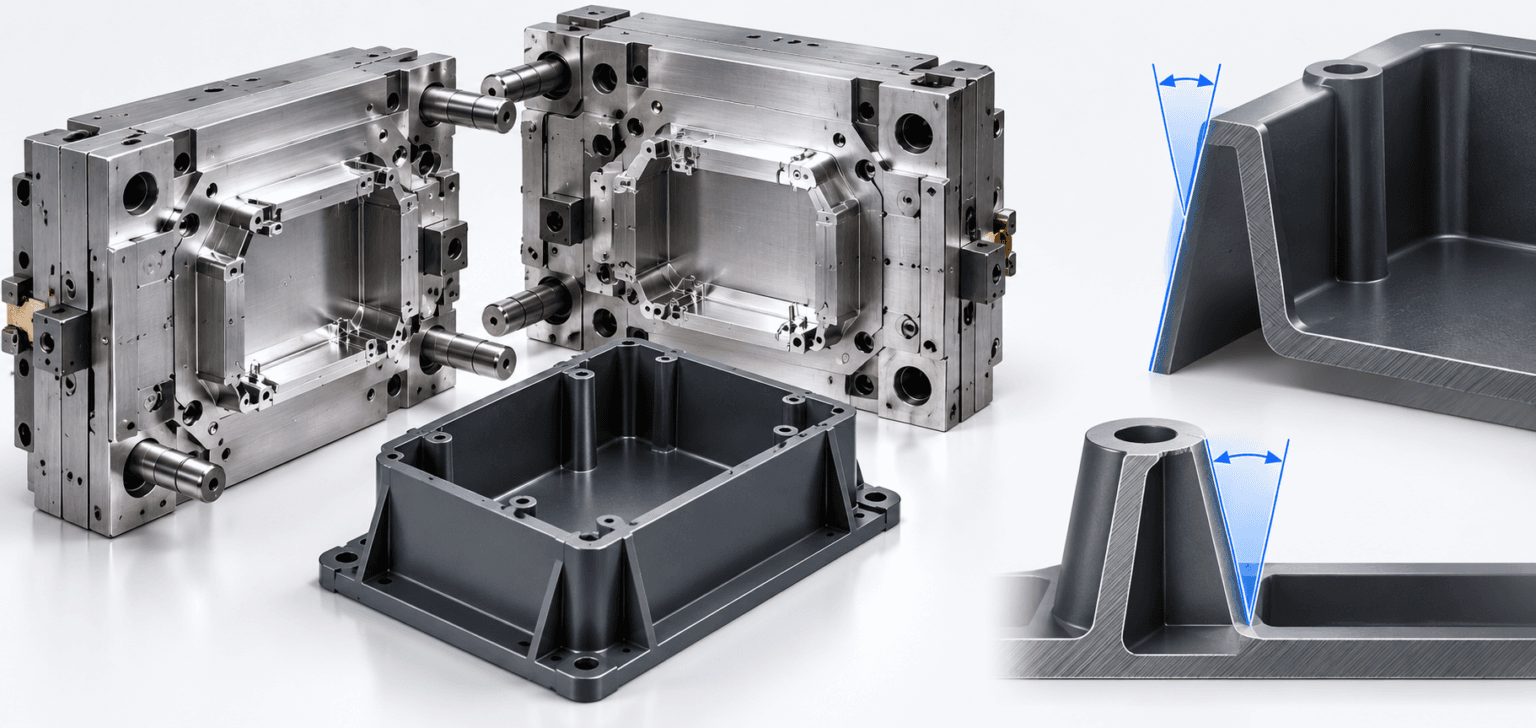
Draft Angle in Injection Mold Design: Improving Part Quality, Ejection and Tooling Efficiency
Discover how draft angles affect injection mold design, part ejection, surface texture, dimensional accuracy, ribs, bosses and long-term tooling performance.
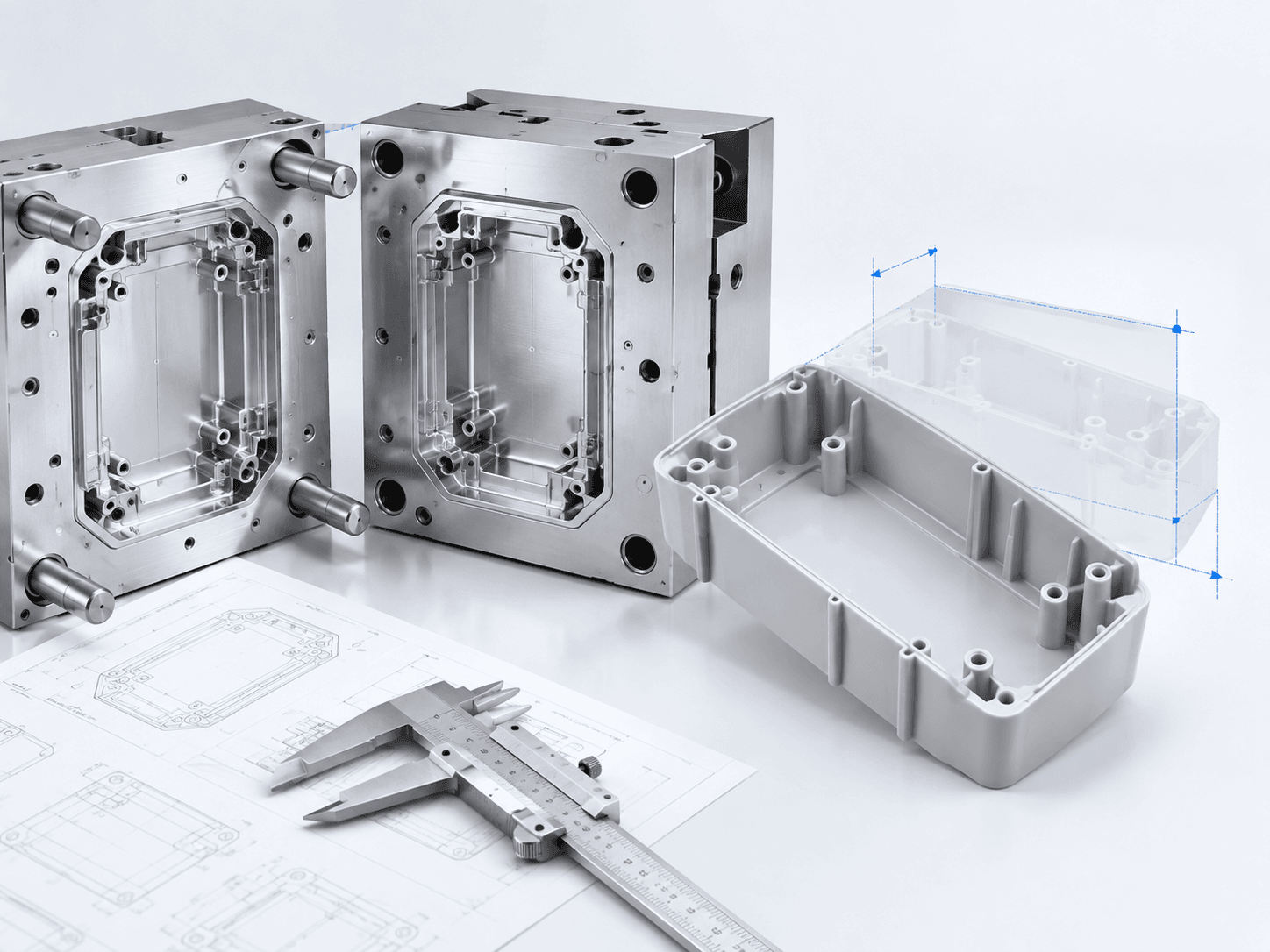
Injection Molding Shrinkage: How to Control Part Dimensions from Mold Design to Production
Learn how injection molding shrinkage affects mold dimensions, tolerances and warpage, and how material, gate design, packing, cooling and mold trials help control final plastic part dimensions.