
Moldeo por inyección doméstico: Aplicaciones, materiales, diseño de moldes y soluciones de fabricación
Índice
Servicio relacionado
Introducción
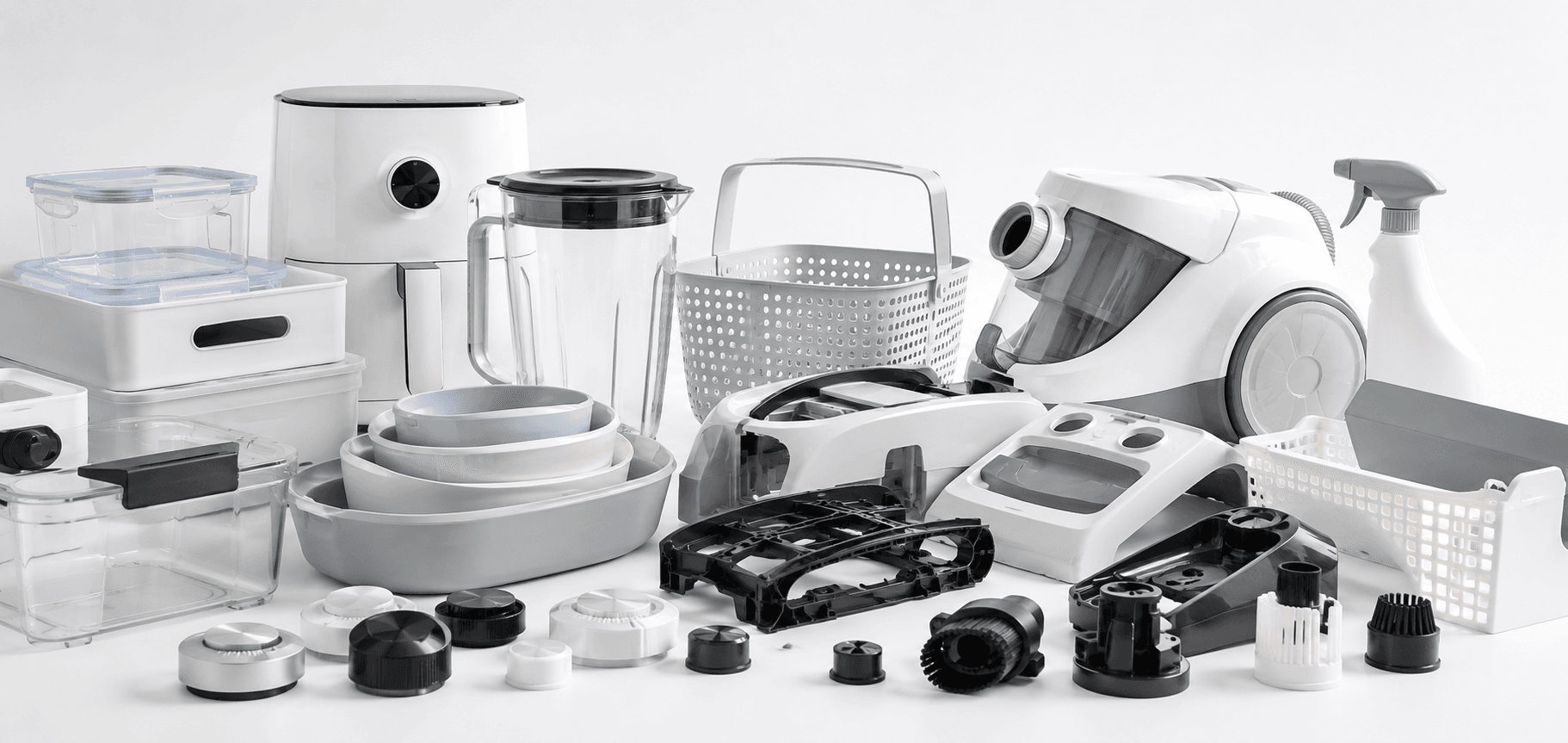
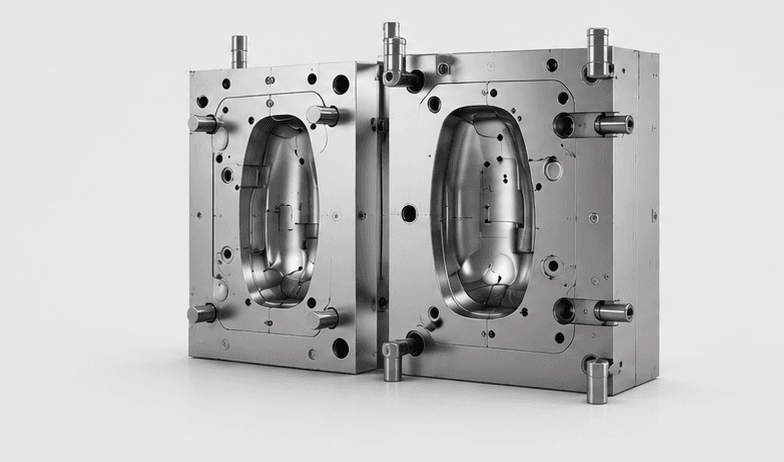
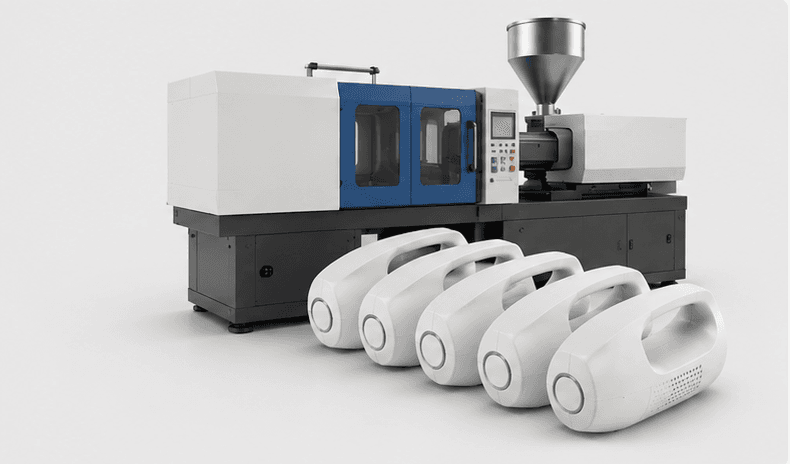
Moldeo por inyección de plástico es uno de los procesos de fabricación más importantes utilizados en la industria de productos para el hogar. Desde electrodomésticos de cocina y contenedores de almacenamiento hasta productos de limpieza, accesorios de baño, componentes de muebles y carcasas de aparatos eléctricos, los plásticos moldeados por inyección están presentes en casi todos los hogares modernos.
El proceso es especialmente adecuado para productos domésticos porque los fabricantes suelen necesitar altos volúmenes de producción, dimensiones consistentes, superficies atractivas, geometría compleja y costos unitarios competitivos. El moldeo por inyección también permite integrar varias funciones —como costillas, clips, soportes para tornillos, asas, bisagras, elementos de sellado y texturas decorativas— directamente en un componente moldeado.
Los principales proveedores de plásticos de ingeniería identifican específicamente a los electrodomésticos grandes y pequeños, los recipientes para alimentos y bebidas, los muebles, los utensilios de cocina y otros artículos para el hogar como aplicaciones importantes para los termoplásticos.
Sin embargo, el moldeo por inyección doméstico exitoso requiere más que elegir un plástico económico. El rendimiento del material, la apariencia, los requisitos de contacto con alimentos, la resistencia al calor, la seguridad eléctrica, el diseño del molde, el ensamblaje y la durabilidad a largo plazo deben considerarse durante el desarrollo del producto.
1. Piezas moldeadas por inyección en electrodomésticos
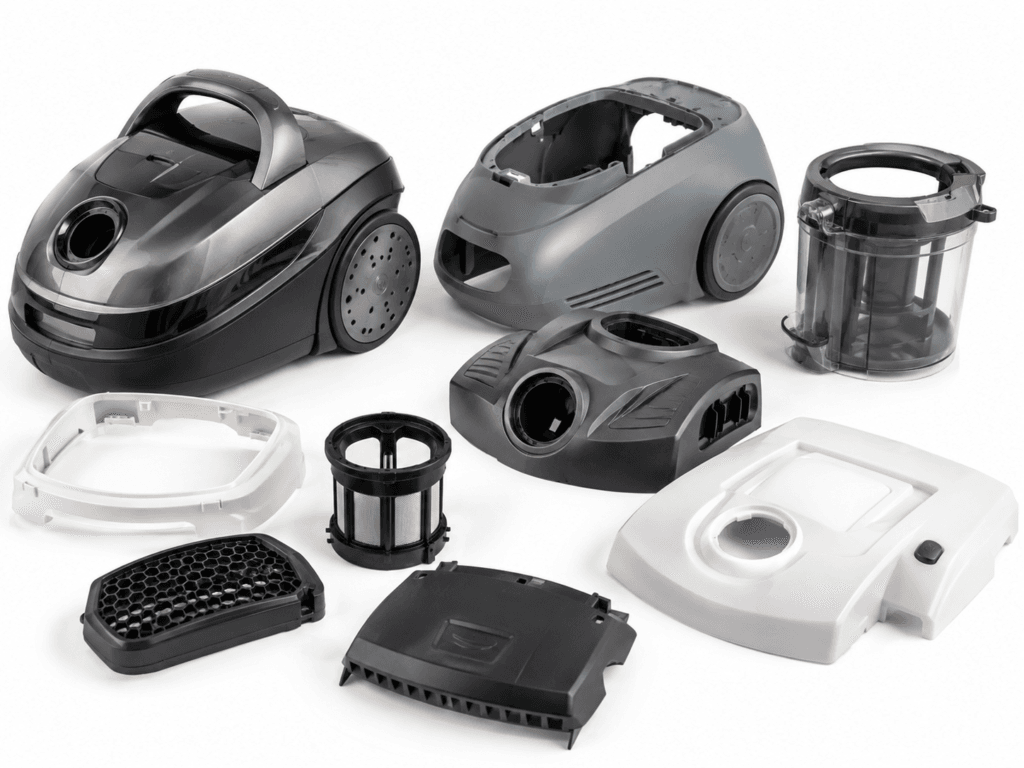
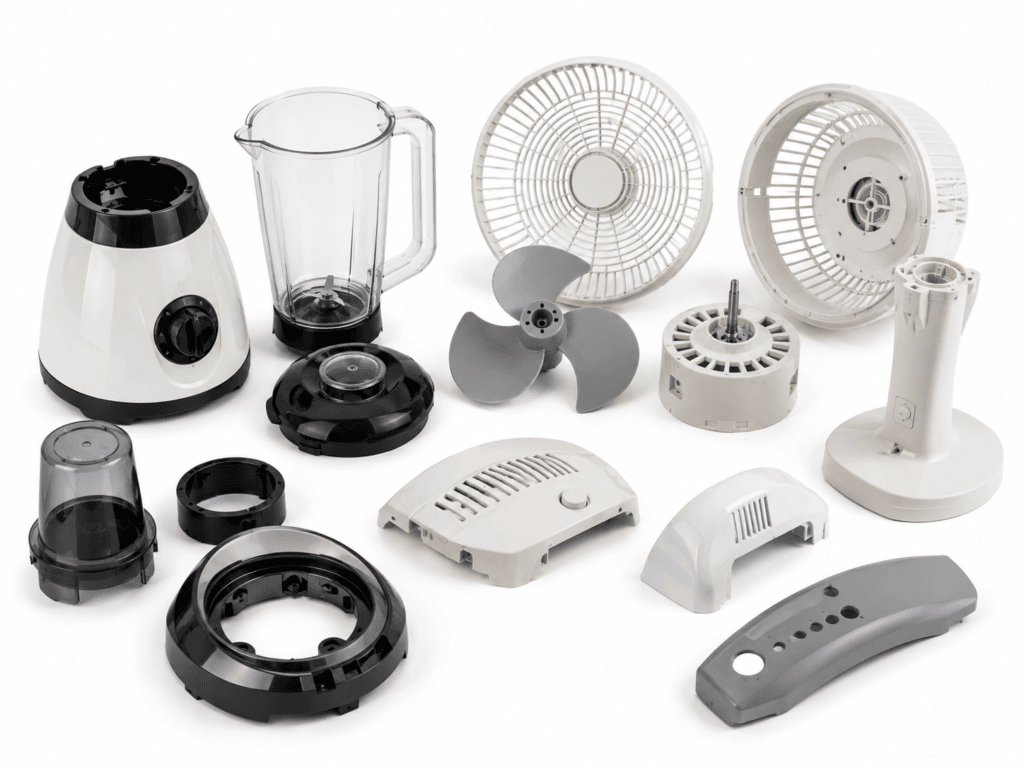
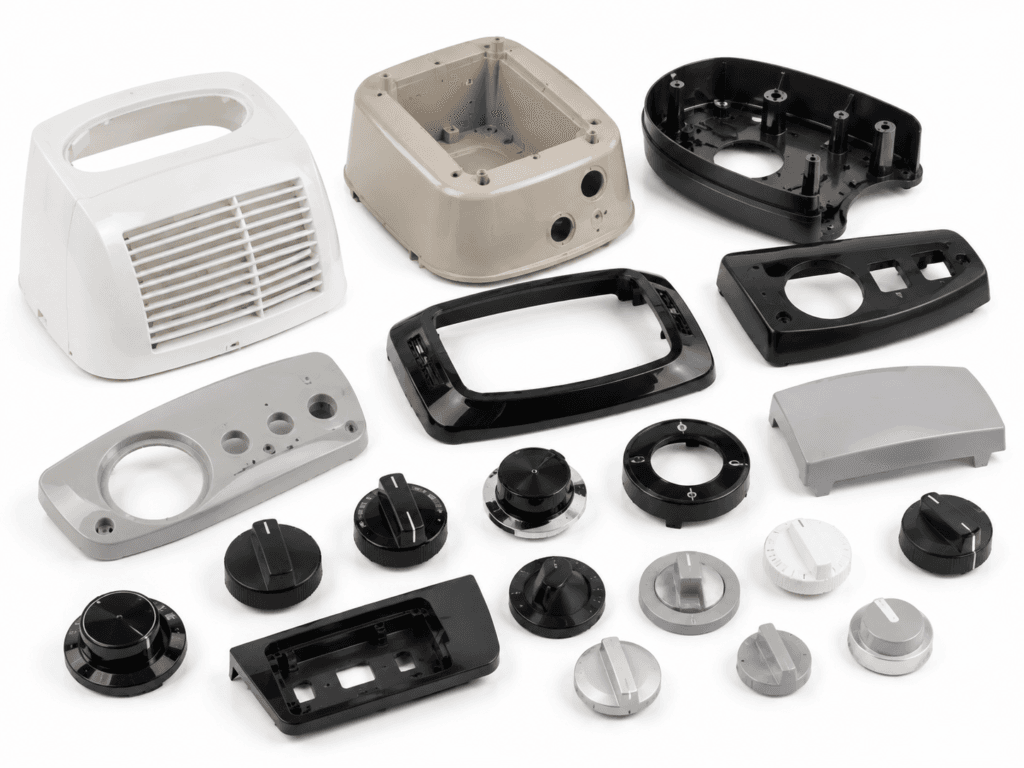
Los electrodomésticos grandes y pequeños contienen muchos componentes de plástico moldeados por inyección.
Las aplicaciones típicas incluyen:
- Carcasas de aspiradora
- Componentes de la máquina de café
- Carcasas de hervidores eléctricos
- Bases de licuadora
- Aspas y protectores de ventilador
- Componentes de la lavadora
- Partes interiores del refrigerador
- Carcasas de purificadores de aire
- Botones de control
- Cajas de interruptores
- Corchetes internos
Los plásticos de ingeniería son valiosos porque pueden combinar construcción ligera, aislamiento eléctrico, estabilidad dimensional, apariencia y flexibilidad de diseño. Tanto SABIC como Celanese enumeran los electrodomésticos y de cocina como aplicaciones establecidas para los termoplásticos de ingeniería.
Para los aparatos electrodomésticos, también se deben considerar los requisitos de seguridad. La familia de normas IEC 60335 aborda la seguridad de los aparatos electrodomésticos y análogos, con partes específicas que cubren diferentes categorías de equipos.
Aplicaciones de electrodomésticos
| Componente | Requisito principal | Material potencial |
|---|---|---|
| Carcasa de electrodoméstico | Apariencia + resistencia al impacto | ABS / PC+ABS |
| Soporte interno | Resistencia + estabilidad dimensional | PA-GF |
| Caja del interruptor | Aislamiento eléctrico | PBT / PC |
| Componente de ventilador | Resistencia + ligereza | PP / PA |
| Botón de control | Apariencia + precisión dimensional | ABS / POM |
2. Utensilios de cocina y productos de plástico en contacto con alimentos
Los utensilios de cocina son otra aplicación importante del moldeo por inyección.
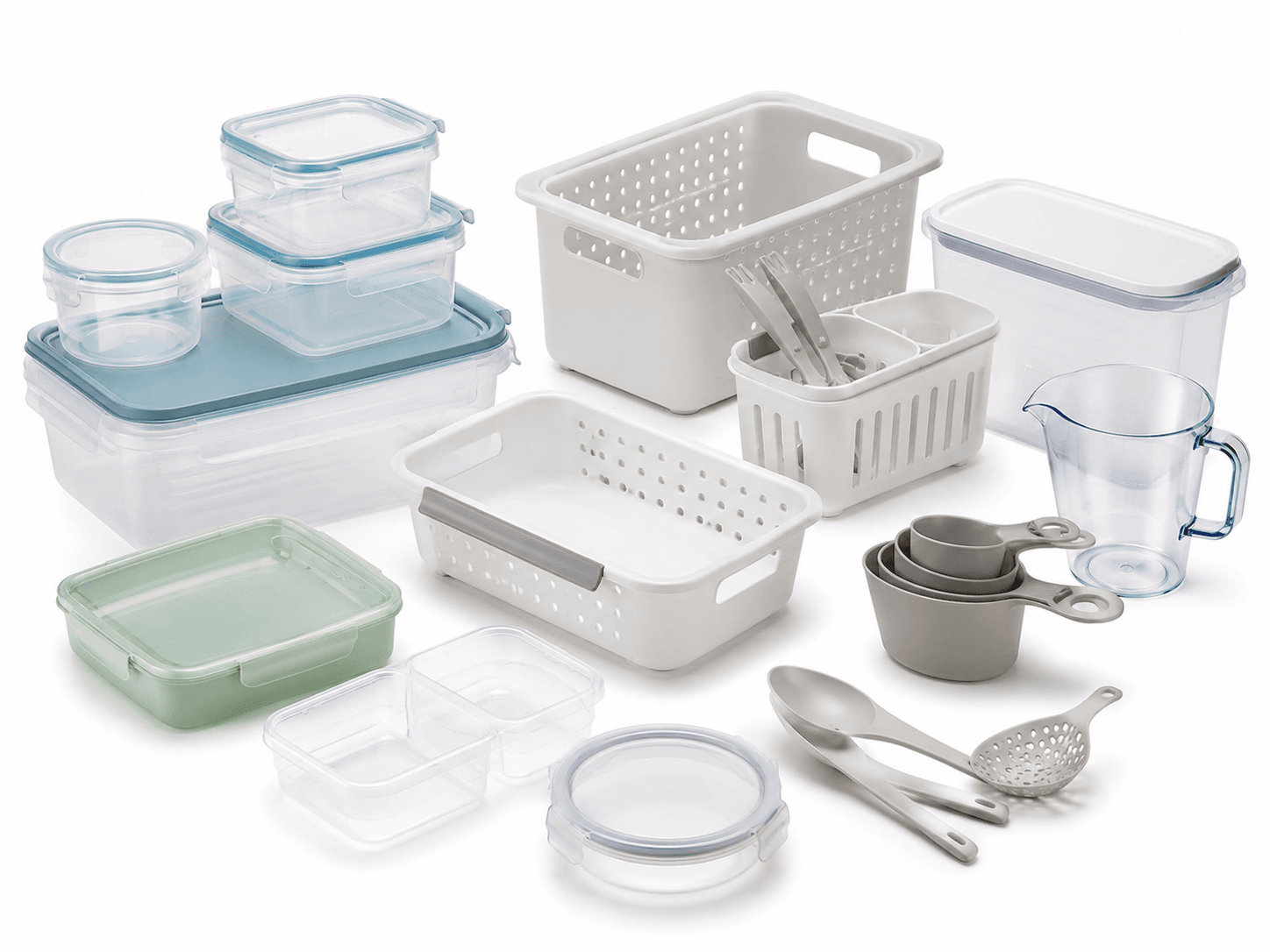
Los productos moldeados comunes incluyen:
- Recipientes para almacenar alimentos
- Tazas de medir
- Organizadores de cocina
- Mangos de utensilios
- Cajas reutilizables
- bandejas de almacenamiento para refrigerador
- Componentes de la máquina de café
- Accesorios para la preparación de alimentos
La selección de materiales adquiere especial importancia cuando el producto acabado entra en contacto directo con los alimentos.
En los Estados Unidos, las normas de la FDA cubren las sustancias utilizadas en envases de alimentos, utensilios de cocina, superficies de preparación de alimentos, equipos de procesamiento y otras aplicaciones donde los materiales entran en contacto con los alimentos. El uso autorizado depende de la sustancia específica y de las condiciones de uso.
Del mismo modo, los materiales en contacto con los alimentos de la UE están sujetos a un marco normativo destinado a controlar la migración de sustancias a los alimentos, con requisitos específicos aplicables a los materiales plásticos en contacto con los alimentos.
El PP se considera con frecuencia para muchos envases de alimentos para el hogar debido a su combinación de procesabilidad, resistencia química y coste práctico, mientras que otras aplicaciones pueden requerir materiales de ingeniería transparentes o de mayor temperatura.
Productos de almacenamiento y organización
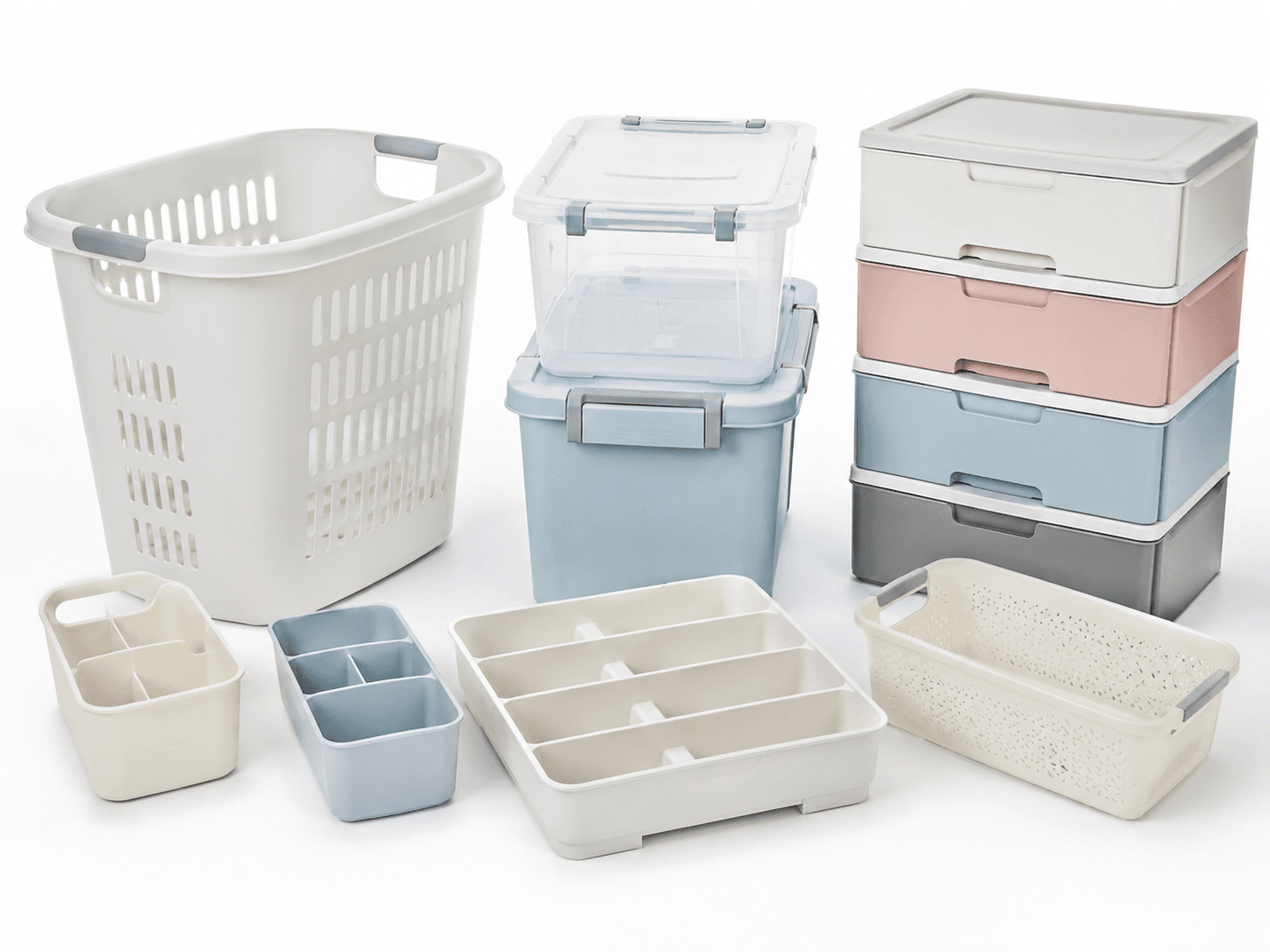
Los productos de almacenamiento suelen producirse en volúmenes muy altos y pueden variar desde pequeños organizadores hasta contenedores de plástico relativamente grandes.
Las aplicaciones típicas incluyen:
- Cajas de almacenamiento
- Organizadores de cajones
- Organizadores de ropa
- Cestos de ropa
- Contenedores multiusos
- Accesorios para estanterías
- Organizadores de herramientas
- Cubos de basura domésticos
Estos productos pueden parecer sencillos, pero las piezas grandes moldeadas por inyección pueden plantear importantes desafíos de ingeniería.
Las paredes planas y largas son especialmente susceptibles a la deformación. Los nervios grandes pueden crear marcas de rechupte, mientras que una rigidez insuficiente puede hacer que un envase se sienta débil o económico.
Los diseñadores suelen utilizar redes de nervios, bordes enrollados, radios de esquina y geometría estructural para aumentar la rigidez sin limitarse a aumentar el espesor de las paredes.
Consideraciones de diseño estructural
| Característica de diseño | Propósito de la ingeniería |
| Red de costillas | Aumentar la rigidez |
| Esquinas redondeadas | Reducir la concentración de tensiones |
| Grosor de pared uniforme | Reducir chupazgos y alabeo |
| Ángulo de salida | Mejorar el desmoldeo de moldes |
| Geometría apilable | Mejorar la eficiencia del almacenamiento |
| Mangos reforzados | Mejorar la capacidad de carga |
4. Productos de limpieza y lavandería
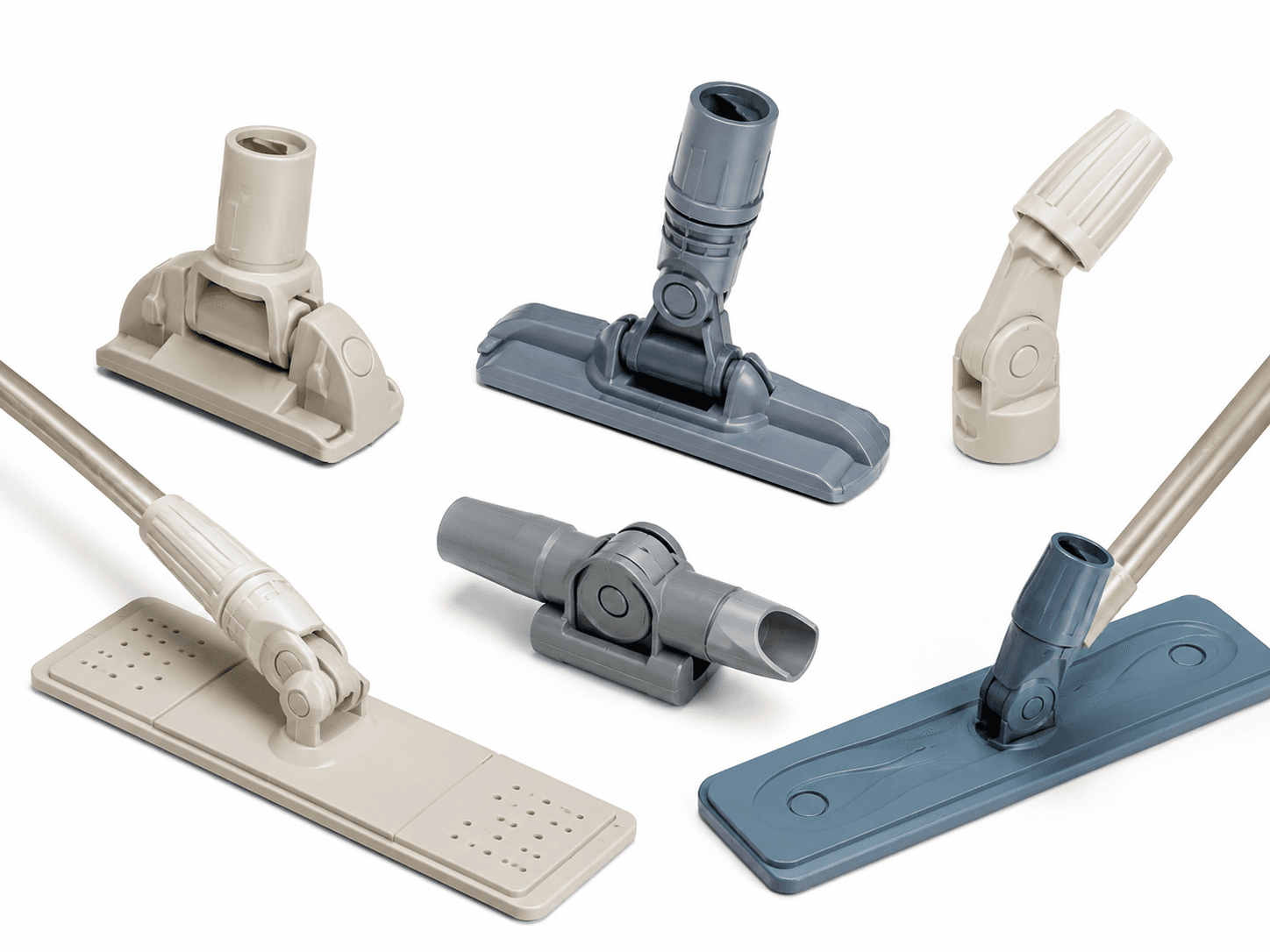
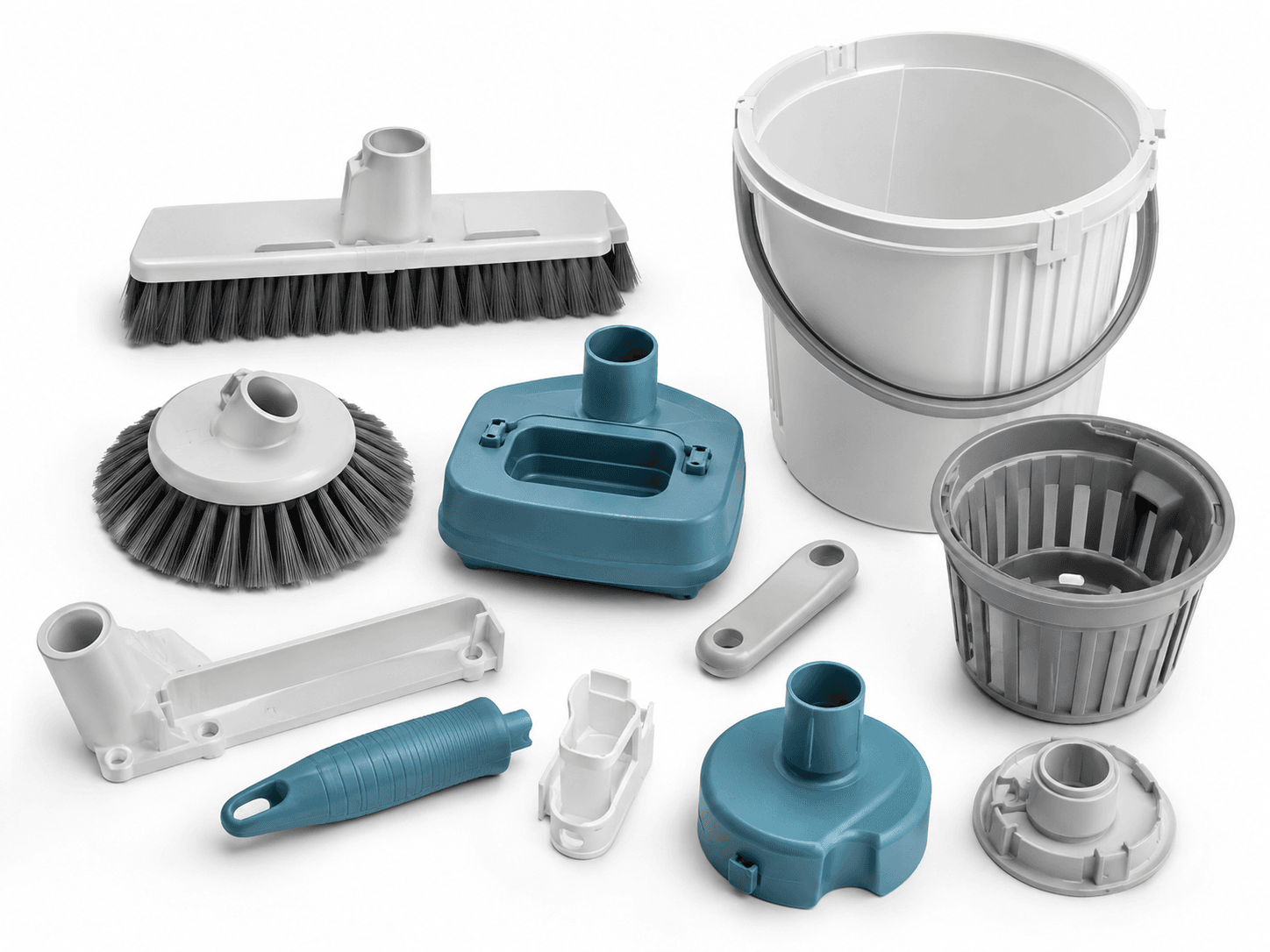
El moldeo por inyección se utiliza ampliamente para productos de limpieza y lavado porque estos componentes a menudo requieren una buena resistencia química, tenacidad y una producción en masa económica.
Las aplicaciones incluyen:
- Componentes de la mopa
- Asas de balde
- Portaescobillas
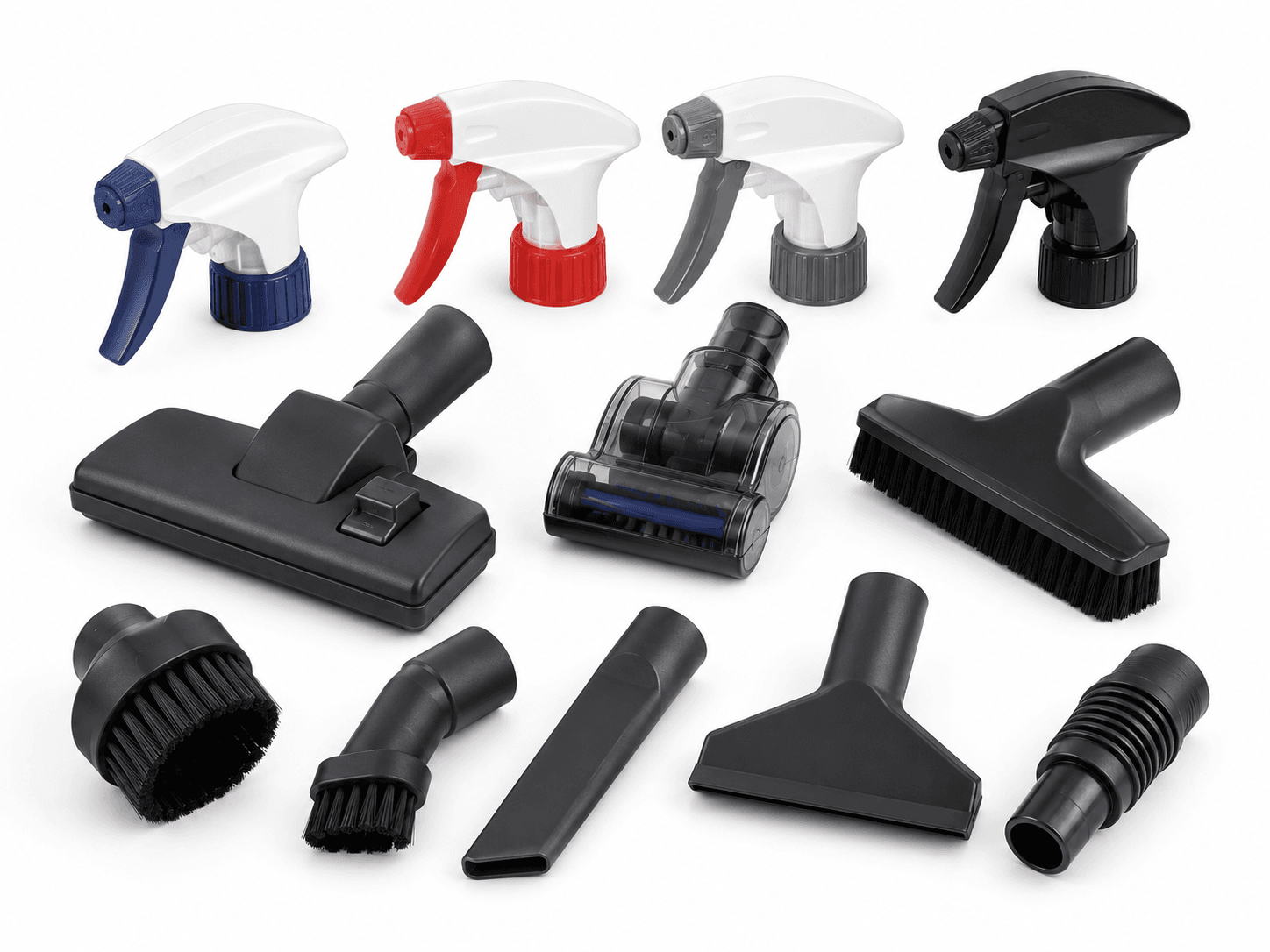
- Componentes de la botella con atomizador
- Limpieza de conectores de herramientas
- Accesorios para aspiradora
- Accesorios de lavandería
- Componentes de dispensación de detergente
Estos productos pueden entrar en contacto repetido con detergentes, agentes de limpieza, agua y productos químicos domésticos.
Por lo tanto, la compatibilidad de los materiales debe evaluarse frente a los productos químicos reales utilizados durante el servicio. La fisuración por tensión puede ocurrir cuando un polímero que se comporta bien mecánicamente se expone a un producto químico incompatible bajo carga.
Las uniones de encaje a presión, las interfaces roscadas y las áreas de agarre suave sobremoldeadas también son comunes en los productos de limpieza.
5. Componentes de baños y servicios domésticos
Los baños y las zonas de servicio contienen numerosos productos moldeados por inyección expuestos a la humedad, al agua, a productos químicos de limpieza y a una manipulación frecuente.
Los ejemplos incluyen:
- Carcasas de dispensadores de jabón
- Portacepillos de dientes
- Accesorios de ducha
- Componentes de drenaje
- Ganchos multiusos
- Organizadores de baño
- Accesorios de baño
- Caretas de control de agua
Estas piezas suelen requerir superficies lisas que sean fáciles de limpiar, manteniendo al mismo tiempo la resistencia a la humedad y a los productos químicos de limpieza.
Para los productos de baño visibles, la calidad superficial puede ser tan importante como el rendimiento estructural. El pulido de moldes de alto brillo, las texturas mate, la igualación de colores y los detalles decorativos moldeados se pueden utilizar para lograr la apariencia deseada sin un procesamiento secundario extensivo.
6. Selección de materiales para moldeo por inyección doméstico
Los productos para el hogar abarcan una gama tan amplia de aplicaciones que ningún polímero por sí solo es adecuado para cada componente.
Entre los materiales más habituales se encuentran:
| Material | Características clave | Aplicaciones domésticas típicas |
| PP | Resistencia química, económico | Almacenamiento, utensilios de cocina, productos de limpieza |
| ABS | Buen aspecto y resistencia | Carcasas de electrodomésticos |
| PC/ABS | Resistencia al impacto + estabilidad dimensional | Carcasas para electrodomésticos de alta gama |
| PC | Rendimiento de alto impacto | Componentes transparentes duraderos |
| POM | Baja fricción, resistencia al desgaste | Engranajes y mecanismos |
| PA-GF | Resistencia y rigidez | Piezas estructurales para aparatos |
| PBT | Propiedades eléctricas, estabilidad dimensional | Interruptores y componentes eléctricos |
| TPE | Tacto suave y flexible | Manijas y sellos |
Los proveedores de materiales para ingeniería ofrecen ABS, PBT y otros termoplásticos destinados específicamente a aplicaciones en electrodomésticos y aparatos eléctricos, y la elección del material depende de los requisitos de rendimiento.
La selección de materiales debe tener en cuenta todo el entorno operativo, incluidos la temperatura, el impacto, el contacto químico, el contacto con alimentos, los requisitos eléctricos, la apariencia y la vida útil prevista del producto.
7. Moldeo por inyección y productos para el hogar de tacto suave
Muchos productos domésticos de alta gama están fabricados con más de un material.
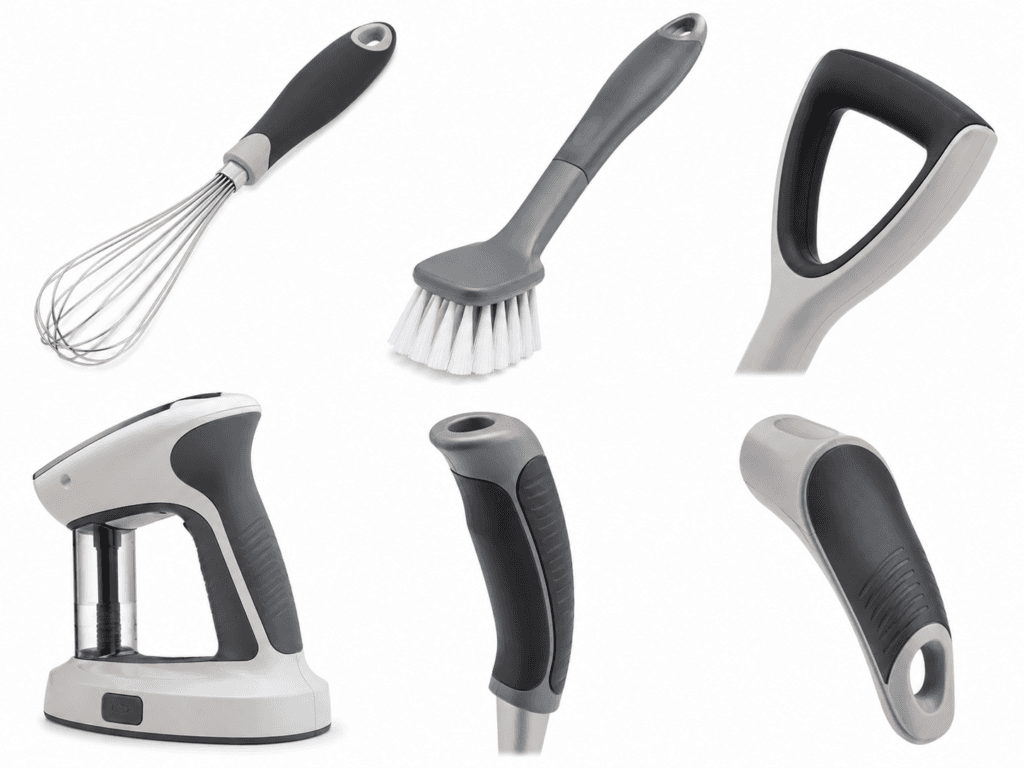
El sobremoldeo de TPE puede proporcionar:
- Asas de tacto suave
- Mayor agarre
- Reducción de las vibraciones
- Sellado
- Protección contra impactos
- Aspecto mejorado
Ejemplos comunes incluyen mangos de utensilios de cocina, herramientas de limpieza, empuñaduras de aparatos eléctricos, componentes de cepillos de dientes y herramientas domésticas.
El sustrato y el material de sobremoldeo deben tener características de adhesión adecuadas. El diseño del molde también debe controlar la posición del material, las superficies de cierre y las tolerancias dimensionales para evitar rebabas o cobertura incompleta.
8. Diseño de moldes para piezas de plástico de uso doméstico
Los productos para el hogar suelen tener objetivos de costos agresivos, lo que hace que el diseño eficiente de moldes sea especialmente importante.
Las consideraciones clave incluyen:
Herramental de múltiples cavidades
Las piezas pequeñas como clips, perillas, tapas y conectores a menudo pueden utilizar moldes de cavidades múltiples para aumentar la producción.
Sistemas de canales calientes
Para los productos de alto volumen adecuados, los canales calientes pueden reducir el desperdicio de los canales y favorecer la producción automatizada.
Optimización de refrigeración
La refrigeración suele representar una parte significativa del ciclo de moldeo. Una refrigeración equilibrada ayuda a reducir el tiempo de ciclo mientras controla la contracción y el alabeo.
Deslizadores y levantadores
Los productos para el hogar pueden contener aberturas laterales, ganchos de cierre, asas o elementos de ajuste a presión que requieren mecanismos de socavadura.
Textura superficial
El pulido y texturizado de moldes determinan el aspecto final de muchos productos domésticos visibles.
9. Resistencia a la llama y seguridad eléctrica
Las piezas de plástico utilizadas cerca de componentes eléctricos, sistemas de calefacción, motores o fuentes de alimentación pueden requerir consideraciones de seguridad adicionales.
UL 94 se utiliza ampliamente para caracterizar el comportamiento de inflamabilidad de los materiales plásticos empleados en componentes y piezas de dispositivos y electrodomésticos. Es importante destacar que la clasificación se refiere a condiciones de prueba definidas y al espesor del material; no debe considerarse como una garantía universal de la seguridad contra incendios completa del producto.
Para los aparatos electrodomésticos, la norma de producto final correspondiente debe considerarse junto con las propiedades del material, la geometría de los componentes, las distancias de aislamiento eléctrico, la exposición al calor y las condiciones de funcionamiento.
10. Defectos comunes de moldeo por inyección domésticos
Los productos domésticos de gran volumen requieren una apariencia y dimensiones estables.
| Defecto | Causa Común | Solución de ingeniería |
| Marcas de hundimiento | Grosor local excesivo | Optimizar costillas y soportes |
| Deformación | Enfriamiento/contracción desigual | Mejorar el enfriamiento y el llenado |
| Líneas de soldadura | Frentes de flujo múltiples | Optimizar la ubicación de la puerta |
| Destello | Eliminación de moho o alta presión | Mejorar las herramientas y el proceso |
| Tiro corto | Relleno insuficiente | Optimizar la ruta de flujo |
| Variación de color | Incoherencia en los materiales o los procesos | Mejorar el control de materiales |
| Marcas superficiales | Condición del molde/proceso | Optimizar finalización de herramienta |
La revisión de DFM y la simulación de flujo de molde pueden identificar muchos de estos riesgos antes de fabricar las herramientas.
11. Control de calidad para piezas de plástico para el hogar
Los productos para el hogar pueden ser económicos individualmente, pero las cantidades de producción pueden ser extremadamente altas. Por lo tanto, una pequeña tasa de defectos puede generar costos sustanciales de desperdicio y ensamblaje.
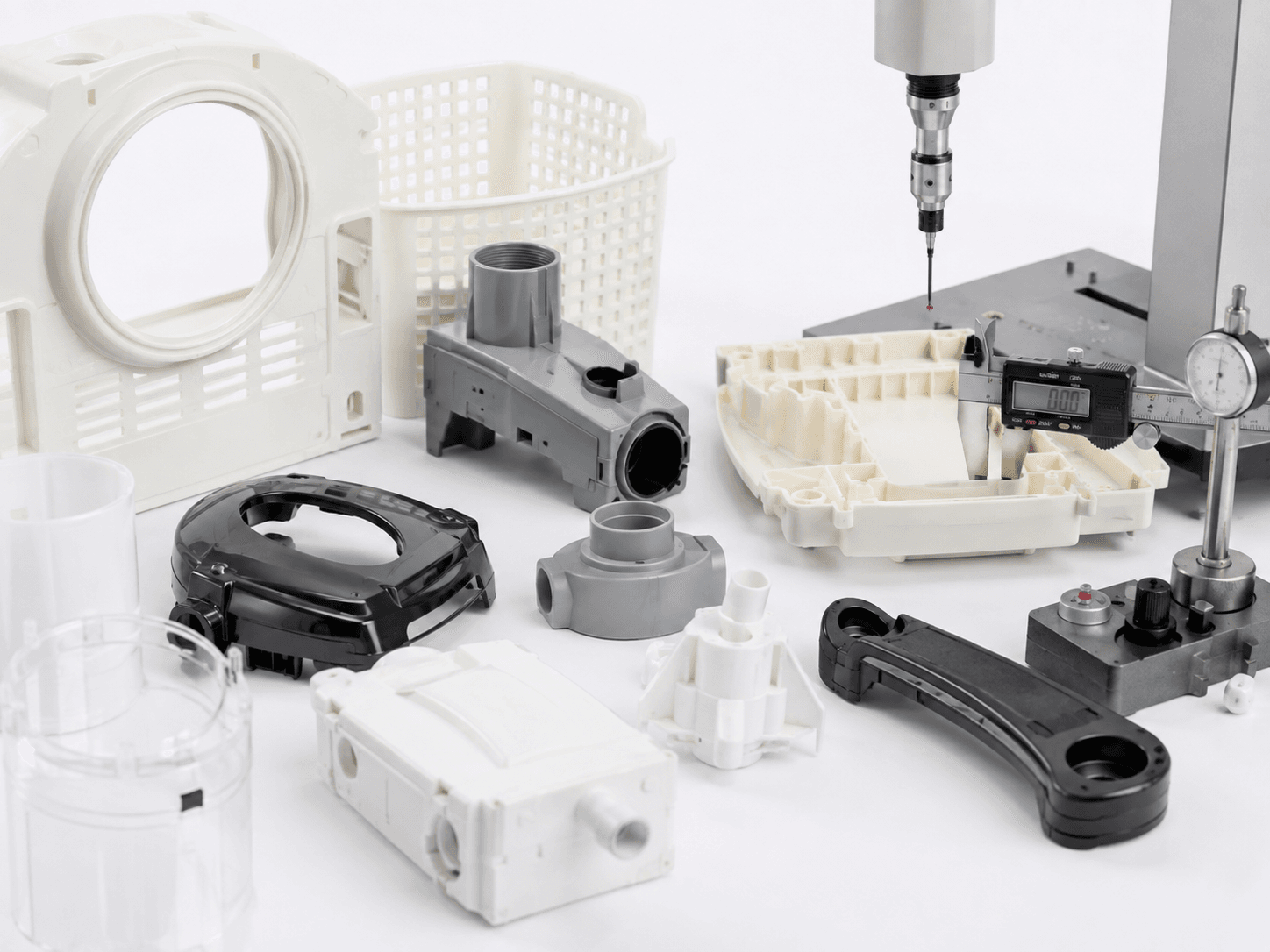
Entre los métodos de inspección más habituales se incluyen:
- Inspección dimensional
- Inspección visual de superficies
- Comparación de colores
- Pruebas de ensamblaje
- Prueba de caída
- Pruebas de carga
- Prueba de torque
- Prueba de fugas
- Pruebas de ciclo de vida funcional
Los aparatos eléctricos pueden requerir pruebas de seguridad adicionales según los requisitos aplicables del mercado y del producto final.
12. Sostenibilidad y diseño de productos para el hogar
La sostenibilidad es cada vez más relevante en el desarrollo de artículos para el hogar y electrodomésticos. Los proveedores de materiales están desarrollando soluciones en torno al aligeramiento, la integración de piezas, el contenido reciclado y el diseño para la reciclabilidad.
Las estrategias prácticas pueden incluir:
- Reducción del grosor de pared innecesario
- Diseñar menos componentes
- Utilizando estructuras monomateriales cuando sea práctico
- Selección de termoplásticos reciclables
- Reducción de residuos de colada
- Diseño de productos para la reparación o el desmontaje
- Evaluación de materiales reciclados cuando las especificaciones lo permitan
Para los productos en contacto con alimentos, los materiales reciclados requieren consideraciones reglamentarias adicionales. La FDA, por ejemplo, ofrece directrices específicas sobre los plásticos reciclados propuestos para aplicaciones en contacto con alimentos.
¿Por qué elegir Samgo para el moldeo por inyección doméstico?
La fabricación de productos para el hogar requiere un equilibrio entre apariencia, durabilidad, eficiencia de producción y costo.
Samgo admite proyectos de plástico para el hogar personalizados, desde la ingeniería de productos hasta la matricería y la producción en masa.
| Capacidad | Beneficio para el cliente |
| Apoyo en diseño de productos | Mejorar la fabricabilidad |
| Análisis DFM | Identifique los riesgos de las herramientas temprano |
| Análisis Moldflow | Optimizar el llenado y la alabeo |
| Fabricación de moldes de precisión | Dimensiones de la pieza estable |
| Herramental de múltiples cavidades | Mejorar la eficiencia de producción |
| Moldeo por inyección | Producción en masa constante |
| Inspección de Calidad | Verificar apariencia y función |
Las aplicaciones pueden incluir carcasas de electrodomésticos, utensilios de cocina, productos de almacenamiento, equipos de limpieza, productos para el baño, componentes de utilidad y otras piezas de plástico para el hogar personalizadas.
Preguntas frecuentes
¿Qué plásticos se utilizan comúnmente para el moldeo por inyección doméstico?
PP, ABS, PC/ABS, PC, POM, PA, PBT y TPE son ampliamente considerados. El material correcto depende de la resistencia mecánica, la temperatura, los productos químicos, los requisitos eléctricos, la apariencia y los requisitos reglamentarios.
¿Qué plástico es adecuado para carcasas de electrodomésticos?
El ABS y el PC/ABS son candidatos comunes porque pueden ofrecer una buena apariencia, tenacidad y rendimiento dimensional. Las aplicaciones eléctricas o relacionadas con el calor pueden requerir grados especializados.
¿Se pueden moldear por inyección los productos de cocina para el hogar?
Sí. Los recipientes de almacenamiento, los productos de medición, los accesorios de cocina, los componentes de electrodomésticos y muchos otros productos de cocina se producen mediante moldeo por inyección. Se debe evaluar el cumplimiento del contacto con alimentos para el mercado objetivo.
¿Se pueden moldear empuñaduras de caucho blando directamente en productos para el hogar?
Sí. El moldeado de dos inyecciones o el sobremoldeado de TPE pueden crear agarres integrados de tacto suave cuando los materiales y la geometría del producto son compatibles.
Conclusión
El moldeo por inyección permite a los fabricantes de artículos para el hogar producir productos plásticos atractivos, duraderos, funcionales y rentables a altos volúmenes de producción. Las aplicaciones van desde utensilios de cocina y recipientes de almacenamiento hasta equipos de limpieza, productos de baño, carcasas de electrodomésticos, componentes eléctricos y mecanismos internos.
Los requisitos de cada producto pueden diferir considerablemente. Un organizador de almacenamiento sencillo puede priorizar el bajo costo y la rigidez, mientras que un componente de cocina puede requerir cumplimiento de contacto con alimentos y resistencia al calor. La carcasa de un aparato eléctrico puede requerir resistencia al impacto, estabilidad dimensional, rendimiento frente a las llamas y cumplimiento de los requisitos de seguridad de electrodomésticos aplicables.
Por lo tanto, el moldeo por inyección doméstico exitoso comienza por comprender el entorno real del producto. La selección del material, el grosor de las paredes, las nervaduras, los ensamblajes a presión, el acabado superficial, la estructura del molde, la refrigeración, la eficiencia de producción y la validación de la calidad deben considerarse en conjunto.
Al combinar la DFM de productos, la ingeniería de materiales, la simulación Moldflow, la fabricación de moldes de precisión y el moldeo por inyección controlado, los fabricantes pueden desarrollar componentes plásticos para el hogar que ofrecen un rendimiento fiable al tiempo que mantienen costes de producción competitivos.
¿Obtener el último precio? Le responderemos lo antes posible (dentro de las 12 horas)
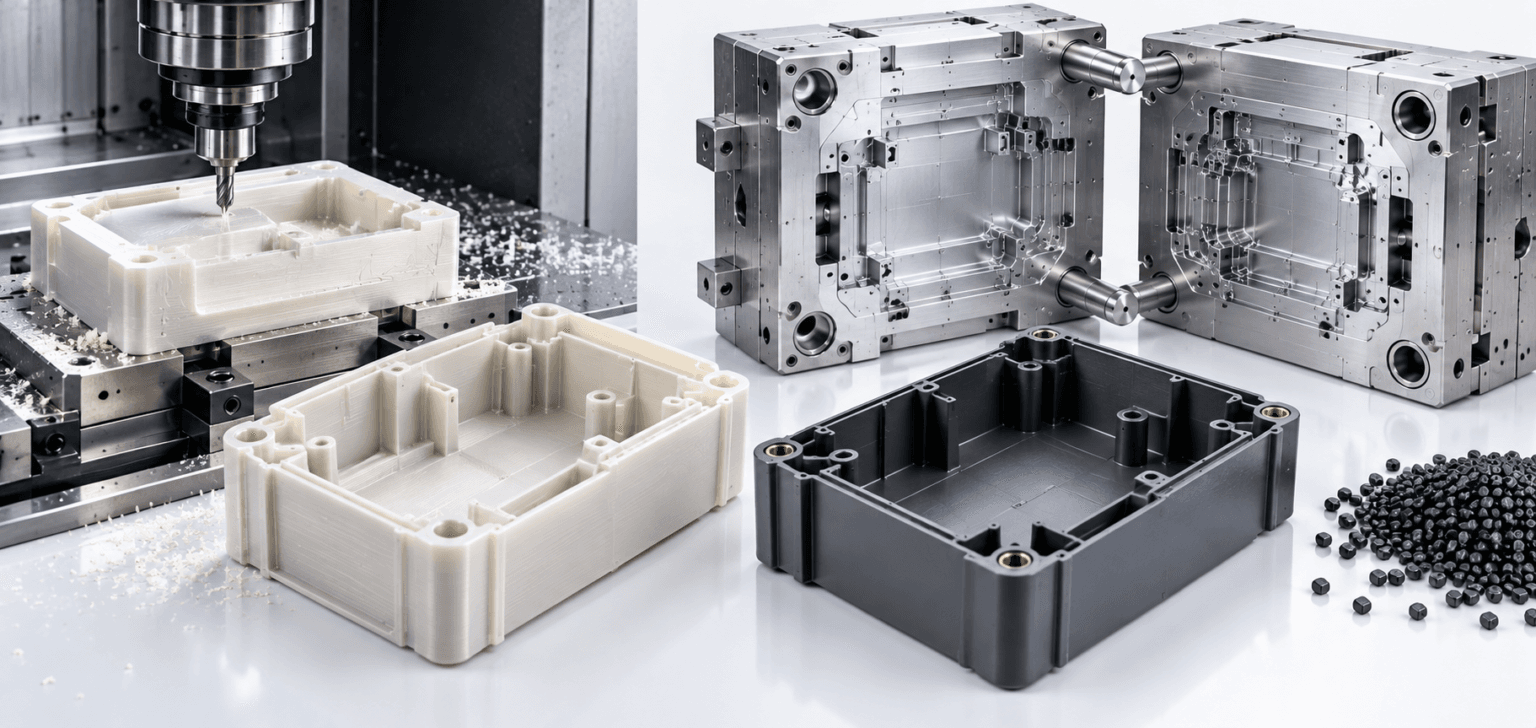
CNC Plastic Prototypes vs. Injection Molded Parts: Key Differences Engineers Should Understand
Compare CNC plastic prototypes and injection molded parts in material properties, dimensions, warpage, surface finish, geometry, cost and production performance.
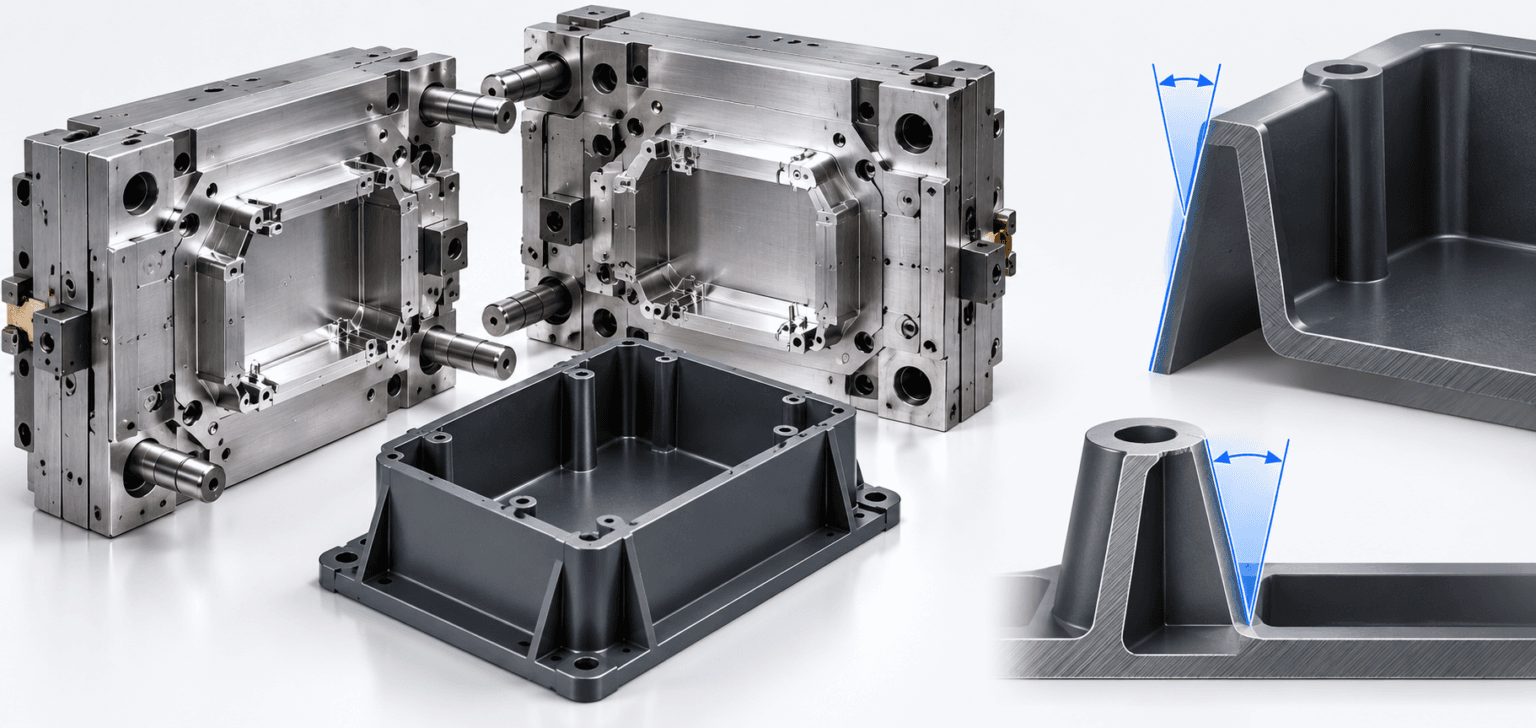
Draft Angle in Injection Mold Design: Improving Part Quality, Ejection and Tooling Efficiency
Discover how draft angles affect injection mold design, part ejection, surface texture, dimensional accuracy, ribs, bosses and long-term tooling performance.
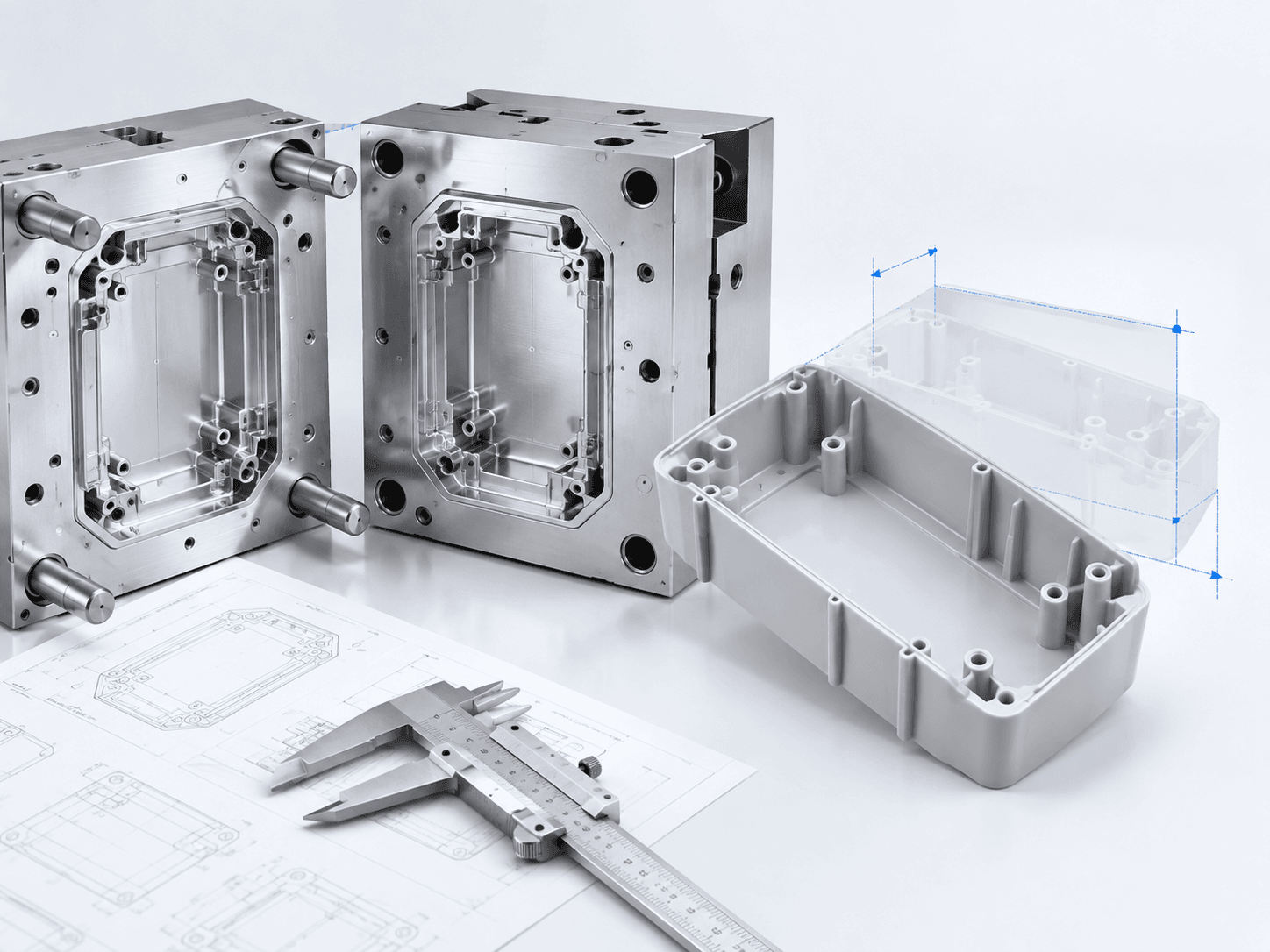
Injection Molding Shrinkage: How to Control Part Dimensions from Mold Design to Production
Learn how injection molding shrinkage affects mold dimensions, tolerances and warpage, and how material, gate design, packing, cooling and mold trials help control final plastic part dimensions.