
Aplicaciones de moldeo por inyección en la industria de las nuevas energías: materiales, componentes y soluciones de fabricación
Índice
Introducción
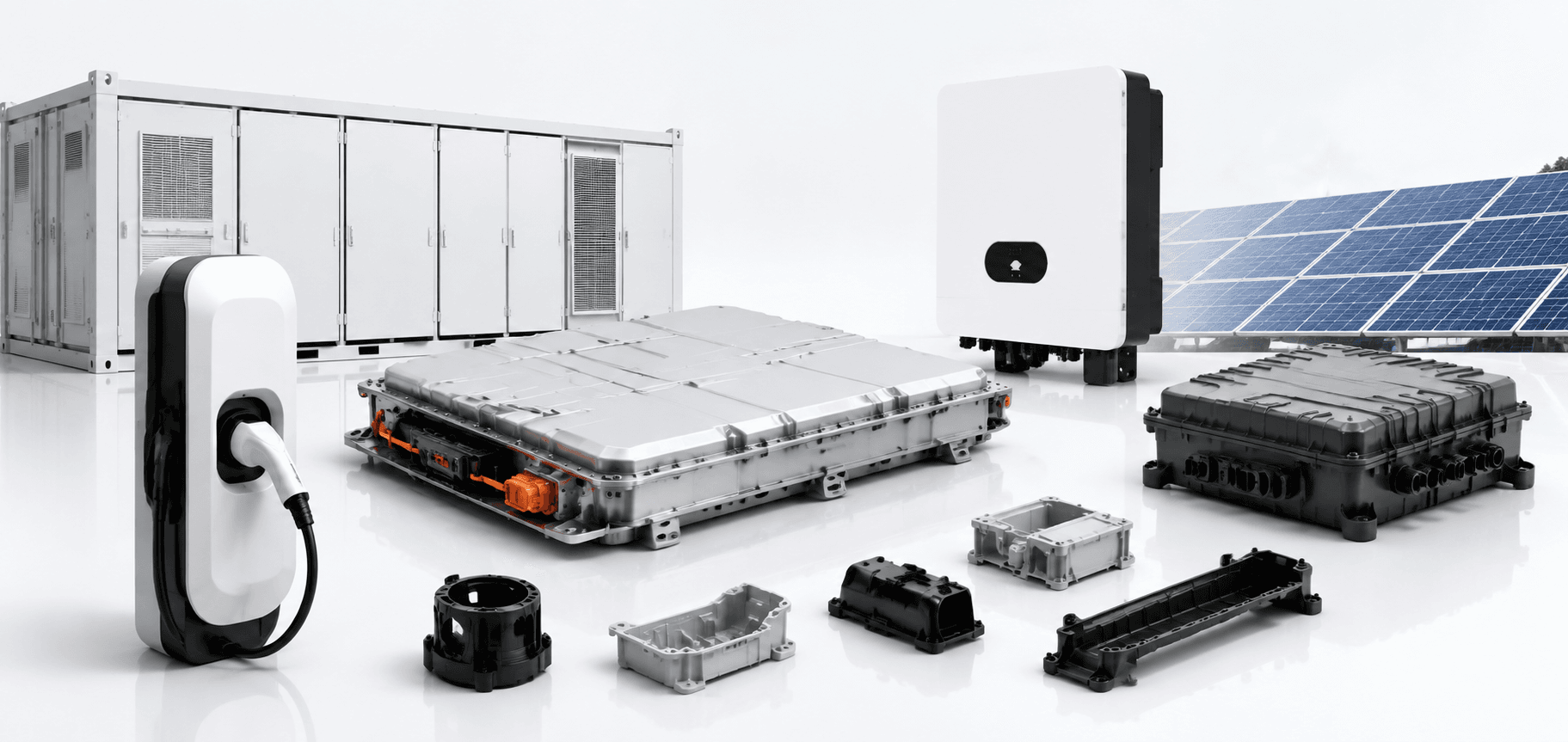
La transición global hacia la energía renovable y la electrificación ha generado un rápido crecimiento en las nuevas industrias energéticas, incluidos los vehículos eléctricos, los sistemas de almacenamiento de energía, los equipos de energía solar, la infraestructura de carga y los dispositivos inteligentes de gestión de energía.
Detrás de estas tecnologías, los componentes de plástico de alto rendimiento desempeñan un papel esencial en la protección de los sistemas eléctricos, la mejora de la fiabilidad del producto, la reducción del peso y la optimización de los costos de fabricación.
Moldeo por inyección se ha convertido en uno de los métodos de producción más importantes para componentes plásticos de nuevas energías debido a que ofrece una excelente repetibilidad, capacidad de diseño complejo, alta eficiencia de producción en volumen y compatibilidad con materiales de ingeniería avanzados.
A diferencia de las piezas de plástico industrial tradicionales, las nuevas aplicaciones energéticas suelen requerir estándares de rendimiento más altos, que incluyen:
- Aislamiento eléctrico
- Resistencia al fuego
- Resistencia química
- Estabilidad térmica
- Precisión dimensional
- Durabilidad ambiental a largo plazo
Desde los componentes de módulos de batería y carcasas de estaciones de carga hasta las cubiertas de equipos solares y cerramientos de almacenamiento de energía, el moldeo por inyección respalda el desarrollo de productos energéticos más seguros y eficientes.
Samgo ofrece soluciones completas de moldeo por inyección para aplicaciones de nuevas energías, incluyendo optimización del diseño de productos, análisis DFM, fabricación de moldes de precisión, selección de materiales y producción en masa.
¿Por qué Moldeo por inyección Es importante para los nuevos productos energéticos
El nuevo equipo de energía a menudo opera bajo condiciones exigentes.
Los componentes pueden experimentar:
- Ambientes de alta temperatura
- Cargas eléctricas
- Exposición a la intemperie
- Vibración
- Exposición química
- Requisitos de larga vida útil
El moldeo por inyección de plástico ofrece a los fabricantes soluciones fiables para producir componentes ligeros y duraderos.
Ventajas del moldeo por inyección para aplicaciones de nuevas energías
| Ventaja | Valor |
|---|---|
| Aislamiento eléctrico | Protege los sistemas electrónicos |
| Diseño ligero | Reduce el peso total del producto |
| Geometría Compleja | Admite estructuras avanzadas |
| Alta eficiencia de producción | Apto para producción en masa |
| Flexibilidad de materiales | Soporta plásticos de ingeniería |
| Calidad constante | Rendimiento de producción estable |
1. Componentes de plástico del sistema de baterías para vehículos eléctricos
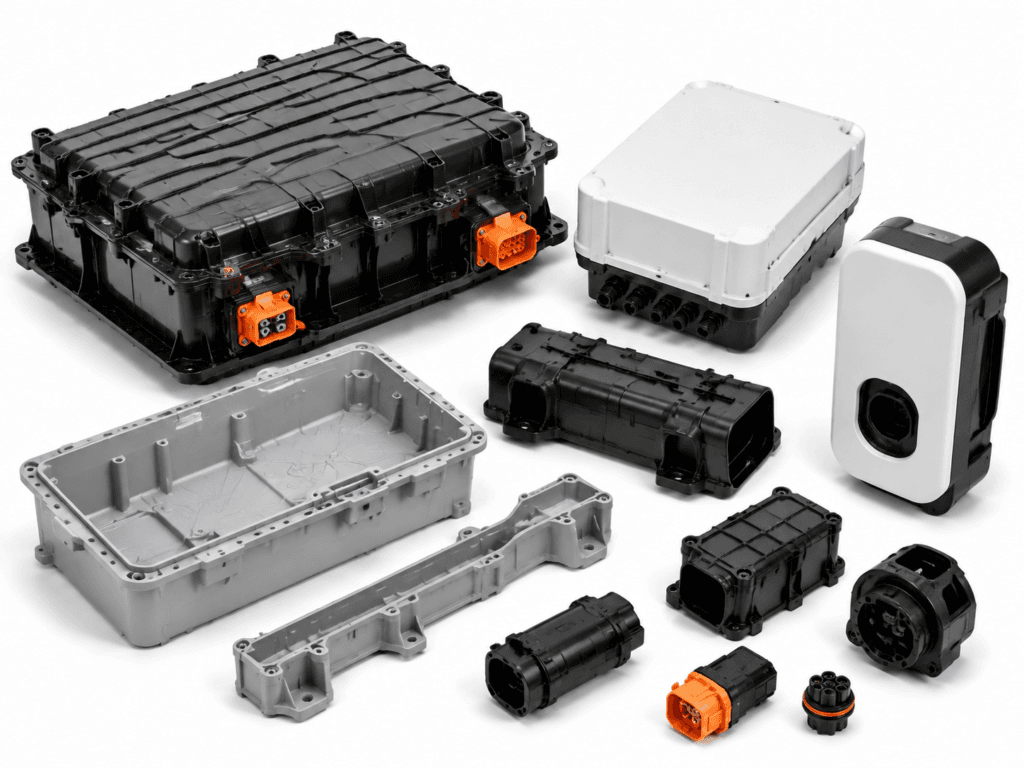
Las baterías de vehículos eléctricos requieren sistemas de protección confiables para garantizar la seguridad, el rendimiento y la durabilidad.
Aunque las celdas de batería y las estructuras metálicas son fundamentales, muchos componentes circundantes dependen de materiales plásticos de alto rendimiento.
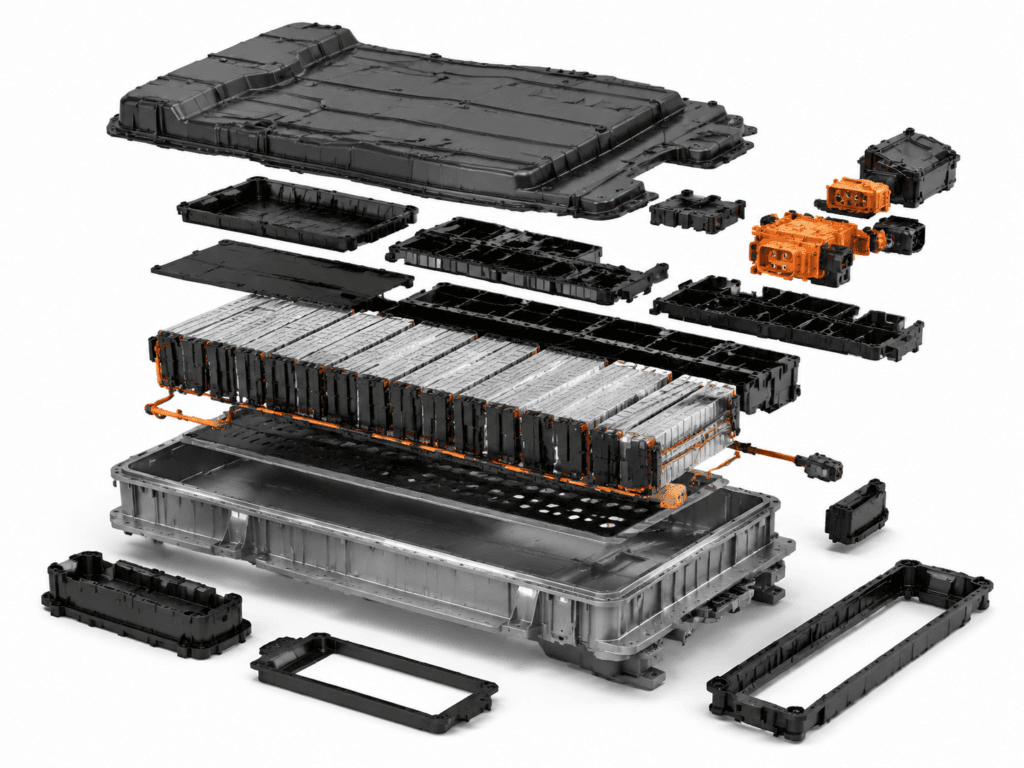
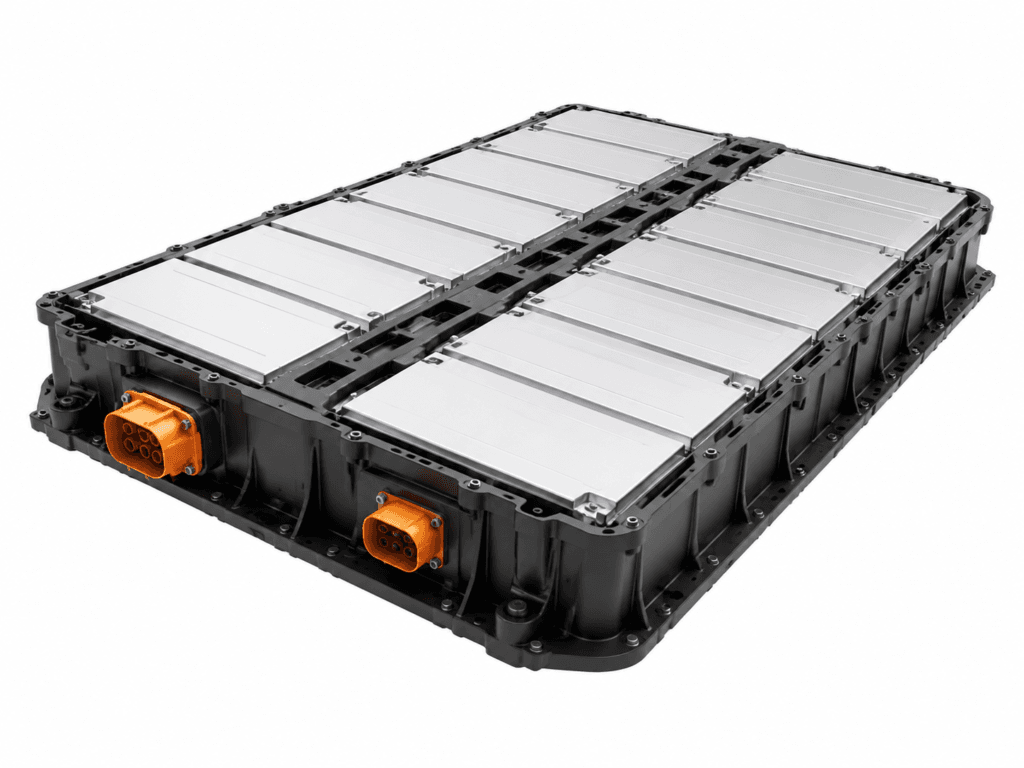
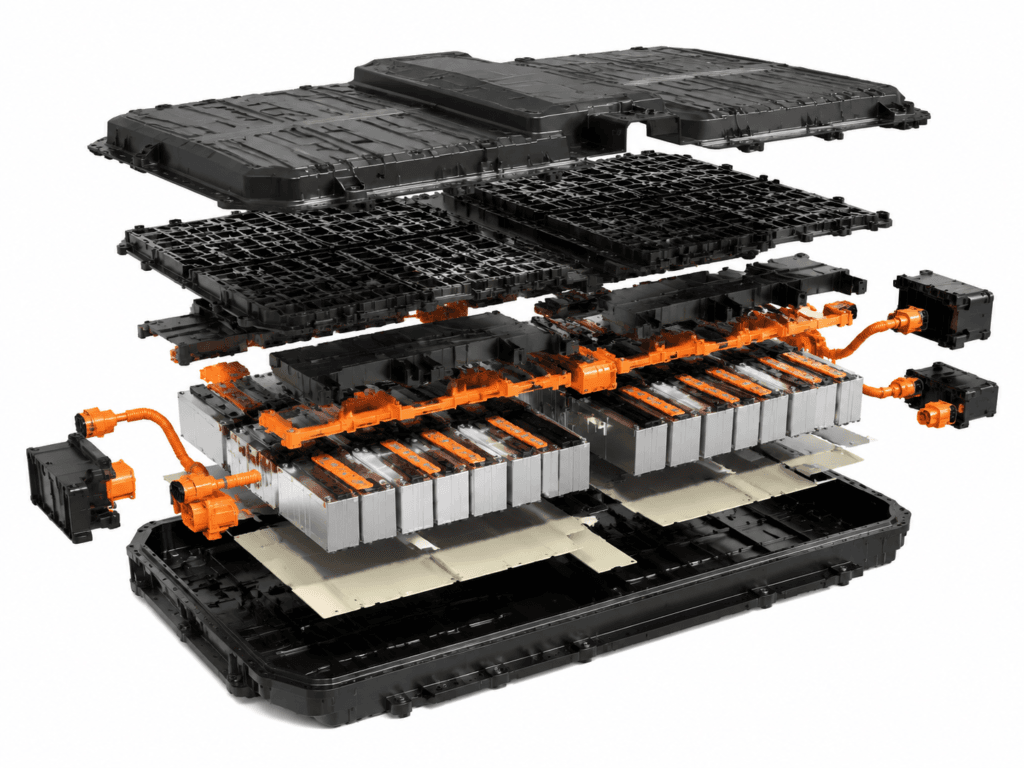
Los componentes típicos de baterías moldeados por inyección incluyen:
- Cubiertas del módulo de batería
- Carcasas de conectores
- Soportes para pilas
- Barreras de aislamiento
- Componentes de protección de cables
- Soportes para sensores
- Componentes del sistema de refrigeración
Los materiales plásticos utilizados en aplicaciones de baterías deben proporcionar:
- Aislamiento eléctrico
- Retardancia de llama
- Estabilidad dimensional
- Resistencia química
- Resistencia a la temperatura
Los materiales comunes incluyen:
- PC+ABS FR
- PA66 GF
- PD
- PBT
- PP ignífugo
Componentes de plástico para baterías de vehículos eléctricos
| Componente | Función | Material recomendado |
|---|---|---|
| Tapa de la batería | Protección | PC+ABS FR |
| Portapilas | Posicionamiento | PA66 GF |
| Carcasa de conector | Aislamiento eléctrico | PBT |
| Barrera aislante | Protección de seguridad | PP ignífugo |
| Componentes de refrigeración | Gestión térmica | PA GF |
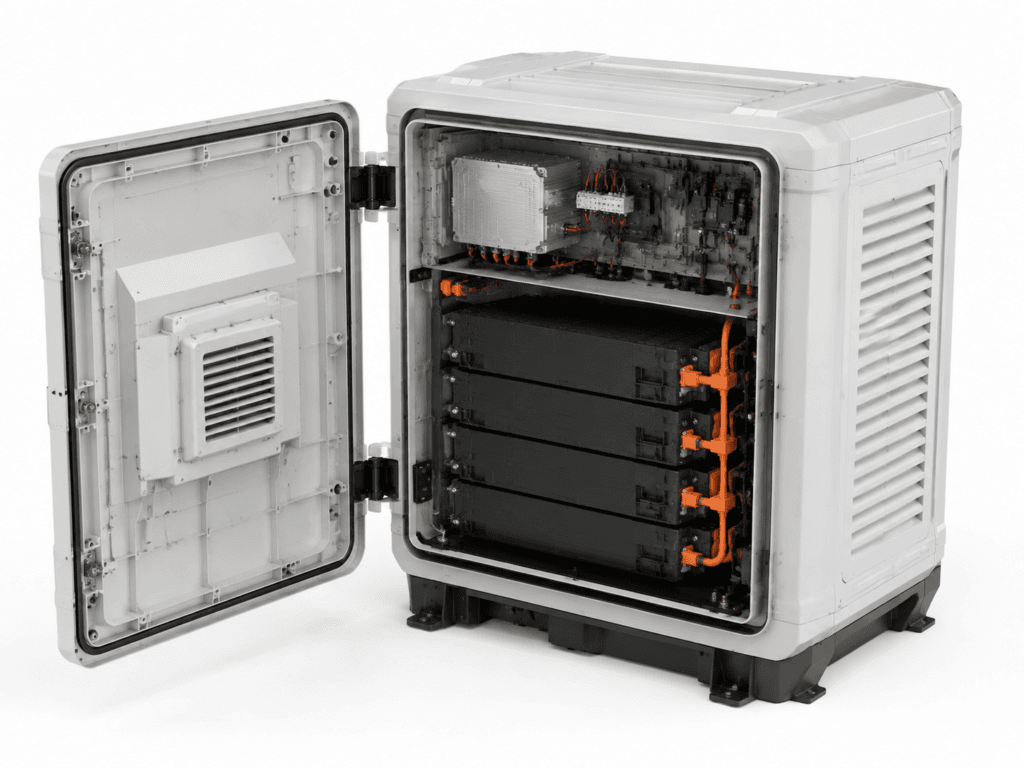
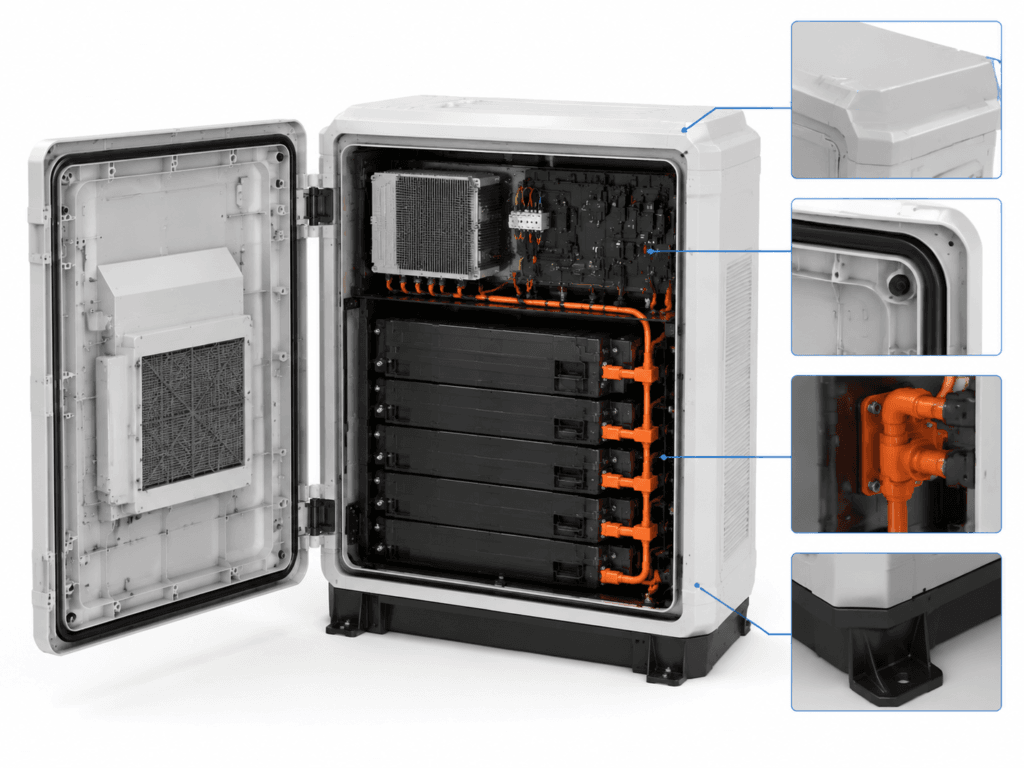
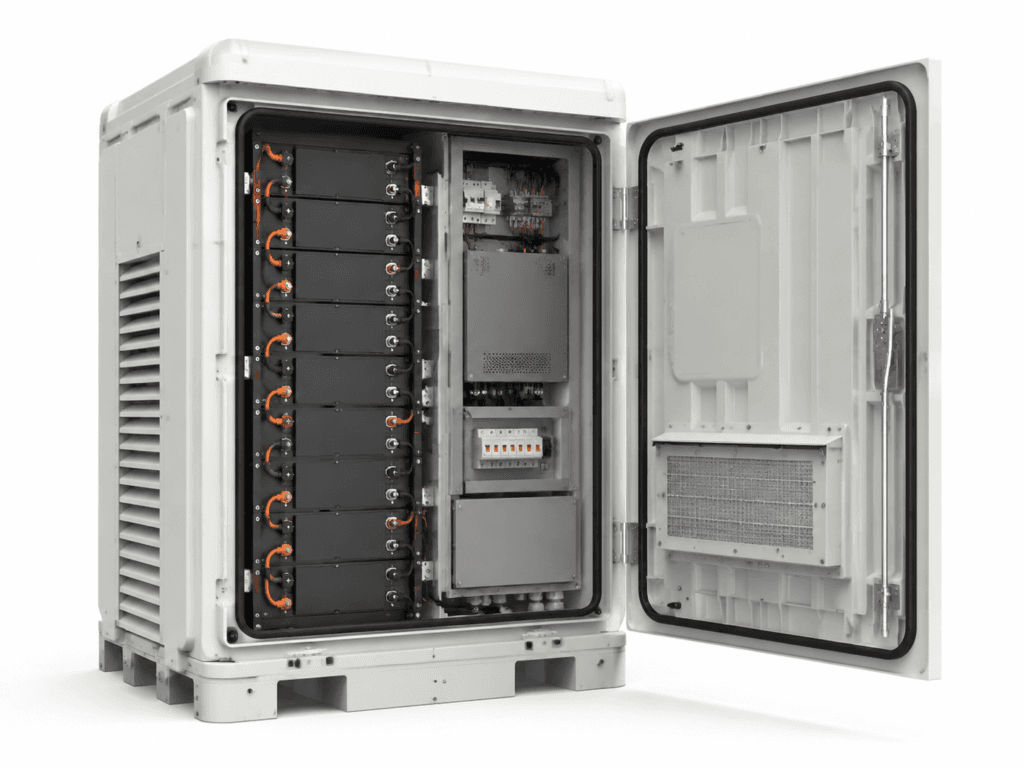
2. Recintos para sistemas de almacenamiento de energía
Los sistemas de almacenamiento de energía (SAE) son cada vez más importantes para las aplicaciones de energía renovable.
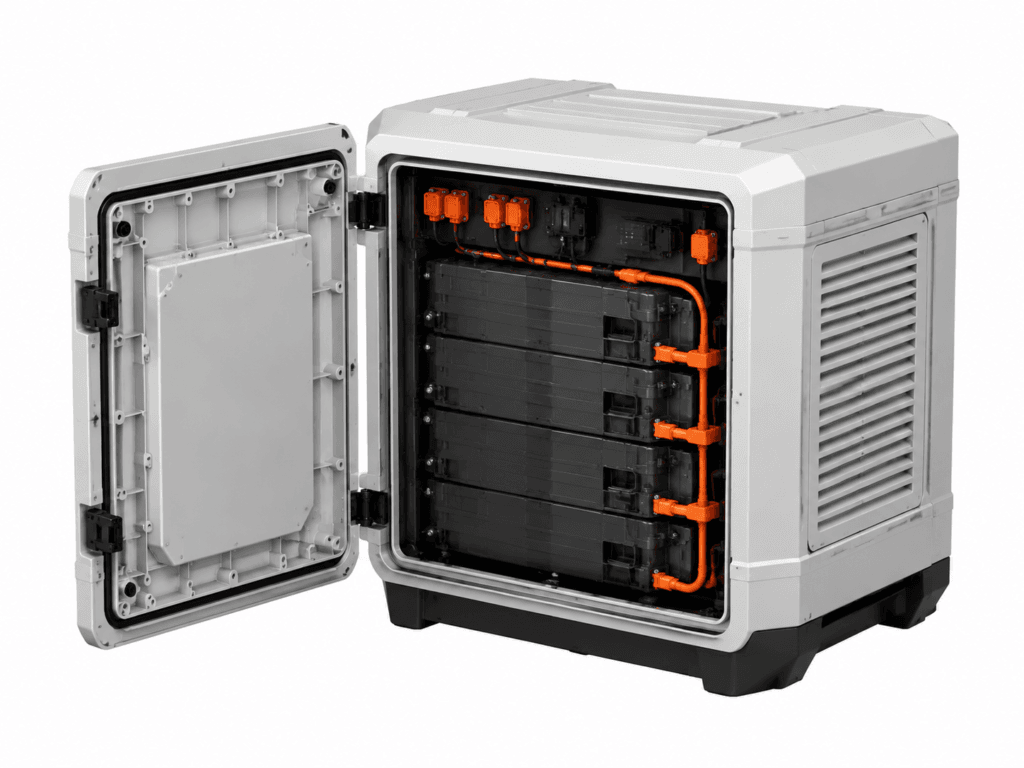
Los sistemas de almacenamiento de baterías residenciales e industriales requieren carcasas protectoras duraderas que puedan soportar entornos interiores y exteriores.
Los componentes de plástico moldeados por inyección se utilizan para:
- Carcasas de sistemas de gestión de baterías
- Cubiertas de la caja de control
- Carcasas de sensores
- Cubiertas de conectores
- Soportes de protección
Los requisitos clave incluyen:
- Resistencia al fuego
- Protección contra impactos
- Resistencia a la intemperie
- Gestión del calor
- Resistencia mecánica
En el caso de los sistemas de almacenamiento de energía para exteriores, materiales como PC/ASA y los plásticos de ingeniería resistentes a los rayos UV se consideran comúnmente.
Requisitos de alojamiento para almacenamiento de energía
| Requisito | Solución de diseño |
|---|---|
| Resistencia a la intemperie | Materiales estabilizados frente a los rayos UV |
| Seguridad contra incendios | Resina ignífuga |
| Protección impermeable | Sellado con junta |
| Control de calor | Diseño térmico |
| Resistencia mecánica | Estructuras reforzadas |
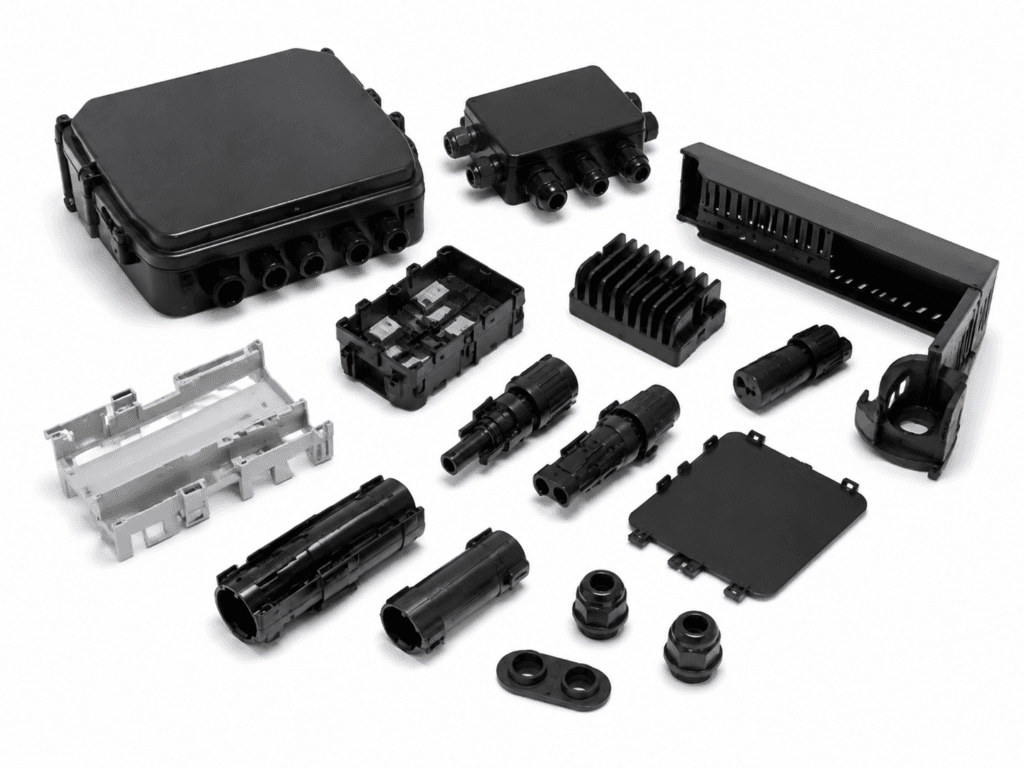
3. Componentes moldeados por inyección para el sector de la energía solar
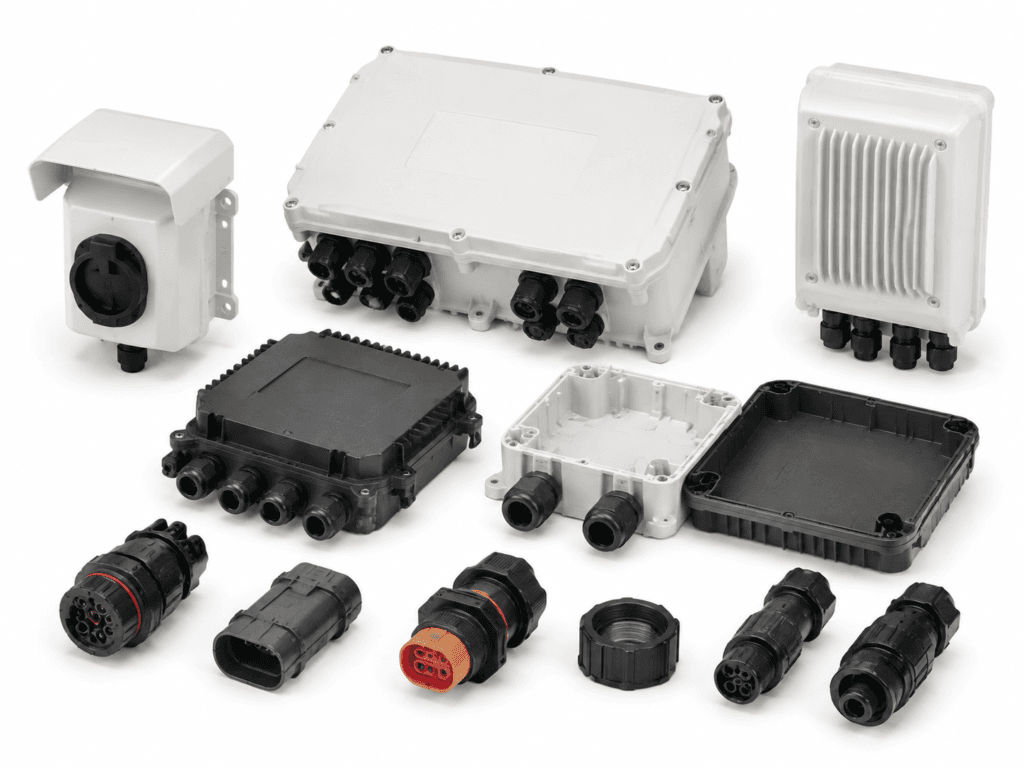
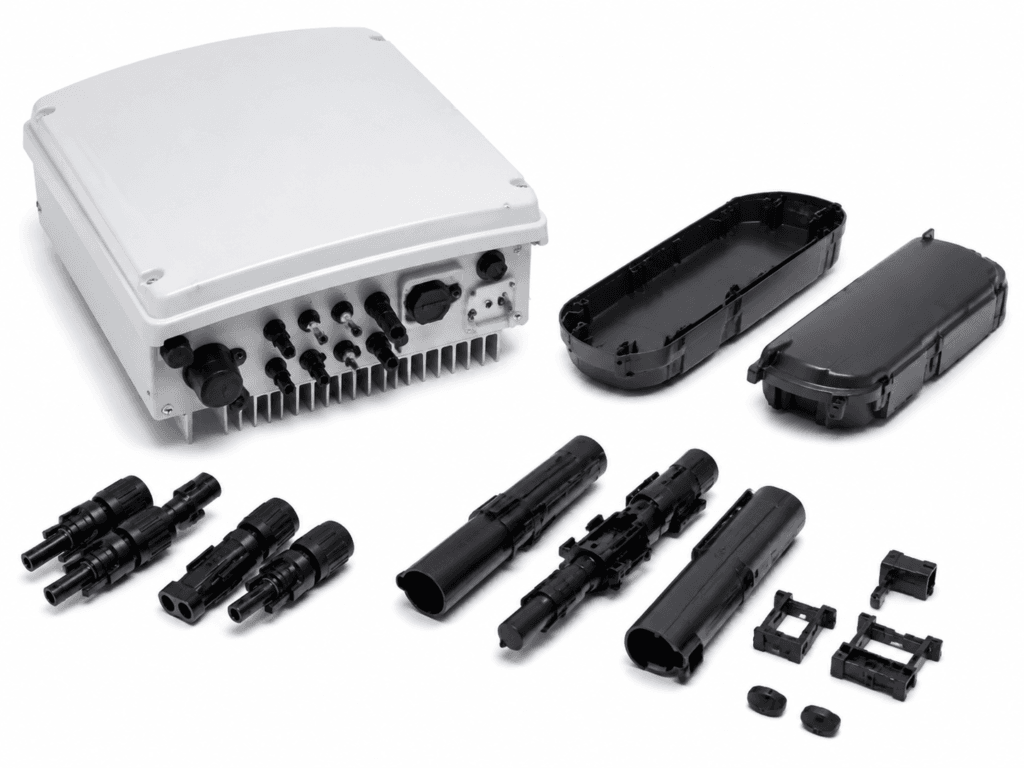
Los sistemas de energía solar requieren muchos componentes de plástico duraderos para su funcionamiento en exteriores.
Moldeo por inyección se utiliza ampliamente para:
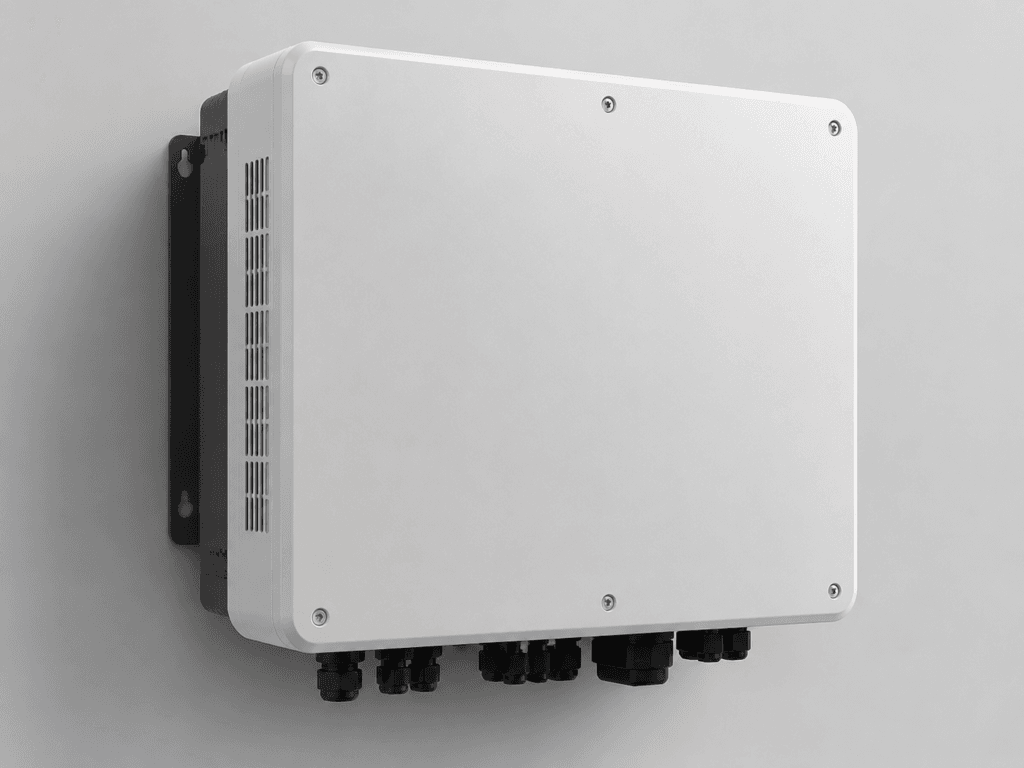
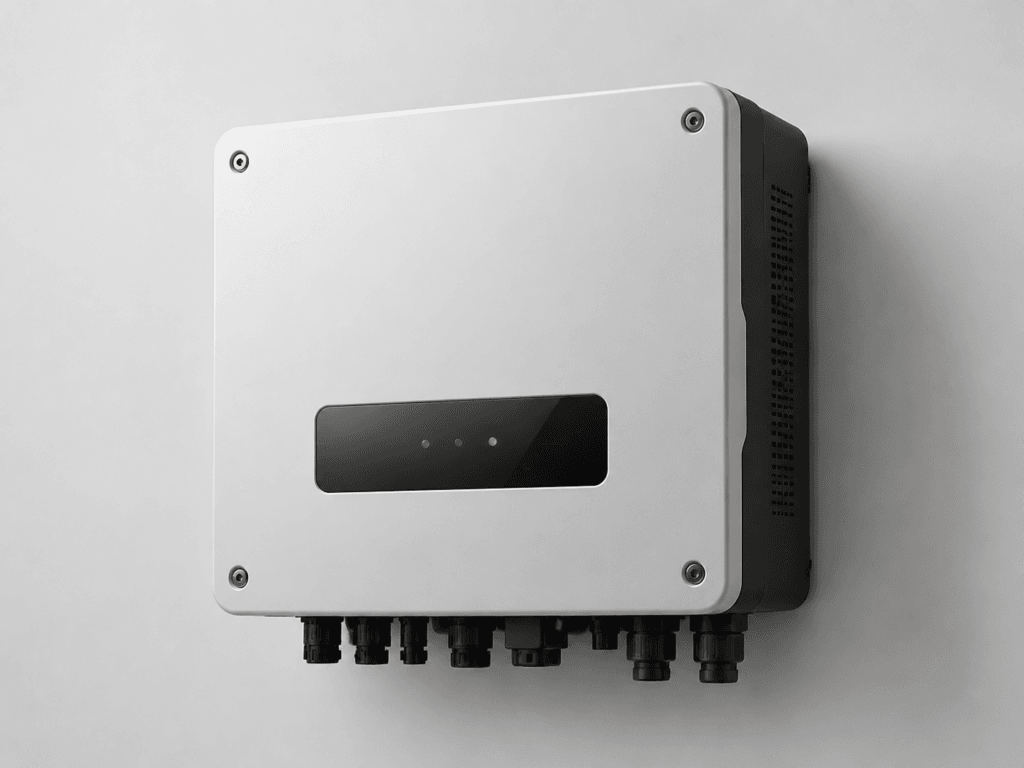
- Carcasas para inversores solares
- Cubiertas de conectores
- Componentes de la caja de conexiones
- Accesorios para la organización de cables
- Accesorios de montaje
- Fundas protectoras
Estos componentes deben resistir:
- radiación UV
- Lluvia
- Ciclo térmico
- Humedad
- Exposición química
Los materiales suelen incluir:
- ASA
- PC
- PC/ASA
- PP resistente a los rayos UV
- Plásticos de ingeniería
Componentes plásticos solares
| Producto | Función | Material |
|---|---|---|
| Carcasa del inversor | Proteger los dispositivos electrónicos | PC/ASA |
| Caja de conexiones | Protección eléctrica | PC |
| Tapa del conector | Protección ambiental | PA |
| Abrazadera para cables | Gestión de cables | PP |
4. Carcasas de plástico para equipos de carga
La expansión de los vehículos eléctricos requiere una infraestructura de carga a gran escala.
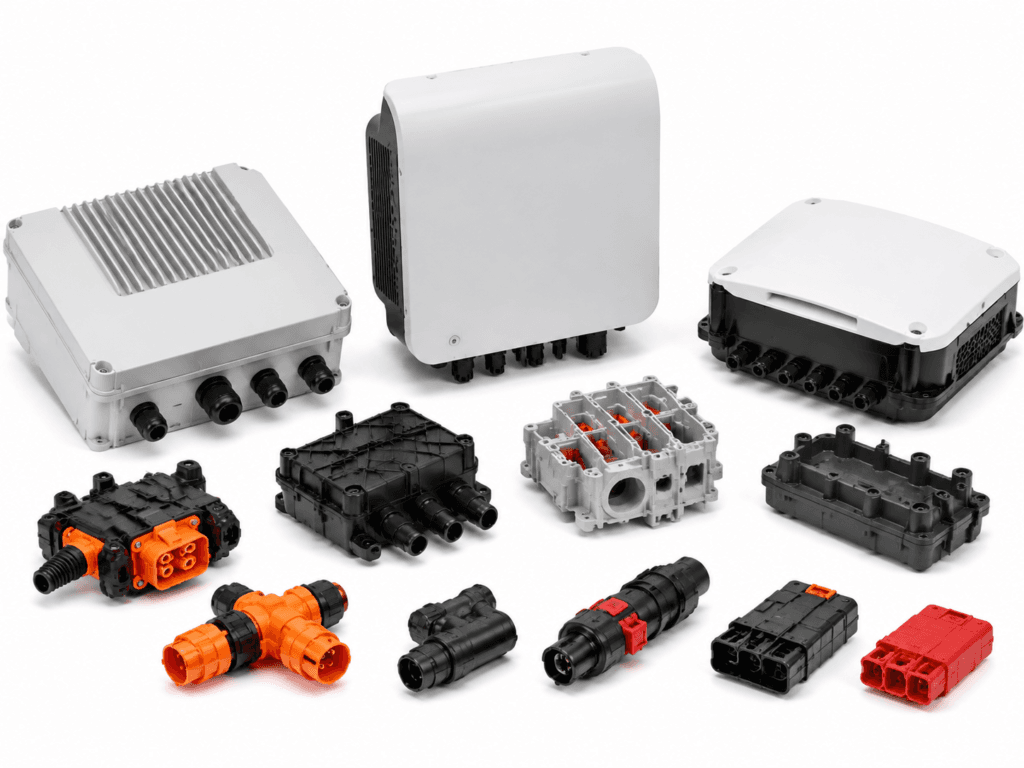
Los equipos de carga requieren carcasas de plástico que proporcionen:
- Aislamiento eléctrico
- Resistencia a la intemperie
- Protección contra impactos
- Gestión del calor
- Apariencia atractiva
Las piezas típicas moldeadas por inyección incluyen:
- Cubiertas para estaciones de carga
- Soportes para cables
- Carcasas de conectores
- Marcos del panel de control
- Cubiertas de protección
Los equipos de recarga para exteriores suelen requerir protección IP, materiales resistentes a los rayos UV y estructuras mecánicas robustas.
Requisitos de diseño de equipos de carga
| Característica | Propósito |
|---|---|
| Estructura impermeable | Proteger los dispositivos electrónicos |
| Resistencia a los rayos UV | Durabilidad a la intemperie |
| Resistencia al impacto | Protección del medio ambiente público |
| Resistencia a las llamas | Seguridad eléctrica |
| Ensamblaje de precisión | Funcionamiento fiable |
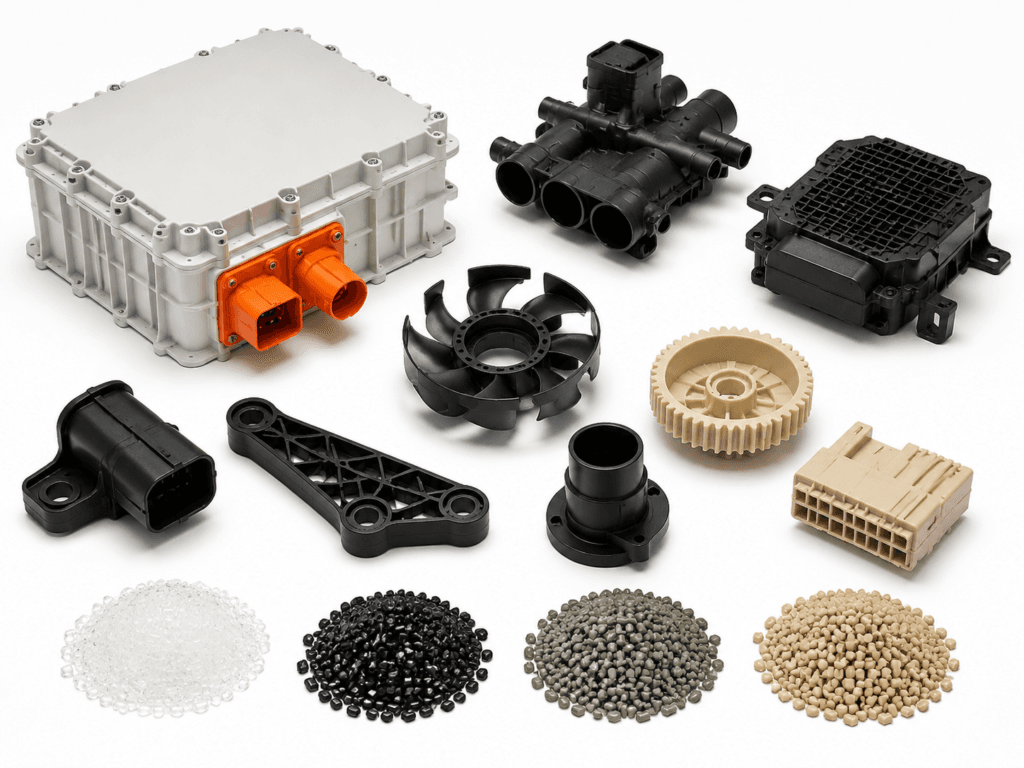
5. Selección de materiales para el moldeo por inyección de nuevas energías
La selección de materiales es uno de los factores más importantes en las aplicaciones de nuevas energías.
Los ingenieros deben equilibrar:
- Resistencia mecánica
- Aislamiento eléctrico
- Resistencia al fuego
- Rendimiento térmico
- Costo
Materiales comunes
| Material | Propiedades principales | Aplicaciones |
|---|---|---|
| PC/ABS FR | Impacto + resistencia a las llamas | Carcasas eléctricas |
| PA66 GF30 | Alta resistencia | Componentes estructurales |
| PBT | Rendimiento eléctrico | Conectores |
| PD | Resistencia a altas temperaturas | Sistemas de baterías |
| ASA | Durabilidad a la intemperie | Recintos energéticos |
| PP FR | Resistencia química | Piezas protectoras |
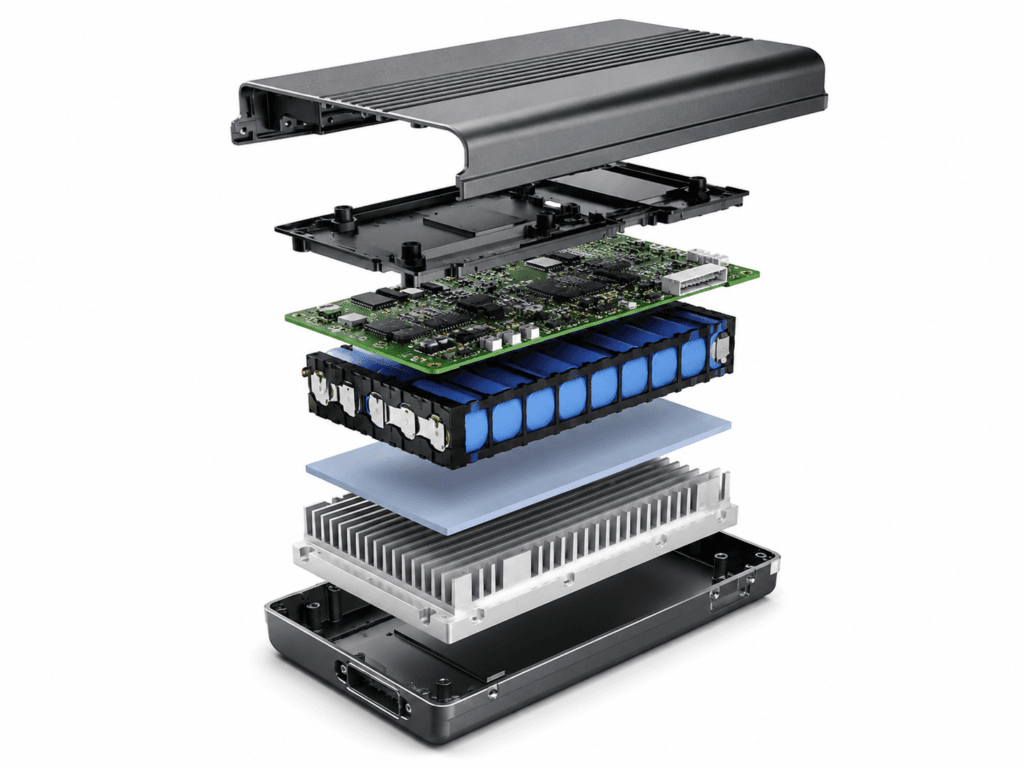
Diseño de gestión térmica para nuevas piezas de plástico energéticas
La gestión térmica es uno de los desafíos más importantes en las aplicaciones de nuevas energías.
Los sistemas de baterías, la electrónica de potencia, los equipos de carga y los dispositivos de almacenamiento de energía generan un calor significativo durante su funcionamiento. Un diseño térmico deficiente puede reducir la eficiencia, acortar la vida útil y crear riesgos para la seguridad.
Aunque los plásticos tienen una conductividad térmica menor en comparación con los metales, los plásticos de ingeniería avanzados y los diseños estructurales permiten que los componentes moldeados por inyección satisfagan los requisitos de gestión térmica.
Las soluciones comunes incluyen:
- Plásticos de ingeniería termorresistentes
- Canales de refrigeración
- Estructuras de ventilación
- Materiales de interfaz térmica
- Insertos metálicos
- Estructuras de disipación de calor
Por ejemplo, los componentes de los módulos de batería pueden requerir estabilidad dimensional bajo cambios continuos de temperatura, mientras que las carcasas de los inversores necesitan una disipación de calor eficaz a la vez que mantienen el aislamiento eléctrico.
Comparativa de soluciones de gestión térmica
| Solución | Ventaja | Aplicación |
|---|---|---|
| Resina termorresistente | Mayor capacidad de temperatura | Componentes de la batería |
| Inserto de aluminio | Transferencia de calor mejorada | Electrónica de potencia |
| Estructura de ventilación | Enfriamiento natural | Recintos |
| Interfaz de almohadilla térmica | Mejora de la transferencia de calor | Sistemas de PCB |
| Canales de enfriamiento | Control de la temperatura | Equipo energético |
Requisitos de retardancia de llama para nuevos componentes plásticos de energía
La seguridad es un requisito crítico en las aplicaciones de nuevas energías, especialmente en lo que respecta a las baterías y los sistemas eléctricos de alta tensión.
Los componentes de plástico pueden tener que cumplir con los requisitos de resistencia a la llama para reducir los riesgos de incendio y proteger los componentes circundantes.
Los estándares comunes de retardantes de llama incluyen:
- clasificación de inflamabilidad UL94
- requisitos de seguridad eléctrica de la CEI
- Especificaciones de la industria automotriz y energética
Los materiales ignífugos típicos incluyen:
- PC+ABS FR
- PA66 GF FR
- PBT FR
- PD
- PP ignífugo
El material seleccionado depende de la temperatura de funcionamiento, la carga mecánica, los requisitos eléctricos y los requisitos de certificación.
Comparación de Materiales Ignífugos
| Material | Rendimiento de la llama | Aplicación típica |
|---|---|---|
| PC+ABS FR | Excelente | Carcasas eléctricas |
| PA66 GF FR | Alta resistencia | Partes estructurales |
| PBT FR | Aislamiento eléctrico | Conectores |
| PD | Alta temperatura | Componentes de la batería |
| PP FR | Rentable | Fundas protectoras |
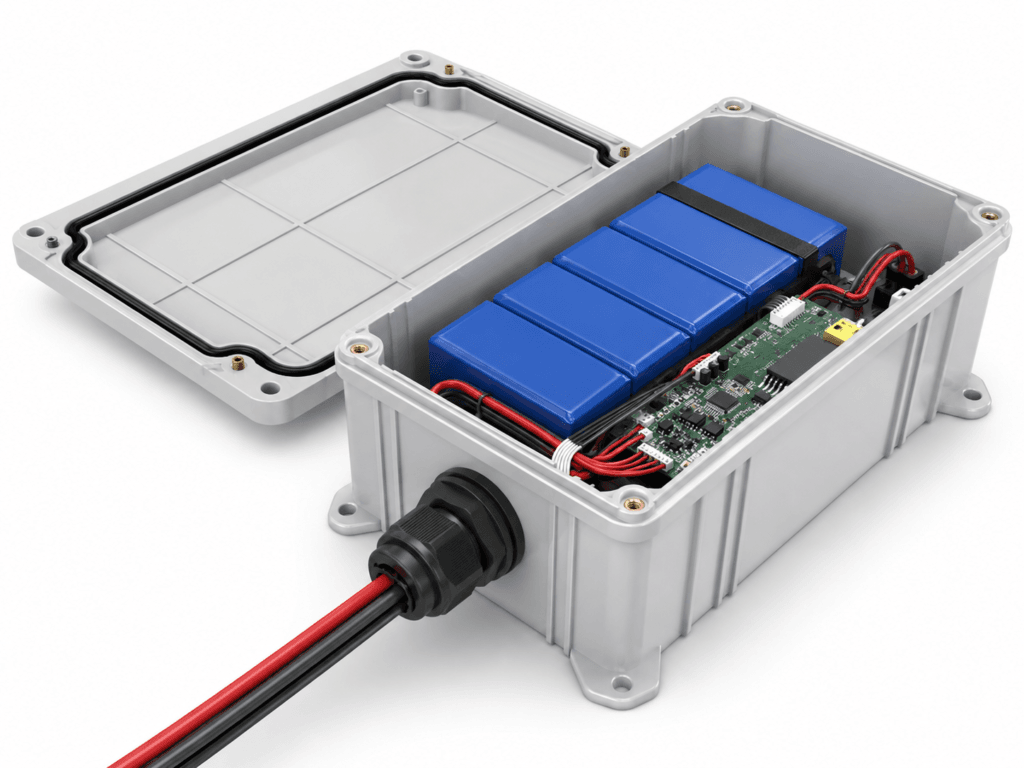
Diseño impermeable y con protección IP
Muchos nuevos productos energéticos operan al aire libre o en entornos difíciles. Por lo tanto, la protección impermeable es esencial.
Los ejemplos incluyen:
- Estaciones de carga para vehículos eléctricos
- Sistemas de almacenamiento de baterías para exteriores
- Equipos solares
- Controladores de energía inteligentes
Las carcasas moldeadas por inyección comúnmente utilizan:
- Juntas de silicona
- aros de sellado de TPE
- Prensaestopas impermeables
- Conectores sellados
- Estructuras de vivienda superpuestas
El diseño de sellado debe considerar no solo el rendimiento impermeable inicial, sino también la durabilidad a largo plazo después del ciclo térmico y el estrés mecánico.
Características de diseño para la protección de la propiedad intelectual
| Característica | Función |
|---|---|
| Ranura para junta | Crea compresión de sellado |
| Prensaestopas | Protege la entrada de cables |
| Canal de drenaje | Evita la acumulación de agua |
| Estructura de superposición | Bloquea el paso directo del agua |
| Conector sellado | Protege la interfaz eléctrica |
Consideraciones de diseño de moldes de inyección para piezas de nuevas energías
Los componentes de plástico de nuevas energías a menudo requieren alta precisión porque se integran con:
- Módulos de batería
- Conectores eléctricos
- Sensores
- Ensambajes de PCB
- Estructuras metálicas
El diseño del molde afecta directamente a la fiabilidad del producto.
Consideraciones importantes incluyen:
1. Estabilidad dimensional
La batería y los componentes electrónicos a menudo requieren tolerancias estrictas. Un enfriamiento irregular o una contracción excesiva pueden afectar la precisión del montaje.
2. Control de Alabeo
Las carcasas grandes y las cubiertas requieren un llenado y enfriamiento equilibrados para evitar la deformación.
Moldeo por inserción
Algunas aplicaciones requieren insertos metálicos para:
- Conexión a tierra
- Transferencia de calor
- Refuerzo mecánico
- Fijación de alta resistencia
4. Requisitos de superficie
Los productos de energía para exteriores pueden requerir:
- Texturas resistentes a los rayos UV
- Acabados mate
- Superficies resistentes a los arañazos
Requisitos de diseño de moldes
| Característica de molde | Propósito |
|---|---|
| Diseño de Puerta Equilibrada | Relleno uniforme |
| Refrigeración optimizada | Reducir la deformación |
| Inserciones de precisión | Mejorar la precisión del ensamblaje |
| Ventilación adecuada | Evita las marcas de quemaduras |
| Control de textura superficial | Mejorar apariencia |
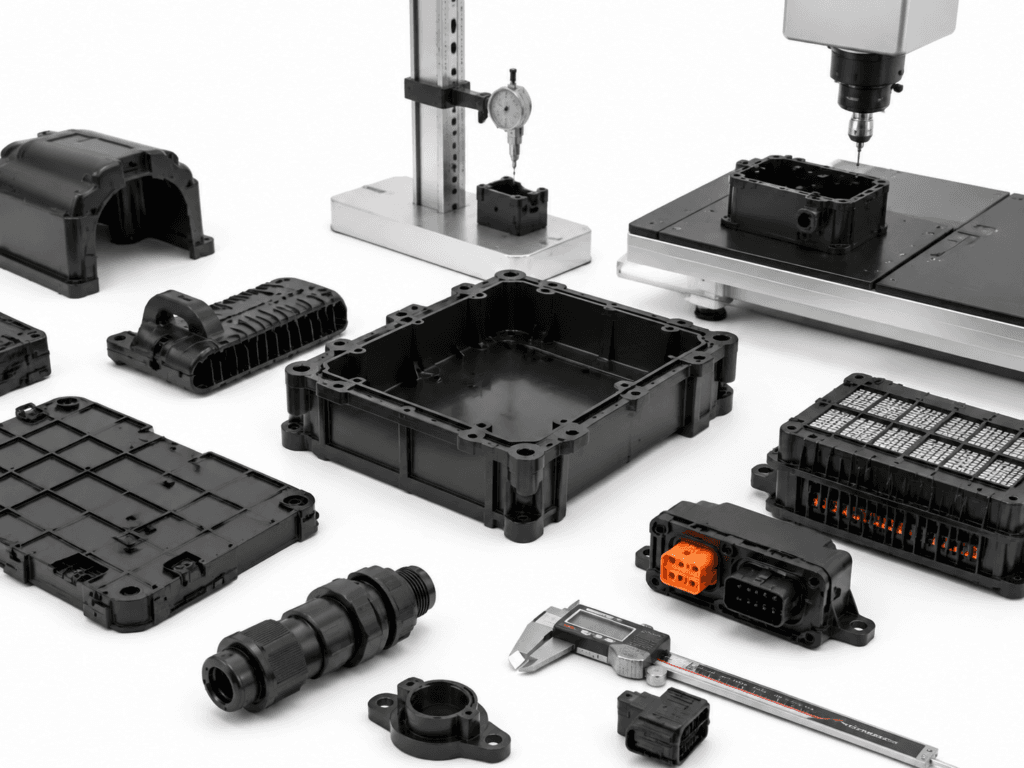
Control de Calidad y Pruebas
Los nuevos componentes energéticos requieren un control de calidad estricto porque los fallos pueden afectar la seguridad y la fiabilidad del sistema.
Las inspecciones típicas incluyen:
- Medición dimensional
- Verificación de material
- Prueba a la llama
- Prueba de resistencia mecánica
- Ciclo térmico
- Prueba de impermeabilidad
- Pruebas de ensamblaje
Para la producción de alto volumen, los sistemas de inspección automatizados pueden mejorar la consistencia y reducir el error humano.
Métodos de prueba de calidad
| Prueba | Propósito |
|---|---|
| Inspección dimensional | Verificar la precisión del montaje |
| Ciclo térmico | Evaluar la durabilidad a la temperatura |
| Prueba de llama | Confirmar el rendimiento de seguridad |
| Prueba de impermeabilidad | Verificar sellado |
| Prueba de impacto | Verificar la resistencia mecánica |
| Prueba de ensamblaje | Garantizar la compatibilidad |
Desafíos comunes de fabricación y soluciones
Los nuevos productos energéticos combinan materiales exigentes, estructuras complejas y estrictos requisitos de fiabilidad.
| Reto | Causa | Solución |
|---|---|---|
| Deformación | Enfriamiento desigual | Optimizar la refrigeración del molde |
| Desciframiento | Concentración de esfuerzos | Mejorar la estructura |
| Ensamblaje deficiente | Variación dimensional | Intensificar el control de moho |
| Marcas de quemadura | Mala ventilación | Mejorar los respiraderos del molde |
| Tiro corto | Relleno difícil | Optimizar la ubicación de la puerta |
| Defectos superficiales | Problemas de procesamiento | Ajustar parámetros |
Temprano Análisis DFM y la simulación de Moldflow puede reducir significativamente los riesgos de desarrollo.
¿Por qué elegir Samgo para el moldeo por inyección de nuevas energías?
Samgo ofrece soluciones completas de moldeo por inyección para las industrias de nuevas energías, apoyando a los clientes desde el diseño conceptual hasta la producción en masa.
Nuestras capacidades incluyen:
| Servicio | Beneficio para el cliente |
|---|---|
| Diseño de productos Reseña | Mejorar la fabricabilidad |
| Análisis DFM | Reducir los riesgos de desarrollo |
| Simulación Moldflow | Optimizar el llenado y la refrigeración |
| Fabricación de moldes de precisión | Garantizar la precisión |
| Moldeo por inyección | Producción estable |
| Control de Calidad | Rendimiento confiable |
Nuestra experiencia abarca:
- Componentes de la batería
- Carcasas de almacenamiento de energía
- Componentes solares
- Equipo de carga
- Piezas de protección eléctrica
- Productos de energía inteligente
Preguntas frecuentes
¿Qué plásticos se utilizan comúnmente en el moldeo por inyección de nuevas energías?
Los materiales comunes incluyen PC+ABS FR, PA66 GF, PBT, PPS, ASA y PP ignífugo. La selección depende de los requisitos de temperatura, resistencia, eléctricos y de seguridad.
¿Por qué se utilizan plásticos en los sistemas de baterías?
Los materiales plásticos proporcionan aislamiento eléctrico, construcción ligera, resistencia a la corrosión y flexibilidad de diseño.
¿Pueden las piezas moldeadas por inyección cumplir con los requisitos de retardantes de llama?
Sí. Los grados ignífugos pueden alcanzar los niveles de seguridad requeridos según la aplicación y los requisitos de certificación.
¿Qué es importante al diseñar carcasas de plástico para almacenamiento de energía?
Los factores clave incluyen el sellado, la gestión térmica, la resistencia mecánica, la selección de materiales, la seguridad contra incendios y la estabilidad dimensional.
¿Obtener el último precio? Le responderemos lo antes posible (dentro de las 12 horas)

CNC Plastic Prototypes vs. Injection Molded Parts: Key Differences Engineers Should Understand
Compare CNC plastic prototypes and injection molded parts in material properties, dimensions, warpage, surface finish, geometry, cost and production performance.
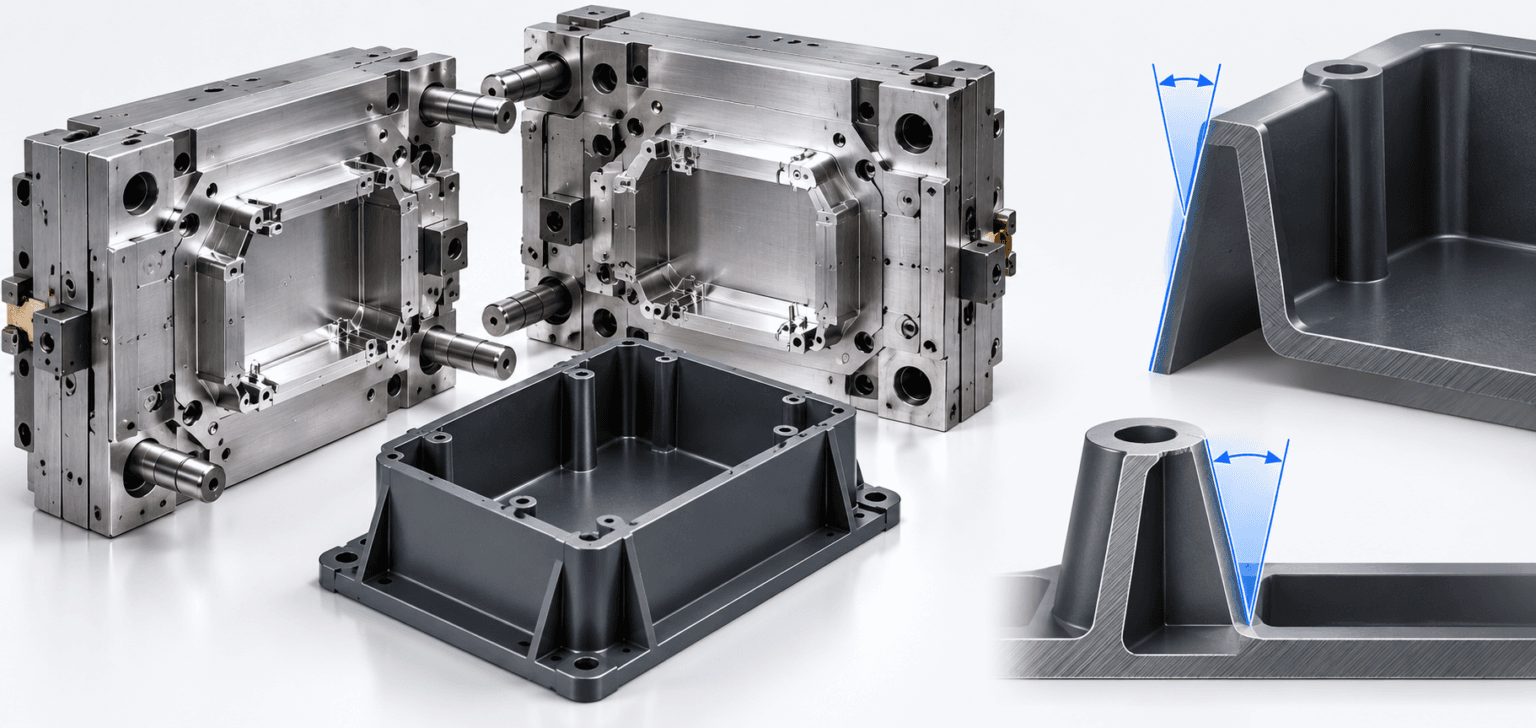
Draft Angle in Injection Mold Design: Improving Part Quality, Ejection and Tooling Efficiency
Discover how draft angles affect injection mold design, part ejection, surface texture, dimensional accuracy, ribs, bosses and long-term tooling performance.
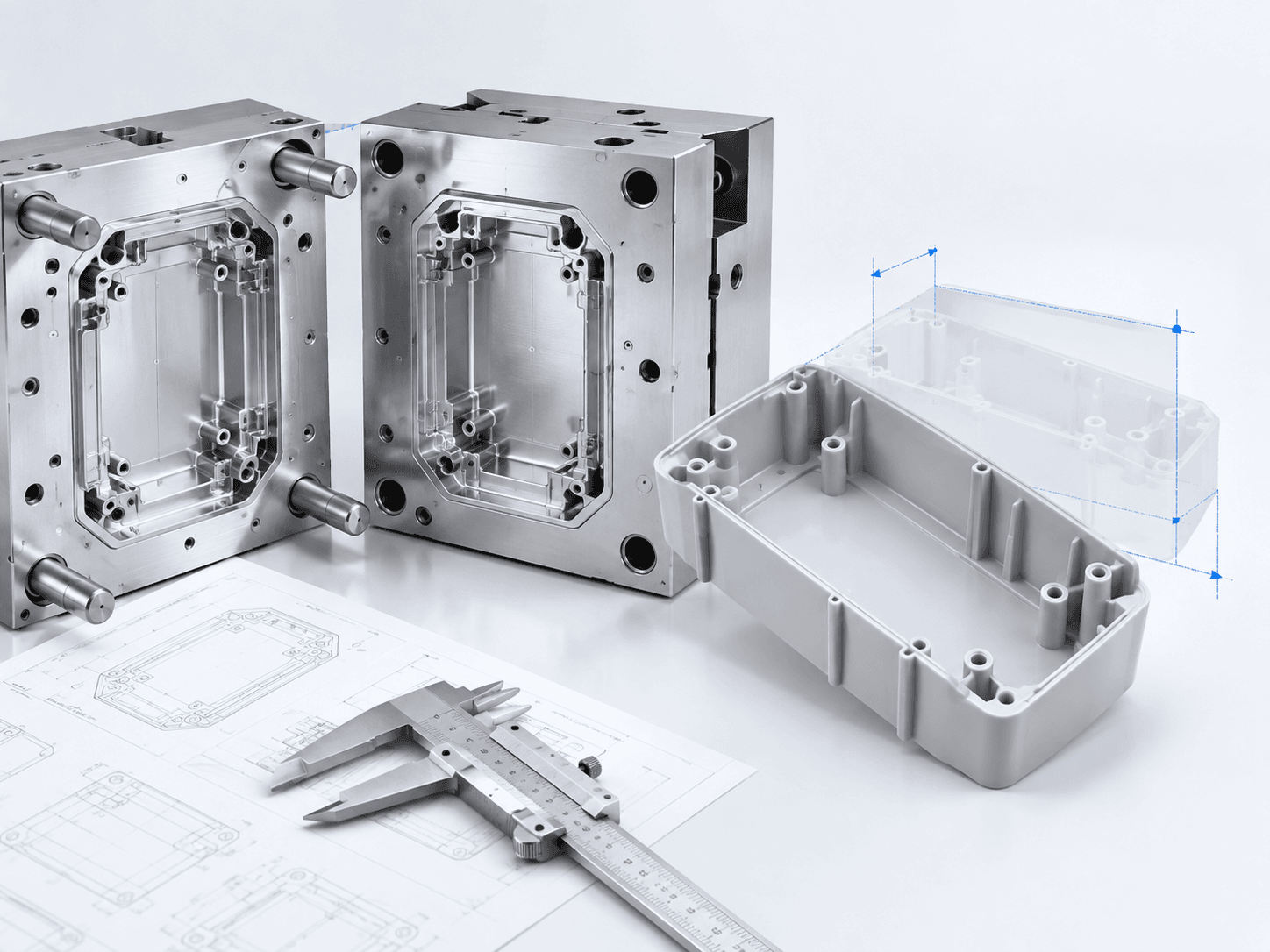
Injection Molding Shrinkage: How to Control Part Dimensions from Mold Design to Production
Learn how injection molding shrinkage affects mold dimensions, tolerances and warpage, and how material, gate design, packing, cooling and mold trials help control final plastic part dimensions.