
Einführung
In modern plastic product development, mold manufacturing is no longer based solely on engineering experience. Computer-Aided Engineering (CAE) has become an essential part of the injection molding process, enabling engineers to predict potential molding defects before a mold is manufactured. Among these technologies, Spritzgussform Flow Analysis, often referred to as Moldflow-Analyse, is one of the most valuable engineering tools for reducing development risks, shortening lead times, and improving part quality.
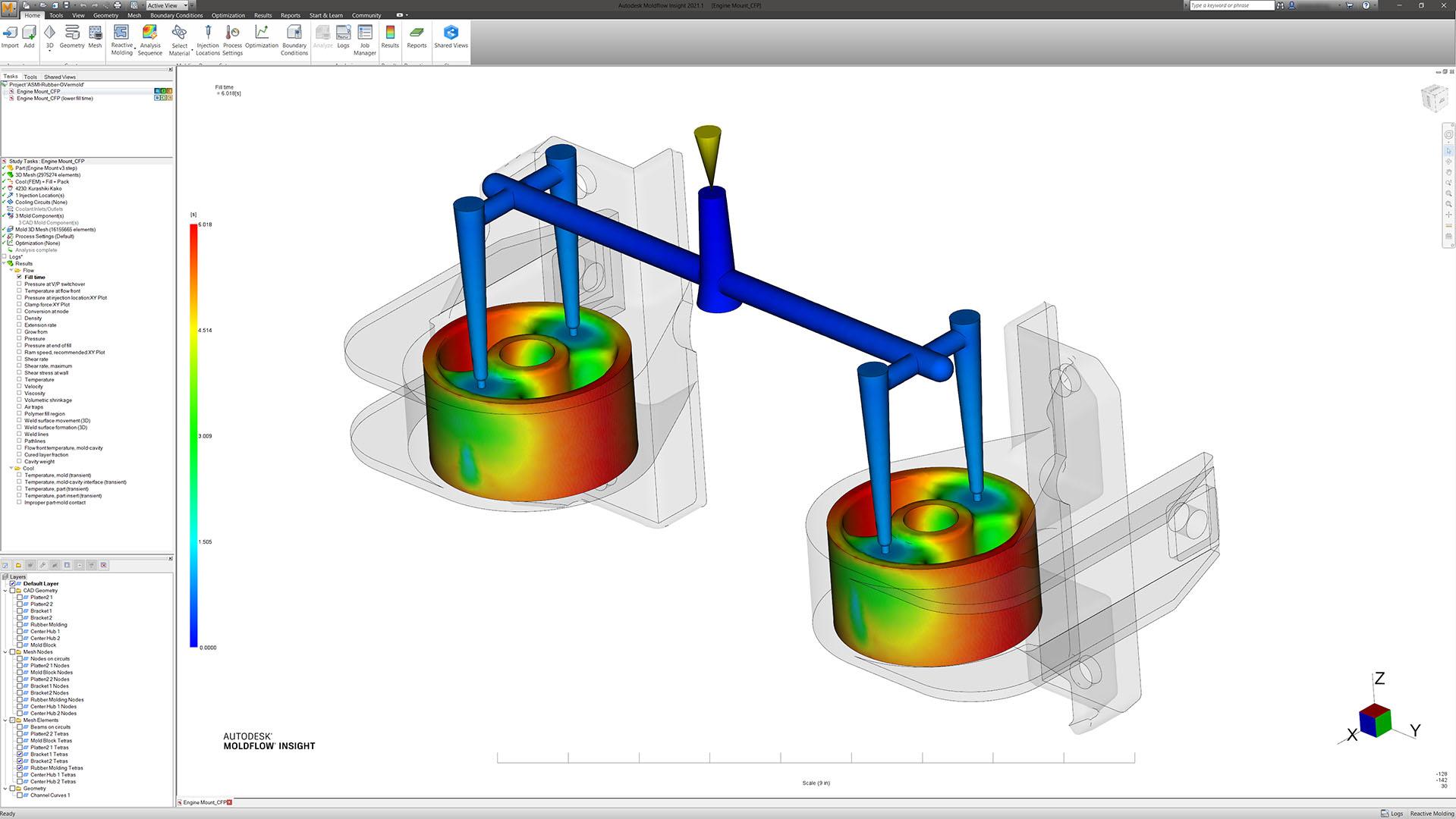
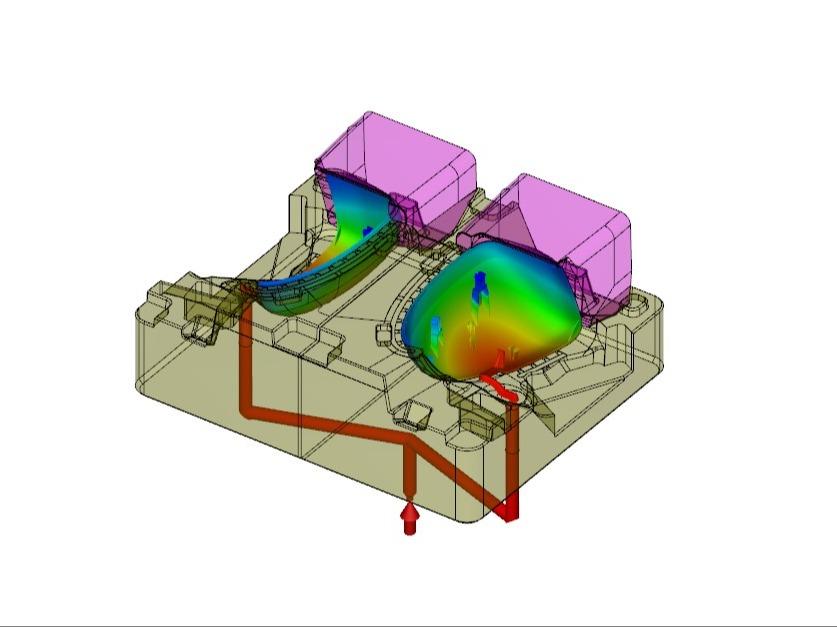
Mold flow simulation uses advanced numerical algorithms to analyze how molten plastic fills a mold cavity under real production conditions. Engineers can visualize material flow, pressure distribution, cooling efficiency, shrinkage, weld lines, air traps, and warpage before cutting steel. Instead of solving problems after mold trials, manufacturers can optimize gate locations, wall thickness, runner layouts, and cooling systems during the design phase.
For complex plastic components used in automotive, medical, consumer electronics, industrial equipment, and outdoor products, Moldflow analysis significantly improves product reliability while reducing costly engineering changes.
At Samgo, Moldflow simulation is integrated into our DFM review and mold design process. By combining engineering experience with simulation technology, we help customers achieve faster development cycles, better product quality, and more efficient production.
Why Mold Flow Analysis Is Important
Traditional mold development often relies on repeated mold trials to identify processing issues. Each mold modification increases development cost and delays production.
Mold Flow Analysis reduces uncertainty by predicting molding behavior before manufacturing begins.
Key Benefits
- Reduce mold modification costs
- Improve filling balance
- Torposition optimieren
- Predict weld lines
- Detect air traps
- Reduce warpage
- Improve cooling efficiency
- Shorten mold trial cycles
- Increase production stability
Benefits Comparison
| Traditional Development | Mold Flow Analysis |
|---|---|
| Multiple mold trials | Virtual simulation before tooling |
| Higher development cost | Reduced engineering changes |
| Trial-and-error optimization | Data-driven decisions |
| Longer lead time | Faster product launch |


The Mold Flow Analysis Workflow
A professional Moldflow project follows a structured engineering process.
Typical Workflow
- Import 3D CAD model
- Repair and simplify geometry
- Generate simulation mesh
- Assign plastic material
- Define gate location
- Set molding parameters
- Run filling simulation
- Analyze pressure and temperature
- Evaluate cooling
- Predict warpage
- Optimize design
- Generate engineering report
Workflow Table
| Bühne | Zweck |
|---|---|
| CAD Preparation | Create simulation model |
| Mesh Generation | Build finite element model |
| Materialauswahl | Apply resin properties |
| Filling Analysis | Simulate melt flow |
| Packing Analysis | Predict shrinkage compensation |
| Cooling Analysis | Evaluate heat removal |
| Warpage Analysis | Predict dimensional deformation |


Filling Analysis
Filling analysis is the foundation of every Moldflow simulation.
It predicts:
- Flow pattern
- Fill time
- Flow front progression
- Hesitation areas
- Short-shot risk
Engineers use filling analysis to determine whether molten plastic reaches every section of the cavity smoothly.


Gate Location Optimization
Gate location has a major influence on part quality.
An optimized gate can:
- Reduce weld lines
- Improve pressure balance
- Reduce sink marks
- Minimize warpage
- Improve cosmetic appearance
Gate Comparison
| Poor Gate Location | Optimized Gate |
|---|---|
| Uneven filling | Balanced filling |
| Higher pressure | Lower pressure |
| More weld lines | Fewer weld lines |
| Higher deformation | Bessere Formbeständigkeit |


Pressure Analysis
Pressure analysis evaluates the force required to fill the cavity.
Excessive pressure may indicate:
- Thin walls
- Long flow paths
- Small gates
- Poor runner design
Balancing cavity pressure helps reduce machine load and improves part consistency.


Cooling Analysis
Cooling efficiency directly affects cycle time and dimensional stability.
Simulation evaluates:
- Cooling channel effectiveness
- Temperature distribution
- Hot spots
- Cooling time
Uniform cooling minimizes differential shrinkage and reduces warpage.
Cooling Comparison
| Effiziente Kühlung | Poor Cooling |
|---|---|
| Short cycle time | Long cycle time |
| Stable dimensions | Verzug |
| Uniform shrinkage | Hot spots |


Weld Line and Air Trap Prediction
Mold Flow software predicts where multiple melt fronts meet and where trapped air is likely to accumulate.
Typical Defects
- Bindefnähte
- Brandspuren
- Luftfallen
- Unvollständige Füllung
These issues can often be eliminated by changing gate position, venting, or wall thickness.


Warpage Analysis
Warpage is caused by uneven shrinkage during cooling.
Simulation predicts deformation before tooling is manufactured.
Typical optimization methods include:
- Improving cooling balance
- Adjusting wall thickness
- Modifying gate location
- Optimizing packing pressure


Common Mold Flow Reports
| Analysis Type | Zweck |
|---|---|
| Fill Time | Flow progression |
| Pressure | Injection pressure |
| Temperatur | Melt distribution |
| Kühlung | Heat transfer |
| Weld Line | Weld prediction |
| Air Trap | Gas accumulation |
| Sink Mark | Surface defects |
| Volumetric Shrinkage | Shrinkage prediction |
| Verzug | Final deformation |
Warum Samgo wählen?
At Samgo, Mold Flow Analysis is integrated into every precision mold development project.
Our engineering capabilities include:
| Service | Customer Value |
|---|---|
| DFM-Analyse | Optimize part manufacturability |
| Formfüllsimulation | Predict molding behavior |
| Formenbau | Engineering optimization |
| Präzisionsformenbau | Reliable tooling |
| Spritzgießen | Stabile Produktion |
| Qualitätsprüfung | Gleichbleibende Produktqualität |
By combining simulation with real manufacturing experience, we reduce development risks and deliver molds that perform reliably from the first production trial.
Recommended Internal Links
- Product Design Services
- DFM Analysis Guide
- Injection Mold Structure Explained
- Plastic Part Wall Thickness Design Guide
- Custom Plastic Injection Mold
- Plastic Injection Molding Services
Recommended External References
For additional technical information, consider referencing:
Fazit
Injection Mold Flow Analysis has become an indispensable engineering tool for modern plastic product development. By simulating filling behavior, pressure distribution, cooling performance, weld line formation, air traps, shrinkage, and warpage before mold manufacturing, engineers can optimize designs early, reduce costly tooling modifications, and accelerate time to market.
For manufacturers seeking high-quality injection molded products, Moldflow analysis is not simply a software report—it is a strategic engineering process that improves reliability, reduces risk, and enhances manufacturing efficiency. At Samgo, we combine advanced CAE simulation with practical mold engineering expertise to help customers develop robust, production-ready solutions that perform reliably from prototype to mass production.