
Injection Molding Applications in the New Energy Industry: Materials, Components, and Manufacturing Solutions
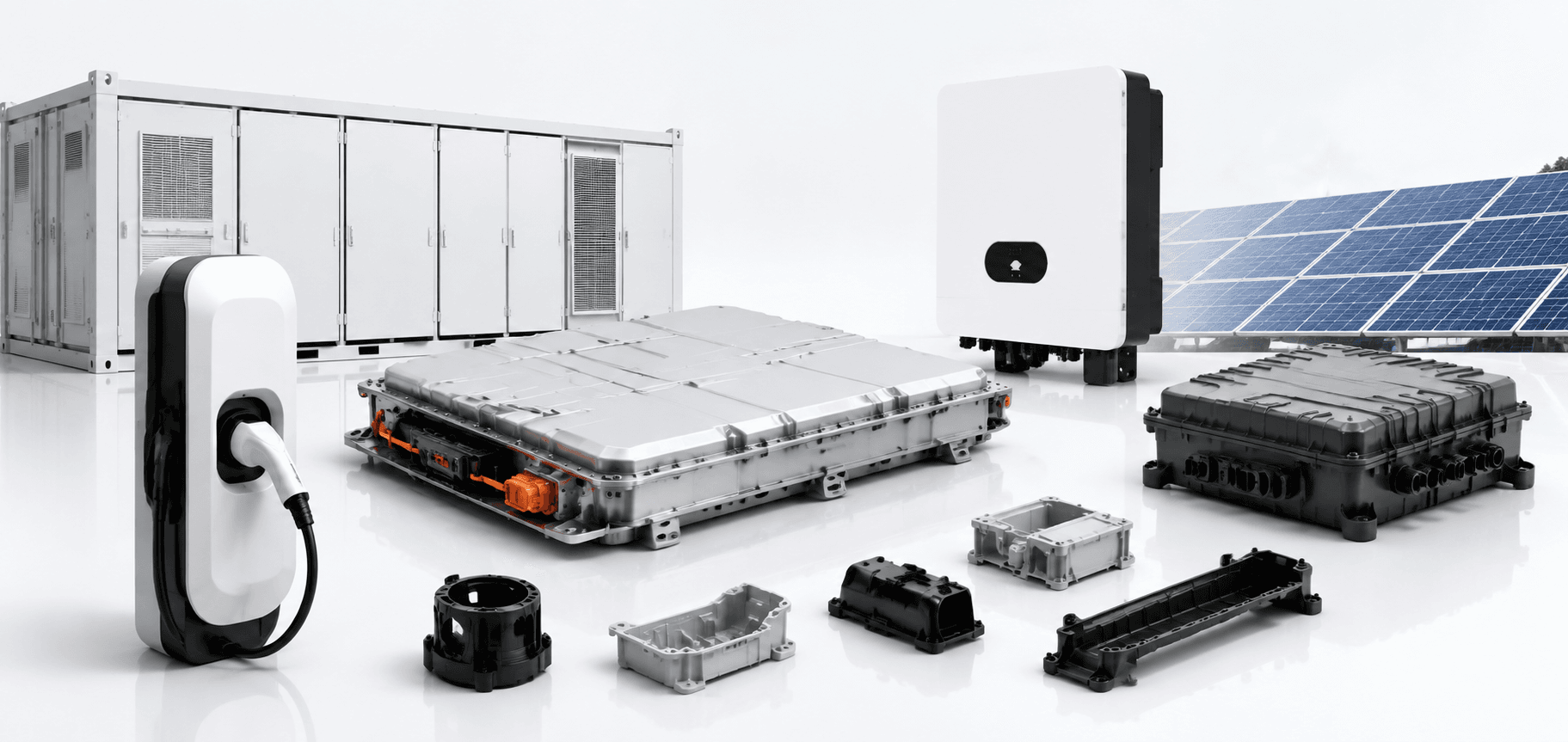
Table of Contents
Introduction
The global transition toward renewable energy and electrification has created rapid growth in new energy industries, including electric vehicles, energy storage systems, solar power equipment, charging infrastructure, and smart energy management devices.
Behind these technologies, high-performance plastic components play an essential role in protecting electrical systems, improving product reliability, reducing weight, and optimizing manufacturing costs.
Injection molding has become one of the most important production methods for new energy plastic components because it provides excellent repeatability, complex design capability, high-volume production efficiency, and compatibility with advanced engineering materials.
Unlike traditional industrial plastic parts, new energy applications often require higher performance standards, including:
- Electrical insulation
- Flame resistance
- Chemical resistance
- Thermal stability
- Dimensional accuracy
- Long-term environmental durability
From battery module components and charging station housings to solar equipment covers and energy storage enclosures, injection molding supports the development of safer and more efficient energy products.
Samgo provides complete injection molding solutions for new energy applications, including product design optimization, DFM analysis, precision mold manufacturing, material selection, and mass production.
Why Injection Molding Is Important for New Energy Products
New energy equipment often operates under demanding conditions.
Components may experience:
- High temperature environments
- Electrical loads
- Outdoor exposure
- Vibration
- Chemical exposure
- Long service life requirements
Plastic injection molding provides manufacturers with reliable solutions for producing lightweight and durable components.
Advantages of Injection Molding for New Energy Applications
| Advantage | Value |
|---|---|
| Electrical Insulation | Protects electronic systems |
| Lightweight Design | Reduces overall product weight |
| Complex Geometry | Supports advanced structures |
| High Production Efficiency | Suitable for mass production |
| Material Flexibility | Supports engineering plastics |
| Consistent Quality | Stable production performance |
1. EV Battery System Plastic Components
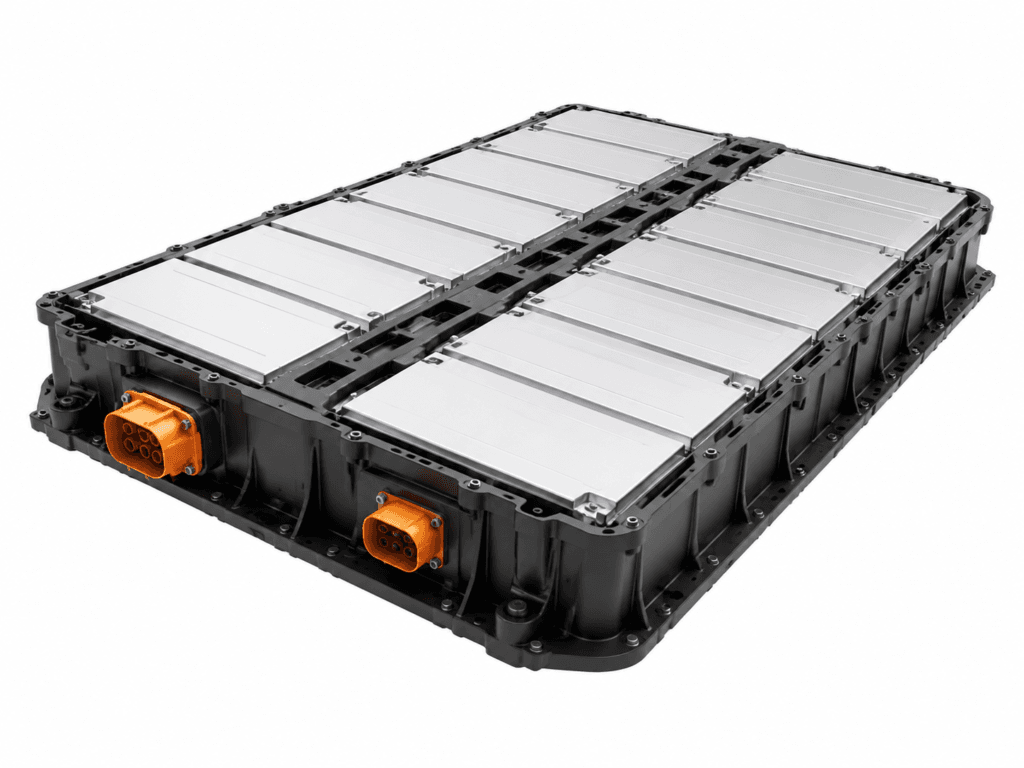
Electric vehicle batteries require reliable protection systems to ensure safety, performance and durability.
Although battery cells and metal structures are critical, many surrounding components rely on high-performance plastic materials.
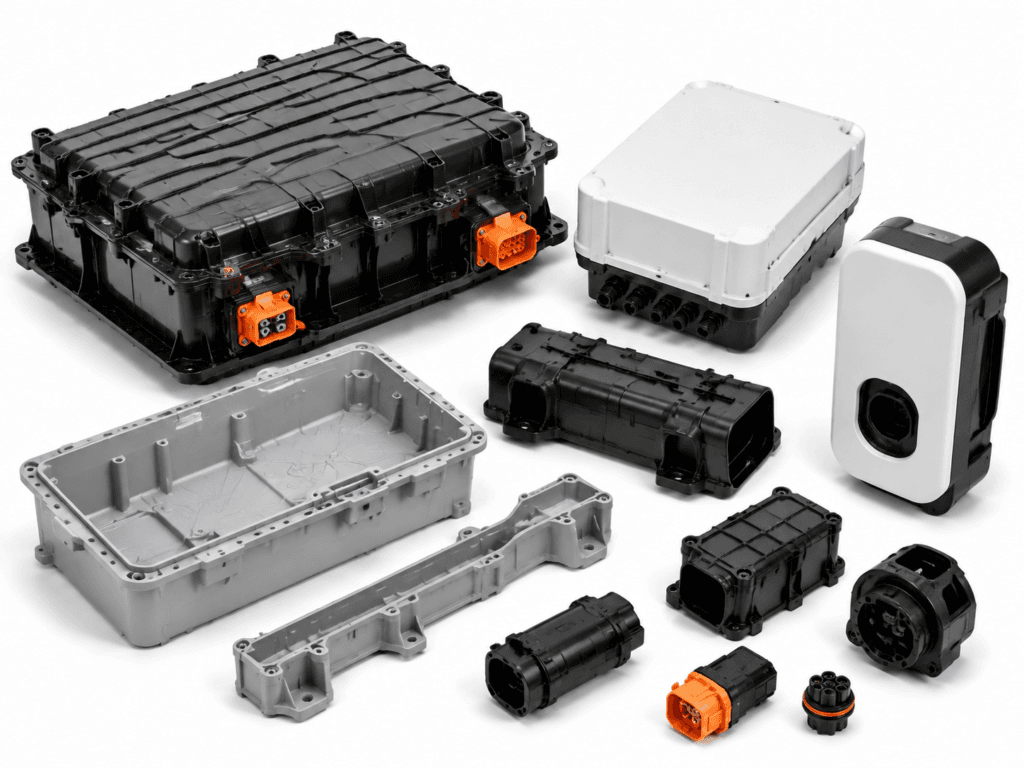
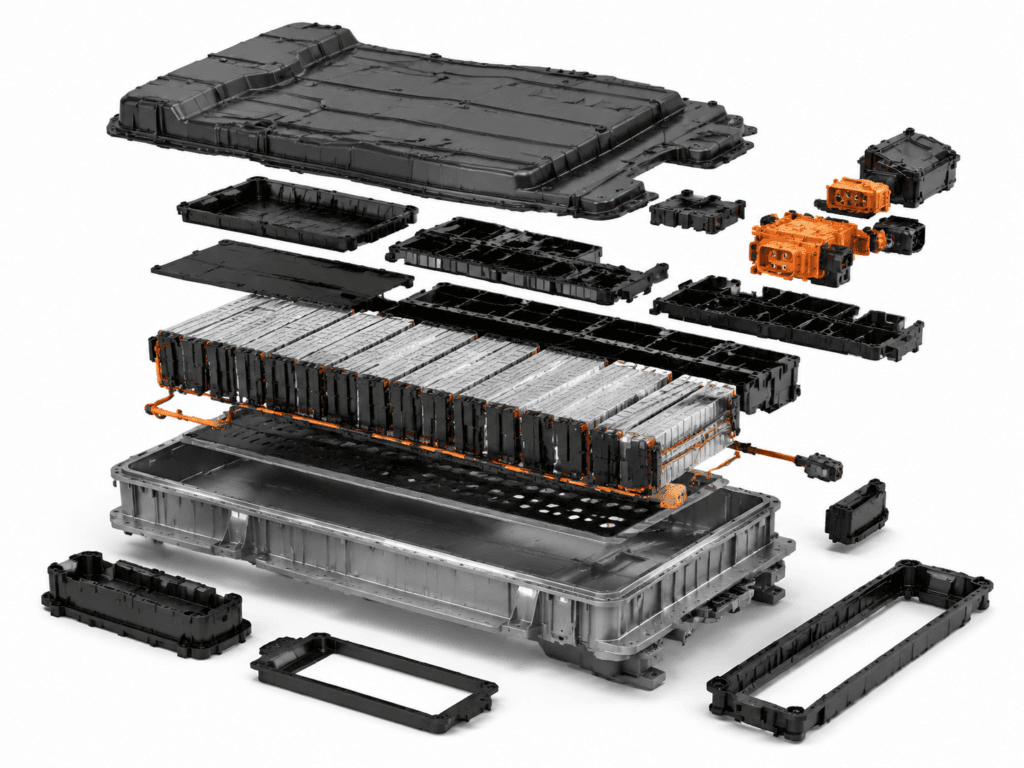
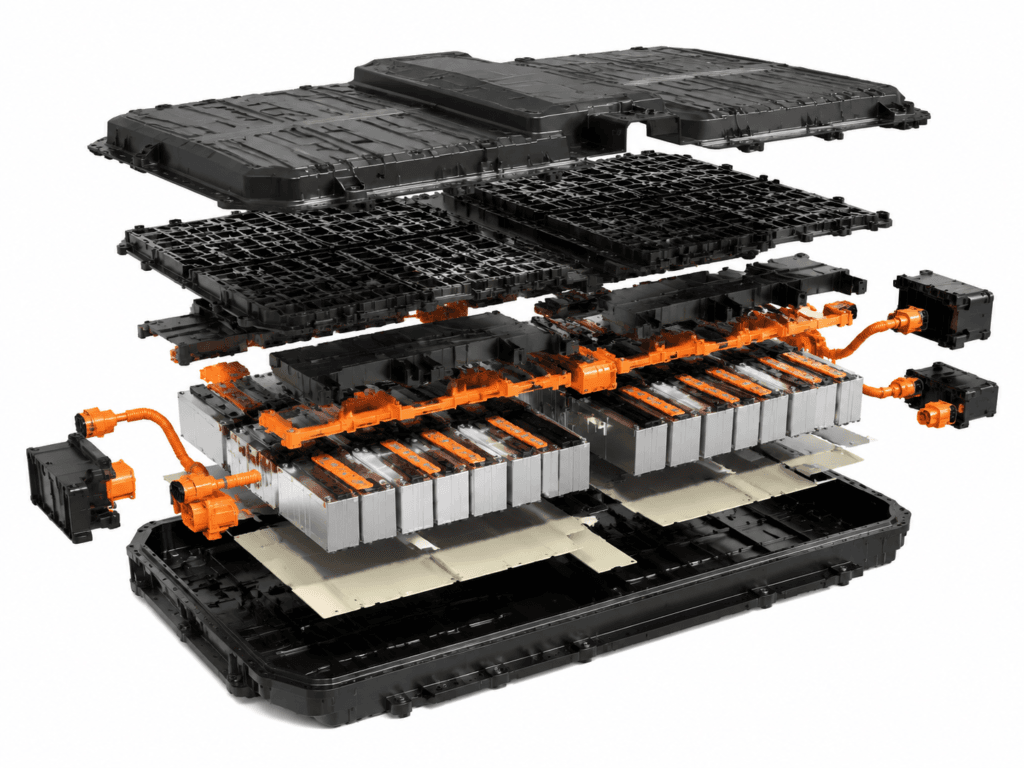
Typical injection molded battery components include:
- Battery module covers
- Connector housings
- Cell holders
- Insulation barriers
- Cable protection components
- Sensor brackets
- Cooling system components
Plastic materials used in battery applications must provide:
- Electrical insulation
- Flame retardancy
- Dimensional stability
- Chemical resistance
- Temperature resistance
Common materials include:
- PC+ABS FR
- PA66 GF
- PPS
- PBT
- Flame-retardant PP
EV Battery Plastic Components
| Component | Function | Recommended Material |
|---|---|---|
| Battery Cover | Protection | PC+ABS FR |
| Cell Holder | Positioning | PA66 GF |
| Connector Housing | Electrical insulation | PBT |
| Insulation Barrier | Safety protection | Flame-retardant PP |
| Cooling Components | Thermal management | PA GF |
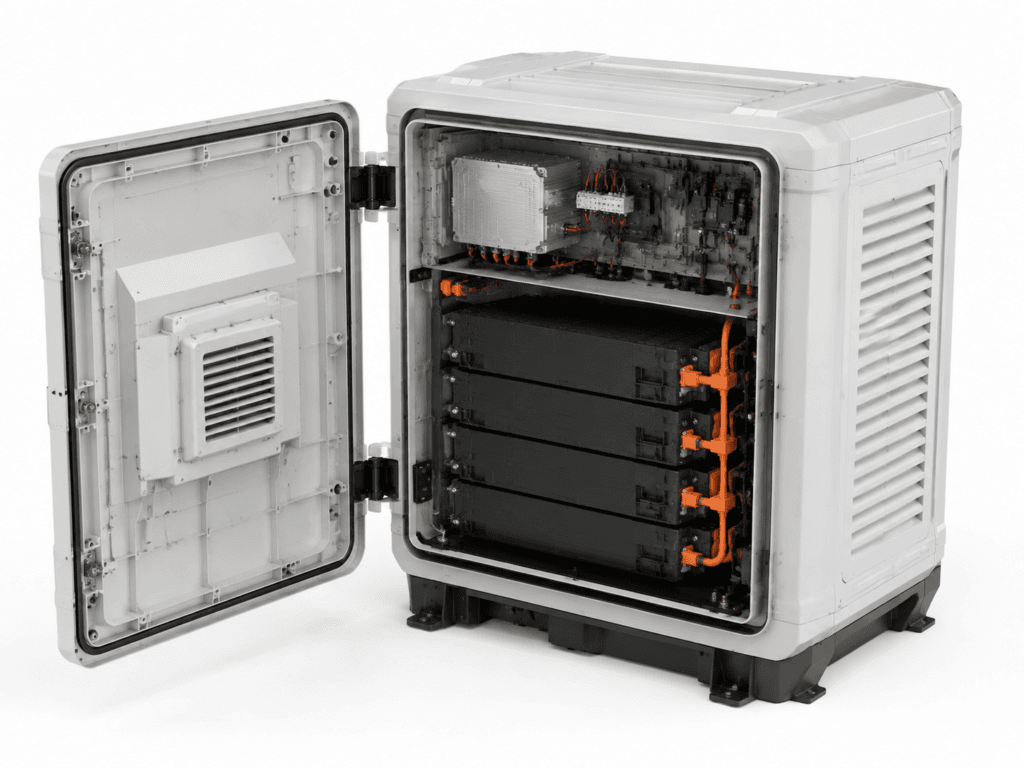
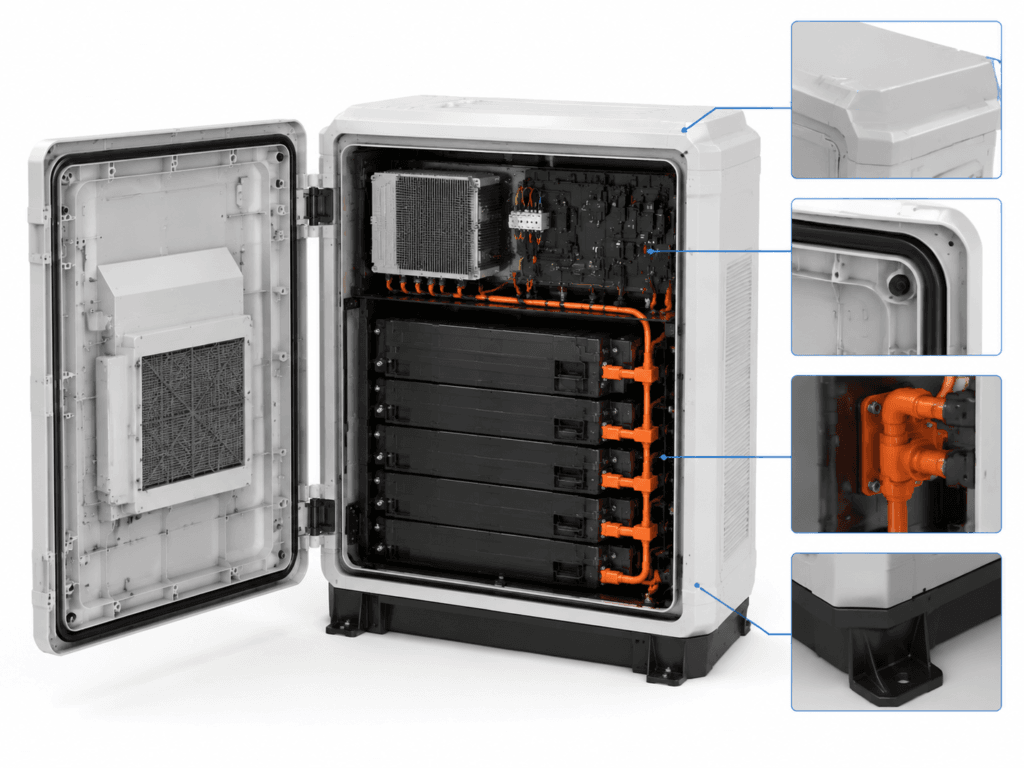
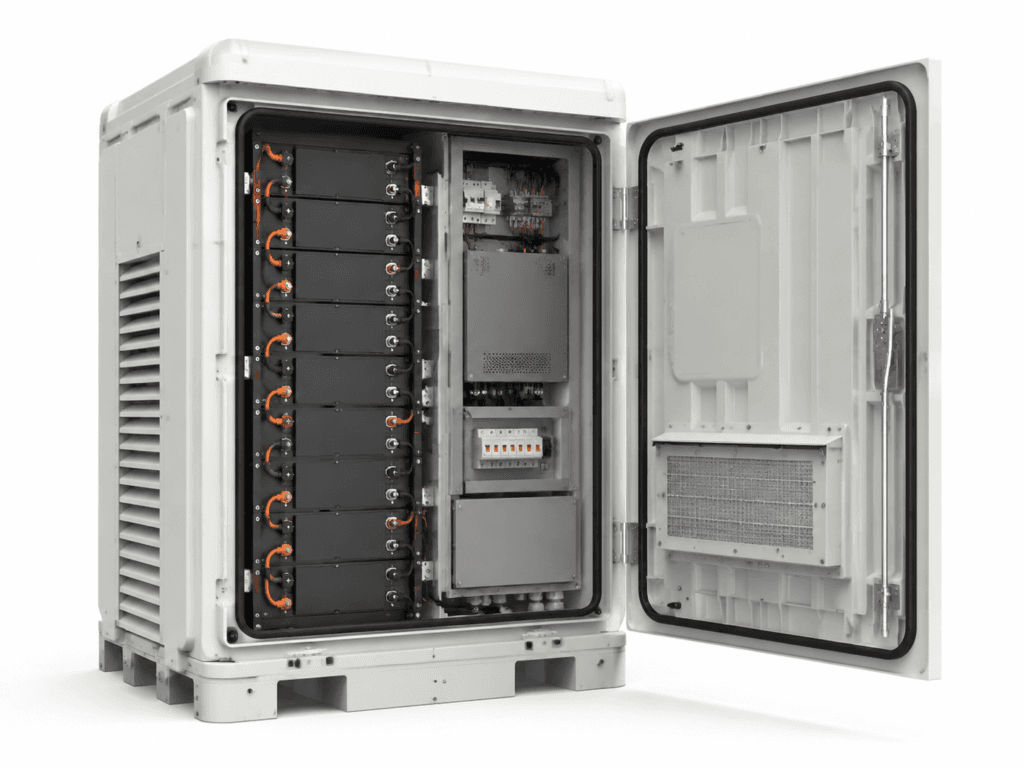
2. Energy Storage System Enclosures
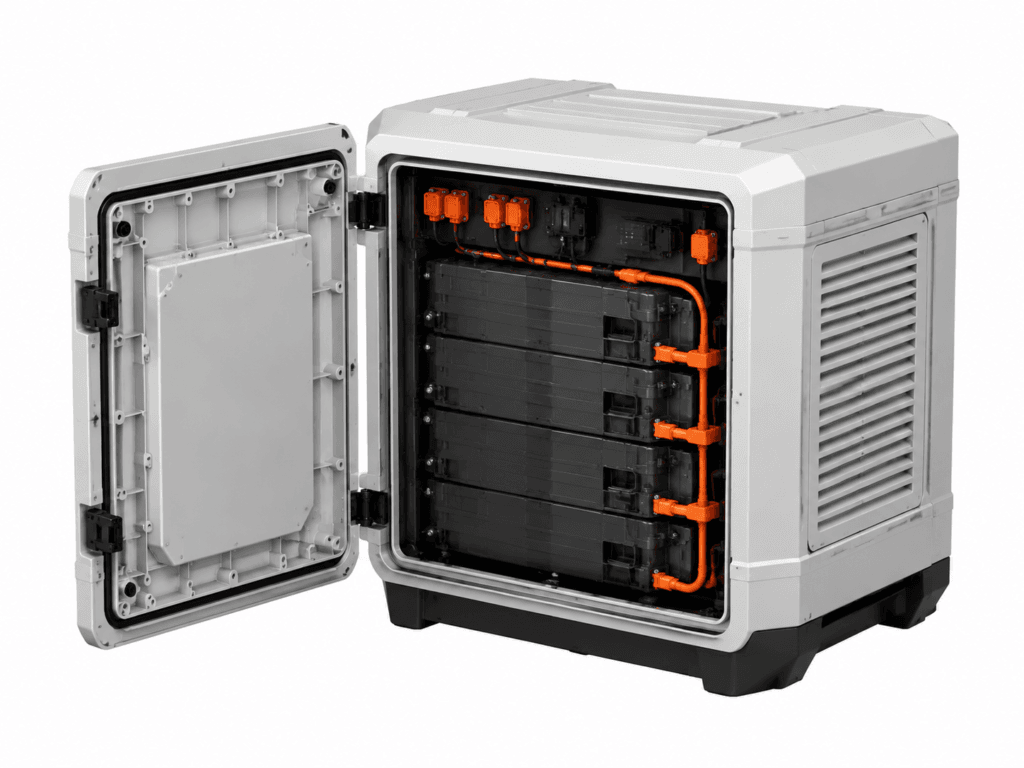
Energy storage systems (ESS) are becoming increasingly important for renewable energy applications.
Residential and industrial battery storage systems require durable protective housings that can withstand indoor and outdoor environments.
Injection molded plastic components are used for:
- Battery management system housings
- Control box covers
- Sensor enclosures
- Connector covers
- Protection brackets
Key requirements include:
- Fire resistance
- Impact protection
- Weather resistance
- Heat management
- Mechanical strength
For outdoor energy storage systems, materials such as PC/ASA and UV-resistant engineering plastics are commonly considered.
Energy Storage Housing Requirements
| Requirement | Design Solution |
|---|---|
| Weather Resistance | UV stabilized materials |
| Fire Safety | Flame-retardant resin |
| Waterproof Protection | Gasket sealing |
| Heat Control | Thermal design |
| Mechanical Strength | Reinforced structures |
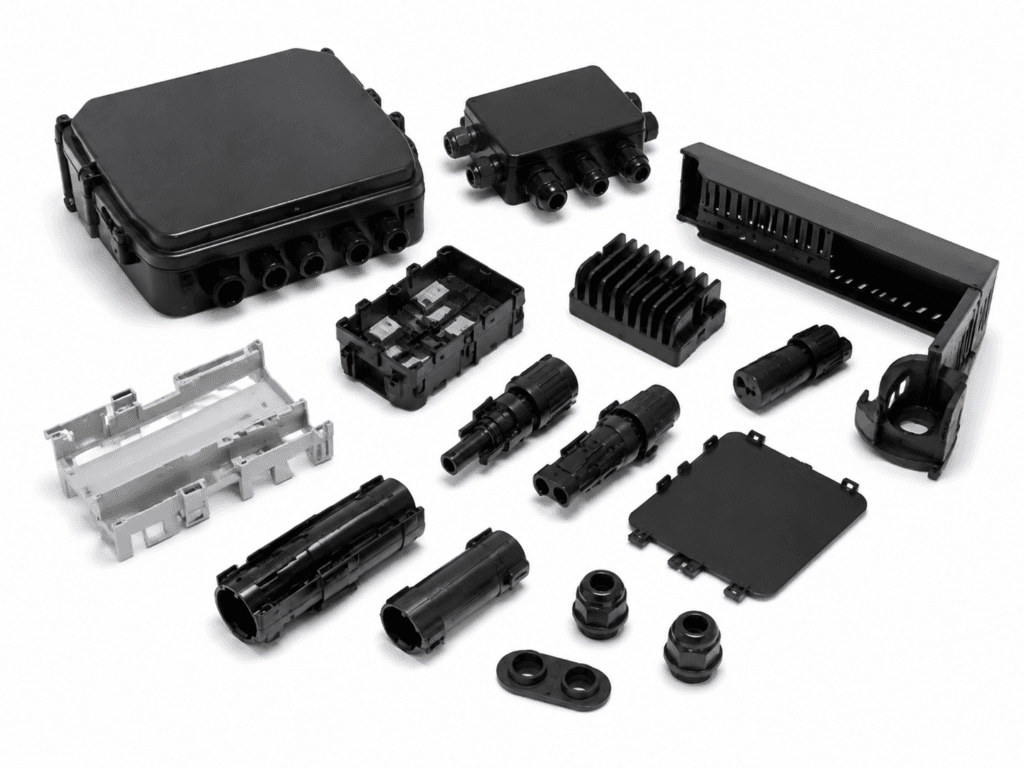
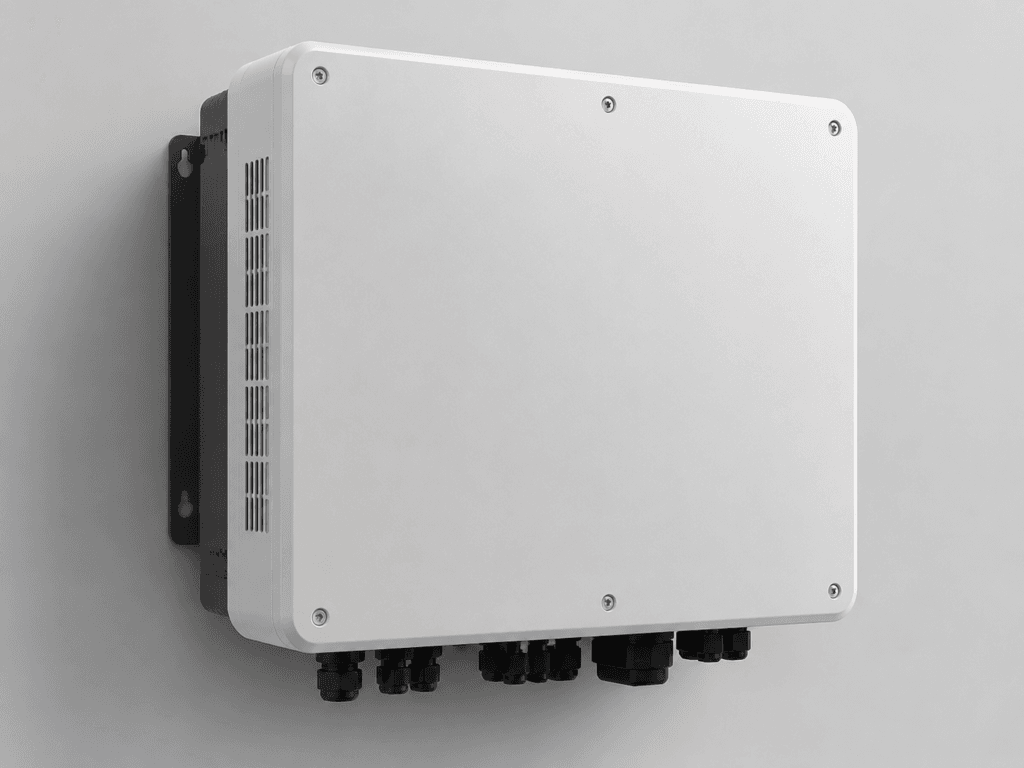
3. Solar Energy Injection Molded Components
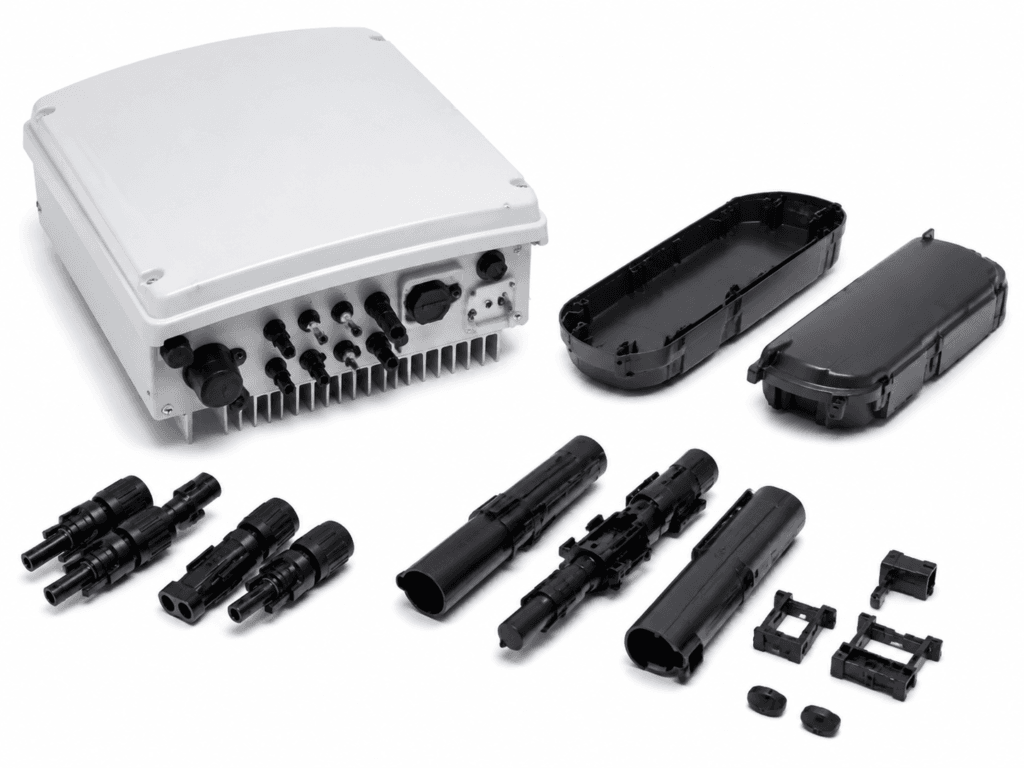
Solar energy systems require many durable plastic components for outdoor operation.
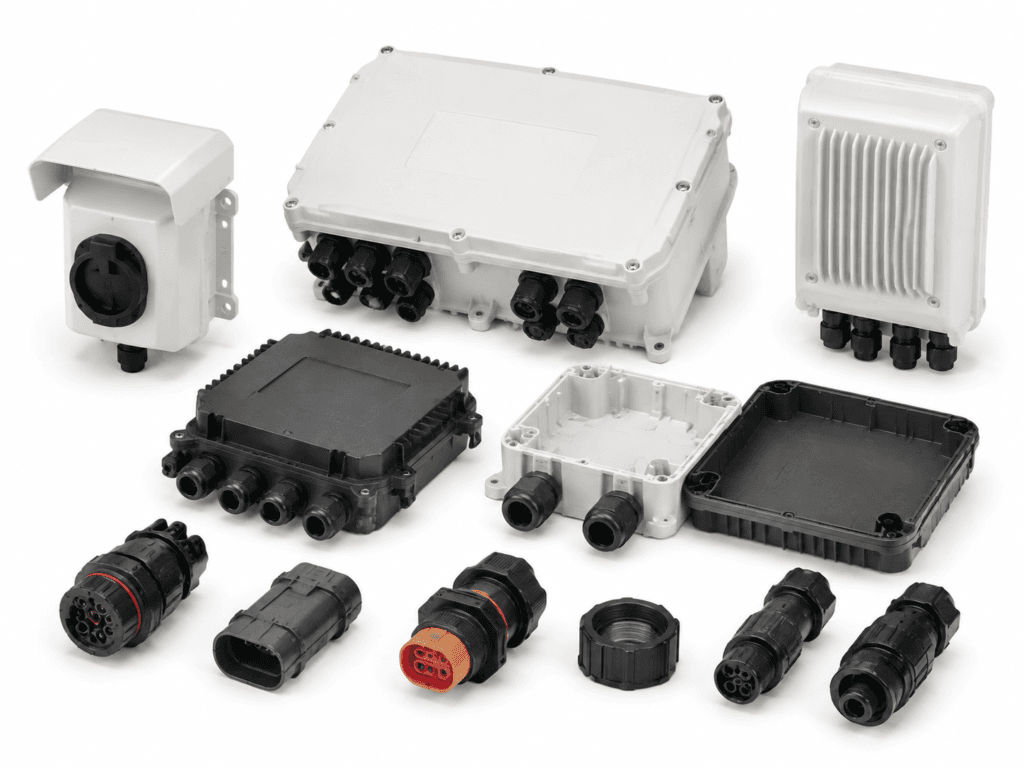
Injection molding is widely used for:
- Solar inverter housings
- Connector covers
- Junction box components
- Cable management parts
- Mounting accessories
- Protective covers
These components must resist:
- UV radiation
- Rain
- Temperature cycling
- Humidity
- Chemical exposure
Materials often include:
- ASA
- PC
- PC/ASA
- UV-resistant PP
- Engineering plastics
Solar Plastic Components
| Product | Function | Material |
|---|---|---|
| Inverter Housing | Protect electronics | PC/ASA |
| Junction Box | Electrical protection | PC |
| Connector Cover | Environmental protection | PA |
| Cable Clip | Cable management | PP |

4. Charging Equipment Plastic Housings
The expansion of electric vehicles requires large-scale charging infrastructure.
Charging equipment requires plastic housings that provide:
- Electrical insulation
- Weather resistance
- Impact protection
- Heat management
- Attractive appearance
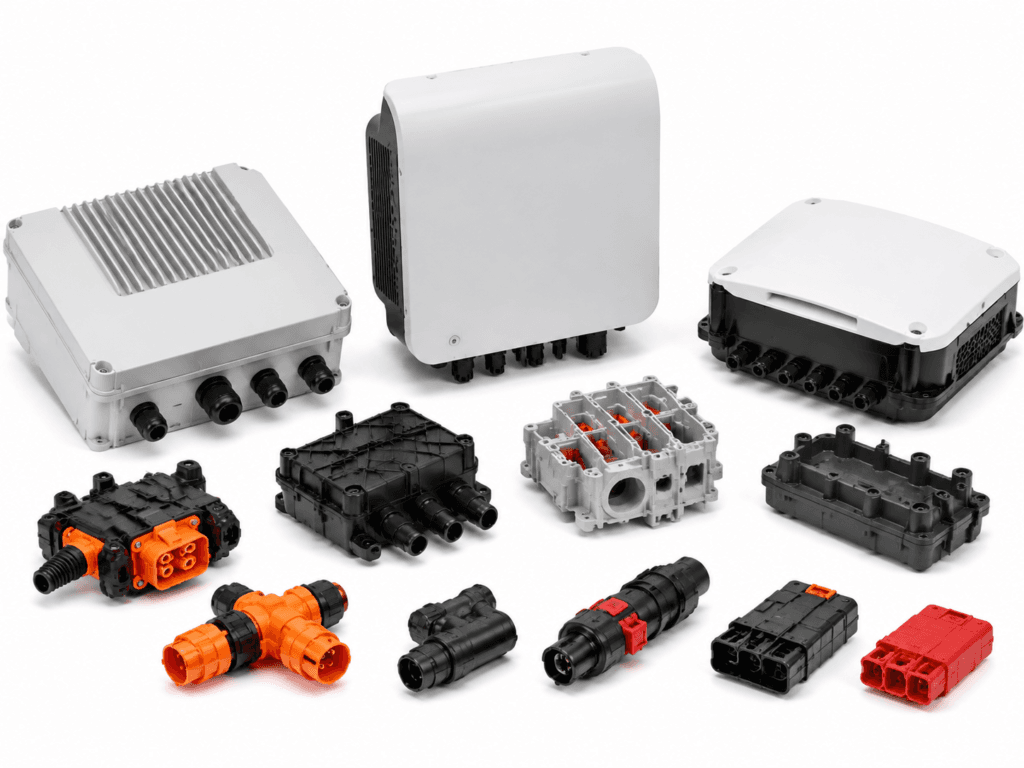
Typical injection molded parts include:
- Charging station covers
- Cable holders
- Connector housings
- Control panel frames
- Protection covers
Outdoor charging equipment often requires IP protection, UV-resistant materials and strong mechanical structures.
Charging Equipment Design Requirements
| Feature | Purpose |
|---|---|
| Waterproof Structure | Protect electronics |
| UV Resistance | Outdoor durability |
| Impact Strength | Public environment protection |
| Flame Resistance | Electrical safety |
| Precision Assembly | Reliable operation |
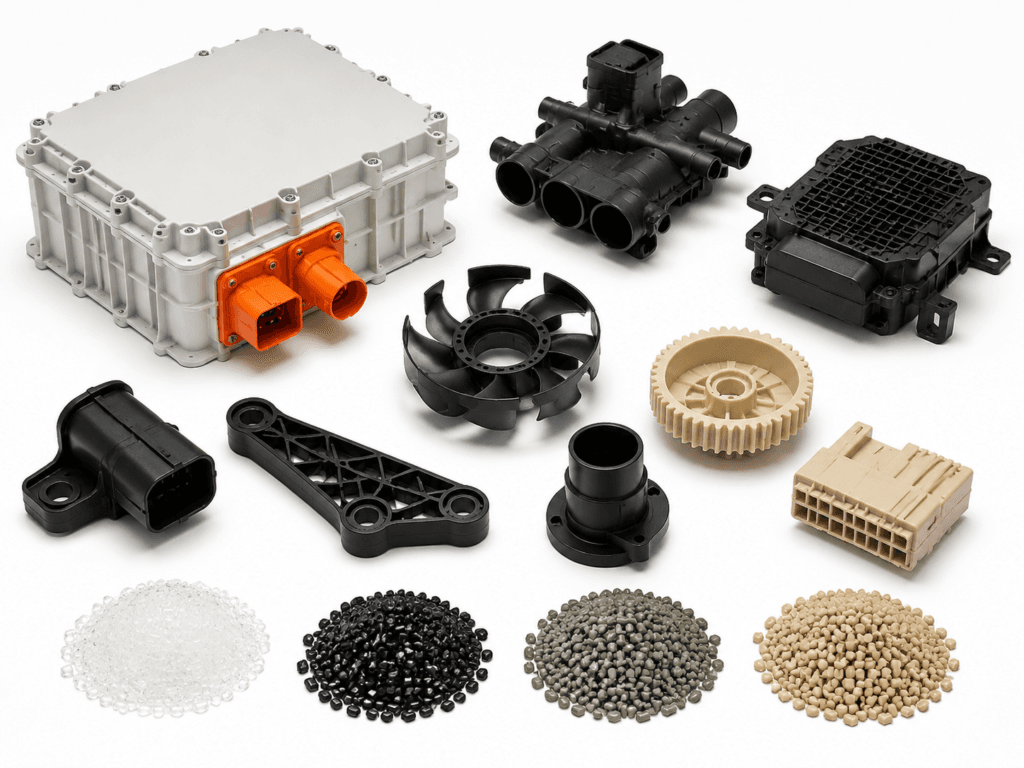
5. Material Selection for New Energy Injection Molding
Material selection is one of the most important factors in new energy applications.
Engineers must balance:
- Mechanical strength
- Electrical insulation
- Flame resistance
- Thermal performance
- Cost
Common Materials
Thermal Management Design for New Energy Plastic Parts
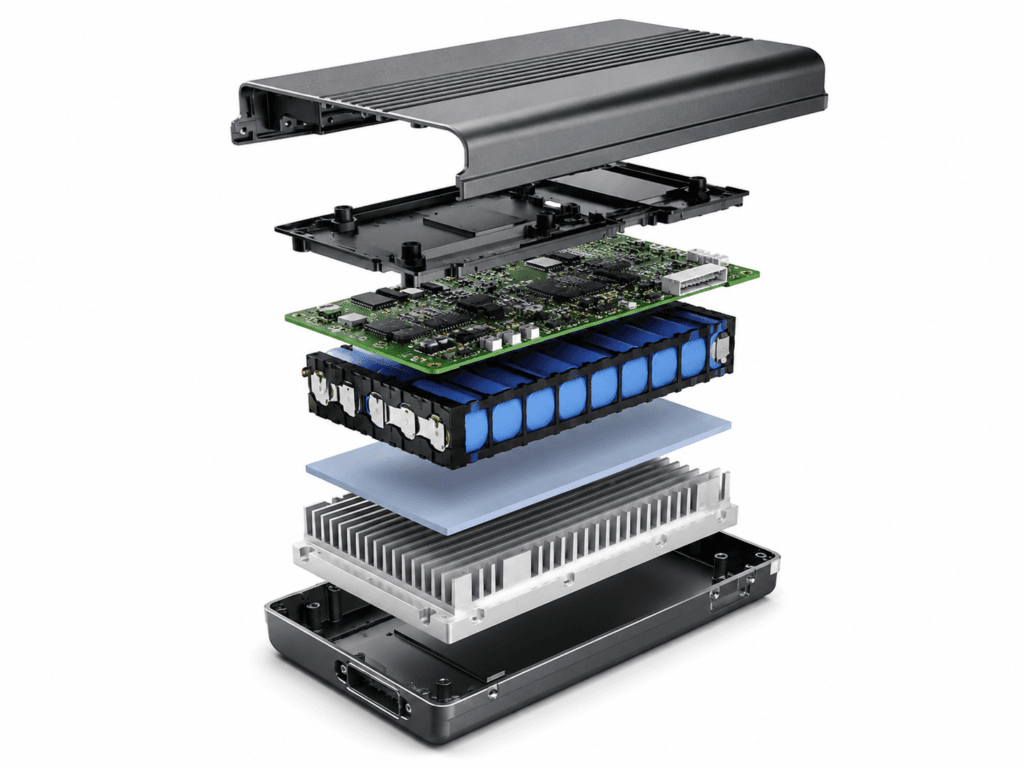
Thermal management is one of the most important challenges in new energy applications.
Battery systems, power electronics, charging equipment, and energy storage devices generate significant heat during operation. Poor thermal design can reduce efficiency, shorten service life, and create safety risks.
Although plastics have lower thermal conductivity compared with metals, advanced engineering plastics and structural designs allow injection molded components to support thermal management requirements.
Common solutions include:
- Heat-resistant engineering plastics
- Cooling channels
- Ventilation structures
- Thermal interface materials
- Metal inserts
- Heat dissipation structures
For example, battery module components may require dimensional stability under continuous temperature changes, while inverter housings need effective heat dissipation while maintaining electrical insulation.
Thermal Management Solutions Comparison
| Solution | Advantage | Application |
|---|---|---|
| Heat-resistant Resin | Higher temperature capability | Battery components |
| Aluminum Insert | Improved heat transfer | Power electronics |
| Ventilation Structure | Natural cooling | Enclosures |
| Thermal Pad Interface | Heat transfer improvement | PCB systems |
| Cooling Channels | Temperature control | Energy equipment |
Flame Retardant Requirements for New Energy Plastic Components
Safety is a critical requirement in new energy applications, especially around batteries and high-voltage electrical systems.
Plastic components may need to comply with flame resistance requirements to reduce fire risks and protect surrounding components.
Common flame-retardant standards include:
- UL94 flammability rating
- IEC electrical safety requirements
- Automotive and energy industry specifications
Typical flame-retardant materials include:
- PC+ABS FR
- PA66 GF FR
- PBT FR
- PPS
- Flame-retardant PP
The selected material depends on operating temperature, mechanical loading, electrical requirements, and certification requirements.
Flame Retardant Material Comparison
| Material | Flame Performance | Typical Application |
|---|---|---|
| PC+ABS FR | Excellent | Electrical housings |
| PA66 GF FR | High strength | Structural parts |
| PBT FR | Electrical insulation | Connectors |
| PPS | High temperature | Battery components |
| PP FR | Cost-effective | Protective covers |
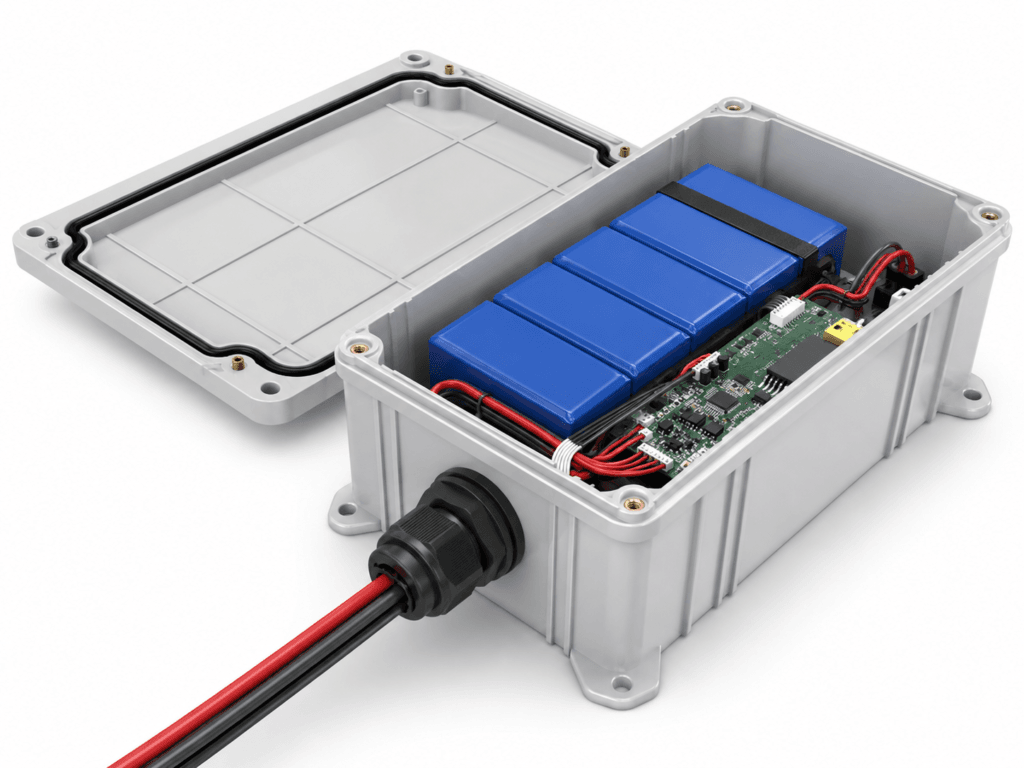
Waterproof and IP Protection Design
Many new energy products operate outdoors or in harsh environments. Waterproof protection is therefore essential.
Examples include:
- EV charging stations
- Outdoor battery storage systems
- Solar equipment
- Smart energy controllers
Injection molded housings commonly use:
- Silicone gaskets
- TPE sealing rings
- Waterproof cable glands
- Sealed connectors
- Overlapping housing structures
The sealing design must consider not only initial waterproof performance but also long-term durability after temperature cycling and mechanical stress.
IP Protection Design Features
| Feature | Function |
|---|---|
| Gasket Groove | Creates sealing compression |
| Cable Gland | Protects cable entry |
| Drainage Channel | Prevents water accumulation |
| Overlap Structure | Blocks direct water path |
| Sealed Connector | Protects electrical interface |
Injection Mold Design Considerations for New Energy Parts
New energy plastic components often require high precision because they integrate with:
- Battery modules
- Electrical connectors
- Sensors
- PCB assemblies
- Metal structures
Mold design directly affects product reliability.
Important considerations include:
1. Dimensional Stability
Battery and electronic components often require tight tolerances. Uneven cooling or excessive shrinkage may affect assembly accuracy.
2. Warpage Control
Large housings and covers require balanced filling and cooling to prevent deformation.
3. Insert Molding
Some applications require metal inserts for:
- Grounding
- Heat transfer
- Mechanical reinforcement
- High-strength fastening
4. Surface Requirements
Outdoor energy products may require:
- UV-resistant textures
- Matte finishes
- Scratch-resistant surfaces
Mold Design Requirements
| Mold Feature | Purpose |
|---|---|
| Balanced Gate Design | Uniform filling |
| Optimized Cooling | Reduce deformation |
| Precision Inserts | Improve assembly accuracy |
| Proper Venting | Avoid burn marks |
| Surface Texture Control | Improve appearance |
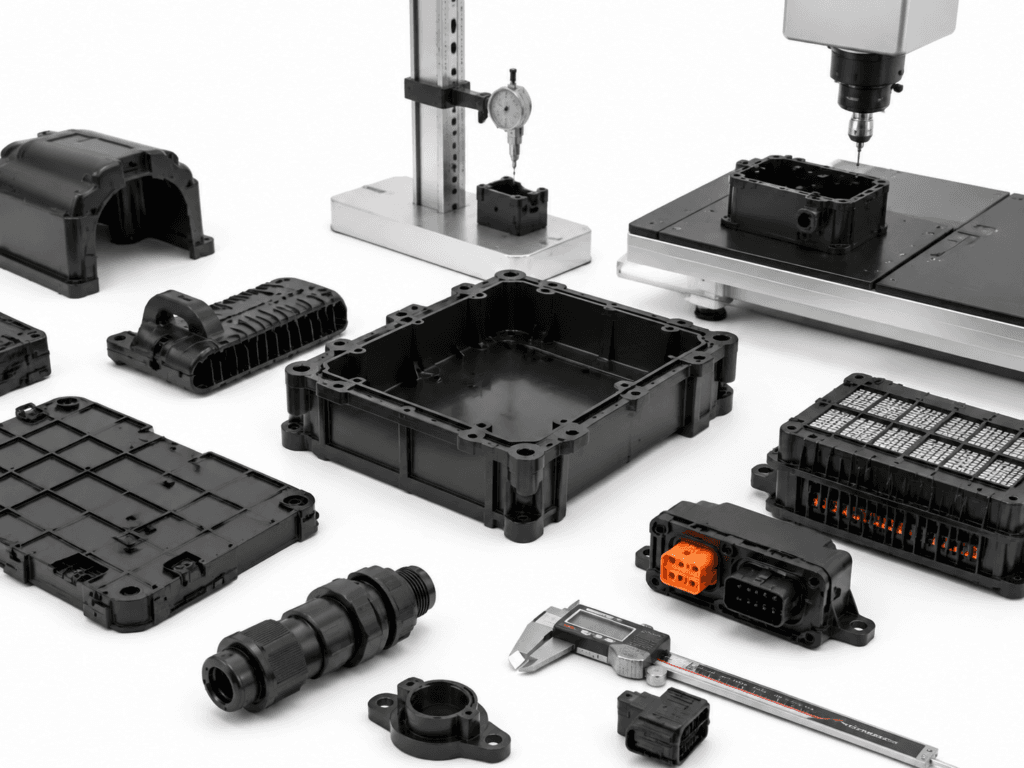
Quality Control and Testing
New energy components require strict quality control because failures may affect safety and system reliability.
Typical inspections include:
- Dimensional measurement
- Material verification
- Flame testing
- Mechanical strength testing
- Thermal cycling
- Waterproof testing
- Assembly testing
For high-volume production, automated inspection systems can improve consistency and reduce human error.
Quality Testing Methods
| Test | Purpose |
|---|---|
| Dimensional Inspection | Verify assembly accuracy |
| Thermal Cycling | Evaluate temperature durability |
| Flame Test | Confirm safety performance |
| Waterproof Test | Verify sealing |
| Impact Test | Check mechanical strength |
| Assembly Test | Ensure compatibility |
Common Manufacturing Challenges and Solutions
New energy products combine demanding materials, complex structures and strict reliability requirements.
| Challenge | Cause | Solution |
|---|---|---|
| Warpage | Uneven cooling | Optimize mold cooling |
| Cracking | Stress concentration | Improve structure |
| Poor Assembly | Dimensional variation | Tighten mold control |
| Burning Marks | Poor venting | Improve mold vents |
| Short Shot | Difficult filling | Optimize gate location |
| Surface Defects | Processing issues | Adjust parameters |
Early DFM analysis and Moldflow simulation can significantly reduce development risks.
Why Choose Samgo for New Energy Injection Molding?
Samgo provides complete injection molding solutions for new energy industries, supporting customers from concept design to mass production.
Our capabilities include:
| Service | Customer Benefit |
|---|---|
| Product Design Review | Improve manufacturability |
| DFM Analysis | Reduce development risks |
| Moldflow Simulation | Optimize filling and cooling |
| Precision Mold Manufacturing | Ensure accuracy |
| Injection Molding | Stable production |
| Quality Control | Reliable performance |
Our experience covers:
- Battery components
- Energy storage housings
- Solar components
- Charging equipment
- Electrical protection parts
- Smart energy products
Frequently Asked Questions
What plastics are commonly used in new energy injection molding?
Common materials include PC+ABS FR, PA66 GF, PBT, PPS, ASA and flame-retardant PP. The selection depends on temperature, strength, electrical and safety requirements.
Why are plastics used in battery systems?
Plastic materials provide electrical insulation, lightweight construction, corrosion resistance and design flexibility.
Can injection molded parts meet flame-retardant requirements?
Yes. Flame-retardant grades can achieve required safety levels depending on application and certification requirements.
What is important when designing energy storage plastic housings?
Key factors include sealing, thermal management, mechanical strength, material selection, fire safety and dimensional stability.
Get the latest price? We will reply as soon as possible (within 12 hours)
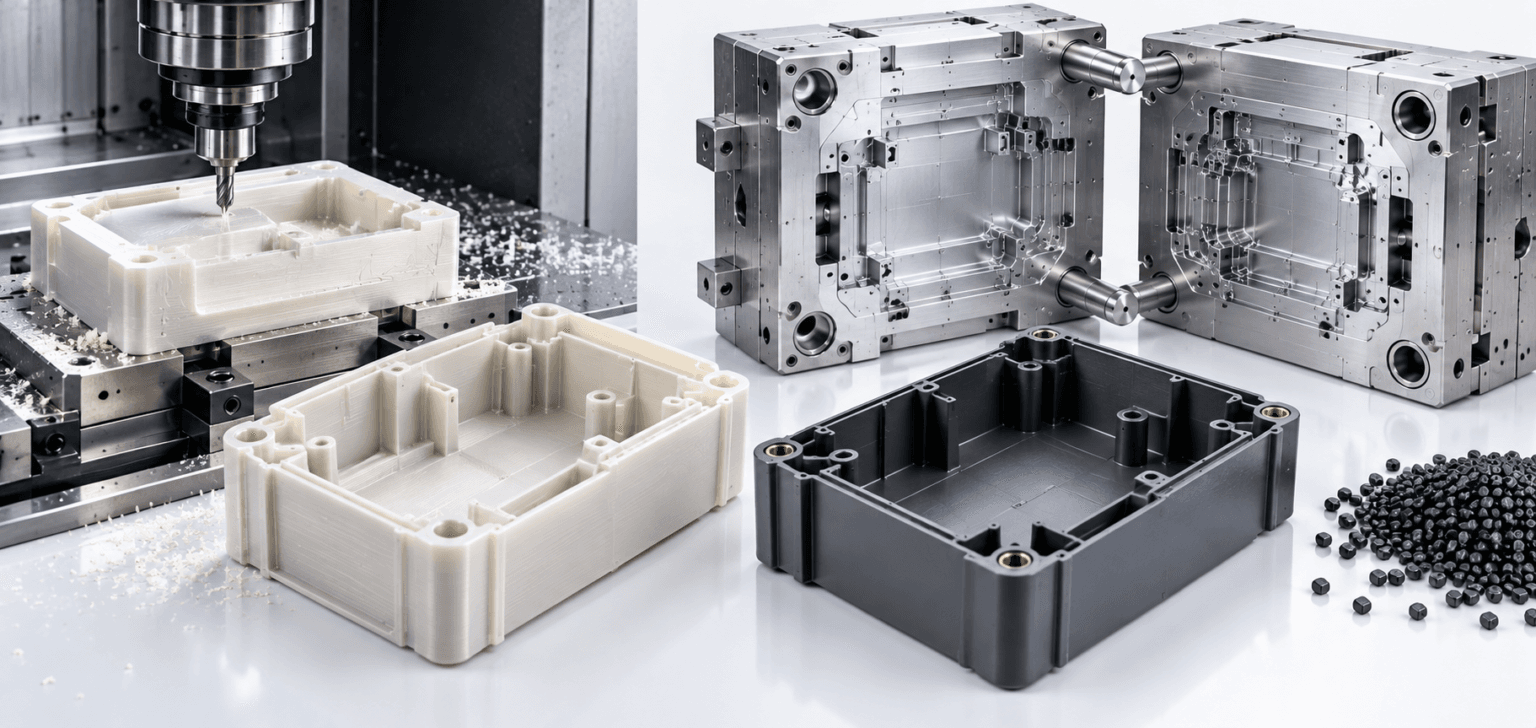

CNC Plastic Prototypes vs. Injection Molded Parts: Key Differences Engineers Should Understand
Compare CNC plastic prototypes and injection molded parts in material properties, dimensions, warpage, surface finish, geometry, cost and production performance.
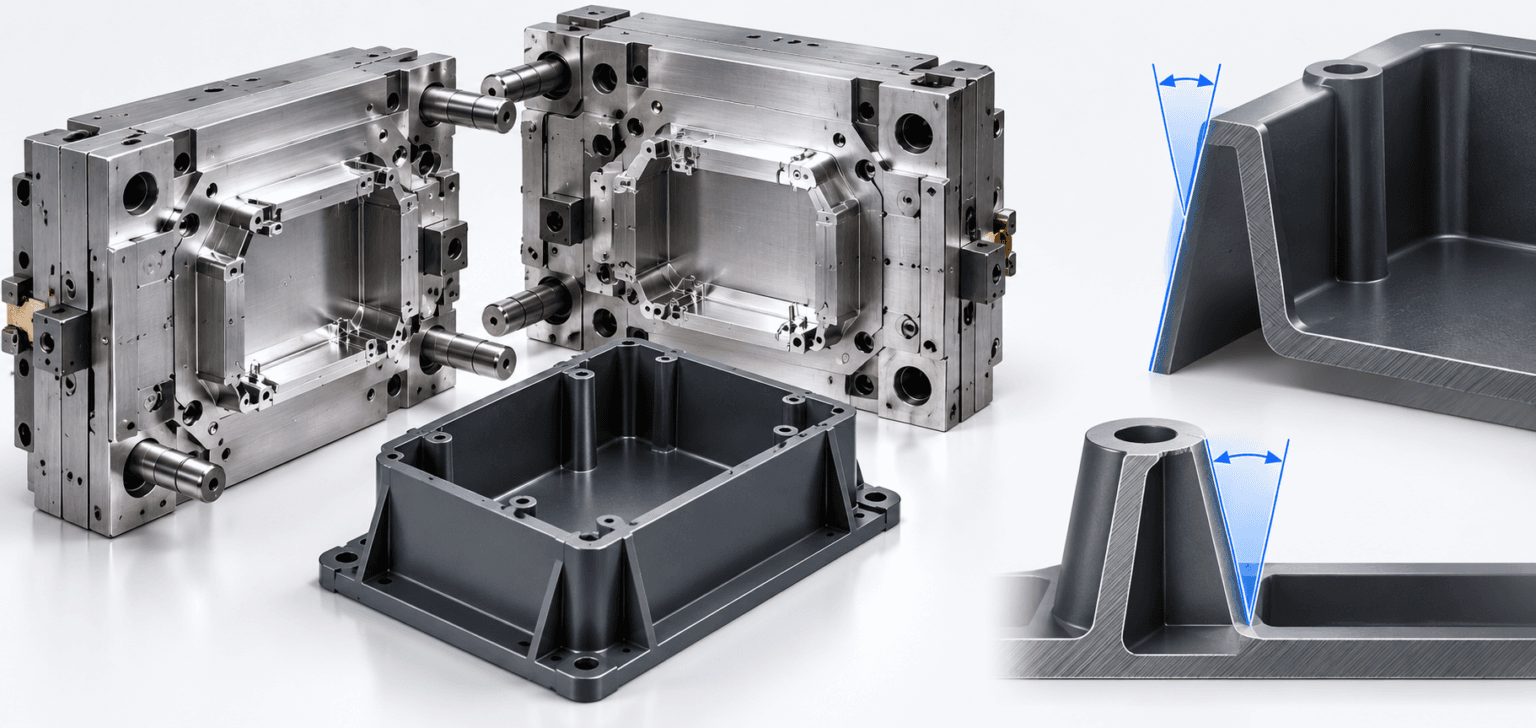
Draft Angle in Injection Mold Design: Improving Part Quality, Ejection and Tooling Efficiency
Discover how draft angles affect injection mold design, part ejection, surface texture, dimensional accuracy, ribs, bosses and long-term tooling performance.
Injection Molding Shrinkage: How to Control Part Dimensions from Mold Design to Production
Learn how injection molding shrinkage affects mold dimensions, tolerances and warpage, and how material, gate design, packing, cooling and mold trials help control final plastic part dimensions.