
Automotive-Spritzguss: Anwendungen, Materialien, Werkzeugdesign und Fertigungslösungen
Inhaltsverzeichnis
Einführung
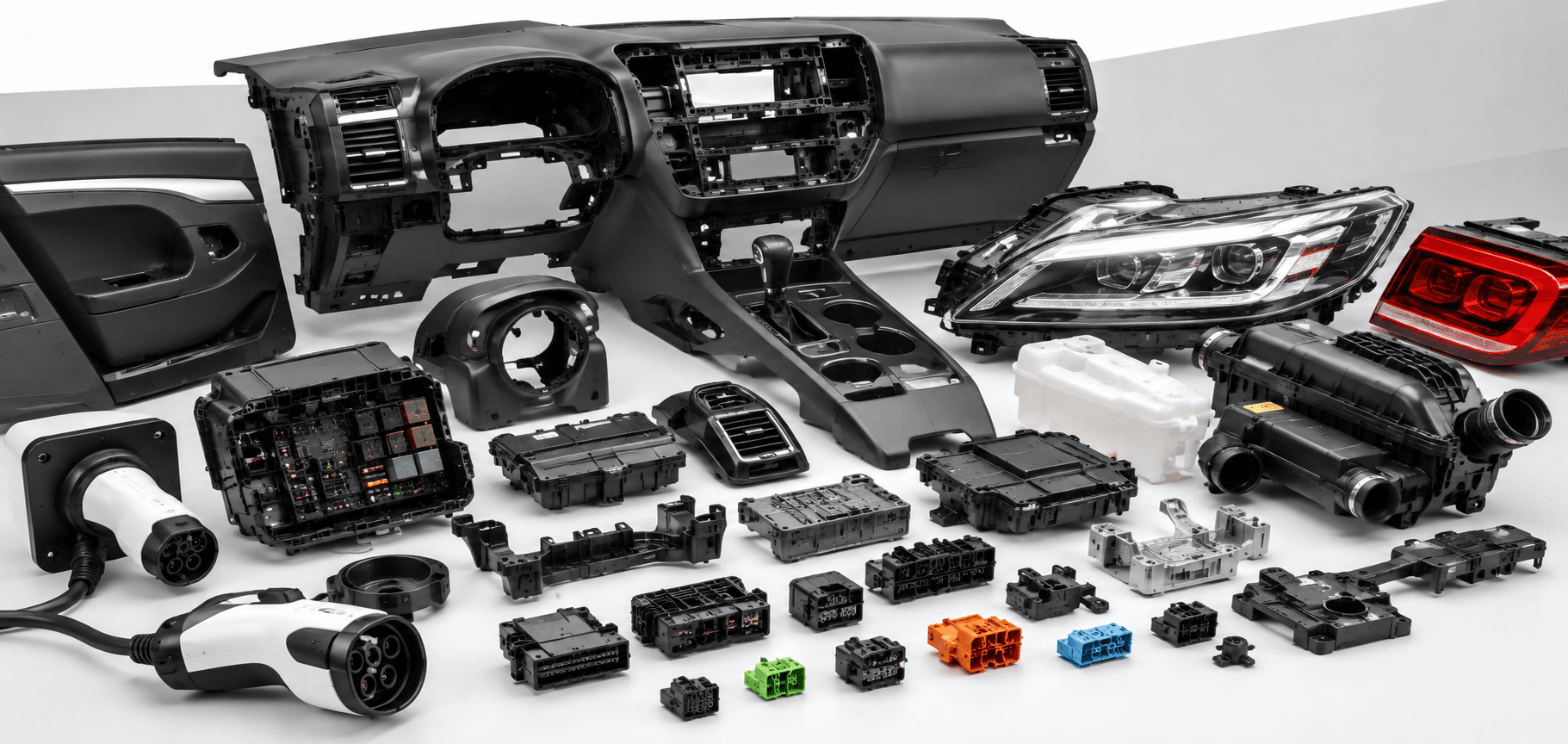
Kunststoffspritzgießen spielt eine entscheidende Rolle in der modernen Automobilfertigung. Von Innenverkleidungen und elektrischen Steckverbindern bis hin zu Komponenten unter der Motorhaube und Außengehäusen helfen Spritzgussteile aus Kunststoff den Fahrzeugherstellern, Gewicht zu reduzieren, komplexe Funktionen zu integrieren, das Erscheinungsbild zu verbessern und die Großserienproduktion zu unterstützen.
Automotive Anwendungen stellen höhere Anforderungen als viele allgemeine Konsumgüter. Komponenten müssen möglicherweise Vibrationen, Stößen, Chemikalien, ultravioletter Strahlung, Temperaturwechseln, Feuchtigkeit, Maßbelastungen und jahrelangem Dauerbetrieb standhalten.
Der Übergang zu Elektrofahrzeugen erhöht die Bedeutung von technischen Kunststoffen weiter. Batteriesysteme, Ladeausrüstung, Sensoren, elektronische Steuergeräte und Hochspannungsverbinder erfordern leichte Materialien mit starker elektrischer Isolierung und flammhemmenden Eigenschaften.
Erfolgreiches Spritzgießen in der Automobilindustrie erfordert daher mehr als nur die Herstellung eines Kunststoffteils. Materialauswahl, Produktdesign, Werkzeugbau, Prozessüberwachung, Dimensionsvalidierung und langfristige Zuverlässigkeit müssen als vollständiges Fertigungssystem betrachtet werden.
Dieser Artikel untersucht die wichtigsten Anwendungen, Materialien, Konstruktionsprinzipien, Formanforderungen und Qualitätskontrollaspekte des Spritzgießens in der Automobilindustrie.
1. Kunststoffteile für den Automobilinnenraum
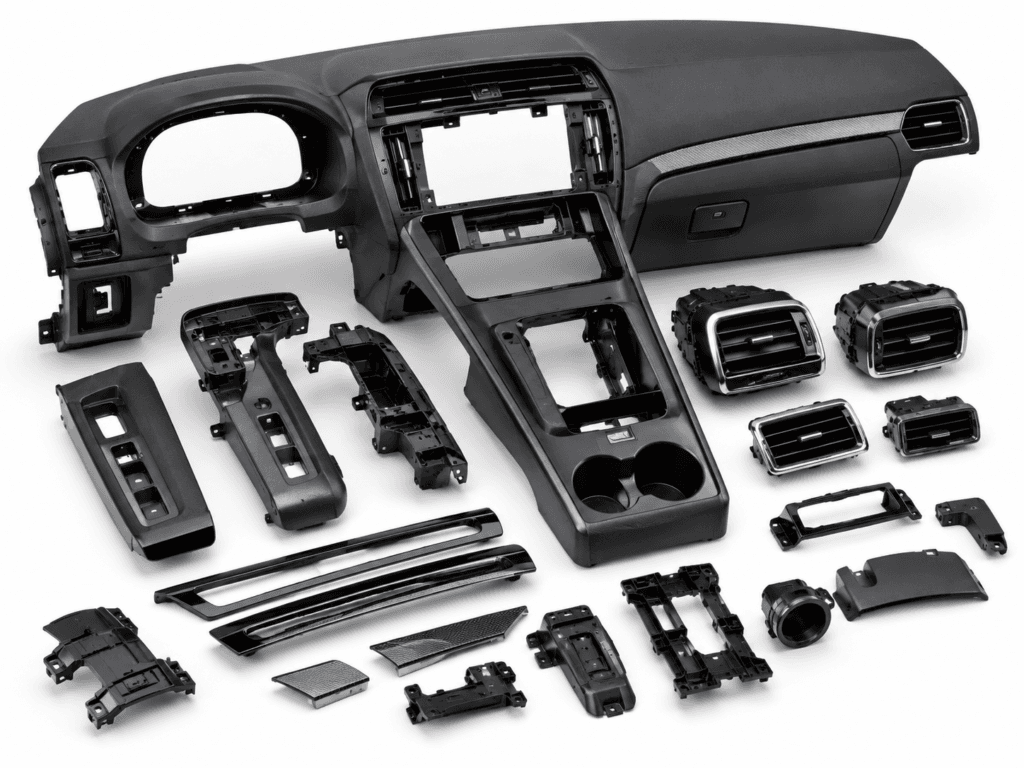
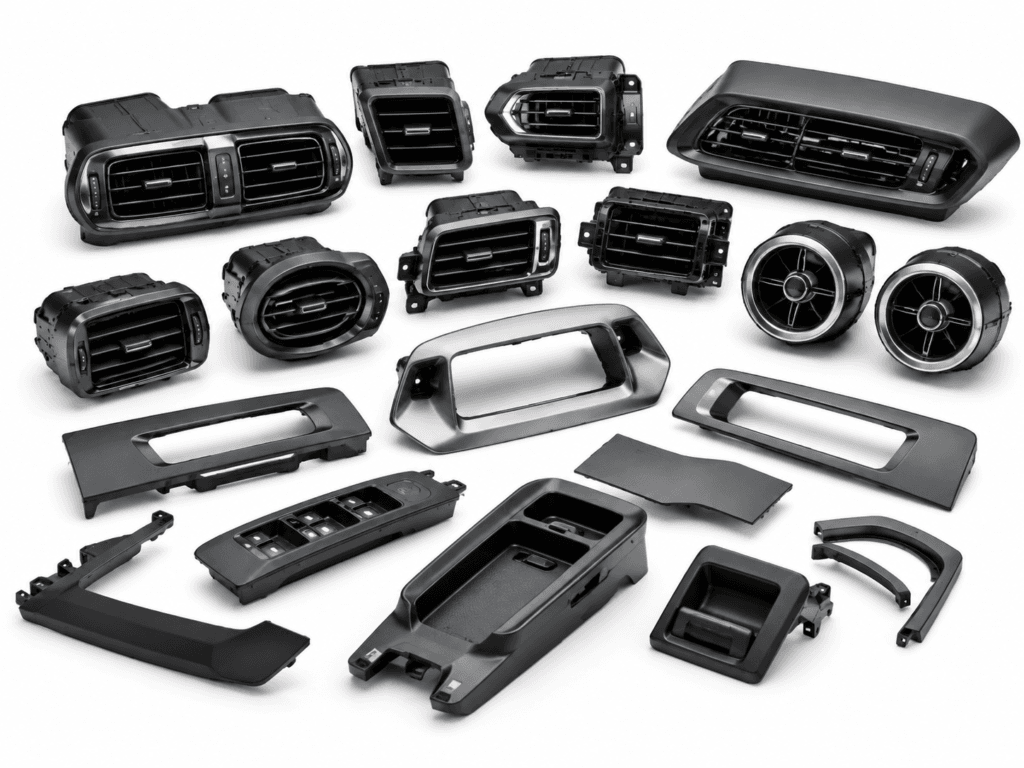
Fahrzeuginnenräume enthalten eine große Anzahl von Spritzgussteilen, da das Verfahren komplexe Formen mit hervorragender Wiederholgenauigkeit und Oberflächenqualität ermöglichen kann.
Häufige Anwendungsbereiche sind:
- Dashboard-Komponenten
- Mittelkonsolen
- Türverkleidungskonstruktionen
- Lüftungsdüsen der Klimaanlage
- Schalttafelgehäuse
- Getränkehalter
- Komponenten zur Sitzverstellung
- Staufächer
- Schaltergehäuse
Bei Innenausstattungskomponenten müssen Optik, Formstabilität, Haptik, mechanische Festigkeit und Kosten in Einklang gebracht werden.
Je nach Anwendungsbereich kommen Materialien wie ABS, PC/ABS, PP und modifizierte technische Kunststoffe häufig in Betracht.
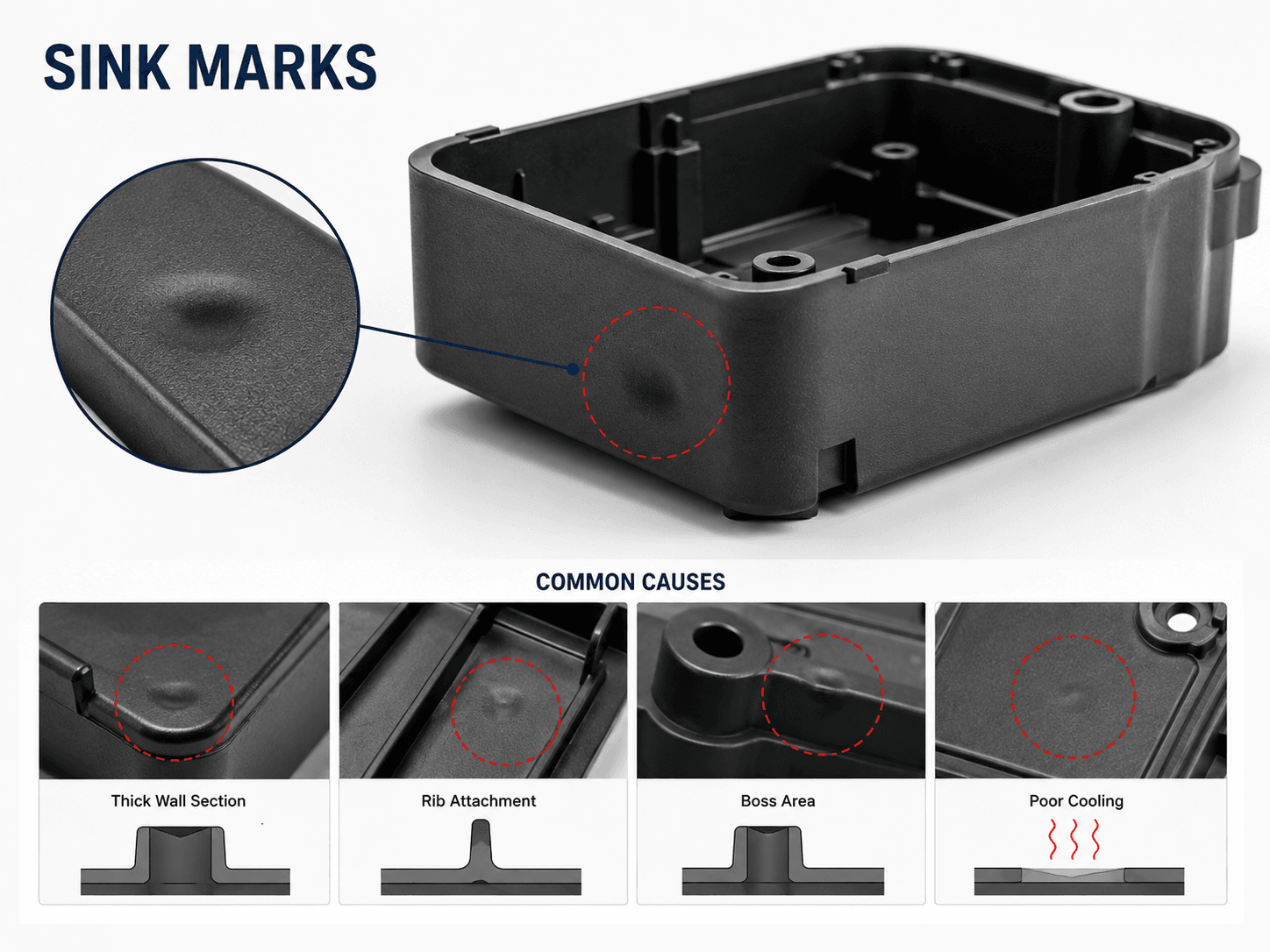
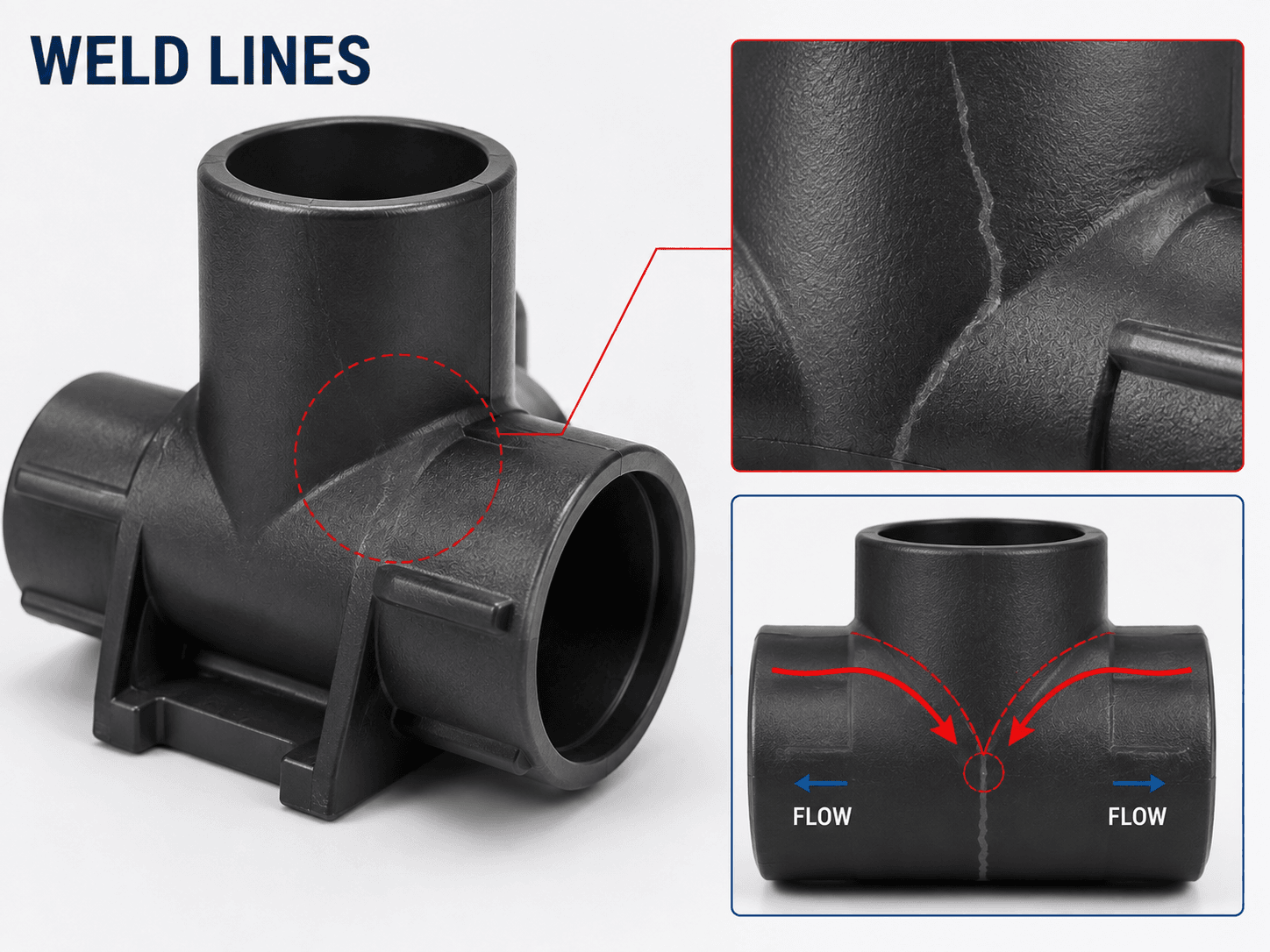
Für sichtbare Klasse-A-Oberflächen sind die Werkzeugtextur und die Verarbeitungsbedingungen besonders wichtig. Bindenähte, Fließlinien, Einfallstellen, Glanzgradschwankungen oder Verzug können die wahrgenommene Fahrzeugqualität direkt beeinträchtigen.
Beispiele für Materialien im Fahrzeuginnenraum
| Komponente | Typische Anforderung | Mögliches Material |
|---|---|---|
| Armaturenbrettgehäuse | Optik + Schlagfestigkeit | PC/ABS |
| Aufbau der Türverkleidung | Leichtigkeit + Robustheit | PP |
| Entlüftungsöffnung | Maßhaltigkeit | ABS |
| Schaltergehäuse | Präzision + Optik | PC/ABS |
| Konsolenkomponente | Oberflächenqualität | ABS / PC+ABS |
2. Kunststoffteile für den Automobil-Außenbereich
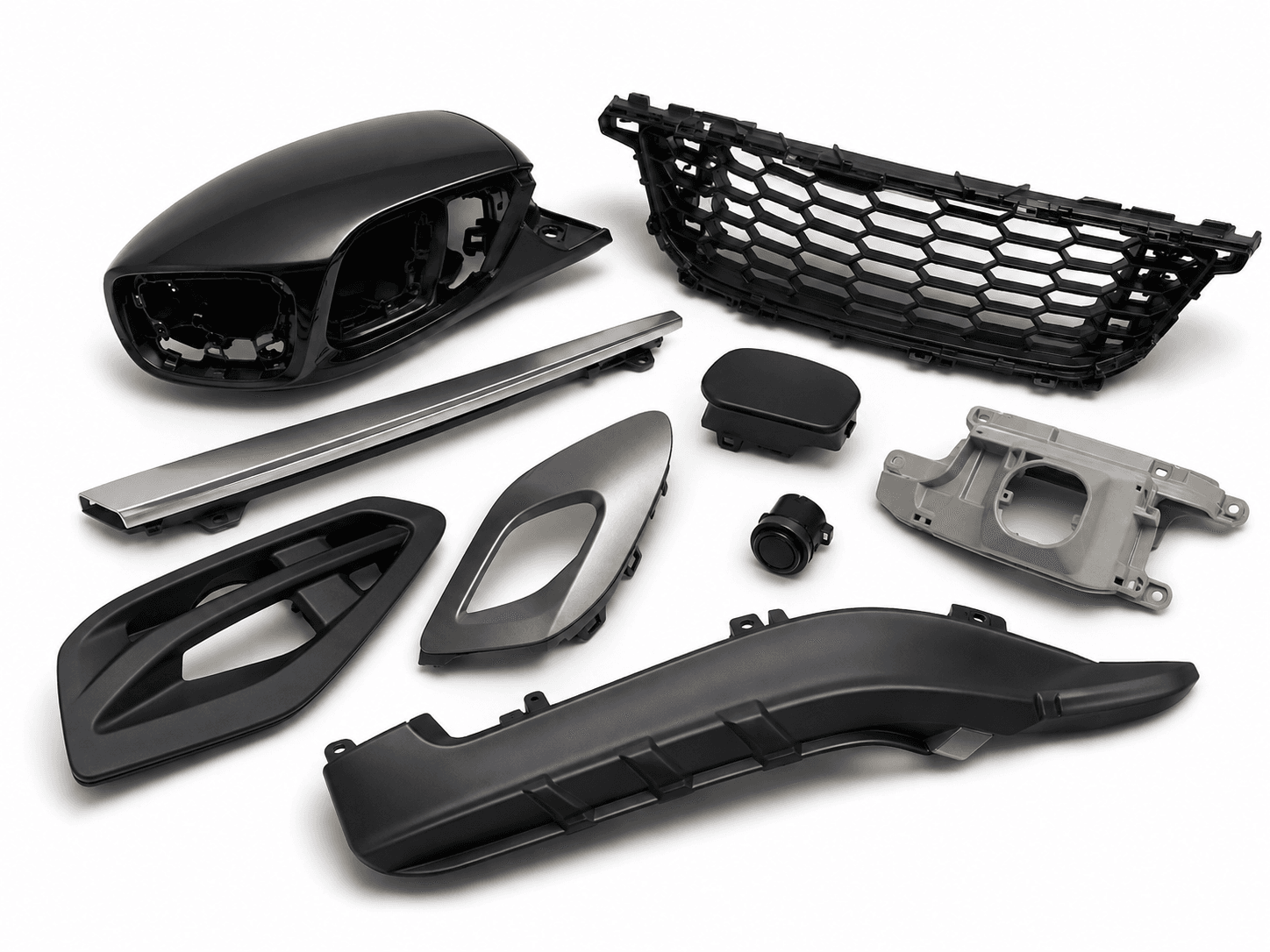
Kfz-Außenbauteile müssen Sonnenlicht, Regen, Verschmutzungen durch den Straßenverkehr, Temperaturschwankungen, Vibrationen und mechanischen Stößen standhalten.
Das Spritzgießen wird für Produkte wie beispielsweise folgende verwendet:
- Außenverkleidung
- Spiegelgehäuse
- Kühlergrillkomponenten
- Sensorabdeckungen
- Radlaufkomponenten
- Schutzhüllen
- Leuchtengehäuse
- Dekorative Außenteile
UV-Beständigkeit und Formstabilität gewinnen dabei besonders an Bedeutung.
Je nach den mechanischen und optischen Anforderungen können ASA, PC/ASA, PP-basierte Werkstoffe, verstärkte technische Kunststoffe und andere witterungsbeständige Typen ausgewählt werden.
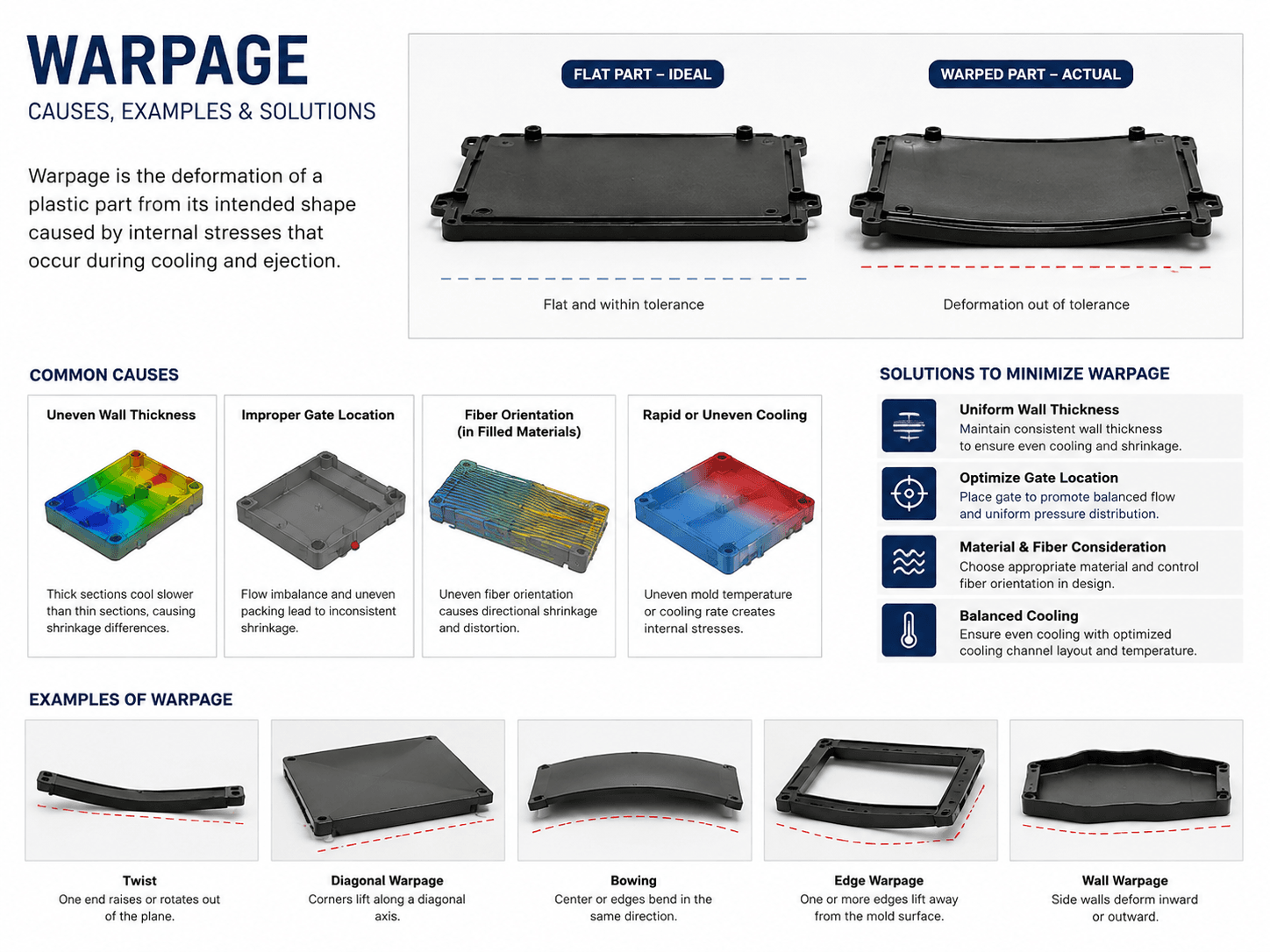
Auch bei großen Bauteilen für den Außenbereich ist eine sorgfältige Verformungskontrolle erforderlich. Ungleichmäßige Wandstärken, ungünstig platzierte Angüsse oder eine unausgewogene Kühlung können nach dem Spritzgießen zu sichtbaren Verformungen führen.
3. Spritzgussteile im Motorraum
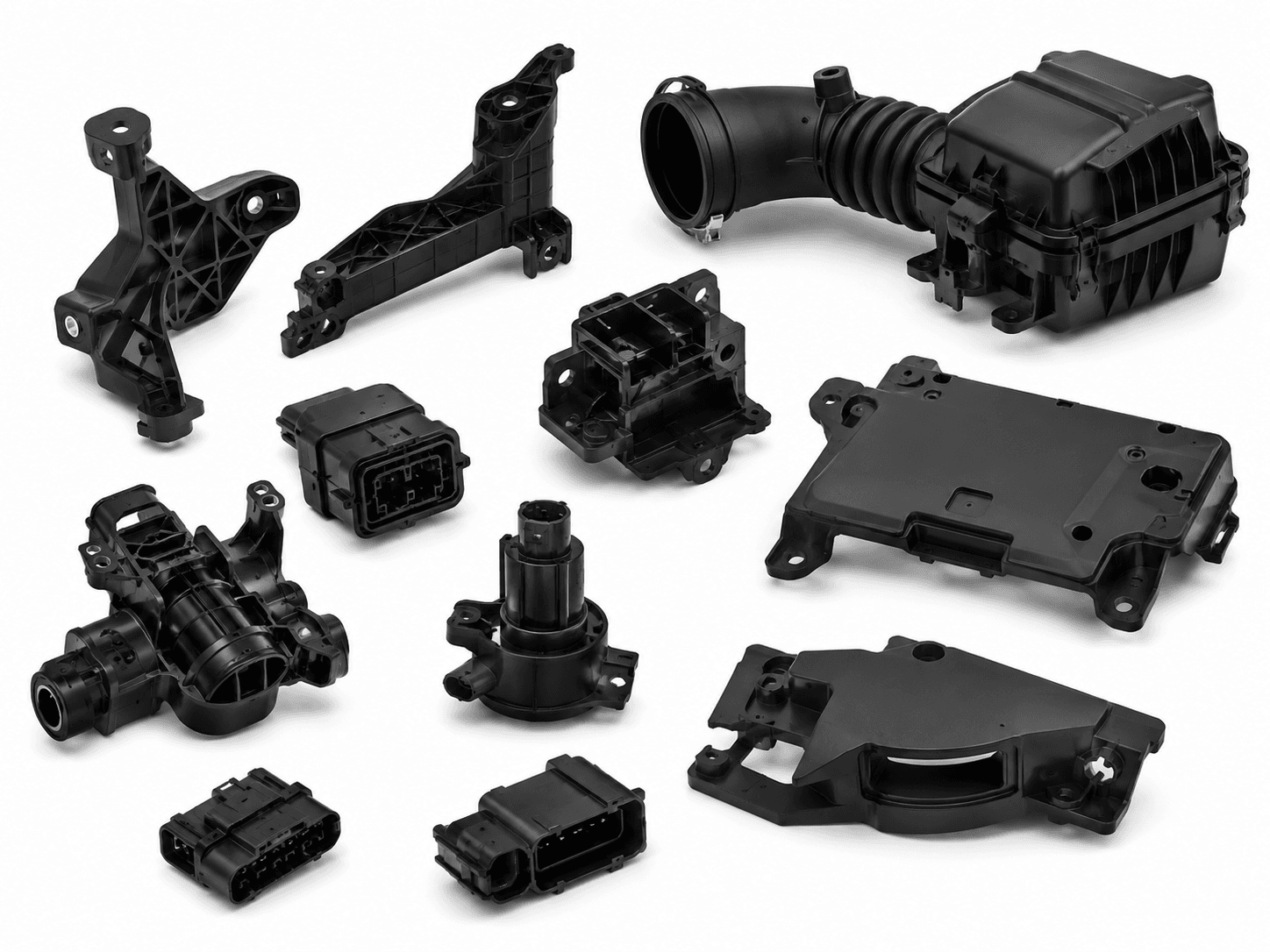
Der Motorraum ist eine der anspruchsvollsten Umgebungen für Kunststoffkomponenten.
Teile können ausgesetzt sein gegenüber:
- Erhöhte Temperaturen
- Öl
- Kühlmittel
- Kraftstoffdämpfe
- Mechanische Schwingung
- Wiederholte thermische Zyklen
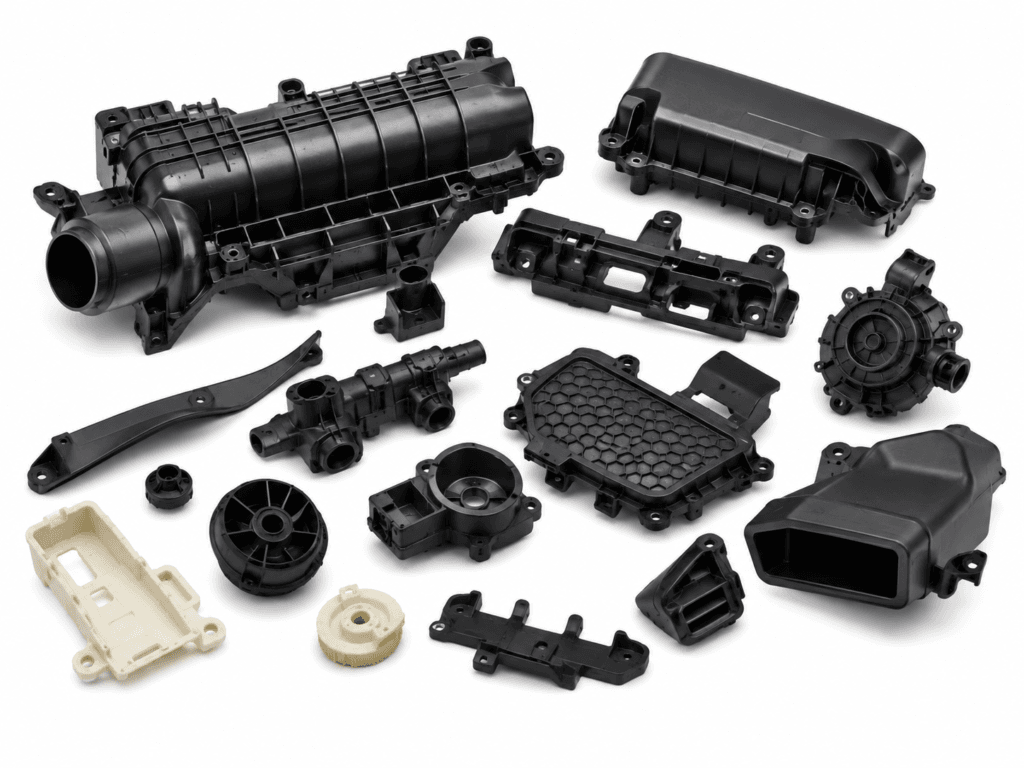
Typische Formteile umfassen:
- Luftansaugteile
- Elektrogehäuse
- Lüfterkomponenten
- Fluidsystem-Verbinder
- Kabelclips
- Sensorgehäuser
- Schutzhüllen
Technische Kunststoffe wie beispielsweise PA66-GF, PBT, PS, und Hochtemperaturpolymere können erforderlich sein.
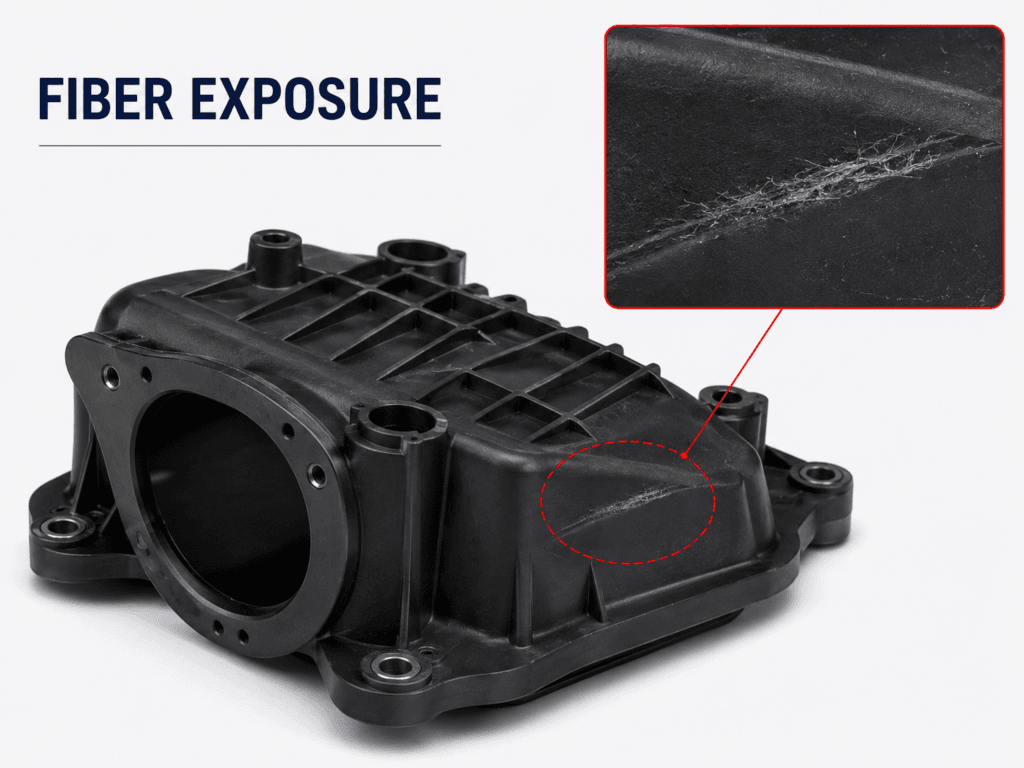
Glasfaserverstärkung kann die Steifigkeit und Hitzebeständigkeit erhöhen, aber sie kann auch anisotrope Schwindung und Herausforderungen bei der Oberflächenqualität mit sich bringen. Formgestaltung und Angusstyp bzw. Angusslage werden daher besonders wichtig.
Materialvergleich für den Motorraum
| Material | Großer Vorteil | Typische Verwendung |
| PA66-GF | Hitzebeständigkeit und Festigkeit | Strukturbauteile |
| PBT | Elektrische Eigenschaften | Steckverbinder |
| PS | Hochtemperaturverhalten | Thermische und elektrische Anwendungen |
| PP modifiziert | Chemische Beständigkeit | Abdeckungen |
| PC/ABS | Auswirkungsleistung | Geschützte Elektronikgehäuse |
4. Elektrische und elektronische Komponenten in Kraftfahrzeugen
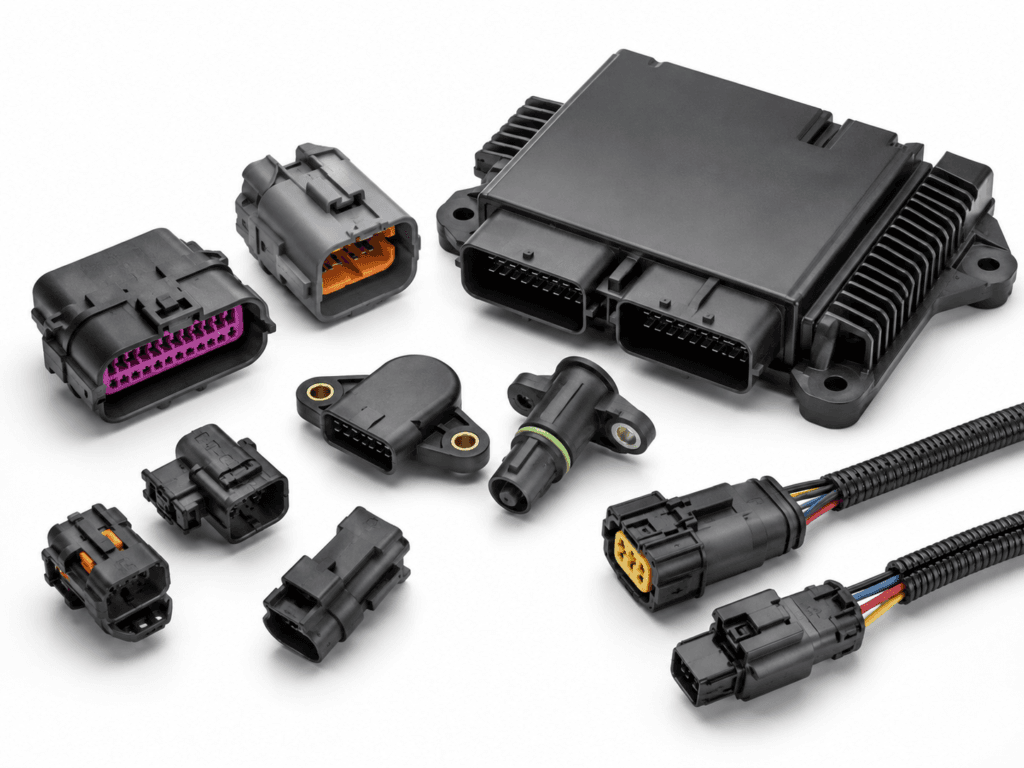
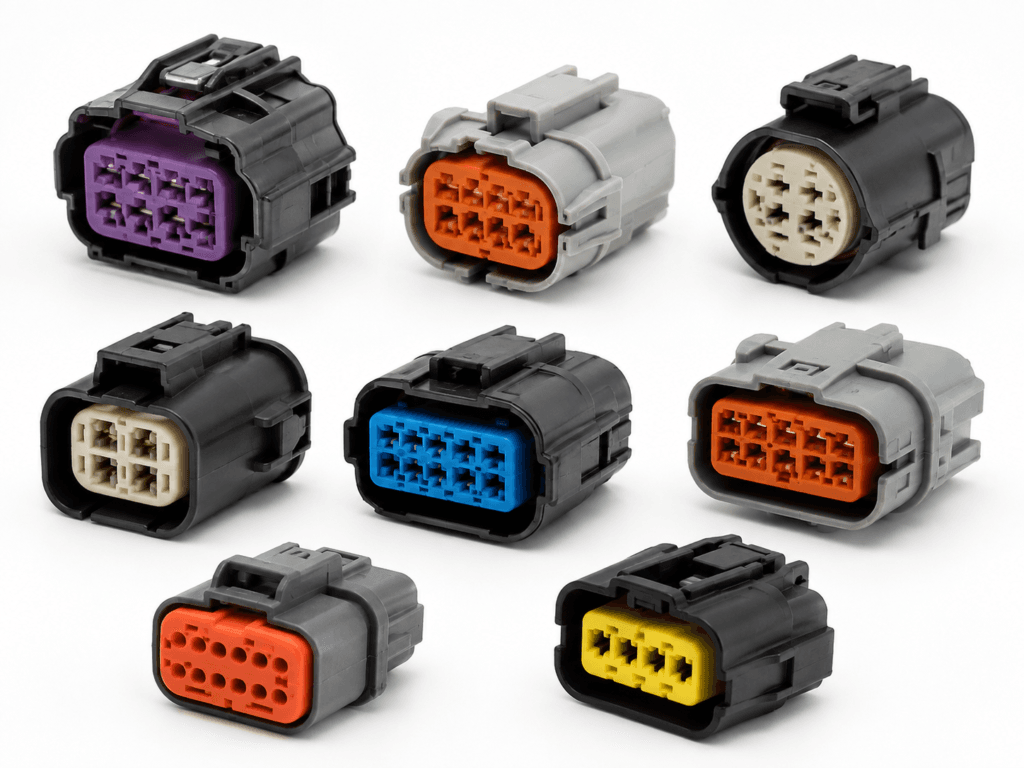
Moderne Fahrzeuge enthalten zunehmend komplexe elektronische Systeme. Fortschrittliche Fahrerassistenzsysteme, Sensoren, Kameras, Steuergeräte, Infotainment-Ausstattung und die Fahrzeugvernetzung sind alle auf präzisionsgegossene Kunststoffteile angewiesen.
Typische Anwendungen umfassen:
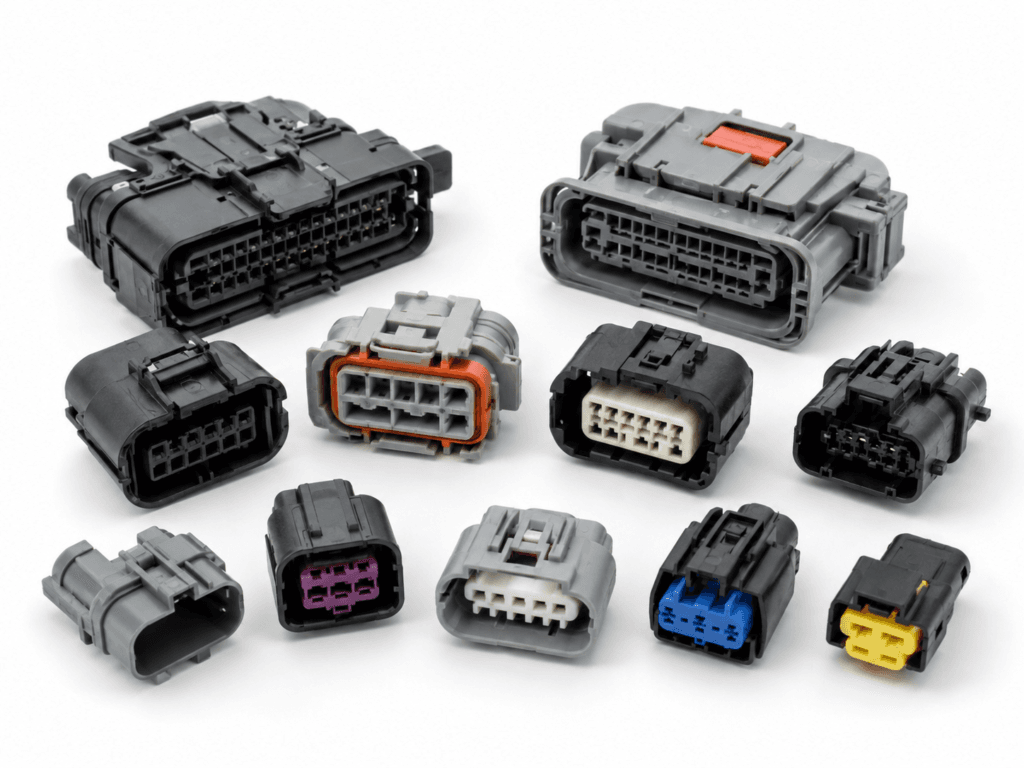
- Steckergehäuse
- ECU-Gehäuse
- Sensorgehäuser
- Kamerahalterungen
- Sicherungskasten-Komponenten
- Schaltergehäuse
- Kabelmanagement-Komponenten
Diese Teile erfordern oft enge Toleranzen und stabile Abmessungen, da kleine Abweichungen elektrische Schnittstellen und die Montage beeinträchtigen können.
Für elektrische Anwendungen können die Materialeigenschaften umfassen:
- Elektrische Isolierung
- Flammenschutzeigenschaft
- Hitzebeständigkeit
- Maßhaltigkeit
- Geringe Feuchtigkeitsempfindlichkeit
PBT und technische Polyamide werden häufig für Steckverbinder in Betracht gezogen, während PC/ABS und andere flammhemmende Materialien für Elektronikgehäuse verwendet werden können.
5. Spritzgegossene Bauteile für Elektrofahrzeuge
Elektrofahrzeuge schaffen zusätzliche Möglichkeiten für das Kunststoffspritzgießen.
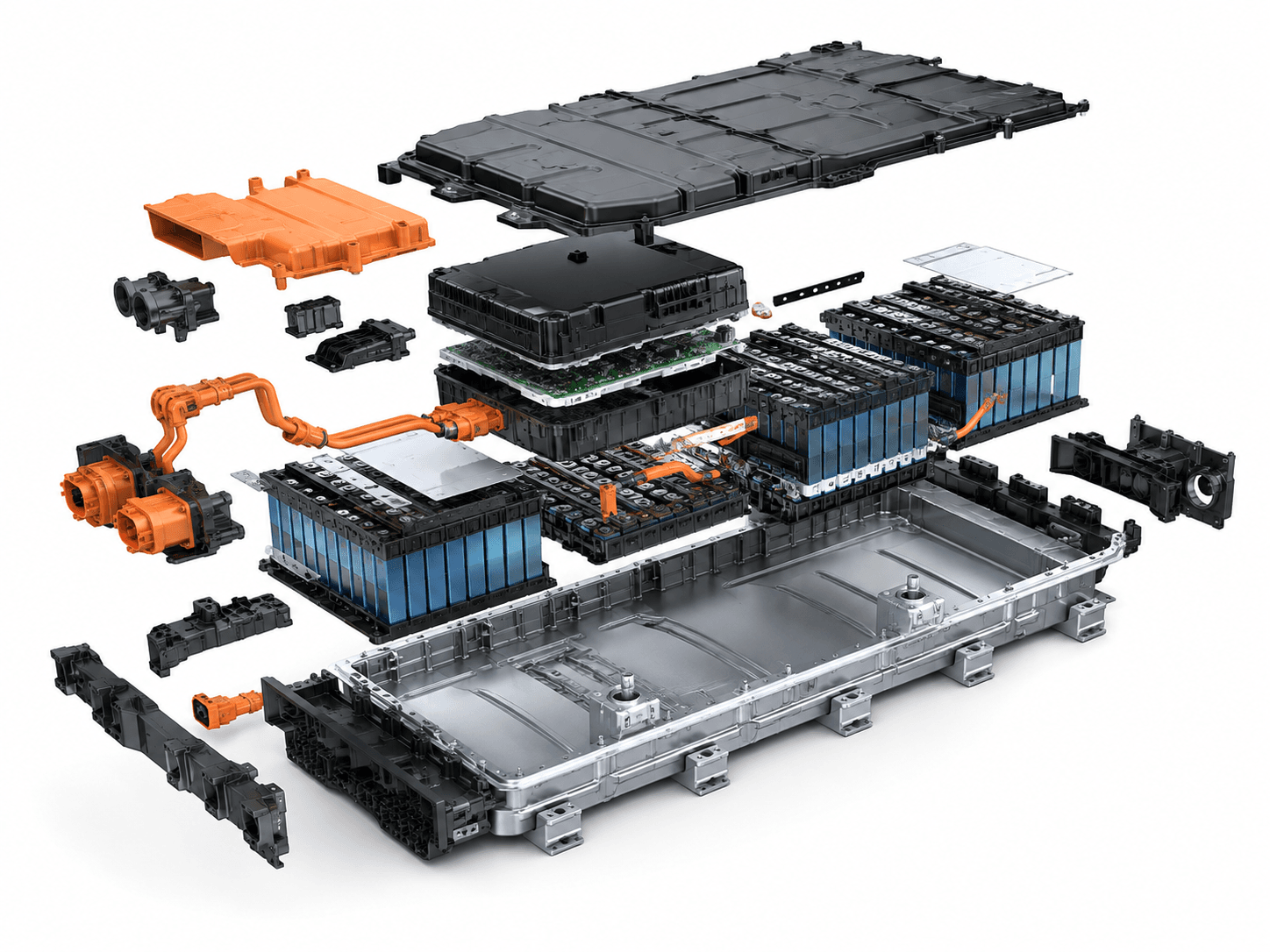
Während für Batteriezellen und strukturelle Batteriegehäuse möglicherweise Metall verwendet wird, kommen bei vielen umgebenden Bauteilen technische Kunststoffe zum Einsatz.
Beispiele hierfür sind:
- Hochspannungs-Steckverbindergehäuse
- Batterieschutzabdeckungen
- Zellhalter
- BMS-Gehäuse
- Ladeverbinder-Komponenten
- Isoliersperren
- Kabelverlegungskomponenten
- Elektrische Schutzabdeckungen
Gewichtsreduzierung ist besonders bei Elektrofahrzeugen von Wert, da jedes Kilogramm die Fahrzeugeffizienz beeinflussen kann.
Gleichzeitig wird die elektrische Sicherheit kritischer. Materialien müssen möglicherweise Flammschutz, elektrische Isolierung, Hitzestabilität und Maßhaltigkeit bieten.
EV-Automobilkunststoffteile
| Komponente | Hauptanforderung | Mögliches Material |
| HV-Steckverbinder | Isolierung + Präzision | PBT FR |
| Batteriedeckel | Schlagfestigkeit + Flammwidrigkeit | PC/ABS FR |
| Zellhalter | Stärke | PA66-GF |
| BMS Wohnungsbau | Elektrischer Schutz | PC/ABS |
| Ladekomponente | Witterungsbeständigkeit + Wärmedämmung | PCASA |
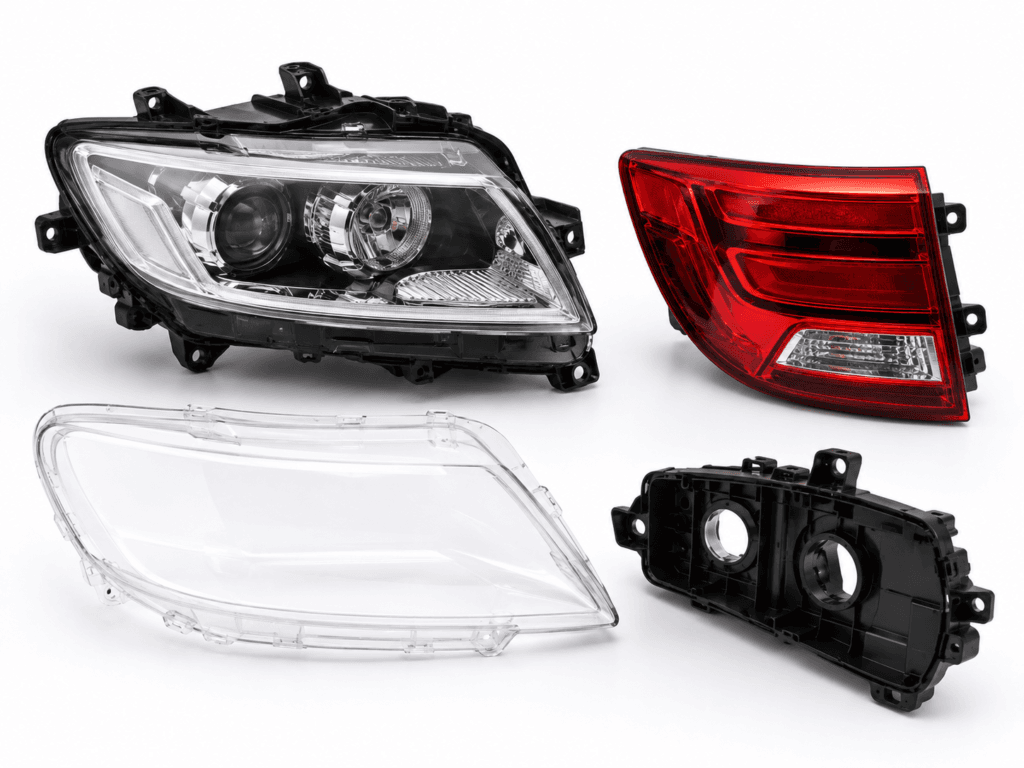
6. Automobilbeleuchtungskomponenten
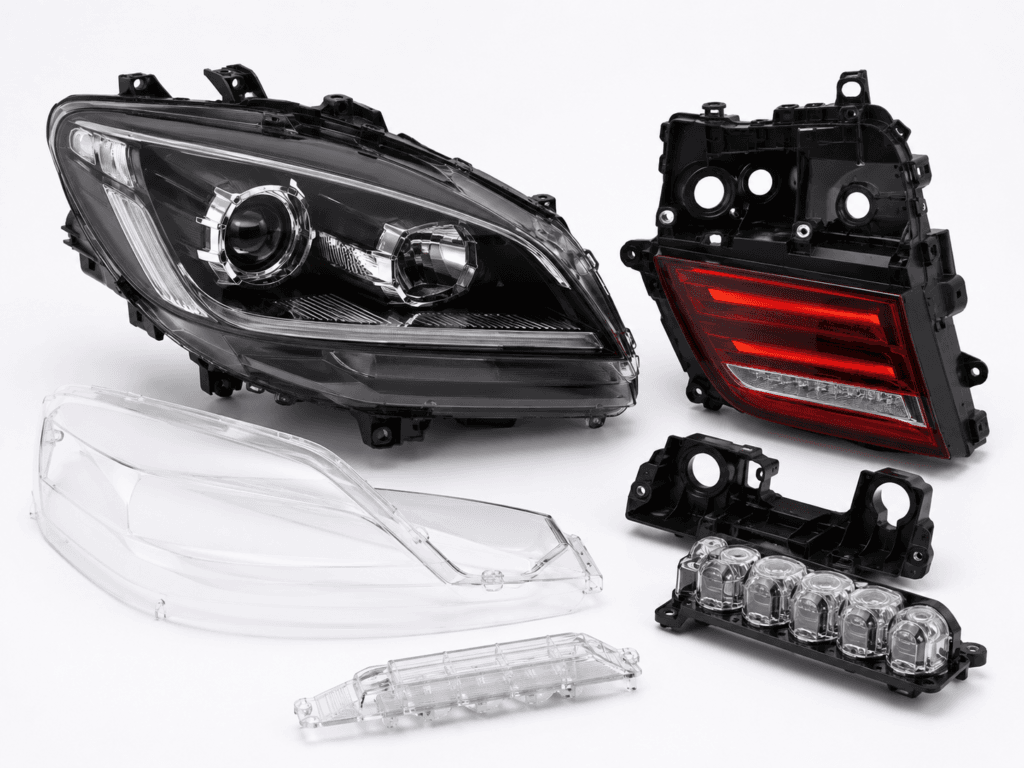
Automotive-Beleuchtungssysteme vereinen Design, optische Leistung, Wärmemanagement und Maßhaltigkeit.
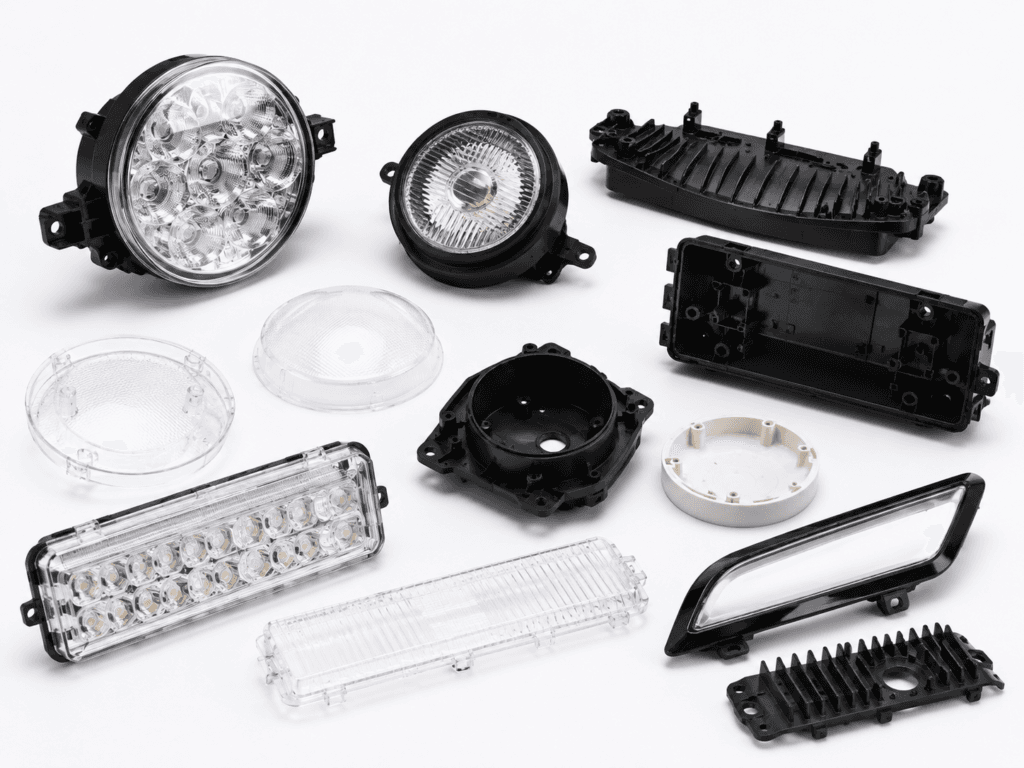
Spritzgussteile können umfassen:
- Scheinwerfergehäuse
- Rückleuchtengehäuse
- Reflektorstrukturen
- LED-Modulabdeckungen
- Anschlussschnittstellen
- Montagewinkel
PC wird aufgrund seiner Schlagfestigkeit und seiner optischen Eigenschaften häufig mit transparenten Automobilbeleuchtungsanwendungen in Verbindung gebracht, während andere technische Kunststoffe für strukturelle Gehäuse verwendet werden können.
Die Formoberfläche, Entlüftung, Temperierung und Materialaufbereitung sind besonders wichtig, wenn es auf die optische Beschaffenheit ankommt.
7. Wichtigste Materialien im Automobil-Spritzguss
Automobilkunststoffe werden entsprechend mechanischen, thermischen, elektrischen, optischen und umweltbezogenen Anforderungen ausgewählt.
| Material | Haupteigenschaften | Gängige Automobilanwendungen |
| PP | Leicht, chemikalienbeständig | Innenausstattung |
| ABS | Aussehen, Verarbeitbarkeit | Innenausstattungskomponenten |
| PC/ABS | Schlagfestigkeit + Formbeständigkeit | Armaturenbretter, Gehäuse |
| PA66-GF | Festigkeit + Hitzebeständigkeit | Teile im Motorraum |
| PBT | Elektrische Eigenschaften | Steckverbinder |
| POM | Verschleißfestigkeit | Zahnräder und Mechanismen |
| PC | Auswirkung und Transparenz | Beleuchtungskomponenten |
| ASA | UV-Beständigkeit | Äußere Teile |
| PS | Hochtemperaturbeständigkeit | Hochentwickelte elektrische Bauteile |
Die Materialauswahl sollte sich immer am fertigen Bauteil orientieren und nicht nur am Datenblatt des Harzes.
Wandstärke, Bindenähte, Faserorientierung, Feuchtigkeitsaufnahme, Chemikalienbeständigkeit, Betriebstemperatur und die erwartete Lebensdauer können die Leistung unter realen Bedingungen beeinflussen.
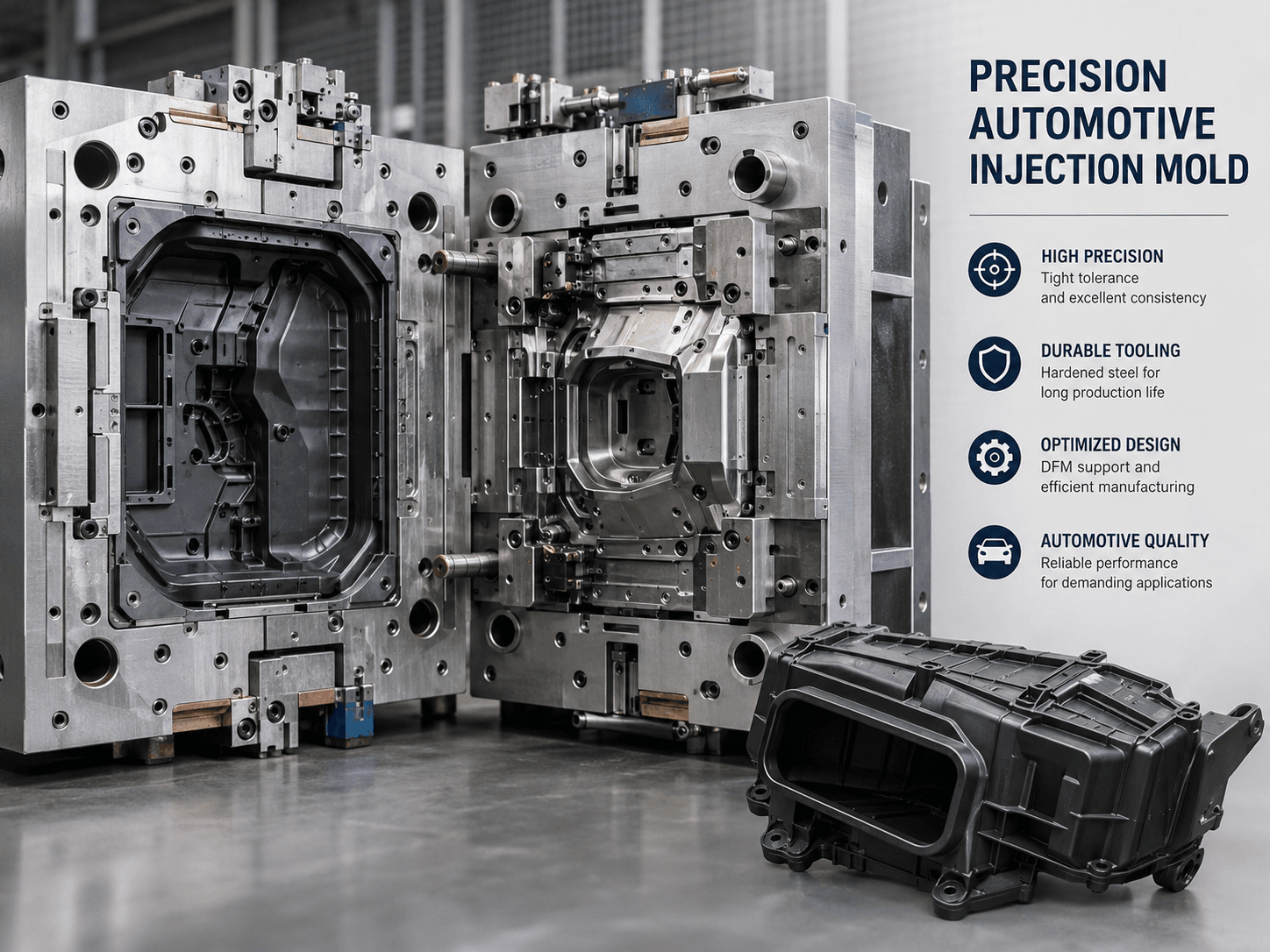
8. Konstruktion von Automobil-Spritzgusswerkzeugen
Automobilformen müssen bei langen Produktionsläufen eine wiederholbare Maßhaltigkeit gewährleisten.
Wichtige Bereiche der Werkzeug- und Formenbau-Technik umfassen:
Tor-Design
Die Anguss-Position beeinflusst die Füllbalance, die Lage von Bindehtnähten, den Nachdruck und das äußere Erscheinungsbild.
Kühlsystem
Eine gleichmäßige Kühlung trägt dazu bei, die Zykluszeit zu steuern und den Verzug zu verringern.
Auslassen
Ordnungsgemäße Entlüftung verhindert eingeschlossenes Gas, unvollständige Füllungen, Brandflecken und schlechte Oberflächenqualität.
Schieber und Heber
Automobilteile enthalten häufig Querlöcher, Rastnasen, Klips und andere Unterschnitte, die Schiebermechanismen erfordern.
Formoberfläche
Texturen, polierte Oberflächen und Maserungsmuster müssen in der Produktion konsistent reproduziert werden.
Für komplexe Automobilteile kann die Moldflow-Simulation dabei helfen, das Füllverhalten, Bindenähte, den Druck, die Kühlung, den Schwind und eine mögliche Verformung vor dem Formenbau vorherzusagen.
9. Häufige Fehler beim Spritzgießen von Automobilteilen
Automotive Qualitätsanforderungen machen Fehlervermeidung essenziell.
| Defekt | Mögliche Ursache | Technische Lösung |
| Verzug | Unzureichende Kühlung | Kühllayout optimieren |
| Einfallstellen | Dicke lokale Schnitte | Wandstärke verbessern |
| Bindefürze | Schlechtes Strömungsmuster | Torposition optimieren |
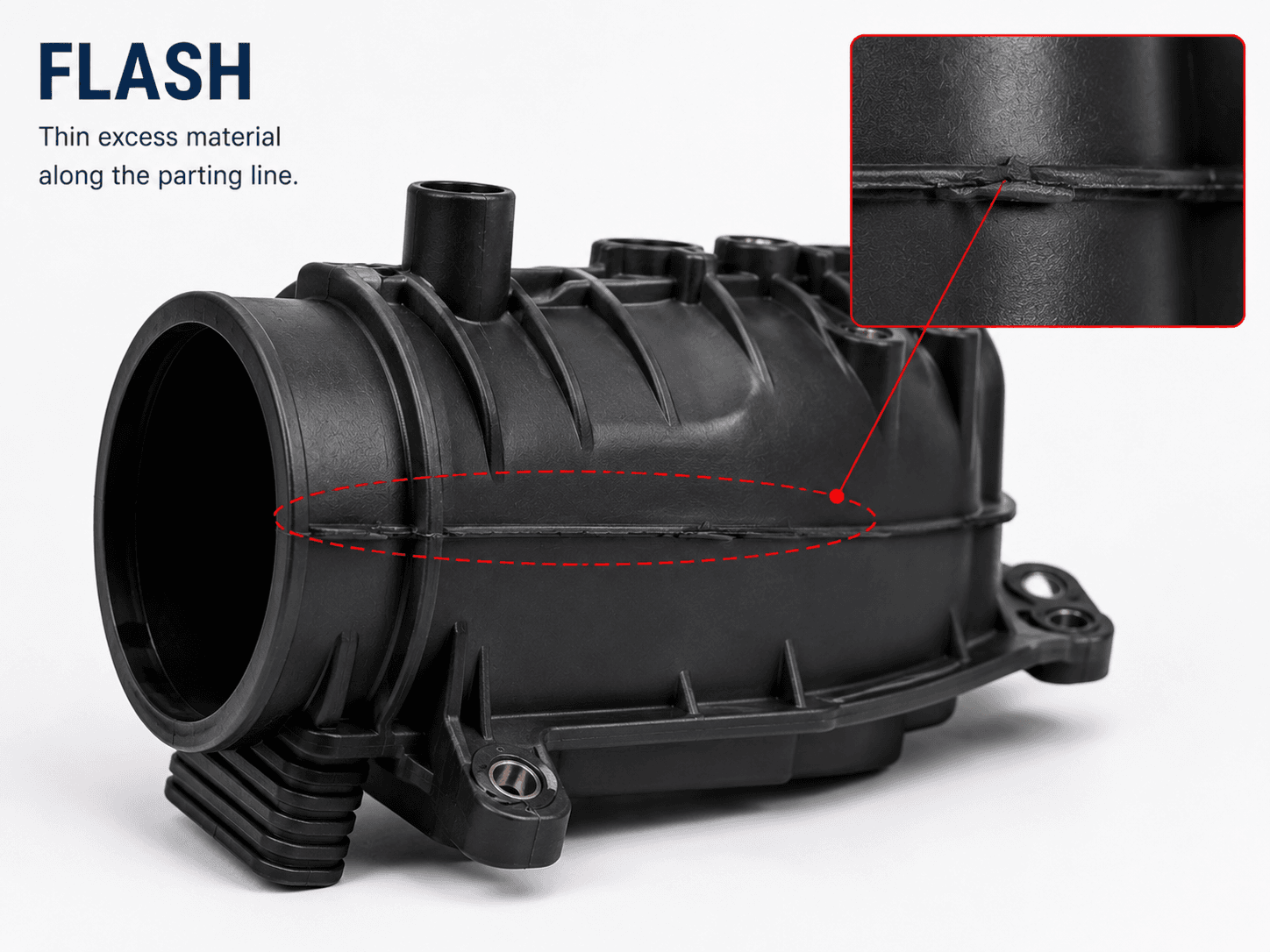
| Blitz | Formverschleiß oder übermäßiger Druck | Formpassform verbessern |
| Kurzer Schuss | Eingeschränkter Fluss | Tor/Prozess anpassen |
| Faserbelastung | Verstärktes Material / Prozessbedingungen | Form und Parameter optimieren |
| Dimensionsvariation | Schwindung/Prozessinstabilität | Prozesssteuerung verbessern |
Eine frühe DFM-Prüfung hilft dabei, viele dieser Probleme zu erkennen, bevor der Werkzeugbau beginnt.
10. Automobil-Qualitätskontrolle
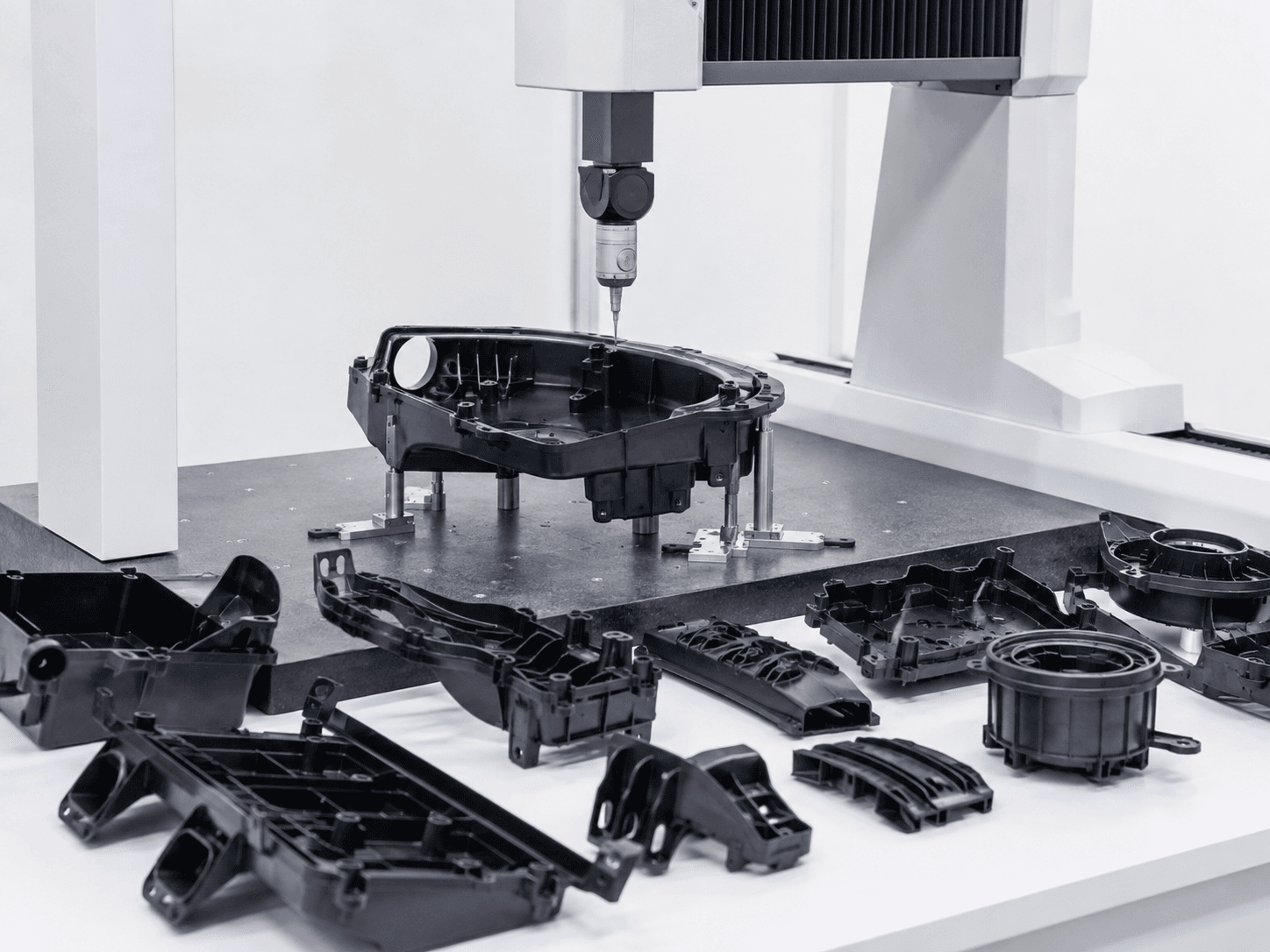
Automobilteile erfordern typischerweise eine strenge Prüfung und Produktionsrückverfolgbarkeit.
Gängige Methoden umfassen:
- KMG-Dimensionsprüfung
- Optische Messung
- Grenzlehren
- Montagevorrichtungen
- Materialprüfung
- Schlagprüfung
- Thermisches Altern
- Umweltprüfung
- Funktionstests
Die statistische Prozessregelung kann auch zur Überwachung kritischer Maße während der Produktion eingesetzt werden.
Je nach Projekt arbeiten Automobilzulieferer möglicherweise nach Qualitätsmanagementsystemen wie IATF 16949 und kundenspezifischen Anforderungen.
Warum Samgo für das Spritzgießen in der Automobilindustrie wählen?
Das Spritzgießen in der Automobilindustrie erfordert eine enge Abstimmung zwischen Produktentwicklung, Werkzeugbau, Materialauswahl und Produktion.
Samgo unterstützt Automobilprojekte von der Designbewertung über den Formenbau bis hin zur Massenproduktion.
| Fähigkeit | Kundennutzen |
| Produktdesign Bewertung | Herstellbarkeit verbessern |
| DFM-Analyse | Risiken vor der Werkzeugbeschaffung identifizieren |
| Moldflow-Simulation | Füllung und Verzug optimieren |
| Präzisionswerkzeuge | Konstante Maßhaltigkeit |
| Spritzgießen | Wiederholbare Produktion |
| Qualitätsprüfung | Kritische Spezifikationen überprüfen |
| Montageunterstützung | Lieferkette vereinfachen |
Anwendungen können Innenraumkomponenten, Außenverkleidungen, Steckverbinder, Beleuchtungsprodukte, Teile für den Motorraum, EV-Batteriekomponenten und andere kundenspezifische Automobil-Kunststoffteile umfassen.
Häufig gestellte Fragen
Welche Kunststoffe werden beim Automobil-Spritzguss am häufigsten verwendet?
PP, ABS, PC/ABS, PA66-GF, PBT, POM, PC, ASA und PPS werden je nach Anwendung häufig eingesetzt.
Warum werden Kunststoffe in Elektrofahrzeugen zunehmend eingesetzt?
Technische Kunststoffe können das Gewicht reduzieren, elektrische Isolierung bieten, Korrosion widerstehen und komplexe Funktionen in weniger Komponenten integrieren.
Was ist beim Spritzgießen von Automobil-Steckverbindergehäusen wichtig?
Maßhaltigkeit, elektrische Eigenschaften, Materialstabilität, Formgenauigkeit und eine zuverlässige Prozesskontrolle sind besonders wichtig.
Warum ist Moldflow für Automobilteile nützlich?
Automobilteile haben oft komplexe Geometrien und strenge Maßanforderungen. Simulationen können dabei helfen, Füllvorgänge, Bindenähte, Abkühlung, Schwindung und Verzug vorherzusagen, bevor Werkzeuge hergestellt werden.
Fazit
Spritzgießen ist für die moderne Automobilfertigung von wesentlicher Bedeutung. Innenverkleidungen, Außengehäuse, Steckverbinder, Komponenten unter der Motorhaube, Beleuchtungssysteme und Teile für Elektrofahrzeugbatterien profitieren gleichermaßen von der leichten Bauweise, den komplexen Geometrien und der hohen Volumeneffizienz von Kunststoffformteilen.
Automotive Bauteile müssen jedoch anspruchsvolle Standards hinsichtlich Maßhaltigkeit, Hitzebeständigkeit, Schlagzähigkeit, Aussehen, Umweltbeständigkeit und Langzeitzuverlässigkeit erfüllen.
Die erfolgreiche Fertigung beginnt mit der Auswahl des geeigneten technischen Kunststoffs und der produktgerechten Konstruktion für das Spritzgießen. DFM-Analysen, Moldflow-Simulationen, Präzisionsformenbau, ausgeglichene Kühlung, Prozesskontrolle und strenge Prüfungen helfen anschließend dabei, das Design in ein stabiles Serienbauteil umzusetzen.
Da Fahrzeuge zunehmend elektrifiziert und elektronisch komplexer werden, wird die Bedeutung von Hochleistungs-Spritzgusskunststoffen sowohl bei herkömmlichen als auch bei elektrischen Fahrzeugplattformen weiter zunehmen.
Möchten Sie den aktuellen Preis erfahren? Wir werden so schnell wie möglich (innerhalb von 12 Stunden) antworten.
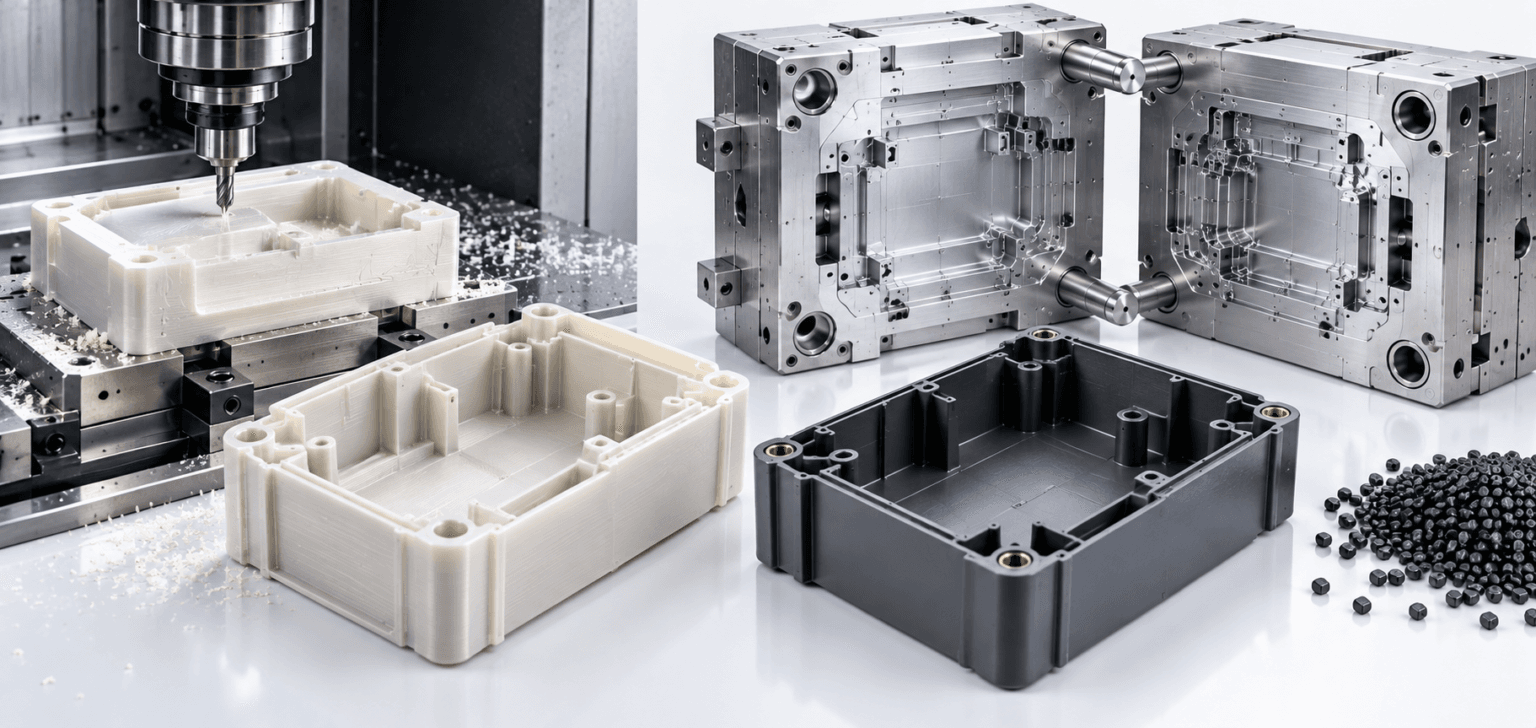

CNC Plastic Prototypes vs. Injection Molded Parts: Key Differences Engineers Should Understand
Compare CNC plastic prototypes and injection molded parts in material properties, dimensions, warpage, surface finish, geometry, cost and production performance.
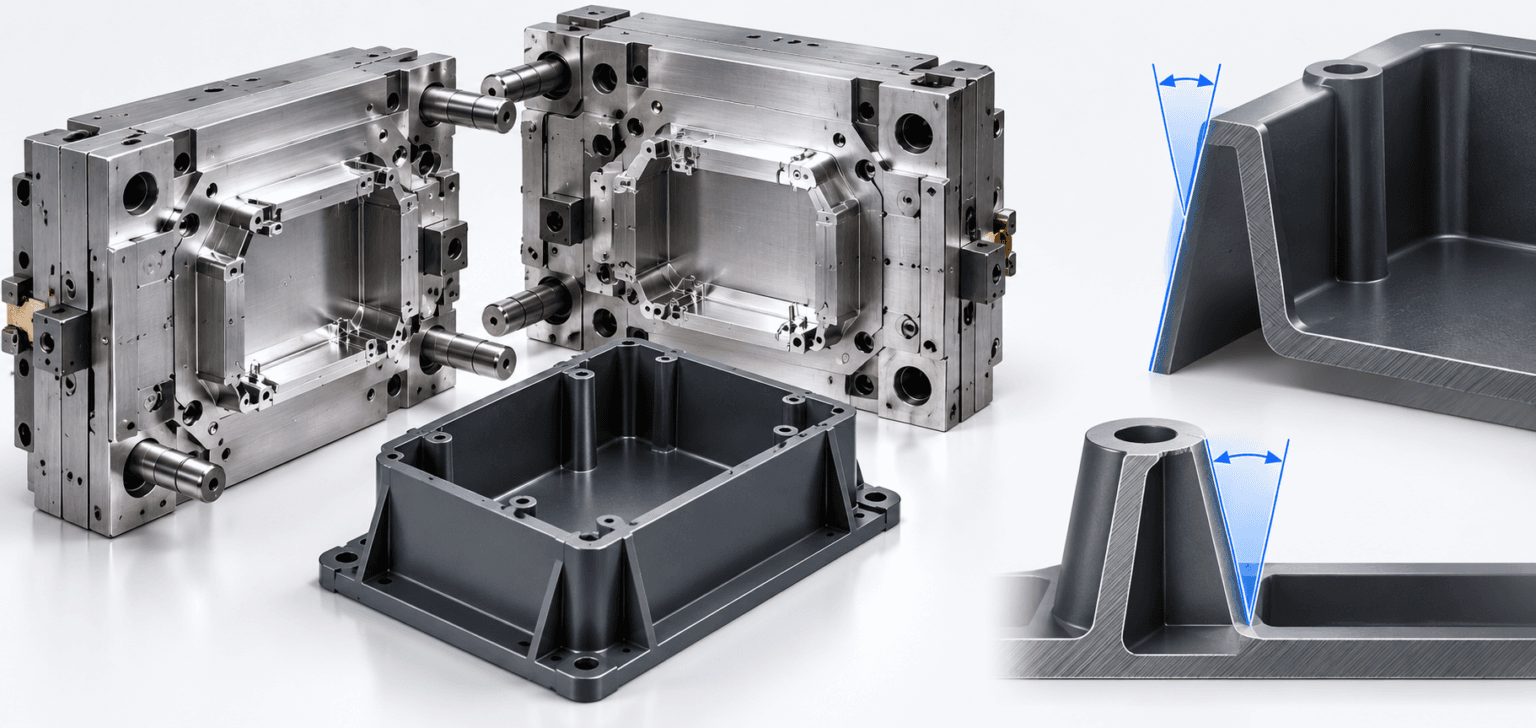
Draft Angle in Injection Mold Design: Improving Part Quality, Ejection and Tooling Efficiency
Discover how draft angles affect injection mold design, part ejection, surface texture, dimensional accuracy, ribs, bosses and long-term tooling performance.
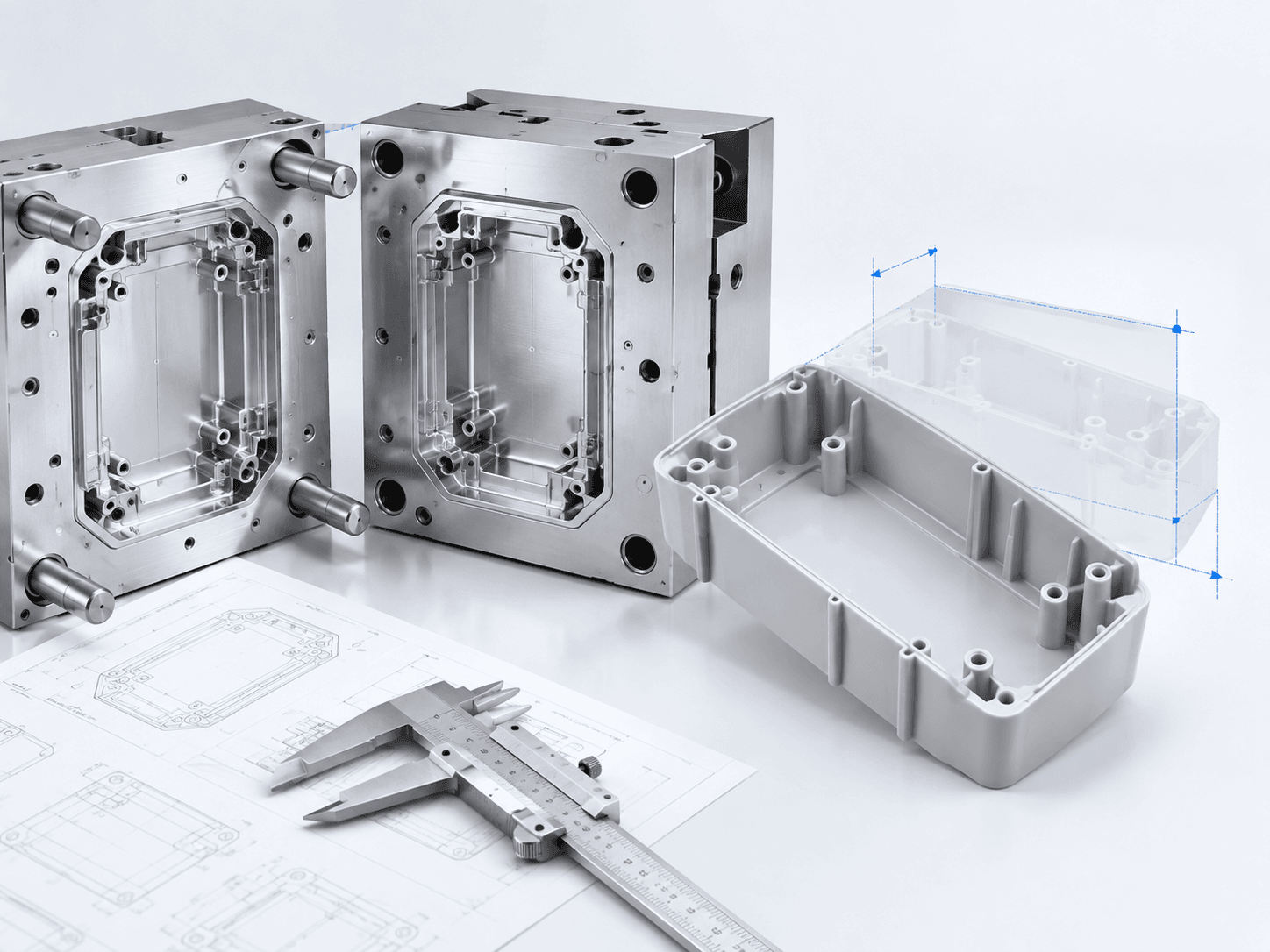
Injection Molding Shrinkage: How to Control Part Dimensions from Mold Design to Production
Learn how injection molding shrinkage affects mold dimensions, tolerances and warpage, and how material, gate design, packing, cooling and mold trials help control final plastic part dimensions.