
ماكينات القولبة بالحقن: التطبيقات، المواد، تصميم القوالب، وحلول التصنيع
مقدمة
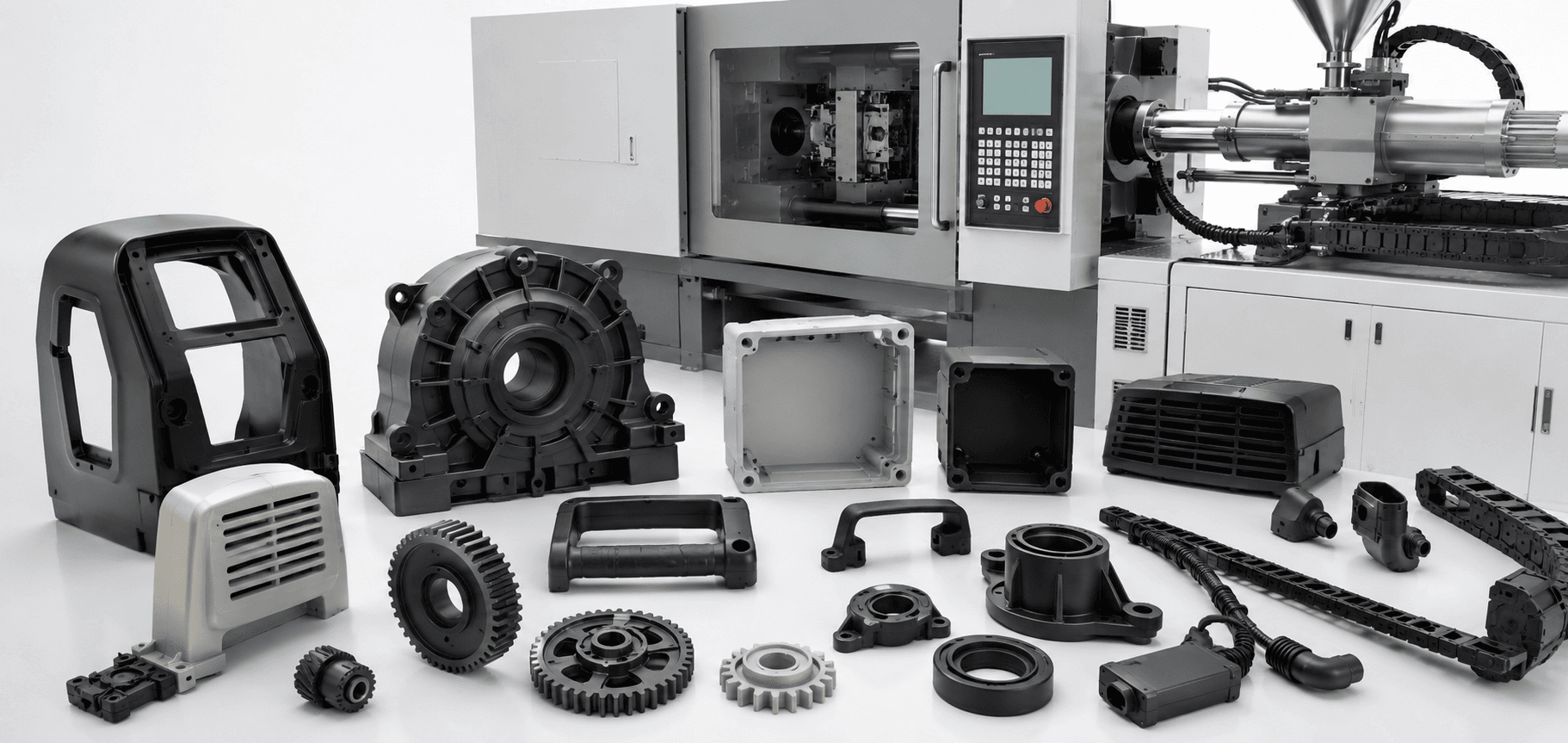
القولبة بالحقن البلاستيكي أصبحت تقنية تصنيع مهمة في قطاع الآلات. تحتوي المعدات الصناعية الحديثة على مكونات بلاستيكية أكثر بكثير من مجرد أغطية تزيينية بسيطة. تُستخدم اللدائن الحرارية الهندسية الآن في صناعة التروس، والمحامل، واقيات الآلات، والأغلفة الكهربائية، والمقابض، وحاويات المستشعرات، ومكونات الناقلات، وأجزاء إدارة الكابلات، ومكونات أنظمة السوائل، والتجمعات الميكانيكية الدقيقة.
لا تقتصر الميزات الرئيسية على انخفاض الوزن فحسب. فالقولبة بالحقن تسمح للمصنعين بدمج الأضلاع، والنتوءات، والمشابك، ومقاعد المحامل، وموجهات الكابلات، ومجاري الإحكام، والأسنان اللولبية، وخصائص التثبيت في مكون واحد. بالنسبة لحجم الإنتاج المرتفع بما يكفي، يمكن أن يقلل هذا من عمليات التشغيل الآلي والتجميع الثانوية مع توفير هندسة قابلة للتكرار بدرجة عالية.
المواد مثل POM و PA66-GF و PBT و PC/ABS،, نظام بي بي إس, وتسمح البوليمرات المتخصصة المقاومة للتآكل للأجزاء البلاستيكية بخدمة تطبيقات ميكانيكية متزايدة المتطلبات. وتحدد شركة "باسف" (BASF)، على سبيل المثال، القولبة بالحقن كطريقة معالجة رئيسية لمادة بولي أوكسي ميثيلين (POM) وتصف تطبيقات تشمل المكونات المجهدة تقنياً مثل المحامل والتروس.
ومع ذلك، تتطلب القولبة بالحقن الآلي الناجحة دراسة متأنية للأحمال، والتآكل، ودرجة الحرارة، والمواد الكيميائية، والتفاوتات الأبعادية، والسلامة، ظروف التشغيل على المدى الطويل.
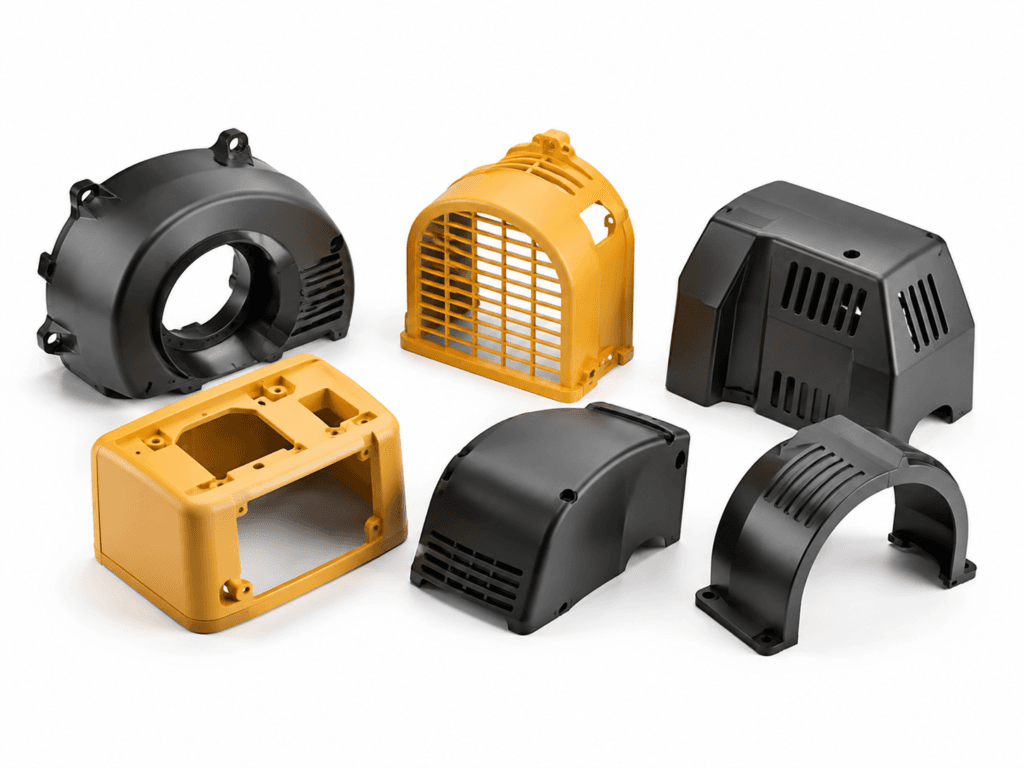
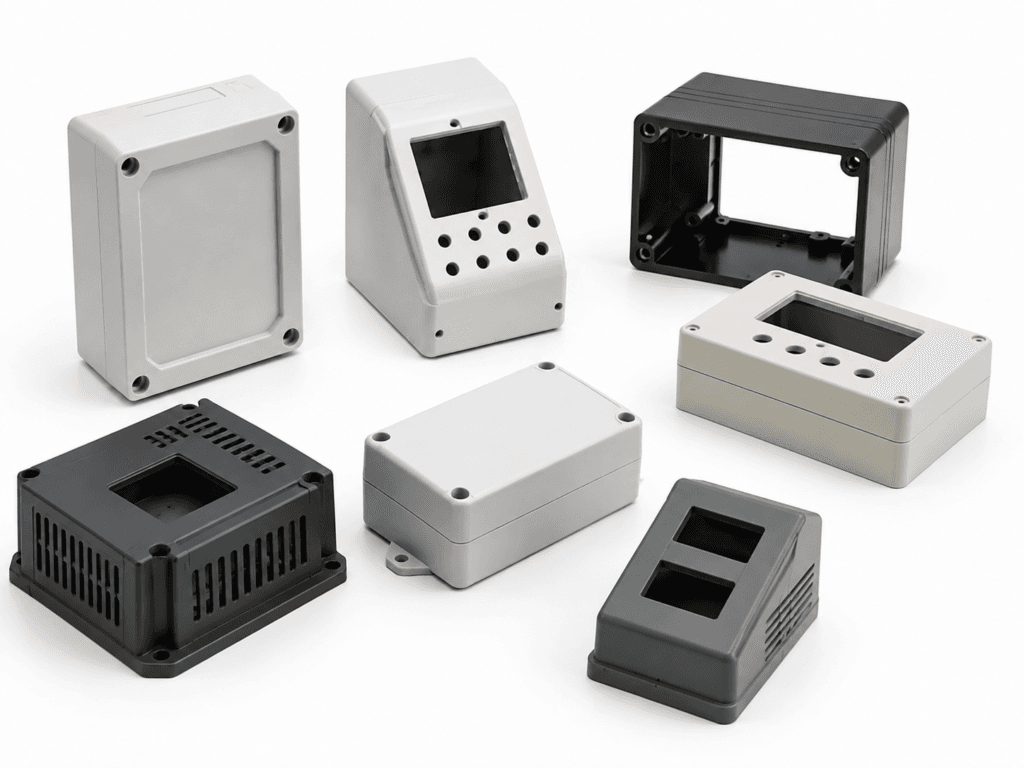
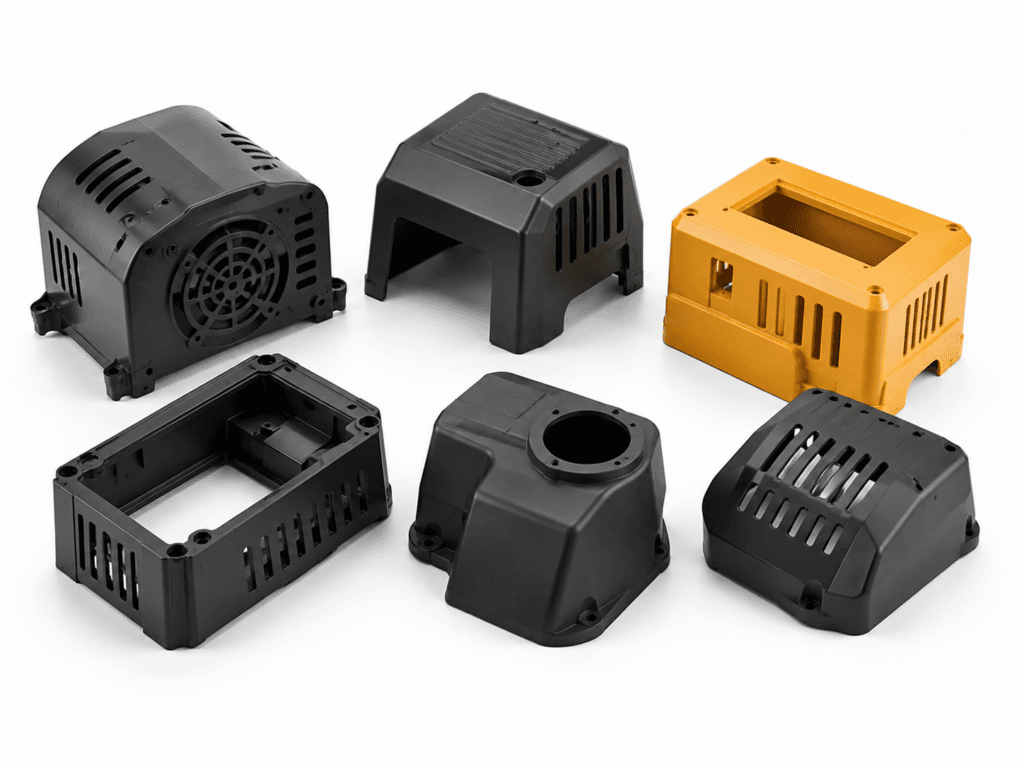
1. واقيات الآلات، والأغطية، والغلاف الواقي
غالبًا ما تتطلب الآلات الصناعية أغطية وواقيات لحماية الآليات الداخلية، والمكونات الكهربائية، والتشغيليين، والمعدات المحيطة.
تشمل المكونات النموذجية المقولبة بالحقن:
- أغطية المحركات
- أغطية حماية علبة التروس
- لوحات التحكم
- أغطية جانب الآلة
- واقيات السيور والبكرات
- أغطية المستشعرات
- علب التوصيل الكهربائي
- أغطية الفحص
مقارنة بالأغطية المصنوعة من الصفائح المعدنية المصنعة، توفر المواد البلاستيكية المقولبة هندسة معقدة ومتكاملة، وعزلاً كهربائياً، ومقاومة للتآكل، ووزناً أخف، ومرونة أكبر في التصميم الصناعي.
ت تتطلب أغطية الآلات الكبيرة اهتماماً خاصاً بالصلابة والالتواء. وبدلاً من مجرد زيادة سماكة الجدران، يمكن للمهندسين استخدام الاضلاع، والأسطح المنحنية، وحواف الحواف، نقاط التثبيت المعززة لتحسين الصلابة.
يجب دائماً التعامل مع سلامة الآلات على مستوى النظام. توفر المواصفات القياسية ISO 12100 مبادئ عامة ومنهجية لتقييم مخاطر الآلات وتقليلها، بدلاً من التعامل مع مادة العلبة نفسها كحل سلامة متكامل.
٢. التروس البلاستيكية ومكونات نقل الحركة
أحد أكثر الاستخدامات المثيرة للاهتمام من الناحية التقنية للقولبة بالحقن في الآلات هو إنتاج التروس ومكونات نقل الحركة.
قد تشمل التطبيقات:
- الترس الحفاز
- تروس دودية
- تروس مخروطية
- جريدة مسننة
- مكونات التوقيت
- آليات نقل الحركة الصغيرة
- أنظمة الضبط
- مكونات المشغل
يمكن للبوليمرات الهندسية أن توفر وزناً أخف، ومقاومة للتآكل، وتقليلاً لضوضاء التشغيل، وإمكانية تصميم أنظمة تعمل بدون تشحيم في التطبيقات المصممة هندسياً بشكل مناسب. وتتوفر أنظمة التروس البوليمرية التجارية بتكوينات مصبوبة بالحقن للإنتاج بكميات كبيرة.
يعتبر البولي أكسي ميثيلين (POM) مهمًا بشكل خاص في التطبيقات الميكانيكية الدقيقة نظراً لاستقراره أبعاده، وصلابته، وانخفاض احتكاكه، وخصائص مقاومته للتآكل. وتشير شركة باسف (BASF) إلى أنه يمكن إنتاج مكونات البولي أكسي ميثيلين المعقدة بكميات ضخمة وبكل اقتصادية من خلال تقنية القولبة بالحقن.
مع ذلك، لا تُعد التروس البلاستيكية بدائل تلقائية للترس المعدنية. يجب أخذ عزم الدوران، ودرجة الحرارة، والسرعة، وتحميل الأسن، والزحف، ظروف التشغيل، وعمر الخدمة المتوقع في الاعتبار جميعها أثناء اختيار المواد والهندسة.
اعتبارات مواد التروس
| مادة | ميزة رئيسية | تطبيق نموذجي |
|---|---|---|
| بوم | احتكاك منخفض، ثبات الأبعاد | تروس دقيقة |
| PA66 | الصلابة ومقاومة التآكل | تروس ميكانيكية |
| PA66-GF | صلابة عالية | أجزاء نقل الحركة الإنشائية |
| نظام بي بي إس | مقاومة الحرارة والمواد الكيميائية | آليات درجات الحرارة المرتفعة |
| البوليمرات المعدلة لمقاومة التآكل | احكاك مخفض | تجفيف التطبيقات |
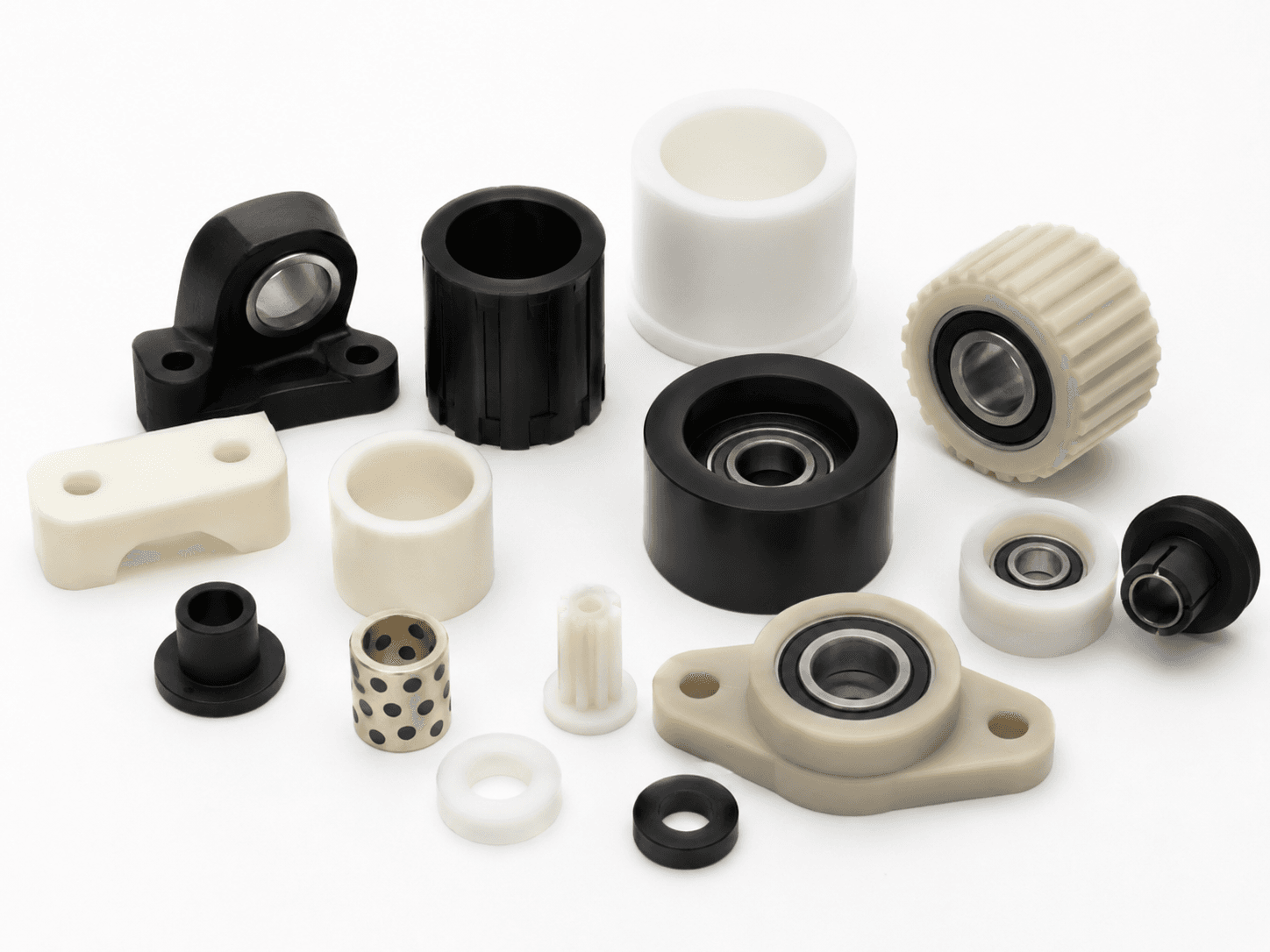
المحامل، البطانات، ومكونات التآكل
تُستخدم المحامل والبطانات البلاستيكية على نطاق واسع في الأماكن التي يُفضل فيها تقليل الصيانة، أو مقاومة التآكل، أو انخفاض الوزن، أو التشغيل بدون مواد تشحيم.
تشمل تطبيقات الآلات النموذجية:
- محامل انزلاقية
- جلب
- أكمام توجيه
- وسادات الاحتكاك
- بكرات
- كتل منزلقة
- الموجهات الخطية
تكون صب الحقن جذابة بشكل خاص عندما يجب أن تتضمن الهندسة حوافاً، أو ميزات قفل، أو هياكل تزييت، أو ميزات تركيب والتي قد تتطلب لولا ذلك تشزيناً ثانوياً.
تقدم الشركات المصنعة المتخصصة لمحامل البوليمر قطع أجزاء تآكل مخصصة من خلال القولبة بالحقن بالإضافة إلى التشغيل الآلي والتصنيع الإضافي، مما يدل على الاستخدام الواسع النطاق للبوليمرات في تطبيقات الحركة الميكانيكية.
يجب أن يعتمد اختيار المواد على الضغط، وسرعة الانزلاق، ومادة العمود، ودرجة حرارة التشغيل، والتعرض للمواد الكيميائية، وعمر التآكل المتوقع.
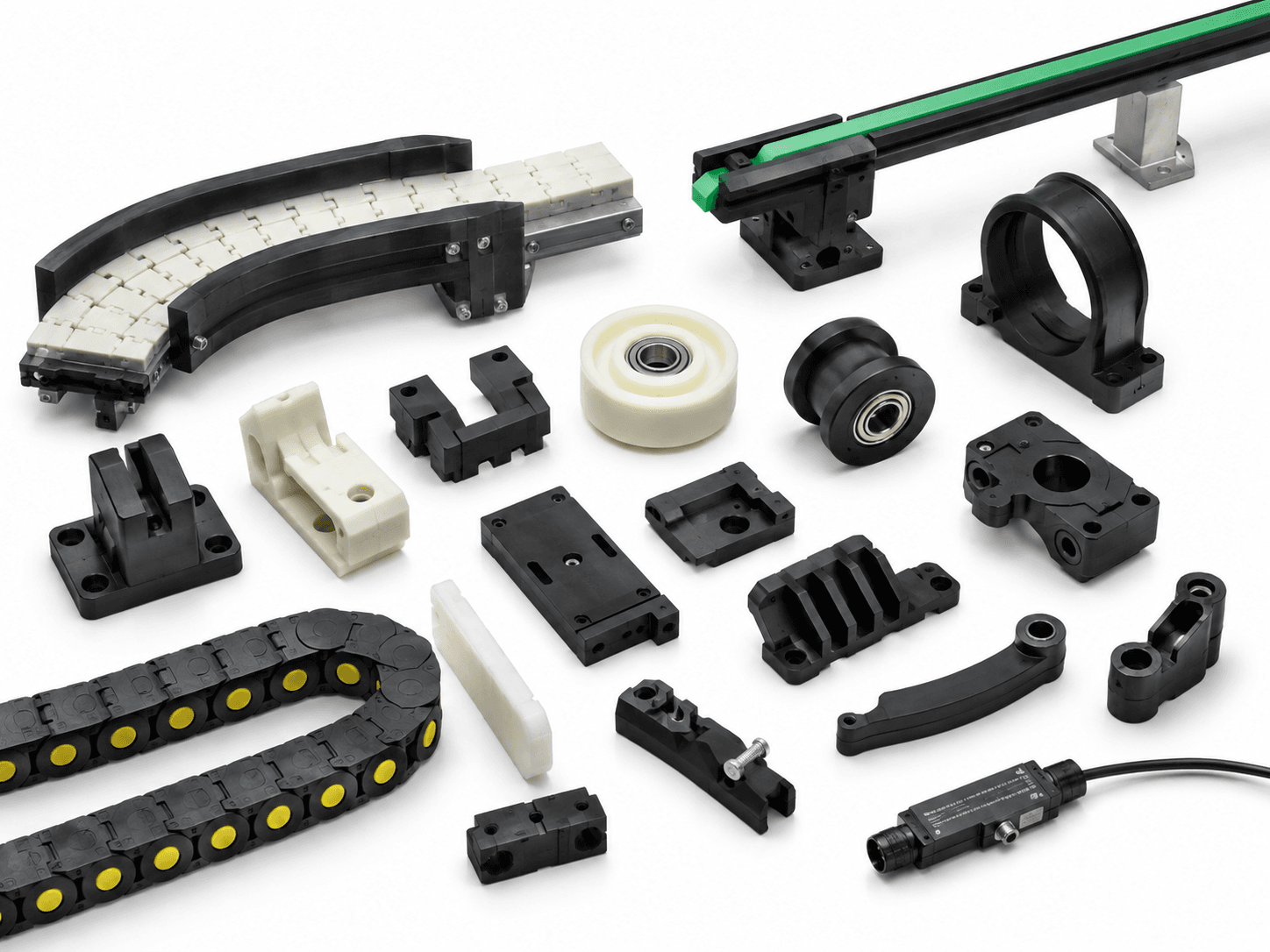
4. مكونات الأتمتة ونظام الناقل
تحتوي خطوط الإنتاج الآلية على العديد من المكونات المصنوعة بالحقن والتي تعمل بشكل مستمر.
تشمل التطبيقات:
- موجهات الناقل
- موجه السلسلة
- كتائف المستشعرات
- دعامات كابلات الروبوت
- المؤاثرات النهائية
- أزرار الضبط
- مكونات الأسطوانة
- تحديد مواقع الكتل
- أغطية واقية
القدرة على دمج وظائف متعددة في مكون واحد مصوب يمكن أن تبسط عملية التجميع وتقلل من عدد الأجزاء.
يمكن أيضاً تصميم الأجزاء المقولبة بالحقن باستخدام حشوات معدنية، أو حشوات ملولبة، أو ميزات مقولبة فوقياً (overmolded) حيثما تطلب الأمر قوة ميكانيكية إضافية.
بالنسبة لمعدات التشغيل الآلي ذات الحجم الكبير، تعد إمكانية التكرار مهمة بشكل خاص لأن التغير في الأبعاد يمكن أن يؤثر على مواضع المستشعرات، أو محاذاة الناقل، أو واجهات التجميع.
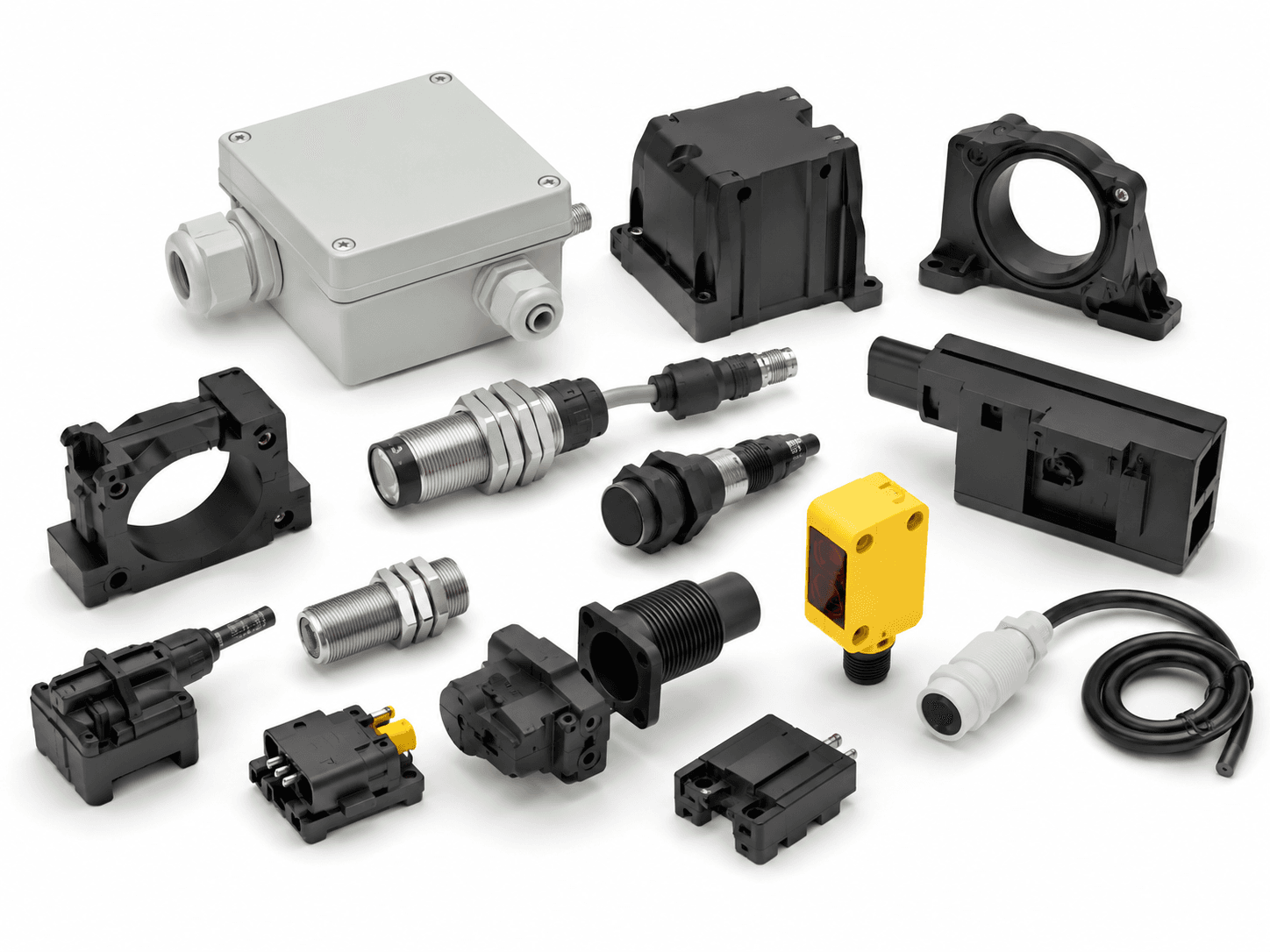
5. المكونات الكهربائية ومكونات الاستشعار
تعتمد الآلات الحديثة بشكل كبير على أنظمة التحكم الكهربائية والإلكترونية.
قد تشمل المكونات المقولبة بالحقن:
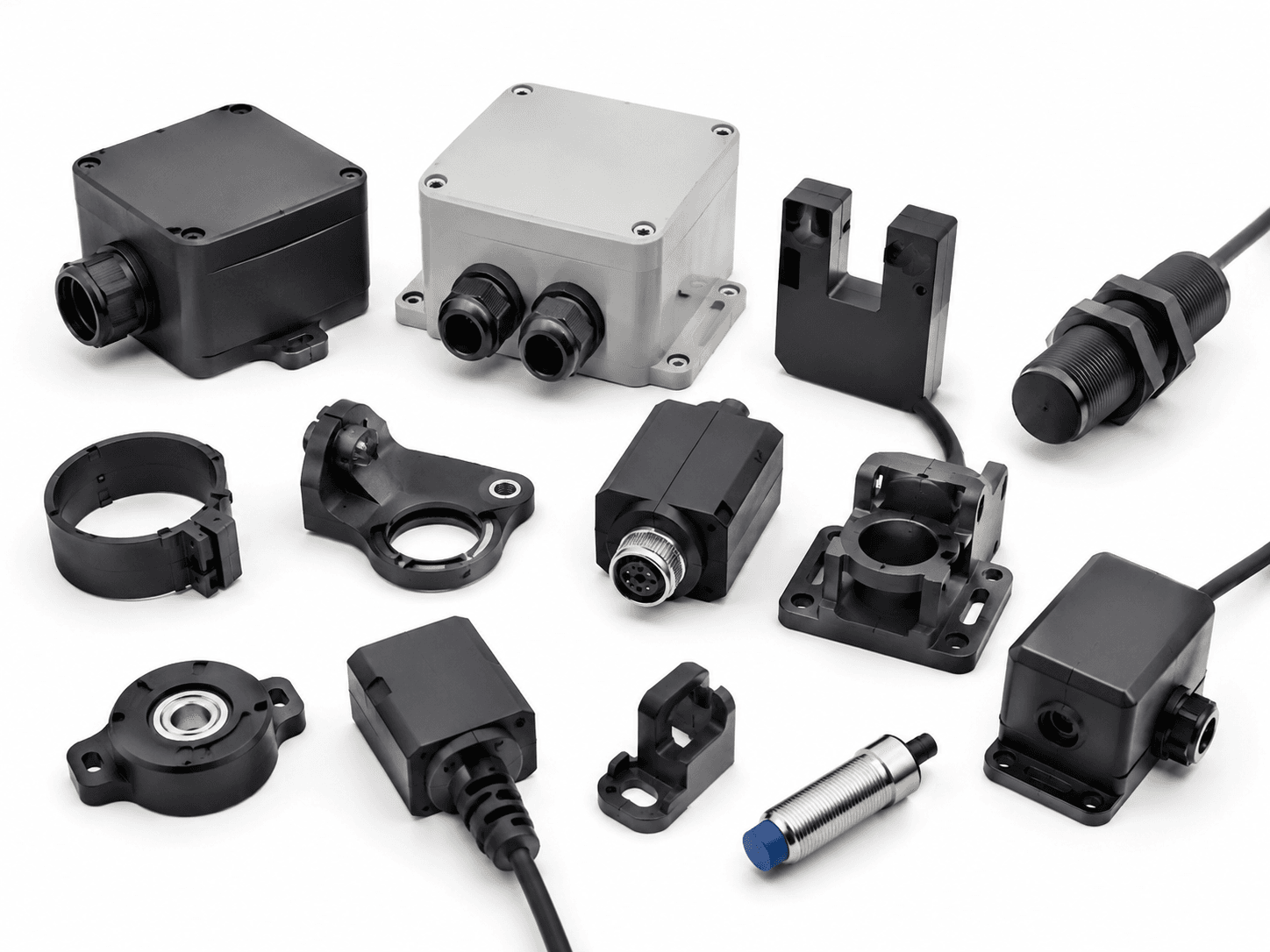
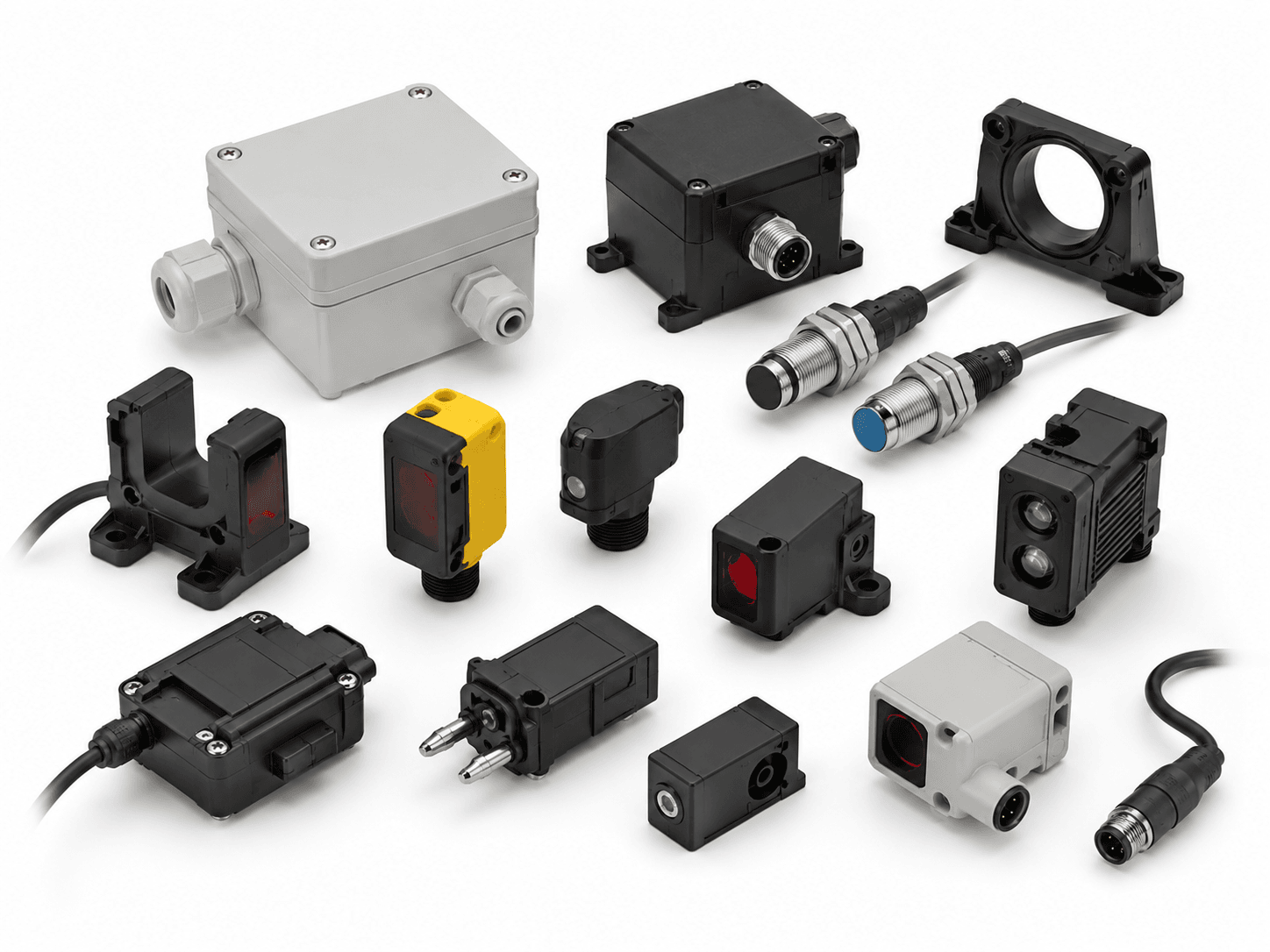
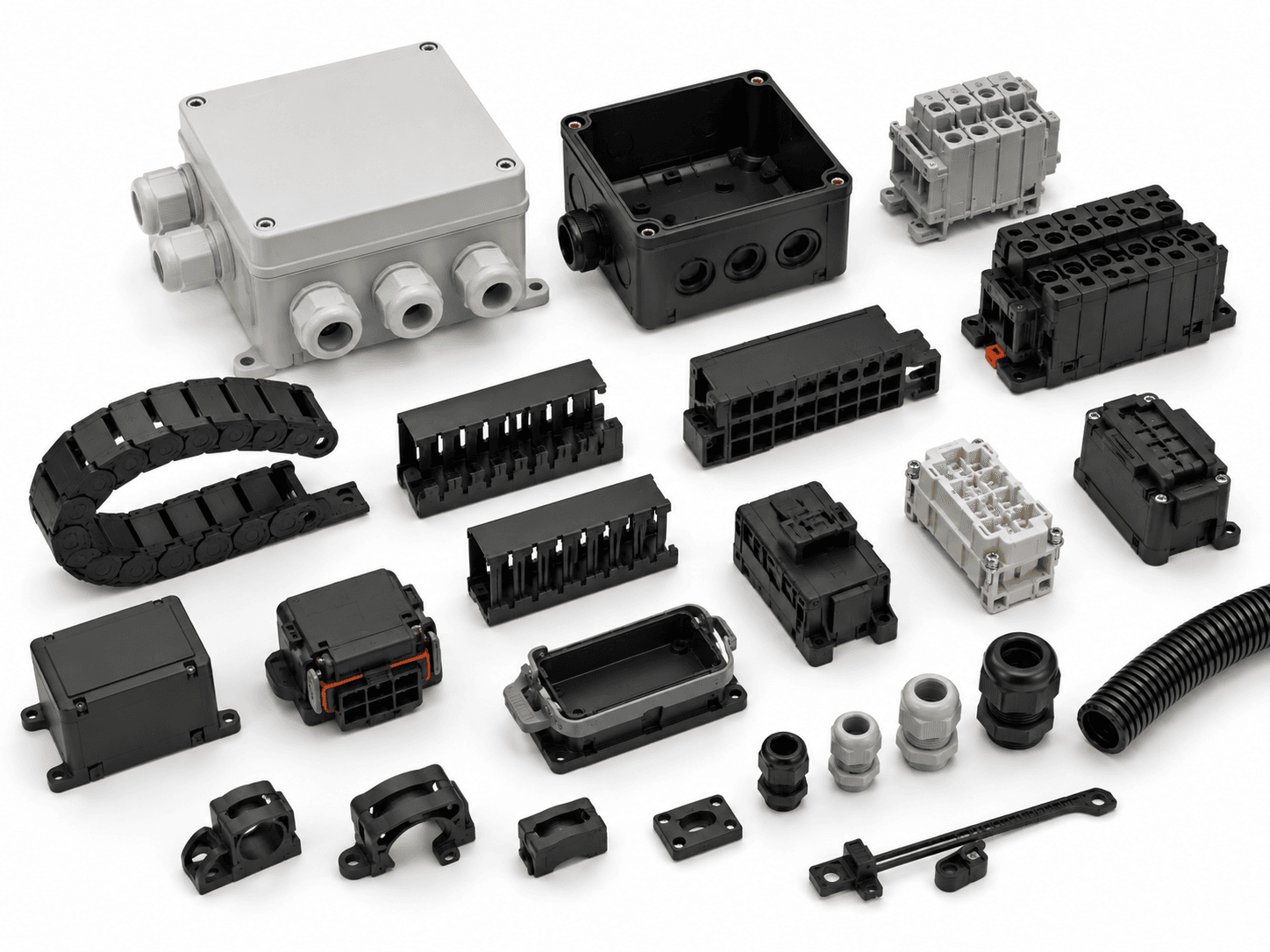
- مبيتات المستشعرات
- خزانات خاصة بوحدات التحكم المنطقي القابل للبرمجة (PLC)
- مبيتا الطرفيات
- مبيتات المفاتيح
- أجسام الموصلات
- مناولات الكابلات
- مكونات لوحة التحكم
- أغطية الحماية الكهربائية
يجب أن توفر المواد عزلًا كهربائيًّا مناسبًا، وثباتًا في الأبعاد، ومقاومة للحرارة، فضلاً عن الأداء المقاوم للهب حيثما كان ذلك مطلوبًا.
غالبًا ما يُستخدم PBT والنايلون الهندسي للمكونات الكهربائية، بينما قد يكون PC/ABS مناسبًا لأغلفة التحكم الأكبر حجمًا.
قد تقع الأنظمة الكهربائية في الآلات أيضًا ضمن نطاق المواصفة القياسية IEC 60204-1. تتناول النسخة المجمعة الحالية، IEC 60204-1:2016+A1:2021، المعدات والأنظمة الكهربائية والإلكترونية والإلكترونية القابلة للبرمجة المرتبطة بالآلات.
مكونات الآلات الكهربائية
| مكون | المتطلبان الرئيسي | مادة محتملة |
| مبيت الموصل | عزل كهربائي | بي بي تي |
| مبيت المستشعر | دقة + متانة | بولي أميد / بولي تريفثالات البوتيلين |
| حاوية التحكم | الأثر + المظهر | بولي كاربونات / أكريلونتريل بوتادين ستيرين |
| مكون الطرفية | الأداء الحراري والكهربائي | PBT FR |
| جزء إدارة الكابلات | صلابة | السلطة الفلسطينية |
معالجة الموائع والمكونات الهوائية
غالبًا ما تشمل الآلات الصناعية أنظمة المياه والهواء والزيت والتبريد والأنظمة الهوائية.
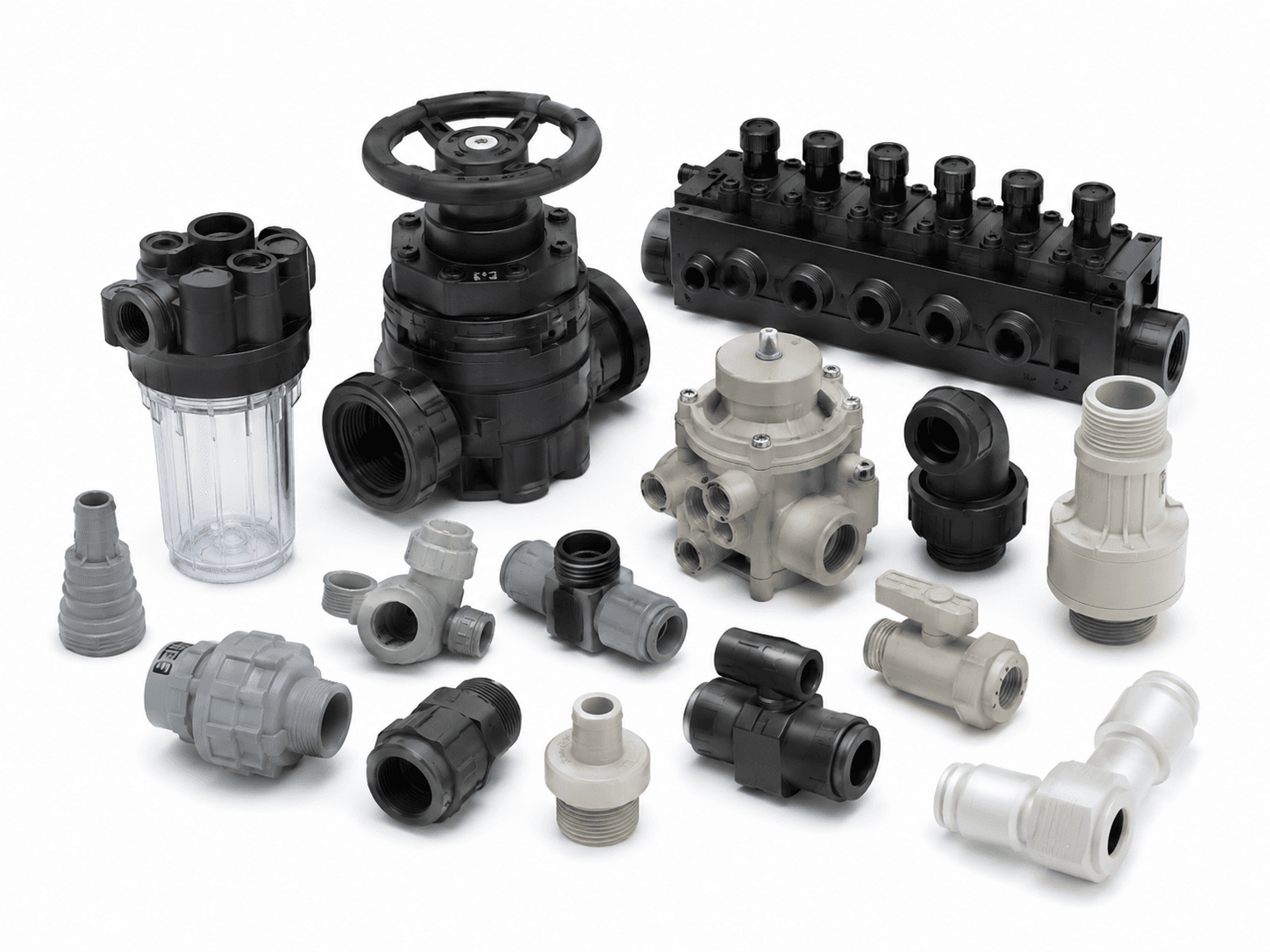
يمكن أن تتضمن المكونات المقولبة بالحقن:
- أجسام الصمامات
- موصلات الخراطيم
- تركيبات هوائية
- متشعبات
- مبيتات الفلاتر
- مكونات المضخة
- أغطية واقية
- مقابض التحكم في السوائل
يجب أن يأخذ اختيار المواد في الاعتبار الضغط ودرجة الحرارة والمواد الكيميائية الزحف ومتطلبات الإحكام.
يمكن تقييم بولي أكسيد الميثيلين (POM)، والبولي أميد (PA)، والبولي بروبيلين (PP)، وكبريتيد البولي فينيلين (PPS)، وغيرها من المواد الهندسية بناءً على بيئة التشغيل.
بالنسبة للمكونات الاحتواء للضغط، تتطلب خطوط التجزئة، وخطوط اللحام، والأسنان، وسمك الجدار، وأسطح الإحكام تصميماً دقيقاً لأن العيوب المحلية يمكن أن تؤثر بشكل مباشر على أداء مانع التسرب.
7. المقابض، والأزرار، وواجهات المشغل
لا يتطلب كل مكون من مكونات الآلات هندسة بلاستيكية تحمل درجات حرارة عالية. تُمثل المقابض، والمقابض الدوارة، والعتلات، والأزرار، ومكونات الضبط فئة كبيرة أخرى من المنتجات المقولبة بالحقن.
تشمل الأمثلة الشائعة:
- مقابض الآلات
- عجلات يدية
- أزرار الضبط
- مقabض الرافعة
- أزرار التحكم
- مقابض إقفال
- مقابض التحديد
يمكن استخدام القولبة ثنائية المواد أو القولبة المجاوزة بالـ TPE لإنشاء أسطح ناعمة الملمس وتحسين القبضة.
يمكن أيضًا دمج الحشوات المعدنية الملولبة في الأماكن التي يُتوقع فيها الربط المتكرر أو الأحمال الميكانيكية الأعلى.
8. الهندسة البلاستيكية لمكونات الآلات
غالباً ما تعمل أجزاء الآلات تحت أحمال أعلى بكثير من تلك التي تحتملها المكونات البلاستيكية المنزلية العادية.
لذلك، يجب أن يأخذ اختيار المواد في الاعتبار الخواص الميكانيكية إلى جانب بيئة العمل الفعلية.
| مادة | الخصائص الرئيسية | تطبيق الآلات النموذجي |
| بوم | احتكاك منخفض، ثبات الأبعاد | تروس، بطانات |
| PA6 / PA66 | متانة، مقاومة التآكل | المكونات الميكانيكية |
| PA66-GF | صلابة وقوة عاليتان | أقواس هيكلية |
| بي بي تي | الأداء الكهربائي والأبعادي | موصلات |
| بولي كاربونات / أكريلونتريل بوتادين ستيرين | مقاومة الصدمات | غلاف الآلة |
| نظام بي بي إس | مقاومة عالية للحرارة والمواد الكيميائية | مكونات صناعية متطلبة |
| TPE | مرونة وقوة قبض | المقابض والأختام |
يمكن أيضاً النظر في استخدام البلاستيك الموصل حرارياً للمعدات المتخصصة حيث يجب أن تساهم المكونات البوليمرية في الإدارة الحرارية. على سبيل المثال، تقدم شركة سيلانيز (Celanese) هندسة بلاستيكية موصلة حرارياً للتطبيقات التي يكون فيها نقل الحرارة متطلباً تصميمياً هاماً.
القولبة بالادخال لأجزاء الآلات
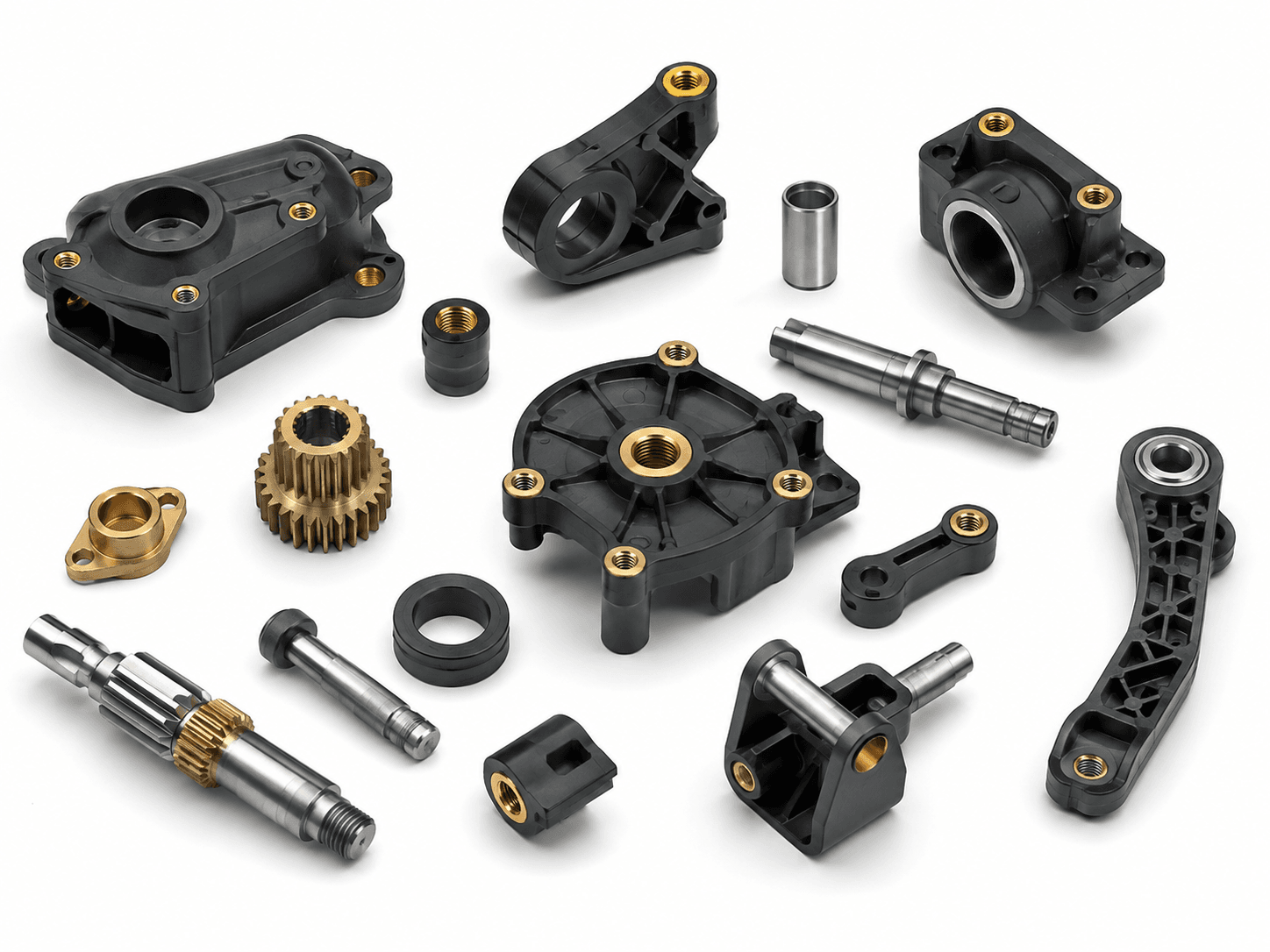
غالبًا ما تجمع مكونات الآلات بين البلاستيك والمعدن.
يمكن لعملية القولبة الإضافية (أو الحقن التداخلي) دمج:
- حشوات نحاسية ملولبة
- أعمدة فولاذية
- أغلفة المحامل
- أطراف توصيل كهربائية
- تسليح معدني
- لوحات التثبيت
يمكن لهذا النهج أن يقلل من التجميع الثانوي مع إنشاء واجهات ميكانيكية قوية.
مع ذلك، يجب على المصممين مراعاة الاختلافات في التمدد الحراري بين البلاستيك والمعدن. كما أن زيادة سماكة البلاستيك بشكل مفرط حول القطعة المدمجة يمكن أن تؤدي أيضاً إلى علامات انكماش أو إجهاد متبقي.
يجب التحكم في موقع الإدراج بدقة داخل القالب للحفاظ على التناسق الأبعادي خلال دورات الإنتاج المتكررة.
10. تصميم القوالب لمكونات الآلات الصناعية
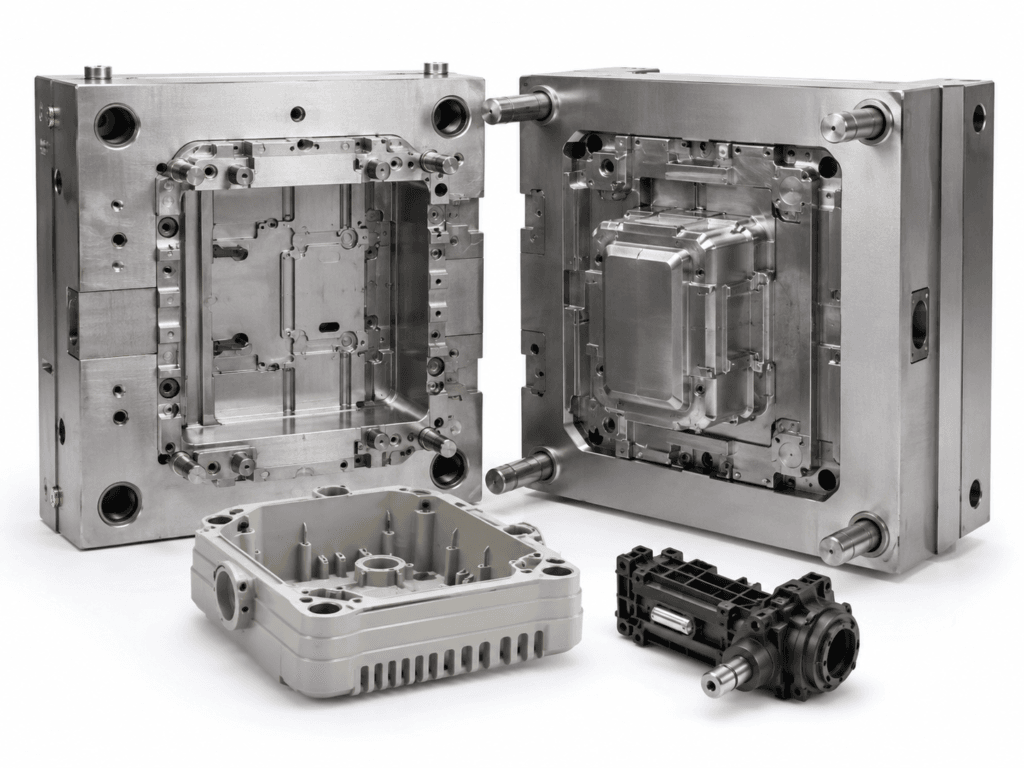
غالبًا ما تتطلب أجزاء الآلات عمرًا خدمة طويلاً وأبعادًا مستقرة، مما يجعل الأدوات الدقيقة أمرًا بالغ الأهمية.
تشمل الاعتبارات المهمة لتصميم القوالب ما يلي:
موقع البوابة
يؤثر موضع البوابة على خطوط اللحام، وتوازن الحمل، واتجاه الألياف، والدقة الأبعادية.
تبريد
التبريد المنتظم يساعد في تقليل وقت دورة التصنيع وتقليل التشويه.
التنفيس عن الغضب
التهوية الكافية تقلل من الغاز المحبوس، وعلامات الحروق، والملء غير الكامل.
القصات الجانبية
قد تتطلب الثقوب الجانبية، والتشابكات (المشابك)، والتمغضات (المجاري)، وميزات الإقفال منزلقات أو رافعات.
البلاستيك المقوى
قد تُنتج المواد المحشوة بالزجاج انكماشاً تخواصياً (لا متناظراً) وتآكلاً أكبر للقالب، مما يتطلب استخدام فولاذ قوالب مناسب واستراتيجيات معالجة ملائمة.
يمكن أن يكون المحاكاة ذات قيمة خاصة لمكونات الآلات المعقدة. تذكر أوتوديسك أن برنامج Moldflow يمكنه تقييم مراحل التعبئة، والكبس، والتبريد، والالتواء، واختيار المواد، وأداء قنوات التبريد قبل وضع اللمسات الأخيرة على أدوات الإنتاج.
11. عيوب القولبة بالحقن الشائعة في الآلات
| عيب | سبب محتمل | الالحل الموصى به |
| التواء | تبريد غير متساوی أو اتجاه الألياف | تحسين البوابة والتبريد |
| علامات الانكماش | سمك محلي مفرط | تحسين الضلوع والنتوءات |
| خطوط اللحام | جبهات تدفق متعددة | تحسين موقع البوابة |
| فلاش | تآكل القالب أو الضغط المفرط | تحسين ملاءمة القالب |
| رَشْفَةٌ قَصِيرَةٌ | تدفق انصهار مقيد | تحسين المعالجة |
| التغير البعدي | انكماش/عدم استقرار العملية | تحسين التحكم في العمليات |
| التعرض للألياف | راتنج مدعم/ ظروف التشغيل | تحسين درجات الحرارة وساحة القالب |
تحتفظ شركة باسف (BASF) بموارد مخصصة لمعالجة مشاكل القولون بالحقن، والتي تغطي عيوب التصنيع الشائعة والتدابير التصحيحية المحتملة.
12. مراقبة الجودة وسلامة الآلات
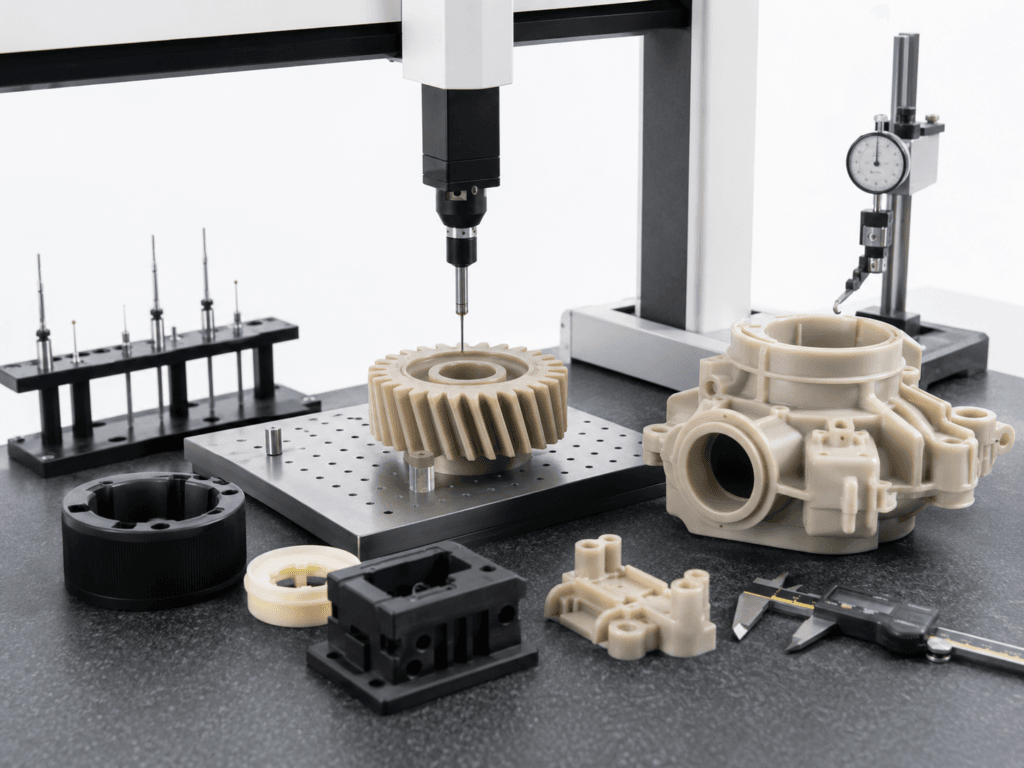
قد تعمل المكونات الصناعية بشكل مستمر لآلاف الساعات، لذا يجب أن يعكس التحقق من الأبعاد والأداء ظروف الخدمة الفعلية.
تشمل طرق الفحص الشائعة:
- الفحص بالأبعاد باستخدام آلة قياس الإحداثيات
- فحص شكل التروس
- مقاييس «موافق/غير مطابق»
- اختبار عزم الدوران
- اختبار التحمل
- اختبار التآكل
- الشيخوخة الحرارية
- اختبار المقاومة الكيميائية
- اختبار التجميع
- اختبار دورة التشغيل
حيثما يؤدي مكون مصبوب وظيفة تتعلق بالسلامة، يجب تقييم تصميمه كجزء من استراتيجية الحد من المخاطر للآلة الكاملة. توفر المواصفات القياسية (ISO 12100) الإطار العام لتقييم المخاطر والحد منها في تصميم الآلات.
لماذا تختار سامغو لآلات قولبة الحقن؟
تطلب مكونات الآلات الصناعية أكثر من مجرد قوالب تجميلية. يجب مراعاة الاحمال الميكانيكية، والتفاوتات الأبعاد، والتآكل، ودرجة الحرارة، واستقرار الإنتاج على المدى الطويل منذ البداية.
تدعم شركة سامجو مشاريع البلاستيك الآلية بدءاً من مراجعة الهندسة المبكرة وحتى صناعة القوالب والإنتاج الضخم.
| قدرة | المزايا التي يحصل عليها العميل |
| مراجعة تصميم المنتج | تحسين قابلية التصنيع |
| تحليل التصنيع والتجميع | تحديد مخاطر الأدوات |
| دعم اختيار المواد | مطابقة الراتنج مع ظروف التشغيل |
| محاكاة Moldflow | تحسين عمليات التعبئة والالتواء |
| تصنيع القوالب بدقة عالية | تحسين الثبات الأبعادي |
| القولبة بالحقن الإضافي | اجمع بين المعدن والبلاستيك |
| فحص الجودة | التحقق من المتطلبات الميكانيكية |
يمكن أن تشمل التطبيقات هياكل المعدات الصناعية، والتروس، والمحامل، ومكونات الأتمتة، هياكل أجهزة الاستشعار، والأجزاء الكهربائية، ومكونات أنظمة السوائل، والمقابض، وغيرها من الأجزاء البلاستيكية المخصصة للآلات.
الأسئلة الشائعة
هل يمكن للقطع البلاستيكية المقولبة بالحقن أن تستبدل مكونات الآلات المعدنية؟
في تطبيقات مختارة، نعم. يمكن أحيانًا تحويل التروس، والجلب، والأغطية، والكتائف، والموجهات، وغيرها من المكونات من المعدن إلى اللدائن الهندسية. يجب تقييم متطلبات الحمل، ودرجة الحرارة، والتآكل، والزحف، والسلامة قبل إجراء التغيير.
أي بلاستيك هو الأفضل لتروس الآلات؟
يعد بولي أوكسي ميثيلين (POM) والنايلون الهندسي خيارين شائعين بسبب خصائصهما الميكانيكية وخصائص التآكل. تعتمد المواد الصحيحة على عزم الدوران، والسرعة، ودرجة الحرارة، والتشحيم، وعمر الخدمة.
لماذا يُستخدم النايلون المقوى بالألياف الزجاجية في الآلات؟
يمكن أن يؤدي التسليح بالزجاج إلى تحسين الصلابة، والقوة الميكانيكية، والأداء البعدي بشكل كبير، مما يجعل النايلون المسلح مناسباً للكتائف الهنشائية والمكونات الميكانيكية.
هل يعتبر برنامج Moldflow مفيداً لمكونات الآلات؟
نعم. يمكن أن يساعد في تقييم التعبئة، وتجاه الألياف، والتبريد، والانكماش، وخطوط اللحام، والالتواء قبل تصنيع القالب، لا سيما للأجزاء المدعومة أو الحرجة من الناحية الأبعادية.
الخاتمة
تزداد أهمية القولبة بالحقن في قطاع الآلات لأن البلاستيك الهندسي يمكنه أداء وظائف هيكلية وميكانيكية وكهربائية ووقائية وللتحكم في الحركة داخل المعدات الحديثة.
ت تتراوح التطبيقات من واقيات الآلات والأغلفة الكهربائية إلى التروس، والمحامل، ومكونات الناقلات، وحاويات المستشعرات، وأجزاء أنظمة السوائل، والمقابض، والآليات الدقيقة.
غالباً ما تأتي القيمة الكبرى من دمج الوظائف. يمكن لقطعة مصبوبة مصممة بشكل صحيح أن تجمع بين الضلوع، ومواضع المحامل، وموجهات الكابلات، والقطع المفاجئة، وركائز التثبيت، والأسنان اللولبية، والهياكل الواقية في جزء واحد، مما يقلل من تعقيد التجميع ويدعم التصنيع بكميات كبيرة.
ومع ذلك، تفرض تطبيقات الآلات متطلبات صعبة على اللدائن (البلاستيك). يجب أخذ البلى، ودرجة الحرارة، والثبات الأبعادي، والتعرض للمواد الكيميائية، والاهتزاز، والتحميل الميكانيكي، وعمر الخدمة الطويل بعين الاعتبار.
من خلال اختيار المواد المناسبة، وتحليل التصنيع للتصاميم (DFM)، ومحاكاة التدفق (Moldflow)، وصناعة القوالب بدقة، والتشكيل بالادراج، والإنتاج المحكوم، والتحقق الوظيفي، يمكن لمكونات الهندسة البلاستيكية الم حقونة بالحقن أن توفر حلولاً موثوقة وفعالة من حيث التكلفة لمجموعة واسعة من تطبيقات الآلات الصناعية.
احصل على أحدث سعر؟ سنرد عليك في أقرب وقت ممكن (خلال 12 ساعة)
CNC Plastic Prototypes vs. Injection Molded Parts: Key Differences Engineers Should Understand
Compare CNC plastic prototypes and injection molded parts in material properties, dimensions, warpage, surface finish, geometry, cost and production performance.
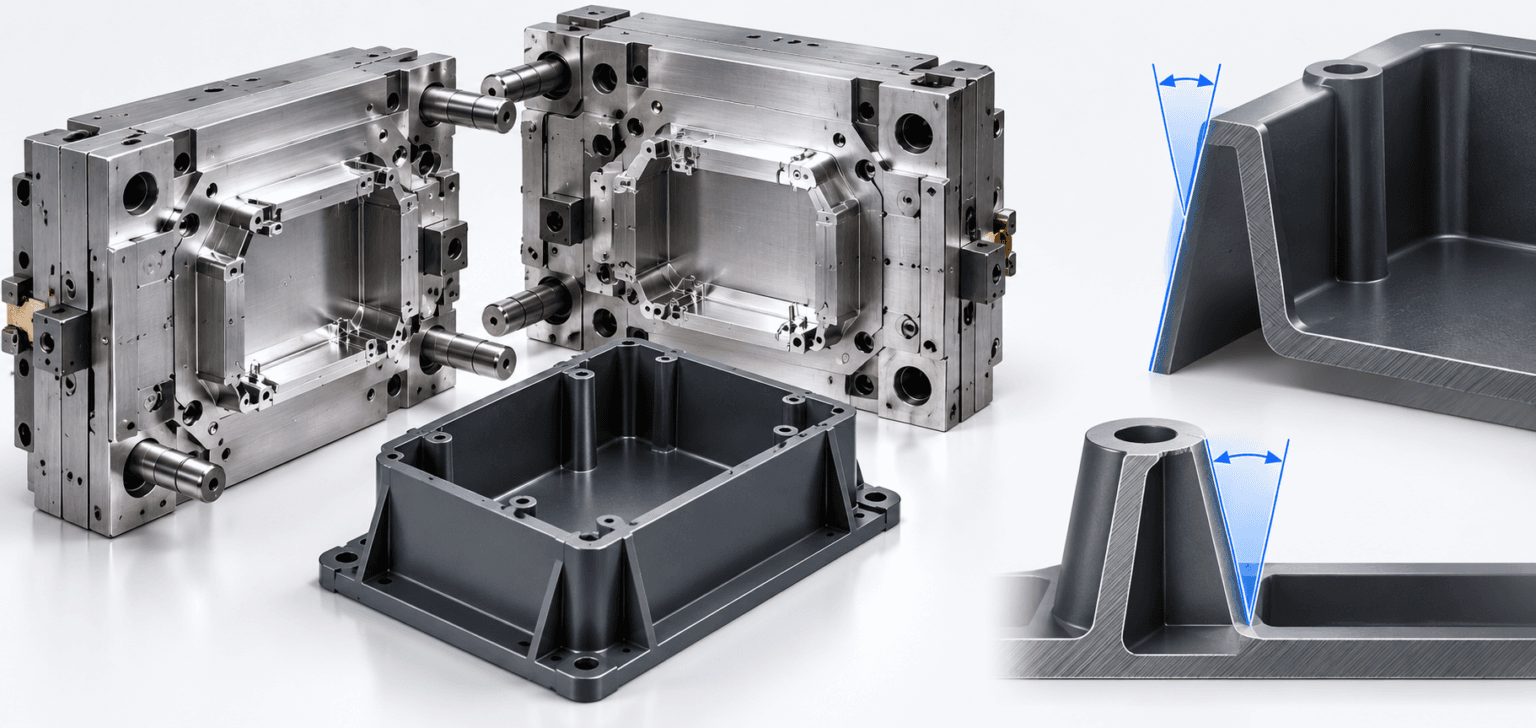
Draft Angle in Injection Mold Design: Improving Part Quality, Ejection and Tooling Efficiency
Discover how draft angles affect injection mold design, part ejection, surface texture, dimensional accuracy, ribs, bosses and long-term tooling performance.
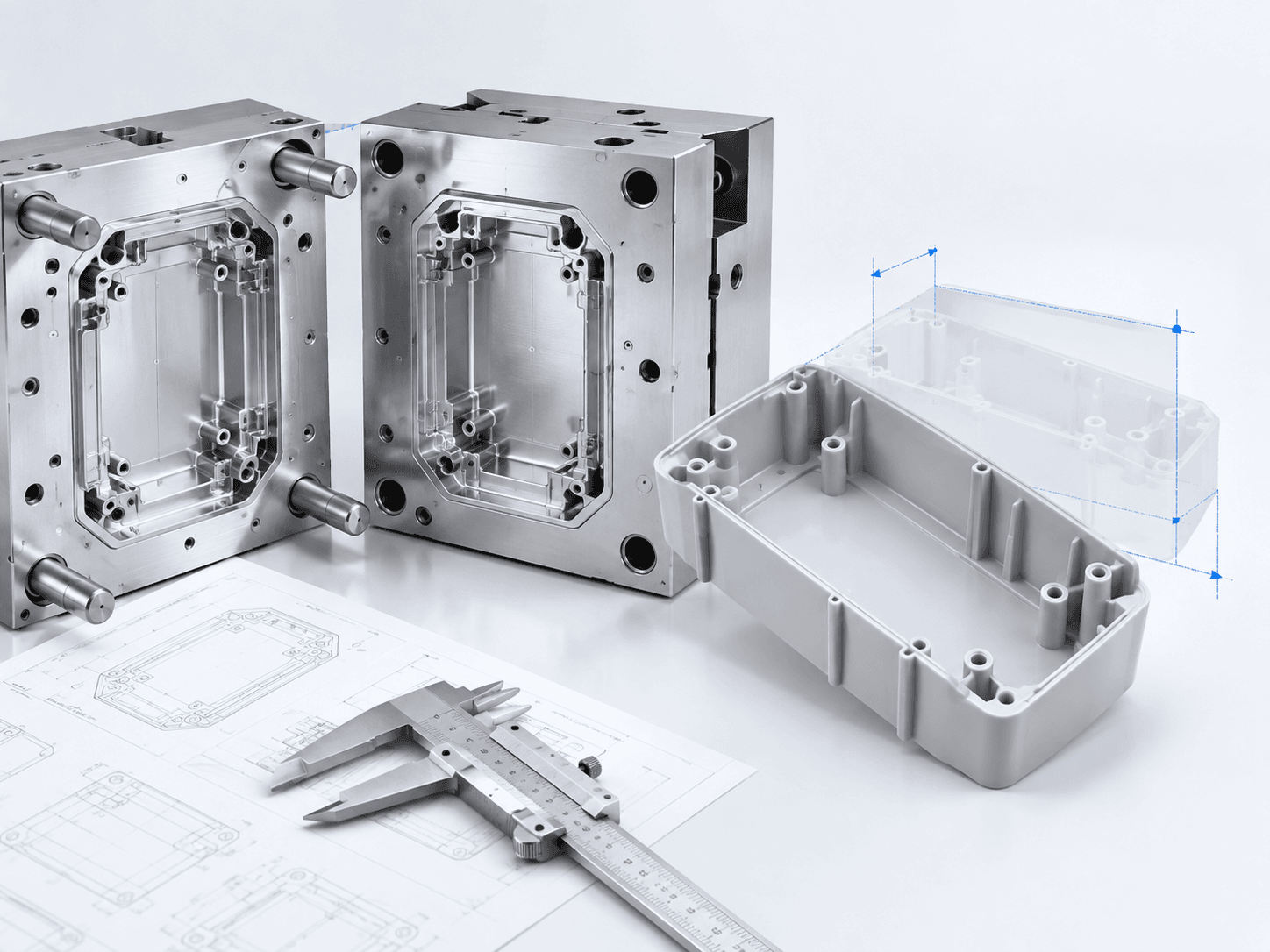
Injection Molding Shrinkage: How to Control Part Dimensions from Mold Design to Production
Learn how injection molding shrinkage affects mold dimensions, tolerances and warpage, and how material, gate design, packing, cooling and mold trials help control final plastic part dimensions.